Lesson 60 of 60 · about 9 minutes
Joseph Plumb Martin: The Common Soldier Who Wrote It All Down
You'll be able to
- Follow Martin from a Connecticut farm to the siege of Yorktown
- Read his own words on hunger, foraging and the assault on Redoubt 10
- Explain how the 1830 Narrative disappeared and was found again, and where sources differ on when
- Describe what happened to Martin and other veterans after the war
In January 1780, at Morristown, New Jersey, a Connecticut corporal named Joseph Plumb Martin went four days and four nights with nothing to eat except bark. He remembered it for fifty years. "We were absolutely, literally starved," he wrote. "I do solemnly declare that I did not put a single morsel of victuals into my mouth for four days and as many nights, except a little black birch bark which I gnawed off a stick of wood, if that can be called victuals."1
A Boy from Becket
Martin was born November 21, 1760, in Becket, Massachusetts, the son of a minister.23 At seven he was sent to live with his grandparents on their farm in Milford, Connecticut.2 They did not want him in the army. The Battlefield Trust says he threatened to go off on a privateer until they gave in.4 In 1776 he joined the Connecticut militia (state troops, in the Battlefield Trust's words) at about fifteen and was sent to the New York City area.34 The Park Service's short biography calls this Continental service, while the other sources describe a militia or state tour that ended in December 1776.243
He saw Long Island, Kip's Bay, Harlem Heights and White Plains, then went home. He missed Trenton and Princeton. In April 1777 he signed on again, this time for the rest of the war.23
Hunger at Valley Forge and Morristown
The army reached Valley Forge a few days before Christmas 1777. Martin arrived at dark with no water in camp. He paid three pence for a drink, his whole fortune, and spent two nights and a day with nothing to eat but half a pumpkin he roasted on a rock. "I am not writing fiction," he wrote, "all are sober realities."5
Then he was put on a foraging party. The job, he explained, was to take provisions from the farmers for the army "at the point of the bayonet." He and his comrades once ate beef he joked was so transparent it would make a fine lantern.5 The Teaching American History editor, Robert McDonald, notes that Martin elsewhere remembered Valley Forge meals as "a leg of nothing and no turnips."5
The worse winter was at Morristown in 1779-80. At that camp, Martin says, men roasted their old shoes and ate them, and he heard that some officers killed and ate a dog.1 He was a corporal in the light infantry by then. In 1780 he moved to the new Corps of Sappers and Miners and made sergeant.3
Yorktown and Redoubt 10
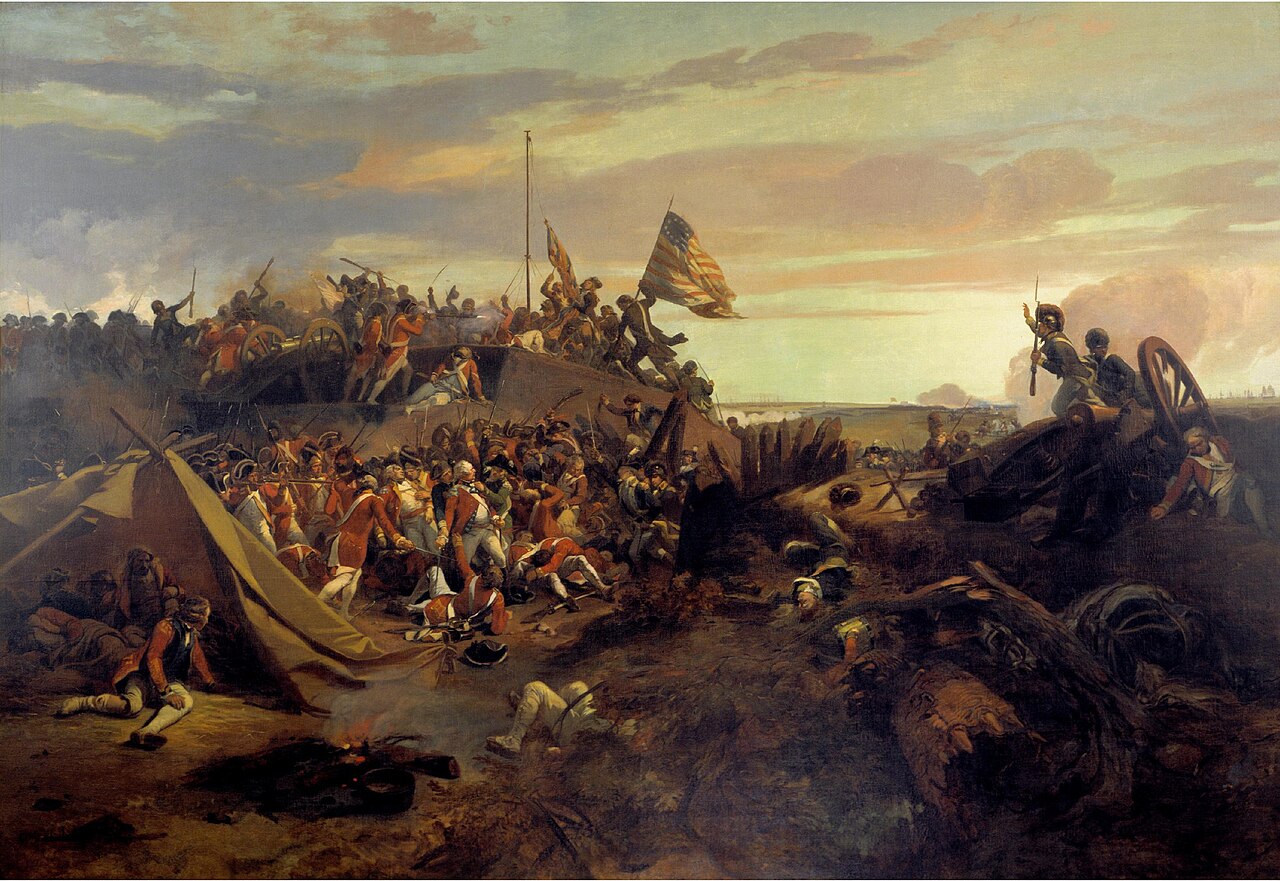
At Yorktown his corps dug Washington's first parallel and then cleared the approach to British Redoubt 10.4 Allied troops stormed Redoubts 9 and 10 on October 14, 1781.6 Martin recalled marching up with unloaded muskets, in the dark, until the abatis. Then the British fired. Shells had torn holes in the ground, and men kept dropping into them. "I thought the British were killing us off at a great rate," he wrote. "At length, one of the holes happening to pick me up, I found out the mystery of the huge slaughter."4
The Battlefield Trust says he was 22 at Yorktown. His birth date makes him 20. Martin saw Cornwallis's army surrender and left the army in 1783, among the last Continental soldiers discharged.43
A Farm in Maine and a Book Nobody Read
After the war Martin taught school in New York and then settled on the Maine frontier, where he married Lucy Clewley in 1794.4 That same year he fell into a land dispute with Henry Knox, once the army's chief of artillery. The Battlefield Trust says Martin lost the dispute and lost land, and a personal appeal to Knox fell on deaf ears. Knox's own story is in its own lesson.4
Martin was granted a pension in 1818, $96 a year, by which time he was destitute.4 He thought the country had used the enlisted man and dropped him. "The country was rigorous in exacting my compliance to my engagements," he wrote, "but equally careless in performing her contracts with me; and why so? One reason was, because she had all the power in her hands, and I had none." Soldiers, he said, were "turned adrift like old worn-out horses."7
He began writing his Narrative more than forty years after the war. Franklin Glazier of Hallowell, Maine, printed it in 1830, when Martin was about seventy, and it seems unlikely he ran off more than a few hundred copies. Martin said he wrote to satisfy his friends and never expected it to "reach beyond the pale of my own neighborhood."7 Surviving copies are rare. Martin died in 1850.2
Myth: Martin's book is a wartime diary, and he stayed a lowly private
The Narrative is a memoir written more than forty years after the war, though it has been sold under titles such as The Diary of Joseph Plumb Martin.7 Editorial notes at the Virtual Marching Tour say his account of the ship Augusta at Fort Mifflin does not match the record: the notes put her in the attack on Fort Mercer and say she ran aground on shoals after a night attack by American galleys, not on the river obstructions as Martin wrote.8 Martin also rose above private, to corporal in 1778 and sergeant in 1780.37 The title Private Yankee Doodle was the 1962 editor's choice, not Martin's own.7
Found Again
George Scheer, a writer for American Heritage, found a copy of the 1830 edition in the library of Morristown National Historical Park. He transcribed it and published it with Little, Brown in 1962 as Private Yankee Doodle.7 The American Revolution Institute dates the find to the late 1950s, while the Virtual Marching Tour says the book was rediscovered in the 1960s.78 The National Park Service named the hiking trail around Valley Forge for him.7
Martin's Life at a Glance
- 1760 Born November 21 in Becket, Massachusetts.
- 1776 Joins the Connecticut militia at about 15; sees Long Island and White Plains.
- April 1777 Enlists for the rest of the war.
- Winter 1777 to 1778 At Valley Forge.
- January 1780 Starves at Morristown; later a sergeant in the Sappers and Miners.
- October 14, 1781 Takes part in the assault on Redoubt 10 at Yorktown.
- 1818 Pension approved at $96 a year.
- 1830 Publishes the Narrative in Hallowell, Maine.
- May 2, 1850 Dies in Prospect, Maine.
Learn more
- Teaching American History: Foraging for Valley Forge: long passages in Martin's own words
- NPS Morristown: The Hard Winter: Martin beside other accounts of 1779-80
- American Battlefield Trust: Joseph Plumb Martin: Redoubt 10 in his words
- American Revolution Institute: Martin, Everyman: how the book was printed and found
- Friedrich von Steuben: the drillmaster who trained the army Martin served in
Notes
- Joseph Plumb Martin, A Narrative of Some of the Adventures, Dangers, and Sufferings of a Revolutionary Soldier (Hallowell, Maine, 1830), passage on January 2-4, 1780, as reproduced in National Park Service, Morristown National Historical Park, "The Hard Winter DBQ," Document 5. Read it online. ↩
- National Park Service, "Joseph Plumb Martin," on his birth in Becket on November 21, 1760, Milford, his enlistment at fifteen, his 1777 re-enlistment, Valley Forge and Morristown, and his death in Prospect, Maine, on May 2, 1850. Read it online. ↩
- American Revolution Institute, "Joseph Plumb Martin, Everyman," on his father, the Connecticut militia in 1776, his April 1777 enlistment, his promotion to corporal in 1778 and sergeant in 1780, the battles and his discharge in 1783. Read it online. ↩
- American Battlefield Trust, "Joseph Plumb Martin: Voice of the Common American Soldier," on the privateer threat, the Connecticut State Troops, Yorktown, the quotation about Redoubt 10, his marriage in 1794, the land dispute with Knox, the pension of $96 a year and the age of 22. Read it online. ↩
- Martin, Narrative (1830), pp. 75-83, as reproduced with an introduction by Robert M. S. McDonald in "Foraging for Valley Forge," Teaching American History. Read it online. ↩
- National Park Service, Colonial National Historical Park, "Chronology of the Siege of Yorktown," entry for October 14, 1781. Read it online. ↩
- American Revolution Institute, same article, on the quotations about the country's contracts, the "old worn-out horses" remark and the "pale of my own neighborhood," Glazier's press, the writing of the Narrative more than forty years after the war and Scheer's discovery and 1962 edition. Read it online. ↩
- Virtual Marching Tour of the American Revolutionary War, "Joseph Plumb Martin," on the rediscovery of the book in the 1960s and the editorial notes on the Augusta. Read it online. ↩
Terms in this lesson
- Narrative
- Martin's memoir, published in 1830 as A Narrative of Some of the Adventures, Dangers, and Sufferings of a Revolutionary Soldier.
- Sappers and Miners
- The Continental Army corps that dug trenches and cleared obstacles in sieges. Martin served in it as a sergeant.
- Abatis
- A barrier of sharpened felled trees placed in front of a fort. At Redoubt 10 the sappers had to cut through one.
- Foraging
- Collecting food and fodder from civilians for the army, which Martin describes as done at the point of the bayonet.
- Pension
- Regular payment to a veteran. Martin's was approved in 1818 at $96 a year.
Sources
- National Park Service, Morristown, The Hard Winter DBQ (Document 5) checked 2026-10
- Teaching American History, Foraging for Valley Forge (Martin, Narrative, 1830, pp. 75-83) checked 2026-10
- American Battlefield Trust, Joseph Plumb Martin: Voice of the Common American Soldier checked 2026-10
- American Revolution Institute, Joseph Plumb Martin, Everyman checked 2026-10
- National Park Service, Joseph Plumb Martin checked 2026-10