Lesson 11 of 60 · about 9 minutes
Thaddeus Kosciuszko: The Engineer Who Chose the Ground
You'll be able to
- Describe Kosciuszko's engineering work at Philadelphia, Saratoga, West Point and in the South
- Explain the will of 1798 and what Jefferson did and did not do with it
- Note where sources disagree about dates and details
- Say why Americans and Poles both claim him
In September 1777 General Horatio Gates wrote a letter crediting two things for his strong position at Saratoga: "hills and forests" and "a young Polish Engineer."1 The engineer was Tadeusz Kosciuszko, thirty-one years old, who had been in America for little more than a year and still spelled his name in ways Washington never got right. Washington, by one count, spelled it eleven different ways.1
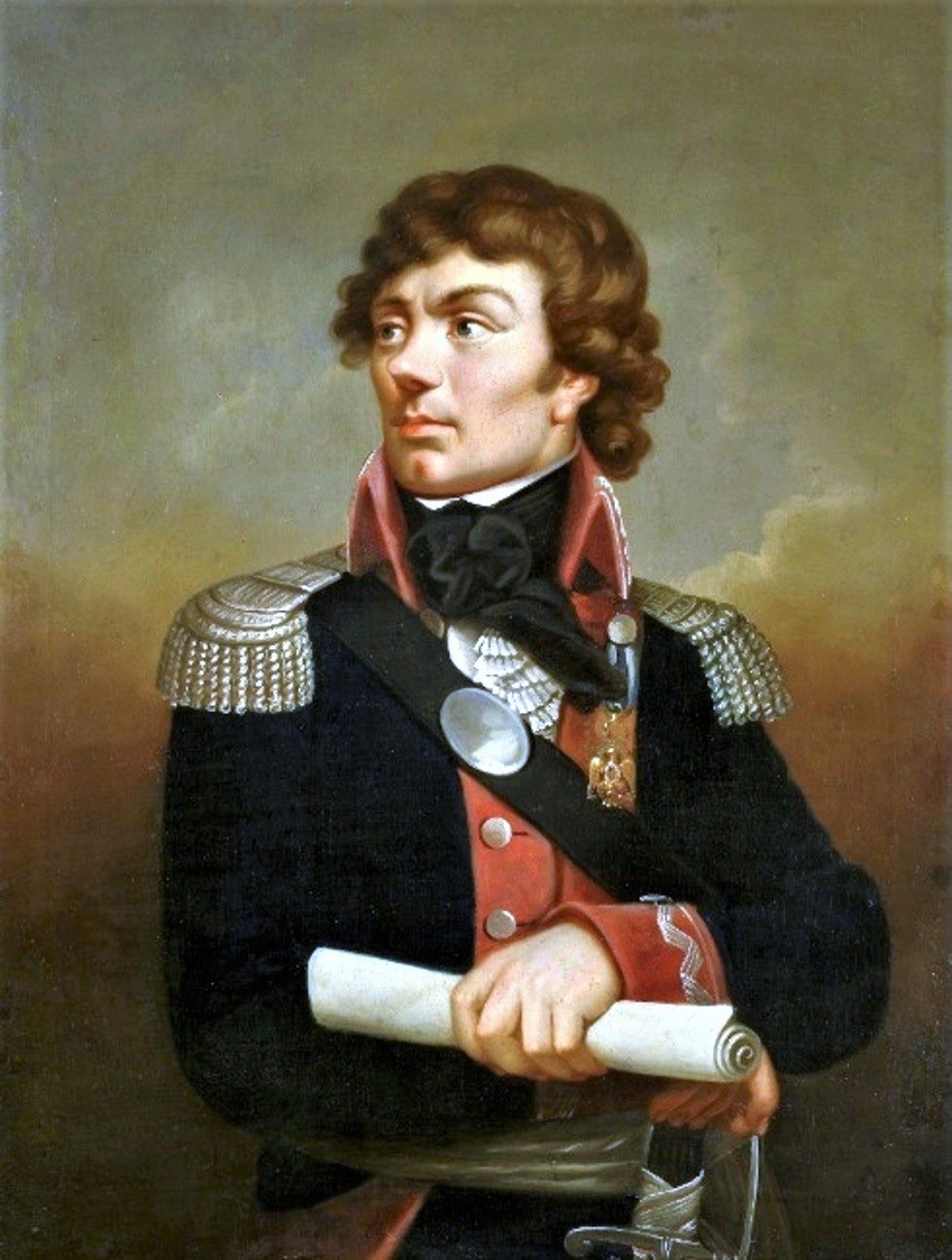
A Polish Officer in Philadelphia
Kosciuszko was born in the Grand Duchy of Lithuania in 1746. Wikipedia gives February 4 or 12 and notes that sources conflict on the voivodeship.2 He studied at the Warsaw Corps of Cadets and later in Paris. In 1776 he reached Philadelphia and, as the Smithsonian tells it, presented himself to Congress on August 30. John Hancock commissioned him a colonel in October. Benjamin Franklin hired him to design forts on the Delaware River to guard Philadelphia from the British navy.3
Saratoga and West Point
In May 1777 Gates sent him to look at Fort Ticonderoga. He urged fortifying a nearby hill, but superiors ignored him, and in July the British under John Burgoyne took the hill. A floating log bridge he designed helped the Americans get away. He chose Bemis Heights for the American position at Saratoga, and Burgoyne's attacks in September and early October failed.4 Burgoyne surrendered on October 17, 1777.5
The Park Service gives him credit for the West Point fortifications, which Benedict Arnold later tried to hand over to the British.6 He arrived at West Point in March 1778 and spent more than two years there.5 Washington praised him and unsuccessfully asked Congress to promote him.4
The Southern Army
In August 1780 Washington approved his move to the Southern Army, where he became Nathanael Greene's chief engineer. He helped in the race across North Carolina to the Dan River and took part in the siege of Ninety Six from May 22 to June 18, 1781, where he was bayonetted, his only wound of the war.5 The Smithsonian adds that he twice helped rescue American forces by directing river crossings, and that Washington later gave him two pistols and a sword.4
The National Archives blog names two Black Americans who served with him: Agrippa Hull, a free-born man from Massachusetts, who was detailed to Kosciuszko for four years and two months, and Jean Lapierre, who served as his aide and later settled in Poland. Lapierre offered to be exchanged for him when Kosciuszko was imprisoned.7
Poland and the Will
In 1791 Poland adopted a constitution on May 3. Kosciuszko saw it as a step in the right direction but was disappointed that it kept the monarchy and did little for peasants and Jews, according to Wikipedia.8
After the war Kosciuszko returned to Poland in 1784, hoping the American Revolution might be a model there.9 After the partition of 1793 he led a seven-month uprising in 1794. He won at Raclawice on April 4 and was wounded and captured at Maciejowice on October 10.5 Russians held him for two years until Catherine the Great died and her successor freed him.9 The National Archives blog dates the uprising to 1795, while the Smithsonian and Wikipedia put it in 1794. The date is a plain discrepancy in the sources.10
He came back to America in 1797, sided with the Republicans and formed a friendship with Vice President Thomas Jefferson. Jefferson wrote that he was "as pure a son of liberty as I have ever known."11 Before he left in secret in 1798 he wrote a will, dated May 5, 1798, naming Jefferson executor.10 It directed that his American assets, which the Smithsonian counts as $18,912 in back pay and 500 acres in Ohio, be used to buy and educate enslaved people.12 The National Archives blog quotes two phrases from it: the freed were to be given "Liberty in my name," and they were to be educated as "defenders of their Liberty and Country."10
"giving them Liberty in my name"
Tadeusz Kosciuszko, will, May 5, 1798, as quoted by the National Archives. 10
Myth: Jefferson carried out the will
It did not happen. Jefferson, by then elderly, sought another executor in 1819. The Smithsonian notes that most of Jefferson's own slaves were sold at auction after he died in 1826. The money ended up in a long dispute. The Smithsonian says the Supreme Court ruled the will invalid in 1852 because of a later will.12 Wikipedia says the litigation lasted until 1856, with the case reaching the Court three times. None of the money bought a person's freedom.13
Why both nations keep him
Kosciuszko died in Switzerland on October 15, 1817, aged 71.13 His body went to Krakow.6 An institute in Newark, New Jersey, took his name in 1826 and was funded in part from the estate.13 In America he is the engineer who chose the ground at Saratoga. In Poland he is the man who tried to keep a country alive.
Kosciuszko's Life at a Glance
- 1746 Born in the Grand Duchy of Lithuania (February 4 or 12).
- 1776 Arrives in Philadelphia; commissioned colonel in October.
- 1777 Chooses Bemis Heights; Burgoyne surrenders October 17.
- March 1778 Arrives at West Point.
- August 1780 Moves to the Southern Army.
- 1781 Wounded at Ninety Six.
- 1794 Leads the Polish uprising; wins at Raclawice; captured at Maciejowice.
- 1797 Returns to America and befriends Jefferson.
- May 5, 1798 Writes his will naming Jefferson executor.
- October 15, 1817 Dies in Solothurn, Switzerland.
Learn more
- Smithsonian: Polish Patriot Who Helped Americans Beat the British: a long article on his American years and the will
- National Archives: For Our Freedom and Yours: includes phrases from the will and the stories of Agrippa Hull and Jean Lapierre
- Library of Congress: Our Founding Uncle Thaddeus K.: a short note with Jefferson's praise
- NPS: Tadeusz Kosciuszko: his Saratoga and West Point work
Notes
- Smithsonian Magazine, Erick Trickey, "Polish Patriot Who Helped Americans Beat the British," March 8, 2017, on Gates's letter about "hills and forests" and a "young Polish Engineer" and the eleven spellings of his name in Washington's hand. Read it online. ↩
- Wikipedia, "Tadeusz Kosciuszko," on his birth on February 4 or 12, 1746, and the conflicting voivodeship names. Read it online. ↩
- Smithsonian Magazine, same article, on his arrival in Philadelphia, his appearance before Congress on August 30, 1776, his colonel's commission in October and the Delaware forts. Read it online. ↩
- Smithsonian Magazine, same article, on Ticonderoga in 1777, the log bridge, Bemis Heights, Washington's praise, the river crossings and the gift of pistols and a sword. Read it online. ↩
- Wikipedia, same article, on Burgoyne's surrender on October 17, 1777, West Point from March 1778, Ninety Six from May 22 to June 18, 1781, and the 1794 battles of Raclawice and Maciejowice. Read it online. ↩
- National Park Service, "Tadeusz Kosciuszko," Saratoga National Historical Park, on his Saratoga and West Point fortifications and his burial in Krakow. Read it online. ↩
- National Archives, The Text Message, "Tadeusz Kosciuszko: For Our Freedom and Yours," September 15, 2020, on Agrippa Hull and Jean Lapierre. Read it online. ↩
- Wikipedia, same article, on his reaction to the Polish Constitution of May 3, 1791. Read it online. ↩
- Smithsonian Magazine, same article, on his return to Poland in 1784, his imprisonment in Russia and release. Read it online. ↩
- National Archives, same blog post, dating the uprising to 1795 and quoting the will of May 5, 1798, in phrases drawn from Founders Online. Read it online. ↩
- Library of Congress, "Our Founding Uncle, Thaddeus K.," May 2017, on Jefferson's description of Kosciuszko as "as pure a son of liberty as I have ever known." Read it online. ↩
- Smithsonian Magazine, same article, on the will's assets of $18,912 and 500 acres, Jefferson's search for another executor in 1819, the auction of his slaves after 1826 and the ruling of 1852. Read it online. ↩
- Wikipedia, same article, on litigation until 1856, the school in Newark in 1826 and his death on October 15, 1817. Read it online. ↩
Terms in this lesson
- Engineer (military)
- An officer who designs fortifications, roads, bridges and river crossings.
- Bemis Heights
- The ridge near Saratoga, New York, that Kosciuszko helped select and fortify for the American defense against Burgoyne in 1777.
- Executor
- The person who carries out the terms of a will. Kosciuszko named Thomas Jefferson.
- Partition of Poland
- The division of Polish-Lithuanian territory among Russia, Prussia and Austria between 1772 and 1795.
- Kosciuszko Uprising
- The 1794 Polish revolt against Russian and Prussian rule that Kosciuszko led.
Sources
- Smithsonian Magazine, Polish Patriot Who Helped Americans Beat the British checked 2026-10
- National Archives, The Text Message, Tadeusz Kosciuszko: For Our Freedom and Yours checked 2026-10
- Library of Congress, Our Founding Uncle Thaddeus K. checked 2026-10
- National Park Service, Tadeusz Kosciuszko, Saratoga checked 2026-10
- Wikipedia, Tadeusz Kosciuszko checked 2026-10