Lesson 3 of 60 · about 8 minutes
James Armistead Lafayette: The Spy Who Fooled Cornwallis
You'll be able to
- Describe what James Armistead did for Lafayette in the Virginia campaign of 1781
- Explain why the Virginia emancipation law of 1783 did not free him and how he won his freedom anyway
- Tell which claims about his spying rest on evidence and which rest on repetition
- Follow his life after 1787, including his pension and his meeting with Lafayette in 1824
In the winter of 1781 a young man in New Kent County, Virginia, asked his owner for permission to join the American army. He was enslaved, and the army he meant was Lafayette's. His name was James Armistead. Within months he would spend time inside two British headquarters, passing false reports to the enemy and true ones to the French marquis.1
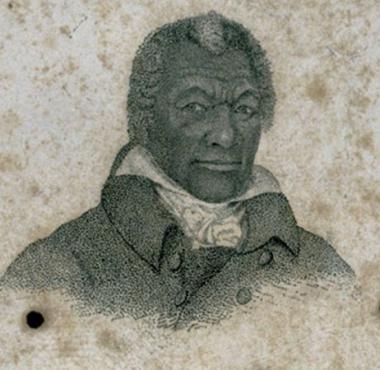
Enslaved in New Kent County
Armistead was born into slavery in Virginia, and the sources disagree on when. Biography.com gives about 1748, while the Daughters of the American Revolution say about 1760.23 They also differ on his owner's name, William or John Armistead. What they agree on is that he could read and write, which was unusual for an enslaved man in Virginia and later mattered a great deal.3
With his owner's consent he enlisted in 1781. He was not a soldier in the ordinary sense. Lafayette used him as a forager, a laborer and a courier before finding a better use for a man the British would not suspect.1
A Runaway in Arnold's Camp
Lafayette had him pose as a runaway. He walked into the camp of Benedict Arnold, who had gone over to the British in 1780 and was raiding Virginia. When Arnold's force left for New York, Armistead moved on to Lord Cornwallis at Portsmouth, where he worked as an orderly. He fed the British false information and carried real information back to Lafayette.4 Biography.com adds that he could move between the camps, which is the whole value of a double agent.2 Nothing in the surviving record says how he kept both sides convinced. A man in his position had no margin. If the British doubted him he was a spy facing the rope, and if the Americans doubted him he was a runaway who would be returned to an owner.
Lafayette later put his opinion on paper. His certificate of November 21, 1784, said that Armistead's "intelligences from the Enemy's Camp were Industriously Collected and More faithfully deliver'd."5 Lafayette also wrote that Armistead appeared to him entitled to every reward his situation could admit of. Note that last phrase. Lafayette could not free him by himself. Only Virginia could.5
Myth: Armistead's reports won Yorktown
Some popular accounts say his information stopped 10,000 British reinforcements and made the siege possible. Biography.com repeats that figure but cites no primary source for it.6 Historynet notes that the familiar scene in which Cornwallis visits Lafayette's tent after the surrender and finds his former servant there has no cited source either.7 The solid record is Lafayette's certificate. Armistead was useful and trusted, and the British surrender came on October 19, 1781.
Freedom Denied, Then Granted
When the war ended Armistead was still enslaved. Virginia had passed an act in 1783 that freed enslaved men who had served in the army in place of their owners. Armistead had served as a spy and laborer, and the law was read to cover soldiers.8 His first petition, in December 1784, failed. It left out the Lafayette letter written a month earlier, an omission Historynet calls "inexplicable."9
The second try worked. In 1786 a petition went to the Assembly, this time with Lafayette's certificate attached. The legislature passed a bill and Governor Edmund Randolph signed it in January 1787. The state paid William Armistead 250 pounds for the loss of his property.10 That detail deserves a pause. Virginia freed a man who had helped win the war by paying the man who owned him.
Once free, he took his general's name and was James Armistead Lafayette from then on.10
A second account of his service
The Daughters of the American Revolution give a somewhat different outline. They credit him with warning Lafayette and Washington of British plans to bring in reinforcements, which made a blockade possible, and they date the surrender to October 17, 1783, which cannot be right.11 Cornwallis surrendered on October 19, 1781, and 1783 is the year of the peace treaty. The same entry names his wife as Sylvia and a son, Thompson.11 The DAR page and Biography.com agree on the outline and disagree on the details, and neither cites the documents behind them.
The Long Years After
He farmed about forty acres in New Kent County, married, and raised a family. A tax book from 1787 lists Lafayette as owner of three enslaved people. Historynet cautions that this may be what it says, or may be a clerk's way of recording relatives, since records of the time sometimes labeled Black family members as slaves. The evidence does not settle it.12
By 1818 he was old and short of money. On December 28 he petitioned the General Assembly, and Virginia gave him $60 in immediate relief and a pension of $40 a year.13 The Marquis returned to the United States on a farewell tour in 1824, and the two men met again at Yorktown. Armistead died on August 9, 1830, four years before Lafayette.13
What the record can carry
Few documents from Armistead's own hand survive. Almost everything passes through Lafayette's certificate and the Assembly's records. The certificate is a strong document. Anything beyond it, including the number of British troops he supposedly kept from the field, belongs to tradition and not to evidence. The 1787 act also stays unusual. Virginia freed him for one named service. It did not revisit the thousands of other Virginians still held in bondage, and it did not pretend to.
Armistead's Life at a Glance
- About 1748 Born into slavery in New Kent County, Virginia (some sources say about 1760).
- 1781 Enlists with his owner's consent and serves Lafayette as courier and spy.
- October 19, 1781 Cornwallis surrenders at Yorktown.
- 1783 Virginia frees enslaved soldiers; Armistead is left out.
- November 21, 1784 Lafayette writes his certificate of service.
- January 1787 Governor Randolph signs the act freeing him; he takes the name Lafayette.
- 1818 Virginia grants him $60 and a $40 yearly pension.
- 1824 Meets Lafayette again at Yorktown.
- August 9, 1830 Dies in Virginia.
Learn more
- Historynet: The Slave Who Spied: the fullest account of the petitions, the certificate and the 1818 pension
- DAR Honoring Our Patriots: a short entry that puts the 1783 act at the center of his story
- Biography.com on James Armistead: a quick summary that also shows how legend creeps in
Notes
- Historynet, "The Slave Who Spied: James Armistead's Role in the Revolutionary War," on his request to serve with Lafayette in 1781 and Lafayette's use of him as forager, laborer and courier. Read it online. ↩
- Biography.com, "James Armistead," giving his birth as around 1748 in New Kent, Virginia, and describing how he could move between the British and American camps. Read it online. ↩
- Daughters of the American Revolution, Honoring Our Patriots, "James Armisted Lafayette," giving a birth around 1760, the owner as John Armistead, and noting that he learned to read and write. Read it online. ↩
- Historynet, same article, on his posing as a runaway in Arnold's camp and serving as an orderly in Cornwallis's camp at Portsmouth. Read it online. ↩
- Historynet, same article, quoting Lafayette's certificate of November 21, 1784, written at Richmond. Read it online. ↩
- Biography.com, "James Armistead," on the claim that his reports prevented 10,000 British reinforcements from reaching Yorktown; the page cites no primary sources. Read it online. ↩
- Historynet, same article, presenting the Cornwallis tent scene without a source; the surrender at Yorktown was October 19, 1781. Read it online. ↩
- Daughters of the American Revolution, Honoring Our Patriots, on the Act of 1783 and why a spy did not qualify. Read it online. ↩
- Historynet, same article, on the failed petition of December 1784. Read it online. ↩
- Historynet, same article, on the second petition of 1786, Governor Edmund Randolph's signature in January 1787, the 250 pound payment and the name change. Read it online. ↩
- Daughters of the American Revolution, same entry, on his warning of British reinforcements, the dating of the surrender, his wife Sylvia and his son Thompson. Read it online. ↩
- Historynet, same article, on his farm, the 1787 tax book entry and the caution about how such records labeled family members. Read it online. ↩
- Historynet, same article, on the December 28, 1818 petition, the $60 and $40 pension, the 1824 reunion at Yorktown and his death on August 9, 1830. Read it online. ↩
Terms in this lesson
- Double agent
- A spy who works for one side while pretending to serve the other. Armistead reported to Lafayette while he appeared to serve the British.
- Manumission
- The act of an owner, or in this case a legislature, freeing an enslaved person.
- Act of 1783
- A Virginia law that freed enslaved men who had served as soldiers in place of their owners. Armistead did not qualify because he had served as a spy and laborer.
- Petition
- A formal written request to a legislature. Armistead's owner and then Armistead himself used petitions to win his freedom and later his pension.
- Intelligence
- Information about an enemy's plans, numbers and movements.