Lesson 1 of 60 · about 9 minutes
Joseph Warren: The Doctor Who Sent Revere
You'll be able to
- Place Joseph Warren's life in order, from Roxbury in 1741 to Breed's Hill in 1775
- Explain what the Suffolk Resolves said and why the Continental Congress endorsed them
- Describe Warren's part in the night of April 18, 1775, using Revere's own account
- Tell the documented story of Warren's death and identification apart from the legends around it
About ten o'clock on the night of April 18, 1775, a messenger came to Paul Revere's house in Boston's North End. Dr. Joseph Warren wanted him, and fast. Revere wrote the scene down more than twenty years later: "Dr. Warren Sent in great haste for me, and beged that I would imediately Set off for Lexington, where Messrs. Hancock and Adams were, and acquaint them of the Movement."1 Revere's ride became a poem and then a national story. The man who sent him is far less known. Two months later Warren was dead on Breed's Hill, thirty-four years old, and the leaders of Massachusetts had lost the one man most of them trusted to hold the whole thing together.
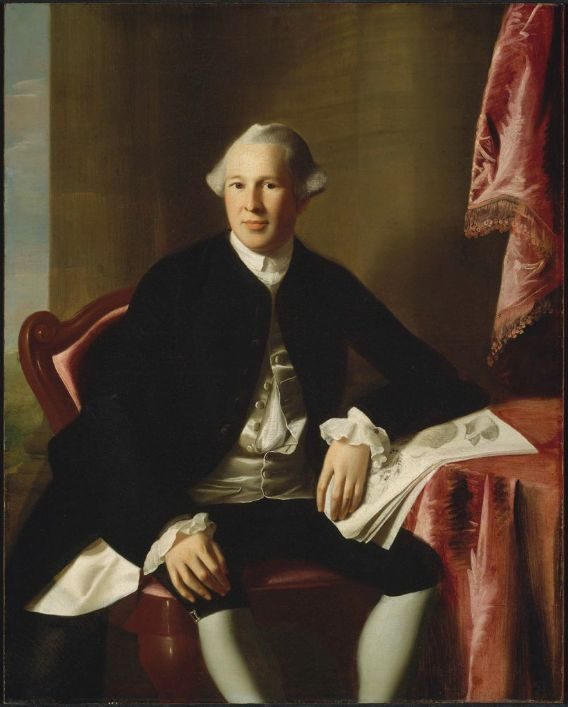
A Roxbury Boy Turned Boston Physician
Warren was born June 11, 1741, in Roxbury, a farm town just across the Neck from Boston. His father died in an accident on the farm when Joseph was a teenager. He graduated from Harvard in 1759, served a medical apprenticeship, married Elizabeth Hooten in 1764, and built one of the busiest practices in Boston.2 During the smallpox epidemic of 1764 he ran an inoculation hospital and treated poor patients without charge.3
His patients included the Adams family. John Quincy Adams remembered as an old man that Warren "had been our family physician and surgeon and had saved my forefinger from amputation under a very bad fracture."3 Elizabeth Warren died in 1773 and left him with four young children.
Orator and Organizer
The Stamp Act of 1765 pulled Warren into politics. He wrote for the Boston newspapers under pen names, sometimes signing himself "A True Patriot," and joined Samuel Adams and John Hancock in the town's patriot circle. After the Boston Massacre of March 5, 1770, the town held an oration on each anniversary, and Warren was chosen to give it twice, in 1772 and again in March 1775, when British troops occupied the town.3 His 1772 address closed with a prayer:
"May this Almighty Being graciously preside in all our councils! May He direct us to such measures as He himself shall approve and be pleased to bless! May we ever be a people favored of God! May our land be a land of liberty, the seat of virtue, the asylum of the oppressed, a name and a praise in the whole earth!"
Joseph Warren, Boston Massacre oration, March 5, 1772, as quoted by the National Park Service. 3
The Suffolk Resolves
In 1774 Parliament answered the Tea Party with the Coercive Acts. Boston harbor was closed, and the Massachusetts charter was rewritten so the Crown appointed the council and controlled town meetings. Delegates from the towns of Suffolk County met at Dedham on September 6 and adjourned to Daniel Vose's house in Milton, where on September 9 they voted unanimously for a set of resolves that Warren had drafted.4 The fourth resolve was blunt:
"That no obedience is due from this province to either or any part of the Acts above mentioned; but that they be rejected as the attempts of a wicked Administration to enslave America."
Suffolk Resolves, September 9, 1774, printed in the Supplement to the Massachusetts Gazette, September 15, 1774. 5
The resolves told tax collectors to hold their money, urged the towns to train their militia once a week, called for a boycott of British goods, and asked for a Provincial Congress. They also told people to stay away from "routs, riots, or licentious attacks upon the properties of any person whatsoever."4 Resistance was to be lawful and orderly. Revere carried the document to Philadelphia, and on September 17, 1774, the First Continental Congress endorsed it.4
Running the Resistance, Spring 1775
With Samuel Adams and John Hancock away much of the time, Warren became the working head of the Massachusetts cause. He chaired the Committee of Safety, which gathered powder, arms and supplies and could call out the militia, and in the spring of 1775 he became president of the Provincial Congress.3
On April 18 the signs that the regulars were about to march piled up all day. Warren first sent William Dawes over the Neck by land. When the troops gathered at the bottom of the Common, he sent for Revere, who would cross by boat to Charlestown.1 The next day Warren went out himself and fought along the road from Lexington and Concord. A bullet struck his powdered wig and missed his head.3
Myth: Warren's secret source was General Gage's wife
A popular story holds that Margaret Kemble Gage, the American-born wife of the British commander, tipped Warren off about the march. David Hackett Fischer treated her as a plausible candidate in Paul Revere's Ride (1994). The only contemporary evidence for any informant is a secondhand remark a Mr. Waters made to Jeremy Belknap in October 1775, and he named no one. J. L. Bell and Derek W. Beck have argued the Gage theory has no real support, and Beck thinks Warren simply saw the troops embarking with his own eyes.6 The honest answer is that nobody knows.
Bunker Hill
On June 14, 1775, the Provincial Congress made Warren a major general. On the night of June 16 the Americans dug a redoubt on Breed's Hill in Charlestown. Warren arrived on June 17 before he had received orders or a command, and offered his services as a private soldier.7 Friends urged him to lead from a safer place. He refused.3 Historians accept that he fought as a private in the redoubt. The exact words he is supposed to have said come from later tellings and should be read that way.
The Americans threw back two British assaults. On the third, with their powder gone, the British overran the redoubt. Warren stood up to the attackers and was shot in the face and killed instantly.3 The British won the hill at a terrible cost: the American Battlefield Trust counts about 1,054 British and 450 American casualties.2 British soldiers stripped Warren's body and buried it in a shallow pit with other Americans.
Identified by His Teeth
The British left Boston in March 1776. That spring Warren's brothers and friends, Revere among them, dug up the grave. Years earlier Revere, who did dental work alongside his silversmithing, had wired an ivory replacement for Warren's upper left canine and a premolar. He recognized his own work in the skull. The Army's National Museum of Health and Medicine calls it the first identification of an American service member by dental remains.8 Warren was reburied several times before his remains came to rest in the family plot at Forest Hills Cemetery in 1855.2
Martyr, Memory and Argument
Warren's death made him the first great martyr of the war. John Trumbull painted The Death of General Warren at the Battle of Bunker's Hill in 1786, and towns, counties and forts across the country took his name.3 His reputation also attracted legends: that he was a chief planner of the Tea Party, that he had a spy in Gage's household, and a set of stirring last words. Samuel A. Forman, his most careful modern biographer, and Christian Di Spigna, whose 2018 biography called him the founding martyr, both work to pull the record apart from the stories.9
What survives that test is plenty. Warren wrote the resolves that turned Boston's crisis into a continental cause. He kept the resistance orderly and armed. He sent the riders. And when the shooting started, he took a musket and stood in the line with farmers and tradesmen rather than command from a safe distance.
Warren's Life at a Glance
- 1741 Born June 11 in Roxbury, Massachusetts.
- 1759 Graduates from Harvard College.
- 1764 Marries Elizabeth Hooten; treats patients during the Boston smallpox epidemic.
- 1772 Delivers the Boston Massacre oration on March 5.
- 1773 Elizabeth Warren dies, leaving four children.
- 1774 Drafts the Suffolk Resolves, adopted September 9 and endorsed by Congress September 17.
- 1775 Gives a second Massacre oration in March; sends Dawes and Revere on April 18; elected major general June 14; killed at Bunker Hill June 17.
- 1776 Remains identified by Paul Revere from a dental bridge.
- 1855 Reburied in the family plot at Forest Hills Cemetery, Boston.
Learn more
- Paul Revere's letter to Jeremy Belknap: Revere's own account of the night Warren sent him, with his spelling intact.
- The Suffolk Resolves, full text: Samuel Forman's transcription with notes on Warren's authorship.
- NPS: Joseph Warren, The Sacrifice That Rallied a Nation: a short illustrated life from the Park Service.
- Dr. Joseph Warren's Informant: Derek Beck takes apart the secret-spy story piece by piece.
- Warren and Revere, the first dental identification: the Army medical museum's short case study.
- American Battlefield Trust: Bunker Hill: maps and casualty figures for the battle where Warren died.
Notes
- Paul Revere to Jeremy Belknap, undated (about 1798), Massachusetts Historical Society, transcription. Read it online. ↩
- American Battlefield Trust, "Joseph Warren," biography page, with Bunker Hill casualty estimates. Read it online. ↩
- National Park Service, "Joseph Warren: The Sacrifice That Rallied a Nation," including the 1772 oration prayer and John Quincy Adams's recollection. Read it online. ↩
- Samuel A. Forman, "Power But Not Justice, Vengeance but Not the Wisdom of Great Britain: Suffolk Resolves," drjosephwarren.com, September 2016, full text with commentary on Warren's drafting and the Congress's endorsement. Read it online. ↩
- "At a Meeting of the Delegates of every Town and District in the County of Suffolk," Supplement to the Massachusetts Gazette, September 15, 1774, page 1, Massachusetts Historical Society Collections Online. Read it online. ↩
- Derek W. Beck, "Dr. Joseph Warren's Informant," Journal of the American Revolution, April 3, 2014, discussing Fischer, J. L. Bell and the Waters interview recorded by Belknap on October 25, 1775. Read it online. ↩
- National Museum of Health and Medicine, "Case Study: Major General Joseph Warren and Paul Revere," in the exhibit Resolved, on his commission of June 14, 1775, and his offer to serve as a private. Read it online. ↩
- Same, on the ivory and gold-wire prosthesis replacing the upper left canine and first premolar, and Revere's identification of the remains in 1776. Read it online. ↩
- Samuel A. Forman, Dr. Joseph Warren: The Boston Tea Party, Bunker Hill, and the Birth of American Liberty (Gretna, La.: Pelican, 2012); Christian Di Spigna, Founding Martyr: The Life and Death of Dr. Joseph Warren, the American Revolution's Lost Hero (New York: Crown, 2018). ↩
Terms in this lesson
- Suffolk Resolves
- Resolutions adopted by delegates of the towns of Suffolk County, Massachusetts, on September 9, 1774, declaring the Coercive Acts void and urging a boycott, militia training and a Provincial Congress. Warren drafted them.
- Committee of Safety
- The executive body created by the Massachusetts Provincial Congress in 1774 to call out and supply the militia. Warren chaired it.
- Massachusetts Provincial Congress
- The assembly the towns of Massachusetts elected in 1774 after Parliament altered the colony's charter. It governed outside royal control until 1775.
- Coercive Acts
- The 1774 acts of Parliament, called the Intolerable Acts in the colonies, that closed Boston harbor and rewrote the Massachusetts charter after the Tea Party.
- Massacre oration
- The annual Boston address given on the anniversary of the March 5, 1770 shootings. Warren gave it in 1772 and 1775.
Sources
- National Park Service, Joseph Warren: The Sacrifice That Rallied a Nation checked 2026-10
- Paul Revere to Jeremy Belknap, c. 1798, transcription, Massachusetts Historical Society checked 2026-10
- The Suffolk Resolves, text and commentary, Samuel A. Forman checked 2026-10
- Supplement to the Massachusetts Gazette, September 15, 1774 (Suffolk Resolves), MHS Collections Online checked 2026-10
- American Battlefield Trust, Joseph Warren checked 2026-10
- Derek W. Beck, Dr. Joseph Warren's Informant, Journal of the American Revolution, 2014 checked 2026-10
- National Museum of Health and Medicine, Case Study: Major General Joseph Warren and Paul Revere checked 2026-10