Lesson 4 of 60 · about 8 minutes
Deborah Sampson: The Soldier Called Robert Shurtleff
You'll be able to
- Describe Deborah Sampson's service as the record supports it, including her wounds and her discharge
- Explain why her enlistment date is given as 1781 in some sources and 1782 in others
- Follow her fight for back pay and a federal pension from 1792 to 1837
- Separate what she told audiences after the war from what documents confirm
On May 23, 1782, a tall young farm worker from Massachusetts stepped up to a recruiting officer of the Fourth Massachusetts Regiment and signed on as Robert Shurtleff.1 The recruit was Deborah Sampson, twenty-one years old and a woman. She would serve for seventeen months, take two wounds, hide one of them from the surgeons, and spend much of the rest of her life proving she had done it.
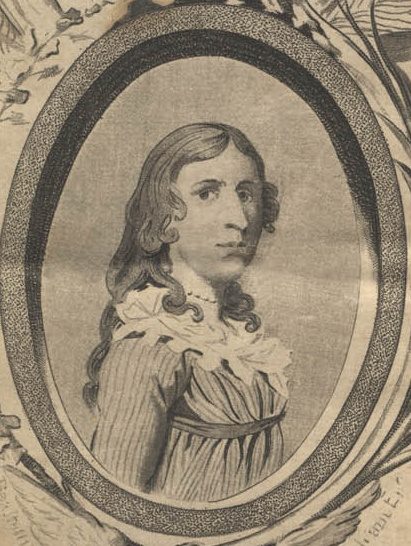
A Plympton Girl
Sampson was born December 17, 1760, in Plympton, Massachusetts.2 The National Archives notes that she descended from Miles Standish on her father's side and William Bradford on her mother's.3 Beyond her own later statements, little survives to explain what drove her to enlist, and the best-known accounts of her motives come from lectures she gave decades afterward.2
Enlisting, and the Date Problem
Sources do not agree on when she signed up. Britannica gives 1782, and Military.com gives the exact day, May 23.4 Her own sworn statement of 1818, held at the National Archives, says April 1781 and names Captain George Webb's company.5 The difference matters. A start in 1781 would put her near the surrender of Cornwallis in October of that year, and her statement does say she was at the capture of Cornwallis.5 A start in 1782 would not. The seventeen months between May 1782 and her discharge in October 1783 fit the later date, and both Britannica and Military.com follow it.6 The 1818 statement came thirty-seven years after the events, from a woman in need, and memory had thirty-seven years to bend.
Wounds at Tarrytown
The record is clearer on what happened to her in the field. Near Tarrytown, New York, a sword cut her forehead and a musket ball struck her thigh. Military.com reports that she took one ball out herself and that fragments stayed in her leg for life.7 The detail is telling. A soldier who goes to a surgeon gets undressed. She did not go.
It did not last. Britannica says a fever exposed her before she was discharged.8 She received her honorable discharge at West Point on October 25, 1783.6 The written discharge was later lost, and the National Archives says her service record was destroyed when the British burned Washington in 1814.9
Marriage, the Lecture Stage and Paul Revere
She married Benjamin Gannett, a Massachusetts farmer, in 1784 or 1785. In 1802 she began lecturing about her service, and Britannica calls her perhaps the first woman to lecture professionally in the United States.10
The money was another matter. In 1792 she petitioned the Massachusetts legislature for withheld pay, and the state awarded her 34 pounds plus interest. That was back pay and not a pension.11 In 1804 Paul Revere visited her farm in Sharon and wrote on her behalf to Congressman William Eustis, and in 1805 she was placed on the federal pension rolls for disability.12 Revere's letter, as the Archives summarizes it, said her poor health came from the exposure she suffered while doing a soldier's duty.13
By 1818 she was applying under the new federal pension law for Revolutionary veterans. Her sworn statement of September 14 describes a woman with little left.
"such reduced circumstances, as to require the aid of her country"
Deborah Sampson Gannett, sworn statement in support of a federal pension, September 14, 1818, National Archives. 13
She died on April 29, 1827, in Sharon.14
Two claims that need care
The National Archives page says the Massachusetts General Court granted her a pension in 1792 in recognition of an extraordinary instance of female heroism. Military.com describes the 1792 action as an award of back pay, 34 pounds plus interest, and says it was not a pension.311 The Archives page also says she was one of only two women to receive a federal Revolutionary War pension, the other being Margaret Corbin.3 Corbin's pension came from the Continental Congress in 1779, not from the later federal government, so that claim holds only if "federal" is read loosely.
Congress Catches Up
Her husband carried the fight on. A congressional committee in 1837 concluded that her record was unmatched in the history of the Revolution, and Congress approved a payment to Benjamin Gannett. He died before he received it.15 Britannica dates a full military pension to her heirs to 1838, a year after the committee, so the two accounts differ on the final details.14
What Documents Show and What Legend Added
Colorful retellings of Sampson's service have long outrun the paper. What stands on documents is the enlistment under a man's name, the service in the Fourth Massachusetts, the discharge at West Point in 1783, and the payments that followed. That is already an unusual story. It does not need decoration, and when it gets some, the dates are usually where it shows.
Sampson's Life at a Glance
- 1760 Born December 17 in Plympton, Massachusetts.
- 1781 or 1782 Enlists as Robert Shurtleff (her 1818 statement says April 1781; later accounts say May 23, 1782).
- 1783 Discharged honorably at West Point on October 25.
- 1784 or 1785 Marries Benjamin Gannett.
- 1792 Massachusetts pays her back wages of 34 pounds plus interest.
- 1802 Begins lecturing on her service.
- 1805 Added to the federal pension rolls after Paul Revere writes to Congress.
- 1818 Gives sworn testimony for a federal pension, September 14.
- 1827 Dies April 29 in Sharon, Massachusetts.
- 1837 A congressional committee praises her record; payment to her husband is approved.
Learn more
- DocsTeach: Testimony of Deborah Sampson Gannett: her own 1818 words, with the Archives' notes
- Military.com on Sampson: a careful modern account of her wounds and pension fight
- Britannica: Deborah Sampson: a short summary with her lecture career
Notes
- Military.com, "She Disguised Herself as a Man and Was Wounded in the Revolutionary War, Then Fought for Decades for Her Veteran Benefits," October 22, 2025, on the enlistment under the name Robert Shurtleff at the Fourth Massachusetts recruiting station. Read it online. ↩
- Britannica, "Deborah Sampson," on her birth on December 17, 1760, in Plympton, Massachusetts. Read it online. ↩
- National Archives, DocsTeach, "Testimony of Deborah Sampson Gannett," on her descent from Miles Standish and William Bradford. Read it online. ↩
- Britannica, same article, giving 1782 as the year of enlistment; Military.com, same article, giving May 23, 1782. Read it online. ↩
- National Archives, DocsTeach, same document, on her statement that she enlisted in April 1781 in Captain George Webb's company and was at the capture of Cornwallis. Read it online. ↩
- Military.com, same article, on 17 months of service ending with a discharge at West Point on October 25, 1783. Read it online. ↩
- Military.com, same article, on the sword wound to the forehead and the musket ball in the thigh near Tarrytown. Read it online. ↩
- Britannica, same article, on the fever that revealed her identity before discharge. Read it online. ↩
- National Archives, DocsTeach, same document, on the lost discharge and the service record destroyed when the British burned Washington in 1814. Read it online. ↩
- Britannica, same article, on her marriage to Benjamin Gannett in 1784 or 1785 and her lecturing from 1802. Read it online. ↩
- Military.com, same article, on the 1792 petition to Massachusetts and the award of 34 pounds plus interest. Read it online. ↩
- Military.com, same article, on Paul Revere's 1804 visit and letter to William Eustis, and her placement on the pension rolls in 1805. Read it online. ↩
- National Archives, DocsTeach, same document, on Revere's letter and her sworn statement of September 14, 1818. Read it online. ↩
- Britannica, same article, on her death on April 29, 1827, and the 1838 pension to her heirs. Read it online. ↩
- Military.com, same article, on the 1837 congressional committee and the payment approved for Benjamin Gannett. Read it online. ↩
Terms in this lesson
- Continental Army
- The national army raised by the Continental Congress in 1775, as distinct from state militias.
- Light infantry
- Fast-moving infantry used for scouting, raids and skirmishes. Sampson served in a light infantry company.
- Invalid pension
- A pension paid to a veteran disabled by service. Sampson received one in 1805.
- Back pay
- Wages owed to a soldier but never paid. Sampson sought it from Massachusetts in 1792.
- Sworn testimony
- A statement made under oath. Sampson gave hers in 1818 to support a federal pension.
Sources
- National Archives DocsTeach, Testimony of Deborah Sampson Gannett checked 2026-10
- Britannica, Deborah Sampson checked 2026-10
- Military.com, She Disguised Herself as a Man and Was Wounded in the Revolutionary War checked 2026-10