Lesson 14 of 60 · about 9 minutes
John Laurens: The Soldier Who Asked Congress to Free Slaves
You'll be able to
- Trace Laurens from Charleston and London to Washington's staff and Yorktown
- Explain his 1779 proposal to arm enslaved men and why South Carolina would not accept it
- Note where sources differ on how and when the proposal was rejected
- Describe how he died and how Washington and Hamilton wrote of him
On August 27, 1782, John Laurens, twenty-seven, led about fifty men against a British detachment of roughly 150 along the Combahee River in South Carolina. He was ill. He could have waited for reinforcements that were close by. He charged instead and was shot from his saddle.1 It was a skirmish in a war that was already ending. General Greene later called it a "paltry little skirmish."2
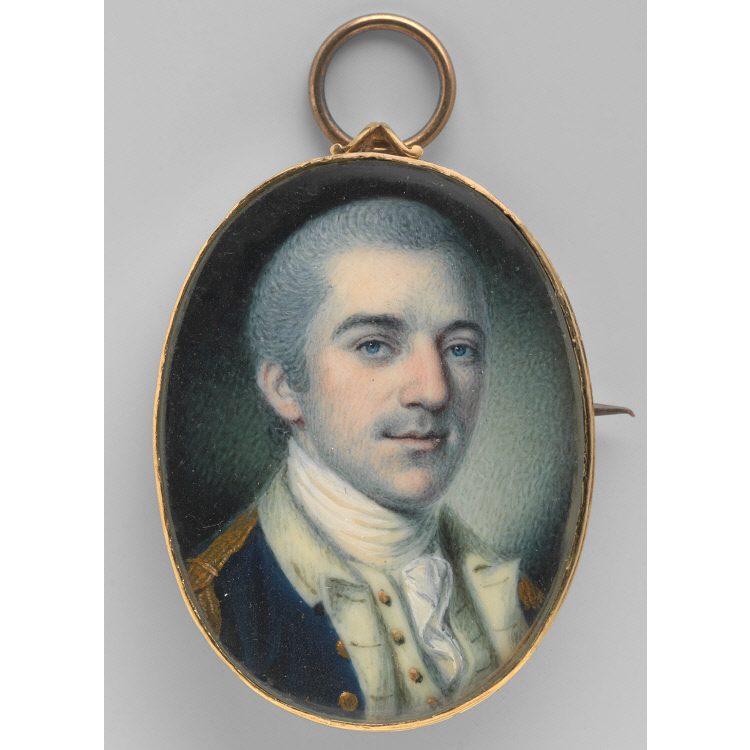
Charleston, London and Washington's Staff
Laurens was born in Charleston on October 28, 1754, to Henry Laurens, a wealthy planter who enslaved hundreds of people.3 He was educated in Europe and absorbed ideas about equality that turned him against slavery. His father moved him to London in 1771, he studied in Geneva from 1772, and he began legal studies at the Middle Temple in November 1774. In 1776, in London, he married Martha Manning, and their daughter Frances Eleanor was born around January 1777.4 He was studying law in London when the war began. He sailed for America in 1777 over his father's objections and joined Washington's staff as a volunteer aide that August. He became a lieutenant colonel that October.3
He fought at Brandywine, Germantown, where he was wounded in the shoulder, and Monmouth, and he formed a close friendship with Alexander Hamilton at Valley Forge.35 In December 1778 he fought a pistol duel with Major General Charles Lee, who had insulted Washington. Lee was grazed, and the seconds ended it.6
Lafayette said of him after Brandywine, in the words the Battlefield Trust attributes to him, "It was not his fault that he was not killed or wounded."5 He gained a reputation for reckless bravery.
The Battalion Proposal
By early 1779 Laurens had a plan. He wanted to form battalions of enslaved men, free them in return for service, and use them against the British in the South. He argued that Southern patriots could not credibly claim to fight for liberty while holding slaves, and he wrote that they "cannot contend with a good Grace, for Liberty, until we shall have enfranchised our Slaves."5
Congress took the idea up. In March 1779 it recommended that South Carolina and Georgia raise 3,000 enslaved men, and commissioned Laurens a lieutenant colonel for the purpose.5 The Southern legislatures were not persuaded. The Park Service says the South Carolina legislature rejected the proposal in 1779 and again at Jacksonborough after Yorktown.7 Wikipedia says he reintroduced it in 1779, 1780 and 1782 and was rejected each time.8 The Battlefield Trust does not describe a formal state rejection, only that recruitment fell short.5 The sources agree on the result: the regiment was never raised.
Myth: Congress ordered the South to arm slaves
Congress could ask but not compel. The Park Service says it recommended that South Carolina and Georgia raise the men.9 The Battlefield Trust says it approved Laurens's petition and allowed the two states to recruit.5 The decision belonged to the state legislatures, and they said no. Wikipedia adds that in early 1778 Laurens advised his father to use forty enslaved people he stood to inherit in a brigade, which shows he was willing to risk his own property.8
When Charleston fell in May 1780, Laurens was taken prisoner and paroled to Pennsylvania.4
France and Yorktown
In 1781 Laurens went to France to seek money and supplies. After the foreign minister rebuffed him, he appealed to King Louis XVI and secured a large loan.9 Wikipedia counts 2.5 million livres in silver and says he traveled with Thomas Paine.8 He returned in August 1781, in time for the siege of Yorktown.
On the night of October 14, 1781, he led a light infantry battalion in the storming of Redoubt No. 10, in an assault led by Hamilton.9 Washington then named him the American commissioner to negotiate the surrender terms, and he was present when the British marched out.5 After Yorktown, Hamilton urged him to leave the army and join Congress to help build the new nation.10 Laurens went south instead.
Combahee River
Laurens had moved to Greene's army in the Carolinas, where he joined Mordecai Gist's light infantry brigade, assigned to stop British foraging raids near Charleston. Friends and family had urged him to stop fighting.11 At the Combahee, Loyalist spies likely warned the British of the dawn attack. They opened fire at once. Of Laurens's men, two were killed, including Laurens, 19 were wounded and three were missing.11 He was first buried on a plantation nearby. His family later reburied him at Mepkin, where the gravestone reads "Dulce et Decorum Est Pro Patria Mori."11
Washington wrote that Laurens "had not a fault that I ever could discover."10 Hamilton wrote, "His career of virtue is at an end."10
Laurens's Life at a Glance
- 1754 Born October 28 in Charleston.
- 1777 Returns from Europe; joins Washington's staff; lieutenant colonel in October.
- December 23, 1778 Duels General Charles Lee.
- March 1779 Congress backs his plan to raise a battalion of enslaved men.
- May 1780 Captured at the fall of Charleston and paroled.
- 1781 Mission to France; storms Redoubt No. 10 on October 14; helps draft the surrender terms.
- August 27, 1782 Killed at the Combahee River.
Learn more
- NPS Valley Forge: Lt Colonel John Laurens: a short life with Washington's and Hamilton's tributes
- American Battlefield Trust: John Laurens: the battalion proposal in his own words
- South Carolina Historical Society: The Death of John Laurens: the Combahee ambush
- Wikipedia: John Laurens: a long account with his letters
Notes
- South Carolina Historical Society, "August, 1782: The Death of John Laurens during the Battle of the Combahee River," on the raid, his illness and the choice to attack with 50 men against about 150. Read it online. ↩
- Wikipedia, "John Laurens," on the ambush at the Combahee and Greene's description of it as "a paltry little skirmish." Read it online. ↩
- National Park Service, Valley Forge National Historical Park, "Lt Colonel John Laurens," on his birth, his father Henry Laurens, his education in Europe, his return in 1777 and his friendship with Hamilton. Read it online. ↩
- Wikipedia, same article, on his schooling in London and Geneva, the Middle Temple, his marriage to Martha Manning in 1776, his daughter's birth, and his capture and parole in 1780. Read it online. ↩
- American Battlefield Trust, "John Laurens," on Germantown and Monmouth, his 1779 petition to Congress, the quoted phrase, Congress allowing the two states to recruit, the shortfall in recruiting and his role as surrender commissioner. Read it online. ↩
- National Park Service, Valley Forge, same page, on the duel with General Charles Lee in December 1778. Read it online. ↩
- National Park Service, "John Laurens," on the rejection of the proposal in 1779 and again at Jacksonborough after Yorktown. Read it online. ↩
- Wikipedia, same article, on the reintroductions of 1779, 1780 and 1782, the forty enslaved people he advised his father to use, and the 2.5 million livres from France. Read it online. ↩
- National Park Service, Valley Forge, same page, on Congress recommending that South Carolina and Georgia raise 3,000 enslaved men, the appeal to Louis XVI and the storming of Redoubt No. 10. Read it online. ↩
- National Park Service, Valley Forge, same page, quoting Washington and Hamilton on Laurens. Read it online. ↩
- South Carolina Historical Society, same article, on Gist's brigade, the Loyalist warning, the casualty count, the first burial and the gravestone at Mepkin. Read it online. ↩
Terms in this lesson
- Aide-de-camp
- A personal staff officer who carries orders, writes letters and assists a general. Laurens served Washington as one.
- Black battalion
- Laurens's proposed unit of enslaved men who would be freed in return for service.
- Redoubt No. 10
- A British earthwork at Yorktown stormed on the night of October 14, 1781, by Hamilton's and Laurens's light infantry.
- Combahee River
- A river in South Carolina where Laurens was killed on August 27, 1782.
- Emancipation
- Freeing enslaved people. Laurens's plan tied it to military service.
Sources
- National Park Service, Valley Forge: Lt Colonel John Laurens checked 2026-10
- American Battlefield Trust, John Laurens checked 2026-10
- National Park Service, John Laurens checked 2026-10
- South Carolina Historical Society, The Death of John Laurens checked 2026-10
- Wikipedia, John Laurens checked 2026-10