Lesson 55 of 60 · about 8 minutes
Charles Thomson: The Secretary Who Kept Congress's Books
You'll be able to
- Trace Thomson from his Irish birth and Philadelphia teaching to the secretary's desk in 1774
- Explain what a secretary of Congress actually did, including the secret journals
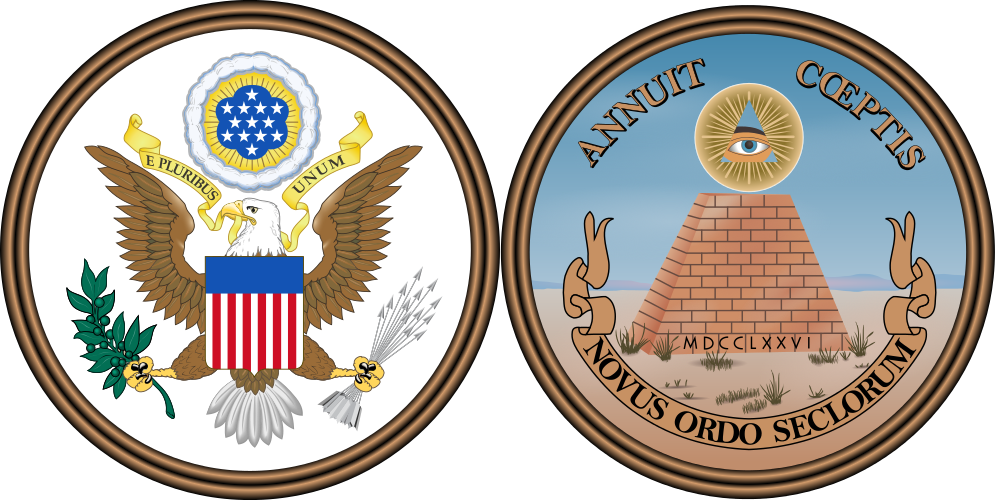
- Describe his part in the Great Seal and why sources credit him differently
- Note where sources disagree on his birth year and age
Charles Thomson left New York on April 7, 1789, and the roads fought him the whole way. Storms, bad ground and big rivers slowed him, but he reached Mount Vernon around noon on April 14. Washington was home.1 Thomson had a message from the Senate, and his address included the words: "I have it therefore in command to accompany you to New York."1 Washington answered the same day that he could not "find myself at liberty to delay my Journey."2
The man carrying the news had been the paper spine of the Revolution for fifteen years.
An Ulster Orphan in Philadelphia
Thomson was born in Ulster, but the sources do not agree on the details. The Penn archives, Carpenters' Hall and the DAR give 1729, with the DAR adding November 29. Penn names Maghera parish in County Londonderry. Britannica gives 1730 and Magherafelt.345
His mother died in 1739. His father took the boys to the colonies and died at sea, and the sons were landed at New Castle, Delaware, and split up. Carpenters' Hall says the captain kept the family's money.34 Young Charles ran toward Philadelphia when he learned he was to be bound as an apprentice, and a woman who heard about it helped pay for his schooling. Penn dates his entry to Francis Alison's academy in Chester County to about 1743.34
He taught Latin and Greek at the Academy of Philadelphia, forerunner of the University of Pennsylvania. Penn says he was a tutor from 1750 (its other page says 1751) until he resigned in March 1755, and that the trustees praised how he had "discharged the duties of his place with capacity, faithfulness and diligence."3 Then came a Quaker school and a dry goods shop, which left him in debt. A linen factory, a distillery and silkworms did no better. An interest in a New Jersey iron furnace did pay off in the war.4
The DAR says the Delaware people adopted him and gave him a name meaning roughly "man of truth," and that he spoke for them at the 1757 Treaty of Easton. Wikipedia gives the name as "The-man-who-speaks-the-truth" but no year.67 Penn confirms only that he served as secretary to the Delaware at the Easton meetings of 1757 and 1758. Neither Penn nor Carpenters' Hall mentions an adoption, so treat that detail as secondhand.3
The Secretary's Desk
He married Hannah Harrison on September 1, 1774, four days before the First Continental Congress met. On its first day, September 5, Congress chose him secretary.4 He held the job through the Second Continental Congress and the Confederation Congress, about fifteen years.3
What did a secretary do? He kept the journals. He decided, with Congress, what went into the published record. He certified the acts of Congress, and he kept secret journals for business that was left out of print.67 When the first printed Declaration of Independence went out, it carried only two names, John Hancock's and Thomson's.6 The Goddard Broadside later added the rest.
Myth: Thomson designed the Great Seal
Congress named three committees over six years, in 1776, 1780 and 1782. The State Department says the third left most of the work to William Barton, a Philadelphia lawyer interested in heraldry, and that Congress gave all the collected designs to Thomson on June 13, 1782. He picked the best parts, replaced the crested European eagle with the American bald eagle and wrote the description Congress adopted on June 20.8 The State Department says he took E Pluribus Unum from the first committee's report and added Annuit Coeptis and Novus Ordo Seclorum on the reverse. It says Barton then simplified the shield to thirteen vertical stripes and specified thirteen arrows, and that Thomson made a few changes and wrote the final description on June 19 and 20.8
The description is worth reading. Of the stars he wrote, "The Constellation denotes a new State taking its place and rank among other sovereign powers."8
Carrying the News to Mount Vernon
The Constitution put a President in place, and Congress needed someone to find him. The Founders Online editors note that the Senate sent Thomson to Mount Vernon with the election result.1 On the road back he escorted Washington to New York. Thomson's last official act as secretary, Carpenters' Hall says, was this errand.4
On July 23, 1789, he wrote to Washington that he wanted to return to private life. He handed over the books, records and papers of Congress and the Great Seal, and he recommended Roger Alden and John Fisher for jobs.9
Harriton, a Burned Memoir and a Bible
Thomson and Hannah moved to her farm, Harriton, near Bryn Mawr. Carpenters' Hall says he burned a memoir of the Revolution about 1,000 pages long. That is a loss to every historian who would have wanted it. He spent his remaining years on a translation of the Greek Old Testament, the Septuagint. The Bridwell Library says he worked on it for twenty years and that it was published in 1808 by Jane Aitken of Philadelphia. Carpenters' Hall says about 1,000 copies were printed and few sold.410
He died on August 16, 1824. The DAR and Wikipedia say he was 94. Carpenters' Hall says 95, which does not fit a November 1729 birth.647
Thomson's Life at a Glance
- 1729 Born in Ulster (Britannica says 1730).
- 1739 Mother dies; father dies at sea on the voyage to the colonies.
- 1750 to 1755 Tutor at the Academy of Philadelphia.
- 1757 DAR places him at the Treaty of Easton speaking for the Delaware.
- September 5, 1774 Chosen secretary of the First Continental Congress.
- June 20, 1782 Congress adopts his description of the Great Seal.
- April 14, 1789 Tells Washington at Mount Vernon that he is President.
- July 23, 1789 Resigns and hands over Congress's papers and seal.
- August 16, 1824 Dies at Harriton.
Learn more
- Carpenters' Hall: My Zeal for Liberty: a readable life of Thomson from the First Congress's own meeting place
- State Department: The Great Seal of the United States: the three committees and Thomson's report
- Founders Online: Address by Charles Thomson, 14 April 1789: the editors' note on his ride to Mount Vernon
- Penn Archives: Charles Thomson: his years as the first tutor at the Academy of Philadelphia
Notes
- Founders Online, "Address by Charles Thomson, 14 April 1789," Mount Vernon, with the editors' note on Thomson's departure from New York on April 7, the hard journey and arrival around noon on April 14. Read it online. ↩
- Founders Online, Washington's reply to Thomson, 14 April 1789. Read it online. ↩
- University of Pennsylvania Archives, "Charles Thomson," on his birth in Maghera parish in 1729, the family's voyage, the academy, the tutorship of 1750 or 1751 to 1755, the trustees' tribute, his secretaryship to the Delaware at Easton and his service as secretary. Read it online. ↩
- Carpenters' Hall, "My Zeal for Liberty," on his birth in 1729, the voyage, schooling, business failures, marriage, election as secretary, the Washington errand, the burned memoir, the Bible and his age at death. Read it online. ↩
- Encyclopaedia Britannica, "Charles Thomson," giving his dates as 1730 to 1824 and his birthplace as Magherafelt. Read it online. ↩
- Daughters of the American Revolution, "Charles Thomson," DAR Magazine, November-December 2015, on his birth date, the Delaware adoption, Easton, the journals, the first printing of the Declaration, resignation and death. Read it online. ↩
- Wikipedia, "Charles Thomson," on the Delaware name, the journals and his death at age 94. Read it online. ↩
- U.S. Department of State, The Great Seal of the United States, on the three committees, Barton, the mottoes, Thomson's June 13, 1782 assignment, the June 20 adoption and the quoted passage. Read it online. ↩
- Founders Online, Charles Thomson to George Washington, 23 July 1789, with the editors' note that he notified Washington of his election in April 1789. Read it online. ↩
- Bridwell Library, Southern Methodist University, "The First English Bible Translation by an American," on Thomson's twenty years of work and the 1808 publication by Jane Aitken. Read it online. ↩
Terms in this lesson
- Secretary of Congress
- The officer who kept the journals, certified the acts and held the papers and seal of the Continental Congress. Thomson held the post from 1774 to 1789.
- Secret journals
- Records of foreign and domestic business that Congress kept out of the published journals.
- Attest
- To certify that a document is genuine. Thomson's name appeared with Hancock's on the first printed Declaration.
- Blazon
- The formal written description of a coat of arms. Congress adopted Thomson's blazon of the Great Seal on June 20, 1782.
- Septuagint
- The ancient Greek translation of the Hebrew Bible. Thomson translated it into English in retirement.
Sources
- Founders Online, Address by Charles Thomson, 14 April 1789 checked 2026-10
- Founders Online, Washington's reply to Thomson, 14 April 1789 checked 2026-10
- Founders Online, Thomson to Washington, 23 July 1789 checked 2026-10
- Carpenters' Hall, My Zeal for Liberty checked 2026-10
- University of Pennsylvania Archives, Charles Thomson checked 2026-10
- Department of State, The Great Seal of the United States checked 2026-10
- Encyclopaedia Britannica, Charles Thomson checked 2026-10
- Bridwell Library, The First English Bible Translation by an American checked 2026-10
- DAR Magazine, Charles Thomson checked 2026-10