Lesson 7 of 60 · about 9 minutes
Nathanael Greene: The General Who Lost Battles and Won the South
You'll be able to
- Place Greene's career from Rhode Island ironworks to the Southern Department in order
- Explain how he used Daniel Morgan and a strategy of retreat and return to wear down Cornwallis
- Name the battles of 1781 and what each cost the British even when Greene lost
- Describe how his own money and his debts shaped the end of his life
When Nathanael Greene rode into Charlotte, North Carolina, in December 1780, the Southern Department of the Continental Army was a wreck. Savannah and Charleston had fallen. Horatio Gates had been beaten at Camden that August. Washington picked Greene to take over what was left.1 Within a year the British would be pushed back to the coast.
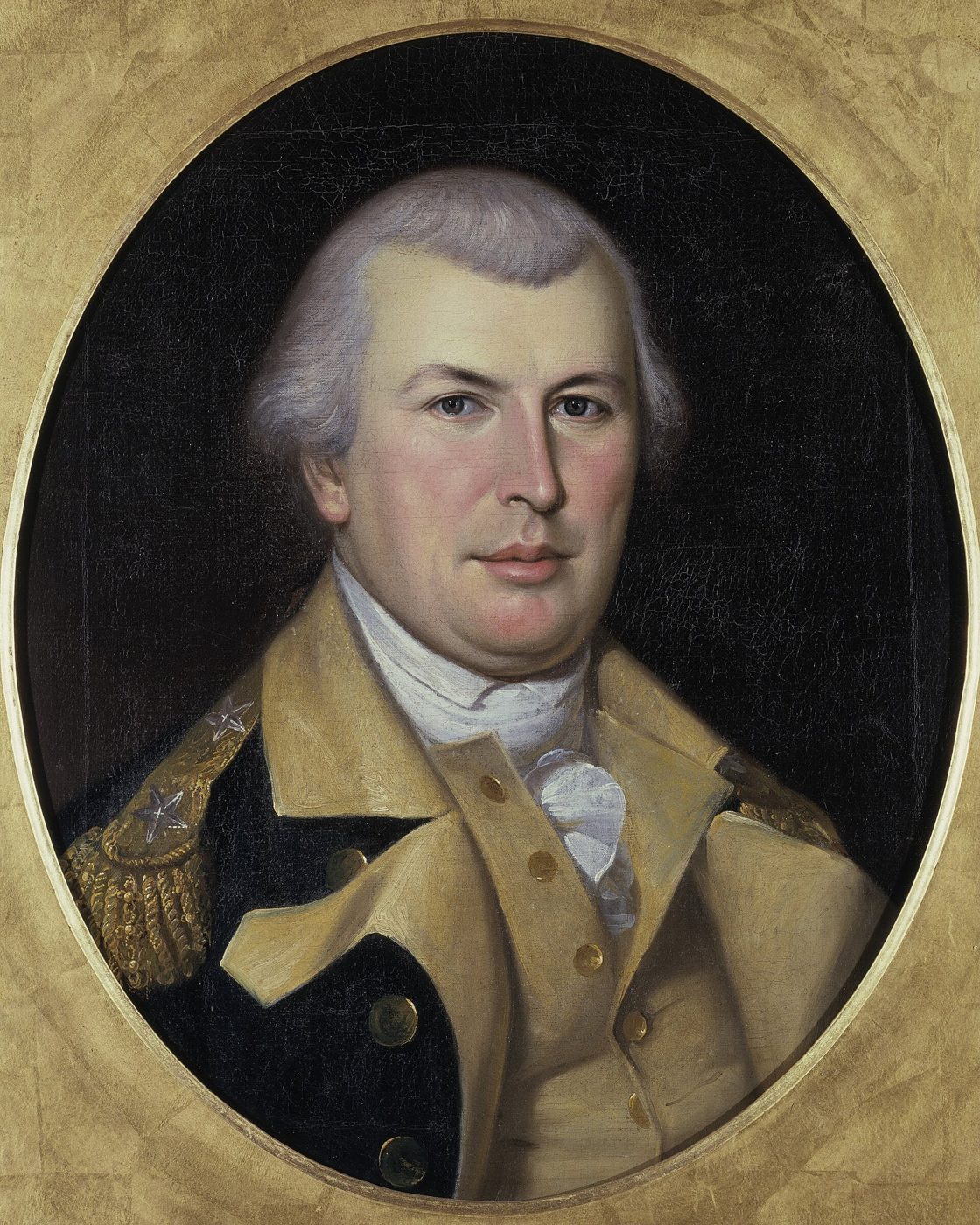
Potowomut to Boston
Greene was born at Potowomut, Rhode Island, to a Quaker family that ran an iron forge.2 Sources do not agree on the day. The South Carolina Encyclopedia says July 27, 1742. The National Park Service says August 7. The American Battlefield Trust says only August.324 His interest in education went against Quaker norms, and in 1773 his local meeting dismissed him after he was caught in a "house of public resort."4 The Park Service says he joined the Kentish Guards as a private in 1775, while the Battlefield Trust says a limp kept him out of the unit, so the sources conflict on that as well.2
After Lexington and Concord, the Rhode Island Assembly made him a brigadier general of its Army of Observation, which marched to Boston.5 He lost Forts Washington and Lee in the New York campaign of 1776, and then led a column at Trenton and Princeton.5
Mount Vernon says he was the youngest of eight brigadier generals when Congress took over the New England army in 1775, and that his one major blunder in 1776 was reinforcing Fort Washington when Washington wanted it evacuated. He later wrote that he was "mad, vext, sick and sorry" over the loss.6 He won Washington back at Trenton, Princeton and Monmouth.6
The Quartermaster
After the hard winter at Valley Forge he took over the army's quartermaster department, a job nobody wanted, and he reformed it.7 The Battlefield Trust dates the appointment to 1777 and Mount Vernon to 1778, another small conflict between sources.48 Greene saw the job for what it was. He wrote, "No body ever heard of a quarter Master in History as such or in relateing any brilliant Action."8 He stayed until July 1780, when Congress would not give him a vote of confidence and he resigned.7 That experience taught him how an army eats. It shaped how he fought in the Carolinas.
The South Campaign of 1781
Greene divided his small army, sending Daniel Morgan west. On January 17, 1781, Morgan won at Cowpens.9 Greene then led Cornwallis on a long chase across North Carolina. On March 15, 1781, he fought at Guilford Courthouse and lost the field, but the fight badly damaged Cornwallis's army, and the British turned toward Wilmington.9
The pattern repeated. At Hobkirk's Hill on April 25 the Americans were beaten, but the British had to abandon Camden.10 Greene besieged Ninety Six. Lord Rawdon came to relieve it, patriot partisans took Augusta and other interior posts, and Rawdon, unable to bring Greene to battle, abandoned Ninety Six and went back to the coast.10 On September 8, 1781, at Eutaw Springs, the British under Alexander Stewart held the field, and Greene withdrew with his army intact.10 By the end of the year the British had fallen back to Charleston. They evacuated it in December 1782.11
"As army commander, Greene never won a battle but did win the war."
South Carolina Encyclopedia, entry on Nathanael Greene. 12
That is a remark about a general who lost the ground and kept the war. The encyclopedia's phrase is a summary and not Greene's own words, but it is fair. He did not have the numbers to win in the field. He used the countryside, partisans like Francis Marion, who joined Greene's operations in 1781 and fought at Eutaw Springs,13 and the distance Cornwallis had to cover.
Money and the End
The Park Service reports that in the South Greene used the supply methods he had learned under Washington and personally guaranteed payment to his contractors.2 When the war ended in 1783 he had sold most of his own property to cover those debts.14 The people of Georgia gave him, his wife Catherine Littlefield Greene and their five children a plantation, Mulberry Grove, northwest of Savannah.14
He died there on June 19, 1786, possibly of complications from sunstroke.14 He was buried in Savannah, and his remains were later moved to Johnson Square.12
What historians weigh
Greene's reputation has risen and fallen. Mount Vernon calls the series of Cowpens, Guilford Courthouse, Hobkirk's Hill and Eutaw Springs a string of Pyrrhic victories for the British, and says Washington trusted Greene more than anyone else in his military family, calling him "a Gentleman in whom I place the most intire confidence."15 The Park Service says his three years of leadership in the South helped break the British war effort. Others point to the string of lost battles. The record supports a narrower claim. Between December 1780 and the evacuation of Charleston in December 1782, an American army that had been destroyed in the South pushed the British back to the coast and then out.11
Greene's Life at a Glance
- 1742 Born at Potowomut, Rhode Island (July 27 by one source, August 7 by another).
- 1773 Dismissed by his Quaker meeting.
- 1775 Made a brigadier general of the Rhode Island Army of Observation.
- 1776 Loses Forts Washington and Lee; leads a column at Trenton and Princeton.
- 1778 Takes over the army's quartermaster department after Valley Forge.
- July 1780 Resigns as Quartermaster General.
- December 1780 Takes command of the Southern Department.
- March 15, 1781 Loses the field at Guilford Courthouse.
- September 8, 1781 Eutaw Springs; British hold the field and Greene withdraws intact.
- December 1782 British evacuate Charleston.
- June 19, 1786 Dies at Mulberry Grove, Georgia.
Learn more
- American Battlefield Trust: Nathanael Greene: a short military biography with maps
- National Park Service: Nathanael Greene: Greene as quartermaster and his personal debts
- South Carolina Encyclopedia: Nathanael Greene: the 1781 battles in order
Notes
- American Battlefield Trust, "Nathanael Greene," on the fall of Savannah and Charleston and the defeat at Camden, and Washington's choice of Greene for the Southern command in October 1780. Read it online. ↩
- National Park Service, "Nathanael Greene," on his birth on August 7, 1742, the family iron forge, his joining the Kentish Guards as a private in 1775, and his death at Mulberry Grove on June 19, 1786, possibly from sunstroke. Read it online. ↩
- South Carolina Encyclopedia, "Nathanael Greene," on his birth on July 27, 1742. Read it online. ↩
- American Battlefield Trust, same article, on his birth in August 1742, his dismissal by his local meeting in 1773 for being caught in a "house of public resort," and the limp that kept him out of the Kentish Guards. Read it online. ↩
- American Battlefield Trust, same article, on the Army of Observation at Boston, the loss of Forts Washington and Lee, and the column at Trenton and Princeton. Read it online. ↩
- Mount Vernon Digital Encyclopedia, "Nathanael Greene," on his rank as the youngest of eight brigadier generals, the blunder at Fort Washington, his "mad, vext, sick and sorry" letter, and his recovery at Trenton, Princeton and Monmouth. Read it online. ↩
- National Park Service, same article, on his reluctant takeover of the quartermaster department after Valley Forge, Congress denying him a vote of confidence and his resignation in July 1780. Read it online. ↩
- Mount Vernon, same article, on his appointment as Quartermaster General in 1778 and his remark about quartermasters in history. Read it online. ↩
- American Battlefield Trust, same article, on Morgan's victory at Cowpens in early 1781 and the British withdrawal toward Wilmington after Guilford Courthouse; South Carolina Encyclopedia, same article, on Guilford Courthouse on March 15, 1781, as a battle that badly damaged Cornwallis. Read it online. ↩
- South Carolina Encyclopedia, same article, on Hobkirk's Hill on April 25, 1781, Camden, the siege of Ninety Six, and Eutaw Springs on September 8, 1781, against Colonel Alexander Stewart. Read it online. ↩
- American Battlefield Trust, same article, on the evacuation of Charleston in December 1782. Read it online. ↩
- South Carolina Encyclopedia, same article, on Greene as an army commander who "never won a battle but did win the war," and on his burial at Christ Episcopal Church in Savannah and the later move to Johnson Square. Read it online. ↩
- South Carolina Encyclopedia, "Francis Marion," on Marion joining Greene's operations in 1781 and fighting at Eutaw Springs. Read it online. ↩
- National Park Service, same article, on his supply methods in the South, his personal guarantees to contractors, the sale of his property by 1783 and the Georgia plantation given to Greene, his wife Catherine Littlefield Greene and their five children, and his death at Mulberry Grove on June 19, 1786. Read it online. ↩
- Mount Vernon, same article, on the Pyrrhic victories in the Carolinas and Washington's letter to Congress describing Greene. Read it online. ↩
Terms in this lesson
- Quartermaster General
- The officer who supplied the army with food, wagons, tents and forage. Greene held the post from 1778 to 1780.
- Southern Department
- The Continental Army's command covering the Carolinas and Georgia.
- Guerrilla warfare
- Fighting by small mobile forces that raid and retreat. Greene used partisan leaders like Francis Marion alongside his regular troops.
- Tactical defeat
- Losing the field of a battle while still achieving a larger goal, such as weakening the enemy.
- Mulberry Grove
- The plantation near Savannah that Georgia gave Greene after the war.
Sources
- Mount Vernon Digital Encyclopedia, Nathanael Greene checked 2026-10
- American Battlefield Trust, Nathanael Greene checked 2026-10
- National Park Service, Nathanael Greene checked 2026-10
- South Carolina Encyclopedia, Nathanael Greene checked 2026-10