Lesson 7 of 14 · about 55 minutes · Updated October 28, 2026
Early American Theologians: Samuel Hopkins, Joseph Bellamy, Timothy Dwight and John Witherspoon
You'll be able to
- Explain what the New Divinity was, who named it, and how it grew from Edwards's distinction between natural ability and moral inability.
- Describe the teaching of Bellamy, Hopkins, Jonathan Edwards Jr. and Emmons in their own words, including disinterested benevolence, the governmental atonement and the exercise scheme.
- State what Hopkins, Edwards Jr., Bellamy, Witherspoon and Haynes did and wrote about slavery, from the records.
- Weigh the evidence on whether Timothy Dwight belongs to the New Divinity, and describe the Yale revival of 1802 from contemporary witnesses.
- Explain Witherspoon's Scottish common sense philosophy and his 1776 sermon on providence, and how Princeton's line differed from New England's.
- Trace the teacher-and-student lines from Edwards to Taylor, Beecher, Nettleton and Hodge, the men who later argued over Finney.
Start here: the short version
Jonathan Edwards died in March 1758, but his theology did not die with him. A circle of his students and admirers, chiefly Joseph Bellamy of Bethlehem, Connecticut, and Samuel Hopkins of Great Barrington, Massachusetts, and later of Newport, Rhode Island, trained young ministers in their own parsonages and built on his books. Their critics called their system the "New Divinity," and its later and stricter form was called "Hopkinsianism." They kept Edwards's distinction between natural ability and moral inability, taught that true virtue is "disinterested benevolence," insisted that the unregenerate must be told to repent at once, and recast the atonement as a satisfaction of God's moral government. Jonathan Edwards Jr. and Nathanael Emmons carried the system into the 1800s. The same men produced some of the earliest and strongest antislavery writing by New England ministers: Hopkins's Dialogue Concerning the Slavery of the Africans (1776) and Edwards Jr.'s sermon The Injustice and Impolicy of the Slave Trade (1791). Lemuel Haynes, a Black Revolutionary veteran and pastor in Vermont, preached the same theology. Two college presidents stood near this circle and were not simply members of it. Timothy Dwight, Edwards's grandson, led Yale from 1795 to 1817, presided over the revival of 1802 and wrote Theology Explained and Defended; historians still debate how far he was a New Divinity man. John Witherspoon, a Scottish minister who led the College of New Jersey (Princeton) from 1768 to 1794, taught Scottish common sense philosophy, signed the Declaration of Independence and owned two enslaved people at his death. This lesson sets out what each man wrote in his own words and how historians have placed them. Their students argued with Charles Finney (lessons 09 and 10) and divided into New Haven and Princeton (lesson 13).
The First Great Awakening produced revival preachers, and it also produced theologians. The revivals of the 1740s raised hard questions for the Calvinist ministers who supported them. If sinners cannot change their own hearts, why tell them to repent? If God decrees all things, how is anyone to blame? What exactly is a true conversion, and how is it different from the excitement that the critics of the revival called "enthusiasm"? Jonathan Edwards answered these questions in Religious Affections (1746) and Freedom of the Will (1754), which are taught in lesson 05. His students and their students spent the next seventy years working out his answers, pressing them further than he had, and defending them against Arminians, Old Calvinists, Universalists and deists. Their work is usually called the New England Theology, and its first generation the New Divinity.
This lesson does not reteach Edwards. It begins where lesson 05 ends and follows four groups: the New Divinity men proper (Bellamy, Hopkins, Jonathan Edwards Jr., Nathanael Emmons and their circle); Timothy Dwight at Yale; John Witherspoon at Princeton; and Lemuel Haynes, the Black New Divinity preacher whose life is told in full in Liberty module 54, lesson 22. Witherspoon's political career is told in Liberty module 54, lesson 57, and the Scottish philosophy he taught is set in its European setting in Liberty module 58, lesson 03. Here the focus is on what these men taught about God, sin, conversion, virtue and slavery, quoted from their own books.
The New Divinity: who and what
A name given by opponents
"New Divinity" began as a label used by the system's critics, and its followers accepted it only in part. The clearest contemporary picture comes from Ezra Stiles, president of Yale from 1778 to 1795 and a steady opponent of the movement. Edwards A. Park, who edited Hopkins's works in 1852, printed an extract from Stiles's Literary Diary for August 10, 1787, and introduced it by saying that no one had opposed the New Divinity "more steadfastly" in the eighteenth century than Stiles, who still regarded Hopkins as "both a great and a good man."1 Stiles wrote:
"The New Divinity gentlemen are getting into confusion, and running into different sentiments. They are generally giving up the doctrine of imputation, both in original sin, and in justification. They are dropping and leaving off the diction of 'love to being in general,' as describing the nature of holiness; and some of them, receding from disinterested benevolence, are going into the idea, that all holy motive operates as terminating in personal happiness, while others are still willing to be damned for the glory of God and the good of the universe."2
The same entry records how the system had been taught: "It has been the ton, to direct students in divinity, these thirty years past, to read the Bible, President Edwards, Dr. Bellamy, and Mr. Hopkins's writings; and this was a pretty good sufficiency of reading." Stiles then listed the younger men he thought were competing for leadership: "Dr. Edwards, Mr. Trumbull, Mr. Smalley, Mr. Judson, Mr. Spring, Mr. Robinson, Mr. Strong of Hartford, Mr. Dwight, Mr. Emmons, and others. They all want to be Luthers."2 The diary entry is an opponent's description, written in a satirical tone, as Park himself said. It is still useful evidence for three facts: by 1787 the New Divinity was recognized as a distinct party with its own reading list; its members disagreed among themselves on imputation, the atonement and the motive of holiness; and Stiles counted Timothy Dwight among them.
Modern historians use the term in a similar way. Joseph Conforti, in Samuel Hopkins and the New Divinity Movement (1981), treats the New Divinity as a clerical movement of Edwards's disciples, strongest in rural Connecticut and western Massachusetts, which combined strict Calvinist theology with a demanding ethic of benevolence and a program of church reform.3 Douglas Sweeney and Allen Guelzo, in their documentary collection The New England Theology (2006), use "New England Theology" for the whole line from Edwards through the New Divinity to the New Haven theology of Nathaniel William Taylor, and argue that its members understood themselves as one tradition even when they disagreed sharply.4 Older historians wrote in a less friendly key. A Genetic History of the New England Theology (1907), the standard early twentieth century survey, treated the line as a long effort to bring Calvinism into harmony with human freedom, and Joseph Haroutunian's Piety versus Moralism (1932) argued that Edwards's God-centered piety decayed in his followers into a moralism centered on human duty and happiness.5 These readings disagree about whether the story is one of faithful development or of decline. They agree on who belongs in it.
The starting point: natural ability and moral inability
Almost everything distinctive in the New Divinity grew from one distinction Edwards drew in Freedom of the Will (1754). He wrote: "We are said to be naturally unable to do a thing, when we cannot do it if we will, because what is most commonly called nature does not allow of it, or because of some impeding defect or obstacle that is extrinsic to the Will." By contrast, "Moral Inability consists not in any of these things; but either in the want of inclination; or the strength of a contrary inclination; or the want of sufficient motives in view, to induce and excite the act of the Will."6 A sinner, on this account, has every natural faculty needed to love God: understanding, will and the power to act as he chooses. What he lacks is the inclination. His inability is real and certain, since he will never choose otherwise without grace, but it is a moral inability, and so it is his fault. The argument is set out more fully, with a diagram, in lesson 05.
Edwards's son later named this the second of his father's "improvements in theology." In a paper printed with his works, Jonathan Edwards Jr. wrote that "before him, the Calvinists were nearly driven out of the field, by the Arminians, Pelagians, and Socinians," because they could not answer the objection "that a man has no power to come to Christ, and yet be commanded to come to him on pain of damnation!"7 The distinction gave Edwards's followers a way to preach as urgently as any Arminian while holding to unconditional election and total depravity. It also led them to conclusions that older Calvinists rejected, as the sections below show.
The Calvinist and Arminian positions in general are set out in Module 80, lesson 03. Readers in the Wesleyan tradition will notice that John Wesley's answer to the same problem was different: he held that God gives every person a measure of "preventing" (prevenient) grace that restores the ability to respond, so that the sinner's ability is itself a gift. Edwards and his followers held instead that natural ability was never lost, and that only grace removes the moral inability, and only in the elect. Each side regarded the other's account as unstable, and each was stating its own case from its own texts.
Joseph Bellamy and True Religion Delineated
The pastor of Bethlehem
Joseph Bellamy was born in 1719 in Connecticut, graduated from Yale and spent time studying in Edwards's household before he was settled in 1740 over the new parish of Bethlehem (spelled "Bethlem" in his day) in Litchfield County, Connecticut. He stayed there for fifty years. His epitaph, as his nineteenth century editor Tryon Edwards recorded it, reads: "In memory of the Rev. Joseph Bellamy, D. D., First pastor of the church in Bethlem. He died March 6, 1790, In the seventy-second year of his age, And the fiftieth of his ministry."8 During the revival of 1740 to 1742 he was one of the most active itinerant preachers in Connecticut. His own record, as summarized by Tryon Edwards, shows that "in the two years commencing March, 1741, he preached four hundred and fifty-eight times, in two hundred and thirteen places" besides his own parish.8
Bellamy's larger influence came through teaching. Before there were theological seminaries in America, a young college graduate who wanted to be a minister usually lived for some months in a pastor's home, read under his direction and preached trial sermons. Bellamy's parsonage became the best known of these "schools of the prophets." Tryon Edwards's memoir describes how he gave his pupils sets of questions on each head of divinity, had them read "the writings of the most learned and acute opposers of the truth," and then "laid open to them the fallacy of their conclusions and reasonings."8 Standard accounts credit him with training about sixty ministers, a number that should be treated as an estimate from later memoirs. His students included Jonathan Edwards Jr. and John Smalley, through whom the method passed to Nathanael Emmons and others.
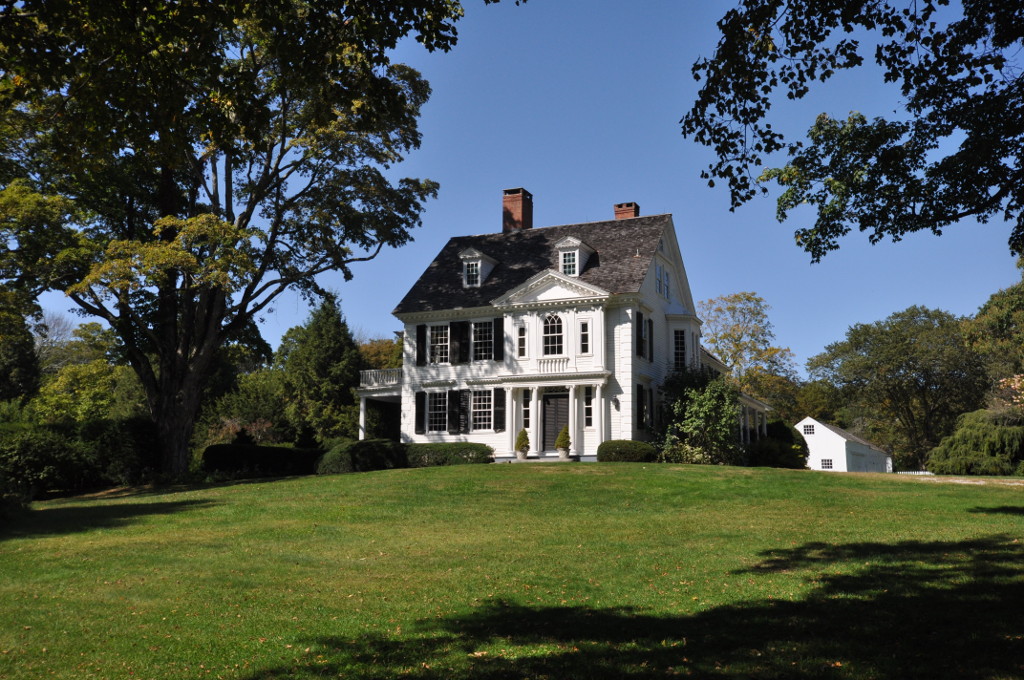

True Religion Delineated (1750)
Bellamy's first and most widely read book appeared at Boston in 1750, printed by S. Kneeland. Its title page states its purpose at length: True Religion Delineated; or, Experimental Religion, As distinguished from Formality on the one Hand, and Enthusiasm on the other, set in a Scriptural and Rational Light. In Two Discourses, In which some of the principal Errors both of the Arminians and Antinomians are confuted.9 The two errors named on the title page, "formality" and "enthusiasm," were the two charges each side had thrown at the other during the Awakening: the revival's friends accused its critics of cold formal religion, and the critics accused the revival of enthusiasm. Bellamy claimed to steer between them.
The book carried a preface by Jonathan Edwards, signed at Northampton in August 1750, weeks after his dismissal from his church (see lesson 05). Edwards wrote that the want of "thoro' Distinction" between true and false religion had been "the chief Thing that has obscured, obstructed and brought to a Stand all remarkable Revivals of Religion, which have been since the Beginning of the Reformation."9 Bellamy's own preface opens with a sentence that sets the tone of the whole book: "We are designed by God our Maker for an endless Existence. In this present Life we just enter upon Being, and are in a State introducing to a never-ending Duration in another World, where we are to be for ever unspeakably happy, or miserable, according to our present Conduct. This is designed for a State of Probation; and that, for a State of Rewards and Punishments."9 (The 1750 printing uses the long s and some irregular type; the spelling here is given with the long s modernized.)
The first discourse expounds the two great commandments (Matthew 22:37 to 40) as the whole substance of the law, and argues that true religion consists in a real conformity of heart to that law: love to God for his own excellence, and love to neighbor. The second expounds John 3:16 as "a brief Summary of the Gospel," which Bellamy set beside Christ's "brief Summary of the Law."9 Two features made the book a founding text of the New Divinity. First, it made love to God for what he is, as distinct from love to God for what he gives, the test of true religion; a "self-love" that loved God only for his favors was, in Bellamy's account, no virtue. Second, it insisted that the law's demand is reasonable and binding on every sinner at once, because sinners have the natural powers to love God and lack only the will. Mark Valeri, in Law and Providence in Joseph Bellamy's New England (1994), reads Bellamy's work as an effort to restate Calvinist moral law for a commercial society in which older bonds of deference were weakening.10
Bellamy's later book, The Wisdom of God in the Permission of Sin (1758), argued that God permitted sin because the universe as a whole would be better for it, through the display of God's justice and grace that sin occasioned. His nineteenth century editors called it "perhaps, on the whole, his ablest work."8 The argument, which Hopkins pressed further in Sin, thro' Divine Interposition, an Advantage to the Universe (1759), became one of the New Divinity positions that its critics most disliked. To the New Divinity men it was a necessary consequence of God's goodness and sovereignty; to its critics it seemed to make God the author of sin and to call evil good.
Samuel Hopkins: system, benevolence and slavery
From Waterbury to Newport
Samuel Hopkins wrote in his autobiography that he "was born at Waterbury, in Connecticut, on the Lord's day, September 17, 1721."1 He graduated from Yale in 1741. At the Yale commencement of September 1741, when he took his degree, he heard Edwards preach at New Haven the sermon later printed as The Distinguishing Marks of a Work of the Spirit of God (see lesson 02), which Hopkins remembered as "the sermon on The Trial of the Spirits," and that winter he rode to Northampton "with a view to live with Mr. Edwards, where I was an utter stranger." Edwards was away preaching, but Sarah Edwards received him "with great kindness."1 He studied there and with Bellamy, and on December 28, 1743, he was ordained at Housatonic (later Great Barrington), a frontier parish in the Berkshire hills. His diary entry for that day reads: "I have this day publicly and visibly given myself up to the work of the ministry, being solemnly set apart to that employment, though I have reason to be ashamed that I have done it no more heartily."1
Hopkins was never a popular preacher, and his Great Barrington church dwindled. A council dissolved the pastoral relation in 1769, and on April 11, 1770, he was installed over the First Congregational Church of Newport, Rhode Island, where he remained until his death.1 Edwards's move to Stockbridge in 1751 had made the two men near neighbors for six years, and after Edwards's death Hopkins edited and published several of his manuscripts, including The Nature of True Virtue and Concerning the End for Which God Created the World (1765). Park recorded that Hopkins died "on the twentieth of December, 1803."1
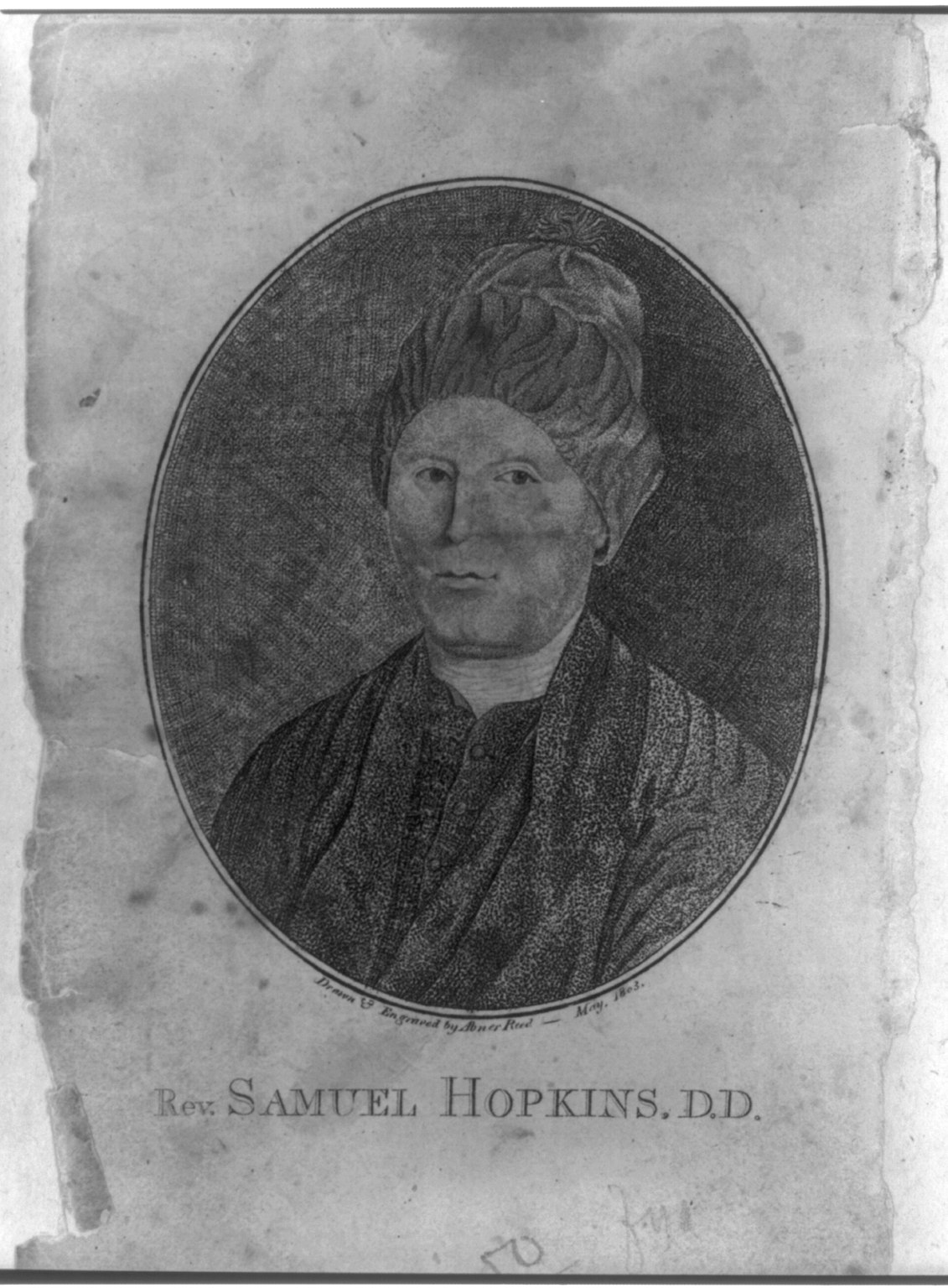

The System of Doctrines (1793)
Hopkins's major work, The System of Doctrines, Contained in Divine Revelation, Explained and Defended, appeared at Boston in 1793 in two volumes, printed by Isaiah Thomas and Ebenezer T. Andrews.11 It was the first full system of theology written by an American Congregationalist since Samuel Willard's Compleat Body of Divinity (1726). Hopkins opened his preface with a defense of writing systems at all: "Systematic Divinity is considered and treated, by many, with slight and contempt," he observed, and then asked, "Is not a System of Divinity as proper and important, as a System of Jurisprudence, Physic, or Natural Philosophy?"11 Park, writing in 1852, added a detail that says something about Hopkins's reputation abroad: "There were more subscribers for his System in Great Britain, than among all the 'white inhabitants' of Rhode Island."1 Park's index also notes the Black subscribers to the System among Hopkins's Newport congregation.
Disinterested benevolence
The phrase most closely tied to Hopkins is "disinterested benevolence." It developed Edwards's teaching in The Nature of True Virtue that true virtue is "benevolence to Being in general," love to God and to all creatures according to their worth, and not love grounded in what one gains. Hopkins made this the definition of holiness and of conversion itself. In the System he wrote that "men are no further converted than they are conformed in the exercise and affection of their hearts to the law of God, which requires disinterested love, and nothing else, and excludes and forbids all selfishness, or self-love, which is the same. Therefore, the new heart, and all truly Christian exercises, consist in disinterested affection."11 He grounded this in the example of Christ: "Jesus Christ is a remarkable and striking instance of disinterested benevolence, in which Christians are to imitate him, and do so, as far as they are Christians."11
Hopkins anticipated the objection that such love was impossible for finite creatures and qualified it: "This disinterested benevolence regards the interest and happiness of those who are nearest, and most in sight, more strongly and tenderly than of those who are farther off, and more out of sight."11 His opponents, Old Calvinists and Arminians alike, objected that he had condemned all self-love, including the desire for one's own salvation that Scripture itself appeals to. Hopkins answered that a proper regard for one's own good is included in benevolence to being in general, since the self is part of being, and that what he condemned was "selfishness," a love of self set against God and others.
"Willing to be damned"
The New Divinity doctrine that drew the most ridicule was the claim that a true Christian must be willing to be damned if that were necessary for the glory of God. Hopkins set it out in A Dialogue Between a Calvinist and a Semi-Calvinist, published with his works. The Calvinist speaker says that no one can know he loves God "until he does seek his glory above all things, and is disposed to say, 'Let God be glorified, whatever may be necessary in order to it,' without making any exception; and this is to be willing to be damned, if this be necessary for the glory of God."12 In An Inquiry into the Nature of True Holiness (1773), also printed in his works, Hopkins appealed to Paul's words in Romans 9:3, "For I could wish that myself were accursed from Christ for my brethren, my kinsmen according to the flesh" (KJV), and to the example of Christ, "who gave himself a ransom for many, and was willingly made a curse that men might be saved from it."12
The doctrine was conditional in Hopkins's own wording: willing "if this be necessary." Hopkins held that it never would be necessary for anyone who had such a disposition, since such a person was already a lover of God and would be saved. His point was a test of motive: love to God that would vanish the moment one's own happiness was not guaranteed was, in his view, only self-love. Critics read it differently. Ezra Stiles, in an entry of his Literary Diary written at New Haven in 1781, after a discouraging letter from Hopkins about religion at Newport, which Park printed, complained that people were growing tired of hearing "that true repentance implies a willingness and desire to be damned for the glory of God."2 The Wesleyan and Arminian objection was that the doctrine made assurance of salvation depend on a disposition few could honestly claim, and the Old Calvinist objection was that it confused the duty of submission with a duty to desire one's own ruin.
The "unregenerate doings" controversy
A second New Divinity position caused more practical trouble in parishes. If the unregenerate act only from selfish motives, then their prayers, Bible reading and attendance on the means of grace are selfish too, and so sinful. Hopkins drew this conclusion in controversial pieces of the 1760s and 1770s against Jonathan Mayhew and Moses Hemmenway, collected in his works under titles such as An Inquiry Concerning the Promises of the Gospel and Remarks on Mr. Hemmenway's Book.12 He did not tell sinners to stop praying. He told them that their unregenerate prayers earned nothing and carried no promise, and that their immediate duty was to repent and love God, which they had the natural ability to do. Opponents summed up the New Divinity, unfairly in its adherents' eyes, as teaching "that an unconverted man had better be killing his father and mother than praying for converting grace," a line from the same Stiles passage.2
Jonathan Edwards Jr., in his list of the New Divinity's "improvements," explained how the question had arisen. He credited the Scottish writer Robert Sandeman with exposing an inconsistency in "Calvinistic divines in general," who taught that the unregenerate are "dead in trespasses and sins" and yet supposed that such sinners offer "those sincere prayers, which are well pleasing in the sight of God, and which are the sure presages of renewing grace and salvation." The disciples of Edwards, he wrote, "founding themselves on the great principles of moral agency, established in the Freedom of the Will, have since his day made considerable improvement upon former views."7 This debate over the "use of means" by the unregenerate is the background of Timothy Dwight's sermons on the means of grace (below) and of Finney's later teaching that sinners can and must change their own hearts (lesson 10).
Hopkins, Newport and slavery
Newport in 1770 was the chief slave-trading port of New England. Park, Hopkins's admiring editor, did not hide his subject's own record. He wrote that Hopkins "seems to have agreed with President Edwards, as long as the President lived, with regard to slavery," noted that the inventory of Edwards's estate listed "one negro boy, Titus" (Edwards's ownership of enslaved people is treated in lesson 05), and stated plainly: "So, during a part of Hopkins's residence at Great Barrington, he owned a slave." Park said this rested partly on the testimony of several of Hopkins's acquaintances "and in part on the ground of common fame," and that the more common and "more correct opinion" was that the slave was sold before Hopkins moved to Newport.1 No bill of sale is cited in the memoir, and the details (the man's name, the date and the buyer) are not recorded there.
At Newport, Park wrote, "his church members, his best friends, his nearest neighbors, nearly all the respectable families of the town, were owners, and many of the most accomplished merchants on the island were importers of slaves."1 Hopkins began to preach against the trade in the early 1770s. The surviving documents of this campaign are his own publications. In 1776, early in the year and before the Declaration of Independence, he published at Norwich, Connecticut, A Dialogue, Concerning the Slavery of the Africans; Shewing it to be the Duty and Interest of the American Colonies to emancipate all their African Slaves: With an Address to the Owners of such Slaves. Dedicated to the Honorable the Continental Congress.13 The dedication addressed the delegates on behalf of "more than half a million of persons in these colonies, who are under such a degree of oppression and tyranny as to be wholly deprived of all civil and personal liberty, to which they have as good a right as any of their fellow-men, and are reduced to the most abject state of bondage and slavery without any just cause."13 It pointed to "the inconsistence of promoting the slavery of the Africans, at the same time we are asserting our own civil liberty at the risk of our fortunes and lives," and asked Congress to bring about "a total abolition of slavery."13
The Dialogue itself is a conversation between A, a slaveholder who grants that the slave trade "cannot be justified" but doubts that he must free the slaves he already holds, and B, who argues that he must. B opens with the theological premise that tied antislavery to the revival tradition's language of public sin and judgment: "if the slavery in which we hold the blacks is wrong, it is a very great and public sin, and, therefore, a sin which God is now testifying against in the calamities he has brought upon us; consequently, must be reformed before we can reasonably expect deliverance, or even sincerely ask for it."13 He compared delay to "the mariner, who, when his ship is filling with water, neglects to stop the leak, or ply the pump, that he may mend his sails." He gave a figure, "at the lowest computation, 800,000 slaves in British America, including the West India islands," which should be read as Hopkins's own estimate in 1776.13 He described the trade on the African coast, where Europeans "have taken advantage of their ignorance and barbarity to persuade them to enter into the inhuman practice of selling one another to the Europeans," and singled out the rum carried from New England: "We have put the bottle to our neighbors' mouths, by carrying immense quantities of rum to them."13 The Dialogue's description of Africans as sunk in "heathenism" and "barbarity" is the language of its time, and it sits beside an argument that they had "an equal right to freedom with ourselves."
The pamphlet had a second life. The editors of the 1852 Works recorded that the New York Manumission Society, founded in January 1785 with John Jay as president, resolved on December 11, 1785 to print two thousand copies of the Dialogue, and on February 3, 1786 to furnish one to each member of Congress and of the New York legislature.13 Hopkins also wrote against the trade in Rhode Island newspapers, supported the Providence Abolition Society, and in the 1770s, with Ezra Stiles, proposed sending two Black members of his church, Bristol Yamma and John Quamine, to Africa as missionaries after training them. The two men were tutored privately for a time by John Witherspoon at Princeton in 1774, an episode recorded by the Princeton and Slavery Project.14 The Revolution interrupted the plan; Quamine died in the war.
A story about Bellamy
Park printed a story, taken from John Ferguson's Memoir of Hopkins (Boston, 1830), about a visit Hopkins paid to Bellamy, "who then owned a slave." Hopkins pressed the case against slavery, Bellamy defended it, and Hopkins asked whether he would free the man if he wished it. Bellamy agreed. The man was called in from the field and asked, "Would you be more happy if you were free?" When he answered that he would, Bellamy is reported to have said, "You have your desire: from this moment you are free."1 Park noted that "substantially the same narrative has been given by several writers." The story is a later recollection, retold in a nineteenth century memoir, and no record from Bellamy's lifetime has been cited for it. It is evidence that Bellamy held a slave at some point, which Park accepted, and that Hopkins was remembered as having pressed his friends on the question. The conversation itself should be treated as tradition.
Jonathan Edwards Jr.
The son of the theologian
Jonathan Edwards Jr. was "born at Northampton, Mass., on the twenty-sixth day of May, 1745," the ninth child of Jonathan and Sarah Edwards.15 When he was six his family moved to Stockbridge, which, as he recalled in 1788, "at that time was inhabited by Indians almost solely; as there were in the town but twelve families of whites or Anglo-Americans, and perhaps one hundred and fifty families of Indians."15 He learned the Mohican language as a boy, and his Observations on the Language of the Muhhekaneew Indians (1788) remains a source for that language. He graduated from the College of New Jersey in 1765, studied divinity with Bellamy, and on January 5, 1769, was ordained over the White Haven church in New Haven, Connecticut.15 The congregation was divided, and he was dismissed in 1795. In January 1796 he was settled at Colebrook, Connecticut, and in 1799 he became president of Union College at Schenectady, New York, where he died "on the first day of August, 1801."15
The "improvements" and the governmental atonement
Edwards Jr. wrote out what he considered the "Improvements in theology" made by his father and his father's followers. The paper lists ten points: the end of creation; liberty and necessity; the nature of true virtue; the origin of moral evil; the atonement; the imputation of Adam's sin and Christ's righteousness; the state of the unregenerate and the use of means; experimental religion; disinterested affection; and regeneration.7 Several of these were Edwards's own; others, as the son said, were made by "the followers of Mr. Edwards." The fifth is the most important for the later history of American theology. Edwards Jr. wrote:
"It has been commonly represented, that the atonement which Christ made was the payment of a debt due from his people. ... The followers of Mr. Edwards have proved, that the atonement does not consist in the payment of a debt, properly so called. It consists rather in doing that, which, for the purpose of establishing the authority of the divine law, and of supporting in due tone the divine government, is equivalent to the punishment of the sinner according to the letter of the law. Now, therefore, God, without the prostration of his authority and government, can pardon and save those who believe."7
This is the "governmental" or "moral government" theory of the atonement in its New England form. Edwards Jr. had set it out at length in three sermons on The Necessity of the Atonement (1785). Its roots are usually traced to the Dutch jurist Hugo Grotius's defense of the satisfaction of Christ (1617), though the New Divinity men presented it as a development of Edwards. Its defenders held that it kept the free grace of pardon (since a debt fully paid is not forgiven) while keeping God's justice as ruler. Old Calvinists, and later the Princeton theologians, held that it gave up the substitution of Christ as bearing the penalty owed by the elect, which the Westminster Confession teaches when it says that Christ "by his perfect obedience, and sacrifice of himself ... hath fully satisfied the justice of his Father" (chapter VIII, section 5).16 Ezra Stiles's 1787 diary entry recorded the dispute already dividing the New Divinity: some "are beginning to concur with Mr. Bacon in denying a real vicarious suffering in Christ's atonement," while "Messrs. Hopkins, West, &c., differ from them, and hold the atonement in the just, scriptural sense."2 Charles Finney's governmental atonement (lesson 10) descends from this line.
The Injustice and Impolicy of the Slave Trade (1791)
On September 15, 1791, Edwards Jr. preached before the Connecticut Society for the Promotion of Freedom, and for the Relief of Persons unlawfully holden in Bondage, at its annual meeting in New Haven. The society voted thanks and asked for a copy, and the sermon was printed at New Haven by Thomas and Samuel Green that year as The Injustice and Impolicy of the Slave Trade, and of the Slavery of the Africans.17 His text was Matthew 7:12, "Therefore all things whatsoever ye would that men should do to you, do ye even so to them: for this is the law and the prophets" (KJV).
His central argument applied the law of Exodus 21:16 ("And he that stealeth a man, and selleth him, or if he be found in his hand, he shall surely be put to death," KJV): "to hold in slavery a man who has a right to liberty, is substantially the same crime as to deprive him of his liberty. And to deprive of liberty and reduce to slavery, a man who has a right to liberty, is man-stealing."17 He concluded that holding a man in slavery who had not forfeited his liberty was a greater sin than fornication, theft or robbery, and he looked ahead: "if we judge of the future by the past, within fifty years from this time, it will be as shameful for a man to hold a Negro slave, as to be guilty of common robbery or theft."17 Fifty years from 1791 was 1841. Slavery had by then been ended or placed on a path to gradual abolition in the northern states, and the British Parliament had abolished slavery in most of its colonies in 1833; it remained lawful in the southern states until the Thirteenth Amendment of 1865.
Nathanael Emmons and the "exercise scheme"
Nathanael Emmons carried the New Divinity well into the nineteenth century. His autobiography gives the dates himself: "I was born on the twentieth of April, 1745, ordained on the twenty-first of April, 1773, and married on the sixth of April, 1775."18 He was ordained "to the pastoral care of the second church in Wrentham," Massachusetts, the parish that was set off as the town of Franklin, and he served it for more than fifty years. He died on September 23, 1840, at the age of ninety-five.18 Like Bellamy, he trained ministers in his home. Edwards A. Park, in a lecture printed in the same volume of Emmons's works, wrote that he "guided the studies of eighty-seven young men preparing to become ministers of the gospel"; later accounts that round this to about a hundred go beyond Park's figure.18
Emmons's own account of his education shows how the New Divinity spread from teacher to student. He first studied with "Mr. Strong, a well known Calvinist," who had him read the standard expositions of the Westminster catechism. "After reading such books as these, I thought myself pretty well acquainted with the Calvinistic theory; but when I came to Mr. Smalley's, I found myself in the situation of Apollos, who needed to be instructed more perfectly. Mr. Smalley was a man of a strong and clear mind, who had thoroughly digested Mr. Edwards' writings." When Emmons came to be examined for a license to preach, "several of the aged ministers were opposed to Mr. Smalley's sentiments, and of course to mine," and "several of the ministers voted against it, and one remonstrated in writing."18 The New Divinity was contested within the Congregational associations, not only between them and outsiders.
Emmons is remembered for the "exercise scheme." His editor, Jacob Ide, summarized it in the memoir prefixed to his works: "By common consent, the 'Exercise scheme' is his. He not only believed with others, that much of the sin and holiness of men consists in their voluntary affections, but that all of it does." From this principle, Ide wrote, "it follows that the depravity of mankind is not a corrupt nature inherited from Adam, but their own voluntary opposition to God; that regeneration consists not in the implantation of a new principle distinct from the affections of the mind, but in a change in the affections themselves."18 Edwards A. Park, in a lecture to Andover students printed in the same volume, wrote that Emmons "denied the existence of sin in any passive principle or state, or any thing distinct from an exercise of the will."18
The New Divinity men who disagreed with Emmons were called "tasters." They held, with Edwards in Religious Affections, that beneath the exercises of the will lies a "taste" or disposition, a principle of the heart, which grace changes in regeneration. The exercise scheme located both sin and holiness wholly in acts. Emmons combined this with a strong doctrine of divine efficiency: God, he taught, directly produces every exercise of the will, sinful or holy, and yet the exercises are truly the creature's own. His critics, then and since, have said that this made God the author of sin; Emmons and his editor replied that it was the plain teaching of the Westminster divines "that God has fore-ordained whatsoever comes to pass."18 The exercise scheme matters for the later story because Nathaniel Taylor's claim that "sin is in the sinning" and Finney's denial of a sinful nature (lessons 10 and 13) both treated sin as an act of the will. Taylor rejected Emmons's divine efficiency, and the Princeton theologians rejected both.
Timothy Dwight and Yale
Edwards's grandson
The memoir prefixed to Dwight's Theology Explained and Defended (fourth edition, 1825) records that "Timothy Dwight was born at Northampton, in the county of Hampshire, state of Massachusetts, on the 14th day of May, A. D. 1752," and that "his mother was the third daughter" of "Jonathan Edwards, for many years the minister of Northampton, and afterwards president of Nassau-Hall."19 The memoir claims that "before he was four years old, [he] was able to read the Bible with ease and correctness," which is a family recollection. He entered Yale at thirteen, graduated in 1769, and served as a tutor there from 1771. In his first year as tutor, "at the age of nineteen," he began The Conquest of Canaan, an epic poem on the book of Joshua, which he finished in 1774.19 During the Revolution he was appointed "Chaplain to General Parsons' brigade, which was a part of the division of General Putnam."19
In May 1783 the church at Greenfield, a parish in the town of Fairfield, Connecticut, called him as minister; he was ordained on November 5 of that year and remained there twelve years. He ran an academy at Greenfield that took pupils "of both sexes."19 In 1788 he published The Triumph of Infidelity, a satirical poem directed against the deists and against the universalism of the Boston minister Charles Chauncy. "In May, 1795, the Presidency of Yale College became vacant by the death of the Rev. Dr. Stiles," and Dwight was chosen. He served until his death, which the memoir places "a few minutes before three o'clock, on Saturday morning, the 11th of January" 1817.19
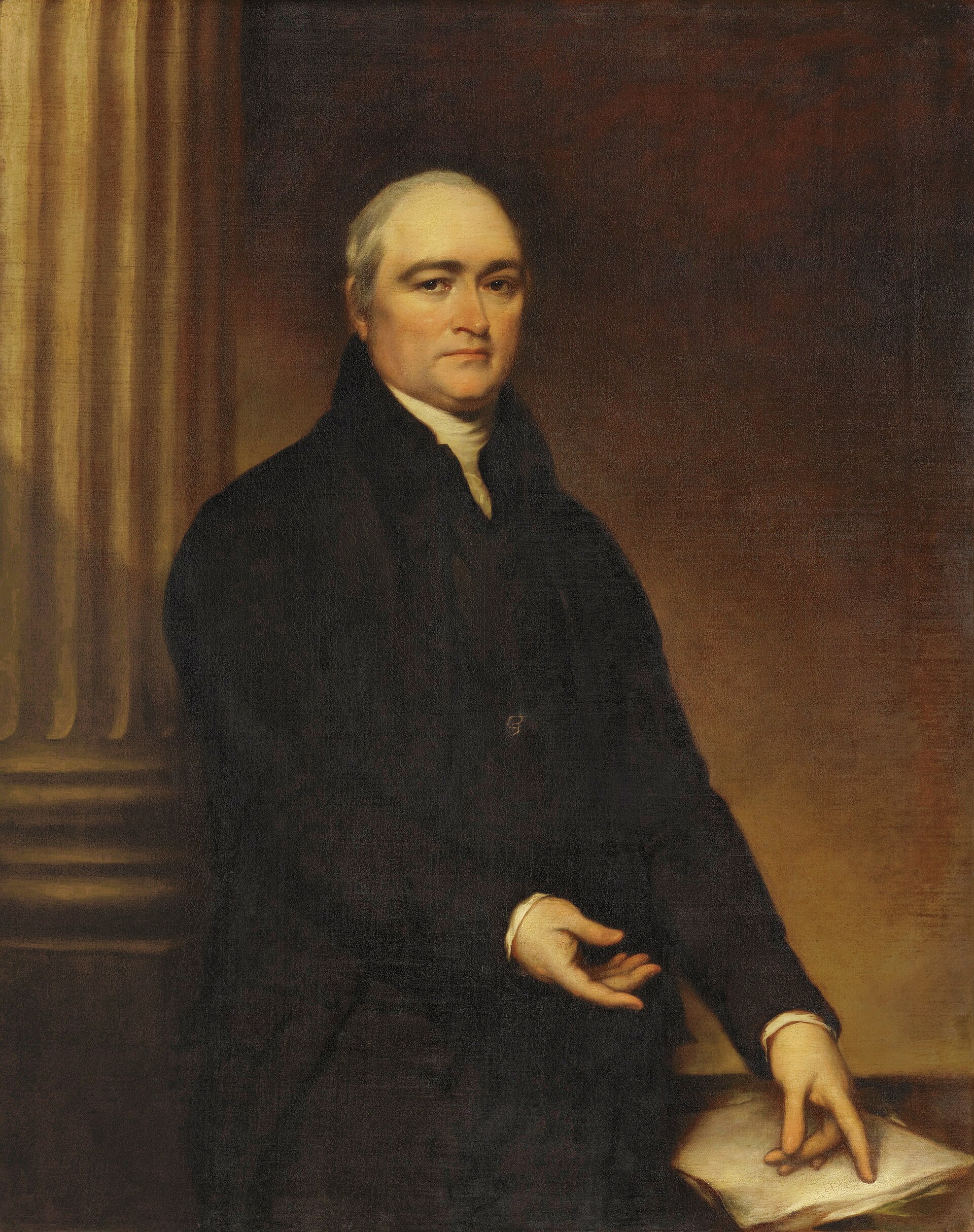

"Infidelity" at Yale
The memoir gives a vivid account of the college Dwight took over. When he arrived, "the whole number of students was one hundred and ten"; during his presidency the number rose to 313.19 It describes "an extensive prevalence of infidelity among the students," derived from "the circumstances of the country at the close of the preceding war," and offers as proof that "a considerable proportion of the class which he first taught, had assumed the names of the principal English and French infidels, and were more familiarly known by them than by their own."19 Dwight took the senior class himself. In the weekly forensic disputations the students proposed questions and the president chose among them; when a class offered the question whether the Scriptures were the word of God, the memoir says, he chose it, let the students argue the case against inspiration, and then "entered into a direct defence of the divine origin of Christianity, in a strain of powerful argument and animated eloquence which nothing could resist. The effect upon the students was electrical."19
This account was written after Dwight's death by admirers, and it has the shape of a story told many times. Historians accept that Yale in the 1790s, like other colleges, had students reading Paine, Voltaire and Hume, that Dwight confronted deism directly in his chapel sermons and disputations, and that student numbers rose under him. The more dramatic details (the "infidel" nicknames, the single decisive debate) rest on the memoir and on students' later recollections, and they are rated below in "Claims checked." John Fitzmier's New England's Moral Legislator: Timothy Dwight, 1752 to 1817 (1998) treats Dwight's campaign against "infidelity" as part of a larger effort to defend the Connecticut standing order of church and state, and Stephen Berk's Calvinism versus Democracy (1974) read him chiefly as a defender of that order against Jeffersonian politics.20
The Yale revival of 1802
In the spring and summer of 1802 Yale College experienced a revival that became, for later evangelicals, the New England counterpart of Cane Ridge (lesson 08). The best contemporary witness is a letter from Benjamin Silliman, then a tutor and later Yale's famous professor of chemistry, to his mother, dated June 11, 1802: "It would delight your heart, my dear mother, to see how the trophies of the Cross are multiplied in this Institution. Yale College is a little temple: prayer and praise seem to be the delight of the greater part of the students, while those who are still unfeeling are awed into respectful silence."21 Silliman joined the college church on September 5, 1802. A letter from John Marsh, a student of those years, printed in George Fisher's Life of Benjamin Silliman (1866), adds: "In August, 1802, I with sixteen others ... united with" the college church; the same book recalls that before the revival a student of the class of 1800, Shubael Bartlett, "was on one occasion the sole communicant from the ranks of the students at the Lord's Supper."21
How many students were converted is not recorded in any one contemporary count. The Dwight memoir says that the delivery of one of his sermons, on Jeremiah 8:20 ("The harvest is past, the summer is ended, and we are not saved," KJV), was "obviously the commencement of a revival of religion among his pupils" on two occasions, "in the first of which nearly half of them were united to the College Church."19 Later histories, drawing on Chauncey Goodrich's narrative of Yale revivals (1838), usually say that about a third of the student body, some seventy-five of roughly 230 students, professed conversion in 1802. These figures are estimates by later writers and should be cited as such. Among the young men who came under Dwight's influence in these years were Lyman Beecher (class of 1797), Bennet Tyler (1804), Nathaniel William Taylor (1807), who lived in Dwight's household as his amanuensis, and Asahel Nettleton (1809). All four reappear in this module as Finney's critics or as the leaders of New Haven and its opponents (lessons 09 and 13).
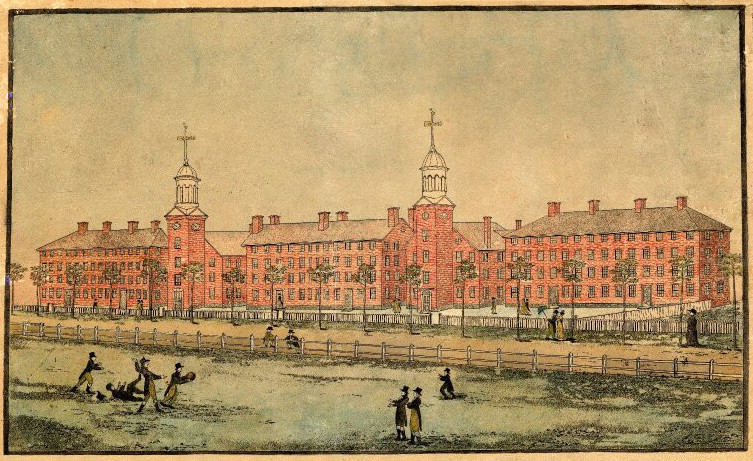

Theology Explained and Defended
As professor of divinity as well as president, Dwight preached a cycle of sermons that covered the whole of Christian doctrine. The memoir explains: "His practice was to preach one on the morning of each Sabbath in term time. By this arrangement he finished the course once in four years. Thus each student, who completed his regular collegiate period, had an opportunity to hear the whole series." He had first drafted the plan at Greenfield, "in short notes in about one hundred sermons."19 The series was published after his death as Theology; Explained and Defended, in a Series of Sermons (Middletown, Connecticut, 1818 to 1819, in five volumes; later editions in four), and it was reprinted many times in America and Britain. Its 173 sermons follow the order of the Westminster Shorter Catechism, from the existence of God through the commandments to the means of grace.
Dwight's treatment of the means of grace shows where he parted from Hopkins. In Sermon CXXXV, "The Means of Grace," he argued from 1 Corinthians 4:15 that God ordinarily uses means to bring people to faith:
"It is not here intended, that God could not, if he pleased, produce this change in the human character, without these, or any other means. Nor is it intended, that in some cases he does not actually thus produce it. ... But it is here intended, that this is not the usual course of his Spiritual providence; and that, in that course, means are really employed to bring men into the heavenly kingdom. It is further intended, that these means are so far necessary, as that without them, this important end would not, in the ordinary course of providence, be accomplished."22
He went on to defend the use of means by the unregenerate and to answer "the principal Objections to this scheme of doctrine."22 On this point Dwight sided with the older Calvinist practice of urging sinners to read, pray and hear sermons as the ordinary path to conversion, against the strict Hopkinsian view that such unregenerate doings were only sin. He opened the same sermon by reminding his hearers that, in his view, "Evangelical Faith and Repentance are indispensable to the existence of any moral good in the soul of man."22
Was Dwight a New Divinity man?
The question has a real answer only in parts, and historians have given different weight to the parts.
- The evidence for: Dwight was Edwards's grandson, revered Edwards, and taught Edwards's distinction between natural and moral ability. Ezra Stiles, writing in 1787, named "Mr. Dwight" among the New Divinity men competing for leadership.2 Park, in 1852, recorded that Dwight "was in early life so much in favor of the Hopkinsian peculiarities, that he wrote an essay to prove man's obligation to be willing to be lost, if the glory of God should require the sacrifice. Subsequently, however, he burned the manuscript."1 Park also noted that Hopkins wrote warmly of "young Dwight" and praised his Fourth of July discourse of 1798 as "a masterly performance."1
- The evidence against: In his mature theology Dwight rejected the "willing to be damned" test, defended the use of means by the unregenerate, and declined the exercise scheme. He worked closely with Old Calvinists in defense of the Connecticut establishment and against deism and Jeffersonian politics. His theology was organized on the catechism, with less of the metaphysical argument that marked Hopkins and Emmons.
- How historians read it: Sidney Mead's study of Nathaniel Taylor (1942) and older accounts treated Dwight as a moderate who led Yale away from strict Hopkinsianism and prepared the way for Taylor's New Haven theology. Douglas Sweeney and Allen Guelzo place Dwight inside a broad Edwardsian tradition that included both the New Divinity and New Haven, and treat him as the link between them. Fitzmier stresses his role as the moral and civic leader of the Connecticut standing order more than his place in a theological school.4 20
A fair summary is that Dwight came out of the New Divinity, kept its Edwardsian framework and its revival preaching, and dropped its sharpest positions. The brief for this module asks that Bellamy, Hopkins and Dwight be placed "in the right school": Bellamy and Hopkins founded the New Divinity; Dwight was its heir and a modifier of it, the bridge to the New Haven theology of his student Taylor.
John Witherspoon and Princeton
From Paisley to Princeton
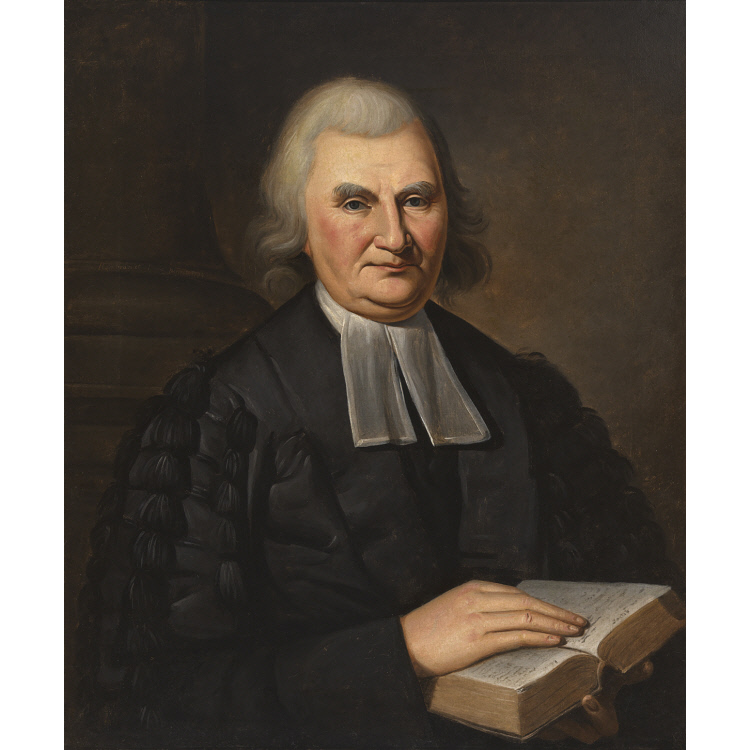
John Witherspoon came from a different world. Born in Scotland in 1723, he was a minister of the Church of Scotland at Beith and then at Paisley, and the title page of his collected Works still called him "sometime minister of the gospel at Paisley."23 In Scotland he belonged to the Popular (evangelical) party in the Kirk and attacked the Moderate party, which controlled the church's courts and was close to the Edinburgh literati, in a satire called Ecclesiastical Characteristics (1753). The College of New Jersey, founded in 1746 by New Side Presbyterians (lesson 04), had lost three presidents in quick succession, including Jonathan Edwards in 1758 (lesson 05). Its trustees invited Witherspoon, who arrived in 1768 and was president from that year until his death on November 15, 1794.14
Witherspoon was chosen in part to unite the Old Side and New Side Presbyterians, who had reunited formally in 1758, and he was not an Edwardsean. Jonathan Edwards Jr. was a tutor at the college from 1767 to 1769, overlapping with Witherspoon's arrival.15 Mark Noll, in Princeton and the Republic, 1768 to 1822 (1989), describes how Witherspoon replaced the idealist philosophy associated with Edwards and Bishop Berkeley, which some tutors favored, with the Scottish philosophy of common sense, and how this set Princeton on a different intellectual path from the New England colleges.24 Later Princeton tradition, recorded by Ashbel Green, said that Witherspoon had driven idealism out of the college by argument and ridicule; that is a later account, and it is given here as tradition.

Common sense and moral philosophy
Witherspoon taught the senior course in moral philosophy, which every graduate took, and his lectures circulated in student copies before they were printed in his Works after his death. The first lecture begins with a definition and a defense: "Moral Philosophy is that branch of science which treats of the principles and laws of duty, or morals. It is called Philosophy, because it is an inquiry into the nature and grounds of moral obligation by reason, as distinct from revelation."25 He knew that this would trouble some New England readers, and he quoted one of them: "An author of New England says, 'Moral philosophy is just reducing infidelity to a system.'" His answer was that "if the scripture is true, the discoveries of reason cannot be contrary to it; and therefore it has nothing to fear from that quarter," and he compared moral philosophy to the natural philosophy of Newton: "The noble and eminent improvements in natural philosophy, which have been made since the end of the last century, have been far from hurting the interest of religion; on the contrary, they have greatly promoted it. Why should it not be the same with moral philosophy, which is indeed nothing else but the knowledge of human nature?"25
Witherspoon's epistemology came from the Scottish writers Thomas Reid and James Beattie. Against the skepticism of David Hume, he told his students that "there are certain first principles, or dictates of common sense, which are either simple perceptions, or seen with intuitive evidence. These are the foundation of all reasoning, and without them, to reason is a word without a meaning. They can no more be proved than you can prove an axiom in mathematical science." He credited "these authors of Scotland" with resolving "all the refinements and metaphysical objections of some infidel writers," and named James Beattie ("Beatty, in his Essay on Truth," in the printed text) as having tried "to establish certain impressions of common sense, as axioms and first principles of all our reasonings on moral subjects."25 He even hoped that "a time may come, when men, treating moral philosophy as Newton and his successors have done natural, may arrive at greater precision."25
This Scottish realism became the working philosophy of Princeton and, through Princeton's graduates and the later seminary, of much of American Presbyterianism and of American college teaching in general. Noll, in America's God (2002), argues that the combination of evangelical Protestantism, republican political ideas and Scottish common sense reasoning became the dominant American Protestant synthesis of the early nineteenth century, and he traces one of its main channels to Witherspoon's classroom.24 The New England theologians used Scottish ideas too, but they began from Edwards. The difference shows later in the Princeton theologians' suspicion of New England "improvements" (lesson 13). Common sense realism is placed in its European setting in Liberty module 58, lesson 03.
"The Dominion of Providence over the Passions of Men" (1776)
On May 17, 1776, the day of fasting that the Continental Congress had appointed through the colonies, Witherspoon preached at Princeton on Psalm 76:10, "Surely the wrath of man shall praise thee: the remainder of wrath shalt thou restrain" (KJV). The sermon was printed at Philadelphia by Robert Aitken that year, dedicated to John Hancock as president of Congress, with an Address to the Natives of Scotland residing in America.23 It begins: "There is not a greater evidence, either of the reality or the power of religion, than a firm belief of God's universal presence, and a constant attention to the influence and operation of his providence."23 Most of the sermon is an exposition of providence: God overrules even the sinful passions of men for his own ends, so that Christians should neither despair in calamity nor trust in their own strength.
Near its end Witherspoon turned to the American cause. He told his hearers that the outcome would decide "the temporal and eternal happiness of us and our posterity," and he made a claim that has been quoted ever since: "There is not a single instance in history, in which civil liberty was lost, and religious liberty preserved entire. If therefore we yield up our temporal property, we at the same time deliver the conscience into bondage."23 He then disowned political abuse from the pulpit: "You shall not, my brethren, hear from me in the pulpit, what you have never heard from me in conversation, I mean railing at the king personally, or even his ministers and the parliament, and people of Britain, as so many barbarous savages."23 And he drew the moral that joined piety and politics: "he is the best friend to American liberty, who is most sincere and active in promoting true and undefiled religion, and who sets himself with the greatest firmness to bear down profanity and immorality of every kind. Whoever is an avowed enemy to God, I scruple not to call him an enemy to his country." He added at once: "I do not wish you to oppose any body's religion, but every body's wickedness."23 (The printed texts use the long s; it is modernized here.) The same idea appeared in the 1775 pastoral letter of the Presbyterian Synod of New York and Philadelphia, generally attributed to Witherspoon, which said "there is no example in history, in which civil liberty was destroyed, and the rights of conscience preserved entire."23
In June 1776 New Jersey elected Witherspoon a delegate to the Continental Congress, and he signed the Declaration of Independence. His name appears among the New Jersey signers in the National Archives transcription.26 He was the only active minister of a congregation or college among the fifty-six signers, a fact usually stated as "the only clergyman to sign"; several other signers had studied divinity or preached at some point. He served in the Continental Congress for most of the years to 1782. His political career, including his role in the Articles of Confederation and his students James Madison and Aaron Burr Jr., is told in Liberty module 54, lesson 57 and Liberty module 55, lesson 01. Jeffry Morrison's John Witherspoon and the Founding of the American Republic (2005) argues that his combination of Reformed theology, Scottish moral philosophy and republican political theory made him one of the most influential teachers of the founding generation; Varnum Lansing Collins's two-volume President Witherspoon (1925) remains the fullest older biography.27
Witherspoon and slavery
Witherspoon's record on slavery is set out by the Princeton and Slavery Project, a research project of Princeton University. Its essay on him, by Lesa Redmond, states that he bought two enslaved people in 1779 to work his farm, Tusculum, near Princeton, and that at his death in 1794 his estate included two enslaved people there.14 In the New Jersey legislature in 1790 he chaired a committee that recommended against a law for abolition; according to Collins's biography, as the project summarizes it, the committee reasoned that slavery in New Jersey was already declining and "would not last beyond twenty-eight years."14 The committee's report itself was not opened for this lesson.
His lectures on moral philosophy addressed slavery under the head of the rights of persons. He allowed that men "may become slaves, or their persons and labour be put wholly in the power of others by consent," or "as a punishment for the commission of crimes," and he condemned the slave trade's method of capture: "it is certainly unlawful to make inroads upon others, unprovoked, and take away their liberty, by no better right than superior power." He then wrote: "I do not think there lies any necessity on those who found men in a state of slavery, to make them free, to their own ruin. But it is very doubtful whether any original cause of servitude can be defended, but legal punishment for the commission of crimes. Humanity in the manner of treating them is manifestly a dictate of reason and nature."25 The lecture thus doubted the justice of almost every origin of slavery while denying any duty to free those already enslaved.
The same project records that Witherspoon privately tutored Bristol Yamma and John Quamine, the two free Black men from Hopkins's Newport church, in 1774, and that in 1792 he began tutoring John Chavis, "a free black man of Virginia," at Tusculum, where two enslaved people lived and worked.14 Set beside Hopkins's Dialogue of 1776 and Edwards Jr.'s sermon of 1791, Witherspoon's position shows that Calvinist ministers of the founding era did not speak with one voice on slavery. The New Divinity men in New England argued for immediate emancipation as a religious duty; the Scottish-born Princeton president taught that the trade was unjust and that existing slaveholding need not be ended at once, and he held slaves himself.
Lemuel Haynes: a Black New Divinity preacher
Lemuel Haynes's life is told in Liberty module 54, lesson 22; here the subject is his theology. His first biographer, Timothy Mather Cooley, wrote that "Lemuel Haynes was born July 18th, 1753, at West Hartford, Connecticut," the son of an African father and a white mother, and that he was abandoned in infancy and raised as an indentured servant in the household of Deacon David Rose of Granville, Massachusetts.28 Cooley described how the boy studied "his spelling-book and psalter till he had literally devoured them," reading by firelight, and how he could give his master "from memory a copious analysis of the sermons" he heard.28 He served as a minuteman and in the Continental army, studied theology with Connecticut ministers, was licensed to preach in 1780 and ordained in 1785, and in 1788, Cooley wrote, "he went to Rutland, having received a call to the pastoral office in the west parish," in Vermont.28 He served that parish for some thirty years.
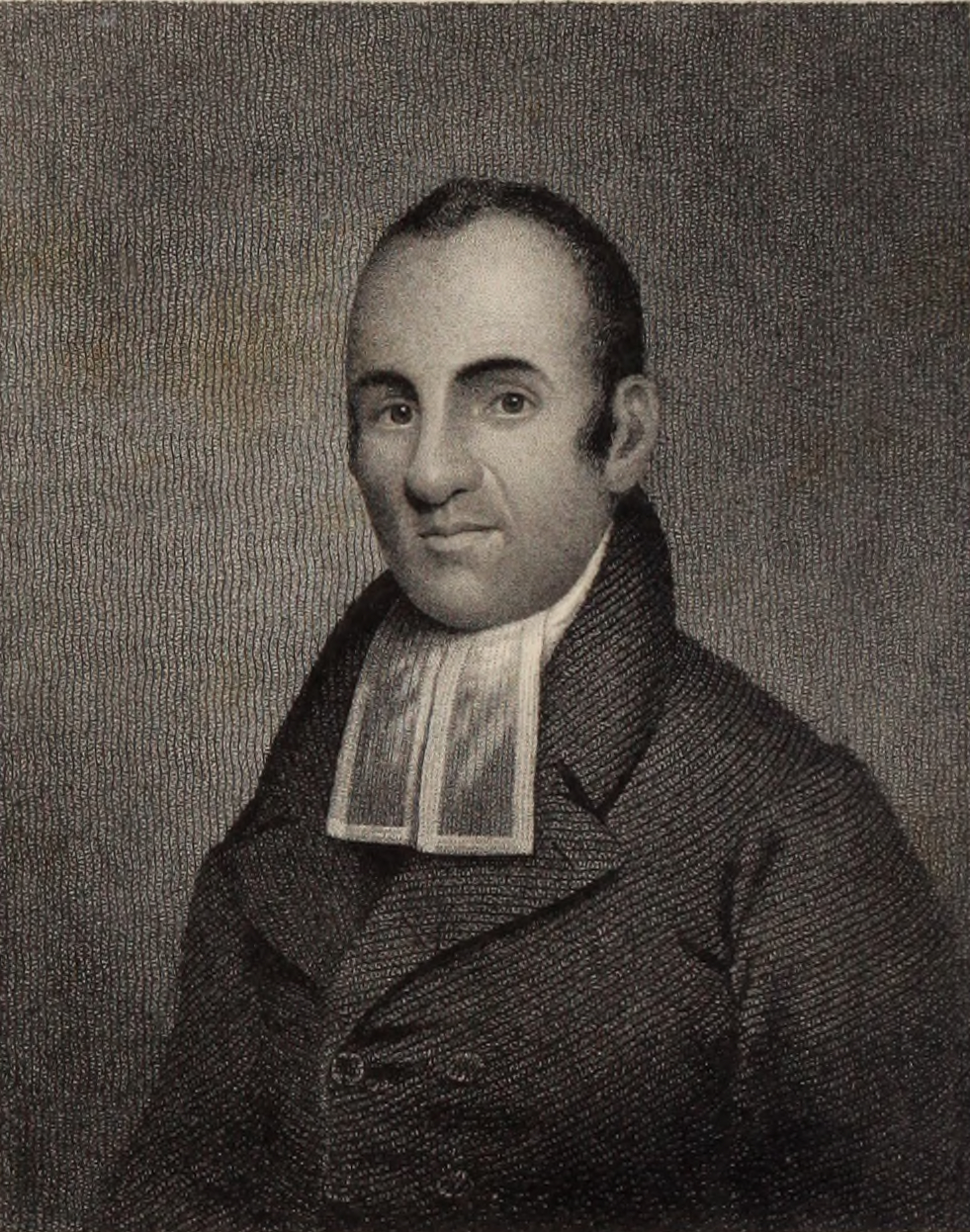

Haynes's theology was Edwardsean and Hopkinsian. Cooley wrote that "respecting the operations of the Holy Spirit, Mr. Haynes had adopted the same principles as Edwards and Whitefield," and that "he had read Edwards, and Bellamy, and Hopkins, and was familiar with their leading views, though not able to possess their works." Haynes quoted Hopkins's System in his own writings, as Cooley's collection shows.28 In an unpublished essay of about 1776, "Liberty Further Extended," first printed by the historian Ruth Bogin in the William and Mary Quarterly in 1983, he argued that the liberty claimed by the colonists belonged equally to Africans, the same argument Hopkins made in the Dialogue that year. John Saillant's Black Puritan, Black Republican: The Life and Thought of Lemuel Haynes, 1753 to 1833 (2003) reads Haynes's antislavery and his New Divinity theology as one system, in which disinterested benevolence required the end of slavery.29
His best known publication was a short sermon against universalism. In 1805, at Rutland, he answered the visiting preacher Hosea Ballou, who taught that all people would be saved, with a sermon on Genesis 3:4, "Ye shall not surely die" (KJV), the words of the serpent to Eve. Printed as Universal Salvation, a Very Ancient Doctrine, it went through many editions; Cooley wrote that it "has been printed and reprinted, both in America and in Great Britain, till no one pretends to give any account of the number of editions."28 Its inferences show Haynes's wit: "The devil is not dead, but still lives, and is able to preach as well as ever, 'Ye shall not surely die.'" and "Universal salvation is no new-fangled scheme, but can boast of great antiquity."28 Universalists then and since have answered that the sermon caricatured Ballou, who taught universal restoration from Scripture, and Ballou published a reply. Both sides were stating their case in their own words.
A timeline of the period
What the New Divinity left behind
The New Divinity's legacy ran in several directions at once. Its insistence that sinners are fully able, naturally, to do what God commands, and fully responsible for refusing, gave revival preachers of the Second Great Awakening a theology for urgent appeals to repent now. Its moral government theory of the atonement passed into the New Haven theology and into Finney (lesson 10). Its ethic of disinterested benevolence fed the voluntary societies of the early republic: the foreign missions of the American Board of Commissioners for Foreign Missions (1810), founded largely by men trained in this tradition, and the antislavery and reform societies discussed in lesson 11. Conforti argued that the New Divinity's ethic of self-denying benevolence, taught in country parsonages, helped shape the missionary and reform movements of the next generation.3 Its founding of Andover Theological Seminary (1808) by a coalition of Hopkinsians and Old Calvinists, after Harvard appointed a Unitarian professor of divinity in 1805, gave the tradition an institutional home; Edwards A. Park, the editor quoted throughout this lesson, taught there.
The tradition also divided. By the 1820s Nathaniel Taylor at Yale, Dwight's student, had moved further toward human agency than Hopkins or Emmons had ever gone, and Bennet Tyler and the "Tylerites" founded a rival seminary at East Windsor, Connecticut, in 1834 to defend what they saw as the older Edwardsean position (lesson 13). Meanwhile the Princeton theologians, heirs of Witherspoon's Scottish realism and of the Westminster standards, criticized both the New Divinity and New Haven as departures from the Reformed faith. The story of how Edwards's heirs became Finney's critics, and how some of Finney's own positions came from the same tradition, is told in lessons 09 and 10.
What the record shows and what it does not
- Documented fact: Bellamy's True Religion Delineated (Boston, 1750), with Edwards's preface; Hopkins's Dialogue Concerning the Slavery of the Africans (Norwich, 1776) and System of Doctrines (Boston, 1793); Edwards Jr.'s sermon of September 15, 1791; Witherspoon's sermon of May 17, 1776 and his signature on the Declaration; Dwight's presidency of Yale (1795 to 1817); Bellamy's death on March 6, 1790; Hopkins's on December 20, 1803; Emmons's on September 23, 1840. The texts quoted in this lesson are all from printed editions opened for it.
- The writers' own claims: Hopkins's claim that true love to God includes a willingness to be damned "if this be necessary for the glory of God"; Edwards Jr.'s claim that his father's followers had "proved" the atonement was no payment of a debt; Witherspoon's claim that no nation had ever lost civil liberty and kept religious liberty. These are positions argued by their authors, and others in the same period denied them.
- Later tradition: The Bellamy emancipation story (from John Ferguson's memoir of 1830); the story of Dwight's decisive debate on the inspiration of Scripture and the Yale students' "infidel" nicknames (from the memoir of 1825); Ashbel Green's account of Witherspoon driving idealism out of Princeton; the count of students trained by Bellamy (about sixty). (For Emmons, Park gave a count of eighty-seven.)
- Scholarly reading: Whether the New Divinity was a faithful development of Edwards (Sweeney and Guelzo) or a decline into moralism (Haroutunian); whether Dwight belongs to the New Divinity or to a moderate Calvinism that prepared for Taylor; how much Witherspoon's Scottish philosophy shaped American Protestant thought (Noll); whether the New Divinity's antislavery grew from its theology of benevolence (Conforti, Saillant).
- Open questions: The exact number of converts in the Yale revival of 1802; the name, date and circumstances of the enslaved man Hopkins owned and sold; the extent to which Witherspoon's slaves and his teaching are to be weighed against his tutoring of Black students.
Claims checked
"Hopkins taught that Christians must want to be damned"
Partly supported. Hopkins's Calvinist speaker says that seeking God's glory "without making any exception" is "to be willing to be damned, if this be necessary for the glory of God."12 The claim is conditional in his own words; he did not teach that anyone should desire damnation, and he held that a person with such a disposition was a lover of God and would be saved. His opponents' summaries ("a willingness and desire to be damned") dropped the condition, as Stiles's diary shows.2
"Dwight single-handedly drove infidelity out of Yale"
Partly supported. Dwight did confront deism directly in sermons and disputations, enrollment rose from 110 to 313 under him, and a revival in 1802 brought many students into the college church, as Silliman's letter of June 11, 1802 shows.21 The single debate that "nothing could resist," the students with "infidel" nicknames and the claim that infidelity was left "without a lurking place" come from the memoir written by his admirers after his death.19 Other causes (the revival's spread through New England churches, student societies, the wider reaction against the French Revolution) were also at work, and no source measures Dwight's personal share.
"Witherspoon was the only clergyman to sign the Declaration of Independence"
Supported, with a qualification. Witherspoon signed among the New Jersey delegates and was the only signer serving at the time as an ordained minister and college president.26 Some other signers had trained for the ministry or preached earlier in life, so the claim is best stated as "the only active clergyman."
"Hopkins wrote the first American antislavery tract"
Unsupported. Hopkins's Dialogue (1776) was one of the earliest and fullest antislavery arguments by a New England Congregational minister, and its dedication to the Continental Congress was unusual. It was not the first antislavery writing in the colonies. Samuel Sewall, a Boston judge, published The Selling of Joseph at Boston in 1700, and Quaker writers such as John Woolman and Anthony Benezet wrote against slavery in the 1750s and 1760s.30
"Bellamy freed his slave on the spot when Hopkins challenged him"
Unresolved. The story was printed by John Ferguson in 1830 and repeated by Park in 1852, who noted that "substantially the same narrative has been given by several writers."1 No record from Bellamy's lifetime is cited for the conversation. That Bellamy owned an enslaved man at some point is accepted by Park; the scene itself is tradition.
"The New Divinity simply repeated Edwards"
Refuted. The New Divinity men themselves claimed to have improved on Edwards. Edwards Jr. listed ten "improvements," several of them made by "the followers of Mr. Edwards," including the governmental view of the atonement and the doctrine of the unregenerate's use of means.7 Stiles's diary of 1787 recorded that the party was already divided over imputation, the atonement and the motive of holiness.2 Whether their changes were faithful to Edwards is a separate question on which historians disagree.
"Witherspoon opposed slavery"
Partly supported. His lectures called it "unlawful to make inroads upon others, unprovoked, and take away their liberty, by no better right than superior power," and doubted "whether any original cause of servitude can be defended, but legal punishment for the commission of crimes."25 The same lecture denied any necessity to free those already enslaved, he owned two enslaved people at his death, and in 1790 he chaired a legislative committee that recommended no abolition law.14
"Edwards Jr. predicted that slaveholding would soon be thought as shameful as theft"
Supported. His 1791 sermon said that "within fifty years from this time, it will be as shameful for a man to hold a Negro slave, as to be guilty of common robbery or theft."17 The prediction held for most of the northern states and the British Empire by 1841, and failed for the southern states until 1865.
"Lemuel Haynes was the first Black minister ordained in America"
Partly supported. Haynes's ordination in 1785 by Congregational ministers is usually described as the first ordination of a Black man by a mainline Protestant body in the United States, and his pastorate of a white congregation at Rutland from 1788 was without known precedent.29 "First Black minister" in a broader sense is harder to establish, since Black preachers, licensed and unlicensed, were active in Baptist and Methodist circles in the same decades.
Hard questions and answers
A Presbyterian of the Old School asks: did the New Divinity abandon Calvinism?
The New Divinity men said no, and on the central points they were right by their own lights: they held unconditional election, the certainty of human sinfulness, the necessity of regenerating grace, and God's foreordination of all that comes to pass, which Emmons defended in the very words of the Westminster Confession.18 The Old School answer, given most fully at Princeton in the 1830s and 1840s (lesson 13), was that they had changed three doctrines that the Westminster standards treat as essential. They redefined the atonement as a satisfaction of public justice and denied that it was the payment of a debt, which Edwards Jr. stated openly.7 They weakened or dropped the imputation of Adam's sin, as Stiles recorded in 1787.2 And some of them (Emmons above all) located all sin in acts of the will and denied a sinful nature beneath them. Whether these changes amount to leaving Calvinism depends on which definition of Calvinism one applies: the five points of Dort, which they kept, or the full system of Westminster, which they revised.
A Wesleyan asks: if unregenerate prayers are only sin, why preach to sinners at all?
Hopkins's answer was that preaching is God's means of bringing the truth before the sinner, and that the truth calls for immediate repentance, which the sinner is naturally able to give and morally unwilling to give. Preaching aims at repentance itself; Hopkins saw no saving value in a preparatory course of selfish prayers. Dwight, on the same side of the Calvinist divide, gave a different answer: God ordinarily works through means, and "without them, this important end would not, in the ordinary course of providence, be accomplished," so sinners should use them.22 The Wesleyan view, that God's prevenient grace already enables every sinner to respond, makes the question easier to answer, and that is one reason Methodist preachers and New Divinity preachers, starting from different theologies, could sound alike in the revivals of the 1800s. Finney later dissolved the question in his own way, by teaching that the sinner is able and obliged to change his own heart (lesson 10).
A skeptic asks: how could men who preached disinterested benevolence hold slaves?
Some of them did, and the record says so. Edwards held enslaved people (lesson 05); Park accepted that Hopkins owned and sold a slave at Great Barrington and that Bellamy held one; Witherspoon owned two at his death.1 14 The same record shows that the New Divinity produced some of the earliest New England ministers to call for immediate emancipation as a Christian duty, and that Hopkins and Edwards Jr. used the doctrine of benevolence and the Golden Rule to do it.13 17 Park's own judgment was that "the remembrance of his own traffic in human flesh stimulated him to oppose the same evil in other men."1 A historian can describe the change and its timing (around 1770 for Hopkins, in a slave-trading town); whether a theology should be judged by its adherents' worst practice or by the arguments it supplied against that practice is a question the evidence alone does not settle.
A Catholic reader asks: did Witherspoon make morality independent of revelation?
He made moral philosophy "an inquiry into the nature and grounds of moral obligation by reason, as distinct from revelation," and he expected reason and Scripture to agree.25 That approach has parallels in the Catholic tradition of natural law, which also holds that the moral law can be known by reason and is confirmed by revelation, though Witherspoon drew on Scottish and Protestant writers and did not cite Thomas Aquinas. His New England critic, who called moral philosophy "just reducing infidelity to a system," feared that a reason-based ethic would make revelation unnecessary.25 Witherspoon's reply was that true reason could only confirm Scripture. Historians such as Noll have argued that this confidence in common sense reasoning shaped American Protestant thought for a century, for good and ill: it gave preachers a shared method of argument with the educated public, and it left them less prepared when that public's common sense changed.24
A student of Finney asks: was Finney a child of the New Divinity?
In part. Finney's insistence that sinners can and must repent immediately, his governmental atonement and his account of sin as voluntary all have New England roots: in Edwards's natural ability, Edwards Jr.'s atonement, Emmons's exercise scheme and Taylor's New Haven theology. Finney himself was not trained in that tradition; he studied law, read the Bible for himself, and was licensed by a Presbyterian presbytery in upstate New York (lesson 09). The New Divinity's own heirs, Beecher and Nettleton, were among his first critics, and the stricter Edwardseans (the Tylerites) objected to New Haven and to Finney alike. The family tree above shows how the same teachers produced both Finney's allies and his opponents.
A reader in the Reformed tradition asks: why read these men today?
Because the arguments they made are still being made. Debates over whether Christ's death paid a debt or upheld a moral government, over whether sin is a nature or only an act, over whether preachers should urge sinners to use means or to repent at once, and over whether a Christian ethic of love requires political action against injustice, all took their American form in the parsonages of Bethlehem, Great Barrington, Newport and Franklin and in the college halls of New Haven and Princeton. The primary texts are short enough to read: Bellamy's preface, Hopkins's Dialogue on slavery, Edwards Jr.'s 1791 sermon, Witherspoon's 1776 sermon and the first lectures of his moral philosophy. The sources list for this lesson links each of them.
Where this leads
The next lesson turns from New England's theologians to the camp meetings of the Kentucky frontier and the Methodist circuit riders: lesson 08, The Second Great Awakening. Dwight's Yale reappears there as the New England side of that awakening. The heirs of the men in this lesson return in lesson 09 (Beecher and Nettleton at New Lebanon), lesson 10 (the atonement and the will) and lesson 13 (Taylor, Tyler and Hodge). For the background in church history, see the Congregationalists and Puritans in Module 80, lesson 05 and the Presbyterians in Module 80, lesson 02; for the evangelical tradition that grew from these debates, Module 77, lesson 03.
Learn more
- Samuel Hopkins, A Dialogue Concerning the Slavery of the Africans (1776, in Works vol. 2): The full antislavery Dialogue with its dedication to the Continental Congress, pp. 547 and following.
- Jonathan Edwards Jr., The Injustice and Impolicy of the Slave Trade (1791): A short sermon; the argument from Exodus 21:16 and the fifty-year prediction.
- Joseph Bellamy, True Religion Delineated (1750): The first edition with Edwards's preface.
- John Witherspoon, Works, vol. 5 (Dominion of Providence): The May 17, 1776 sermon and the 1775 pastoral letter.
- John Witherspoon, Works, vol. 7 (Lectures on Moral Philosophy): The lectures every Princeton senior heard, including the passage on slavery.
- Princeton and Slavery Project: John Witherspoon: The documentary record of Witherspoon's slaveholding and his tutoring of Black students.
- Timothy Mather Cooley, Sketches of the Life of Lemuel Haynes (1837): The first biography, with Haynes's sermon on universal salvation.
- Liberty module 54, lesson 57: John Witherspoon: Witherspoon's political career.
Still being checked (13 items)
These points could not be confirmed against a primary source when this lesson was written and fact checked in October 2026. The text above states each one as uncertain.
- Bellamy's birthplace, Yale class and residence in Edwards's household, Hopkins's study with Bellamy, Edwards Jr.'s study of divinity with Bellamy, and John Smalley's study with Bellamy are given from standard histories; the memoirs opened for this lesson did not state them in readable OCR.
- The count of students trained by Bellamy (about sixty) is a later estimate from memoirs and standard accounts, not a contemporary count. (Emmons's count of eighty-seven is now given from Park's lecture in the 1842 Works.)
- The figure of about seventy-five converts out of roughly 230 Yale students in 1802 is attributed to Chauncey Goodrich's 1838 narrative, which was not opened; only Silliman's letter, John Marsh's recollection and the Dwight memoir were read.
- Taylor's role as Dwight's amanuensis, the Yale class years of Beecher, Tyler, Taylor and Nettleton, Smalley's dates, William Graham's Princeton class, the 1812 founding of Princeton Seminary and Taylor's 1822 chair are from standard references.
- Ashbel Green's account of Witherspoon driving idealism from Princeton is reported from secondary summaries (Noll), not from Green's text; it is labeled tradition in the lesson.
- Witherspoon's pastorate at Beith, the Ecclesiastical Characteristics (1753) and his service in Congress to 1782 are from standard biographies; the 1775 Synod pastoral letter is generally attributed to him.
- The 1790 New Jersey committee report was not opened; its wording ('would not last beyond twenty-eight years') is quoted as the Princeton and Slavery Project gives it from Collins.
- Haynes's licensing (1780) and ordination (1785), his military service and his description as the first Black man ordained by a mainline Protestant body are from Saillant and standard accounts; 'Liberty Further Extended' was not opened.
- Hopkins's newspaper writing, his support of the Providence Abolition Society and John Quamine's death in the Revolutionary War are summarized from Park's memoir index and standard accounts.
- The 1785 date of Edwards Jr.'s sermons on the Necessity of the Atonement and the tracing of the governmental theory to Grotius (1617) are from standard histories.
- Historians' characterizations (Conforti, Sweeney and Guelzo, Valeri, Fitzmier, Berk, Mead, Noll, Morrison, Saillant, the 1907 Genetic History, Haroutunian) are summarized from general knowledge of these books, not quoted; their exact wording should be checked before quoting.
- The Witherspoon portrait is dated 1794 and attributed to Rembrandt Peale on Wikimedia Commons; the National Portrait Gallery record was not opened. The Hopkins engraving's 1803 date is the Library of Congress catalog date as listed in IMAGES.md.
- Lesson 07 gives the Yale revival conversion figure (about seventy-five of 230) as a later estimate; Beardsley (1912) prints it without naming a source, and Goodrich's 1838 narrative was not opened.
Notes
- Edwards A. Park, "Memoir of the Life and Character of Samuel Hopkins, D.D.," in The Works of Samuel Hopkins, D.D., vol. 1 (Boston: Doctrinal Tract and Book Society, 1852; 1854 printing), including Hopkins's autobiographical narrative (birth, Northampton, ordination diary, Dec. 28, 1743), pp. 19 to 35; installation at Newport, April 11, 1770; slavery and the Bellamy story from John Ferguson's Memoir (1830), pp. 114 to 119; the Dwight essay and Hopkins's praise of Dwight; death, Dec. 20, 1803. Internet Archive scan (retrieved Oct. 28, 2026). Read it online. ↩
- Ezra Stiles, Literary Diary, entry of Aug. 10, 1787, and an entry headed "New Haven, 1781" on Hopkins and Newport, as printed in Edwards A. Park, Memoir of Samuel Hopkins, in The Works of Samuel Hopkins, vol. 1 (Boston, 1852), pp. 234 to 235 and pp. 107 to 108. Internet Archive (retrieved Oct. 28, 2026). Read it online. ↩
- Joseph A. Conforti, Samuel Hopkins and the New Divinity Movement: Calvinism, the Congregational Ministry, and Reform in New England Between the Great Awakenings (Grand Rapids: Christian University Press / Eerdmans, 1981). Interpretation summarized, not quoted. ↩
- Douglas A. Sweeney and Allen C. Guelzo, eds., The New England Theology: From Jonathan Edwards to Edwards Amasa Park (Grand Rapids: Baker Academic, 2006); Douglas A. Sweeney, Nathaniel Taylor, New Haven Theology, and the Legacy of Jonathan Edwards (New York: Oxford University Press, 2003); Sidney E. Mead, Nathaniel William Taylor, 1786 to 1858: A Connecticut Liberal (Chicago, 1942). Interpretations summarized, not quoted. ↩
- A Genetic History of the New England Theology (Chicago: University of Chicago Press, 1907); Joseph Haroutunian, Piety versus Moralism: The Passing of the New England Theology (New York: Henry Holt, 1932). Interpretations summarized, not quoted. Read it online. ↩
- Jonathan Edwards, A Careful and Strict Enquiry into the Modern Prevailing Notions of That Freedom of Will (Boston, 1754), Part I, Section IV, "Of the distinction of natural and moral necessity, and inability"; text from the Christian Classics Ethereal Library (Hickman edition) (retrieved Oct. 28, 2026). Critical text: The Works of Jonathan Edwards, vol. 1, ed. Paul Ramsey (Yale University Press, 1957). Read it online. ↩
- Jonathan Edwards Jr., "Remarks on the Improvements Made in Theology by His Father, President Edwards," in The Works of Jonathan Edwards, D.D., Late President of Union College, ed. Tryon Edwards, vol. 1 (Andover: Allen, Morrill and Wardwell, 1842), pp. 481 to 492. Internet Archive (retrieved Oct. 28, 2026). Read it online. ↩
- Tryon Edwards, "Memoir of the Life and Character of Joseph Bellamy," in The Works of Joseph Bellamy, D.D., First Pastor of the Church in Bethlem, Conn., vol. 1 (Boston: Doctrinal Tract and Book Society, 1853; entered 1850): preaching record, teaching method, epitaph (died March 6, 1790), and the editors' advertisement. Internet Archive (retrieved Oct. 28, 2026). Read it online. ↩
- Joseph Bellamy, True Religion Delineated; or, Experimental Religion, As distinguished from Formality on the one Hand, and Enthusiasm on the other (Boston: S. Kneeland, 1750), title page, preface by Jonathan Edwards (Northampton, August 1750) and the author's preface; long s modernized. Internet Archive scan of the 1750 edition (retrieved Oct. 28, 2026). Read it online. ↩
- Mark Valeri, Law and Providence in Joseph Bellamy's New England: The Origins of the New Divinity in Revolutionary America (New York: Oxford University Press, 1994). Interpretation summarized, not quoted. ↩
- Samuel Hopkins, The System of Doctrines, Contained in Divine Revelation, Explained and Defended, 2 vols. (Boston: Isaiah Thomas and Ebenezer T. Andrews, 1793), preface and the section on disinterested affection; quotations checked against the 1793 scan and the text in The Works of Samuel Hopkins, vol. 1 (Boston, 1852). Internet Archive (retrieved Oct. 28, 2026). Read it online. ↩
- Samuel Hopkins, An Inquiry into the Nature of True Holiness (1773), section VI, on Romans 9:3, pp. 45 to 47; "A Dialogue Between a Calvinist and a Semi-Calvinist," and the replies to Jonathan Mayhew (An Inquiry Concerning the Promises of the Gospel) and Moses Hemmenway, in The Works of Samuel Hopkins, vol. 3 (Boston, 1852), pp. 45 to 47 and 129 to 233. Internet Archive (retrieved Oct. 28, 2026). Read it online. ↩
- Samuel Hopkins, A Dialogue, Concerning the Slavery of the Africans; Shewing it to be the Duty and Interest of the American Colonies to emancipate all their African Slaves (Norwich: Judah P. Spooner, 1776); quoted from the text with the editors' advertisement on the New York Manumission Society in The Works of Samuel Hopkins, vol. 2 (Boston, 1852), pp. 547 to 588, checked against the 1776 scan. Internet Archive (retrieved Oct. 28, 2026). Read it online. ↩
- Lesa Redmond, "John Witherspoon," Princeton and Slavery Project, Princeton University (citing the Princeton University Archives and V. L. Collins, President Witherspoon, vol. 2, p. 167) (retrieved Oct. 28, 2026). Read it online. ↩
- Tryon Edwards, "Memoir," in The Works of Jonathan Edwards, D.D., Late President of Union College, vol. 1 (Andover, 1842): birth May 26, 1745; Stockbridge recollection from the preface to Observations on the Language of the Muhhekaneew Indians (1788); graduation September 1765; tutor 1767 to 1769; ordination at New Haven Jan. 5, 1769; Colebrook 1796; death Aug. 1, 1801. Internet Archive (retrieved Oct. 28, 2026). Read it online. ↩
- The Westminster Confession of Faith (1646), chapter VIII, section 5, text as published by the Orthodox Presbyterian Church (retrieved Oct. 28, 2026). Read it online. ↩
- Jonathan Edwards Jr., The Injustice and Impolicy of the Slave Trade, and of the Slavery of the Africans: Illustrated in a Sermon Preached before the Connecticut Society for the Promotion of Freedom ... at their Annual Meeting in New-Haven, September 15, 1791 (New Haven: Thomas and Samuel Green, 1791). Internet Archive (retrieved Oct. 28, 2026). Read it online. ↩
- Nathanael Emmons, autobiography, and Jacob Ide, "Memoir," in The Works of Nathanael Emmons, D.D., vol. 1 (Boston: Crocker and Brewster, 1842): birth April 20, 1745; ordination April 21, 1773; studies with Strong and Smalley; the "Exercise scheme"; death Sept. 23, 1840; and Edwards A. Park, "Miscellaneous Reflections of a Visiter, upon the Character of Dr. Emmons," a lecture printed in the same volume (eighty-seven students; sin not in any "passive principle"). Internet Archive (retrieved Oct. 28, 2026). Read it online. ↩
- "Memoir of the Life of the Author," in Timothy Dwight, Theology; Explained and Defended, in a Series of Sermons, 4th ed., vol. 1 (New Haven: S. Converse, 1825), pp. 5 to 40 approx.: birth, parentage, tutorship, chaplaincy, Greenfield, Yale presidency, the disputation on Scripture, the sermon on Jeremiah 8:20, death Jan. 11, 1817. Internet Archive (retrieved Oct. 28, 2026). Read it online. ↩
- John R. Fitzmier, New England's Moral Legislator: Timothy Dwight, 1752 to 1817 (Bloomington: Indiana University Press, 1998); Stephen E. Berk, Calvinism versus Democracy: Timothy Dwight and the Origins of American Evangelical Orthodoxy (Hamden, Conn.: Archon, 1974). Interpretations summarized, not quoted. ↩
- George P. Fisher, Life of Benjamin Silliman, M.D., LL.D., vol. 1 (New York: Charles Scribner, 1866): Silliman to his mother, Yale, June 11, 1802; John Marsh's recollection; Shubael Bartlett. Internet Archive (retrieved Oct. 28, 2026). Read it online. ↩
- Timothy Dwight, Theology; Explained and Defended, 4th ed., vol. 4 (New Haven, 1825), Sermon CXXXV, "The Means of Grace. Ordinary Means of Grace. Proofs that there are such Means," on 1 Corinthians 4:15. Internet Archive (retrieved Oct. 28, 2026). Read it online. ↩
- John Witherspoon, The Dominion of Providence over the Passions of Men. A Sermon Preached at Princeton, on the 17th of May, 1776, Being the General Fast appointed by the Congress through the United Colonies (Philadelphia: R. Aitken, 1776); quoted from The Works of John Witherspoon, vol. 5 (Edinburgh, 1815), Sermon XXII, which also prints the 1775 Pastoral Letter of the Synod of New York and Philadelphia; long s modernized. Internet Archive (retrieved Oct. 28, 2026). Read it online. ↩
- Mark A. Noll, Princeton and the Republic, 1768 to 1822: The Search for a Christian Enlightenment in the Era of Samuel Stanhope Smith (Princeton University Press, 1989); Mark A. Noll, America's God: From Jonathan Edwards to Abraham Lincoln (New York: Oxford University Press, 2002). Interpretations summarized, not quoted. ↩
- John Witherspoon, Lectures on Moral Philosophy, Lectures I, VI, X and XVI, in The Works of John Witherspoon, vol. 7 (Edinburgh, 1815); long s modernized; checked against the 1912 edition by V. L. Collins (Princeton University Press), archive.org/details/lecturesonmoralp00withrich. Internet Archive (retrieved Oct. 28, 2026). Read it online. ↩
- The Declaration of Independence: A Transcription, National Archives (list of signers, New Jersey delegation including John Witherspoon) (retrieved Oct. 28, 2026). Read it online. ↩
- Jeffry H. Morrison, John Witherspoon and the Founding of the American Republic (Notre Dame: University of Notre Dame Press, 2005); Varnum Lansing Collins, President Witherspoon: A Biography, 2 vols. (Princeton University Press, 1925). Interpretations summarized. ↩
- Timothy Mather Cooley, Sketches of the Life and Character of the Rev. Lemuel Haynes, A.M., for Many Years Pastor of a Church in Rutland, Vt. (New York: Harper and Brothers, 1837), including the text of Universal Salvation, a Very Ancient Doctrine (1805). Internet Archive (retrieved Oct. 28, 2026). Read it online. ↩
- John Saillant, Black Puritan, Black Republican: The Life and Thought of Lemuel Haynes, 1753 to 1833 (New York: Oxford University Press, 2003); Ruth Bogin, "'Liberty Further Extended': A 1776 Antislavery Manuscript by Lemuel Haynes," William and Mary Quarterly, 3rd ser., 40 (1983): 85 to 105. Summarized, not quoted. ↩
- Samuel Sewall, The Selling of Joseph: A Memorial (Boston: Bartholomew Green and John Allen, 1700). Internet Archive (retrieved Oct. 28, 2026). Read it online. ↩
Check yourself
1. Which distinction from Edwards's Freedom of the Will became the starting point of the New Divinity?
Edwards defined natural inability as being unable to do a thing even if one wills it, and moral inability as the lack of inclination. His followers used it to press sinners to repent at once while holding to total depravity.
2. How did Jonathan Edwards Jr. describe the atonement taught by his father's followers?
In his Remarks on the Improvements in theology he wrote that the atonement 'does not consist in the payment of a debt, properly so called,' but in upholding the authority of the divine law and government: the governmental view.
3. To whom did Samuel Hopkins dedicate his 1776 Dialogue Concerning the Slavery of the Africans?
The title page dedicated it to 'the Honorable the Continental Congress,' and the dedication asked the delegates to bring about 'a total abolition of slavery.'
4. What did Hopkins mean by saying a Christian must be 'willing to be damned'?
In his Dialogue Between a Calvinist and a Semi-Calvinist the willingness is conditional; Hopkins held that it was a test of motive and that such a person would in fact be saved.
5. What did Benjamin Silliman write to his mother on June 11, 1802?
Silliman wrote that 'Yale College is a little temple: prayer and praise seem to be the delight of the greater part of the students,' a contemporary witness to the revival of 1802.
6. Which philosophy did John Witherspoon teach at Princeton?
His Lectures on Moral Philosophy appealed to 'first principles, or dictates of common sense' and named Beattie's Essay on Truth; Noll traces Princeton's later philosophy to this source.
7. In his 1791 sermon, what did Jonathan Edwards Jr. predict about slaveholding within fifty years?
He said 'within fifty years from this time, it will be as shameful for a man to hold a Negro slave, as to be guilty of common robbery or theft.'
8. Which of these men was NOT a student of Timothy Dwight at Yale?
Taylor, Beecher and Nettleton graduated from Yale under Dwight. Hodge was a Princeton man, in the line that ran from Witherspoon's Scottish philosophy through Archibald Alexander.
Terms in this lesson
- New Divinity
- The name, first used by its critics, for the theology of Edwards's disciples Bellamy and Hopkins and their students, from about 1750 to 1830.
- Hopkinsianism
- The stricter form of the New Divinity associated with Samuel Hopkins: disinterested benevolence, the sinfulness of unregenerate doings and willingness to be damned for God's glory.
- Natural ability and moral inability
- Edwards's distinction between the power to do what one chooses (which sinners have) and the inclination to choose the good (which they lack), so that their inability is their fault.
- Disinterested benevolence
- Hopkins's definition of holiness: love to God and all beings for their own sake, opposed to selfishness, in which he said 'the new heart, and all truly Christian exercises, consist.'
- Governmental (moral government) atonement
- The view, stated by Edwards Jr., that Christ's death upheld the authority of God's law and government and was not the payment of a debt; later taught by Finney.
- Unregenerate doings
- The prayers and religious duties of unconverted people; Hopkins held they carried no promise of grace, while Dwight defended the use of means.
- Exercise scheme
- Nathanael Emmons's teaching that all sin and holiness consist in voluntary exercises of the will, with no sinful nature beneath them.
- Tasters
- New Divinity men who held, against Emmons, that a 'taste' or disposition of the heart underlies the will's exercises and is changed in regeneration.
- School of the prophets
- A pastor's home in which college graduates lived and read divinity before ordination, as in Bellamy's parsonage at Bethlehem.
- Scottish common sense realism
- The philosophy of Thomas Reid and James Beattie, taught by Witherspoon, holding that certain first principles are known by intuition and need no proof.
- Old Calvinists
- New England Calvinists who rejected the New Divinity's innovations and kept older practices such as urging the unconverted to use the means of grace.
- Standing order
- The legally established Congregational churches of Connecticut and Massachusetts and the political leadership allied with them, which Dwight defended.
Sources
- The Works of Samuel Hopkins, vols. 1 to 3 (1852 to 1854), with Park's Memoir (1852) checked 2026-10
- Samuel Hopkins, The System of Doctrines (1793), vol. 1 (1793) checked 2026-10
- Samuel Hopkins, Works vol. 2 (Dialogue Concerning the Slavery of the Africans) (1776 (text of 1852)) checked 2026-10
- Samuel Hopkins, Works vol. 3 (Dialogue Between a Calvinist and a Semi-Calvinist) (1852) checked 2026-10
- Samuel Hopkins, A Dialogue Concerning the Slavery of the Africans (Norwich, 1776), original scan (1776) checked 2026-10
- Joseph Bellamy, True Religion Delineated (Boston, 1750) (1750) checked 2026-10
- The Works of Joseph Bellamy, vol. 1, with Tryon Edwards's Memoir (1853) checked 2026-10
- Jonathan Edwards, Freedom of the Will (CCEL) (1754) checked 2026-10
- The Works of Jonathan Edwards, D.D. (the younger), vol. 1, with Remarks on the Improvements in Theology (1842) checked 2026-10
- Jonathan Edwards Jr., The Injustice and Impolicy of the Slave Trade (1791) checked 2026-10
- The Works of Nathanael Emmons, vol. 1 (autobiography and memoir) (1842) checked 2026-10
- Timothy Dwight, Theology Explained and Defended, vol. 1 (memoir), 4th ed. (1825) checked 2026-10
- Timothy Dwight, Theology Explained and Defended, vol. 4 (Sermon CXXXV) (1825) checked 2026-10
- George P. Fisher, Life of Benjamin Silliman, vol. 1 (1866) checked 2026-10
- The Works of John Witherspoon, vol. 5 (Dominion of Providence) (1815) checked 2026-10
- The Works of John Witherspoon, vol. 7 (Lectures on Moral Philosophy) (1815) checked 2026-10
- Witherspoon, The Dominion of Providence (Philadelphia, 1776), original scan (1776) checked 2026-10
- Princeton and Slavery Project: John Witherspoon (Lesa Redmond) (accessed 2026) checked 2026-10
- The Declaration of Independence: A Transcription (National Archives) (1776) checked 2026-10
- Timothy Mather Cooley, Sketches of the Life and Character of the Rev. Lemuel Haynes (1837) checked 2026-10
- Samuel Sewall, The Selling of Joseph (1700) checked 2026-10
- Westminster Confession of Faith (OPC text) (1646) checked 2026-10
- A Genetic History of the New England Theology (University of Chicago Press) (1907) checked 2026-10
- Joseph A. Conforti, Samuel Hopkins and the New Divinity Movement (1981) checked 2026-10
- Douglas A. Sweeney and Allen C. Guelzo, eds., The New England Theology (2006) checked 2026-10
- Mark Valeri, Law and Providence in Joseph Bellamy's New England (1994) checked 2026-10
- John R. Fitzmier, New England's Moral Legislator: Timothy Dwight (1998) checked 2026-10
- Mark A. Noll, Princeton and the Republic, 1768 to 1822; America's God (1989, 2002) checked 2026-10
- Jeffry H. Morrison, John Witherspoon and the Founding of the American Republic (2005) checked 2026-10
- John Saillant, Black Puritan, Black Republican (2003) checked 2026-10