Lesson 14 of 14 · about 55 minutes · Updated October 28, 2026
Review: Timeline, Terms and How the Awakenings Still Shape American Evangelicalism
You'll be able to
- Place the main revivals, books and church divisions from 1630 to 1875 in order and connect each to the lesson that documents it.
- Locate Westminster, Edwards, the New Divinity, Taylor, Finney, Hodge and Wesley on the questions of sin, the will and grace, using their own words.
- Explain what McLoughlin meant by an awakening, what is meant by a Third Great Awakening, and why Butler and others doubt the category.
- Trace the public invitation from the Methodist mourners' bench through Finney's anxious seat to Moody, Billy Sunday and Billy Graham, with the objections raised at each stage.
- Connect the revivals to the Holiness and Pentecostal movements and to Bebbington's four marks of evangelicalism.
- Judge common claims about the awakenings (the Revolution, slavery, crowd sizes, the altar call, Finney as Pelagian) against the documentary record.
Start here: the short version
This lesson pulls the module together. Between the Puritan settlement of Massachusetts in 1630 and the death of Charles Finney in 1875, American Protestants passed through two great seasons of revival and a long argument about what revival is. The First Great Awakening (about 1734 to the 1740s) was led by men who held the Calvinist theology of the Westminster Confession: Jonathan Edwards, George Whitefield and Gilbert Tennent. Their critics, such as Charles Chauncy, attacked the excesses of the revivals, and the quarrel split Congregationalists into Old Lights and New Lights and Presbyterians into Old Side and New Side. Edwards's students built the New Divinity, and his grandson Timothy Dwight led Yale. The Baptists who grew out of the revivals pressed for religious liberty, and their petitions reached Madison and Jefferson. The Second Great Awakening (about 1800 to the 1830s) opened with Kentucky camp meetings such as Cane Ridge and grew through Methodist circuit riders and Baptist farmer preachers. Charles Finney turned revival into a method he defended in his own words: "a revival of religion is not a miracle." His theology of the will, of sin as voluntary choice and of the atonement as a satisfaction of public justice put him at odds with the Princeton theologians, while western New York produced new movements of its own. The same revivals fed reform: abolition, temperance and the higher education of women. The line runs on through Moody, Billy Sunday and Billy Graham, through the altar call, and through the Holiness and Pentecostal churches. This review gives a full timeline, a who-is-who table, a theological map, the debate over whether "awakenings" is even a useful category, and a reading list of the primary texts.
The thirteen lessons before this one each took a part of the story. This lesson does not retell them. It lays them side by side so that a reader can see the order of events, place each person in his or her school, and test the large claims people still make about the awakenings: that they made the American Revolution, that they ended slavery, that Finney invented the altar call, that American evangelicalism was born in a tent. Each section links back to the lesson that carries the full evidence. For the denominational histories behind the story, see Module 80, lesson 05 (Puritans and Congregationalists), lesson 02 (Presbyterians), lesson 06 (Baptists) and lesson 07 (Methodists). For the Calvinist and Arminian positions in outline, see Module 80, lesson 03.
The full timeline, 1630 to 1875
The timeline below sets out the events taught in this module in one column. Colors mark the five parts of the story: the colonial churches before the revivals (lesson 01), the First Great Awakening and its quarrels (lessons 02 to 05), the age of the Revolution and the early theologians (lessons 06 and 07), the Second Great Awakening and Finney (lessons 08 to 11), and the offshoots and the Presbyterian division (lessons 12 and 13). Dates are those footnoted in the lessons named on each line.
Part one: the colonial churches (lesson 01)
The revivals renewed churches that already existed and already argued. New England's Congregational churches, founded on a covenant and a public account of conversion, had loosened their rules in the Half-Way Covenant of 1662 so that the baptized children of members could bring their own children to baptism. At Northampton, Solomon Stoddard opened the Lord's Supper to all members of good life and counted five seasons of "harvest." Virginia and the southern colonies had an established Church of England, Massachusetts and Connecticut taxed every town for a Congregational minister, and Rhode Island and Pennsylvania wrote liberty of conscience into their founding documents. Lesson 01 sets out these arrangements and the jeremiad sermons that warned of decline. The point for the review is that almost every quarrel of the Awakening (who may come to the Lord's Supper, whether a minister must show signs of conversion, whether a town may tax a dissenter) had already been fought in some form before 1730.
Part two: the First Great Awakening (lessons 02 to 05)
Edwards's account of the Northampton revival of 1734 and 1735, lesson 02, became a model for revival narratives on both sides of the Atlantic. George Whitefield's tours, lesson 03, turned local revivals into an intercolonial event. Benjamin Franklin, who was no convert, tested how far the preacher's voice could carry from the Philadelphia courthouse steps. He walked backward down Market Street until street noise drowned the voice, then reasoned: "Imagining then a semicircle, of which my distance should be the radius, and that it were fill'd with auditors, to each of whom I allow'd two square feet, I computed that he might well be heard by more than thirty thousand."1 Franklin's figure is a calculation of how many could have heard, not a count of who came. He added that it "reconcil'd me to the newspaper accounts of his having preach'd to twenty-five thousand people in the fields."1 Every crowd number in this module carries the same warning: it is an estimate made by someone, for some purpose, and it should be quoted with its source.
Gilbert Tennent's sermon at Nottingham in 1740, lesson 04, charged that unconverted ministers were leading their people astray, and the quarrel split the Presbyterians (Old Side and New Side, 1741 to 1758) and the New England Congregationalists (Old Lights and New Lights). Charles Chauncy of Boston wrote the most sustained attack on the revival's "enthusiasm," and James Davenport's book burning at New London in 1743 gave the critics their best example. Edwards answered with a theology of true and false religion. Lesson 05 follows him from Religious Affections (1746) to Freedom of the Will (1754) and to his death in 1758, weeks after he became president of the College of New Jersey. Edwards owned enslaved people, a fact documented in lesson 05 from the bill of sale of 1731 and his own draft letter.
Part three: the Revolution and the early theologians (lessons 06 and 07)
The New Light and Separate Baptist churches of the revival era supplied the strongest voices for religious liberty. Isaac Backus in Massachusetts and John Leland in Virginia and later Massachusetts argued that civil government had no business taxing anyone to support a church, and lesson 06 follows their petitions to the Virginia Statute for Religious Freedom (1786), the Danbury Baptists' letter and Jefferson's reply of January 1, 1802, and the end of the New England establishments (Connecticut 1818, Massachusetts 1833). Jefferson's reply contains the phrase most quoted from the whole episode. He wrote that the people, in the First Amendment, had declared that their legislature should "make no law respecting an establishment of religion, or prohibiting the free exercise thereof," "thus building a wall of separation between Church & State."2 Lesson 06 also weighs the case for and against a link between the Awakening and the Revolution, which this review returns to in the claims below.
Lesson 07 places Edwards's heirs. Joseph Bellamy and Samuel Hopkins were his students and the founders of what came to be called the New Divinity, Jonathan Edwards Jr. and Nathanael Emmons carried it on, and Lemuel Haynes, a Black Congregational minister in Vermont, preached it. Timothy Dwight, Edwards's grandson and president of Yale from 1795, belonged to the same family of thought, though historians debate how far he was a New Divinity man. John Witherspoon, a Scot who led the College of New Jersey from 1768, brought Scottish common sense philosophy to Princeton, which shaped Princeton theology for a century (see the lesson on the two Enlightenments and the Witherspoon biography).
Part four: the Second Great Awakening and Finney (lessons 08 to 11)
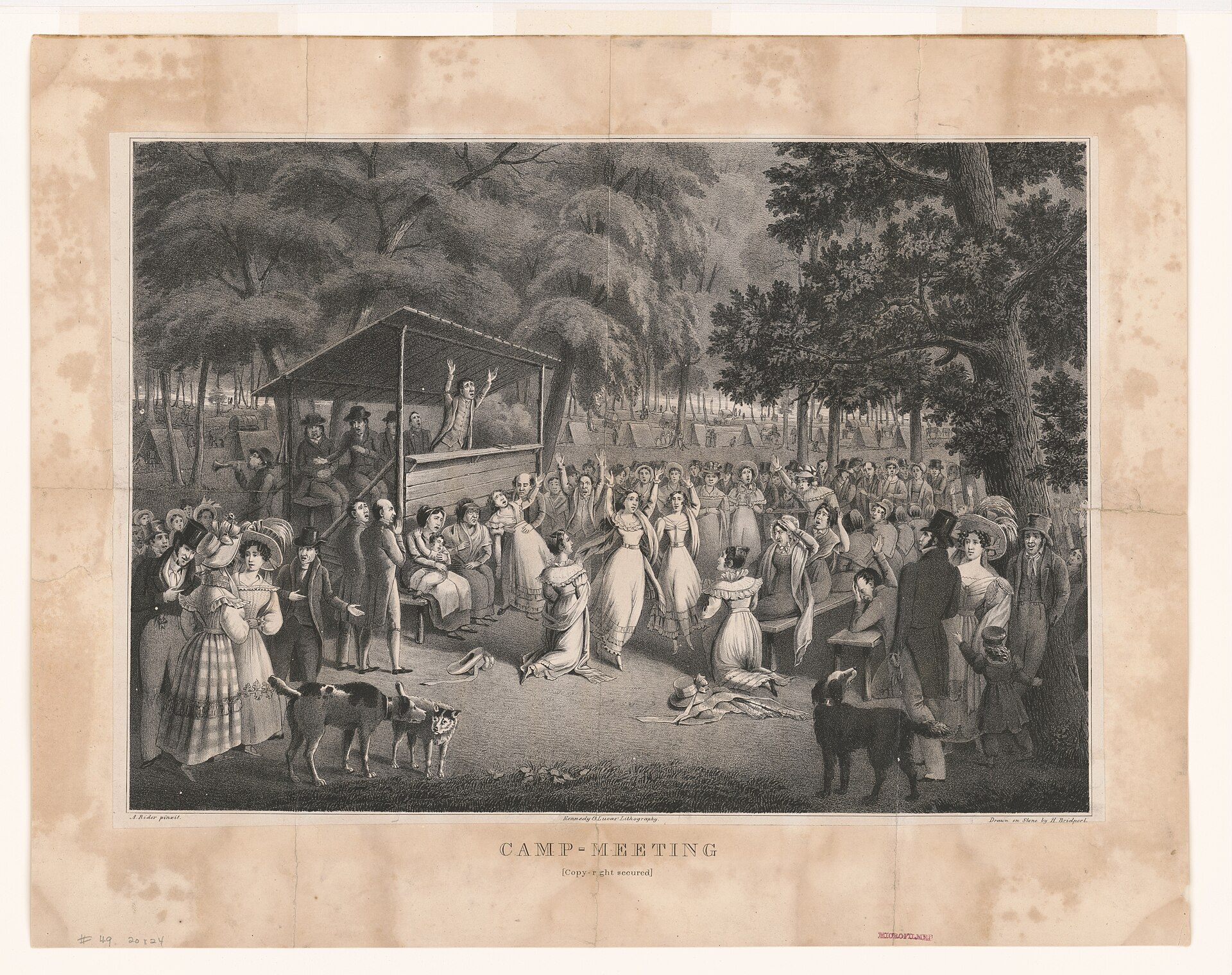
The second season of revival began in several places at once around 1800: Yale, the Presbyterian colleges of Virginia, and the Kentucky meetings led by James McGready. Lesson 08 follows the camp meeting from Logan County (1800) to Cane Ridge (August 1801). Barton W. Stone, the host minister at Cane Ridge, wrote in his autobiography that "It was judged, by military men on the ground, that there were between twenty and thirty thousand collected," and that "Four or five preachers were frequently speaking at the same time, in different parts of the encampment, without confusion."3 Stone wrote that account decades later, and he reported a judgment made by others. Modern accounts usually give a range of about 10,000 to 25,000, and Paul Conkin's Cane Ridge: America's Pentecost (1990) weighs the estimates (lesson 08 gives them with their sources). The honest summary is that the crowd was very large for a frontier county and that no one counted it.
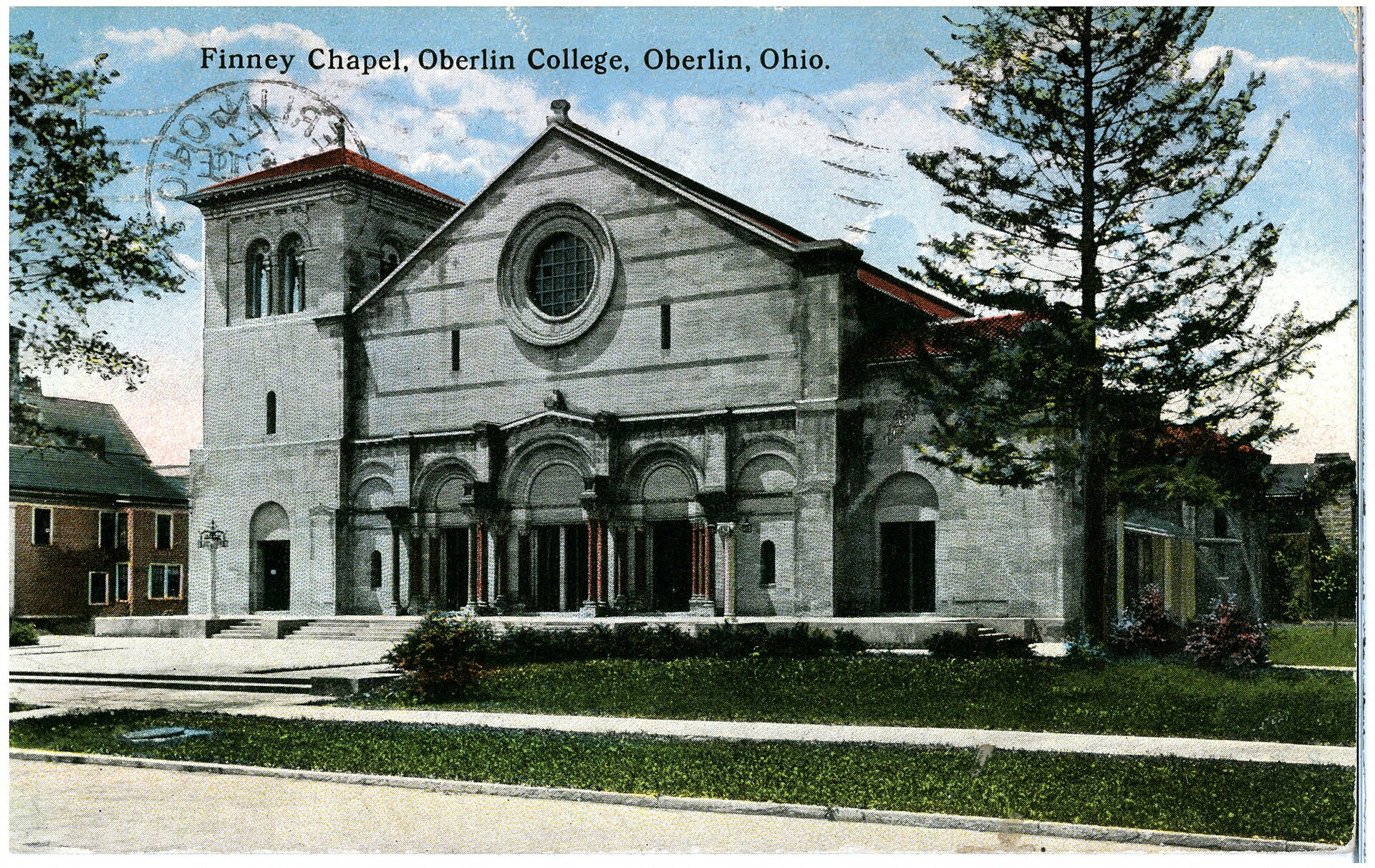
Charles Grandison Finney (1792 to 1875), a lawyer's apprentice converted in 1821, became the most famous revival preacher of the 1820s and 1830s. Lesson 09 follows his western New York revivals, the New Lebanon Convention of 1827 with Lyman Beecher and Asahel Nettleton, and the Rochester revival of 1830 to 1831. Lesson 10 sets out his theology from his own lectures. In the first of his Lectures on Revivals of Religion (1835) he said that revival is "not a miracle, or dependent on a miracle, in any sense," and that "It is a purely philosophical result of the right use of the constituted means."4 Lesson 11 follows him to Oberlin, where he taught from 1835 and served as president from 1851 to 1866, and where the college admitted Black students and women and became a center of abolition and of the teaching called Oberlin perfectionism.
Part five: the offshoots and Princeton (lessons 12 and 13)
Western New York, crossed by the Erie Canal and visited by revival after revival, gave birth or a home to several new movements, which Whitney Cross grouped under the name "the Burned-over District" in 1950. Lesson 12 describes, in their own founders' words, the Millerites and the Seventh-day Adventists who came from them, the Church of Jesus Christ of Latter-day Saints, the Spiritualists, the Shakers and the Oneida Community. Lesson 13 follows the theological war between Princeton (Archibald Alexander, Charles Hodge) and New Haven (Nathaniel William Taylor), which ran into the Presbyterian division of 1837 and 1838 and the reunion of 1869 and 1870.
Who is who
The table lists the people a reader meets most often in this module, with their dates, what they did, and the lesson where each is documented. Dates and roles are those established, with footnotes to primary sources, in the lessons named. The "school" column states how each person described his or her own theology or church, not a judgment of it.
| Person | Dates | Church or school | Why the person matters here | Lesson |
|---|---|---|---|---|
| Solomon Stoddard | 1643 to 1729 | Congregational, Northampton | Opened the Lord's Supper to members of good life; counted five "harvests"; Edwards's grandfather and predecessor | 01 |
| Jonathan Edwards | 1703 to 1758 | Congregational, Reformed (Calvinist) | Northampton revival, Sinners in the Hands of an Angry God, Religious Affections, Freedom of the Will | 02, 05 |
| George Whitefield | 1714 to 1770 | Church of England, Calvinist Methodist | Field preacher of the intercolonial revival; split with John Wesley over predestination | 03 |
| Gilbert Tennent | 1703 to 1764 | Presbyterian, New Side | "The Danger of an Unconverted Ministry" (1740) | 04 |
| Charles Chauncy | 1705 to 1787 | Congregational, Old Light (later a Universalist) | Chief critic of the revival's "enthusiasm" | 04 |
| James Davenport | 1716 to 1757 | Congregational itinerant | New London book burning (1743) and his later Retractations (1744) | 04 |
| Isaac Backus | 1724 to 1806 | Separate, then Baptist | An Appeal to the Public for Religious Liberty (1773) | 06 |
| John Leland | 1754 to 1841 | Baptist | Religious liberty in Virginia; the Cheshire cheese for Jefferson (1802) | 06 |
| Joseph Bellamy | 1719 to 1790 | Congregational, New Divinity | True Religion Delineated (1750); Edwards's student | 07 |
| Samuel Hopkins | 1721 to 1803 | Congregational, New Divinity | "Disinterested benevolence"; System of Doctrines (1793); Dialogue against slavery (1776) | 07 |
| John Witherspoon | 1723 to 1794 | Presbyterian (Church of Scotland) | President of the College of New Jersey; signer of the Declaration; common sense philosophy | 07 |
| Timothy Dwight | 1752 to 1817 | Congregational, Edwardsean | Yale president from 1795; Yale revival of 1802; Edwards's grandson | 07 |
| Lemuel Haynes | 1753 to 1833 | Congregational, New Divinity | Black minister in Vermont; preached against slavery and against Universalism | 07 |
| Francis Asbury | 1745 to 1816 | Methodist Episcopal | Bishop who organized the circuit system | 08 |
| James McGready | about 1763 to 1817 | Presbyterian | Kentucky sacramental meetings, Red River (1800) | 08 |
| Barton W. Stone | 1772 to 1844 | Presbyterian, then the "Christian" movement | Host minister at Cane Ridge (1801) | 08 |
| Peter Cartwright | 1785 to 1872 | Methodist | Circuit rider; Autobiography (1856) | 08 |
| Richard Allen | 1760 to 1831 | African Methodist Episcopal | First bishop of the AME Church (1816) | 08 |
| Lyman Beecher | 1775 to 1863 | Congregational, then Presbyterian (New School) | New England revivalist; temperance sermons; opposed Finney in 1827, later reconciled | 10, 13 |
| Asahel Nettleton | 1783 to 1844 | Congregational, Edwardsean | Revival preacher who opposed the new measures | 09, 10 |
| Nathaniel W. Taylor | 1786 to 1858 | Congregational, New Haven theology | Concio ad Clerum (1828): sin located in free choice | 13 |
| Charles G. Finney | 1792 to 1875 | Presbyterian, then Congregational; Oberlin theology | New measures; Lectures on Revivals (1835); Systematic Theology (1846 to 1847) | 09 to 11 |
| Theodore Dwight Weld | 1803 to 1895 | Finney convert; abolitionist | Lane debates (1834); American Slavery As It Is (1839) | 11 |
| Asa Mahan | 1799 to 1889 | Congregational, Oberlin | First president of Oberlin; Christian perfection | 11 |
| Archibald Alexander | 1772 to 1851 | Presbyterian, Old School | First professor of Princeton Seminary (1812) | 13 |
| Charles Hodge | 1797 to 1878 | Presbyterian, Old School | Princeton theologian; reviewed Finney in 1847 | 13 |
| William Miller | 1782 to 1849 | Baptist lay preacher; Adventist | Taught the return of Christ "about 1843" | 12 |
| Joseph Smith | 1805 to 1844 | Founder of the Church of Jesus Christ of Latter-day Saints | Book of Mormon (1830); organized the church April 6, 1830 | 12 |
| John Humphrey Noyes | 1811 to 1886 | Perfectionist; Oneida Community | Took perfectionism from the revival era into a communal society (1848) | 12 |
| Phoebe Palmer | 1807 to 1874 | Methodist; Holiness movement | The Way of Holiness (1843); "altar" teaching on sanctification | this lesson |
| Dwight L. Moody | 1837 to 1899 | Congregational layman; urban evangelist | British and American campaigns with Ira Sankey from 1873 | this lesson |
| Billy Sunday | 1862 to 1935 | Presbyterian evangelist | Former baseball player; "hitting the sawdust trail" | this lesson |
| Billy Graham | 1918 to 2018 | Southern Baptist evangelist | Crusades from 1949; the public invitation | this lesson |
The theological map: Calvinist to Arminian, placed by their own words
The argument that ran through all thirteen lessons was an argument about the human will and the grace of God. Who acts first in conversion: God, by a new birth that makes the sinner willing, or the sinner, by a choice the sinner is able to make? Is human nature sinful before any choice, or is sin only in choosing? Did Christ die to pay the debt of the elect, or to uphold God's moral government so that God may forgive any who repent? The answers form a range, from the Westminster Confession at one end to John Wesley and Charles Finney toward the other, though Wesley and Finney stand in different places, as the map below shows. The placements are a teaching device. Each one rests on the person's own words quoted here or in the lesson cited, and none is a verdict on who was right.
The Westminster Confession and Princeton
The Westminster Confession (1646), the standard of the Presbyterian churches and, with small changes, of the New England Congregationalists, holds that the human will has a real "natural liberty, that it is neither forced, nor, by any absolute necessity of nature, determined to good, or evil," and also that "Man, by his fall into a state of sin, hath wholly lost all ability of will to any spiritual good accompanying salvation: so as, a natural man, being altogether averse from that good, and dead in sin, is not able, by his own strength, to convert himself, or to prepare himself thereunto."5 Conversion therefore begins with God's act. This was the position the Princeton theologians defended against New Haven and against Finney (lesson 13).
Charles Hodge stated the Princeton spirit himself at the celebration of his fifty years as a professor in 1872. Speaking of Archibald Alexander and Samuel Miller, he said: "They were not given to new methods or new theories. They were content with the faith once delivered to the saints. I am not afraid to say that a new idea never originated in this Seminary."6 He meant it as praise of fidelity to received doctrine, and the sentences that follow explain his method: "The Bible is the word of God. That is to be assumed or proved. If granted; then it follows, that what the Bible says, God says. That ends the matter."6 The remark is often quoted as a joke against Princeton; in context it was a statement of what Hodge thought a seminary was for. Later the same day the Rev. R. G. Vermilye, bringing the congratulations of another seminary's faculty, said that Hodge "was right to-day, when he witnessed a good confession, in saying you never originated a new idea here," and added that the same theology could be found "in the archives of New England."6
Edwards and the New Divinity
Edwards accepted the Westminster account of sin and grace but changed the vocabulary of inability. In Freedom of the Will (1754) he separated two kinds of inability. A person is naturally unable to do something when he cannot do it even if he wills it. Moral inability is different: "Moral Inability consists not in any of these things; but either in the want of inclination; or the strength of a contrary inclination; or the want of sufficient motives in view, to induce and excite the act of the Will, or the strength of apparent motives to the contrary." He summed it up: "moral Inability consists in the opposition or want of inclination."7 The sinner can come to Christ in the sense that nothing outside his will prevents him, and cannot in the sense that he does not want to. The distinction let a Calvinist preacher urge every hearer to repent at once, which is what Edwards did at Enfield, and it gave the New Divinity men and later New England preachers the language of "natural ability" that Finney would push further. Lesson 05 draws the argument as a diagram.
Bellamy and Hopkins kept Edwards's Calvinism and pressed his ethics. Hopkins described true virtue as disinterested benevolence, a love for the good of God and the universe without regard to self, and argued against the slave trade in 1776 on those grounds. Later New Divinity writers, especially Nathanael Emmons, held that sin and holiness consist in "exercises" of the will rather than in an underlying nature. That step moved New England toward the position Taylor would take (lesson 07).
New Haven: Nathaniel Taylor
Nathaniel William Taylor, Dwight's student and professor at the Yale Divinity School, preached the Concio ad Clerum to the Connecticut clergy at Yale on September 10, 1828. He affirmed that mankind are "entirely depraved by nature," and then explained what he meant: "I do not mean that their nature is itself sinful, nor that their nature is the physical or efficient cause of their sinning; but I mean that their nature is the occasion, or reason of their sinning." Such is human nature, he went on, that in every fitting circumstance "they will sin and only sin."8 He described sin as an act: "all sin consists in freely preferring some inferior good to God."8 The phrase usually used to sum up the sermon, "sin is in the sinning," is a summary of this teaching; the sermon's own words are those quoted here. Taylor still held that God's purpose in election was sure; he did not call himself an Arminian, and his opponents at East Windsor (Bennet Tyler and the "Tylerites") said that he had given away too much (lesson 13).
Finney at Oberlin
Finney took the New England line further than Taylor. In his Lectures on Systematic Theology (the 1851 London edition, which revised the Oberlin edition of 1846 to 1847), he wrote: "Moral depravity cannot consist in any attribute of nature or constitution, nor in any lapsed and fallen state of nature; for this is physical and not moral depravity." He continued: "It cannot consist in anything back of choice, and that sustains to choice the relation of a cause. Whatever is back of choice, is without the pale of legislation."9 On the atonement he rejected the view that Christ paid a debt: "I must show that the atonement was not a commercial transaction." He argued instead from what he called public justice, the duty of a ruler to uphold law for the good of all: "public justice requires that he shall see, that a substitute for the execution of law is provided, or that something is done that shall as effectually secure the influence of law, as the execution of the penalty would do."10 That is the governmental account of the atonement, which came into New England through Jonathan Edwards Jr. and goes back to the Dutch jurist Hugo Grotius (lesson 10).
Hodge's review of the Systematic Theology in the Biblical Repertory and Princeton Review (April 1847) gave the Old School reply. The reviewer granted the book's force: "It is as hard to read as Euclid," and "If you grant his principles, you have already granted his conclusions." His objection was to the principles themselves and to the place of Scripture: "The scriptures are throughout recognized as a mere subordinate authority. They are allowed to come in and bear confirmatory testimony, but their place is altogether secondary."11 Finney's defenders replied then, and reply now, that he quoted Scripture constantly and held that reason and Scripture cannot conflict.
The Wesleyan position
The Methodists stood in a different place from both Princeton and Finney. John Wesley held, with the Calvinists, that human nature was fallen and that salvation was by grace alone, and held, against them, that grace was offered to all and could be resisted. His sermon "Free Grace" (1739), the cause of his public break with Whitefield, puts both halves in one sentence: "The grace or love of God, whence cometh our salvation, is FREE IN ALL, and FREE FOR ALL." He explained the first half in terms a Calvinist could accept: "It does not depend on any power or merit in man; no, not in any degree, neither in whole, nor in part."12 Where Finney located the sinner's ability in the will as created, Wesley located it in a grace that goes before conversion and restores the ability to respond. That is why the map below places Wesley near the Westminster Confession on the question of a sinful nature and near Finney on the question of whether grace can be refused. The Methodist and Holiness story is told in Module 80, lesson 07 and Module 77, lesson 01.
Is "awakening" a useful category?
The names "First Great Awakening" and "Second Great Awakening" are later labels. Edwards and Whitefield spoke of a "work of God," a "revival of religion" or "the late revival," and the preachers of 1800 spoke of revivals, camp meetings and the "work" in a given county. Historians who use the larger names mean that in certain decades the revivals were so widespread and so connected that they changed American religion as a whole.
McLoughlin and the cycle of awakenings
The most influential scheme came from William G. McLoughlin, the historian of the Baptist Isaac Backus and of Finney's revivalism. In Revivals, Awakenings, and Reform: An Essay on Religion and Social Change in America, 1607 to 1977 (1978), he separated a "revival," a local or regional season of conversions, from an "awakening," which he described as a period of cultural reorientation lasting a generation, in which a society revised its shared beliefs in response to social strain.13 His scheme is usually summarized as five periods: the Puritan Awakening (1610 to 1640), the First Great Awakening (1730 to 1760), the Second (1800 to 1830), the Third (1890 to 1920) and a Fourth, which he dated from about 1960 and which was still under way when he wrote. A sociological reference work summarizes the common dating more cautiously: the First Awakening is "generally placed in the 1740s," the Second ran "approximately 1800-1830," and a third is "occasionally associated with the years 1890-1920." The same article calls the cyclical, social-change account of awakenings "more contentious."14 The economist Robert Fogel later borrowed McLoughlin's scheme in The Fourth Great Awakening and the Future of Egalitarianism (2000).
What the "Third Great Awakening" means
Writers who speak of a Third Great Awakening, usually dated from the 1880s or 1890s to about 1920, have in mind several movements at once: the urban revivalism of Moody and later Billy Sunday, the Holiness camp meetings and the birth of Pentecostalism, the student volunteer movement for foreign missions, the Social Gospel of Walter Rauschenbusch and others, and the temperance crusade that ended in national Prohibition. Some writers start it earlier, with the "Businessmen's Revival" or prayer meeting revival of 1857 and 1858. The disagreement over its dates is itself evidence for the critics' point that the category groups unlike things together. A theologically conservative revivalist such as Sunday and a liberal Social Gospel theologian such as Rauschenbusch belong to the same "awakening" only if the term means a period of religious energy rather than a single movement.
The critics of the category
The strongest challenge came from Jon Butler. In "Enthusiasm Described and Decried: The Great Awakening as Interpretative Fiction" (Journal of American History, September 1982), Butler argued that the colonial revivals were scattered, regional and short, that they did not form a single intercolonial event, and that the name "Great Awakening" was largely the creation of nineteenth century writers, beginning with Joseph Tracy's The Great Awakening (1842).15 In Awash in a Sea of Faith (1990) he described American religious growth as a steadier process, driven by church building and denominational organization as much as by revival. Frank Lambert, in Inventing the "Great Awakening" (1999), agreed that the event was "invented" but argued that the revivalists themselves invented it in the 1740s, through newspapers, printed sermons and Whitefield's publicity, so that the Awakening was real as an event people believed they were living through.15 Thomas Kidd, in The Great Awakening (2007), defended the older category by documenting the revivals' reach and their continuity across several decades, while dropping the idea of a single tidy event. Lesson 02 and lesson 06 give these arguments in full.
A reader can take three things from the debate. First, the dates of local revivals (Northampton 1734 to 1735, the Connecticut Valley, Whitefield's tours of 1739 to 1741, Cane Ridge 1801, Rochester 1830 to 1831) are documented and are not in dispute. Second, whether those revivals add up to an "awakening" is a judgment of interpretation, and good historians disagree. Third, the cyclical theory, in which awakenings come every two or three generations as answers to social stress, is a model rather than a finding, and its predictive claims have not been tested in any agreed way.
From Finney to Moody, Billy Sunday and Billy Graham
Finney's Lectures on Revivals of Religion made revival a subject of method that could be taught, and the urban evangelists who came after him built organizations around that idea. The facts below come from the evangelists' own institutions or from careful biographical sources; the judgments about their influence are attributed.
Dwight L. Moody
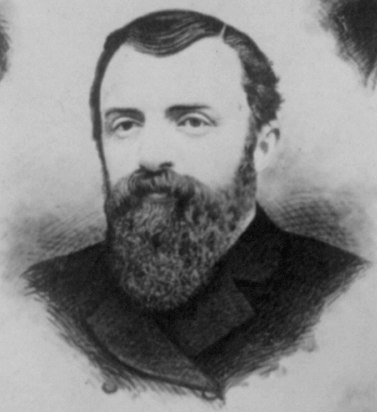
Dwight Lyman Moody was born at Northfield, Massachusetts, on February 5, 1837. His formal schooling ended after the fifth grade, and at seventeen he went to Boston to work in his uncle Samuel Holton's shoe store. There, on April 21, 1855, his Sunday school teacher Edward Kimball found him in the stockroom and spoke to him about Christ, and Moody was converted soon after. In Chicago he built a large mission Sunday school and became active in the YMCA during the revival of 1857 and 1858. In June 1873 Moody, his family and the singer Ira Sankey sailed from New York to Liverpool, and the two men held prayer, preaching and revival meetings throughout the United Kingdom and Ireland. In 1886 Moody, Emma Dryer and others founded the Chicago Evangelization Society, now the Moody Bible Institute, and he died on December 22, 1899.16 Moody was a layman who was never ordained, and he preached a short, plain gospel of God's love without Finney's systematic argument. Historians such as McLoughlin, in Modern Revivalism (1959), treat him as the man who brought business organization to revival: committees of local churches, advance planning, large halls and a singer who led the music.

Billy Sunday
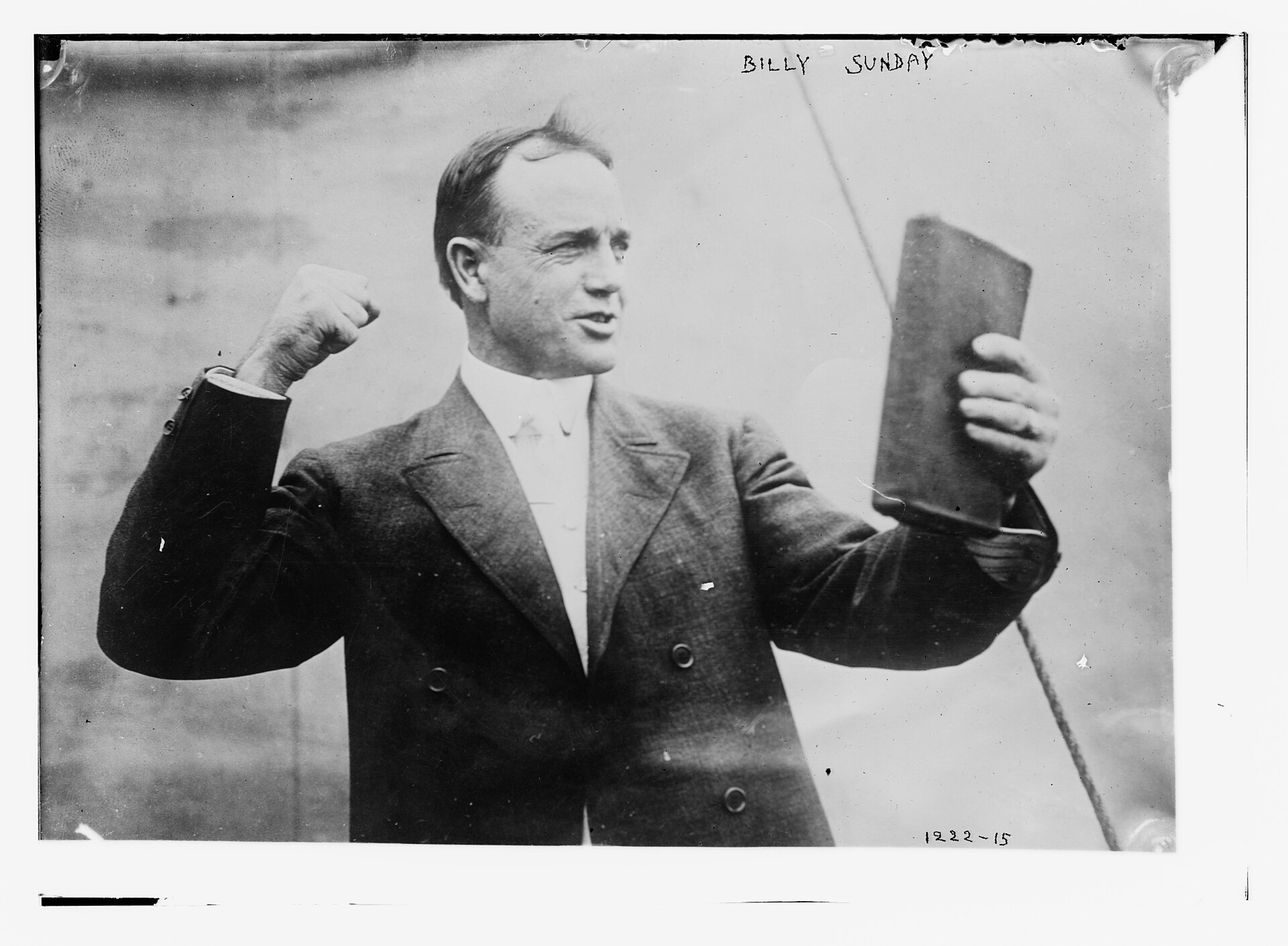
William Ashley Sunday was born on November 19, 1862, at Ames, Iowa. He played professional baseball for Chicago from 1883 and later for Pittsburgh and Philadelphia, ending his playing career in 1890. He was converted in 1886 at a meeting of the Pacific Garden Mission in Chicago. After working for another evangelist, he began his own campaigns in 1896 at Garner, Iowa, and he was ordained a Presbyterian minister in 1903. At the end of his services those who wished to declare their faith came forward to shake his hand, which was called "hitting the sawdust trail," after the sawdust spread on the floors of his temporary wooden tabernacles. For his New York campaign of 1917 about 68,000 converts were claimed, a number given by the campaign, and he spoke constantly against drink and was credited with helping the cause of temperance. He died in Chicago on November 6, 1935.17 The "converts" figure is a count of people who came forward, recorded by the campaign itself, and is not a count of lasting church members, a distinction that applies to every number of this kind from Finney's day to Graham's.

Billy Graham
William Franklin Graham Jr. was born on November 7, 1918, and was reared, in the association's words, "on a dairy farm in Charlotte, North Carolina." The 1949 Los Angeles Crusade made him a national figure, and the Billy Graham Evangelistic Association states that he "preached the Gospel to nearly 215 million people in more than 185 countries and territories" in live meetings, with "hundreds of millions more" reached by television, film and other media. He died on February 21, 2018.18 The figure of 215 million is the association's own total of attendance at meetings, not a count of individuals, since many people attended more than once. Each Graham crusade service ended with an invitation to come forward to make a "decision," followed by counseling by trained local volunteers and referral to local churches, a pattern that historians trace back from Graham through Sunday's sawdust trail and Moody's inquiry meetings to Finney's anxious seat and the Methodist mourners' bench.
The altar call and the invitation system
No practice of American revivalism has been argued over more than the public call for people to come forward. The record shows that it grew in stages and that Finney did not invent it, though he named, defended and spread one form of it.
Before Finney: the mourners' bench and the altar
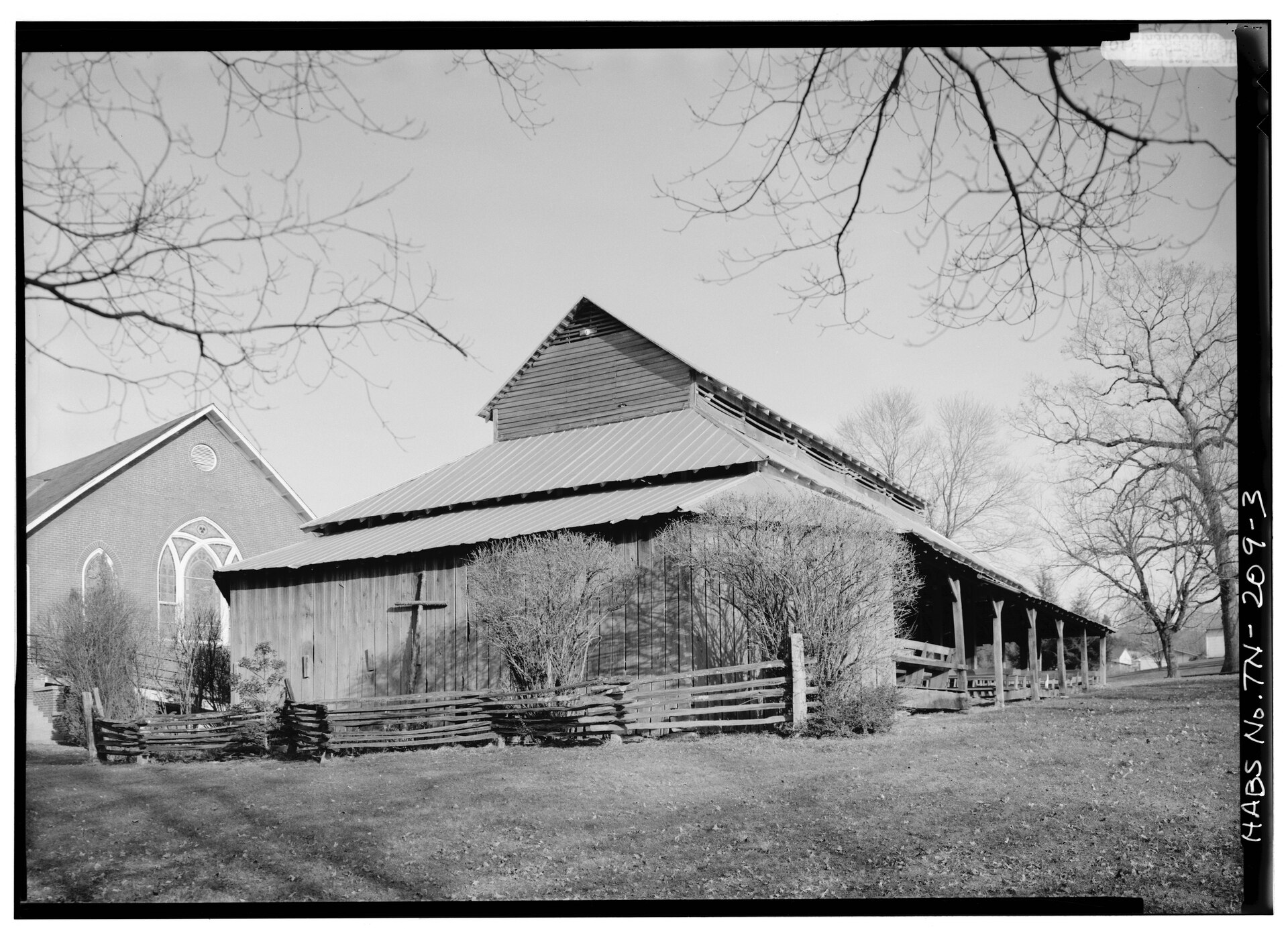
Methodist camp meetings in the early 1800s invited "mourners," people under conviction of sin, to come to a space before the preachers' stand, sometimes called the altar, to be prayed with. Peter Cartwright's Autobiography (1856) uses the language as already familiar. Describing one meeting he wrote, "The altar was crowded to overflowing with mourners," and in another, "I led him to the altar with the mourners." In a meeting where the response was overwhelming he wrote, "We had no need of a mourners' bench."19 Cartwright wrote his memoir in old age, and his stories are not always dated, but his usage shows that a mourners' bench and an altar for seekers were ordinary Methodist practice before or alongside Finney's work.
Finney's anxious seat
Finney's own account dates his regular use of the anxious seat to Rochester in 1830: "I had never, I believe, except in rare instances, until I went to Rochester, used as a means of promoting revivals, what has since been called 'the anxious seat.' I had sometimes asked persons in the congregation to stand up; but this I had not frequently done."20 In his fourteenth lecture on revivals he defined it: "By this I mean the appointment of some particular seat in the place of meeting, where the anxious may come and be addressed particularly, and be made subjects of prayer, and sometimes conversed with individually." He defended it on the ground that a troubled person tends to hide his trouble, and that a public step breaks "the chains of pride."21 The same lecture defends anxious meetings and protracted meetings, the other "new measures," and admits that "Of late this measure has met with more opposition than any of the others."21
The objections
The objections came first from fellow revivalists. Asahel Nettleton, the most successful New England revival preacher of the 1810s and 1820s, wrote to the Rev. Samuel Aikin of Utica from Albany on January 13, 1827, complaining that the new measures were dividing churches: "As we now have it, the great contest is among professors of religion," "a civil war in Zion." He described a church where "a desperate attempt to introduce the practice of females praying with males, raised an angry dispute which lasted all summer. And they had a revival of anger in the church, but no more conversions."22 Nettleton's Calvinist objection was that a public act could be mistaken for conversion itself, giving false assurance to people who had not been born again. Old School Presbyterians added that the method treated conversion as the result of technique. The anxious bench was later attacked in 1843 by John Williamson Nevin, a German Reformed theologian at Mercersburg, in a book called The Anxious Bench, from the standpoint of the church's sacraments and catechism.
Modern critics from the Reformed side, such as Iain Murray in Revival and Revivalism (1994), have argued that the invitation system blurred the line between revival as God's act and revivalism as a human method. Defenders from the Wesleyan, Baptist and broader evangelical traditions answer that Scripture calls for public confession of faith, that the invitation is only a means, and that Finney himself insisted the Spirit is the agent. The question is a theological one, about how grace and human choice relate in conversion, and the answers follow the map in the previous section.
The Holiness and Pentecostal lines
A second line runs from the revivals of this module to churches that now count their members in the hundreds of millions. It passes through the teaching that a Christian may receive, after conversion, a second work of grace that cleanses the heart from sin. John Wesley taught Christian perfection, Finney and Asa Mahan taught their own form of it at Oberlin from the late 1830s (lesson 11), and in New York City a Methodist laywoman turned it into a popular movement. The full history is in Module 77, lesson 01; what follows connects it to this module.
Phoebe Palmer and "the altar"
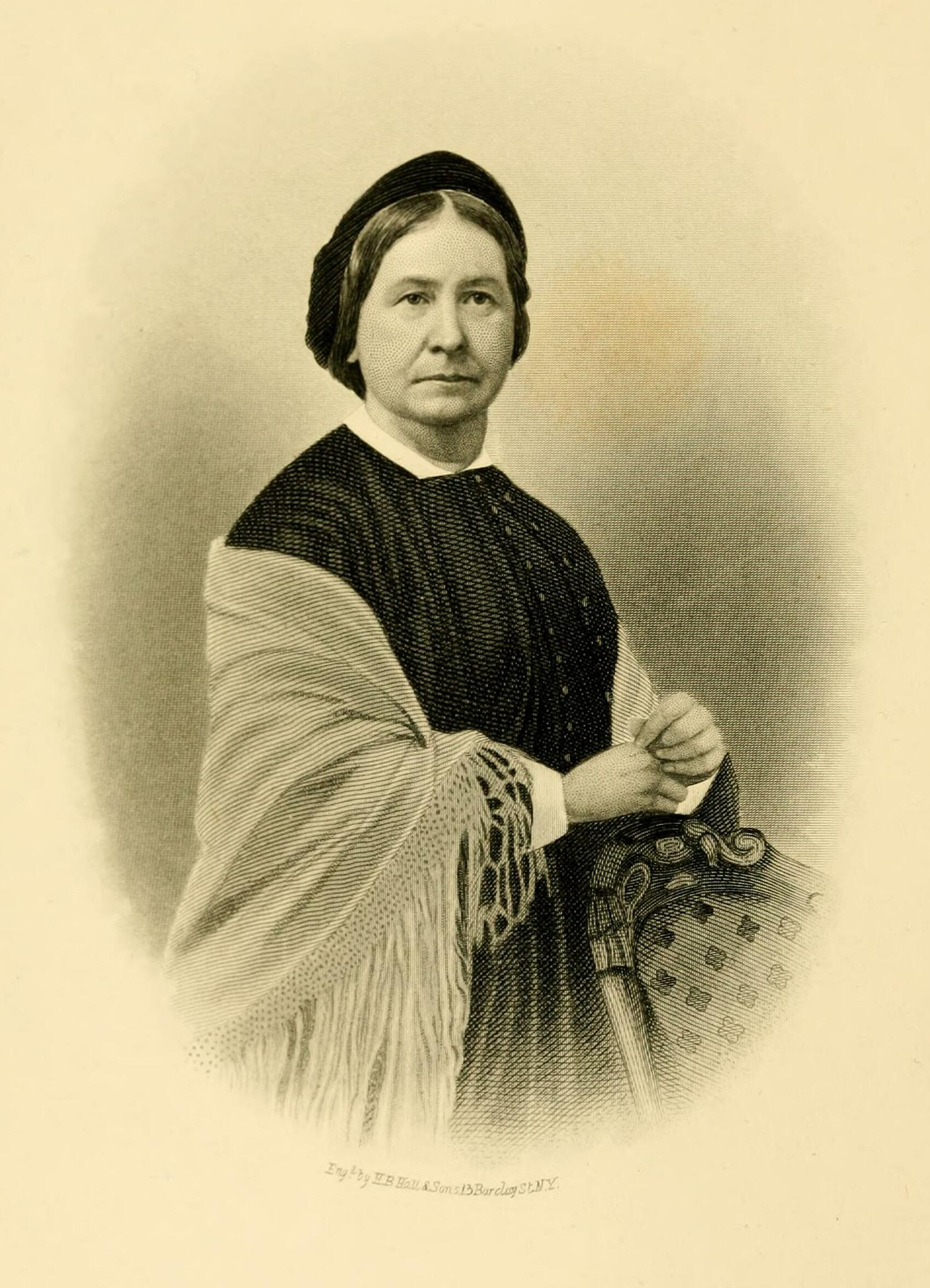
Phoebe Palmer (1807 to 1874) led the Tuesday Meeting for the Promotion of Holiness in her home in New York and wrote The Way of Holiness (1843), a narrative of her own experience told in the third person. A chapter titled "Is There Not a Shorter Way?" asks whether the believer must wait years for entire sanctification. Her answer was that the believer could place body, soul and spirit upon "this altar that sanctifieth the gift" (the phrase of Matthew 23:19) and trust God's promise to accept the offering. The book describes her own act of consecration as "laying all upon the altar." In the prayer it records at that moment she gives herself, "with all these redeemed powers," to God "to be for ever thine!"23 (The scanned copy of the 1843 printing is damaged at this point, so only the clearly legible words are quoted.) The teaching borrowed the logic of Finney's appeal for immediate decision and applied it to sanctification. Methodist leaders were divided over it, and the National Camp Meeting Association for the Promotion of Holiness, founded in 1867, carried it into the Holiness churches of the late nineteenth century, such as the Church of the Nazarene.

From Holiness to Pentecost
Some Holiness teachers came to describe the second blessing as a baptism of the Holy Spirit, and some looked for the signs of the day of Pentecost in Acts 2. In Topeka, Kansas, a Bible school led by Charles Parham taught that speaking in tongues was the evidence of that baptism. In 1906 the preaching of William J. Seymour, a Black Holiness preacher who had studied briefly with Parham, drew crowds to a mission on Azusa Street in Los Angeles. The first issue of the mission's paper, The Apostolic Faith (September 1906), opened: "The power of God now has this city agitated as never before. Pentecost has surely come and with it the Bible evidences are following." It traced the work to a group in Topeka "under the leadership of Charles Parham."24 Pentecostal churches such as the Assemblies of God (1914) and the Church of God in Christ, and the later charismatic movement, descend from these meetings. The camp meeting, the altar call and the expectation of a dateable experience of God all passed from the revivals of this module into that tradition.
Bebbington's quadrilateral and the revivals
The most widely used definition of evangelicalism comes from the British historian David Bebbington, in Evangelicalism in Modern Britain: A History from the 1730s to the 1930s (1989). The National Association of Evangelicals summarizes his four marks this way: conversionism, "the belief that lives need to be transformed through a 'born-again' experience and a life long process of following Jesus"; biblicism, "a high regard for and obedience to the Bible as the ultimate authority"; activism, "the expression and demonstration of the gospel in missionary and social reform efforts"; and crucicentrism, "a stress on the sacrifice of Jesus Christ on the cross as making possible the redemption of humanity."25 Module 77, lesson 03 explains the definition and its critics.
Bebbington dated the start of evangelicalism to the 1730s, the decade of Northampton and of Wesley's conversion, and the figures of this module show why. Each mark can be traced in their own words:
- Conversionism. Edwards's Faithful Narrative is a catalogue of conversions; Finney's Memoirs open with his own. The difference between them is the theology of how conversion happens, which the map above sets out.
- Biblicism. Hodge's "what the Bible says, God says. That ends the matter" and Finney's constant appeal to Scripture both belong here, even though Hodge's review charged Finney with making Scripture "a mere subordinate authority."611
- Activism. Whitefield's orphanage, the Baptist petitions for religious liberty, Oberlin's admission of Black students and women, and the temperance and antislavery societies all came from revival converts.
- Crucicentrism. All the figures preached the cross, but the meaning of the atonement divided them: penal substitution for Westminster and Princeton, the governmental account for Edwards Jr., Taylor and Finney.
Critics of the quadrilateral, including some historians of American religion, say that it fits the British and northern revival tradition better than African American churches, Pentecostal churches or confessional Lutherans, and that it describes attitudes without the doctrines that churches themselves use to define their faith. The revivals of this module are a fair test: every figure in them meets all four marks, yet they disagreed sharply on doctrine.
Revivals and American public life
Revival converts formed societies, and the societies entered public life. Three causes connect most closely to the figures of this module: religious liberty, abolition and temperance. In each case the record shows revival people on more than one side, and none of the causes can be credited to the revivals alone.
Religious liberty
The Baptists and Separates who came out of the First Awakening suffered under the tax laws of New England and the licensing laws of Virginia, and their petitions supported the Virginia Statute (1786) and the end of the New England establishments. Jefferson's reply to the Danbury Baptists (January 1, 1802) is the best known product of that alliance.2 The growth of dissenting churches in the revival era made a single established church impossible to maintain in most states, though the First Amendment itself had many sources besides the revivals. See lesson 06 and the lesson on the Bill of Rights.
Abolition
The record on slavery runs in more than one direction. Edwards and Whitefield owned enslaved people, and Whitefield argued for allowing slavery in Georgia (lesson 03, lesson 05). Hopkins and Edwards Jr. wrote against the slave trade in the 1770s and 1790s, and Lemuel Haynes preached against slavery (lesson 07). Finney's converts, above all Theodore Weld, led the western antislavery movement; Finney barred slaveholders from communion in his churches but preferred revival to political abolitionism, and Oberlin became a center of resistance to the Fugitive Slave Law (lesson 11). Methodists and Baptists split along sectional lines over slavery in 1844 and 1845, and the New School and Old School Presbyterians in 1857 and 1861 (lesson 13). Revival preachers in the South defended slavery from Scripture with the same Bible their northern brethren used against it, a fact Mark Noll treats at length in The Civil War as a Theological Crisis (2006).
Temperance
Lyman Beecher, the Connecticut revivalist who opposed Finney's measures in 1827, preached six sermons on intemperance at Litchfield in 1826. "Intemperance is the sin of our land," he said, "and with our boundless prosperity, is coming in upon us like a flood." A note in the printed edition records that "since that time" the American Society for the Promotion of Temperance "has been formed; and is now in successful operation."26 The temperance movement ran from those sermons through Finney's Oberlin, which banned alcohol, to the Woman's Christian Temperance Union (1874), Billy Sunday's campaigns and the Eighteenth Amendment (ratified 1919). Women who learned to pray and speak in revival meetings, a practice Finney allowed and Nettleton condemned, became the leaders of temperance and of the women's rights movement; Antoinette Brown and Lucy Stone, both Oberlin graduates, are examples (lesson 11).
Who grew and who shrank
The revivals also changed which churches were large. The sociologists Roger Finke and Rodney Stark, in The Churching of America, 1776 to 1990 (1992), estimated each denomination's share of all religious adherents in 1776 and 1850. Their figures for 1776 are built from counts of congregations multiplied by estimated congregation sizes, and their 1850 figures from the federal census of churches, so both columns are estimates.27 The chart shows their percentages. The two churches that used revival methods most freely, the Methodists and Baptists, grew fastest; the three colonial establishments, Congregational, Episcopal and Presbyterian, lost their share. Finke and Stark explained the change by the energy of churches that competed for members in an open religious market, a reading that Nathan Hatch, in The Democratization of American Christianity (1989), puts in terms of popular preachers who addressed ordinary people in their own language. Other historians stress immigration, which explains most of the Catholic growth.

The primary texts to read first
A reader who wants to go from this module to the sources can begin with the short list below. Each text is in the public domain or published free online by the institution named, and each is the text cited in the lessons of this module.
- Jonathan Edwards, A Faithful Narrative of the Surprising Work of God (1737) and Sinners in the Hands of an Angry God (1741). The standard text is The Works of Jonathan Edwards Online at the Jonathan Edwards Center, Yale University; the 1741 Boston printing of Sinners is reproduced at the University of Nebraska Digital Commons. Read the Narrative for what a revival looked like to its pastor and Sinners for what the preaching sounded like. (Lesson 02.)
- Benjamin Franklin, Autobiography, the Whitefield passage. Project Gutenberg, eBook 20203. An observer's account by a friendly skeptic. (Lesson 03.)
- Gilbert Tennent, The Danger of an Unconverted Ministry (1740), and Charles Chauncy, Seasonable Thoughts on the State of Religion in New England (1743). The two sides of the New Light and Old Light quarrel, both on archive.org. (Lesson 04.)
- Jonathan Edwards, A Treatise Concerning Religious Affections (1746) and Freedom of the Will (1754). Edwards's tests for true religion and his account of the will; Freedom of the Will at the Christian Classics Ethereal Library. (Lesson 05.)
- Isaac Backus, An Appeal to the Public for Religious Liberty (1773), and the Danbury Baptists' letter with Jefferson's reply (1801 and 1802). The reply is at the Library of Congress. (Lesson 06.)
- Barton W. Stone, The Biography of Eld. Barton Warren Stone, Written by Himself (1847). The host's account of Cane Ridge; archive.org. (Lesson 08.)
- Peter Cartwright, Autobiography (1856). The Methodist circuit rider's world; archive.org, 1857 printing. (Lesson 08.)
- Charles G. Finney, Lectures on Revivals of Religion (1835), Lectures I and XIV, and Memoirs (1876). Finney's case for means and measures, and his own story; Lecture I at gospeltruth.net and the Memoirs at archive.org. (Lessons 09 and 10.)
- Letters of the Rev. Dr. Beecher and Rev. Mr. Nettleton on the "New Measures" (1828). The critics of 1827 in their own words; archive.org. (Lesson 10.)
- Finney, Lectures on Systematic Theology (1846 to 1847, revised 1851), and Hodge's review (1847). The doctrine and its Old School answer side by side; the 1851 text at gospeltruth.net and the Biblical Repertory and Princeton Review for 1847 at archive.org. (Lesson 10.)
- Nathaniel W. Taylor, Concio ad Clerum (1828). The New Haven theology in one sermon; archive.org. (Lesson 13.)
- The Joseph Smith Papers, the First Vision accounts (1832, 1835, 1838). Published by the Church of Jesus Christ of Latter-day Saints at josephsmithpapers.org. (Lesson 12.)
- Proceedings Connected with the Semi-centennial Commemoration of the Professorship of Rev. Charles Hodge (1872). Hodge's own account of Princeton; archive.org. (Lesson 13.)
- Phoebe Palmer, The Way of Holiness (1843). The Holiness "altar" teaching; archive.org. (This lesson.)

What the record shows and what it does not
- Documented fact: the dates of the major revivals and publications in the timeline; the texts of the sermons, lectures, confessions and letters quoted in this module; Edwards's and Whitefield's ownership of enslaved people; Finney's own statements on the anxious seat, on sin and on the atonement; the Presbyterian division of 1837 and 1838 and the reunion of 1869 and 1870.
- A preacher's or movement's own claim: conversion totals reported by Edwards, Finney, Moody's and Sunday's campaigns and the Billy Graham Evangelistic Association; the judgment of "military men" on the Cane Ridge crowd that Stone reported; the founders' accounts of visions and revelations in lesson 12.
- Later tradition: stories such as Edwards's hearers clutching the pillars at Enfield, the "thundering" Sinners sermon, and the slogan form "sin is in the sinning."
- Scholarly reading: that the revivals formed "Great Awakenings" at all (McLoughlin, Kidd) or did not (Butler); how far the First Awakening prepared the Revolution (Heimert, Bonomi against Butler and Wood); the market account of church growth (Finke and Stark); the democratization thesis (Hatch); Paul Johnson's social reading of Rochester.
- Open question: whether revival conversions were the work of God, of human method or both, which no historical record can settle, and which Calvinist, Wesleyan and Finneyite writers answered differently from their theology.
Claims checked
| Claim | Rating | Evidence |
|---|---|---|
| "The Great Awakening caused the American Revolution." | Unsupported | Alan Heimert (1966) and others argued that revival habits of dissent, voluntary association and millennial hope prepared colonists for resistance; Jon Butler and Gordon Wood answered that the revivals were too early, too scattered and too divided to cause a political revolution three decades later. Thomas Kidd's God of Liberty (2010) takes a middle position. No historian cited in this module claims simple causation. See lesson 06. |
| "Edwards read Sinners in a thundering voice and people fainted." | Partly supported | The diary of Stephen Williams, a minister present at Enfield on July 8, 1741, records loud crying out in the meeting so that the sermon could not be finished (lesson 02). No eyewitness describes a thundering voice; later accounts describe Edwards as a quiet reader of his manuscript. The crying out is documented; the voice is legend. |
| "Whitefield could be heard by 30,000 people." | Partly supported | Franklin computed that Whitefield "might well be heard by more than thirty thousand," by pacing the distance and allowing two square feet for each hearer.1 That is an estimate of how many could have heard, not a count of a crowd. |
| "Cane Ridge drew 25,000 people." | Unresolved | Stone reported that "military men on the ground" judged the crowd at "between twenty and thirty thousand."3 No count was made; modern estimates run from about 10,000 to 25,000. Treat any single figure as an estimate. |
| "Finney invented the altar call." | Refuted | Methodist meetings invited mourners to the altar or a mourners' bench before Finney's revivals, as Cartwright's usage shows.19 Finney himself dated his regular use of the anxious seat to Rochester in 1830.20 He named, defended and spread one form of the invitation; he did not originate the practice. |
| "Finney was a Pelagian." | Unresolved | Finney denied that moral depravity can "consist in any attribute of nature or constitution."9 Pelagius denied that Adam's sin passed a corrupted nature to his descendants (Module 79, lesson 06). Critics from Hodge to B. B. Warfield judged Finney's system Pelagian in substance; Finney and his defenders replied that he held the Holy Spirit's work necessary to conversion and denied the label. Whether the label fits depends on the definition one adopts. See lesson 10. |
| "The Second Great Awakening ended slavery." | Unsupported | Revival converts such as Theodore Weld led antislavery societies, and Oberlin resisted the Fugitive Slave Law; other revival preachers and churches defended slavery, and the churches split over it. Slavery ended through the Civil War and the Thirteenth Amendment (1865). See lesson 11. |
| "William Miller set October 22, 1844 himself." | Refuted | Miller had spoken of the return of Christ "about 1843." The date of October 22, 1844 came from Samuel S. Snow's "seventh month" message in the summer of 1844, which Miller accepted only shortly before the day. See lesson 12. |
| "Hodge said no new idea was ever taught at Princeton." | Partly supported | His words in 1872 were "I am not afraid to say that a new idea never originated in this Seminary," said of Alexander and Miller as praise of fidelity to received doctrine.6 The common paraphrase changes "originated" to "taught" and drops the context. |
| "The revivals were a frontier phenomenon of the uneducated." | Refuted | The revivals began at Northampton under a Yale graduate, reached Yale in 1802 under its president, and at Rochester in 1830 drew lawyers, merchants and their families; Finney wrote that "numbers" of the lawyers "came forward to the anxious seat."20 Camp meetings were one form among several. |
| "Billy Graham preached to more than 200 million people." | Supported | As the organization's own figure: the Billy Graham Evangelistic Association gives "nearly 215 million people in more than 185 countries and territories" in live meetings.18 The total is an attendance figure compiled by the association and counts repeat attendance. |
| "Evangelicalism was born in the revivals of the 1730s." | Partly supported | That is Bebbington's thesis, widely accepted.25 Others trace evangelical roots back to the Puritans and Pietists of the seventeenth century (Module 77, lesson 01). |
Hard questions and answers
A Calvinist asks: if revival is God's work, how could Finney call it the result of means?
Finney answered the question himself. He said that revival "is not a miracle" because the laws of mind are not suspended, and that it is "the right use of the constituted means," but he also said in the same lecture that "there are three agents employed in the work of conversion, and one instrument," naming God, the person who brings the truth, and the sinner himself, and adding, "The instrument is the truth."4 The Old School reply, given by Nettleton, Hodge and Nevin, was that a theology which locates sin only in choice will treat conversion as a choice the preacher can secure, and will mistake a public step for the new birth.2211 Edwards stands between them: he called the Northampton revival a "surprising work of God" and also preached for immediate response, holding that God uses means without being bound to them. The evidence of the revivals cannot settle which theology is true, since every school claimed the same revivals as proof.
A Wesleyan asks: if Edwards believed sinners could not convert themselves, why did he urge them to repent at once?
Edwards's answer was his distinction between natural and moral inability. Sinners have every natural power needed to repent; what they lack is the inclination, and "moral Inability consists in the opposition or want of inclination."7 So a preacher may call every hearer to repent now, and a hearer who refuses is responsible, while conversion still depends on God's grace changing the inclination. Wesley gave a different answer to the same problem: grace goes before every person and restores the ability to respond, and that grace is "FREE FOR ALL."12 Both men preached for decision; they disagreed about where the power to decide comes from.
A Catholic asks: were revivals a Protestant novelty without church authority?
The revivals of this module were Protestant and grew out of Reformed and Methodist churches, and their critics within Protestantism, such as Nevin at Mercersburg, made a similar objection: that the anxious bench put an individual decision in the place of the church's sacraments and teaching. Preaching campaigns meant to stir a whole parish were not unique to Protestants. The historian Jay Dolan, in Catholic Revivalism: The American Experience, 1830 to 1900 (1978), described how Redemptorist, Jesuit and Paulist preachers held parish missions in American Catholic churches with sermons on sin, judgment and conversion, ending in confession and communion. The difference lay less in the call to conversion than in where the convert was sent: to the sacraments of the Church, or to a decision and a congregation of the convert's choosing.
A Latter-day Saint asks: how does this module treat Joseph Smith's First Vision?
Lesson 12 presents the 1832, 1835 and 1838 accounts as the Church of Jesus Christ of Latter-day Saints publishes them in the Joseph Smith Papers, places them in the religious excitement of western New York that Smith himself described, and records what others answered, with attribution. It does not judge whether the vision or the Book of Mormon was a revelation from God. The same rule applies to William Miller's reading of Daniel, to Ellen G. White's visions and to the claims of the Spiritualists. History can establish when and where people said they saw or heard something and what they and others did next; it cannot rule on the truth of a revelation.
A skeptic asks: weren't the conversions just crowd psychology?
The question is as old as the revivals. Charles Chauncy attributed the outcries of the 1740s to the passions and to "enthusiasm," and Edwards answered in The Distinguishing Marks (1741) and Religious Affections (1746) that bodily effects prove nothing either way and that the test of true religion is a changed life over time (lesson 04, lesson 05). Finney said openly that revival follows natural laws of the mind.4 Historians can measure what followed: church membership, new congregations, societies founded, and the lives of particular converts. They cannot measure whether God acted. A reader who believes God works through natural means and a reader who believes no God acts will read the same records differently, and both readings are compatible with the documents.
Is there a Great Awakening now?
McLoughlin dated a Fourth Great Awakening from about 1960, and Fogel wrote of one in 2000, but the debate over the category applies with more force to the present than to the past.1314 The patterns traced in this module still appear: the public invitation, the emphasis on a dateable conversion, the growth of churches that compete for members, the tie between revival and reform, and the argument between Calvinist and Arminian accounts of conversion. Whether a future historian will group the religious movements of the late twentieth and early twenty-first centuries into an "awakening" is a question the documents of this module cannot answer. They do show that the people who lived through the first two awakenings argued about what was happening while it happened, and that their arguments, preserved in their own words, are still the best guide to what they believed.
Learn more
- The Works of Jonathan Edwards Online (Jonathan Edwards Center, Yale): The standard critical text of Edwards, free online, for the Faithful Narrative, Sinners, Religious Affections and Freedom of the Will.
- Finney's works at gospeltruth.net: The 1835 Lectures on Revivals, the 1846 to 1847 and 1851 Systematic Theology and other writings in full, to read Finney in his own words.
- Finney, Memoirs (1876), archive.org: Finney's own account of his conversion, the western revivals and Rochester.
- Letters of Beecher and Nettleton on the New Measures (1828): The objections of 1827 to Finney's methods in the critics' own words.
- Proceedings of the Hodge Semi-centennial (1872): Read Hodge's "new idea" remark in its full context, with the replies of other speakers.
- The Joseph Smith Papers: The First Vision accounts and early records as published by the Church of Jesus Christ of Latter-day Saints.
- Rhys H. Williams, "Great Awakenings" (Hartford Institute): A short reference article on how scholars date and debate the awakenings.
- Sinners in the Hands of an Angry God, 1741 Boston printing (University of Nebraska Digital Commons): The sermon as first printed.
Still being checked (8 items)
These points could not be confirmed against a primary source when this lesson was written and fact checked in October 2026. The text above states each one as uncertain.
- McLoughlin's five-period scheme (Puritan 1610 to 1640, First 1730 to 1760, Second 1800 to 1830, Third 1890 to 1920, Fourth from about 1960) is given from common summaries of Revivals, Awakenings, and Reform (1978); the book was not checked page by page in this task.
- The Finke and Stark percentages for 1776 and 1850 were taken from a table on David Bromley's VCU course page, which does not itself name the table's source; they match the figures commonly cited from The Churching of America, but the book's page was not opened. The six pairs of figures were re-read on the VCU page for this check and match the lesson's chart.
- The page numbers given for Stone's Cane Ridge account (pp. 37 to 38) are approximate, read from the OCR text of the 1847 scan.
- The Moody Bible Institute biography page did not render its text for this check; Moody's birth (February 5, 1837), work at the Holton shoe store, conversion on April 21, 1855, the June 1873 United Kingdom campaign, the Chicago Evangelization Society (1886) and his death (December 22, 1899) were confirmed instead from Christian History magazine, issue 25 (christianitytoday.com). That Moody was never ordained, and McLoughlin's reading of him in Modern Revivalism (1959), were not checked against a source.
- Jay Dolan's account of Catholic parish missions in Catholic Revivalism (1978) is summarized from general knowledge of the book, not from a page opened in this task.
- Butler's and Lambert's arguments are summarized, not quoted; their exact wording is given in lessons 02 and 06.
- The scanned 1843 printing of Palmer's The Way of Holiness is damaged in the prayer passage; only legible words are quoted.
- The figure of about 68,000 converts for Billy Sunday's 1917 New York campaign is the campaign's own claim as reported by the SABR biography, not an independent count.
Notes
- Benjamin Franklin, Autobiography of Benjamin Franklin, ed. Frank Woodworth Pine (New York: Henry Holt, 1916), chapter on Whitefield's preaching in Philadelphia (the courthouse steps passage), Project Gutenberg eBook 20203 (retrieved Oct. 28, 2026). Read it online. ↩
- Thomas Jefferson to Nehemiah Dodge, Ephraim Robbins and Stephen S. Nelson, a committee of the Danbury Baptist Association, January 1, 1802, final letter text as given by the Library of Congress, Information Bulletin, June 1998 (retrieved Oct. 28, 2026). Read it online. ↩
- Barton W. Stone, The Biography of Eld. Barton Warren Stone, Written by Himself, with Additions and Reflections by Elder John Rogers (Cincinnati: J. A. and U. P. James, 1847), about pp. 37 to 38, on the Cane Ridge meeting of August 1801; archive.org scan (retrieved Oct. 28, 2026). Read it online. ↩
- Charles G. Finney, Lectures on Revivals of Religion (New York: Leavitt, Lord and Co., 1835), Lecture I, "What a Revival of Religion Is," sections I and III; text of the 1835 edition at gospeltruth.net (retrieved Oct. 28, 2026). Read it online. ↩
- The Westminster Confession of Faith (1646), chapter IX, "Of Free Will," sections 1 and 3, text as published by the Orthodox Presbyterian Church (retrieved Oct. 28, 2026). Read it online. ↩
- Proceedings Connected with the Semi-centennial Commemoration of the Professorship of Rev. Charles Hodge, D.D., LL.D., in the Theological Seminary at Princeton, N.J., April 24, 1872 (New York: Anson D. F. Randolph, 1872), "Address of Rev. Dr. Hodge," pp. 52 to 53, and "Address of Rev. Dr. R. G. Vermilye," pp. 80 to 81; archive.org scan (retrieved Oct. 28, 2026). Read it online. ↩
- Jonathan Edwards, A Careful and Strict Enquiry into the Modern Prevailing Notions of That Freedom of Will (Boston, 1754), Part I, section 4, "Of the Distinction of Natural and Moral Necessity, and Inability"; text at the Christian Classics Ethereal Library. The standard critical text is vol. 1 of The Works of Jonathan Edwards (Yale University Press, ed. Paul Ramsey, 1957) (retrieved Oct. 28, 2026). Read it online. ↩
- Nathaniel W. Taylor, Concio ad Clerum: A Sermon Delivered in the Chapel of Yale College, September 10, 1828 (New Haven: Hezekiah Howe, 1828; archive.org scan of the reprint by A. H. Maltby and Homan Hallock, New Haven, 1842), the passages on depravity by nature and on sin as "freely preferring some inferior good to God" (retrieved Oct. 28, 2026). Read it online. ↩
- Charles G. Finney, Lectures on Systematic Theology, ed. George Redford (London: William Tegg, 1851), Lecture XXXVIII, "Moral Depravity," the section on what moral depravity cannot consist in; text of the 1851 London edition at gospeltruth.net (retrieved Oct. 28, 2026). Read it online. ↩
- Charles G. Finney, Lectures on Systematic Theology (London, 1851), Lecture XXXIV, "Atonement," section I, principle 10 (public justice), and section V, item 2 ("the atonement was not a commercial transaction"); gospeltruth.net (retrieved Oct. 28, 2026). Read it online. ↩
- [Charles Hodge], review of Charles G. Finney, Lectures on Systematic Theology (Oberlin, 1846), The Biblical Repertory and Princeton Review 19, no. 2 (April 1847), art. VI, pp. 237 to 238; archive.org scan of the volume (retrieved Oct. 28, 2026). Read it online. ↩
- John Wesley, "Free Grace" (sermon preached at Bristol, 1739), sections 2 and 3, in The Sermons of John Wesley, 1872 edition (Thomas Jackson), Sermon 128; Wesley Center Online, Northwest Nazarene University (retrieved Oct. 28, 2026). Read it online. ↩
- William G. McLoughlin, Revivals, Awakenings, and Reform: An Essay on Religion and Social Change in America, 1607 to 1977 (Chicago: University of Chicago Press, 1978), chapter 1 (definitions of revival and awakening) and the book's periodization; catalog record at archive.org. The five-period summary in the text follows common summaries of the book and was not checked page by page (retrieved Oct. 28, 2026). Read it online. ↩
- Rhys H. Williams, "Great Awakenings," in Encyclopedia of Religion and Society, ed. William H. Swatos Jr. (Walnut Creek, Calif.: AltaMira, 1998), online at the Hartford Institute for Religion Research (retrieved Oct. 28, 2026). Read it online. ↩
- Jon Butler, "Enthusiasm Described and Decried: The Great Awakening as Interpretative Fiction," Journal of American History 69, no. 2 (September 1982), pp. 305 to 325; Jon Butler, Awash in a Sea of Faith: Christianizing the American People (Cambridge, Mass.: Harvard University Press, 1990); Frank Lambert, Inventing the "Great Awakening" (Princeton: Princeton University Press, 1999). Summaries of their arguments are given in the words of this lesson; see lessons 02 and 06 of this module for quotations (retrieved Oct. 28, 2026). Read it online. ↩
- Moody Bible Institute, "D. L. Moody" (biography: birth at Northfield, February 5, 1837; schooling ended after fifth grade; work in Samuel Holton's shoe store; Edward Kimball's visit, April 21, 1855; the YMCA during the Chicago revival of 1857 and 1858; sailing to Liverpool with Ira Sankey, June 1873; the Chicago Evangelization Society, 1886; death, December 22, 1899) (retrieved Oct. 28, 2026). Read it online. ↩
- Society for American Baseball Research, Biography Project, "Billy Sunday" (birth at Ames, Iowa, November 19, 1862; Chicago debut 1883; Pittsburgh and Philadelphia, 1890; conversion at the Pacific Garden Mission, 1886; first campaign at Garner, Iowa, 1896; ordination 1903; "hitting the sawdust trail"; New York campaign of April 1917 and its claim of "Some 68,000 converts"; death in Chicago, November 6, 1935) (retrieved Oct. 28, 2026). Read it online. ↩
- Billy Graham Evangelistic Association, "William (Billy) F. Graham Jr.: Evangelist and Chairman of the Board," official biography (birth, November 7, 1918; dairy farm in Charlotte; the 1949 Los Angeles Crusade; audience totals; death, February 21, 2018) (retrieved Oct. 28, 2026). Read it online. ↩
- Peter Cartwright, Autobiography of Peter Cartwright, the Backwoods Preacher, ed. W. P. Strickland (New York: Carlton and Porter, 1856; archive.org scan of the 1857 printing), accounts of camp and two-days' meetings in the chapters on his early circuits (retrieved Oct. 28, 2026). Read it online. ↩
- Charles G. Finney, Memoirs of Rev. Charles G. Finney, Written by Himself (New York: A. S. Barnes, 1876), chapter XXI, "Revival in Rochester, 1830"; archive.org scan of the Cornell University Library copy (retrieved Oct. 28, 2026). Read it online. ↩
- Charles G. Finney, Lectures on Revivals of Religion (New York: Leavitt, Lord and Co., 1835), Lecture XIV, "Measures to Promote Revivals," section on "The Anxious Seat," p. 247 of the 1835 edition; text of the 1835 edition at gospeltruth.net (retrieved Oct. 28, 2026). Read it online. ↩
- Asahel Nettleton, "Copy of a letter to the Rev. Mr. Aikin, of Utica," Albany, January 13, 1827, printed in Letters of the Rev. Dr. Beecher and Rev. Mr. Nettleton, on the "New Measures" in Conducting Revivals of Religion (New York: G. and C. Carvill, 1828); archive.org scan (retrieved Oct. 28, 2026). Read it online. ↩
- Phoebe Palmer, The Way of Holiness, with Notes by the Way: Being a Narrative of Experience Resulting from a Determination to Be a Bible Christian (New York: Piercy and Reed, 1843), section titled "Is There Not a Shorter Way?" (pp. 34 to 35 of the scan); archive.org scan (retrieved Oct. 28, 2026). Read it online. ↩
- "Pentecost Has Come," The Apostolic Faith (Los Angeles: Apostolic Faith Mission, 312 Azusa Street), vol. 1, no. 1 (September 1906), p. 1, as reprinted from Fred T. Corum, Like as of Fire (1981) by Apostolic Bible Institute (retrieved Oct. 28, 2026). Read it online. ↩
- National Association of Evangelicals, "What Is an Evangelical?", giving the four characteristics from David W. Bebbington, Evangelicalism in Modern Britain: A History from the 1730s to the 1930s (London: Unwin Hyman, 1989) (retrieved Oct. 28, 2026). Read it online. ↩
- Lyman Beecher, Six Sermons on the Nature, Occasions, Signs, Evils, and Remedy of Intemperance (Boston: T. R. Marvin for Crocker and Brewster and J. Leavitt, 1827), Sermon I and the author's note that the discourses were delivered at Litchfield in 1826; archive.org scan (retrieved Oct. 28, 2026). Read it online. ↩
- Roger Finke and Rodney Stark, The Churching of America, 1776 to 1990: Winners and Losers in Our Religious Economy (New Brunswick, N.J.: Rutgers University Press, 1992), estimates of denominational shares of religious adherents in 1776 and 1850, as given in the "Percent of Adherents" table of David G. Bromley, "Change in Denominations," Virginia Commonwealth University course page (the course page does not name the table's source) (retrieved Oct. 28, 2026). Read it online. ↩
Check yourself
1. What did Benjamin Franklin's calculation on the Philadelphia street actually measure?
Franklin paced the distance at which he could hear the voice, imagined a semicircle of that radius filled with hearers at two square feet each, and computed that Whitefield "might well be heard by more than thirty thousand." It was an estimate of audibility, not a count of a crowd.
2. Where does the Westminster Confession (1646), chapter IX, place the sinner's ability to convert himself?
Chapter IX holds both that the will is not forced and that a natural man "is not able, by his own strength, to convert himself." The other options describe Wesley's and Finney's positions.
3. How did Nathaniel Taylor's Concio ad Clerum (1828) explain the statement that mankind are "entirely depraved by nature"?
Taylor said he did not mean that "their nature is itself sinful," but that it is "the occasion, or reason of their sinning." The slogan "sin is in the sinning" summarizes this teaching; it is not the sermon's own wording.
4. Which statement about the altar call is best supported by the documents quoted in this lesson?
Peter Cartwright's Autobiography uses the altar and the mourners' bench as familiar Methodist practice, and Finney's Memoirs say he had not used the anxious seat, except in rare instances, until he went to Rochester.
5. What did Jon Butler argue in "Enthusiasm Described and Decried: The Great Awakening as Interpretative Fiction" (1982)?
Butler did not deny the local revivals. He denied that they formed a single intercolonial event and traced the name mainly to nineteenth century writers such as Joseph Tracy (1842).
6. Charles Hodge said in 1872 that "a new idea never originated in this Seminary." In context, what did he mean?
Hodge said Alexander and Miller "were not given to new methods or new theories" and "were content with the faith once delivered to the saints," then stated his method: what the Bible says, God says.
7. Which four marks make up David Bebbington's definition of evangelicalism?
Bebbington's quadrilateral, in Evangelicalism in Modern Britain (1989), names conversionism, biblicism, activism and crucicentrism; the National Association of Evangelicals uses the same four.
8. According to Finke and Stark's estimates, what happened to the Methodists' share of American religious adherents between 1776 and 1850?
Finke and Stark estimated 2.5 percent in 1776 and 34.2 percent in 1850. The fall from 20.4 to 4.0 percent was the Congregationalists', and 16.9 to 20.5 percent was the Baptists'. All the figures are estimates.
Terms in this lesson
- Great Awakening
- A later name for widespread seasons of revival: the First (about 1734 to the 1740s) and the Second (about 1800 to the 1830s). Whether the revivals formed single "awakenings" is disputed by historians such as Jon Butler.
- Third Great Awakening
- A label some historians give to the religious energy of about 1880 to 1920: urban revivalism, the Holiness and Pentecostal movements, student missions, the Social Gospel and temperance. Its dates and usefulness are disputed.
- Revival and awakening (McLoughlin)
- William McLoughlin (1978) used "revival" for a local or regional season of conversions and "awakening" for a generation-long period of cultural reorientation.
- Natural and moral inability
- Edwards's distinction in Freedom of the Will (1754): natural inability is being unable to act even if one wills; moral inability is "the opposition or want of inclination."
- New Haven theology
- The teaching of Nathaniel W. Taylor at Yale, which held that sin consists in free choice and that human nature is the "occasion" of sin rather than itself sinful.
- Governmental theory of the atonement
- The view, from Hugo Grotius through Jonathan Edwards Jr. to Finney, that Christ's death upheld God's moral government and public justice so that God may forgive, rather than paying a debt for the elect.
- Anxious seat (anxious bench)
- A seat set apart in a meeting where people troubled about their souls could come to be addressed and prayed for; Finney dated his regular use of it to Rochester in 1830.
- Mourners' bench
- In Methodist camp meetings, a bench or space before the preachers' stand where people under conviction of sin came to be prayed with; also called the altar.
- Sawdust trail
- The aisle of Billy Sunday's temporary wooden tabernacles, floored with sawdust; "hitting the sawdust trail" meant coming forward to shake his hand as a sign of faith.
- Altar call or invitation
- The general name for a preacher's public call to come forward at the end of a service, in forms running from the mourners' bench to Billy Graham's crusade invitation.
- Holiness movement
- A movement, rooted in Wesley's teaching on Christian perfection and spread by Phoebe Palmer and the National Camp Meeting Association (1867), that taught a second work of grace after conversion.
- Pentecostalism
- A movement that grew from Holiness circles at Topeka (1901) and the Azusa Street mission in Los Angeles (1906), teaching a baptism of the Holy Spirit marked by speaking in tongues.
- Bebbington's quadrilateral
- David Bebbington's four marks of evangelicalism (1989): conversionism, biblicism, activism and crucicentrism.
- Old School and New School
- The two parties of American Presbyterians, divided in 1837 and 1838 over doctrine, revival measures and cooperation with Congregationalists, and reunited in the North in 1869 and 1870.
Sources
- Benjamin Franklin, Autobiography (ed. Frank Woodworth Pine, 1916), Project Gutenberg eBook 20203 (1791 to 1793 (written); 1916 edition) checked 2026-10
- Thomas Jefferson to the Danbury Baptist Association, January 1, 1802 (Library of Congress) (1802-01-01) checked 2026-10
- Barton W. Stone, The Biography of Eld. Barton Warren Stone, Written by Himself (1847) (1847) checked 2026-10
- Charles G. Finney, Lectures on Revivals of Religion (1835), Lecture I (1835) checked 2026-10
- Charles G. Finney, Lectures on Revivals of Religion (1835), Lecture XIV, Measures to Promote Revivals (1835) checked 2026-10
- Westminster Confession of Faith (1646), Orthodox Presbyterian Church text (1646) checked 2026-10
- Proceedings Connected with the Semi-centennial Commemoration of the Professorship of Rev. Charles Hodge (1872) (1872-04-24) checked 2026-10
- Jonathan Edwards, Freedom of the Will (1754), Christian Classics Ethereal Library (1754) checked 2026-10
- Nathaniel W. Taylor, Concio ad Clerum (1828; 1842 reprint) (1828-09-10) checked 2026-10
- Charles G. Finney, Lectures on Systematic Theology (London, 1851), Lecture XXXVIII, Moral Depravity (1851) checked 2026-10
- Charles G. Finney, Lectures on Systematic Theology (London, 1851), Lecture XXXIV, Atonement (1851) checked 2026-10
- [Charles Hodge], review of Finney's Lectures on Systematic Theology, Biblical Repertory and Princeton Review 19 (April 1847) (1847-04) checked 2026-10
- John Wesley, Sermon 128, "Free Grace" (1739), Wesley Center Online (1739) checked 2026-10
- William G. McLoughlin, Revivals, Awakenings, and Reform (1978), archive.org record (1978) checked 2026-10
- Rhys H. Williams, "Great Awakenings," Encyclopedia of Religion and Society (Hartford Institute for Religion Research) (1998) checked 2026-10
- Jon Butler, "Enthusiasm Described and Decried: The Great Awakening as Interpretative Fiction," Journal of American History 69, no. 2 (1982) (1982-09) checked 2026-10
- Moody Bible Institute, "D. L. Moody" (accessed 2026-10-28) checked 2026-10
- Society for American Baseball Research, "Billy Sunday" (accessed 2026-10-28) checked 2026-10
- Billy Graham Evangelistic Association, biography of Billy Graham (accessed 2026-10-28) checked 2026-10
- Peter Cartwright, Autobiography of Peter Cartwright, the Backwoods Preacher (1856; 1857 printing) (1856) checked 2026-10
- Charles G. Finney, Memoirs of Rev. Charles G. Finney (1876) (1876) checked 2026-10
- Letters of the Rev. Dr. Beecher and Rev. Mr. Nettleton, on the "New Measures" (1828) (1828) checked 2026-10
- Phoebe Palmer, The Way of Holiness (1843) (1843) checked 2026-10
- "Pentecost Has Come," The Apostolic Faith 1, no. 1 (September 1906), reprint at Apostolic Bible Institute (1906-09) checked 2026-10
- National Association of Evangelicals, "What Is an Evangelical?" (accessed 2026-10-28) checked 2026-10
- Lyman Beecher, Six Sermons on the Nature, Occasions, Signs, Evils, and Remedy of Intemperance (1827) (1827) checked 2026-10
- David G. Bromley, "Change in Denominations" (VCU course page, table of denominational shares 1776 and 1850) (accessed 2026-10-28) checked 2026-10
- Wikimedia Commons image pages for the figures (Moody 1877, Billy Sunday, Sulphur Springs Campground, Phoebe Palmer, Camp-meeting 1829, Finney Chapel 1917) (various) checked 2026-10