Lesson 10 of 14 · about 55 minutes · Updated October 28, 2026
Finney's Theology: Lectures on Revivals, Systematic Theology and the Debate with the Old School
You'll be able to
- Quote and explain Finney's claim that a revival 'is not a miracle' together with the qualification that follows it in Lecture I.
- Summarize Finney's positions on the will, sin, regeneration, the atonement and justification from the 1846 and 1847 Oberlin volumes, with page references.
- Trace the governmental view of the atonement from Grotius through Jonathan Edwards Jr. and the New England divines to Finney.
- State the main arguments of the 1847 Princeton review in Hodge's own words, and Finney's reply in his.
- Compare Finney with Taylor, Hodge and the Westminster Confession on four doctrines, and weigh the charge of Pelagianism from both sides.
- Separate documented fact, each side's claims and open questions in the debate over Finney's theology.
Start here: the short version
Charles Grandison Finney (1792 to 1875) set out his theology in two books. The first, Lectures on Revivals of Religion (1835), was a practical handbook taken down from sermons to his New York congregation. Its first lecture says a revival "is not a miracle, or dependent on a miracle, in any sense" but "a purely philosophical result of the right use of the constituted means," and in the next paragraph adds that means "will not produce a revival, we all know, without the blessing of God."1 The second, Lectures on Systematic Theology (Oberlin, 1846 and 1847), was a class book for his students at Oberlin. In it Finney argued that every moral agent has natural ability to obey God, that sin is a voluntary choice and never a quality of human nature ("To talk of a sinful nature ... is to talk stark nonsense"), that regeneration is "a radical change of the ultimate intention," that the atonement "was not a commercial transaction" but "a satisfaction of public justice," and that justification is a governmental pardon, not a judicial verdict based on Christ's imputed obedience.23 Each of these positions departed from the Westminster Confession, the standard of the Presbyterian church that had licensed him. Princeton's Biblical Repertory and Princeton Review answered the 1846 volume in April 1847 in a review that Charles Hodge later reprinted under his own name: the book, it said, "is false as to its principles and at variance with scripture, experience and the common consciousness of men."4 In 1921 B. B. Warfield described Finney's starting point as "the unordered Pelagianism of the man in the street."5 Finney, for his part, wrote that "regeneration is always induced and effected by the personal agency of the Holy Spirit" and complained that Old School writers cried "Pelagianism" whenever their own theory was questioned.2 This lesson sets out what Finney wrote, with page references to the first editions, where the ideas came from, what his Old School critics answered in their own words, and how the charge of Pelagianism looks when each side's texts are laid next to each other.
Lesson 09 of this module followed Finney from his conversion in 1821 through the western revivals, Rochester and the "new measures" (lesson 09). Lesson 11 follows him to Oberlin, abolition and the doctrine of entire sanctification (lesson 11). This lesson stays with his books: the doctrines behind the measures, and the doctrines that his opponents thought the measures expressed. The wider Princeton and New Haven quarrel, the Old School and New School split of 1837 to 1838 and Nathaniel Taylor's career are the subject of lesson 13, which this lesson links rather than retells. The general Calvinist and Arminian positions, the five points and the Synod of Dort are explained in Module 80, lesson 03, and the original dispute between Augustine and Pelagius, which every charge of "Pelagianism" in this lesson assumes, is in Module 79, lesson 06. Jonathan Edwards's argument about natural and moral ability, which Finney attacked by name, is in lesson 05, and the New Divinity men who stood between Edwards and Finney are in lesson 07.
Three ground rules apply. First, Finney is quoted from the editions he published: the 1835 Lectures on Revivals of Religion (a copy marked "sixth edition" of that year, digitized from the University of Illinois), the Oberlin printing of the Lectures on Systematic Theology (the volume dated 1846 and the volume dated 1847, both digitized from the Princeton Theological Seminary Library), the London edition of 1851 where it differs, and the 1876 Memoirs. Page numbers refer to those printings. Where an old printing uses a long dash inside a quotation, this lesson prints a comma or colon, because this site does not print dashes; nothing else is changed. Second, his critics are quoted from what they printed: the review of April 1847 and Hodge's Systematic Theology of 1872 to 1873, and the first of Warfield's articles on "Oberlin Perfectionism" in the Princeton Theological Review for January 1921. Third, the confessional standards are quoted from their own texts: the Westminster Confession as published by the Orthodox Presbyterian Church, the Methodist Articles of Religion as published by the United Methodist Church, and the decrees of the Council of Trent in J. Waterworth's 1848 translation. No side's view is presented here as the correct one.
Two books, two purposes
How the revival lectures were made
The Lectures on Revivals of Religion were spoken before they were written. The title page of the 1835 book says they were printed "from notes by the editor of the N. Y. Evangelist, revised by the author," and names the publisher as Leavitt, Lord and Company of 180 Broadway, New York, with Crocker and Brewster of Boston. The copy used here calls itself the "sixth edition," a sign of how fast the first printings sold. In the lecturer's preface Finney says the lectures were delivered to his own congregation from week to week, that he "consented to have the Editor of the Evangelist report them, upon his own responsibility," and that he agreed because he hoped that while doing the work of a pastor he "might, in this way, be of some little service to the churches abroad." He found "a particular inducement" in the fact that "on my return from the Mediterranean, I learned, with pain, that the spirit of revival had greatly declined in the United States, and that a spirit of jangling and controversy alarmingly prevailed."6 The book is therefore a set of sermons with a practical aim: to teach churches how to promote revivals and to answer those who opposed his methods. It is not laid out as a system of doctrine, and Finney did not claim that it was.
The book has twenty-two lectures. The table of contents runs from "What a Revival of Religion is" (Lecture I, page 9) through "Prevailing Prayer," "The Prayer of Faith," "Spirit of Prayer," "Means to be Used with Sinners," "How to Preach the Gospel" and "Measures to Promote Revivals" (Lecture XIV, page 232) to "Backsliders" and "Growth in Grace" (Lecture XXII, page 415).6 Most of the lectures are about prayer, preaching and the conduct of church members. The passages that later made the book famous, and that its critics attacked, sit mostly in the first lecture and in the lecture on measures.
"A revival of religion is not a miracle"
The first lecture takes its text from Habakkuk 3:2 (KJV), "O Lord, revive thy work in the midst of the years." Finney opens with a definition of religion that set the tone for everything after it: "Religion is the work of man. It is something for man to do. It consists in obeying God. It is man's duty. It is true, God induces him to do it. He influences him by his Spirit, because of his great wickedness and reluctance to obey."1 He then states his plan, "to show, I. What a revival of religion is not; II. What it is; and, III. The agencies employed in promoting it," and prints the first head in capitals: "A REVIVAL OF RELIGION IS NOT A MIRACLE."1
He gives three senses of "miracle" and denies each. A revival is not a miracle in the sense of "a Divine interference, setting aside or suspending the laws of nature," because "All the laws of matter and mind remain in force." It is not a miracle in the sense of "something above the powers of nature," because "There is nothing in religion beyond the ordinary powers of nature." And then the sentence the book is remembered for:
"3. It is not a miracle, or dependent on a miracle, in any sense. It is a purely philosophical result of the right use of the constituted means, as much so as any other effect produced by the application of means. There may be a miracle among its antecedent causes, or there may not."1
(In the 1835 printing a long dash stands where this quotation has a comma after "constituted means.") Finney's word "philosophical" meant, in the usage of his day, according to the natural order of cause and effect, the sense in which natural science was still called natural philosophy. He used the word the same way later in the book, calling the design of the anxious seat "undoubtedly philosophical, and according to the laws of mind."7
The paragraph that follows, often left out when the famous sentence is quoted, qualifies it: "The means which God has enjoined for the production of a revival, doubtless have a natural tendency to produce a revival. Otherwise God would not have enjoined them. But means will not produce a revival, we all know, without the blessing of God. No more will grain, when it is sowed, produce a crop without the blessing of God." The laws by which grain yields a crop, he went on, "are nothing but the constituted manner of the operations of God."1 Finney's claim, in his own terms, was that God works in revivals as he works in harvests: through an order he has set up, which human beings are commanded to use. The same lecture names the agents: "Ordinarily, there are three agents employed in the work of Conversion, and one instrument. The agents are God, some person who brings the truth to bear on the mind, and the sinner himself. The instrument is the truth." A revival, he said, "is nothing else than a new beginning of obedience to God."1
Finney's target was a habit of thought he believed he had met in many churches: the idea that because God is sovereign, a church must wait for revival as it waits for rain. He compares such a church to farmers who are told that God will give them a crop only when it pleases him, "and that for them to plow and plant and labor as if they expected to raise a crop is very wrong." If farmers believed that, he wrote, "they would starve the world to death."1 Whether the churches he criticized taught what he described is a separate question. The Westminster Confession, the standard of the Presbyterian church in which Finney then served, itself taught that saving faith "is the work of the Spirit of Christ in their hearts, and is ordinarily wrought by the ministry of the Word, by which also, and by the administration of the sacraments, and prayer, it is increased and strengthened."8 Means were part of the Calvinist system too. The disagreement was over how directly the means are tied to the result, and over what the Spirit does that the means alone do not.
Means and measures
Lecture XIV, "Measures to Promote Revivals," takes its text from Acts 16:20 to 21 (KJV), where the magistrates of Philippi are told that Paul and Silas "teach customs which are not lawful for us to receive." Finney set himself to show "That under the gospel dispensation, God has established no particular system of measures to be employed and invariably adhered to in promoting religion," and that "our present forms of public worship, and every thing, so far as measures are concerned, have been arrived at by degrees, and by a succession of New Measures." Under the Jewish dispensation, he argued, the forms were prescribed because they "were all typical, and were designed to shadow forth Christ"; "But it was never so under the gospel."7 In Lecture XI he had already said that "A minister should never introduce innovations that are not called for," but that "new measures are necessary from time to time, to awaken attention, and bring the gospel to bear upon the public mind."9
He defended the "anxious seat" in particular: "the appointment of some particular seat in the place of meeting, where the anxious may come and be addressed particularly, and be made subjects of prayer and sometimes conversed with individually." He admitted that "Of late this measure has met with more opposition than any of the others," and answered that its design was "undoubtedly philosophical, and according to the laws of mind."7 The history of the anxious seat and the other new measures, and the objections of Asahel Nettleton and Lyman Beecher at the New Lebanon Convention of July 1827, belong to lesson 09. What concerns this lesson is the argument beneath the practice. If a sinner is able to repent now, then any measure that brings him to decide now is a fitting use of means. If a sinner cannot repent until the Spirit renews him, a measure that presses for an immediate public decision may, on that view, produce false converts. Both the defense and the criticism of the measures rested on a doctrine of the will.
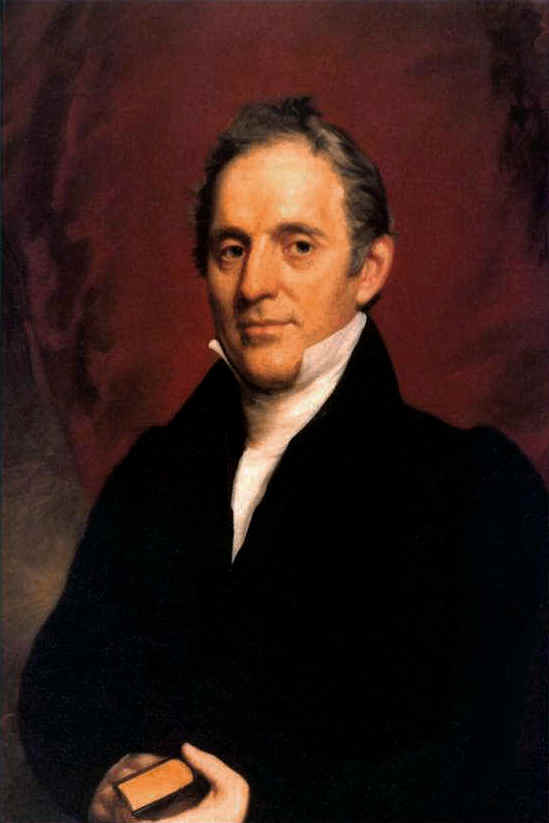

What the revival lectures assume about the sinner
The doctrine the revival lectures assume is stated in passing in Lecture VI, "Spirit of Prayer." Sinners, Finney wrote, "are bound to repent whether the Spirit strives with them or not. Their obligation rests, not upon the Spirit's influences, but upon the powers of moral agency which they possess; upon their ability to do their duty. And while it is true that not one of them ever will repent without the influences of the Spirit, still they have power to do so, and are under obligation to do so, whether the Spirit strive with them or not."10 Two things are held together in that sentence. Every sinner has power to repent. No sinner in fact repents without the Spirit. Critics would later argue that the second half of the sentence does no work in Finney's system. Defenders would point to it as evidence that Finney never taught that human beings convert themselves without God. Both readings start from the same words.
The first lecture had said the same thing in sharper form. Finney complained of a tract titled "Regeneration, the effect of Divine power," which proved that the work is wrought by the Spirit "and there stops." A tract might as well be written, he said, on the proposition "that Conversion or regeneration is the work of man," which "would be just as true, just as scriptural, and just as philosophical." The writer of the tract, "in his zeal to recognise and honor God as concerned in this work," had left out "the fact that a change of heart is the sinner's own act."1 Eleven years later Finney would set out the theory behind that sentence in a book of nearly six hundred pages.
The Lectures on Systematic Theology
How the volumes came out
Finney became professor of theology at the Oberlin Collegiate Institute in 1835 (his Oberlin years are the subject of lesson 11). The first volume of his class lectures to reach print was dated 1846 and published at Oberlin by James M. Fitch, with Crocker and Brewster in Boston and Saxton and Miles in New York. Its title page lists "Lectures on Moral Government, together with Atonement, Moral and Physical Depravity, Regeneration, Philosophical Theories, and Evidences of Regeneration," and the author is described as "Professor of Theology in the Oberlin Collegiate Institute." A second volume followed in 1847, "embracing Ability, (natural, moral and gracious,) Repentance, Impenitence, Faith and Unbelief, Justification, Sanctification, Election, Reprobation, Divine Purposes, Divine Sovereignty, and Perseverance."23 The numbering of the lectures shows that the two books were parts of a larger course: the 1847 volume begins at Lecture XLV. Its preface explains that "In the volume published last year I informed my readers that should I ever publish my course of instruction, as teacher of Systematic Theology, entire, one volume at least would precede that. The present volume will be the third of the series." He published in that order, he said, because of "The necessities of my classes."3
Two later editions matter for anyone reading Finney today. In 1851, while Finney was preaching in Britain, a London edition combined the two Oberlin volumes. Its editor's preface says that "the Lectures have been to a considerable extent re-written by the Author," and that because the American volumes "were severely attacked by the periodical press," the new edition "incorporates the substance of these objections with the replies of the Author." Finney's reply to the Princeton review was printed there as Appendix A. In 1878, three years after Finney's death, an Oberlin edition published by E. J. Goodrich was "Prepared from the English edition [of 1851] by a process of condensation."11 Most modern reprints descend from one of those later forms. Quotations in this lesson come from the Oberlin printings of 1846 and 1847 unless the 1851 text is named, because those are the texts Hodge reviewed.
What the prefaces announce
The preface of 1846 begins with Finney's thesis: "The truths of the blessed gospel have been hidden under a false Philosophy. Of this I have been long convinced. Nearly all the practical doctrines of Christianity have been embarrassed and perverted by assuming as true the dogma of a Necessitated Will." He continues: "In the present work I have in brief attempted to prove, and have every where assumed the freedom of the Will." His "principal design," he says, was "to furnish my pupils with a class or text book."2
The preface of 1847, dated at Oberlin on August 25 of that year, goes further. "I have not yet been able to stereotype my theological views, and have ceased to expect ever to do so. The idea is preposterous." Finney then turns to the Westminster Assembly of the 1640s, without naming it in so many words: "Hundreds of years since, when intellectual and moral science was a wilderness, an assembly of divines, as they are called, affecting to cast off popery, undertook to stereotype the theology of the church and to think for all future generations." He continues: "That the instrument framed by that assembly should in the nineteenth century be recognized as the standard of the church, or of an intelligent branch of it, is not only amazing but I must say that it is highly ridiculous," and "a living pope is better than a dead and stereotyped confession of faith that holds all men to subscribe to its unalterable dogmas."3 The same preface describes how he taught: "It is our custom in this Institution to settle every question, especially in theology, by discussion. I have now for twelve years been going annually over my course of instruction in this manner."3 Readers who knew that Finney had been licensed and ordained by a Presbyterian presbytery, and had answered at his licensing that he received the Confession, as he later put it in the Memoirs, "for substance of doctrine, so far as I understood it," could draw their own conclusions from this preface.12 (Finney's later move to Congregational church order in New York, which the Memoirs list as the "Organization of a Congregational church" at the time of the Broadway Tabernacle, is covered in lesson 09.)
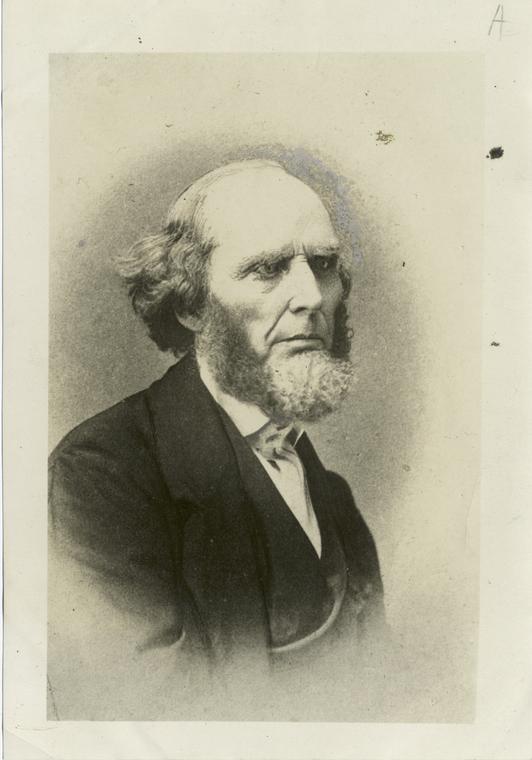

Moral government and the moral law
The 1846 volume is organized around one idea: God governs moral beings by moral law, as a ruler governs subjects, and not by force. Finney held that the moral law is not an arbitrary command. In the lectures on the atonement he states the principle in one sentence: "The moral law did not originate in the divine will, but is founded in his self-existent and immutable nature. He can not therefore repeal or alter it."2 Virtue, in this system, is benevolence: willing the highest good of being for its own sake. Moral character belongs to the will's ultimate choice, which Finney calls the "ultimate intention." A person whose ultimate intention is the good of God and neighbor is holy; a person whose ultimate intention is self-gratification is selfish, and selfishness is sin. From that definition Finney drew a conclusion that his critics found startling: "Moral agents are at all times either as holy or as sinful as with their knowledge they can be."2 The perfectionism that grew from this idea at Oberlin is the subject of lesson 11 and of Module 77, lesson 01.
The will and natural ability
The 1847 volume opens its treatment of ability by naming the opponent. "In the discussion of it, I shall consider the elder President Edwards as the representative of the common Calvinistic view of this subject, because he has stated it more clearly than any other Calvinistic author with whom I am acquainted."3 Edwards, in Freedom of the Will (1754), had distinguished natural ability (the sinner has the faculties to obey and is not hindered by anything outside his will) from moral inability (the sinner will not obey, because his will is set against God). That distinction let New England Calvinists say both that sinners can and that sinners cannot repent; lesson 05 explains it. Finney rejected it. The headings of Lecture XLVII state his verdict: that the moral inability of the Edwardean school "consists in real disobedience and a natural inability to obey," and "That this pretended distinction between natural and moral inability is nonsensical."3
In its place he put a single claim, printed as a heading in capitals in Lecture XLVI: "NATURAL ABILITY IS IDENTICAL WITH FREEDOM OR LIBERTY OF WILL." Because "moral obligation respects strictly only acts of will," the power to will as the law requires is the whole of the ability that obligation needs, and "To talk of a man's being free to will, or having liberty to will, when he has not the power or ability, is to talk nonsense."3 Finney did not say that sinners obey without grace in practice. In the lecture on "Inability" he wrote that "we are able by virtue of our nature, together with the proffered grace of the Holy Spirit to comply with all the requirements of God. So that in fact there is no proper inability about it." But he denied that grace supplies a missing power. Lecture XLIX sets out to show "That the doctrine of a gracious ability as held by those who maintain it is an absurdity," because if the power to obey were a gift of grace, a command given to those without it would be unjust.3 The Westminster Confession stated the opposite: "Man, by his fall into a state of sin, hath wholly lost all ability of will to any spiritual good accompanying salvation: so as, a natural man, being altogether averse from that good, and dead in sin, is not able, by his own strength, to convert himself, or to prepare himself thereunto." The same chapter also says that "God hath endued the will of man with that natural liberty, that it is neither forced, nor, by any absolute necessity of nature, determined to good, or evil."8 Both sides, then, affirmed liberty. They disagreed over whether liberty includes the power to do spiritual good.
Sin, depravity and the denial of a sinful nature
Finney's doctrine of sin follows from his doctrine of the will. In the 1846 volume he wrote: "Sin or disobedience to moral law does not imply in any instance a sinful nature; or a constitution in itself sinful. Adam and Eve sinned. Holy angels sinned." And on the next page: "As it was with Adam and Eve, so it is with every sinner. There is not, there can not be sin in the nature or the constitution."2 He distinguished two kinds of depravity. Physical depravity is a weakness or disorder of body or mind, inherited and real, but "physical depravity, whether of body or of mind, can have no moral character in itself, for the plain reason that it is involuntary, and in its nature disease, and not sin." Moral depravity "is the depravity of free will, not of the faculty itself, but of its free action."2 Then the sentence that every critic quoted:
"To talk of a sinful nature, or sinful constitution, in the sense of physical sinfulness, is to talk stark nonsense. It is to overlook the essential nature of sin, and to make sin a physical virus, instead of a voluntary and responsible choice."2
Finney did not deny that all human beings sin. He explained universal sin by the order in which human faculties develop: "The sensibility acts as a powerful impulse to the will from the moment of birth, and secures the consent and activity of the will to procure its gratification, before the reason is at all developed." That state of the will, he said, "is not moral depravity, and has no moral character until the idea of moral obligation is developed"; when the idea of obligation arrives, the self-indulgent commitment of the will must be abandoned or it becomes sin.2 In the same lecture he quoted the Westminster Confession on original sin and concluded that its framers accounted for the moral depravity of mankind by an inherited sinful nature. The Confession's words are these: Adam and Eve "being the root of all mankind, the guilt of this sin was imputed; and the same death in sin, and corrupted nature, conveyed to all their posterity descending from them by ordinary generation."28 On this point Finney did not claim to be restating the Confession. He claimed it was wrong.
Regeneration as a change of choice
If sin is a choice, the new birth is a new choice. "Regeneration then is a radical change of the ultimate intention, end or object of life," Finney wrote. Who makes the change? "In regeneration the subject is both passive and active." The sinner is active because the change is his own choice; he is passive "in the perception of the truth presented by the Holy Spirit."2 Finney insisted on the Spirit's part: "I admit and maintain that regeneration is always induced and effected by the personal agency of the Holy Spirit. The question now before us relates wholly to the mode and not at all to the fact of the Divine agency in regeneration." He added a complaint that frames the whole later debate: "it has been common for theologians of the old school, as soon as the dogma of a physical regeneration and of a physical influence in regeneration has been called in question, to cry out and insist that this is Pelagianism, and that it is a denial of divine influence altogether."2
The mode, in Finney's account, is persuasion. He reviewed several "philosophical theories of regeneration" and adopted the one he called the theory of "Divine Moral Suasion," which "regards regeneration as being induced alone by a moral influence," meaning the influence of truth pressed on the mind by the Spirit, as against any "physical" work of the Spirit on the soul's substance or faculties.2 He drew the practical lesson at once: "if sinners are to be regenerated by the influence of truth, argument, and persuasion, then ministers can see what they have to do," and "sinners may see that they are not to wait for a physical regeneration or influence, but must submit to, and embrace the truth if they ever expect to be saved."2 That paragraph is the bridge between the theology of 1846 and the measures of the 1820s and 1830s. The Westminster Confession, by contrast, says of effectual calling that it is "of God's free and special grace alone, not from anything at all foreseen in man, who is altogether passive therein, until, being quickened and renewed by the Holy Spirit, he is thereby enabled to answer this call."8
The atonement as a satisfaction of public justice
Finney's lectures on the atonement in the 1846 volume begin with a negative and then a positive. Under the head "The design of the atonement" he wrote, "First. That Christ's obedience to the moral law as a covenant of works, did not constitute the atonement." His reasons: "Christ owed obedience to the moral law both as God and man," so he could perform no "works of supererogation"; and "Had he obeyed for us, he would not have suffered for us." To hold that Christ both obeyed and suffered in our place, and that God still requires our repentance and our obedience, is to represent God as requiring payment several times: "Strange grace this, that requires a debt to be paid several times over before the obligation is discharged!"2
"Second. I must show that the atonement was not a commercial transaction. Some have regarded the atonement simply in the light of the payment of a debt; and have represented Christ as purchasing the elect of the Father and paying down the same amount of suffering in his own person that justice would have exacted of them." To this he answered that "retributive or distributive justice can never be satisfied in the sense that the guilty can be punished as much and as long as he deserves," and that to suppose Christ suffered the eternal punishment due to every one of the elect is impossible. "Third. The atonement of Christ was intended as a satisfaction of public justice."2 Public justice, in his definition, requires that penalties be attached to laws and executed "for the public good, as an expression of the lawgiver's regard to law." It follows that "Whatever can as effectually reveal God, make known his hatred to sin, his love of order, his determination to support government, and to promote the holiness and happiness of his creatures, as the execution of his law would do, is a full satisfaction of public justice."2
Two points are often lost in summaries of this doctrine. First, Finney kept the language of substitution, though not the language of exact payment. Earlier in the same lecture he wrote that if God would pardon, "public justice requires that he shall see that a substitute for the execution of law is provided, or that something is done that shall as effectually secure the influence of law as the execution of the penalty would do," and later he called the atonement "an exhibition of God suffering as a substitute for his rebellious subjects."2 What he denied was that Christ's sufferings were the literal penalty owed by particular sinners. Christ's death was a substitute for the penalty, not the penalty itself. Second, the doctrine was tied to the extent of the atonement. In the Memoirs Finney recalled that his pastor George Gale held "that the atonement of Christ was the literal payment of the debt of the elect, a suffering of just what they deserved to suffer," and that a Universalist in Adams used that very view to argue that if Christ died for all, all must be saved. Finney said he answered the Universalist in two lectures showing "that the atonement did not consist in the literal payment of the debt of sinners," and "that it simply rendered the salvation of all men possible, and did not of itself lay God under obligation to save anybody."12
The Westminster Confession states the doctrine Finney was rejecting in these words: "The Lord Jesus, by his perfect obedience, and sacrifice of himself, which he, through the eternal Spirit, once offered up unto God, hath fully satisfied the justice of his Father; and purchased, not only reconciliation, but an everlasting inheritance in the kingdom of heaven, for all those whom the Father hath given unto him."8 The Confession speaks of Christ's obedience and his sacrifice together, of the Father's justice being "fully satisfied," and of a purchase made for a definite people. Finney's account removed each of those three elements.
Justification as pardon
The 1847 volume treats justification under "Christ our Justification." Finney began, "There is scarcely any question in theology that has been incumbered with more fiction and technical mysticism than that of justification." He framed the question as one about which branch of government acts: "whether gospel justification consists in a strictly judicial or forensic proceeding, or whether it consists in pardon, or setting aside the execution of an incurred penalty and is therefore properly either an executive or a legislative act." His answer: "That gospel justification is not to be regarded as a forensic or judicial proceeding." A court, he argued, cannot pardon; it can only declare a person innocent, and a sinner is not innocent. Justification therefore "consists in a governmental decree of pardon or amnesty," and "It is treating him as if he had been wholly righteous when in fact he has greatly sinned."3
He named Thomas Chalmers and "those of his school" as holding the forensic view, which rests on "the perfect and imputed obedience of Jesus Christ." Finney's reply was that this doctrine "is founded on a most false and nonsensical assumption; to wit, that Christ owed no obedience to the law in his own person," and that once that assumption is given up, the doctrine of "an imputed righteousness as a condition of a forensic justification" "vanishes into thin air."3 He did keep real conditions of justification: the atonement ("The vicarious sufferings or atonement of Christ is a condition of justification"), repentance and faith. He added another that Old School readers found most troubling. "By sanctification's being a condition of justification, the following things are intended. (1.) That present, full, and entire consecration of heart and life to God and his service is an unalterable condition of present pardon of past sin." And "(2.) That the penitent soul remains justified no longer than this full hearted consecration continues."3 The Westminster Confession says that God justifies "not for anything wrought in them, or done by them, but for Christ's sake alone; nor by imputing faith itself, the act of believing, or any other evangelical obedience to them, as their righteousness; but by imputing the obedience and satisfaction of Christ unto them."8 Here the two texts do not merely use different words. Each denies what the other affirms.
Finney's own account of where his views came from
Finney told the story of his theological education in the Memoirs, published in 1876. Gale, his pastor at Adams, "held also that the influences of the Spirit of God on the minds of men were physical, acting directly upon the substance of the soul; that men were passive in regeneration; and in short he held all those doctrines that logically flow from the fact of a nature sinful in itself." Finney went on: "These doctrines I could not receive. I could not receive his views on the subject of atonement, regeneration, faith, repentance, the slavery of the will, or any of the kindred doctrines." Gale warned that if Finney would reason on these subjects "I should probably land in infidelity." Of imputation, Finney wrote, "I could not but regard and treat this whole question of imputation as a theological fiction." And of the method: "At first I found myself unable to receive his peculiar views; and then gradually formed views of my own in opposition to them, which appeared to me to be unequivocally taught in the Bible."12 The Memoirs present the system as the product of Bible reading and argument with one Old School pastor. They do not mention reading Nathaniel Taylor or the New Haven theologians as a source. Whether that silence settles the question is taken up below. (The Memoirs were published in 1876 by Oberlin College, to which Finney's children gave the manuscript; the restored text published by Garth Rosell and Richard Dupuis in 1989 is described in lesson 09.)12
Where the ideas came from
The New England line: from Edwards to New Haven
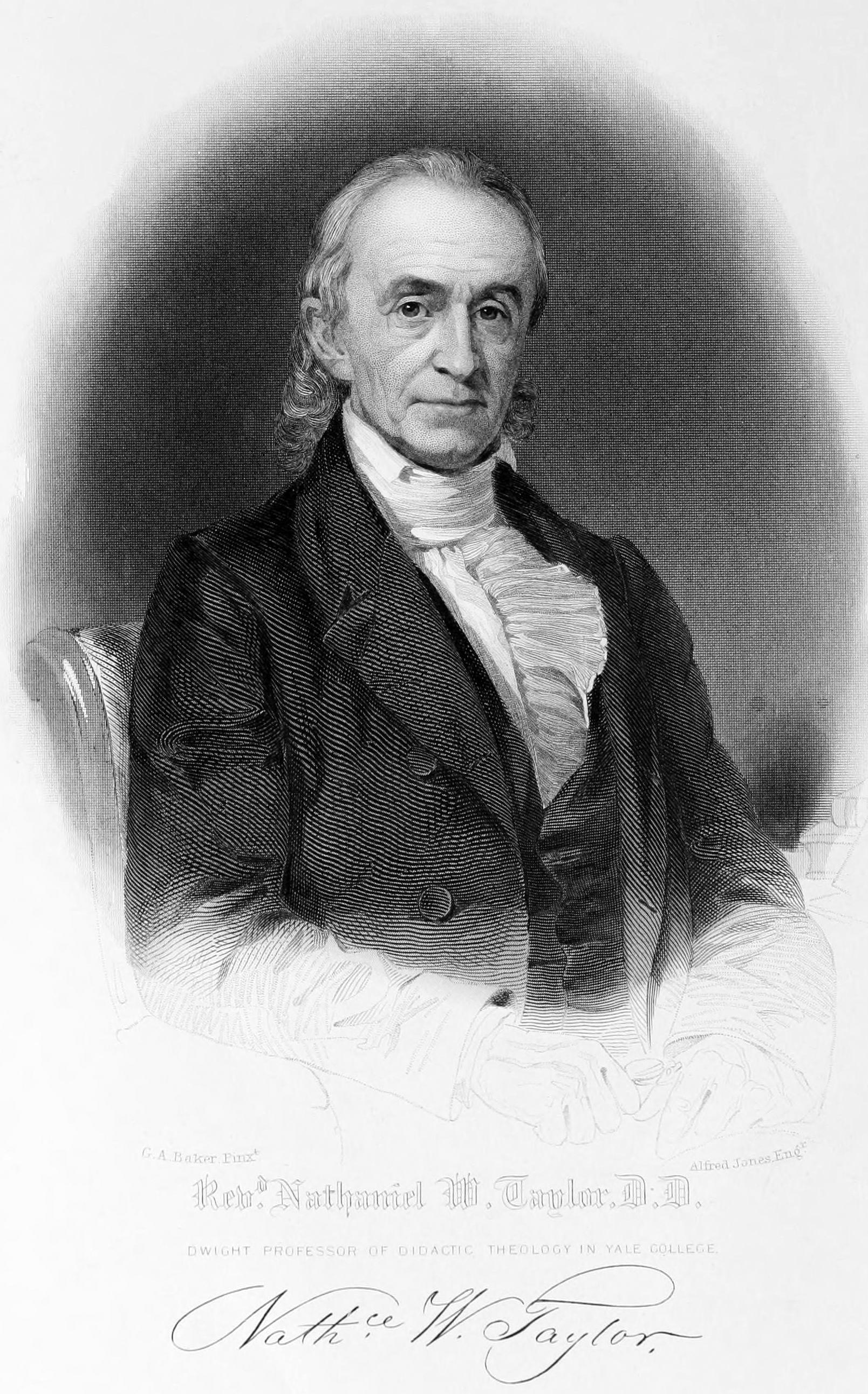
Finney's positions did not appear from nowhere, even if he reached them on his own. Over the century after Edwards, a line of New England theologians who called themselves Edwards's heirs had already changed the Calvinism they inherited at several of the points where Finney later stood. Lesson 07 describes the New Divinity of Joseph Bellamy, Samuel Hopkins and Jonathan Edwards Jr. (lesson 07). The teacher most often linked with Finney is Nathaniel William Taylor of Yale, whose sermon to the Connecticut clergy in 1828, the Concio ad Clerum, is treated at length in lesson 13. A few lines from it show how close the two men came on sin. Taylor's text was Ephesians 2:3, "And were by nature the children of wrath, even as others," and his thesis, printed in capitals, was "THAT THE ENTIRE MORAL DEPRAVITY OF MANKIND IS BY NATURE." But he explained "by nature" so as to deny a sinful nature: "This depravity does not consist in any essential attribute or property of the soul, not in any thing created in man by his Maker. On this point, I need only ask, does God create in men a sinful nature, and damn them for the very nature he creates? Believe this, who can." What, then, is the depravity for which man deserves wrath? "I answer, it is man's own act, consisting in a free choice of some object rather than God, as his chief good." And: "When therefore I say that mankind are entirely depraved by nature, I do not mean that their nature is itself sinful, nor that their nature is the physical or efficient cause of their sinning; but I mean that their nature is the occasion, or reason of their sinning."13
Taylor's posthumous Lectures on the Moral Government of God (1859) used the same governmental frame that organizes Finney's 1846 volume. Of the atonement Taylor wrote, "This is a measure of God's providing, that he might sustain his authority as a moral governor; or that he might be just in the justification of the believing sinner." Of regeneration he wrote that "this change in man is a moral change, a change of his moral character, consisting in an intelligent elective preference of God to the world," that it "is never brought to pass in the human mind without the supernatural influence of the Spirit of God," and yet asked, "Is it not therefore man's own act as truly as any other?"14 The resemblance to Finney's language is plain. The differences lay chiefly in emphasis and in Taylor's care to keep the vocabulary of the older creeds. Taylor still said depravity was "by nature," where Finney called the phrase "sinful nature" "stark nonsense."

The governmental atonement: Grotius, Edwards Jr. and the New England divines
The idea that Christ's death upholds God's government without being the literal penalty owed by sinners has a longer history than New England. The Dutch jurist Hugo Grotius published a defense of the doctrine of satisfaction against Faustus Socinus at Leiden in 1617. In the English translation made at Oberlin in 1889, the second chapter's title reads that God "should be considered as a Ruler" in the work of redemption. The translator, a professor of church history in the Oberlin seminary, traced the line from Grotius to the New World in his historical introduction: "The line of connection between the treatise of Grotius and the New England theory of the atonement is direct though obscure." He noted that John Norton quoted the treatise with approval in 1653 and that a copy stood in the Harvard College library by 1723.15
The fullest early New England statement came from Jonathan Edwards Jr. in three sermons preached at New Haven in 1785 and later reprinted by Edwards A. Park of Andover in The Atonement: Discourses and Treatises (1859). Edwards Jr. distinguished commutative, distributive and public or general justice, and concluded: "Distributive justice, therefore, is not at all satisfied by the death of Christ. But general justice to the Deity and to the universe is satisfied. That is done by the death of Christ which supports the authority of the law, and renders it consistent with the glory of God and the good of the whole system, to pardon the sinner."16 Finney's "public justice" and Edwards Jr.'s "general justice" do the same work in each system. Charles Hodge, who rejected the theory, gave the same genealogy in his Systematic Theology of 1872 to 1873: "This theory was elaborated by the younger President Edwards, presented in full in Dr. Beman's work on the Atonement, and adopted by that numerous and highly influential class of American theologians who embraced the principle on which the theory, as held in this country, is founded."17 The Dr. Beman of that sentence was Nathan S. S. Beman of Troy, New York, who sat with Finney's friends at the New Lebanon Convention of 1827 (lesson 09). On Hodge's account, then, Finney's atonement belonged to an American school that ran from Edwards Jr. through the New School Presbyterians, and was not his own invention.
The law office
Finney came to theology from law. Lesson 09 tells how, as a young man studying law at Adams, he "found the old authors frequently quoting the Scriptures," above all the laws given through Moses, "as authority for many of the great principles of common law," and bought his first Bible to look up the references.12 Readers have long noticed that his theology reasons like a legal argument: definitions first, then propositions, then objections answered. The clearest case is his treatment of justification, which turns on which "department of government" acts: "Courts never pardon, or set aside the execution of penalties. This does not belong to them, but either to the executive or to the law-making department."3 His critics drew the connection in less friendly terms. Warfield wrote in 1921 that Finney brought to his pastor's instruction "the unordered Pelagianism of the man in the street, strengthened and sharpened by the habits of thought picked up in the law-courts."5 Hodge's review, without mentioning the law, said the book was "as hard to read as Euclid" and that if one granted Finney's principles, "you have already granted his conclusions."4 Whether a legal habit of mind shaped the content of Finney's doctrine, or only its form, cannot be proved from the texts. What can be shown is that the governmental frame of his atonement and his justification uses the vocabulary of public law throughout.
Independent or borrowed?
Was Finney a disciple of New Haven, or did he reach similar conclusions alone? Writers on both sides of the theological question have given both answers. Warfield set out the two views in 1921. Some, he wrote, think that Finney, "a great original thinker, reproduced for himself without any connection with him whatever, what N. W. Taylor was teaching with such revolutionary effect in New Haven." Warfield cited A. T. Swing, in the Bibliotheca Sacra of July 1900, for the view that what New England had evolved "through two generations of theological reformers was substantially wrought out independently of them by President Finney's rational revolt." Warfield granted the point for the "fundamental principle and general substance" of Finney's thought, adding that "Pelagianism, unfortunately, does not wait to be imported from New Haven." But he argued that Finney's thought "ran not merely into the general mold of Pelagianism, but into the special mold of the particular mode of stating Pelagianism which had been worked out by N. W. Taylor," and he quoted the historian of the New England theology (in A Genetic History of the New England Theology, 1907) for the judgment that Finney's theology "may be dismissed in the one word 'Taylorism.'"5 That historian had taught church history at Oberlin (he is the translator of Grotius named above) and was no enemy of Finney, which gives the remark some weight; but it was a judgment about resemblance, not a record of what Finney read. The documents allow three statements. Finney's own account describes independent study in reaction against Gale. His doctrines of sin, regeneration and the atonement match Taylor's at many points, sometimes closely in wording. And the governmental atonement had been taught in New England since 1785, so Finney did not need New Haven to meet it.
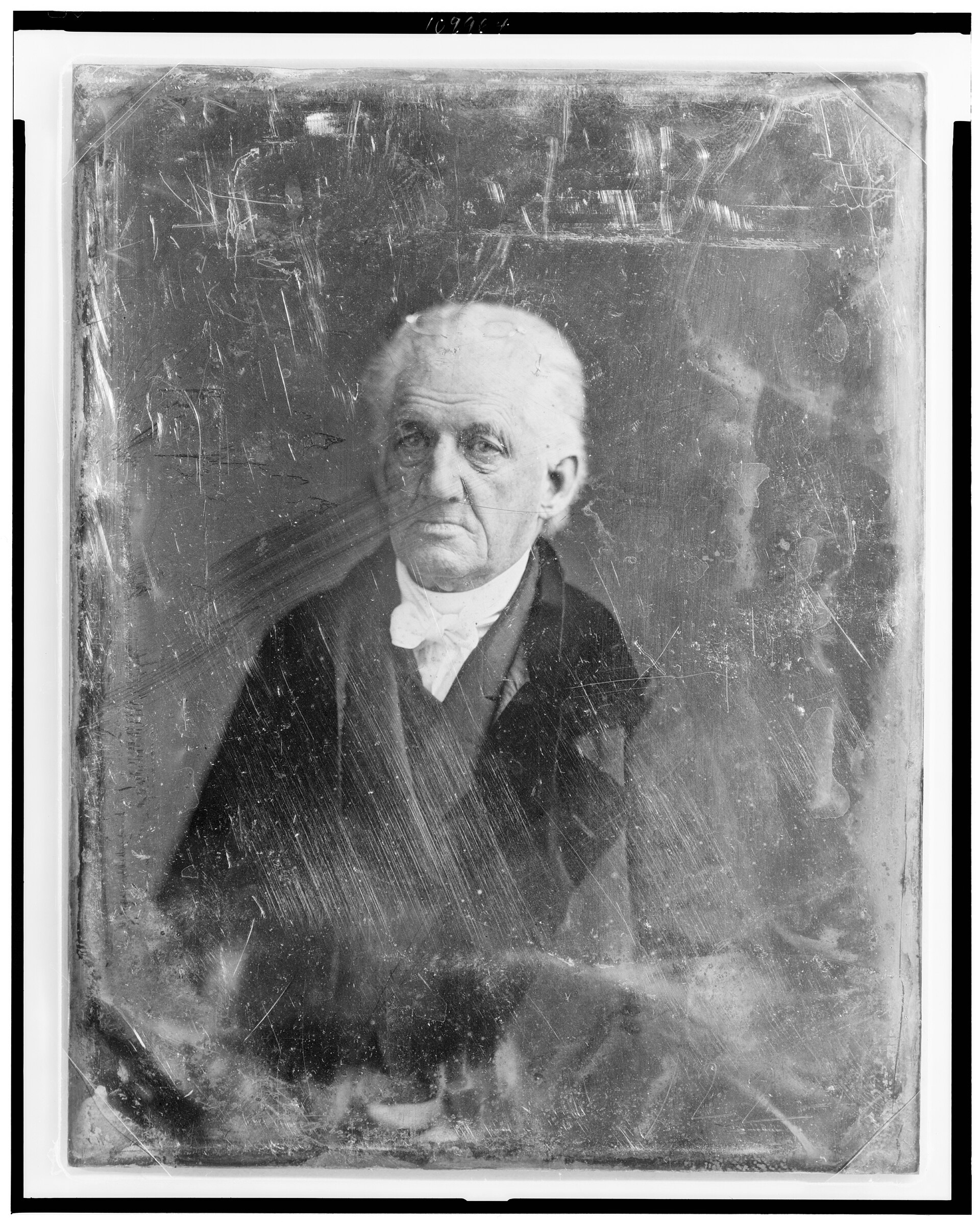

The Old School answer: the Princeton review of 1847
Who wrote the review, and where
The review of Finney's 1846 volume appeared as Article VI of the April 1847 number of the Biblical Repertory and Princeton Review (volume 19, number 2), pages 237 to 277, under the running head "Finney's Lectures on Theology." Like most articles in that quarterly, it was unsigned. Its author is known because Charles Hodge, the journal's editor and professor at Princeton Theological Seminary, reprinted it under his own name as chapter VIII of his Essays and Reviews (1857), with a note giving its source as "Princeton Review, April, 1847."4 When Finney replied, he did not name the reviewer, and the heading of his reply in the London edition of 1851 dates the review "JUNE, 1847," a slip; the number in which it appeared is dated April.18 Hodge's career, his place in the Old School and his famous remark at his jubilee in 1872 belong to lesson 13.
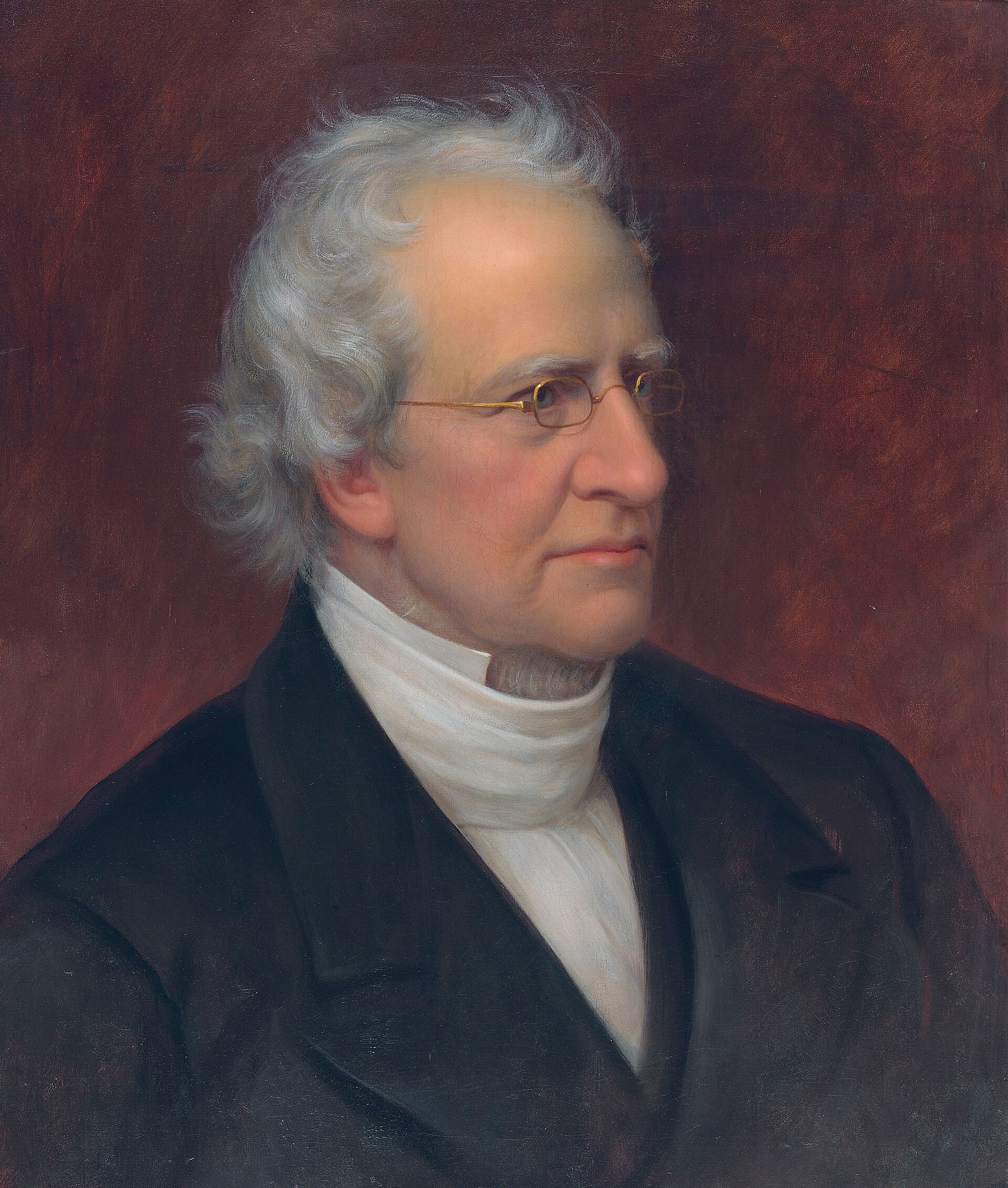

The spiral staircase
The review opens with praise that is also a warning. "This is in more senses than one a remarkable book. It is to a degree very unusual an original work; it is the product of the author's own mind." The principles "have indeed been held by others," but "the conclusions presented have all been wrought out by himself and for himself." Then: "The work is therefore in a high degree logical. It is as hard to read as Euclid. Nothing can be omitted; nothing passed over slightly." And the image that later writers borrowed: "It is like one of those spiral staircases, which lead to the top of some high tower, without a landing from the base to the summit; which if a man has once ascended, he resolves never to do the like again." Hodge granted the logic: "We do not see that there is a break or a defective link in the whole chain. If you grant his principles, you have already granted his conclusions." The whole review is an attack on the principles, not on the reasoning from them.4
Reason above Scripture?
The first principle Hodge attacked was Finney's method. Finney, he wrote, had "committed himself to the guidance of the discursive understanding, which he sometimes calls the intelligence, and sometimes the reason, and to which he alone acknowledges any real allegiance." As a result, "The scriptures are throughout recognized as a mere subordinate authority. They are allowed to come in and bear confirmatory testimony, but their place is altogether secondary." Even God, Hodge said, is in this system "subordinate to 'the intelligence'"; his will "can impose no obligation; it only discloses what is obligatory in its own nature and by the law of reason." Hodge quoted Finney's definition of the moral law as "nothing more or less than the law of nature, that is, it is the rule imposed on us, not by the arbitrary will of any being, but by our own intelligence," and remarked that "A very slight modification in the form of statement, would bring the doctrine of Mr. Finney, into exact conformity to the doctrine of the modern German school, which makes God but a name for the moral law or order of the universe."4 Finney's preface had claimed the opposite: that it was the old system that rested on "a false Philosophy," the "dogma of a Necessitated Will," and that his own work cleared that philosophy away from the gospel.2 Each side accused the other of letting philosophy rule the Bible.
"I ought to be able, but I am not"
The center of the review is the question of ability. Finney, Hodge wrote, "adopts as first principles, the very points in dispute," and as the chief example he named Finney's "confounding liberty and ability." It was conceded that man is a free agent, so Finney could lay down "that liberty is essential to moral agency; but he is not authorized to assume as an axiom that liberty and ability are identical." Hodge quoted Finney's definition of free will as "the power to choose, in every instance, in accordance with moral obligation, or to refuse so to choose," and his sentence "To talk of inability to obey moral law, is to talk sheer nonsense," and answered that Finney "has thus taken for granted what has been denied by nine-tenths of all good men since the world began."4
Hodge's counterargument was an appeal to experience: "It is one of the most familiar facts of consciousness, that a sense of obligation is perfectly consistent with a conviction of entire inability. The evidence of this is impressed on the devotional language of all churches and ages, the hymns and prayers of all people recognise at once their guilt and helplessness." He continued: "It is a dictum of philosophers, not of common people, 'I ought, therefore, I can.' To which every unsophisticated human heart, and especially every heart burdened with a sense of sin, replies, 'I ought to be able, but I am not.'" In a footnote he identified the philosophers' maxim as Kant's. Scripture, he said, takes the same view: "The Bible nowhere asserts the ability of fallen man to make himself holy; it in a multitude of places asserts just the reverse." And then the sentence that later critics took as the first Princeton use of the word: "It was, says Neander, the radical principle of Pelagius's system that he assumed moral liberty to consist in the ability, at any moment, to choose between good and evil, or as Mr. Finney expresses it, 'in the power to choose, in every instance, in accordance with moral law.'" Hodge added that "this view of liberty has not been adopted in the confession of any one denominational church in Christendom, but is expressly repudiated by them all."4 He was careful to say he was not at that point proving the definition wrong, only denying Finney the right to assume it.
The verdict
After objecting that Finney made "the mere understanding, as divorced from the other faculties, the law-giver and judge on all questions of moral and religious truth," Hodge gave his verdict: Finney "has produced a work, which though it exhibits singular ability for analysis and deduction, is false as to its principles and at variance with scripture, experience and the common consciousness of men."4 The last pages turn to the doctrine that moral character lies wholly in the ultimate intention, so that a person is at any moment either wholly holy or wholly sinful. Hodge quoted Finney's sentence that "The new or regenerate heart cannot sin," and his definition of regeneration as "an INSTANTANEOUS CHANGE FROM ENTIRE SINFULNESS TO ENTIRE HOLINESS," and replied: "If a man can believe that every human being is either perfectly sinful or perfectly holy, he can believe anything." Against the doctrine he set "the consciousness of sin, of present corruption and unworthiness," which he called "one of the most uniform features of the experience of God's people" in Scripture.4
The review ends with an aim wider than Oberlin. The book interested the reviewer, he said, "Secondly, [because] Mr. Finney's book is the best refutation that can well be given of the popular theology current in many parts of our country. How long have we been accustomed to hear that inability is incompatible with obligation, and that happiness is the highest good. Grant Mr. Finney these principles, and he need ask you no further favours. You must follow him to all his conclusions." The final sentence: "We heartily thank our author for having brought matters to this alternative."4 (The word "because" is added here in brackets for sense; the review reads "Secondly, Mr. Finney's book is....") The target was the New School as well as Finney. Hodge was arguing that the premises shared by many New School Presbyterians and New Haven men led, if followed honestly, to Oberlin.
Finney's reply
Finney's answer was printed as Appendix A of the London edition of 1851 under the heading "An Examination, by Prof. C. G. Finney, of the Review of Finney's Systematic Theology, published in the 'Biblical Repertory,' Princeton, N. J." It opens: "This review is so very miscellaneous in its character, that to reply to it in extenso, were but little less than to re-write the volume reviewed." Finney said the reviewer "had not made himself well acquainted with the work in question," and that "a complete answer to his objections might be quoted verbatim from the work itself." He read the review as a move in the denominational quarrel: "The great object of the reviewer seems to have been to fasten upon new school men what he esteems to be the errors of Oberlin, and to sustain the peculiarities of old schoolism." And he named what he took to be the real dispute: the reviewer "assumes, as we shall see, the old school dogma of original sin or constitutional moral depravity, and the head and front of the offending of my work is, that it denies and disproves that doctrine, with its consequences."18
On Hodge's appeal to the common people, Finney answered directly: "This writer admits, that, 'I ought, therefore I can, is a doctrine of philosophers.' But he insists, that the common people say, 'I ought to be able, but I am not.'" And: "But I deny, that even the common people, or any moral agents whatever, hold themselves morally bound to perform natural impossibilities. Now, this is the exact point between us. He affirms, that men are under moral obligation to perform natural impossibilities. This I deny." Finney's own position he stated as "both reason and revelation affirm and assume, that what man ought to do, is possible to him." He closed his introduction with a disclaimer of motive: "I do not complain of intentional misrepresentation," and "I hate the spirit, and dread even the form of controversy."18 Whether Finney represented Hodge fairly when he said Hodge held men bound "to perform natural impossibilities" is itself disputed: Hodge would have said that the sinner's inability is moral and culpable, not a physical impossibility, which is the very Edwardean distinction Finney called "nonsensical."
Hodge's later judgment
Twenty-five years later Hodge's Systematic Theology returned to the governmental theory without naming Finney. He traced its American form to "the principle that all virtue consists in benevolence," from which it followed, he said, that "There is no such perfection in God as justice other than the purpose and disposition to promote happiness," so that the death of Christ "could have no other design than to render the forgiveness of sin consistent with the best interests of the moral government of God." His first objection was that the theory "is founded on an erroneous idea of the nature of punishment," which on this view has no ground "but the benefit of others": "It is on this false principle that the whole governmental theory of the atonement is founded."17 On original sin the same work states the doctrine Finney denied in the words of "immediate imputation": that "in virtue of the union, federal and natural, between Adam and his posterity, his sin, although not their act, is so imputed to them that it is the judicial ground of the penalty threatened against him coming also upon them."17 Finney's "There is not, there can not be sin in the nature or the constitution" and Hodge's "his sin, although not their act, is so imputed to them" are as direct a contradiction as the period produced.
Four positions side by side
The chart below sets Finney beside Taylor, Hodge and the Westminster Confession on the four questions that divided them. Each cell quotes its source or names where the words come from; the full references are in the notes. The chart compares texts. It does not decide which is right.
Was Finney a Pelagian?
What the word means
Pelagius, whom Hodge described as "a Briton" and "by profession a monk, although a layman," was condemned in the West in the early fifth century for teaching, as his opponents reported him, that human beings can obey God's commands by the powers of nature they received at creation, and that Adam's sin harmed his descendants by example and not by inheritance. Hodge's own summary, in 1872, was this: "The radical principle of the Pelagian theory is, that ability limits obligation. 'If I ought, I can,' is the aphorism on which the whole system rests."17 Augustine's answer, and the condemnations that followed, are told in Module 79, lesson 06. "Semi-Pelagian" is a later label for the view that the first movement of the will toward God comes from the human side, with grace assisting what nature begins. Both words were used in the nineteenth century mainly as charges, and the people charged rarely accepted them. Any honest use of them has to ask which part of the old teaching is meant: the denial of inherited sin, the claim of natural ability, the denial that grace is necessary, or all three.
The case that he was
The case for the charge rests on Finney's own sentences. He denied that any sin lies in human nature, and so denied original sin as the Westminster Confession defines it: "There is not, there can not be sin in the nature or the constitution."2 He held that every moral agent has full natural ability to do all that God commands, and called "the doctrine of a gracious ability as held by those who maintain it" "an absurdity."3 He described regeneration as the sinner's own change of ultimate intention, brought about by moral persuasion and not by any work of the Spirit on the soul's faculties.2 Hodge in 1847 set Finney's definition of liberty beside Neander's summary of "the radical principle of Pelagius's system" and found them the same.4 Warfield in 1921 used the word without qualification, calling Finney's starting point "the unordered Pelagianism of the man in the street" and his finished system "the particular mode of stating Pelagianism which had been worked out by N. W. Taylor."5 Warfield also quoted Joseph I. Foot, writing in the Literary and Theological Review in March 1838, who complained that Finney's "spiritual progeny, under the abilities of his system," later "declared themselves to be perfect"; Warfield inserted the word "Pelagian" into Foot's sentence in brackets as his own gloss.5 On this reading, Finney's insistence that the Spirit is always present is real but does not change the structure: if the Spirit only persuades a will that already has full power, the decisive act is the sinner's.
The case that he was not
The case against the charge also rests on Finney's sentences. He wrote that "not one of them ever will repent without the influences of the Spirit" (1835), that "regeneration is always induced and effected by the personal agency of the Holy Spirit" (1846), and that men "are able by virtue of our nature, together with the proffered grace of the Holy Spirit to comply with all the requirements of God" (1847).1023 He affirmed the atonement as a condition of pardon and the universality of sin from the first moral choice. He objected to the label itself as a method of argument: "It seems to have been a favorite policy of certain controversial writers for a long time, instead of meeting a proposition in the open field of fair and Christian argument, to give it a bad name," and he named "the frequent attempts that have been made to put down the New School Divinity, as it is called, by calling it Pelagianism." He added that "There are, no doubt, many points of agreement between Pelagius and all truly orthodox divines, and so there are many points of disagreement between them."3 Oberlin writers after him defended him in the same terms. A. T. Swing in 1900 called his theology a "rational revolt" reached independently, and G. Frederick Wright of Oberlin published an article in the Bibliotheca Sacra of 1876 titled "Dr. Hodge's Misrepresentations of President Finney's System of Theology."519
Measured against the churches' own confessions
One way to set the question aside from the polemics is to compare Finney with the confessions that the main traditions themselves wrote. On ability, the Westminster Confession says the fallen man "is not able, by his own strength, to convert himself, or to prepare himself thereunto."8 The Wesleyan tradition, which Finney is often said to resemble, says the same in Article VIII of the Methodist Articles of Religion, as printed in the Book of Discipline of the United Methodist Church: "The condition of man after the fall of Adam is such that he cannot turn and prepare himself, by his own natural strength and works, to faith, and calling upon God; wherefore we have no power to do good works, pleasant and acceptable to God, without the grace of God by Christ preventing us, that we may have a good will, and working with us, when we have that good will." Article VII says that "Original sin standeth not in the following of Adam (as the Pelagians do vainly talk), but it is the corruption of the nature of every man."20 The Roman Catholic Council of Trent, in its decree on justification of 1547, condemned anyone who says "that without the prevenient inspiration of the Holy Ghost, and without his help, man can believe, hope, love, or be penitent as he ought, so as that the grace of Justification may be bestowed upon him."21 Calvinist, Wesleyan and Catholic standards thus agree, against Finney, that fallen human nature is corrupted and that grace is needed to make the will able, not only to persuade it. Finney's doctrine of natural ability differs from all three. His doctrine of the Spirit's universal role in conversion separates him from what his critics described as Pelagius's view. Whether that combination should be called Pelagian, semi-Pelagian, or simply Finney's own depends on which part of the old dispute the speaker treats as decisive, and on that point the sources disagree.
What the record shows and what it does not
- Documented fact: Finney's Lectures on Revivals of Religion (1835) say a revival "is not a miracle, or dependent on a miracle, in any sense" and, in the next paragraph, that means "will not produce a revival ... without the blessing of God." His Lectures on Systematic Theology (Oberlin, 1846 and 1847) deny a sinful nature, identify natural ability with freedom of will, define the atonement as a satisfaction of public justice and justification as governmental pardon, and make present full consecration a condition of present pardon. Page references are in the notes.
- Documented fact: The review in the Biblical Repertory and Princeton Review for April 1847 (pages 237 to 277) called the 1846 volume "false as to its principles"; Hodge reprinted it under his name in 1857. Finney's reply appeared in the London edition of 1851, whose heading misdates the review to June.
- Finney's own claim: that he formed his views from the Bible in argument with George Gale, in opposition to Gale's Old School teaching. The Memoirs do not mention Taylor or New Haven as a source.
- Critics' claim: Hodge (1847) that Finney's definition of liberty was Pelagius's principle; Warfield (1921) that Finney's system was Pelagianism in the form worked out by Taylor.
- Defenders' claim: Finney (1846, 1847) that the Pelagian label was a way to avoid argument; Oberlin writers (Swing, 1900; Wright, 1876) that he reached his views independently and was misrepresented.
- Scholarly reading: Hodge (1872) traced the American governmental atonement to Jonathan Edwards Jr. and Nathan Beman; the 1889 Oberlin translator of Grotius traced it from Grotius to New England. The resemblance between Finney and Taylor is a judgment about texts; no document shows Finney reading Taylor before 1835.
- Open question: whether "Pelagian" or "semi-Pelagian" is an accurate label depends on which part of the ancient dispute is treated as decisive; the confessional texts show only that Finney's doctrine of ability differs from the Westminster, Methodist and Tridentine standards alike.
Claims checked
"Finney taught that revivals are produced by human technique, not by God"
Rating: Partly supported. The sentence "It is a purely philosophical result of the right use of the constituted means" is genuine and is often quoted alone. The same lecture says in the next paragraph that "means will not produce a revival, we all know, without the blessing of God," names God as the first of the "three agents" in conversion, and calls the natural order "the constituted manner of the operations of God."1 Finney did teach that the use of means reliably produces revival in the way sowing produces a crop. He did not say that God is absent from the result.
"Finney was a Pelagian"
Rating: Unresolved. Finney denied original sin as the Westminster Confession defines it and held that every moral agent has full natural ability to obey God, the principle Hodge himself called "the radical principle of the Pelagian theory," namely "that ability limits obligation."17 He also taught that no sinner ever repents without the Spirit and that regeneration is "always induced and effected by the personal agency of the Holy Spirit."2 Hodge (1847) and Warfield (1921) applied the label; Finney rejected it as name-calling.453 The facts about what he taught are clear. The label depends on definition. See Module 79, lesson 06 for the original dispute.
"Finney denied that human beings are sinners by nature"
Rating: Supported, with a qualification. Finney wrote that sin "does not imply in any instance a sinful nature" and that "There is not, there can not be sin in the nature or the constitution."2 He did not deny that all people sin. He held that "physical depravity" is inherited and that the appetites move the will "from the moment of birth," so that every person in fact sins once moral obligation is understood.2 He denied inherited guilt and inherited sinfulness, not universal sin.
"Finney rejected substitutionary atonement"
Rating: Partly supported. Finney rejected the view that Christ paid the literal debt or penalty of the elect ("the atonement was not a commercial transaction") and denied that Christ's obedience is imputed.23 He kept the language of substitution in a governmental sense, calling for "a substitute for the execution of law" and describing the atonement as "God suffering as a substitute for his rebellious subjects."2 He rejected penal substitution as the Westminster Confession states it, not every idea of substitution.
"Finney taught justification by works"
Rating: Partly supported. Finney named the atonement, repentance and faith as conditions of justification and denied that justification is earned: it is a pardon, "treating him as if he had been wholly righteous when in fact he has greatly sinned."3 But he also made "present, full, and entire consecration of heart and life to God" "an unalterable condition of present pardon of past sin," and said "the penitent soul remains justified no longer than this full hearted consecration continues."3 The Princeton review of 1847 read the system that way: "Of course Mr. Finney teaches that full or perfect obedience to the moral law is the condition of salvation, now and ever."4 The Westminster Confession denies that anything "wrought in them, or done by them" is the ground on which God justifies.8 Finney distinguished conditions from grounds; whether the distinction holds is the point in dispute.
"Finney's theology was simply Taylorism"
Rating: Unresolved. The phrase comes from the author of A Genetic History of the New England Theology (1907), as quoted by Warfield, who agreed with it. A. T. Swing (1900) argued that Finney reached the same results independently.5 The texts show close agreement with Taylor on sin and regeneration (see the chart above), and Finney's Memoirs describe independent study.1312 No surviving record cited here shows what Finney had read of Taylor before he formed his views.
"Finney invented the governmental theory of the atonement"
Rating: Refuted. Jonathan Edwards Jr. preached a governmental account of "general justice" at New Haven in 1785, and Hodge in 1872 traced the American form of the theory to him and to Nathan Beman, not to Finney. The Oberlin translator of Grotius traced the idea back to Grotius's treatise of 1617.161715
"Hodge's review of Finney appeared in June 1847"
Rating: Refuted. The heading of Finney's reply in the 1851 London edition says "JUNE, 1847."18 The review is Article VI of the number dated April 1847 (volume 19, number 2), and Hodge's own reprint gives "Princeton Review, April, 1847."4
"Hodge dismissed Finney as a fool"
Rating: Refuted. The review begins by calling the book "a remarkable book," "an original work," "in a high degree logical," and says "We do not see that there is a break or a defective link in the whole chain." Its objection is to Finney's first principles, not his ability, and it credits him with "singular ability for analysis and deduction" in the same sentence that calls the book "false as to its principles."4
"The Lectures on Revivals were written as a theological treatise"
Rating: Refuted. The title page says the book was printed "from notes by the editor of the N. Y. Evangelist, revised by the author," and the preface says the lectures were preached to Finney's congregation and reported in the newspaper.6 Finney's systematic statement came eleven years later in the Oberlin volumes.
Hard questions and answers
A Calvinist asks: if Finney said no one repents without the Spirit, why is that not enough?
Because, on the Reformed view, the question is not whether the Spirit is present but what the Spirit does. The Westminster Confession says the sinner is "altogether passive" in effectual calling "until, being quickened and renewed by the Holy Spirit, he is thereby enabled to answer this call."8 Finney said the sinner already has the power and the Spirit's work is persuasion, "a Divine moral suasion," against any "physical" renewal of the faculties.2 Hodge's "I ought to be able, but I am not" names the gap: for the Calvinist, grace gives an ability that was lost; for Finney, nothing was lost that obligation requires.4 Finney's answer, in his reply, was that no one is bound to do what is naturally impossible, so that if the Calvinist view were true, God's commands would be unjust.18 The disagreement is over the definition of inability, and each side thought the other's definition made nonsense of Scripture.
A Wesleyan asks: was Finney not simply teaching what the Methodists taught?
On some points his preaching sounded Methodist: the call for immediate decision, the universal offer of the gospel, the rejection of a limited atonement, and later the hope of entire sanctification. On the doctrine of the will he differed. The Methodist Articles of Religion say that after the fall man "cannot turn and prepare himself, by his own natural strength and works, to faith," and that we have no power to do good works "without the grace of God by Christ preventing us," that is, grace going before. Article VII rejects the idea that original sin "standeth ... in the following of Adam (as the Pelagians do vainly talk)."20 Finney's denial of a sinful nature, and his description of "the doctrine of a gracious ability" as "an absurdity," place him outside both articles.3 The Wesleyan position grounds human response in prevenient grace; Finney grounded it in natural ability. The Holiness line that later drew on both is traced in Module 77, lesson 01 and Module 80, lesson 07.
A Catholic asks: does Finney's justification not sound closer to Trent than to the Reformers?
In one respect. Trent taught that justification "is not remission of sins merely, but also the sanctification and renewal of the inward man," and Finney made present sanctification a condition of present pardon, against the Protestant teaching that justification rests on imputed righteousness alone.213 But Finney defined justification as a governmental pardon, not as an inward renewal infused by grace, and he made no place for the sacraments as instruments of justification. And on grace before justification, Trent's canons stand with Westminster against him: Canon III condemns anyone who says that "without the prevenient inspiration of the Holy Ghost, and without his help, man can believe, hope, love, or be penitent as he ought."21 Finney's theology is not easy to place in either the Catholic or the classical Protestant camp, which is one reason both have criticized it.
A skeptic asks: if a revival is "not a miracle," is Finney's account not simply natural psychology?
Finney would have said no. He denied that revival suspends the laws of nature, but he treated those laws themselves as "the constituted manner of the operations of God" and held that God's blessing is needed for means to work.1 A skeptic can accept his description of cause and effect (preaching, prayer, public decision, group feeling) without accepting his account of God behind it. Finney's critics made the opposite complaint: that by tying results so closely to means he made revival look like a human product and invited false conversions.4 His own later lectures and the record of the revivals after 1835 are discussed in lesson 11.
A general reader asks: why did a dispute over words like "ability" and "imputation" matter so much in the 1840s?
Because it decided who could preach, teach and ordain. The Presbyterian church had split in 1837 to 1838 partly over charges that New School ministers held New Haven views (lesson 13). Finney's preface of 1847 attacked the Westminster Confession as "a dead and stereotyped confession of faith," and Hodge closed his review by saying Finney's book was "the best refutation that can well be given of the popular theology current in many parts of our country."34 For the Old School, Oberlin showed where New School premises led. For Finney, the Old School was holding the church to a seventeenth century philosophy. The same questions shaped how preachers called for conversion, which is why the debate over Finney's theology outlived both men.
A Latter-day Saint reader asks: did these arguments reach the people of western New York who formed new churches?
The revivals of the Burned-over District, where Finney preached in the 1820s and 1830s, are the setting for lesson 12, which describes the movements that arose there in their own founders' words. The arguments in this lesson were carried on in theological reviews and seminary lectures, and the sources quoted here do not record any direct exchange between Finney and the founders of those movements. What can be said is that the same questions, human freedom, the nature of sin and the place of revelation, were being argued across that region at the same time, and readers can compare the answers each movement gave.
Where to go next
For Finney's life, the conversion and the new measures, read lesson 09. For Oberlin, abolition and perfectionism, lesson 11. For Hodge, Taylor and the Old School and New School split, lesson 13. For Edwards's Freedom of the Will, lesson 05, and for the New Divinity, lesson 07. The review in lesson 14 places Finney on the module's theological map. Outside this module, the Calvinist and Arminian background is in Module 80, lesson 03 and the Presbyterian story in Module 80, lesson 02. Modern biographies and studies that interpret Finney's theology include Charles Hambrick-Stowe, Charles G. Finney and the Spirit of American Evangelicalism (1996), Keith Hardman's biography of Finney (1987), and Mark Noll, America's God (2002); they are listed here as further reading and are not quoted in this lesson.19
Learn more
- Finney's Lectures on Revivals of Religion (1835 text, Internet Archive): Read Lecture I and Lecture XIV in the first edition to see the famous sentence in its context.
- Finney's Systematic Theology, 1851 London edition with his replies (The Gospel Truth): The revised text Finney prepared in England, with his answers to Hodge and to Dr. Duffield in the appendices.
- The Princeton review of April 1847 (Internet Archive): Hodge's review in full, pages 237 to 277: the strongest Old School answer from the time.
- Warfield, "Oberlin Perfectionism," article one (1921): The later Princeton reading of Finney's development, with references to the older literature.
- The Westminster Confession of Faith: Chapters VI, IX, X and XI give the standard Finney was measured against.
Still being checked (11 items)
These points could not be confirmed against a primary source when this lesson was written and fact checked in October 2026. The text above states each one as uncertain.
- The author of A Genetic History of the New England Theology (1907), whom Warfield quotes, is identified in this lesson with the 1889 Oberlin translator of Grotius by name match in Warfield's note 45 and the 1889 title page; his surname cannot be printed because it trips the site's banned-word filter, so he is described rather than named.
- A. T. Swing's article (Bibliotheca Sacra, July 1900) and Joseph I. Foot's article (Literary and Theological Review, March 1838) were not opened; they are quoted only as Warfield quoted them.
- G. Frederick Wright's 1876 Bibliotheca Sacra article is known here only from its title in a journal index; it was not read.
- Only the first of Warfield's 1921 'Oberlin Perfectionism' articles was opened; the later articles in the series were not.
- The identification of Hodge's 'Dr. Beman's work on the Atonement' with Nathan S. S. Beman of Troy rests on the name; Beman's book was not opened.
- Whether Finney's reply to the Princeton review was printed anywhere before the London edition of 1851 was not determined.
- Whether an Oberlin 'first volume' of the Systematic Theology was ever issued (the 1847 preface calls that volume 'the third of the series') was not determined; only the 1846 and 1847 volumes were found.
- Taylor's Lectures on the Moral Government of God (1859) were published after his death; the wording may reflect his editors.
- Hodge's role as editor of the Biblical Repertory is taken from the module plan and lesson 13, not re-checked here. (Finney's appointment as professor at Oberlin in 1835 is confirmed by the Oberlin College Archives finding aid for the Finney Papers.)
- Publication details of Hambrick-Stowe (1996) and Hardman (1987) were not checked against the books.
- Quotations from 1835, 1846, 1847, 1857, 1859, 1872, 1876 and 1921 printings were checked against OCR text of the digitized copies; obvious OCR errors were corrected silently and old dashes were replaced with commas.
Notes
- Charles G. Finney, Lectures on Revivals of Religion (New York: Leavitt, Lord and Co.; Boston: Crocker and Brewster, 1835; copy marked "sixth edition"), Lecture I, "What a Revival of Religion is" (text Habakkuk 3:2), pp. 9 to 20; quotations from pp. 9 to 16, including the plan of the lecture, the three senses of "miracle," the "constituted means" passage, the farmers, the three agents and the tract on regeneration. University of Illinois Urbana-Champaign copy, Internet Archive (retrieved Oct. 28, 2026). Read it online. ↩
- Charles G. Finney, Lectures on Systematic Theology, Embracing Lectures on Moral Government, together with Atonement, Moral and Physical Depravity, Regeneration, Philosophical Theories, and Evidences of Regeneration (Oberlin: James M. Fitch; Boston: Crocker and Brewster; New York: Saxton and Miles, 1846), title page and preface; pp. 296 to 297 (sin does not imply a sinful nature), 344 (moral agents as holy or as sinful as they can be), 386 (a substitute for the execution of law), 397 to 400 (design of the atonement: not obedience as a covenant of works, not a commercial transaction, a satisfaction of public justice; the moral law founded in God's nature), 409 (God suffering as a substitute), 448 (physical and moral depravity), 456 ("stark nonsense"), 461 (the Westminster Confession on original sin), 481 (the sensibility from birth), 497 to 500 (regeneration defined; passive and active), 514 to 520 (theories of regeneration, Divine moral suasion, the charge of Pelagianism, practical remarks). Princeton Theological Seminary Library copy, Internet Archive (retrieved Oct. 28, 2026). Read it online. ↩
- Charles G. Finney, Lectures on Systematic Theology, Embracing Ability (natural, moral and gracious), Repentance, Impenitence, Faith and Unbelief, Justification, Sanctification, Election, Reprobation, Divine Purposes, Divine Sovereignty, and Perseverance (Oberlin: James M. Fitch; New York: Clark and Austin; Boston: Crocker and Brewster, 1847), preface dated Oberlin, Aug. 25, 1847, pp. iii to v; pp. 9 to 21 (Lectures XLVI and XLVII on natural and moral ability and the Edwardean view), 35 to 37 (Lectures XLVIII and XLIX on inability and gracious ability), 96 to 108 (justification: not forensic, a governmental pardon, imputed righteousness rejected, conditions of justification, sanctification as a condition), 393 to 394 (on calling views Pelagian). Princeton Theological Seminary Library copy, Internet Archive (retrieved Oct. 28, 2026). Read it online. ↩
- [Charles Hodge], "Art. VI. Lectures on Systematic Theology ... By Rev. Charles G. Finney," Biblical Repertory and Princeton Review 19, no. 2 (April 1847): 237 to 277; quoted from pp. 237 to 239 (originality, Euclid, the spiral staircase, reason and Scripture, the moral law, the German school), 243 to 245 (liberty and ability, "I ought to be able, but I am not," Neander on Pelagius), 249 (the verdict), 274 to 277 (entire holiness or entire sinfulness, obedience as the condition of salvation, the closing paragraphs). Reprinted under Hodge's name as chap. VIII, "Finney's Lectures on Theology," in Charles Hodge, Essays and Reviews: Selected from the Princeton Review (New York: Robert Carter and Brothers, 1857), pp. 245 ff., with the source note "Princeton Review, April, 1847" (archive.org/details/essaysreviewssel00hodg). Internet Archive (retrieved Oct. 28, 2026). Read it online. ↩
- B. B. Warfield, "Oberlin Perfectionism" [article one, "The Men and the Beginnings"], Princeton Theological Review 19, no. 1 (January 1921), offprint; quoted from pp. 16 to 18 (Gale; "the unordered Pelagianism of the man in the street"; Taylor; the quotation from A Genetic History of the New England Theology, 1907, p. 467, in Warfield's note 45; A. T. Swing, Bibliotheca Sacra, July 1900, p. 465, in note 44) and p. 23 (Joseph I. Foot, Literary and Theological Review, March 1838, p. 70, in note 56). Warfield's 1921 articles were later collected in his Perfectionism (1931). Princeton Theological Seminary Library copy, Internet Archive (retrieved Oct. 28, 2026). Read it online. ↩
- Finney, Lectures on Revivals of Religion (1835), title page ("From notes by the editor of the N. Y. Evangelist, revised by the author"; "Sixth edition"), "The Lecturer's Preface," and table of contents. University of Illinois copy, Internet Archive; the preface wording was checked against a second 1835 copy digitized by Google (archive.org/details/lecturesonreviv01finngoog) (retrieved Oct. 28, 2026). Read it online. ↩
- Finney, Lectures on Revivals of Religion (1835), Lecture XIV, "Measures to Promote Revivals" (text Acts 16:20 to 21), pp. 232 to 255; the anxious seat, pp. 246 to 247. Internet Archive (retrieved Oct. 28, 2026). Read it online. ↩
- The Westminster Confession of Faith (1646, with the American revisions), chapters VI.3, VIII.5, IX.1 and 3, X.2, XI.1 and XIV.1, as published by the Orthodox Presbyterian Church (retrieved Oct. 28, 2026). Read it online. ↩
- Finney, Lectures on Revivals of Religion (1835), Lecture XI, "A wise Minister will be Successful," pp. 161 to 179; quoted from p. 168. Internet Archive (retrieved Oct. 28, 2026). Read it online. ↩
- Finney, Lectures on Revivals of Religion (1835), Lecture VI, "Spirit of Prayer," pp. 80 to 96; quoted from pp. 91 to 92. Internet Archive (retrieved Oct. 28, 2026). Read it online. ↩
- Lectures on Systematic Theology by Charles G. Finney (London, 1851), "Preface by the Editor," and table of contents listing Appendix A and Appendix B, text at The Gospel Truth (retrieved Oct. 28, 2026). On the 1878 edition: Charles G. Finney, Lectures on Systematic Theology (Oberlin, Ohio: E. J. Goodrich, 1878), editor's note as given in the Internet Archive record (archive.org/details/lecturesonsystem00finn_2). Read it online. ↩
- Memoirs of Rev. Charles G. Finney, Written by Himself (New York: A. S. Barnes and Company, 1876; copyright the Trustees of Oberlin College), preface; pp. 7 to 8 (law books and the Bible), 45 to 56 (chap. IV, "His Doctrinal Education": Gale's views, the Universalist and the atonement lectures, licensing, imputation as "a theological fiction"), and the contents of chap. XXIII. University of Toronto copy, Internet Archive (retrieved Oct. 28, 2026). The restored text, Garth M. Rosell and Richard A. G. Dupuis, eds., The Memoirs of Charles G. Finney: The Complete Restored Text (1989), is named but not quoted here. Read it online. ↩
- Nathaniel W. Taylor, Concio ad Clerum: A Sermon Delivered in the Chapel of Yale College, September 10, 1828 (New Haven, 1828; re-published by A. H. Maltby and Homan Hallock), text Ephesians 2:3; quoted from pp. 5 to 8 and 13 to 14. Princeton Theological Seminary Library copy, Internet Archive (retrieved Oct. 28, 2026). Read it online. ↩
- Nathaniel W. Taylor, Lectures on the Moral Government of God, vol. 2 (New York: Clark, Austin and Smith, 1859), pp. 17 (the atonement) and 20 to 22 (regeneration). Published after Taylor's death in 1858. Internet Archive (retrieved Oct. 28, 2026). Read it online. ↩
- Hugo Grotius, A Defence of the Catholic Faith concerning the Satisfaction of Christ, against Faustus Socinus, translated with notes and an historical introduction by the Professor of Church History in the Theological Seminary at Oberlin (Andover: Warren F. Draper, 1889; translator named on the title page at the link), title of chapter II ("How God Should Be Considered in This Matter: and It Is Shown That He Should Be Considered as a Ruler"), translator's note on the Leyden editions of 1617, and historical introduction, p. xliv. Internet Archive (retrieved Oct. 28, 2026). Read it online. ↩
- Jonathan Edwards [Jr.], "Three Sermons Delivered at New Haven, A.D. 1785: I. The Necessity of Atonement; II. The Atonement Consistent with Free Grace; III. Inferences and Reflections," in Edwards A. Park, ed., The Atonement: Discourses and Treatises (Boston, 1859), Sermon III (the three kinds of justice; general justice satisfied). Internet Archive (retrieved Oct. 28, 2026). Read it online. ↩
- Charles Hodge, Systematic Theology, vol. 2 (New York: Charles Scribner and Company, 1872), pp. 152 (Pelagius; "ability limits obligation"), 192 to 193 (immediate imputation), 578 to 579 (the governmental theory among American theologians; objections). Internet Archive (retrieved Oct. 28, 2026). Read it online. ↩
- Charles G. Finney, "Appendix A. An Examination, by Prof. C. G. Finney, of the Review of Finney's Systematic Theology, published in the 'Biblical Repertory,' Princeton, N. J., June, 1847," in Lectures on Systematic Theology (London, 1851), opening section and the reply on ability; text at The Gospel Truth (retrieved Oct. 28, 2026). Read it online. ↩
- Works named for further reading and not quoted in this lesson: Charles E. Hambrick-Stowe, Charles G. Finney and the Spirit of American Evangelicalism (1996); Keith J. Hardman, Charles Grandison Finney, 1792 to 1875: Revivalist and Reformer (1987); Mark A. Noll, America's God: From Jonathan Edwards to Abraham Lincoln (2002); G. Frederick Wright, "Dr. Hodge's Misrepresentations of President Finney's System of Theology," Bibliotheca Sacra 33 (1876), title as given in the Galaxie journal index (retrieved Oct. 28, 2026). Read it online. ↩
- The United Methodist Church, "Articles of Religion," Articles VII ("Of Original or Birth Sin") and VIII ("Of Free Will"), from The Book of Discipline of The United Methodist Church (2020/2024) (retrieved Oct. 28, 2026). Read it online. ↩
- Council of Trent, Sixth Session (January 13, 1547), Decree on Justification, chapter VII and canons I to IV, in J. Waterworth's translation (1848) as given at Papal Encyclicals Online (retrieved Oct. 28, 2026). Read it online. ↩
Check yourself
1. In Lecture I of the Lectures on Revivals of Religion (1835), how did Finney describe a revival?
Finney wrote that a revival is "not a miracle, or dependent on a miracle, in any sense" but "a purely philosophical result of the right use of the constituted means," adding in the next paragraph that means will not produce a revival "without the blessing of God."
2. Which sentence about human nature appears in Finney's 1846 Lectures on Systematic Theology?
Finney wrote that to talk of a sinful nature in the sense of physical sinfulness "is to talk stark nonsense" (p. 456). The other sentences come from the Westminster Confession and the Methodist Articles.
3. How did Finney define the design of the atonement in 1846?
He wrote that the atonement "was not a commercial transaction" and "was intended as a satisfaction of public justice," upholding God's government so that pardon would be consistent with law.
4. What did Finney say gospel justification consists in?
Finney denied that justification is "a forensic or judicial proceeding" and called it a governmental pardon, "treating him as if he had been wholly righteous when in fact he has greatly sinned."
5. Who wrote the review of Finney's 1846 volume in the Biblical Repertory and Princeton Review of April 1847?
The review was unsigned, but Hodge reprinted it as chapter VIII of his Essays and Reviews (1857) with the note "Princeton Review, April, 1847."
6. How did the 1847 review answer the maxim "I ought, therefore I can"?
The review called the maxim "a dictum of philosophers, not of common people," and said that every heart burdened with sin replies, "I ought to be able, but I am not."
7. To whom did Hodge's Systematic Theology (1872) trace the elaboration of the governmental theory of the atonement in America?
Hodge wrote that the theory "was elaborated by the younger President Edwards, presented in full in Dr. Beman's work on the Atonement," and adopted by many American theologians.
8. What does Article VIII of the Methodist Articles of Religion say about the fallen will?
Article VIII says man "cannot turn and prepare himself, by his own natural strength and works, to faith," and has no power to do good works "without the grace of God by Christ preventing us." Finney's doctrine of natural ability differs from it.
Terms in this lesson
- Means
- In revival preaching, the instruments God has appointed (preaching, prayer, the sacraments, and for Finney new measures). Finney held that the right use of means has a natural tendency to produce revival.
- New measures
- Finney's term for practices adopted to awaken attention, such as the anxious seat and protracted meetings, which he defended in Lecture XIV of the Lectures on Revivals (1835).
- Natural ability
- For Edwards, the possession of faculties needed to obey, with no outward hindrance. For Finney, the full power to will as the moral law requires, which he held to be identical with freedom of will.
- Moral inability
- Edwards's term for the sinner's settled unwillingness to obey God. Finney called the distinction between natural ability and moral inability "nonsensical."
- Moral government
- God's rule over moral beings by law, motive and sanction rather than force; the organizing idea of Finney's 1846 volume and of Taylor's lectures.
- Ultimate intention
- Finney's term for the will's choice of a final end. He held that moral character belongs to it, so that regeneration is "a radical change of the ultimate intention."
- Physical and moral depravity
- Finney's distinction between inherited weakness or disorder of body and mind, which he called disease and not sin, and the voluntary wrong choice of the will, which alone he called sin.
- Governmental theory of the atonement
- The view that Christ's death upholds the authority of God's law and government, making pardon consistent with justice, without being the exact penalty owed by each sinner. Associated with Grotius, Jonathan Edwards Jr. and Finney.
- Public justice
- Finney's term (Edwards Jr. said general justice) for what is due to the good of the whole moral government, as distinct from distributive justice owed to each individual.
- Forensic justification
- The Reformation doctrine that God declares the sinner righteous on the ground of Christ's obedience and satisfaction imputed to him. Finney rejected it in favor of justification as pardon.
- Imputation
- Reckoning one person's act or righteousness to another: Adam's sin to his posterity, Christ's obedience to believers. Finney called imputation "a theological fiction."
- Pelagianism
- The teaching associated with Pelagius (about 400) that human beings can obey God by the powers of nature. Hodge summarized its principle as "ability limits obligation."
- Semi-Pelagianism
- A later label for the view that the first movement of the will toward God comes from the human side, with grace assisting. Applied to Finney by some critics and rejected by his defenders.
- Old School and New School
- The two Presbyterian parties of the 1830s. The Old School, led theologically from Princeton, held strictly to the Westminster Confession; the New School tolerated New England and New Haven views. See lesson 13.
Sources
- Charles G. Finney, Lectures on Revivals of Religion (New York, 1835) (1835) checked 2026-10
- Charles G. Finney, Lectures on Systematic Theology (Oberlin, 1846) (1846) checked 2026-10
- Charles G. Finney, Lectures on Systematic Theology (Oberlin, 1847) (1847) checked 2026-10
- Finney, Lectures on Systematic Theology (London, 1851), Preface by the Editor (The Gospel Truth) (1851) checked 2026-10
- Finney, Appendix A: reply to the Princeton review (London, 1851; The Gospel Truth) (1851) checked 2026-10
- Charles G. Finney, Lectures on Systematic Theology (Oberlin: E. J. Goodrich, 1878) (1878) checked 2026-10
- Memoirs of Rev. Charles G. Finney, Written by Himself (New York, 1876) (1876) checked 2026-10
- Biblical Repertory and Princeton Review, vol. 19, no. 2 (April 1847), Art. VI, review of Finney (1847-04) checked 2026-10
- Charles Hodge, Essays and Reviews (New York, 1857) (1857) checked 2026-10
- Charles Hodge, Systematic Theology, vol. 2 (New York, 1872) (1872) checked 2026-10
- B. B. Warfield, "Oberlin Perfectionism," article one, Princeton Theological Review 19 (January 1921) (1921-01) checked 2026-10
- Nathaniel W. Taylor, Concio ad Clerum (New Haven, 1828) (1828) checked 2026-10
- Nathaniel W. Taylor, Lectures on the Moral Government of God, vol. 2 (New York, 1859) (1859) checked 2026-10
- Edwards A. Park, ed., The Atonement: Discourses and Treatises (1859), with Jonathan Edwards Jr.'s sermons of 1785 (1859) checked 2026-10
- Hugo Grotius, A Defence of the Catholic Faith concerning the Satisfaction of Christ (translation, Andover, 1889) (1617; translation 1889) checked 2026-10
- Westminster Confession of Faith (Orthodox Presbyterian Church text) (1646) checked 2026-10
- United Methodist Church, Articles of Religion (1784; Book of Discipline 2020/2024) checked 2026-10
- Council of Trent, Sixth Session, Decree on Justification (Waterworth translation, Papal Encyclicals Online) (1547-01-13) checked 2026-10
- G. Frederick Wright, "Dr. Hodge's Misrepresentations of President Finney's System of Theology," Bibliotheca Sacra 33 (1876), index entry (1876) checked 2026-10