Lesson 9 of 14 · about 60 minutes · Updated October 28, 2026
Charles Finney: The Conversion, the Rochester Revival and the New Measures
You'll be able to
- Retell Finney's conversion of October 10, 1821 from his Memoirs and explain why the account is both a primary source and a later, interested recollection.
- Trace Finney's revivals from Adams and the northern towns through Western, Rome, Utica, Troy, Philadelphia and New York to Rochester, with dates.
- State each of the new measures in Finney's own words and the objections of Nettleton, Beecher, Porter and Nevin in theirs.
- Explain what happened at the New Lebanon Convention of July 1827, and what rests only on Finney's or Beecher's memory.
- Judge convert numbers by asking who gave them, when and how they were counted, and distinguish church admission counts from estimates.
- Summarize Paul Johnson's thesis in A Shopkeeper's Millennium and the main criticisms of it.
Start here: the short version
Charles Grandison Finney (born August 29, 1792, at Warren, Connecticut; died August 16, 1875, at Oberlin, Ohio) was a law student at Adams, New York, when he went into the woods north of the village on the morning of October 10, 1821, determined to "give my heart to God, or I never will come down from there." By his own account he came back that day with his mind at peace, met Christ "face to face" in the back room of the law office that evening, and received what he called "a mighty baptism of the Holy Ghost." The next morning he told a client that he had "a retainer from the Lord Jesus Christ to plead his cause" and could not plead his. The St. Lawrence Presbytery licensed him to preach (December 30, 1823 by one modern chronology, March 1824 by his own memory) and ordained him in 1824. From 1825 to 1827 revivals followed his preaching through Oneida County (Western, Rome, Utica, Auburn, Troy), and the Oneida Presbytery's own narrative counted "more than three thousand" people "indulging hope" by the end of 1826. His methods drew letters of protest from Asahel Nettleton and Lyman Beecher, and in July 1827 the two sides met at New Lebanon, New York. After work in Wilmington, Philadelphia, Reading and New York City, Finney preached at Rochester for six months from September 1830, where by his own account he first made regular use of what was later called the "anxious seat." The "new measures" (anxious meetings, protracted meetings, the anxious seat, praying for people by name, and women praying aloud in mixed meetings) are set out here in Finney's words and in the words of the men who objected to them. The historian Paul Johnson's reading of Rochester as a revival that served a rising business class, and the replies to it, close the historical part of the lesson. Finney's theology is the subject of lesson 10 and his years at Oberlin of lesson 11.
Lesson 08 of this module followed the Second Great Awakening on the frontier and in New England up to the 1820s: the camp meetings of Kentucky and Tennessee, the Methodist circuit riders, and the quieter New England revivals of Lyman Beecher and Asahel Nettleton (lesson 08). This lesson takes up the preacher whose name became attached to the next phase of those revivals in New York, Pennsylvania and New England. The Presbyterian church order in which Finney was licensed and ordained is described in Module 80, lesson 02, and the Calvinist and Arminian positions that frame every argument about him are set out in Module 80, lesson 03. Finney's doctrine of the will, of sin and of the atonement, and the charge that he taught a form of Pelagianism, belong to lesson 10, which links to the account of Pelagius and Augustine in Module 79, lesson 06. Oberlin, abolition and perfectionism belong to lesson 11, and the religious movements that arose in the same part of New York are the subject of lesson 12.
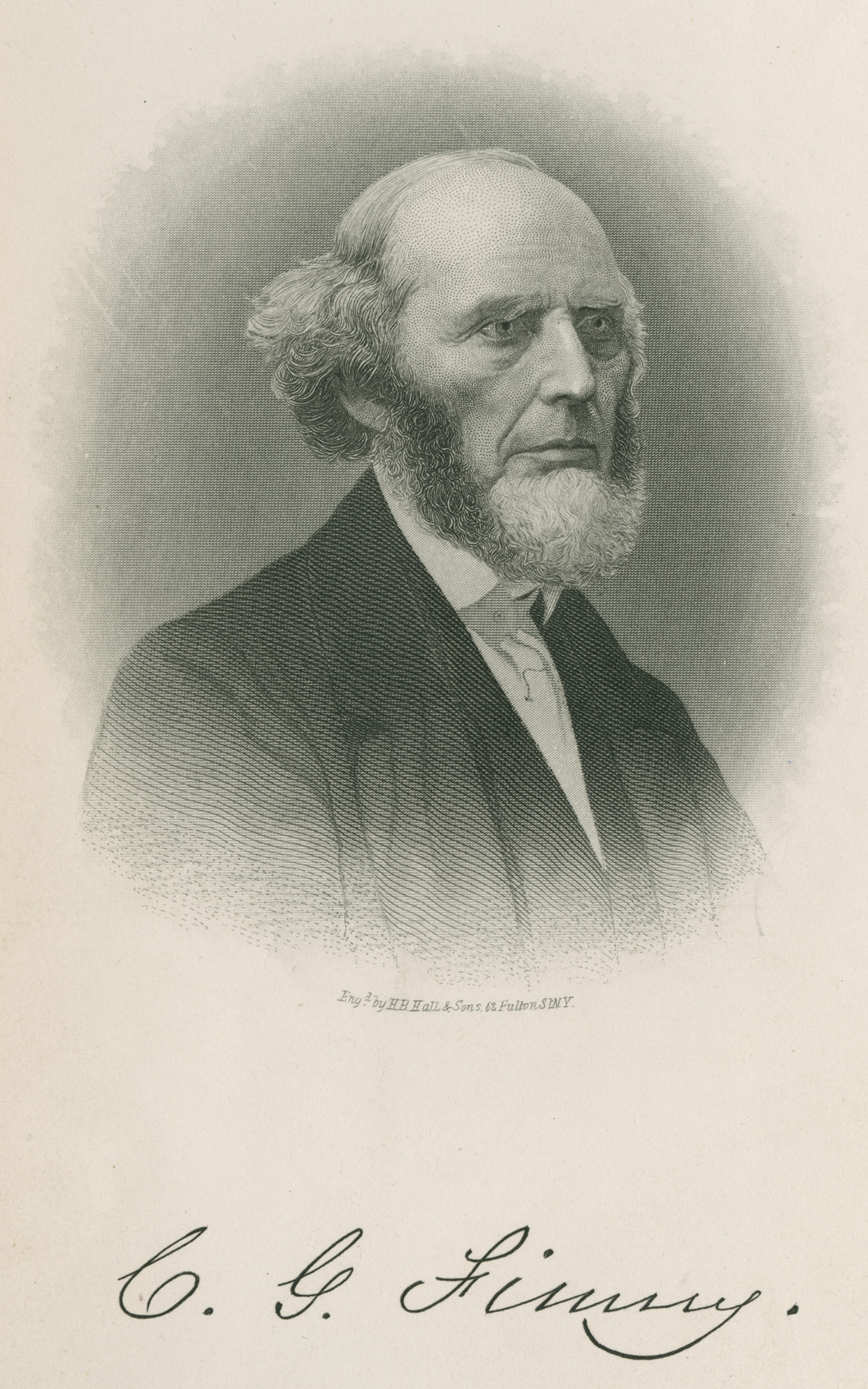

The sources for Finney's life
The Memoirs of 1876
Almost everything known about Finney's conversion and early revivals comes from one book he wrote himself. The Memoirs of Rev. Charles G. Finney, Written by Himself, were published in New York by A. S. Barnes and Company in 1876, with the copyright held by the Trustees of Oberlin College.1 In the opening chapter Finney explains that the trustees and "numerous other friends in this country and in England" had urged him to write an account of "the revivals that occurred in central New York and elsewhere, from 1821 and onward for several years, because those revivals have been most misrepresented and opposed."1 He states plainly how the book was made: "I have kept no diary, and consequently must depend on my memory." He adds that his memory "is naturally very tenacious," but also that he had "often been surprised to find how much my own remembrance of facts differs from the recollection of other persons who were in the midst of those scenes." He gives his age when writing: "I am now (1867-68) seventy-five years old."1
Three cautions follow from the author's own words. The Memoirs were written more than forty years after the events of 1821 to 1831. They were written by a party to the controversies they describe, with the stated purpose of correcting what he regarded as misrepresentation. And the 1876 edition prints many names only as an initial and a dash ("Squire W," "Mr. M," "Judge G"), so that some identifications rest on later research. Finney himself said he did not intend "an autobiography" and would enter no farther into his private life "than shall seem necessary."1
The restored text of 1989
The manuscript Finney wrote in 1867 and 1868 was edited before publication. In 1989 Garth M. Rosell and Richard A. G. Dupuis published The Memoirs of Charles G. Finney: The Complete Restored Text, restoring passages that had been cut or altered in 1876. The Gospel Truth website, which reproduces the restored text chapter by chapter, describes it as Finney's original "Memoirs" dated 1868, "restored from the manuscript and published in 1989."2 The two texts differ in wording and sometimes in substance. One example matters for this lesson: the 1876 text gives the date of Finney's licensing as "March 1824," while the restored chapter on the same events, as posted on that site, gives no date at all.2 Quotations in this lesson are from the 1876 first edition unless the restored text is named.
The other witnesses
Finney's account can be checked at several points against documents written at the time by other people. The most useful are the Narrative of the Revival of Religion in the County of Oneida, compiled by a committee of the Oneida Presbytery appointed on September 8, 1826, which prints reports from the pastors of the towns where Finney preached;3 and the Letters of the Rev. Dr. Beecher and Rev. Mr. Nettleton, on the "New Measures" in Conducting Revivals of Religion, a pamphlet printed in New York in 1828 that collects the critics' letters of 1827.4 Finney's own Lectures on Revivals of Religion (1835) state his defense of the measures in his own words, eight years after the controversy began.5 Modern biographies (Keith J. Hardman, Charles Grandison Finney, 1792 to 1875: Revivalist and Reformer, 1987; Charles E. Hambrick-Stowe, Charles G. Finney and the Spirit of American Evangelicalism, 1996) rest on these documents together with Finney's letters and the presbytery records.
From Warren to Adams
A childhood on the frontier
Finney's own summary of his birth and childhood is brief: "I was born in Warren, Litchfield county, Connecticut, August 29, 1792. When I was about two years old, my father removed to Oneida county, New York, which was, at that time, to a great extent, a wilderness."1 He describes the religious life of the settlement as thin: "No religious privileges were enjoyed by the people. Very few religious books were to be had." The settlers, "being mostly from New England, almost immediately established common schools," and he attended them "summer and winter, until I was fifteen or sixteen years old."1 He wrote that his parents "were neither of them professors of religion" (that is, not church members who had made a profession of faith), and that the occasional travelling preachers he heard were so poorly taught that "the people would return from meeting and spend a considerable time in irrepressible laughter at the strange mistakes which had been made."1 The family moved again, to the country "skirting the southern shore of Lake Ontario, a little south of Sackett's Harbor."
The picture of a boyhood almost without religion comes from Finney alone, written in old age, and it serves the argument of the book (a man converted by reading the Bible for himself, not by the teaching of a school). It agrees with what is known of the new settlements of central and northern New York at the turn of the century, which were served by missionary societies and itinerant preachers before they had settled ministers. It should still be read as his memory of his own youth.
Teacher and student
At about twenty, Finney returned to Connecticut and then went to New Jersey, "near New York city," to teach school. He twice returned to New England to attend a high school, and considered Yale College. His preceptor, a Yale graduate, advised him against it, saying "he could easily accomplish the whole curriculum of study pursued at that institution, in two years." Finney took the advice. "However," he wrote, "afterward I acquired some knowledge of Latin, Greek, and Hebrew. But I was never a classical scholar."1 When he told his parents he meant to go south to teach at an academy, "they both came immediately after me, and prevailed on me to go home with them to Jefferson county, New York." He then entered "as a student, the law office of Squire W, at Adams, in that county. This was in 1818."1 The Oberlin College Archives identify the lawyer as Judge Benjamin Wright of Adams, as do modern biographies;33 the Gospel Truth chronology of Finney's life names the "Wright and Wardwell Law Offices" at Adams.6
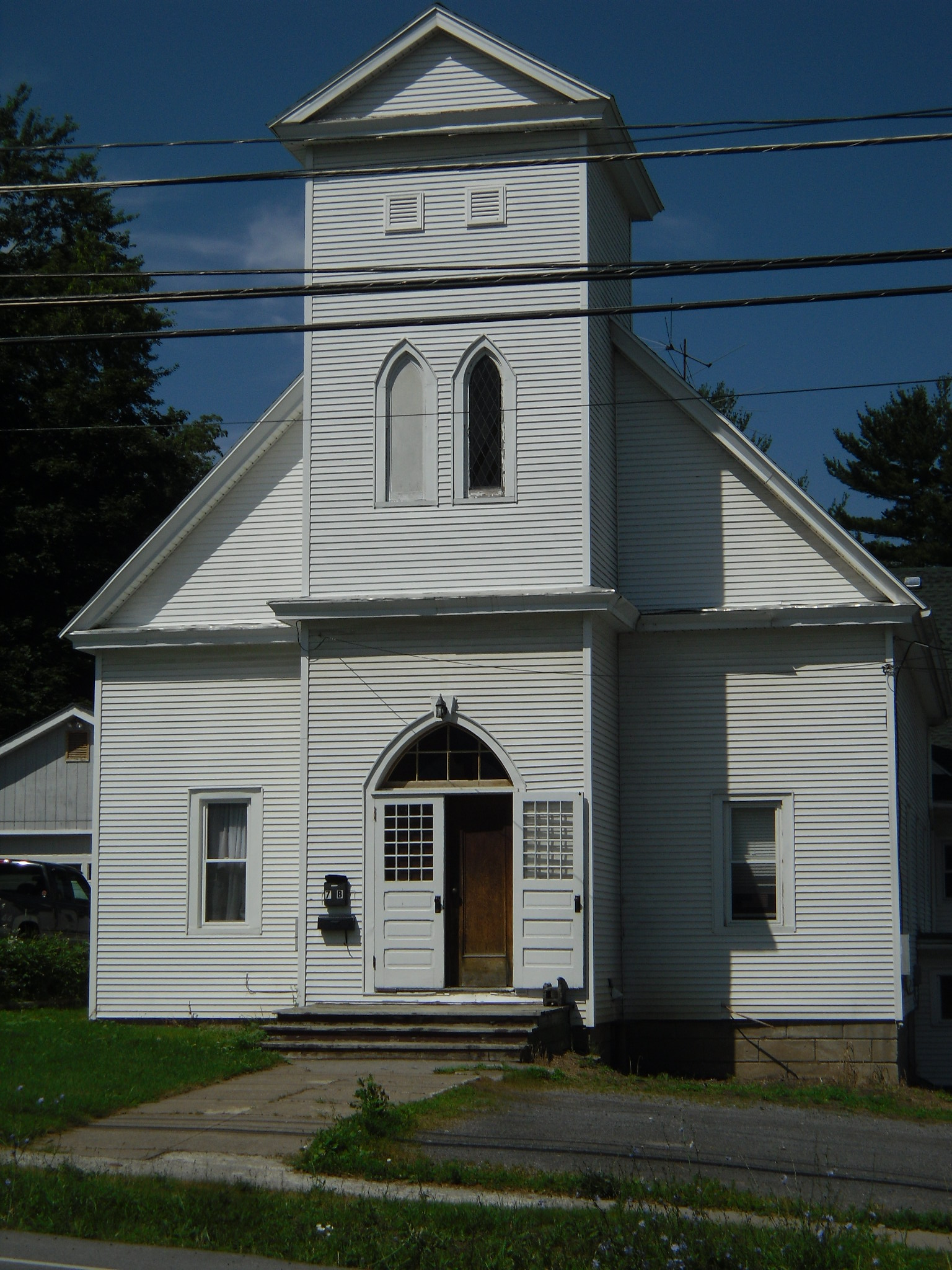

The Bible among the law books
Two influences at Adams turned Finney's attention to religion, by his account. The first was his reading for the law. "In studying elementary law, I found the old authors frequently quoting the Scriptures," referring especially to the law of Moses "as authority for many of the great principles of common law. This excited my curiosity so much that I went and purchased a Bible, the first I had ever owned."1 The second was the preaching and conversation of the new Presbyterian pastor, George Washington Gale, who had studied at Princeton. Finney described Gale's preaching as "of the old school type; that is, it was thoroughly Calvinistic," and wrote that Gale "seemed to me to begin in the middle of his discourse, and to assume many things which to my mind needed to be proved."1 (Finney is using the later label "old school" for the party in the Presbyterian Church that held to the stricter reading of the Westminster Confession; the formal Old School and New School division came in 1837 and 1838 and is the subject of lesson 13.)
The lawyer's questions Finney put to Gale show the cast of mind he brought to theology. "What did he mean by repentance? Was it a mere feeling of sorrow for sin? Was it altogether a passive state of mind, or did it involve a voluntary element? ... What did he mean by faith? Was it merely an intellectual state?"1 The questions already lean toward the answers Finney would later give in his theology: that repentance and faith are acts of the will. Lesson 10 follows that line of thought.
Finney also attended the church's weekly prayer meeting near the office, and was struck that the people prayed for revival and confessed that they did not receive it. When they asked whether he wanted them to pray for him, he refused: "You have prayed enough since I have attended these meetings to have prayed the devil out of Adams, if there is any virtue in your prayers. But here you are praying on, and complaining still."1 On further reading he concluded that "the reason why their prayers were not answered, was because they did not comply with the revealed conditions upon which God had promised to answer prayer; that they did not pray in faith, in the sense of expecting God to give them the things that they asked for." After "some two or three years," he wrote, his mind "became quite settled that ... the Bible was, nevertheless, the true word of God."1
The conversion, October 10, 1821
The Sabbath resolution
Finney's second chapter, "Conversion to Christ," is the most often quoted part of the Memoirs. It begins: "On a Sabbath evening in the autumn of 1821, I made up my mind that I would settle the question of my soul's salvation at once, that if it were possible I would make my peace with God."7 He was busy in the office, but on Monday and Tuesday had time "to read my Bible and engage in prayer most of the time." He found, to his surprise, that he was ashamed to be seen seeking: "When I prayed I would only whisper my prayer, after having stopped the key-hole to the door, lest some one should discover that I was engaged in prayer." If someone came in while he was reading the Bible, "I would throw my law-books upon it, to create the impression that I had not had it in my hand."7 He avoided his pastor and the elders, "ashamed to let them know how I felt, on the one hand; and on the other, I was afraid they would misdirect me. I felt myself shut up to the Bible."
On Wednesday morning, on his way to the office, he describes "an inward voice" asking: "What are you waiting for? Did you not promise to give your heart to God? And what are you trying to do? Are you endeavoring to work out a righteousness of your own?" He then wrote a sentence that a Calvinist, a Wesleyan or a Lutheran reader could each recognize: "I saw that his work was a finished work; and that instead of having, or needing, any righteousness of my own to recommend me to God, I had to submit myself to the righteousness of God through Christ. Gospel salvation seemed to me to be an offer of something to be accepted; and that it was full and complete; and that all that was necessary on my part, was to get my own consent to give up my sins, and accept Christ."7 To the question that followed, "Will you accept it now, to-day?", he answered, "Yes; I will accept it to-day, or I will die in the attempt."
In the woods
Instead of going to the office, Finney turned toward a wood "north of the village, and over a hill," where he often walked. He admitted that pride followed him even there: "I skulked along under the fence, till I got so far out of sight that no one from the village could see me." He found "a place where some large trees had fallen across each other, leaving an open place between," crept in and knelt. "As I turned to go up into the woods, I recollect to have said, 'I will give my heart to God, or I never will come down from there.'"7
At first he could not pray: "when I came to try, I was dumb; that is, I had nothing to say to God." Each rustle of leaves made him look up for fear someone was coming. Then, he wrote, "the revelation of my pride of heart, as the great difficulty that stood in the way, was distinctly shown to me," and he cried out "that I would not leave that place if all the men on earth and all the devils in hell surrounded me." At that point a passage of Scripture "seemed to drop into my mind with a flood of light: 'Then shall ye go and pray unto me, and I will hearken unto you. Then shall ye seek me and find me, when ye shall search for me with all your heart.'"7 The words are from Jeremiah 29:12 to 13 in the King James Version.8 Finney's comment on the moment is theological: "I had intellectually believed the Bible before; but never had the truth been in my mind that faith was a voluntary trust instead of an intellectual state." He answered, "Lord, I take thee at thy word."7
He prayed "for a long time, I know not how long," and on the way back up toward the road said, "If I am ever converted, I will preach the Gospel." On the walk back he found his mind "most wonderfully quiet and peaceful," so quiet that he feared he had "grieved the Holy Ghost entirely away." Then comes the date: "It was on the 10th of October, and a very pleasant day. I had gone into the woods immediately after an early breakfast; and when I returned to the village I found it was dinner time."7
The evening in the law office
That afternoon Finney helped move the firm's books and furniture to another office. When his employer left at dark, Finney went into the unlit back room to pray, and wrote the passage that later readers have most often debated: "There was no fire, and no light, in the room; nevertheless it appeared to me as if it were perfectly light. As I went in and shut the door after me, it seemed as if I met the Lord Jesus Christ face to face." He immediately qualifies what he means: "It did not occur to me then, nor did it for some time afterward, that it was wholly a mental state. On the contrary it seemed to me that I saw him as I would see any other man. He said nothing, but looked at me in such a manner as to break me right down at his feet."7
Returning to the front room, he wrote, "I received a mighty baptism of the Holy Ghost. Without any expectation of it, without ever having the thought in my mind that there was any such thing for me ... the Holy Spirit descended upon me in a manner that seemed to go through me, body and soul. I could feel the impression, like a wave of electricity, going through and through me. Indeed it seemed to come in waves and waves of liquid love; for I could not express it in any other way."7 A member of the choir Finney led found him weeping and asked whether he was in pain. "I gathered myself up as best I could, and replied, 'No, but so happy that I cannot live.'" An elder of the church came, and then a young man who had been warned by the pastor against Finney's company; the young man "partly fell upon the floor, and cried out in the greatest agony of mind, 'Do pray for me!'"
The next morning the experience returned, and Finney wrote that "In this state I was taught the doctrine of justification by faith, as a present experience." He quoted Romans 5:1, "Being justified by faith, we have peace with God through our Lord Jesus Christ," and wrote: "I could see that the moment I believed, while up in the woods all sense of condemnation had entirely dropped out of my mind."7
"A retainer from the Lord Jesus Christ"
The first person to come into the office that morning, after Finney's employer, was a church deacon whose lawsuit was set for trial at ten o'clock, with Finney engaged as his attorney. Finney's answer is the best known sentence in the book: "Deacon B, I have a retainer from the Lord Jesus Christ to plead his cause, and I cannot plead yours." The deacon, Finney says, went away, "immediately settled his suit," and "betook himself to prayer."9 Finney wrote that he "had the impression, which has never left my mind, that God wanted me to preach the Gospel, and that I must begin immediately," and that "I had no longer any desire to practise law."
That evening, without any announcement he knew of, the village filled the meeting house. "I did not wait for anybody, but arose and began by saying that I then knew that religion was from God." Gale, the pastor, rose afterward and confessed that he had discouraged the church from praying for Finney's conversion and had not believed the report of it. A revival followed in the village and among the young people Finney had taught to sing; it "extended itself, not only through the village, but out of the village in every direction."9 Finney also went to Henderson to speak to his father, whom he describes as "an unconverted man."
Reading the conversion account
The account has been read in several ways, and each reading can point to something in the text.
- As an evangelical conversion of a familiar type. Conviction of sin, a struggle with pride, a promise of Scripture taken in faith, peace, and assurance of justification by faith follow the pattern of the conversion narratives that New England churches had heard since the seventeenth century (see lesson 01) and that Jonathan Edwards described in A Faithful Narrative (lesson 02). Finney's sentence about Christ's "finished work" and "the righteousness of God through Christ" would fit a Reformed or a Methodist pulpit.
- As the seed of Finney's theology of the will. Finney himself drew the moral: "faith was a voluntary trust instead of an intellectual state," and salvation required "my own consent to give up my sins." His later teaching that sinners can and must change their own hearts (lesson 10) is foreshadowed here, in his own retelling.
- As a Spirit baptism after conversion. The "mighty baptism of the Holy Ghost" in the evening, distinct from the peace of the morning, became a model for the Holiness movement's teaching on a second work of grace and later for some Pentecostal readers (Module 77, lesson 01). Finney did not use the term "second blessing" in this chapter; he called the experience a baptism of the Spirit and said he had never heard of such a thing beforehand.
- As a psychological event. A skeptical reader will note the days of strain before October 10 (on the Tuesday night, Finney wrote, "a strange feeling came over me as if I was about to die"), and Finney's own later judgment that the vision of Christ was "wholly a mental state." Finney did not treat that phrase as a denial that the experience came from God; he called it "a most remarkable state of mind."
What the record can and cannot show is simple. The only source for the events of October 10, 1821 is Finney's own account, written in 1867 and 1868. The date, the place and his decision to leave the law are not in doubt, since he was licensed to preach about two years later. The inner experience is reported, not documented, and the account was written by a man who by then had taught for decades that conversion is the sinner's voluntary act.
Licensing, ordination and the quarrel with Gale
Arguments with his pastor
Soon after his conversion Finney went to see Gale and began a long argument about the atonement. Gale, he wrote, "was a Princeton student, and of course held the limited view of the atonement: that it was made for the elect and available to none else," and "held that Jesus suffered for the elect the literal penalty of the Divine law."11 Finney objected that "this was absurd," and says the two men renewed the dispute through his whole course of study. (The quotation uses a colon where the 1876 text has a dash.) "I cannot embrace these views come what will," he recalled telling himself after one session; "I cannot believe they are taught in the Bible."11 The positions are those of the Reformed doctrine of particular redemption on Gale's side and of a general atonement, as New England theologians of the Edwardsean line had come to teach it, on Finney's. Lesson 07 traced that New England line and lesson 10 returns to Finney's governmental view of the atonement.
In the spring of 1822 Finney put himself under the care of the presbytery as a candidate for the ministry. "Some of the ministers urged me to go to Princeton to study theology, but I declined." Asked why, he gave first a financial reason and then, when they offered to pay, the real one: "I plainly told them that I would not put myself under such an influence as they had been under; that I was confident they had been wrongly educated, and they were not ministers that met my ideal."11 Finney's critics later used his lack of formal theological education against him; he made it part of his case for a ministry trained in the work of revivals.
Licensed to preach
The St. Lawrence Presbytery met at Adams to examine him. The 1876 Memoirs say: "This was in March 1824." The Gospel Truth chronology gives the date of licensing as December 30, 1823, at Adams, and dates his commission from a women's missionary society as March 17, 1824.6 The difference may be that Finney, writing from memory four decades later, fixed on the month he began his missionary work. The Memoirs state that he was examined, that the presbytery "voted unanimously to license me to preach," and that the members then asked whether he received the Presbyterian confession of faith. "I had not examined it," he wrote, "that is, the large work containing the catechism and confession. This had made no part of my study. I replied that I received it for substance of doctrine, so far as I understood it."11 Later in the book he says that when he did read it he found "several points upon which I could not put the same construction that was put on them at Princeton," and that he told congregations so.12 The phrase "for substance of doctrine" was the formula under which many American Presbyterians of the time subscribed the Westminster Standards; Old School Presbyterians would argue in the 1830s that it was being stretched too far, a dispute traced in lesson 13.
At the same meeting Finney first saw the Rev. Daniel Nash, "generally known as 'Father Nash,'" who later traveled with him and gave himself to prayer during the revivals. When Gale heard Finney preach for the first time after the licensing, he said to him, "Mr. Finney, I shall be very much ashamed to have it known, wherever you go, that you studied theology with me."11
Ordination and marriage
The Presbyterian Historical Society's guide to the Finney papers states that "In 1824 he was ordained by the Presbytery of St. Lawrence."13 The Oberlin College Archives give the month as July 1824, and popular accounts give the day as July 1, 1824;33 the Gospel Truth chronology gives a different, queried date (May 7, 1824) and a different presbytery, so the exact day is left open here.6 Finney wrote only that he was "licensed and ordained by a presbytery, composed mostly of men educated at Princeton."12 In October 1824 he married Lydia Root Andrews at Whitestown, Oneida County; the chronology gives the day as October 5.146 A few days after the wedding he left her to return to his field, expecting to be back in a week; by his own account he was away for six months before he could fetch her.14
The northern revivals, 1824 to 1825
Finney began, he wrote, with no wish to preach to "cultivated congregations": "I intended to go into the new settlements and preach in school-houses, and barns, and groves, as best I could." He took "a commission, for six months, from a female missionary society located in Oneida county" and began at Evans' Mills, in the town of Le Ray, in Jefferson County.14 His health was poor: "I had coughed blood; and at the time I was licensed, my friends thought that I could live but a short time." Gale told him to preach no more than once a week and for half an hour. Instead, "I visited from house to house, attended prayer meetings, and preached."14
The chapters on Evans' Mills, Antwerp, Gouverneur and De Kalb (1824 and 1825) contain most of the elements later called new measures, in an early form. At Evans' Mills Finney pressed the congregation to decide on the spot: those willing to "pledge to me and to Christ, that you will immediately make your peace with God" were to rise, and those who would not were to sit still. All sat still, and Finney told them, "Then you are committed. You have taken your stand." The town was angry until, after a day that Finney and a deacon spent in fasting and prayer, the meetings turned. He preached without notes, used illustrations from ordinary life, and addressed his hearers as "you." Ministers rebuked him, he wrote, "for illustrating my ideas by reference to the common affairs of men of different pursuits around me." Finney's chapter "Remarks upon Ministerial Education" answers them with an argument for extemporaneous preaching and plain speech.14 At De Kalb, where Presbyterians had earlier resisted a Methodist revival because of cases of "falling under the power of God," Finney reports that several Presbyterians fell under his preaching, "and none among the Methodists." These towns were small. Finney gives no count of converts for them.
One sentence from the end of this section of the Memoirs is worth quoting in full, because it answers a charge made against him from his day to this, that he relied on technique: "I wish it to be distinctly understood, in all that I shall say, in my narrative of the revivals that I have witnessed, that I always in my own mind, and practically, laid the utmost stress upon this fact, underlying, directing, and giving efficiency to the means, without which nothing would be accomplished." The "fact" is "the manifest agency of the Holy Spirit."14
The "western revivals," 1825 to 1827
Western and Rome
In the autumn of 1825 Finney stopped in Oneida County on his way back to St. Lawrence County and stayed. The report the Oneida Presbytery printed for the town of Western, furnished by George W. Gale (who had moved there for his health), dates his arrival exactly: "On the last of September, 1825, the Rev. Charles G. Finney arrived in town ... on his way to the county of St. Lawrence." He preached "three times on the Sabbath, and almost every evening in the week, in different parts of the town, besides visiting during the day from house to house." Gale's report counts the converts "in this town, and that part of Lee where the people attended meetings here" at "about one hundred and forty," with thirty-seven joined to the Presbyterian church.3 In the Memoirs, the meetings at Western are the place where the revivals Finney's critics later called "the western revivals" began.15 (In 1826 "western" meant central and western New York, as seen from New England.)
From Western the work spread to Rome, a few miles south, where Moses Gillet was pastor. Gillet's report, dated October 30, 1826, describes the most intense weeks: "Instances of hopeful conversion were most frequent about the second week in January. At two different times, it appeared that more than twenty were hopefully converted in twenty-four hours." "Four lawyers, four physicians, all the merchants who were not professors before, and men of the first respectability in the place, are hopeful converts." In March, 167 were received into the Presbyterian church on profession of faith, and the total received was 284; "Upwards of thirty have united with the Methodist church, and some with the Baptists and Episcopalians. The number of hopeful converts cannot be accurately stated, probably not far from five hundred."3 These numbers deserve to be read the way Gillet offered them: the church admissions are a count from the session's records; the "hopeful converts" figure is the pastor's estimate, in a word ("hopeful") that the Reformed churches used precisely because they did not claim to know who was truly regenerate.
Finney's own chapter on Rome describes an inquiry meeting so charged that "even a few words of conversation would make the stoutest men writhe on their seats, as if a sword had been thrust into their hearts." When Gillet turned pale and asked "What shall we do?", Finney said he whispered, "Keep quiet, keep quiet, brother Gillett," spoke gently to the people, pointed them "to Christ, as the Saviour of the world," and dismissed them.15 The picture of Finney calming an overwrought meeting sits beside the picture his critics drew of a preacher who stirred meetings up. Both pictures can be true of different occasions.
Utica and Theodore Weld
Aikin, pastor of the First Presbyterian Church of Utica, wrote the report for his city. The revival, he said, began about the first of January 1826, given "a new impulse ... by the daily reports of what was doing at Rome." Then, "about the first of February, ... the Rev. Mr. Finney came to Utica, where, as in other places, his plain and pungent and faithful preaching, was attended with evident and wonderful success." Aikin insisted that the meetings "were solemn, and sometimes awfully so." "True, there has been noise," he conceded, but it had been "among the enemies of the revival." His estimate: "The probable number of converts in Utica, is about five hundred."3
The best known convert of the Utica revival was Theodore Dwight Weld, then a student at Hamilton College in Clinton. Finney's account says Weld "became quite outrageous in his expressions of opposition to the work," was brought to hear him by an aunt in Utica, sat through a sermon on the text "One sinner destroyeth much good" that he took as aimed at him, berated Finney for nearly an hour the next day in a store on Genesee Street, and was converted soon afterward. Weld later became one of the most effective antislavery lecturers in the country and a close correspondent of Finney (lesson 11). Finney prefaced the story by saying, "As much has been said about the hopeful conversion of Theodore D. Weld, at Utica, it may be well for me to give a correct report of the facts."15 The same chapter tells of a revival in a cotton factory near Utica that ran "through the mill with astonishing power," so that "in the course of a few days nearly all in the mill were hopefully converted."
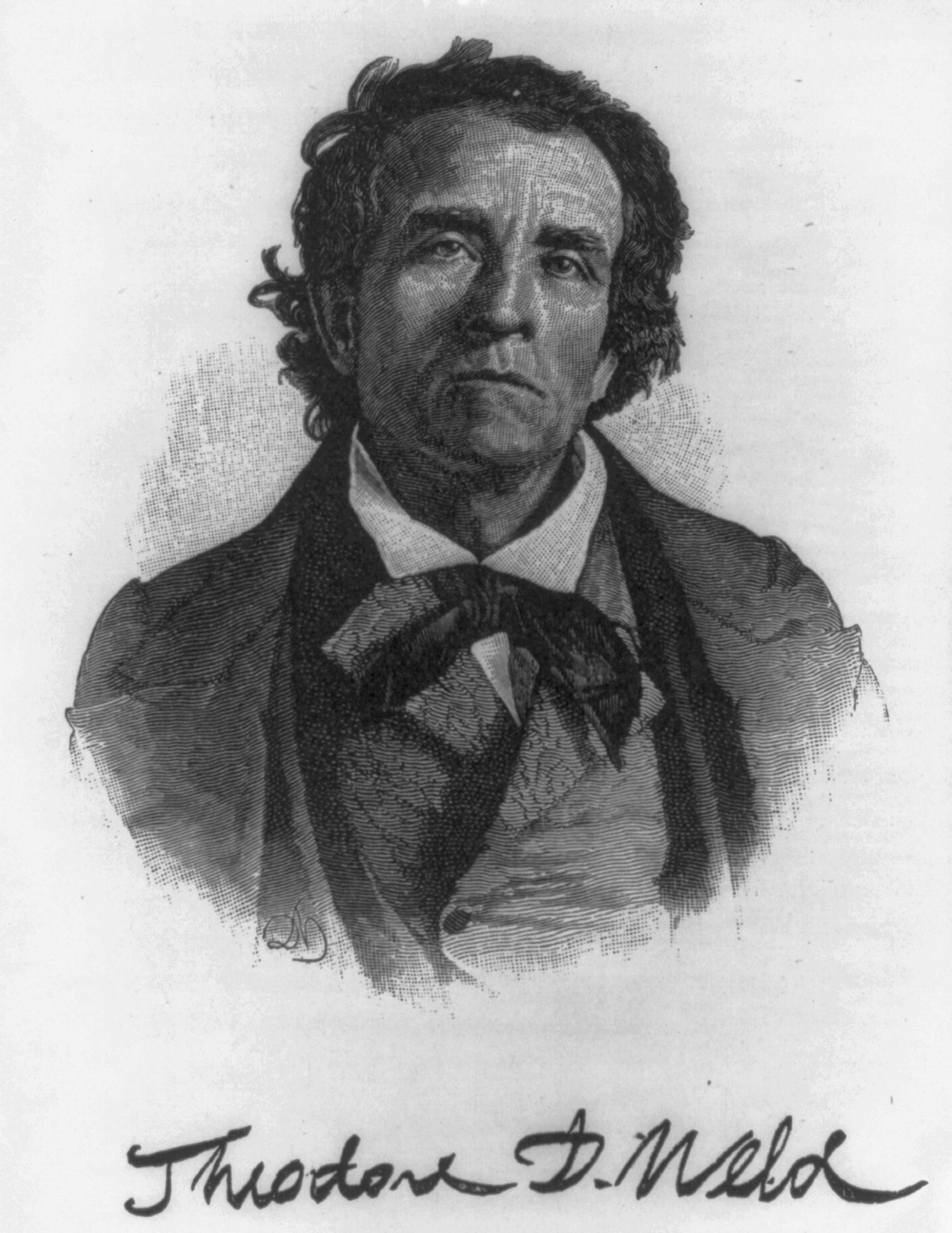

Auburn, Troy and the presbytery totals
From Utica Finney went to Auburn in 1826, where, by his account, opposition grew stronger, partly because "of the known disapproval of my labors on the part of many ministers." At Auburn a man in the congregation, hearing Finney describe a husband who kept his family from religion, cried out "Name me!"15 A similar story, without names, appears in his Lectures on Revivals as an example of preaching that makes a hearer "feel that it means him."16 "Early in the autumn of this year, 1826," Finney accepted an invitation from Nathan S. S. Beman of the First Presbyterian Church of Troy, and "spent the fall and winter" there.17 Troy was the place where the controversy became public: some members of Beman's church brought complaints against their pastor before the Troy Presbytery, which, Finney says, examined the charges "for several weeks" and dismissed them.
The committee of the Oneida Presbytery summed up the year in its closing remarks: "More than three thousand are indulging hope that they have become reconciled to God through the Redeemer. About half this number have already united with the Presbyterian and Congregational churches, and a large portion of the remainder with the Baptist and Methodist churches. Never before have the churches in this region been blessed with so great a shower of divine grace." The committee added at once: "The history of the church in every age, forbids the expectation that all this number possess that repentance and faith, which is unto salvation. In the little family of Jesus, there was a Judas."3 The "more than three thousand" is an estimate by the revival's friends, for the bounds of one presbytery in the year 1826, and it covers the work of several ministers. Finney was the best known of them, but the narrative's town reports name others (the local pastors, Nash, and visiting preachers) as instruments as well.
The "Holy Band"
Modern historians often call the circle of helpers who traveled with Finney or joined him in these campaigns his "Holy Band." The group is usually said to have included Daniel Nash, Abel Clary, Theodore Weld after his conversion, and several young ministers and laymen. The term is a historians' label, used in later scholarship; it does not appear in the 1876 Memoirs, which speak instead of individual "praying" men such as Nash and Clary and of the "spirit of prayer" among converts. Finney describes Clary at Rochester in 1830: "He never, that I could learn, appeared in public, but gave himself wholly to prayer."18 Nettleton's complaint of 1827 was aimed partly at this circle: "Some students in divinity, and others, in their attempts to imitate Brother Finney, have reminded us of the conduct and success of the seven sons of Sceva, who undertook to imitate Paul, in Acts xix."4
The opposition of 1827
Nettleton's letter to Aikin
Asahel Nettleton (1783 to 1844) was the best known revival preacher in New England in the 1810s and 1820s, a Calvinist of the Edwardsean school who worked quietly from parish to parish at the invitation of settled pastors (lesson 08). That winter he was at Albany, near Troy. On January 13, 1827, he wrote from Albany to Aikin at Utica. The letter was printed, with others, in the 1828 pamphlet Letters of the Rev. Dr. Beecher and Rev. Mr. Nettleton.4 Nettleton did not deny that the western revivals were real: "We do not call in question the genuineness of that revival, or the purity of the motives of those who have been the most active in it." His complaint was about what was spreading from them. "The spirit of denunciation which has grown out of the mode of conducting the revivals at the West, is truly alarming." Visitors to Troy, he wrote, had come home "grieved, others soured, and denouncing ministers, colleges, Theological Seminaries."4
Nettleton named particular practices. On praying for people by name: "Who cannot call his minister stupid and dead, and pray for him by name as such? And if he gets mad, and all the church too, no matter for that; 'the more opposition the better.' This is certainly the way to have a revival; for it is Mr. Finney's method." On women praying in meetings where men were present: "The practice of females praying in promiscuous assemblies is considered as absolutely indispensable, so that nothing can possibly be done without it." ("Promiscuous" here means mixed, of men and women together.) He warned that "whoever introduces the practice of females praying in promiscuous assemblies, let the practice once become general, will ere long find, to his sorrow, that he has made an inlet to other denominations, and entailed an everlasting quarrel on those churches generally."4 On Finney himself, Nettleton wrote with sympathy as well as alarm: "Brother Finney himself has been scarcely three years in the ministry, and has had no time to look at consequences," and "I heartily pity Brother Finney, for I believe him to be a good man, and wishing to do good."4
Nettleton also reached back to the First Great Awakening for a warning. "Whoever has made himself acquainted with the state of things in New-England, near the close of the revival in the days of Whitfield and Edwards, cannot but weep over its likeness to the present." The young itinerants of the 1740s, he wrote, had denounced settled ministers, "And so the churches were split in twain," and some "made and published their recantations to the world, which are now extant."4 The allusion is to James Davenport and the Separates of the 1740s, the subject of lesson 04.
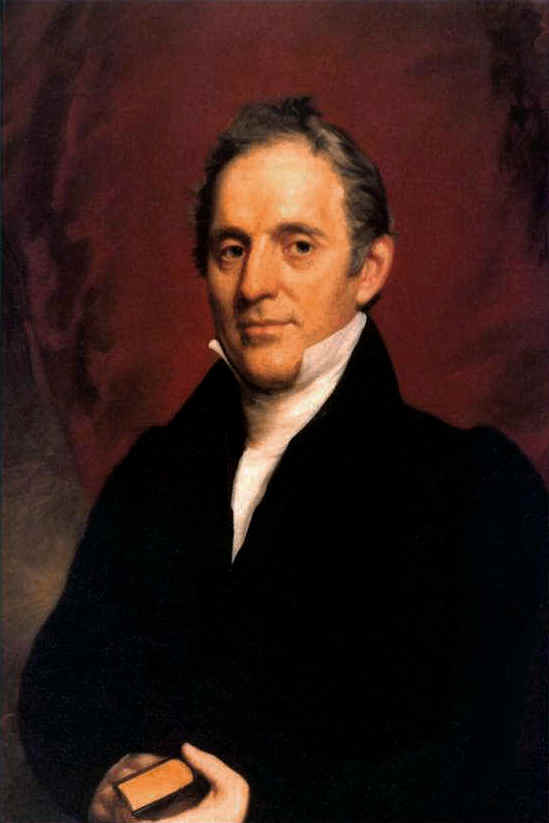

Beecher's letter to Beman
Lyman Beecher (1775 to 1863), then pastor in Boston, wrote to Beman at Troy in January 1827. The letter circulated in manuscript and was printed in the New York Observer at the end of 1827, then in the 1828 pamphlet.20 It opens warmly: "I have confidence in the piety and talents of brother Finney, and have no doubt that he brings the truth of God to bear upon the conscience with uncommon power." Beecher also granted that ordinary churches were "deplorably lukewarm" and "often need strong measures." He then set out, under numbered heads, the faults he feared. Among them were "The hasty recognition of persons as converted upon their own judgment"; "Female prayer in promiscuous assemblies"; "Language of unbecoming familiarity with God in prayer"; "Coarse, blunt, and vulgar expressions"; and "A harsh and severe mode of addressing sinners."20 On women's prayer his argument was from Scripture and from nature: "First, it is no where commanded. Secondly, it is no where authorized, either by precept or example." He cited 1 Timothy 2:12 and 1 Corinthians 14:34 and argued that "nature itself" taught the same.20
Other senior ministers sided with the critics in print, among them Dr. Griffin, whom Nettleton quoted, and Dr. Porter of Catskill. Porter, writing on June 14, 1827, listed "females of all ages praying in social meetings when there are males assembled, and for persons by name, and in a style irreverent and shocking to the humble and contrite spirit" as practices that would make "revivals of religion ... lose their character."21 Finney's friends answered that the critics were relying on distant and garbled reports. Finney himself wrote years later that "No public replies were made to the letters that found their way into the public prints," because "Those of us who were engaged in them, had our hands too full, and our hearts too full."15
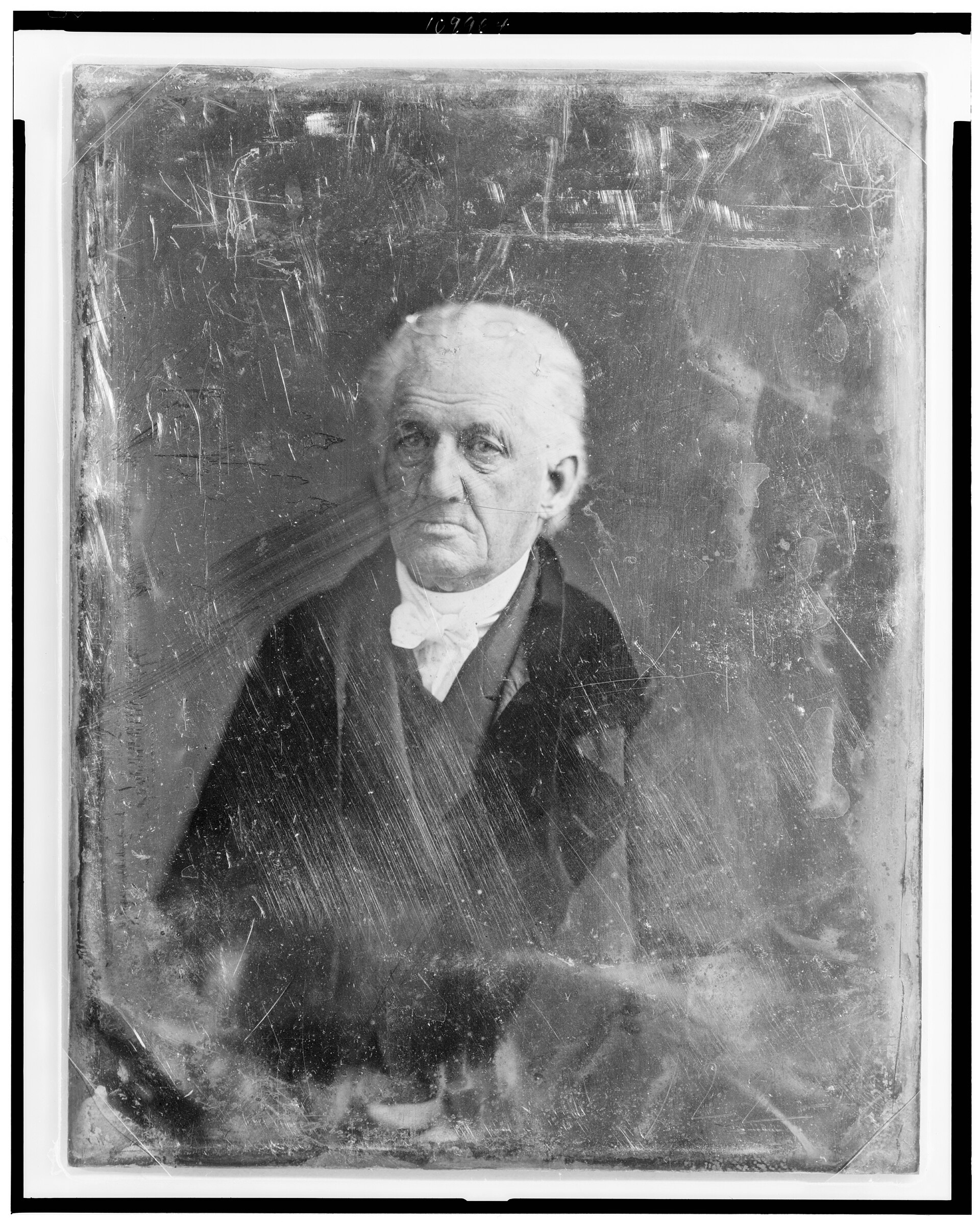

Finney meets Nettleton
Finney's Memoirs describe a single meeting with Nettleton before the convention. Early in his stay at Troy he went down to Albany. "At that time my confidence in him was so great that I think he could have led me, almost or quite, at his discretion." They talked about doctrine and, Finney says, agreed; "What they complained of was something that they supposed was highly objectionable in the measures that we used." When Finney said he would stay and hear Nettleton preach that evening, Nettleton "manifested uneasiness, and remarked that I must not be seen with him." Finney added, against a statement in Nettleton's biography, that "At no time did Mr. Nettleton try to correct my views in relation to revivals."17 The biography he refers to is Bennet Tyler's Memoir of the Life and Character of Rev. Asahel Nettleton (1844), which tells the story from Nettleton's side; the two accounts conflict on whether Nettleton tried to advise Finney.
The New Lebanon Convention, July 1827
Who came and why
The convention met at New Lebanon, in Columbia County, New York, where Finney had been preaching, in July 1827. Finney's memory of the date is hedged ("I think in July, 1827"), and July 1827 is the date generally given.17 Finney insisted on its character: "I find there is an impression in the public mind, that some complaint had been alleged against myself; and that this meeting was for the trial of myself ... But this was by no means the case." The members "were not men that had been appointed by any ecclesiastical bodies"; they were invited to "consult, to compare views, to see if anything was wrong in fact; and if so, to agree to correct what was wrong, on either side."17
From the East, Finney remembered "Dr. Beecher and Mr. Nettleton, Dr. Joel Hawes from Hartford, ... Dr. Humphrey, president of Amherst College, Rev. Justin Edwards of Andover, and a considerable number of other brethren whose names I do not recollect." From central New York came "Dr. Beman of Troy, Dr. Lansing of Auburn, Mr. Aiken of Utica, Mr. Frost of Whitesboro, Mr. Gillett of Rome, Mr. Coe of New Hartford, Mr. Gale of Western, Mr. Weeks of Paris Hill," and Finney. Finney believed that Humphrey presided as moderator.17
What happened, by Finney's account
The western ministers asked at once where Beecher and Nettleton had obtained their information. Finney quotes Beecher's reply: "We have not come here to be catechised; and our spiritual dignity forbids us to answer any such questions." Beecher argued that the western men were parties and should not be heard as witnesses; Humphrey answered "that we were the best witnesses that could be produced," and the eastern members agreed.17 On women praying, Beecher "argued it at length, insisting upon it, that the practice was unscriptural and inadmissible," and Beman replied from 1 Corinthians 11 that the apostle "did not complain of their taking part in the meeting, but of the fact that they did so, laying aside their veils."17 Near the close Nettleton read his "historical letter" listing the practices he had heard of. Finney says he had a copy himself, rose to say that "not one of those facts mentioned there, and complained of, was true" so far as he was concerned, and invited the western ministers present to say otherwise; none did.
Finney also quotes, from Beecher's Autobiography (volume 2, page 101), the most famous sentence connected with the convention, which Beecher remembered saying to Finney: "Finney, I know your plan, and you know I do; you mean to come to Connecticut, and carry a streak of fire to Boston. But if you attempt it, as the Lord liveth, I'll meet you at the state line, and call out all the artillery-men, and fight every inch of the way to Boston, and then I'll fight you there." Finney's comment: "I do not remember this; but, as Dr. Beecher does, let it illustrate the spirit of his opposition."17 The sentence therefore rests on Beecher's own recollection, published decades later in the Autobiography (1864 to 1865) edited by his son Charles Beecher, and Finney neither confirmed nor denied it.
The outcome
Near the close Justin Edwards brought in resolutions disapproving of the practices Nettleton had listed. The western members said they disapproved of those practices too and voted for them ("I believe unanimously," Finney wrote), while objecting that the resolutions were meant to imply that such things had been done in their revivals; Beecher answered that they were "entirely prospective." Finney's judgment was that "From the time of the New Lebanon convention ... open and public opposition to revivals of religion was less and less manifested."18 He also reports that Beecher said, a year and a half later in Boston, that he "would not have had Mr. Nettleton come to Boston for a thousand dollars."17 In 1831 the Congregational ministers and churches of Boston invited Finney to the city, and he preached there in 1831 and 1832.19 Nettleton's view of the measures did not change, as the publication of his letters in 1828 shows. The quarrel over method fed into the larger quarrel between Old School and New School Presbyterians over doctrine (lesson 13).
Wilmington, Philadelphia, Reading and New York, 1827 to 1830
After New Lebanon and a revival at Stephentown, Finney accepted an invitation from a Presbyterian pastor of Wilmington, Delaware, a Mr. Gilbert, whom he describes as "very old-school in his theological views, but a good and earnest man." Finney found that the congregation "seemed to be afraid to make any effort, lest they should take the work out of the hands of God," because they held "that God would convert sinners in his own time." He preached against that view directly and reports that some members were at first offended and then changed.12 From Wilmington he began going up to Philadelphia twice a week to preach for James Patterson, who "held the views of theology then held at Princeton," and then moved there. "It was late in the fall when I took my lodgings in Philadelphia, and I continued to labor there without any intermission until the following August, 1828." Later he preached in a large German church on Race Street, whose house of worship "it was said ... seated three thousand people, when the house was packed and the aisles were filled." He estimated that he spent "about a year and a half" in Philadelphia in all.12
Finney's comment on the numbers in Philadelphia is worth noting, because he is often credited with precise totals: "The converts became numerous in every part of the city; but I never had any knowledge, nor could I form any estimate of their exact number."12 Of a later campaign at Syracuse he wrote, "Indeed I was never in the habit of ascertaining the number of hopeful converts."22 The most often repeated Finney numbers come from other people: pastors' reports, church admission records, and later estimates.
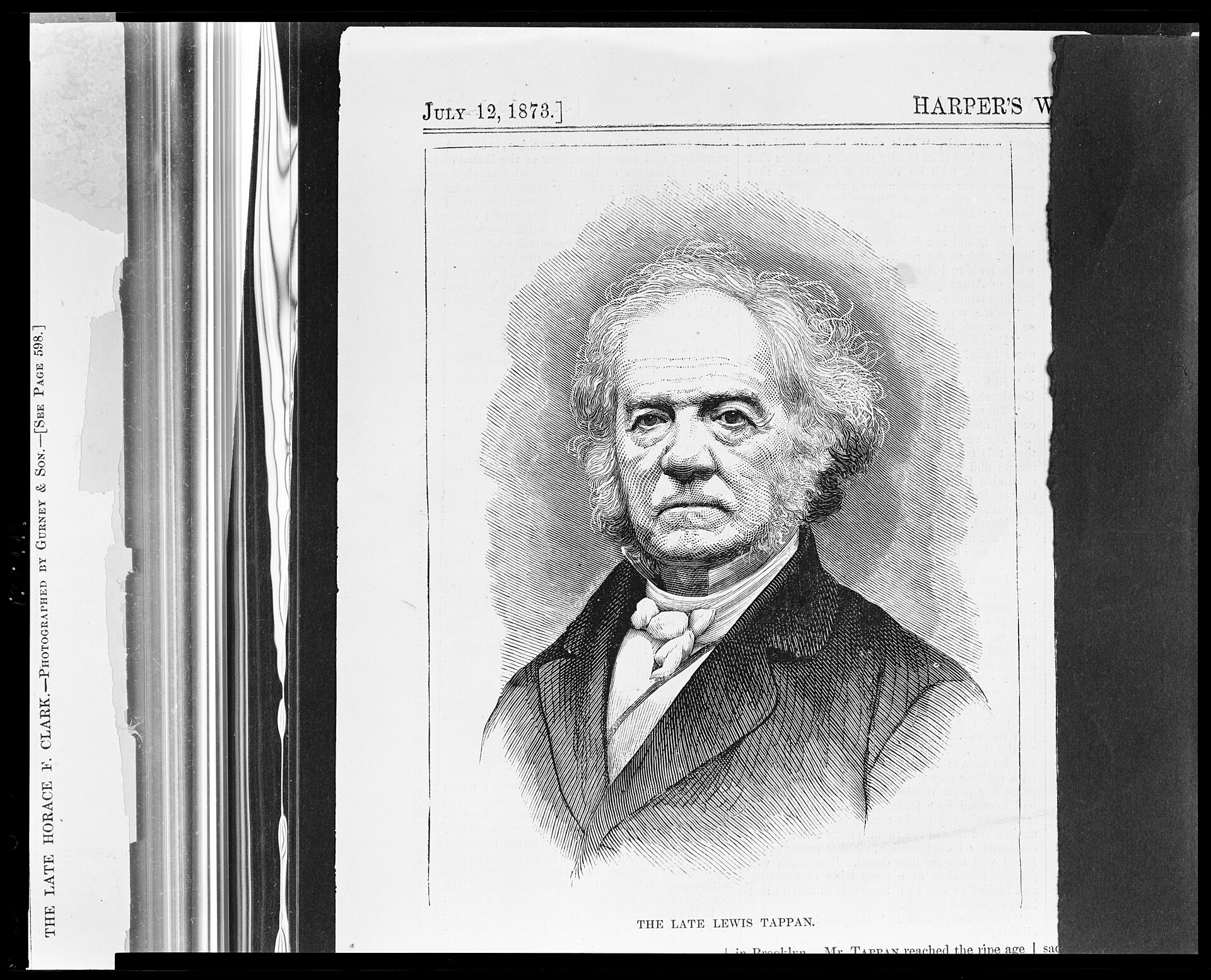
In the spring of 1829, Finney recalled, lumbermen who had floated their rafts down the Delaware to Philadelphia heard him preach, were converted, and carried the revival back to the "lumber region" of northern Pennsylvania, where it spread among settlements that had no churches. In the winter of 1829 to 1830 he went to Reading and Lancaster, Pennsylvania, and then to Columbia, New York. In New York City the merchant Anson G. Phelps, "hearing that I had not been invited to the pulpits of that city, hired a vacant church in Vandewater street," and a revival followed. In the same chapter Finney tells how Lewis Tappan, then a Unitarian of Boston, became an evangelical through his brother Arthur; the Tappan brothers later financed the Chatham Street Chapel and Oberlin (lesson 11).12
Rochester, 1830 to 1831
"The least inviting" field
In the summer of 1830 Finney had invitations from New York, Philadelphia and Rochester. Rochester, a young town on the Genesee River and the Erie Canal, had three Presbyterian churches. The Third Church, which invited him, had no pastor; the Second ("the Brick Church") was divided over its pastor; and an elder of the Third Church had a complaint pending before the presbytery against Dr. Penny, pastor of the First. Friends at Utica advised him unanimously to go east instead. "Rochester seemed to be the least inviting of them all." That night, he wrote, the question came to him differently: "Do you shun the field because there are so many things that need to be corrected, because there is so much that is wrong? But if all was right, you would not be needed." The next morning "the packet boat came along, and we embarked and went westward instead of eastward."18 Finney arrived with his wife and children and lodged first with Josiah Bissell, the leading elder of the Third Church. He gives no exact date; modern accounts place his arrival on September 10, 1830, and his own later chapter says his "labors in Rochester at that time, had continued through six months," ending "in the spring of the year 1831."19
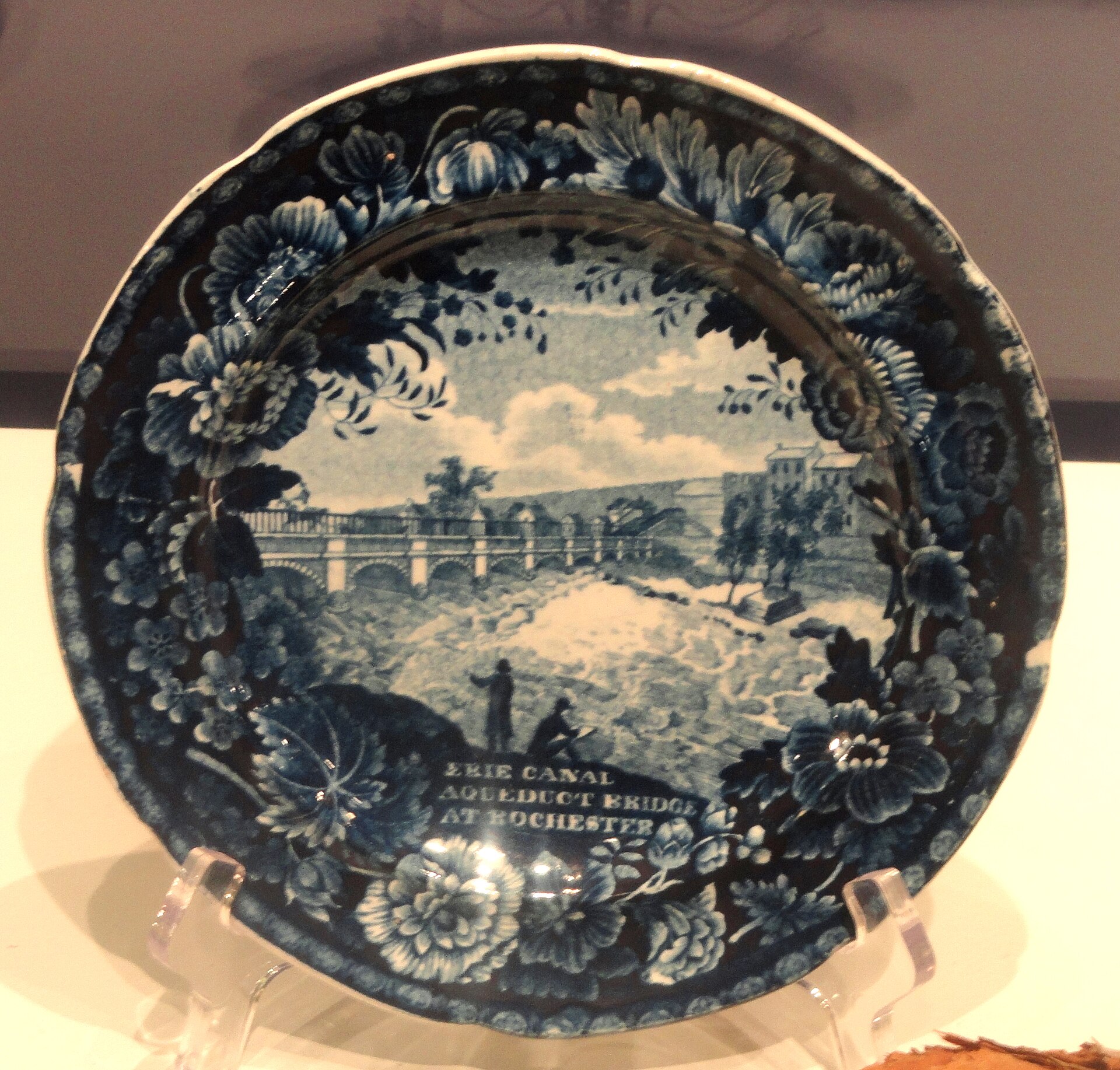

The first converts and the anxious seat
Finney writes that the quarrel between Bissell and Penny was soon healed and that "a spirit of universal kindness and fellowship pervaded all the churches." One of the first converts was "the wife of a prominent lawyer," a "Mrs. M," who had dreaded that "a revival would greatly interfere with the pleasures and amusements that she had promised herself that winter." While Finney prayed with her on the text "Except ye be converted and become as little children, ye shall in no wise enter into the kingdom of heaven" (Matthew 18:3), she began repeating it, "and before we rose from our knees, she was indeed a little child."18
Then comes the passage that is the main evidence for when and why Finney adopted the anxious seat:
"I had never, I believe, except in rare instances, until I went to Rochester, used as a means of promoting revivals, what has since been called 'the anxious seat.' I had sometimes asked persons in the congregation to stand up; but this I had not frequently done. However, in studying upon the subject, I had often felt the necessity of some measure that would bring sinners to a stand. From my own experience and observation I had found, that with the higher classes especially, the greatest obstacle to be overcome was their fear of being known as anxious inquirers. They were too proud to take any position that would reveal them to others as anxious for their souls."18
He continues: "At Rochester, if I recollect right, I first introduced this measure. This was years after the cry had been raised of 'new measures.' A few days after the conversion of Mrs. M, I made a call, I think for the first time, upon all that class of persons whose convictions were so ripe that they were willing to renounce their sins and give themselves to God, to come forward to certain seats which I requested to be vacated, and offer themselves up to God, while we made them subjects of prayer." "A much larger number came forward than I expected."18 Three things in this passage matter for the claims about Finney examined below. He hedges twice ("if I recollect right," "I think for the first time"). He says the controversy over "new measures" was years older than the anxious seat, so the measures his critics attacked in 1827 were not this one. And he connects the measure with his own experience in the woods at Adams, where pride and the fear of being seen were, in his account, the last obstacle to his conversion.
Finney writes that lawyers, physicians and merchants came, and that "numbers of them came forward to the anxious seat, as it has since been called, and publicly gave their hearts to God." A judge who was then "very proud ... resisted the anxious seat, and spoke against it," and was not converted that winter; his fiancee was. In a second revival at Rochester (1842), the same man, by then a judge of the state's court of appeals, crept up the pulpit stairs during the sermon, pulled at Finney's coat and asked, "Mr. Finney, won't you pray for me by name? and I will take the anxious seat."23
The panic at First Church and the high school
One evening at the First Church, during the opening prayer, a timber from the roof fell end down through the ceiling. The congregation took the noise for a gunshot and the falling of the building, and rushed for the doors and windows; "several, as I was informed, leaped out into the canal," which ran behind the church. "Several were considerably hurt, but no one killed." Finney admits that, not knowing of any danger, "the scene looked so ludicrous to me, that I could scarcely refrain from laughing." On examination the walls were found to have spread, partly under the weight of the crowd in the gallery, "until there was real danger."18 Meetings moved to the Second and Third churches.
At a large high school for both sexes, the students became so anxious about their souls that they could not recite, and the skeptical principal, at the suggestion of his Christian assistant, sent for Finney. The revival "took tremendous hold of that school." Years later, Finney wrote, the assistant told him "that more than forty persons, that were then converted in that school, had become ministers," and that "A large number of them had become foreign missionaries."18 The figure of forty ministers is a recollection reported at second hand; no list survives in the Memoirs.
The spirit of prayer
Finney insisted that the revival depended on prayer more than on preaching or measures. He tells of a minister who boarded the canal boat to talk with him, rode all the way to Rochester, and was soon "so convicted that he could not help weeping aloud" in the street. He tells of Abel Clary, converted in the Adams revival of 1821, who lodged with a family a mile west of the city and, the host reported, "prays nearly all the time, day and night, and in such an agony of mind that I do not know what to make of it." Finney's reply: "I understand it; please keep still. It will all come out right; he will surely prevail." He names other men, "and a large number of women," who "partook of the same spirit, and spent a great part of their time in prayer."18 Critics of Finney's theology have pointed to this account of agonized intercession as evidence that his revivals were not the product of technique alone; critics of his practice have pointed to it as an unhealthy strain on the people involved. Both readings start from Finney's own description.
How many converts at Rochester?
No count of Rochester converts was kept by Finney, and the numbers in circulation come from three kinds of source. Each should be labeled for what it is.
- Finney's general claim. The Memoirs say that "The great majority of the leading men and women in the city, were converted," and that people "would be converted by scores" in the surrounding towns. Finney also reports a conversation, "many years afterward," with a lawyer converted in 1830 who became district attorney and told him that although the city had tripled in size since the revival, "there are not one-third as many prosecutions for crime, as there had been up to that time." That statement is Finney's report of another man's informal reading of court records, and no study of the records is cited for it.18
- Lyman Beecher's national figure. Finney wrote that Beecher, "Years after this," called it "the greatest work of God, and the greatest revival of religion, that the world has ever seen, in so short a time," and said that "One hundred thousand ... were reported as having connected themselves with churches, as the results of that great revival." The 100,000 is a national figure for one year of revivals that Beecher associated with Rochester's influence; it is Finney's memory of Beecher's memory of reports made by many churches, and it is not a count of people converted at Rochester.18
- Later popular figures. An unsigned article in Christianity Today in 1981, marking the 150th anniversary, put Rochester's population at about 10,000 and said that "Finney saw over 1,200 converts unite with the churches of Rochester," and that "some 50,000 converts were reported by churches in hundreds of towns and villages in the East within five months of the start of the Rochester revival." The article does not give its method or its sources for these figures.24
The figures that historians treat as most reliable come from church admission records, which list who joined which congregation and when. Paul E. Johnson's study, discussed next, was built on such records for Rochester's Protestant churches from 1815 to 1837. All the numbers above are estimates, and the gap between them (from "1,200" for one city to "100,000" for the nation) shows how far later retellings have stretched the counts that pastors made at the time.
Paul Johnson's thesis: A Shopkeeper's Millennium (1978)
Paul E. Johnson's A Shopkeeper's Millennium: Society and Revivals in Rochester, New York, 1815 to 1837 (New York: Hill and Wang, 1978) is the most influential modern study of the Rochester revival, and the most argued over. Johnson matched the names in church admission records against tax lists, city directories and other records to see who joined the churches and when. His conclusions, as summarized by reviewers at the time, were these.
- Rochester's rapid growth after the canal broke up the old household workshop, in which a master craftsman lived with his journeymen and apprentices and governed their conduct. Masters and employees came to live apart, and the employers lost the old means of controlling their workers' drinking and Sabbath-keeping. Earlier efforts by temperance and Sabbath societies and through politics had failed.25
- The revival of 1830 and 1831 drew in first the city's established business and professional families. Kirkus Reviews summarized Johnson's finding that "the greatest impact of Finney's preaching was on the most stable members of the community," and his thesis that evangelicalism "served to legitimize the middle class and smooth the way for entrepreneurs who needed sober, disciplined wage-earners."26
- Converted employers then pressed their workers to convert and to give up drink, and the proportion of working men among the converts rose in later revivals. Bruce Tucker's review essay in Labour/Le Travailleur (1980) reports Johnson's figures that "In 1830-31, 22 per cent of male converts had been journeymen," a share that rose to 42 percent in the revivals of 1834 to 1837. Johnson concluded, in Tucker's quotation, that by the mid-1830s "there were two working classes in Rochester."27
Johnson did not claim that the businessmen of Rochester invented a religion to suit themselves. Richard Bushman's review, as quoted by the historian John Fea, notes that "Johnson explicitly repudiates the idea that 'entrepreneurs consciously fabricated a religion that suited their economic and social needs.'"28 His argument was that the conversions answered needs the converts did not consciously calculate.
The critics of the Johnson thesis
The book was praised for its research and challenged on its method and conclusions. Bushman, in the same review, called the book "reductionist" and wrote that its "main thesis, that revivals were above all the outgrowth of class tensions, remains at this point conjectural."28 Tucker wrote that Johnson exaggerated the use of church membership as a measure of piety, did not connect the experience of conversion with the choices converts made, and needed more on working-class culture outside the churches and on the place of women.27 A reviewer of the book for a university course noted that it gives little weight to the motives of the working people who joined the revival themselves.25 John Fea, writing in 2021, described the book as having "reduced the early 19th-century evangelical revivals to a form of social control."28 Historians who write on Finney as a religious figure (Hambrick-Stowe's 1996 biography is the fullest) treat the theology and devotion of the revival as causes in their own right.
Tucker's request for more on women's roles has particular force for readers of the Memoirs, where women are prominent in the Rochester story: Mrs. M, the wife who followed her husband to the front of the church, the assistant at the high school, and the women who "partook of the same spirit" of prayer. Records built mainly on men's occupations show less of them. Johnson's evidence about who joined the churches stands; his explanation of why they joined is the disputed part.
The new measures in Finney's own words
Lectures on Revivals, Lecture XIV
Finney's fullest defense of his methods is Lecture XIV, "Measures to Promote Revivals," in Lectures on Revivals of Religion, delivered as Friday evening lectures at the Chatham Street Chapel in New York and published in 1835 "from notes by the editor of the N. Y. Evangelist, revised by the author." The sixth edition appeared the same year.5 The text is Acts 16:20 to 21, the charge against Paul and Silas at Philippi that they "teach customs, which are not lawful for us to receive."8 Finney set out two propositions: "I. That under the gospel dispensation, God has established no particular system of measures to be employed and invariably adhered to in promoting religion. II. To show that our present forms of public worship, and every thing, so far as measures are concerned, have been arrived at by degrees, and by a succession of New Measures."5
The commission of the apostles, he argued, "did not prescribe any forms. It did not admit any." "Do it, the best way you can, ask wisdom from God, use the faculties he has given you, seek the direction of the Holy Ghost, go forward and do it." (The 1835 text separates these clauses with dashes, given here as commas.) He then walked through innovations that had once been resisted and later accepted: ministers giving up wigs and gowns, singing by choirs and from hymn books instead of lining out psalms, laymen praying and exhorting in public, women's prayer meetings, and the field preaching of Whitefield and the "new measures" of Wesley and of Edwards.5 On women's meetings he quoted the objection he had heard: "Set women to praying? Why, the next thing, I suppose, will be to set them to preaching."5 In the eighth lecture he had already said that prayer meetings should be arranged "as to exercise the gifts of every individual member of the church, male and female."29
The lecture then names "three things in particular, which have chiefly attracted remark": "Anxious Meetings, Protracted Meetings, and the Anxious Seat."
- Anxious meetings. These were meetings after the sermon or on another evening "for the purpose of holding personal conversation with anxious sinners, and to adapt instruction to the cases of individuals, so as to lead them immediately to Christ." Finney said the first he heard of under that name was in New England, that their design was sound, and that "they have been opposed because they were new."5
- Protracted meetings. A series of daily services lasting days or weeks. "These are not new, but have always been practised, in some form or other, ever since there was a church on earth. The Jewish festivals were nothing else but protracted meetings." He pointed to the Scottish communion seasons, which "used to begin on Thursday," and to Episcopalians, Baptists and Methodists. He also laid down rules against abuse: not to hold them in harvest or the busy season without plain providential reason, to keep one minister on the ground rather than a different preacher each day, to avoid late hours, to avoid sectarianism, and "Avoid adopting the idea that a revival cannot be enjoyed without a Protracted Meeting."5
- The anxious seat. "By this I mean the appointment of some particular seat in the place of meeting, where the anxious may come and be addressed particularly, and be made subjects of prayer and sometimes conversed with individually. Of late this measure has met with more opposition than any of the others." Finney gave two reasons for it: "The design of the anxious seat is undoubtedly philosophical, and according to the laws of mind." First, "if you can get him to break away from the chains of pride, you have gained an important point towards his conversion." Second, it is "to detect deception and delusion, and thus prevent false hopes": a man who will not take so small a step publicly shows he is "not willing to do any thing." He compared it to the temperance pledge, and to baptism in the apostles' day: "It held the precise place that the anxious seat does now, as a public manifestation of their determination to be Christians."5
He closed with a remark that his critics often quoted against him: "Perhaps it is not too much to say, that it is impossible for God himself to bring about reformations but by new measures." He followed it with the observation that "the very measures which God has chosen to employ ... have been opposed as new measures."5
Praying for people by name, and plain preaching
Two practices that the critics of 1827 named most often are not among the three measures of Lecture XIV. Praying aloud for particular people by name in public meetings had become common in the western revivals; Nettleton and Porter objected that it had become a way of rebuking ministers and neighbors in public. The 1876 Memoirs record a request for it from the other side, the Rochester judge's "won't you pray for me by name?"23 Finney's Lectures defend direct, personal preaching rather than public naming: "No individual is ever benefited by preaching, until he is made to feel that it means him."16 His ministerial critics complained, by his own report, "that I let down the dignity of the pulpit; that I was a disgrace to the ministerial profession; that I talked like a lawyer at the bar; that I talked to the people in a colloquial manner; that I said 'you,' instead of preaching about sin and sinners, and saying 'they'; that I said 'hell,' and with such an emphasis as often to shock the people."14 Nettleton's letter reported that ministers who heard Finney at Troy "uniformly say, 'I never heard the names of God used with such irreverence.'"4
John W. Nevin and The Anxious Bench
The most searching critique of the anxious seat came not from New England Calvinists but from John Williamson Nevin, professor of theology at the German Reformed seminary in Mercersburg, Pennsylvania. His tract The Anxious Bench (1843; second edition, Chambersburg, 1844) was written against the spread of the measure into the German Reformed and Lutheran churches of Pennsylvania. Nevin wrote that he expected to be "calumniated as an enemy to revivals," and set out to separate revival from what he called "the system of New Measures." He asked whether the German churches faced only two choices: "Must it be with them Finneyism, Methodism, Winebrennerism, or open war with serious religion, and the spirit of missions, under every form? Is the necessary alternative, in their case, quackery or death?"30
Nevin's alternative was what he called "the system of the Catechism": a church life of preaching, sacraments, catechetical instruction and pastoral visiting, in which conversion grows within the church's ordinary means of grace. His charges against the bench were that it "tends naturally to disorder," that it "Connects itself readily with a vulgar and irreverent style in religion," and that its influence was "unfavorable to deep, earnest piety."30 He also wrote, in a note, that by 1844 "the system of New Measures, in the sense of the present tract, as represented some years since in the North by such men as ... Finney, has latterly fallen into discredit and general disuse, throughout the Congregational and Presbyterian Churches," though prayer meetings and protracted meetings continued.30 That judgment about the North is Nevin's; the invitation system in other forms continued to spread through American Protestantism (lesson 14).
Was the anxious seat new?
Finney himself said it was not new in principle: "The thing has always been done in substance," and those who opposed the anxious seat "have been obliged to adopt some substitute," such as asking the anxious to remain after the service or to go to the lecture room.5 Methodist preachers had been calling seekers forward at camp meetings for years before 1830. Peter Cartwright's Autobiography (1856), recalling his Methodist meetings in the West from the early 1800s on, describes how "I invited mourners" and how a fashionable woman "was the first that came and fell on her knees, praying aloud for mercy"; of another meeting he wrote, "We had no need of a mourners' bench," because people had fallen all over the ground.31 Cartwright wrote decades after the events, and his dates are not always exact, but his book shows that the "mourners' bench" and the call to "the altar" were familiar Methodist terms. What Finney did was to bring a version of the practice into Presbyterian and Congregational churches in cities and towns of the North, defend it in print, and make his name synonymous with it. The camp meeting background is described in lesson 08, and the Methodist tradition in Module 80, lesson 07.
New York: the Chatham Street Chapel and the Broadway Tabernacle
After Rochester, Finney preached at Auburn again, then Buffalo, then Providence (autumn 1831) and Boston, where the Congregational ministers and churches invited him after one of them, Dr. Wisner of the Old South Church, came to Providence to see the work.19 In 1832 a group of New York evangelicals led by Lewis Tappan leased the Chatham Street Theatre, "in the heart of the most irreligious population of New York," and fitted it up as a church. "They called me, and I accepted the pastorate of the Second Free Presbyterian church. I left Boston in April, 1832."10 The Gospel Truth chronology dates the start of his pastorate there to September 28, 1832, and records that he caught cholera in the epidemic of that year.6
Finney wrote: "When I first went to Chatham street chapel, I informed the brethren that I did not wish to fill up the house with Christians from other churches, as my object was to gather from the world." Members carried printed invitations "from house to house," and "Our ladies were not afraid to go and gather in all classes."10 Finney preached against slavery from this pulpit; he wrote that he did not "make it a hobby," but that "in my prayers and preaching, I so often alluded to slavery, and denounced it, that a considerable excitement came to exist among the people." While he was away on a sea voyage for his health in 1834, members of his church and other abolitionists held an antislavery meeting on the Fourth of July, and "A mob was stirred up"; Finney called it the beginning of "that series of mobs" against antislavery gatherings. His policies on slavery, including the exclusion of slaveholders from communion, belong to lesson 11.
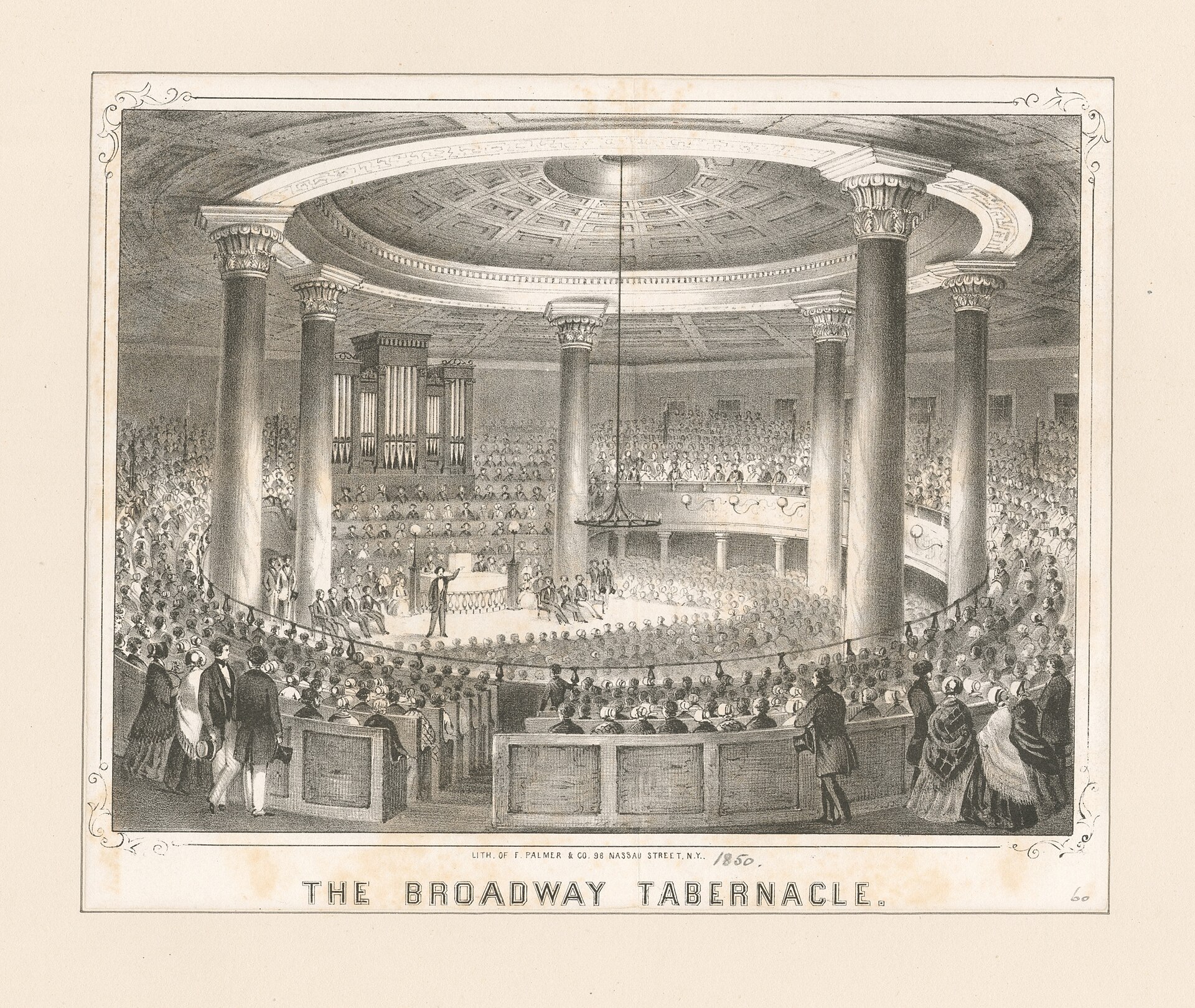
A disciplinary case led him to leave the presbytery. When the Broadway Tabernacle was built, "The men that built it, and the leading members who formed the church there, built it with the understanding that I should be its pastor, and they formed a Congregational church. I then took my dismission from the presbytery, and became pastor of that Congregational church."10 Finney designed the interior himself for hearing: "I had observed the defects of churches in regard to sound; and was sure that I could give the plan of a church, in which I could easily speak to a much larger congregation than any house would hold, that I had ever seen." While it was building, a rumor spread that it would be "an amalgamation church," in which Black and white worshippers "were to be compelled to sit promiscuously," and "somebody set the building on fire," which the firemen, he wrote, "refused to put it out."10 The chronology dates his pastorate at the Tabernacle from April 10, 1836 to April 6, 1837. By then he was also professor of theology at Oberlin (from 1835), dividing his year between Ohio and New York, and he resigned the Tabernacle pastorate in 1837.6


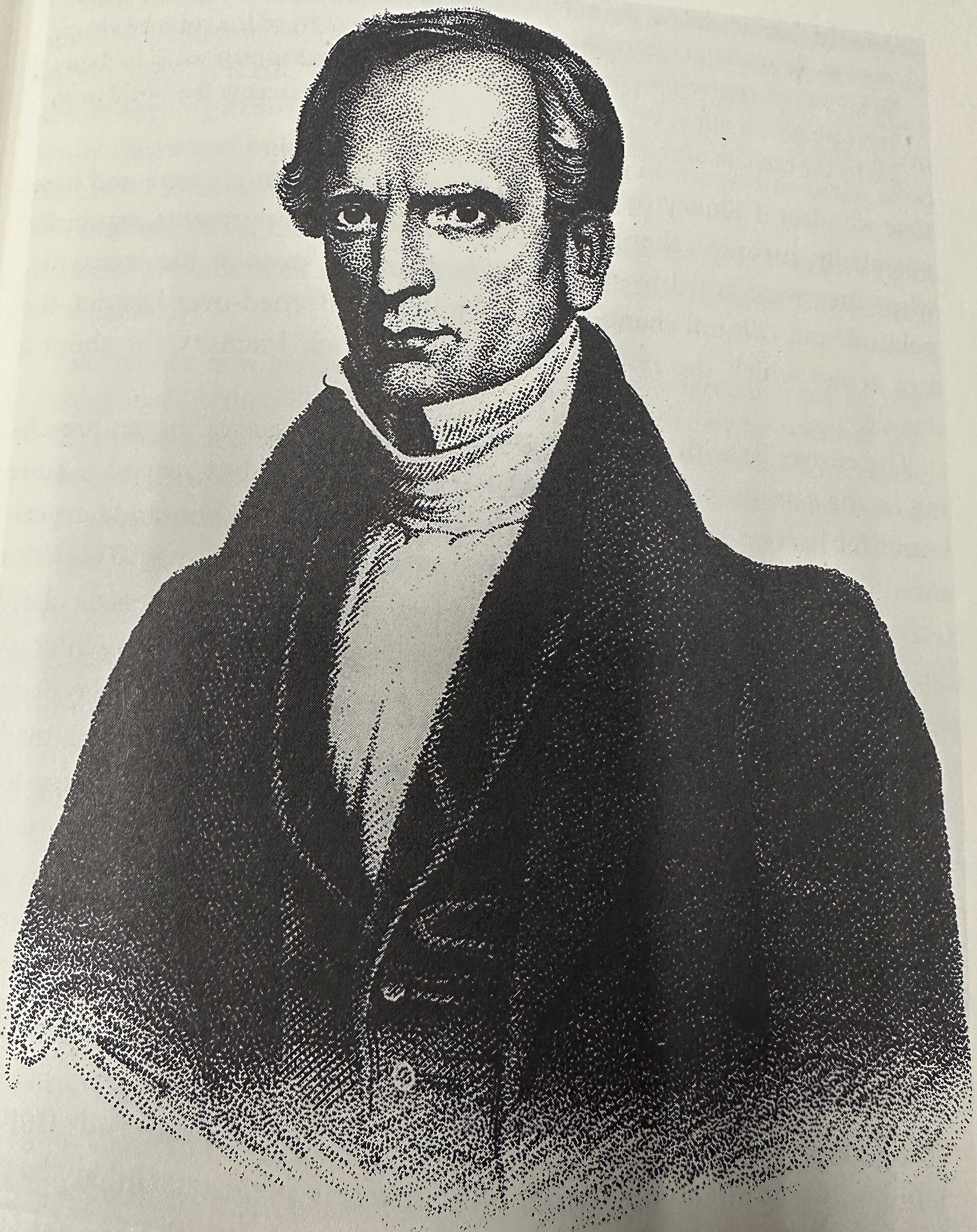

What the record shows and what it does not
- Documented fact. Finney was born at Warren, Connecticut, on August 29, 1792, studied law at Adams, New York, from 1818, was licensed (1823 or 1824) and ordained (1824) by the St. Lawrence Presbytery, preached in the revivals of Oneida County from late September 1825, attended the New Lebanon Convention in July 1827, preached at Rochester for six months from the autumn of 1830, and became pastor of the Chatham Street Chapel (1832) and the Broadway Tabernacle (1836). Nettleton's and Beecher's letters of 1827 and the Oneida Presbytery's Narrative of 1826 survive in print.
- Finney's own account. The details of his conversion on October 10, 1821, the vision of Christ and the "baptism of the Holy Ghost," the "retainer from the Lord Jesus Christ," the scenes at Rome and Rochester, and his statement that he first regularly used the anxious seat at Rochester, all come from the Memoirs, written from memory in 1867 and 1868.
- Estimates by participants. "About one hundred and forty" converts at Western, "probably not far from five hundred" at Rome, "about five hundred" at Utica, and "more than three thousand" in the Oneida Presbytery's bounds in 1826 are pastors' estimates; the church admission figures beside them (for example, 284 received at Rome) are counts.
- Later reports and tradition. Beecher's "One hundred thousand" for one year, as Finney recalled it; the figure of "over 1,200" Rochester converts in a 1981 magazine article; the "streak of fire" sentence, from Beecher's Autobiography; the claim that Rochester's crime rate fell by two-thirds; the "Holy Band" as a name for Finney's helpers.
- Scholarly reading. Paul Johnson's thesis that the Rochester revival served the needs of a new business class, and its critics' replies; the reading of Finney's conversion as the seed of his theology of the will.
- Open questions. The exact days of his licensing and ordination; the number of people converted at Rochester; how much of the Memoirs' account of New Lebanon would be accepted by Beecher's and Nettleton's friends; whether the revivals produced lasting change in the people and towns involved.
Claims checked
"Finney invented the altar call."
Unsupported. Finney himself said the practice had "always been done in substance" and that he had asked people to stand before Rochester. Methodist preachers were inviting "mourners" forward to "the altar" and the "mourners' bench" at camp meetings before 1830, as Peter Cartwright's Autobiography records. What Finney did was introduce a version of it, as he recalled at Rochester in 1830, into Presbyterian and Congregational churches of the urban North, defend it in Lectures on Revivals (1835), and become its best known advocate. Sources: Finney, Memoirs, ch. XXI; Lectures on Revivals, Lecture XIV; Cartwright, Autobiography (1856).1831
"The New Lebanon Convention put Finney on trial."
Refuted. The convention had no ecclesiastical authority, and its members were invited, not appointed by any church body. Finney wrote that the idea that it was "for the trial of myself" was "by no means the case." It did hear Nettleton's letter of complaint, and it passed resolutions (brought in, Finney says, by Justin Edwards) disapproving of the practices Nettleton described, which the western men voted for while saying they had not done those things. Source: Memoirs, ch. XVI.17
"Beecher threatened to fight Finney at the state line with artillery."
Partly supported. The words ("I'll meet you at the state line, and call out all the artillery-men, and fight every inch of the way to Boston") are Beecher's own, as he remembered saying them, printed in his Autobiography and quoted by Finney. Finney wrote, "I do not remember this." The sentence is figurative (no one proposed actual artillery) and rests on one man's recollection decades later. In 1831 the Congregational ministers of Boston invited Finney to the city anyway. Source: Memoirs, chs. XVI and XXII.1719
"100,000 people were converted in the Rochester revival."
Unsupported as stated. The figure comes from Finney's memory of a remark by Lyman Beecher that "One hundred thousand ... were reported as having connected themselves with churches" in one year, as the result of the wider revival that Rochester's fame encouraged. It is a national figure of church accessions, reported by many churches, and not a count of converts in one city. No reliable count for Rochester itself was made by Finney, who said he never kept such counts. Source: Memoirs, chs. XVIII and XXI.1812
"The revival cut crime in Rochester by two-thirds."
Unresolved. The claim rests on Finney's report of a conversation with a former district attorney, years later, who said the city had tripled in size while prosecutions had fallen to less than a third. No published study of the court records is cited in the Memoirs, and the comparison was informal. Source: Memoirs, ch. XXI.18
"Finney was an untrained lawyer who never studied theology."
Partly supported. He had no college or seminary degree and refused to go to Princeton. He did study theology for about two years under George W. Gale, was examined and licensed by a presbytery, and preached trial sermons on assigned texts, as the presbytery required of every candidate. Source: Memoirs, ch. IV.11
"Finney relied on technique and left out the Holy Spirit."
Refuted as a description of what he said; disputed as a judgment of his system. Finney wrote that he "laid the utmost stress" on "the manifest agency of the Holy Spirit," "without which nothing would be accomplished," and described the "spirit of prayer" as the mark of the revivals. Nevin, Nettleton and later Reformed critics answered that his doctrine of means and his measures in practice placed the result in the preacher's hands, whatever he said about the Spirit; that is a theological argument taken up in lesson 10. Sources: Memoirs, chs. XI and XXI; Nevin, The Anxious Bench.1430
"The Rochester revival was a tool of social control by the bosses."
Unresolved. This is a compressed form of Paul Johnson's thesis (1978). Johnson's evidence about who joined the churches and when is widely accepted; his explanation, which he said did not involve conscious calculation, has been called "reductionist" and "conjectural" by reviewers such as Richard Bushman, and was criticized by Bruce Tucker for measuring piety by membership and leaving out women and working-class culture. Sources: notes on Johnson, Tucker and Fea.262728
"Finney left the Presbyterian Church because he was tried for heresy."
Unsupported. No heresy trial of Finney appears in the Memoirs or in the other sources used for this lesson. By his account he took his "dismission from the presbytery" in New York to become pastor of the Congregational church formed at the Broadway Tabernacle, after a disagreement with the presbytery over a disciplinary case. His teaching was attacked in print, especially after Lectures on Systematic Theology (lesson 10), but he was not put on trial. Source: Memoirs, ch. XXIII.10
Hard questions and answers
A Reformed reader asks: if a revival follows the right means, does God's sovereignty still matter?
Finney's answer was that God has chosen to work through means, as he works through seed and rain in farming, and that the Spirit gives "efficiency to the means." The Westminster Shorter Catechism, part of the standards Finney accepted "for substance of doctrine," also speaks of "The outward and ordinary means whereby Christ communicateth to us the benefits of redemption," namely "his ordinances, especially the Word, sacraments, and prayer."32 The disagreement is over whether measures such as the anxious seat are means God has appointed, and over whether a sinner has the ability to respond without first being regenerated. Nettleton and Nevin held that Finney's practice implied that the result lay with the preacher and the sinner; Finney said they had turned the doctrine of inability into an excuse for doing nothing, as he found at Wilmington. The theological core of the dispute is set out in lesson 10.
A Methodist reader asks: weren't the Methodists doing this long before Finney?
Yes, in substance. Methodist preachers called seekers to "the altar" and the "mourners' bench," held long meetings, and allowed lay people to pray and exhort in public, before 1825. Finney recognized the resemblance; at De Kalb he wrote of "falling under the power of God, as the Methodists would express it," among Presbyterians. Nevin's tract lumped "Finneyism, Methodism, Winebrennerism" together. What was new was the use of such practices by a Presbyterian minister in Presbyterian and Congregational churches, with a theological defense written for that audience.
A Catholic, Lutheran or confessional Reformed reader asks: doesn't the anxious seat take the place of the sacraments?
Finney made the comparison himself: "In the days of the apostles baptism answered this purpose ... It held the precise place that the anxious seat does now, as a public manifestation of their determination to be Christians." For a reader who holds that baptism is a means of grace (Catholic, Lutheran, or the Reformed tradition as Nevin read it), that sentence shows the problem: a human measure has taken the place of a divine ordinance. Nevin's answer was "the system of the Catechism," the church's ordinary life of word, sacrament and instruction. Finney's answer was that the forms of the church were left to the discretion of the church and that "God has established no particular system of measures."
A skeptic asks: were these conversions anything more than crowd emotion?
The sources do not settle the inner question, but they show that the participants asked it too. The Oneida committee wrote that the history of the church "forbids the expectation that all this number possess that repentance and faith, which is unto salvation." Nettleton feared "false hopes," and Finney defended the anxious seat as a way "to detect deception and delusion, and thus prevent false hopes." Many of the scenes described were not crowds: the Rochester conversions of Mrs. M, of a skeptical bookseller, and of a married couple happened in private rooms. What can be tested is behavior over time. Some converts (Weld, and the Rochester bookseller who became a trustee of Oberlin) show lifelong commitment; others fell away, as every party expected. No study of all the converts exists.
A social historian asks: why did merchants and lawyers convert first at Rochester?
Finney gave his own reason: he aimed at "the higher classes" because pride and fear of being seen were their great obstacle, and he believed that "the Lord was aiming at the conversion of the highest classes of society." Johnson's answer was that these families faced a breakdown of the old household economy and found in the revival a new discipline for themselves and their workers. The two answers are not exclusive: a preacher's strategy and a class's needs can coincide. The critics of Johnson ask for evidence about motives that tax lists cannot supply.
A Latter-day Saint reader asks: why did the same region produce both Finney's revivals and the Restoration?
The western New York where Finney preached from 1825 to 1831 is the same region where Joseph Smith, Jr. lived at Palmyra and Manchester and where The Church of Jesus Christ of Latter-day Saints was organized in 1830. Revivals, the Erie Canal, rapid settlement and competition among churches shaped the whole district. That history, and the accounts the Church itself publishes of Joseph Smith's experiences, are the subject of lesson 12, which describes each movement in its own founders' words.
The next lesson, Finney's Theology, takes up Lectures on Revivals ("a revival of religion is not a miracle"), the Lectures on Systematic Theology, the governmental view of the atonement, and the debate with Charles Hodge and the Old School. Lesson 11 follows Finney to Oberlin and into the antislavery movement and the teaching on Christian perfection.
Learn more
- Finney, Memoirs (1876), full text: Read chapters II (conversion), XVI (New Lebanon) and XXI (Rochester) in Finney's own words.
- The Memoirs: Complete Restored Text, chapter by chapter: Compare the 1876 edition with the text restored from Finney's manuscript.
- Finney, Lectures on Revivals of Religion (1835): Lecture XIV, "Measures to Promote Revivals," is Finney's own defense of the new measures.
- Letters of the Rev. Dr. Beecher and Rev. Mr. Nettleton (1828): The critics' case in their own words, including Nettleton's letter to Aikin and Beecher's letter to Beman.
- Narrative of the Revival of Religion in the County of Oneida (1826): Pastors' reports from Western, Rome, Utica and other towns, with their own counts.
- John W. Nevin, The Anxious Bench (1844): The German Reformed critique of the anxious seat and the case for catechism and church.
Still being checked (10 items)
These points could not be confirmed against a primary source when this lesson was written and fact checked in October 2026. The text above states each one as uncertain.
- The exact day of Finney's ordination in 1824 was not confirmed from presbytery minutes: the Oberlin College Archives give July 1824 and popular accounts July 1, 1824; the Gospel Truth chronology gives a queried May 7, 1824 and names a different presbytery; the Presbyterian Historical Society says only 1824, Presbytery of St. Lawrence.
- The licensing date of December 30, 1823 comes only from the Gospel Truth chronology; the 1876 Memoirs say March 1824 and the restored text as posted gives no date.
- The arrival date of September 10, 1830 at Rochester comes from modern accounts; the Memoirs give only six months ending in spring 1831.
- The membership of the so-called Holy Band (Nash, Clary, Weld and others) was not checked against Hardman, Hambrick-Stowe or Cross.
- The Christianity Today (1981) figures of over 1,200 Rochester converts and 50,000 in five months are unsourced in that article.
- Johnson's own tables were not consulted directly; his thesis and the journeymen percentages are given through reviews (Kirkus, Tucker, Bushman as quoted by Fea, the GVSU page).
- Beecher's "streak of fire" sentence is quoted through Finney's quotation of Beecher's Autobiography, vol. 2, p. 101; the Autobiography itself was not opened. Bennet Tyler's Memoir of Nettleton (1844), which Finney answers, was not opened.
- The OCR of Lecture XIV is defective at the sentence on anxious meetings, so only its clear final clause is quoted; the name of a second new-measures preacher in Nevin's footnote is unclear in the scan and is omitted.
- The 1850 date of the portrait 09-finney-1850.jpg rests on the Wikimedia Commons date field only.
- Finney's Oberlin presidency is given as 1851 to 1866 in the timeline (as in the module plan); the Oberlin College Archives finding aid gives 1851 to 1865. Lesson 11 should settle the end year.
Notes
- Charles G. Finney, Memoirs of Rev. Charles G. Finney, Written by Himself (New York: A. S. Barnes and Company, 1876; copyright the Trustees of Oberlin College), title page and ch. I, "Birth and Early Education," pp. 1 to 11. Internet Archive scan of the University of Toronto copy (retrieved Oct. 28, 2026). Read it online. ↩
- The Gospel Truth (gospeltruth.net), "Memoirs of Charles G. Finney: The Complete Restored Text," chapter index and ch. 4, reproducing the text restored from the manuscript by Garth M. Rosell and Richard A. G. Dupuis (1989) (retrieved Oct. 28, 2026). Read it online. ↩
- [Presbytery of Oneida, committee of John Frost, Moses Gillet and Noah Coe, appointed at Whitesborough, Sept. 8, 1826], A Narrative of the Revival of Religion in the County of Oneida, Particularly in the Bounds of the Presbytery of Oneida, in the Year 1826 (reprint issued at Washington with an editors' notice dated March 12, 1827): reports from Western (George W. Gale), Rome (Moses Gillet, dated Oct. 30) and Utica (Mr. Aikin), and the committee's "Remarks." Internet Archive (retrieved Oct. 28, 2026). Read it online. ↩
- Asahel Nettleton to the Rev. Mr. Aikin of Utica, Albany, January 13, 1827, in Letters of the Rev. Dr. Beecher and Rev. Mr. Nettleton, on the "New Measures" in Conducting Revivals of Religion, with a Review of a Sermon, by Novanglus (New York: G. and C. Carvill, 1828), pp. 9 to 17. Internet Archive (retrieved Oct. 28, 2026). Read it online. ↩
- Charles G. Finney, Lectures on Revivals of Religion, sixth edition (New York: Leavitt, Lord and Co., 1835), "From notes by the editor of the N. Y. Evangelist, revised by the author," Lecture XIV, "Measures to Promote Revivals," pp. 232 to 249. Internet Archive scan of the University of Illinois copy (retrieved Oct. 28, 2026). Read it online. ↩
- The Gospel Truth, "Charles Grandison Finney" chronology (compiler not named), entries for 1792 to 1837 and 1875 (retrieved Oct. 28, 2026). Used for the licensing date (Dec. 30, 1823), the marriage (Oct. 5, 1824), the Chatham Street and Broadway Tabernacle dates and the date of death; the same page misdates the New Lebanon Convention to 1826 and gives a queried ordination date, so it is used with caution. Read it online. ↩
- Finney, Memoirs (1876), ch. II, "Conversion to Christ," pp. 12 to 23. Internet Archive (retrieved Oct. 28, 2026). Read it online. ↩
- The Holy Bible, King James Version (1611, public domain): Jeremiah 29:12 to 13; Romans 5:1; Matthew 18:3; Acts 16:20 to 21; Ecclesiastes 9:18; 1 Corinthians 11:5; 1 Corinthians 14:34; 1 Timothy 2:12. Project Gutenberg text (retrieved Oct. 28, 2026). Read it online. ↩
- Finney, Memoirs (1876), ch. III, "Beginning of His Work," pp. 24 to 41. Internet Archive (retrieved Oct. 28, 2026). Read it online. ↩
- Finney, Memoirs (1876), ch. XXIII, "Labors in New York City in 1832, and Onward," pp. 320 to 336 (Chatham Street Chapel, the sea voyage of 1834, the Broadway Tabernacle). Internet Archive (retrieved Oct. 28, 2026). Read it online. ↩
- Finney, Memoirs (1876), ch. IV, "His Doctrinal Education and Other Experiences at Adams," pp. 42 to 60 (Gale and the atonement; candidacy in spring 1822; refusal to study at Princeton; licensing, given as March 1824; Father Nash). Internet Archive (retrieved Oct. 28, 2026). Read it online. ↩
- Finney, Memoirs (1876), chs. XVII to XX (Stephentown; Wilmington and Philadelphia; Reading; Columbia and New York City, with Anson G. Phelps and Lewis Tappan), pp. 226 to 283. Internet Archive (retrieved Oct. 28, 2026). Read it online. ↩
- Presbyterian Historical Society, "Guide to the Charles Grandison Finney Papers," RG 309, biographical note: "In 1824 he was ordained by the Presbytery of St. Lawrence" (retrieved Oct. 28, 2026). Read it online. ↩
- Finney, Memoirs (1876), chs. V to XI (Evans' Mills, remarks on ministerial education, Antwerp, return to Evans' Mills and marriage in October 1824, Gouverneur, De Kalb), pp. 61 to 143. Internet Archive (retrieved Oct. 28, 2026). Read it online. ↩
- Finney, Memoirs (1876), chs. XII to XV (Western, Rome, Utica and Theodore D. Weld, Auburn in 1826), pp. 144 to 201. Internet Archive (retrieved Oct. 28, 2026). Read it online. ↩
- Finney, Lectures on Revivals of Religion (1835), Lecture XII, "How to Preach the Gospel," pp. 213 to 214. Internet Archive (retrieved Oct. 28, 2026). Read it online. ↩
- Finney, Memoirs (1876), ch. XVI, "Revival at Troy, and at New Lebanon," pp. 202 to 225 (Nettleton at Albany; the New Lebanon Convention and Justin Edwards's resolutions; Finney's quotation of Lyman Beecher's Autobiography, vol. 2, p. 101). Internet Archive (retrieved Oct. 28, 2026). Read it online. ↩
- Finney, Memoirs (1876), ch. XXI, "Revival in Rochester, 1830," pp. 284 to 301. Internet Archive (retrieved Oct. 28, 2026). Read it online. ↩
- Finney, Memoirs (1876), ch. XXII, "Revivals in Auburn, Buffalo, Providence, and Boston," pp. 302 to 319. Internet Archive (retrieved Oct. 28, 2026). Read it online. ↩
- Lyman Beecher to Nathan S. S. Beman, Boston, January 1827, sent for publication to the New York Observer with a covering letter dated Dec. 15, 1827, and reprinted in Letters of the Rev. Dr. Beecher and Rev. Mr. Nettleton (New York, 1828), pp. 80 to 99 (numbered heads; head V, "Female prayer in promiscuous assemblies"). Internet Archive (retrieved Oct. 28, 2026). Read it online. ↩
- The Rev. Dr. Porter of Catskill, letter dated Catskill, June 14, 1827, from the New York Observer of June 19, 1827, reprinted in Letters of the Rev. Dr. Beecher and Rev. Mr. Nettleton (New York, 1828), pp. 42 to 44. Internet Archive (retrieved Oct. 28, 2026). Read it online. ↩
- Finney, Memoirs (1876), ch. XXX, "Labors in Hartford and in Syracuse," pp. 415 to 427. Internet Archive (retrieved Oct. 28, 2026). Read it online. ↩
- Finney, Memoirs (1876), ch. XXVI, "The Revival in Rochester in 1842," pp. 358 to 369 (Judge G. and the anxious seat). Internet Archive (retrieved Oct. 28, 2026). Read it online. ↩
- "Legacy of the Rochester Revivals," Christianity Today, October 23, 1981 (unsigned), marking the 150th anniversary of the revival of 1830 to 1831 (retrieved Oct. 28, 2026). Read it online. ↩
- Review of Paul E. Johnson, A Shopkeeper's Millennium, web page hosted at Grand Valley State University (www2.gvsu.edu/koehlera), author not named on the page (retrieved Oct. 28, 2026). Read it online. ↩
- Kirkus Reviews, review of Paul E. Johnson, A Shopkeeper's Millennium: Society and Revivals in Rochester, New York, 1815 to 1837 (New York: Hill and Wang, 1978) (retrieved Oct. 28, 2026). Read it online. ↩
- Bruce Tucker, "Class and Culture in Recent Anglo-American Religious Historiography: A Review Essay," Labour/Le Travailleur 6 (1980), discussing Johnson, A Shopkeeper's Millennium (retrieved Oct. 28, 2026). Read it online. ↩
- John Fea, "Is evangelical Christianity a religious movement or is it something else?", The Way of Improvement Leads Home (blog), July 17, 2021, summarizing Johnson's thesis and quoting Richard L. Bushman's review of A Shopkeeper's Millennium (retrieved Oct. 28, 2026). Read it online. ↩
- Finney, Lectures on Revivals of Religion (1835), Lecture VIII, "Meetings for Prayer," p. 127. Internet Archive (retrieved Oct. 28, 2026). Read it online. ↩
- John W. Nevin, The Anxious Bench, second edition, revised and enlarged (Chambersburg, Pa.: Publication Office of the German Reformed Church, 1844; first edition 1843), preface and text. Internet Archive (retrieved Oct. 28, 2026). Read it online. ↩
- Peter Cartwright, Autobiography of Peter Cartwright, the Backwoods Preacher, ed. W. P. Strickland (first published New York, 1856), pp. 76 and 120 to 121 in the printing scanned by Google. Internet Archive (retrieved Oct. 28, 2026). Read it online. ↩
- The Westminster Shorter Catechism (1647), Question 88, text at the Christian Classics Ethereal Library (retrieved Oct. 28, 2026). Read it online. ↩
- Oberlin College Archives, "Charles Grandison Finney Papers," finding aid, biographical sketch: Finney "entered the law office of Judge Benjamin Wright in Adams, New York"; placed himself under the St. Lawrence Presbytery as a candidate in 1823; ordained by that presbytery in July 1824 (retrieved Oct. 28, 2026). Read it online. ↩
Check yourself
1. According to Finney's Memoirs, what did he tell the deacon whose case was set for trial the morning after his conversion?
Finney wrote: "Deacon B, I have a retainer from the Lord Jesus Christ to plead his cause, and I cannot plead yours" (Memoirs, ch. III).
2. What date does Finney give for his conversion in the woods near Adams?
"It was on the 10th of October, and a very pleasant day," in the autumn of 1821 (Memoirs, ch. II).
3. The Oneida Presbytery's Narrative (1826) said that in its bounds that year:
The committee wrote that "More than three thousand are indulging hope that they have become reconciled to God," and warned that not all of them might be truly converted.
4. Which statement about the New Lebanon Convention of July 1827 is supported by Finney's account?
Finney wrote that the members "were not men that had been appointed by any ecclesiastical bodies" and that the meeting was not "for the trial of myself."
5. Where does Finney say he first introduced the anxious seat as a regular measure?
"At Rochester, if I recollect right, I first introduced this measure" (Memoirs, ch. XXI), years after the cry of "new measures" began.
6. In Lecture XIV of Lectures on Revivals (1835), Finney compared the anxious seat to what practice of the apostles' day?
He wrote that baptism "held the precise place that the anxious seat does now, as a public manifestation of their determination to be Christians."
7. Lyman Beecher's figure of "One hundred thousand," as Finney recalled it, referred to:
Beecher said 100,000 "were reported as having connected themselves with churches" in one year; it is a national figure, not a Rochester count.
8. Paul Johnson's A Shopkeeper's Millennium (1978) argued that the Rochester revival:
Reviewers summarize Johnson's thesis this way, and Bushman notes that Johnson "explicitly repudiates" the idea of conscious fabrication.
Terms in this lesson
- New measures
- The name opponents gave in the 1820s and 1830s to revival practices associated with Finney and his circle, such as anxious meetings, protracted meetings, the anxious seat, praying for people by name and women praying in mixed meetings. Finney adopted the phrase and defended the principle in Lecture XIV of Lectures on Revivals (1835).
- Anxious seat (anxious bench)
- Seats at the front of a meeting where those under conviction were asked to come, to be prayed for and spoken to. Finney said he first used it regularly at Rochester in 1830; John W. Nevin attacked it in The Anxious Bench (1843).
- Anxious meeting (meeting of inquiry)
- A meeting, often after preaching, for personal conversation with people concerned about their souls, so that instruction could be fitted to each case.
- Protracted meeting
- A series of daily religious services lasting days or weeks. Finney argued they were not new, citing the Jewish festivals and Scottish communion seasons, and gave rules against their abuse.
- Promiscuous assembly
- In nineteenth century usage, a mixed meeting of men and women. Nettleton and Beecher objected to "female prayer in promiscuous assemblies."
- Hopeful convert
- A person who professed conversion and was thought likely, but not certainly, to be truly regenerate. Pastors' counts of hopeful converts were estimates, distinct from counts of people admitted to church membership.
- Licensure and ordination
- In Presbyterian practice a presbytery first licensed a candidate to preach after examination and trial sermons, and later ordained him to the ministry. The St. Lawrence Presbytery licensed Finney (1823 or 1824) and ordained him (1824).
- For substance of doctrine
- The formula under which Finney, like many American Presbyterians, said he received the Westminster Confession; Old School Presbyterians later argued that it was being stretched too far.
- New Lebanon Convention
- An informal meeting at New Lebanon, New York, in July 1827, between eastern critics (Beecher, Nettleton and others) and the ministers of the central New York revivals, including Finney.
- Western revivals
- The name used in the 1820s for the revivals of central New York (Oneida County and nearby), which were "western" from New England's point of view.
- Holy Band
- A label used by later historians for the helpers who worked with Finney in the 1820s, such as Daniel Nash and Abel Clary; it is not Finney's own term in the 1876 Memoirs.
- Spirit of prayer
- Finney's phrase for the intense, sometimes prolonged intercession for others that he described as the mark of the revivals, as in Abel Clary's prayer at Rochester.
- The reading, associated with Paul Johnson's A Shopkeeper's Millennium (1978), that revivals helped employers impose discipline and sobriety on workers in a changing economy; disputed by historians who give more weight to religious motives.
Sources
- Memoirs of Rev. Charles G. Finney, Written by Himself (1876) (1876) checked 2026-10
- Memoirs of Charles G. Finney: The Complete Restored Text (Rosell and Dupuis, 1989), Gospel Truth chapter index (1989) checked 2026-10
- Charles Grandison Finney chronology, The Gospel Truth (undated web page) checked 2026-10
- Presbyterian Historical Society, Guide to the Charles Grandison Finney Papers (RG 309) (undated finding aid) checked 2026-10
- A Narrative of the Revival of Religion in the County of Oneida (Presbytery of Oneida, 1826; reprint 1827) (1826 to 1827) checked 2026-10
- Letters of the Rev. Dr. Beecher and Rev. Mr. Nettleton, on the "New Measures" (1828) (1828) checked 2026-10
- Charles G. Finney, Lectures on Revivals of Religion, 6th ed. (1835) (1835) checked 2026-10
- John W. Nevin, The Anxious Bench, 2nd ed. (1844) (1844) checked 2026-10
- Peter Cartwright, Autobiography of Peter Cartwright, the Backwoods Preacher (1856) (1856) checked 2026-10
- Westminster Shorter Catechism (1647), CCEL (1647) checked 2026-10
- King James Version (Project Gutenberg) (1611) checked 2026-10
- "Legacy of the Rochester Revivals," Christianity Today (1981-10-23) checked 2026-10
- Kirkus Reviews, review of Paul E. Johnson, A Shopkeeper's Millennium (1978) checked 2026-10
- Bruce Tucker, "Class and Culture in Recent Anglo-American Religious Historiography," Labour/Le Travailleur 6 (1980) checked 2026-10
- John Fea, "Is evangelical Christianity a religious movement or is it something else?" (2021-07-17) checked 2026-10
- Review of A Shopkeeper's Millennium (Grand Valley State University page) (undated) checked 2026-10
- Oberlin College Archives, Charles Grandison Finney Papers, finding aid (undated finding aid) checked 2026-10