Lesson 8 of 14 · about 50 minutes · Updated October 28, 2026
The Second Great Awakening: Cane Ridge, Camp Meetings, Circuit Riders and the Frontier
You'll be able to
- Describe the Presbyterian sacramental season and explain how it grew into the camp meeting at Red River, Gasper River and Cane Ridge.
- Weigh the Cane Ridge crowd estimates, naming who made each one and how.
- Explain how Stone, Cartwright and the Presbyterian critics judged the bodily exercises, in their own words.
- Explain how Asbury's circuit system worked and read Methodist growth figures with their sources and limits.
- Identify the new churches that came from the revival (Cumberland Presbyterian, Stone's Christians, the AME Church) and the dates of their founding.
- Contrast the western camp meetings with the New England revivals of Dwight, Beecher and Nettleton, and name the main historians' readings of the period.
Start here: the short version
The Second Great Awakening is the name historians give to a long run of revivals in the United States from the late 1780s to the 1840s. This lesson covers its first phase, from about 1787 to the 1820s, and its two very different settings. In the South and West, Presbyterian sacramental seasons in Logan County, Kentucky (Red River and Gasper River, June and July 1800) grew into outdoor gatherings where families camped for days. The largest was at Cane Ridge, Bourbon County, Kentucky, in August 1801, where Presbyterian, Methodist and Baptist preachers spoke at once from stands and wagons. Barton W. Stone, the host minister, later wrote that "military men on the ground" judged the crowd at between twenty and thirty thousand. Other witnesses gave smaller numbers, and modern writers usually give a range of 10,000 to 30,000. Every figure is an estimate. The meetings were known for bodily "exercises" (falling, jerking, dancing, laughing, singing), which Stone described and defended and which other Presbyterians condemned. The Methodists turned the camp meeting into a regular institution, and Francis Asbury's system of traveling preachers on circuits carried it across the frontier. Methodist membership rose from under 60,000 in 1790 to over a million by 1850, and the sociologists Roger Finke and Rodney Stark estimate that the Methodist share of American church adherents rose from 2.5 percent in 1776 to 34.2 percent in 1850. The revival also produced new churches: the Cumberland Presbyterians (1810), Stone's "Christians" (taught in Module 80), and in Philadelphia Richard Allen's African Methodist Episcopal Church (1816). In New England the same years brought quieter revivals under Timothy Dwight, Lyman Beecher and Asahel Nettleton, which led toward Charles Finney and the quarrels of lessons 09 and 10.
Lessons 02 to 06 of this module followed the First Great Awakening of the 1730s and 1740s, and lesson 07 followed the students of Jonathan Edwards who carried his theology into the 1790s. This lesson moves west and south, to the frontier settlements of Kentucky and Tennessee, and then follows the revival back east. Barton Stone's later movement (the "Christians" who merged with the Campbells' Disciples in 1832) is taught in Module 80, lesson 10, and the Methodist church order, John Wesley and Francis Asbury in outline in Module 80, lesson 07. The Baptists' own history is in Module 80, lesson 06, and the Presbyterian story in Module 80, lesson 02. This lesson does not repeat those overviews. It reads the eyewitness accounts: James McGready's narrative of 1801, Barton Stone's autobiography (1847), Peter Cartwright's Autobiography (1856), Asbury's Journal, Richard Allen's Life (1833), and the membership tables, and it sets the estimates side by side so that readers can see where each number came from.
What "the Second Great Awakening" means
A name given later
No one at Cane Ridge called it the Second Great Awakening. Participants spoke of "the great revival," "the work," "the falling work" or "the revival of 1800." Later historians, looking back on the 1730s and 1740s as one Awakening, grouped the revivals of roughly 1790 to 1840 as a second. The term covers events of very different kinds: student revivals at Hampden-Sydney (Virginia) and Yale (Connecticut), sacramental meetings in Kentucky, the Methodist camp meetings of the whole country, the quiet parish revivals of Connecticut, and later the urban campaigns of Charles Finney in upstate New York, Philadelphia and New York City (lesson 09). Some historians divide it into an eastern and a western phase. Others, such as Jon Butler in Awash in a Sea of Faith (1990), doubt that "awakening" is a useful category at all, and describe the period instead as a long, steady building of churches, denominations and voluntary societies across a new nation.1 Donald G. Mathews, in an influential article of 1969, described the Second Great Awakening as "an organizing process": a movement that gave scattered people on the frontier and in the new republic a set of churches, rules and associations to belong to.2
Whatever the label, the numbers moved. Between the Revolution and the middle of the nineteenth century, the Methodists went from a small society inside the Church of England to the largest Protestant body in the United States, the Baptists grew into the second largest, and the established churches of the colonial era (Congregationalist in New England, Episcopal in the South) shrank as a share of the whole. The tables and their sources are given below in the section on growth, and the estimates there are labeled as estimates.
The state of religion in the 1790s
Ministers of the 1790s often described their own time as an age of decline. The Revolution had scattered congregations, the Anglican church in the South had lost most of its clergy, and the writings of Thomas Paine and the French Revolution had made deism fashionable among some students and officers. These complaints should be read with care, because ministers of every generation had preached that religion was declining (the jeremiad, described in lesson 01), and church membership rates in the late eighteenth century were low by later standards in part because membership was strict. On the Kentucky frontier the complaint had a local name. Peter Cartwright, whose family moved there from Virginia when he was a boy, wrote that "In the fall of 1793 my father determined to move to what was then called the Green River country," and that "Logan County, when my father moved to it, was called 'Rogues' Harbor.'"3 He described the settlers' Sundays: "Sunday was a day set apart for hunting, fishing, horse-racing, card-playing," and wrote of the county's refugees from justice that "although there was law, yet it could not be executed, and it was a desperate state of society."3 Cartwright wrote this more than fifty years later, as a Methodist preacher with a conversion story to tell, and his picture of the frontier before the revival is a memory shaped by that purpose. It agrees, however, with the reports of Presbyterian and Baptist ministers of the 1790s, who also wrote of small churches and lax morals in the new settlements.
Kentucky was new and growing fast. It became a state in 1792. The historian Wayne Shaw, writing in the Filson Club History Quarterly in 1963, gave its population in 1800 as approximately 220,000.4 Most settlers had come over the mountains from Virginia, North Carolina and Pennsylvania, many of them Scots-Irish Presbyterians by descent, and they were scattered on farms with few churches and fewer ordained ministers. Presbyterians required a learned ministry, trained in Latin, Greek and Hebrew, and that rule kept their supply of preachers small. Baptists and Methodists did not require college training, and that difference became one of the main reasons for their faster growth.
Hampden-Sydney and the southern beginnings
Historians of the revival in the South usually begin in Virginia in the late 1780s. Frank G. Beardsley's A History of American Revivals (1912), which summarized earlier church histories, records revivals of "marked power" in Virginia and Georgia "as early as 1787," and says that a revival at Hampden-Sydney College in Prince Edward County, Virginia, resulted "in the conversion of more than half of the students."5 The college's president was John Blair Smith, a Presbyterian minister. The story told in later Presbyterian histories is that a few students who had been meeting secretly for prayer were discovered and mocked, that Smith took their side and joined their meetings, and that the revival spread from the college to the surrounding counties. The figure of "more than half" comes from those later histories and should be read as their report, since no contemporary enrollment count survives in the sources consulted for this lesson. Several ministers who later went west, among them men who preached in Kentucky and Tennessee, had been students in Virginia during these years. John B. Boles, in The Great Revival, 1787 to 1805 (1972), took 1787 as his starting point for that reason, and argued that the Kentucky revival grew out of an evangelical Calvinist tradition carried from the Carolinas and Virginia.6
The Yale revival of 1802
In New England, the revival period is usually dated from about 1797, when local revivals began in Connecticut and western Massachusetts. Beardsley, citing Bennet Tyler's New England Revivals, wrote that in the years beginning with 1797 "not less than one hundred and fifty churches in New England were visited."5 He quoted the minister Edward Dorr Griffin, who said he could "number fifty or sixty congregations laid down in one field of divine wonders," and "as many more in different parts of New England."5 At Yale College, Timothy Dwight, president from 1795 (and Jonathan Edwards's grandson, taught in lesson 07), preached a series of chapel sermons answering the deist arguments then popular among students. In the spring of 1802 a revival broke out among the students. Beardsley's figure, which he gives without naming a source (later writers usually trace such figures to Chauncey Goodrich's narrative of the Yale revivals, 1838, which was not opened for this lesson), is that "seventy-five out of about two hundred and thirty students were converted," and that "Nearly half of these gave themselves to the work of the gospel ministry."5 Those numbers come from college and church records as later compiled, not from a count published at the time, and they should be taken as the college's own estimate.
The Yale revival matters for this lesson because it produced many of the ministers who led the eastern revivals and founded the missionary and Bible societies of the 1810s and 1820s, and because it shows that the Second Awakening was not only a frontier event. It was quiet. No one fell, jerked or shouted at Yale. The eastern revivals followed the pattern of Edwards's Northampton (lesson 02): preaching on sin and grace, private conversations with anxious hearers, and conversions examined by the pastor before admission to the church.
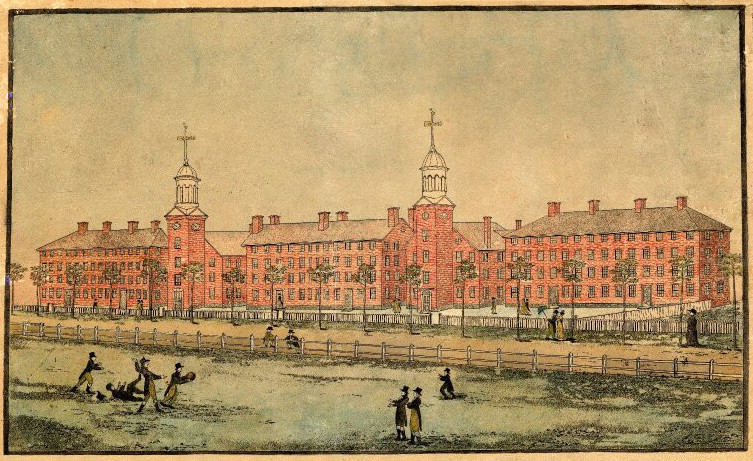

James McGready and Logan County
The sacramental season
The Kentucky revival grew out of a Presbyterian custom: the communion season. Scottish and Scots-Irish Presbyterians did not celebrate the Lord's Supper every week. A congregation held it once or twice a year, often in summer, and the occasion lasted several days. A fast day came first (often a Thursday), then a day of preparation with sermons (Saturday), then the Sabbath of the sacrament itself, when communicants who had been examined received tokens that admitted them to the tables, and then a Monday of thanksgiving. Neighboring ministers came to help, and people from neighboring congregations came to hear them. In Scotland these gatherings could draw thousands, and critics called them "holy fairs." Leigh Eric Schmidt, in Holy Fairs: Scottish Communions and American Revivals in the Early Modern Period (1989), traced the line from those Scottish communions to the Kentucky revivals and argued that Cane Ridge was, in form, a Scottish sacramental occasion on an American frontier.7 Paul K. Conkin, in Cane Ridge: America's Pentecost (1990), told the story of Cane Ridge in the same frame: a communion that grew beyond anything its planners expected.8
McGready, Red River and Gasper River (1797 to 1800)
James McGready (about 1763 to 1817) was a Presbyterian minister trained in western Pennsylvania who had preached in North Carolina before moving to Kentucky. In Logan County, in the Green River country of southern Kentucky, he served three small congregations: Red River, Gasper River and Muddy River. He wrote his own account of the revival in a narrative dated from Logan County in October 1801, later printed in the New York Missionary Magazine and in his Posthumous Works. Its best known lines describe the summer of 1800: "In June, the sacrament was administered at Red River. ... On Monday multitudes were struck down under awful conviction." By his own count, "ten persons, we believe, were savingly brought home to Christ" during that sacrament and the days after it.9 And of the year as a whole: "But the year 1800 exceeds all that my eyes ever beheld upon earth."9
Later accounts add names to the Red River meeting. Two brothers, William McGee, a Presbyterian minister, and John McGee, a Methodist, are said to have preached at the meeting, and John McGee's preaching is the moment usually given for the first outbreak of falling and crying out. Spencer's account, drawn from the Cumberland Presbyterian historian James Smith, places "much feeling" under John McGee's preaching on the Sunday and the falling on the Monday.10 These details come from later narratives, including the brothers' own recollections and histories of the Cumberland Presbyterian Church, rather than from McGready's narrative as quoted in the sources consulted here.9 James Smith's history of the Cumberland Presbyterian Church, as quoted by the Kentucky Baptist historian J. H. Spencer in 1885, reported that at Red River twelve people professed conversion during the meeting, two more than McGready's own count of ten.10
The next month the pattern changed. McGready wrote: "In July, the sacrament was administered in Gasper River Congregation." People had heard about Red River and came prepared to stay. In McGready's words, "between twenty and thirty wagons were brought to the place, loaded with people and their provisions."9 Spencer's history, drawing on the same Cumberland Presbyterian sources, says that the people "slept in their wagons, or under temporary shelters formed of bed covers," that "The people came forty, fifty, and even a hundred miles," and that at Gasper River "forty-five precious souls were believed to have passed from a state of nature to a state of grace."10 A later meeting at Muddy River counted "fifty souls" who professed conversion.10 These were small numbers set beside the crowd figures given for Cane Ridge a year later, and they are more likely to be close to accurate, because the ministers counted persons they had spoken with.
The Gasper River meeting is the one most historians treat as the first camp meeting in the sense of a planned gathering where families brought provisions and camped on the ground for several days. McGready's own words show that the camping was intended by the people who came: the wagons were brought "in order to encamp at the meeting house."9 Smith's history, as quoted by Spencer, goes further and says that some families had camped at Red River, that this "suggested to Mr. McGready the idea of a camp meeting," and that he had the Gasper River meeting "proclaimed 'far and wide'"; Smith called it the "first camp meeting in Christendom."10 That is a claim by a later historian of the Cumberland Presbyterian Church, written decades after the event. The question of which meeting was "first" is taken up in Claims checked below.
Barton Stone goes to Logan County (spring 1801)
Barton Warren Stone (1772 to 1844), a Presbyterian minister serving the congregations of Cane Ridge and Concord in Bourbon County, in the Bluegrass region of northern Kentucky, heard reports of the Logan County meetings and rode across the state to see them in the spring of 1801. His autobiography, published in 1847 after his death from his own manuscript and edited by John Rogers, describes what he found. The meeting was held on "the edge of a prairie," and people stayed "a number of days and nights."11 He wrote: "Many, very many fell down, as men slain in battle," and lay for hours before rising to speak; the scene to him was "new, and passing strange."11 He admitted that much of what he saw he took to be fanaticism, but he wrote that "this should not condemn the work," and he concluded that a work which brought people to humble confession, prayer and repentance could not be from Satan.11 He went home to Cane Ridge resolved to hold such a meeting there.

Cane Ridge, August 1801
The dates
The meeting at Cane Ridge was planned as a Presbyterian communion. Stone's autobiography gives its date as "Thursday or Friday before the third Lord's-day in August, 1801."11 Most modern accounts, including the National Endowment for the Humanities magazine Humanities in 2024, give the dates as "Between August 6 and 12, 1801."12 In August 1801 the Sundays fell on the 2nd, 9th and 16th, so the modern dating puts the communion Sabbath on August 9, the second Lord's day, while Stone's recollection would put it a week later. Stone was writing about forty years after the event, and modern historians, who date the meeting from letters and diaries written at the time, place it in the earlier week. The difference is a small example of why memoirs need to be checked against letters written at the time.
Peter Cartwright, who was a boy in Logan County at the time, was even vaguer: "Somewhere between 1800 and 1801, in the upper part of Kentucky, at a memorable place called 'Cane Ridge,' there was appointed a sacramental meeting by some of the Presbyterian ministers."13 He does not say in that passage that he was present, and his description should be read as what was told in Methodist circles about the meeting.
The crowd: who counted, and how
Stone described the scene before the meeting began: "The roads were literally crowded with wagons, carriages, horsemen, and footmen, moving to the solemn camp."11 He gave a number and said who had made it: "It was judged, by military men on the ground, that there were between twenty and thirty thousand collected."11 The other figures in the sources consulted for this lesson are these:
- A Revolutionary War officer present, as reported by Spencer (1885) from earlier accounts, computed "not less than 20,000 souls."10
- Peter Cartwright (1856): "It was supposed that there were in attendance at times during the meeting from twelve to twenty-five thousand people."13
- Bernard Weisberger, in They Gathered at the River (1958), put the number much lower, basing his estimate on a count of the wagons. Wayne Shaw (1963) replied that this was "a Saturday morning count, early in the meeting," and left out carriages, horsemen and people on foot over the course of the week.4
- Shaw himself wrote that "Estimates ran from 10,000 to 30,000 people."4 The 2024 Humanities article gives "around 20,000 people (estimates range from 10,000 to 30,000)."12
No one counted heads. The "military men" were estimating a crowd the way officers estimated troops in the field, by area and density, and the crowd came and went over six or seven days, so that a figure "at times during the meeting" (Cartwright's phrase) is a different thing from a total of different persons who attended. Set against Kentucky's population of about 220,000 in 1800, a figure of 20,000 would mean almost one Kentuckian in ten, which is possible for a region within a few days' ride but is a reason for caution. The honest summary is that Cane Ridge drew a very large crowd for its time and place, that witnesses estimated it at 10,000 to 30,000, that the high figures come from men who believed the meeting was a work of God, and that the low figures come from later historians with their own methods. The numbers of communicants are firmer, because tokens were counted: Spencer reports that John Lyle, a Presbyterian minister who kept a diary of the meeting, gave "1,000 communicants present," while others said 800.10
Preaching at once from many stands
The meeting house at Cane Ridge could hold only a fraction of the crowd. Preaching went on outside, from a stand in the woods, from wagons and from fallen trees. Stone wrote that "Four or five preachers were frequently speaking at the same time."11 He also wrote: "The Methodist and Baptist preachers aided in the work, and all appeared cordially united in it."11 Cartwright gave the same picture from the Methodist side: "As Presbyterian, Methodist, and Baptist ministers all united in the blessed work at this meeting."13 The meeting continued "six or seven days and nights," in Stone's words, and would have gone longer if provisions had not run out.11 On the number converted Stone was careful: "The numbers converted will be known only in eternity."11
The union of denominations did not last. Baptists generally held back from union communions, since they did not share communion with those they did not regard as baptized, and Spencer notes that the Baptists of Kentucky mostly held their own meetings.10 The Presbyterian synod soon divided over the revival, and within three years Stone and four other ministers had left the synod (the Springfield Presbytery of 1803, dissolved in 1804; see Module 80, lesson 10).
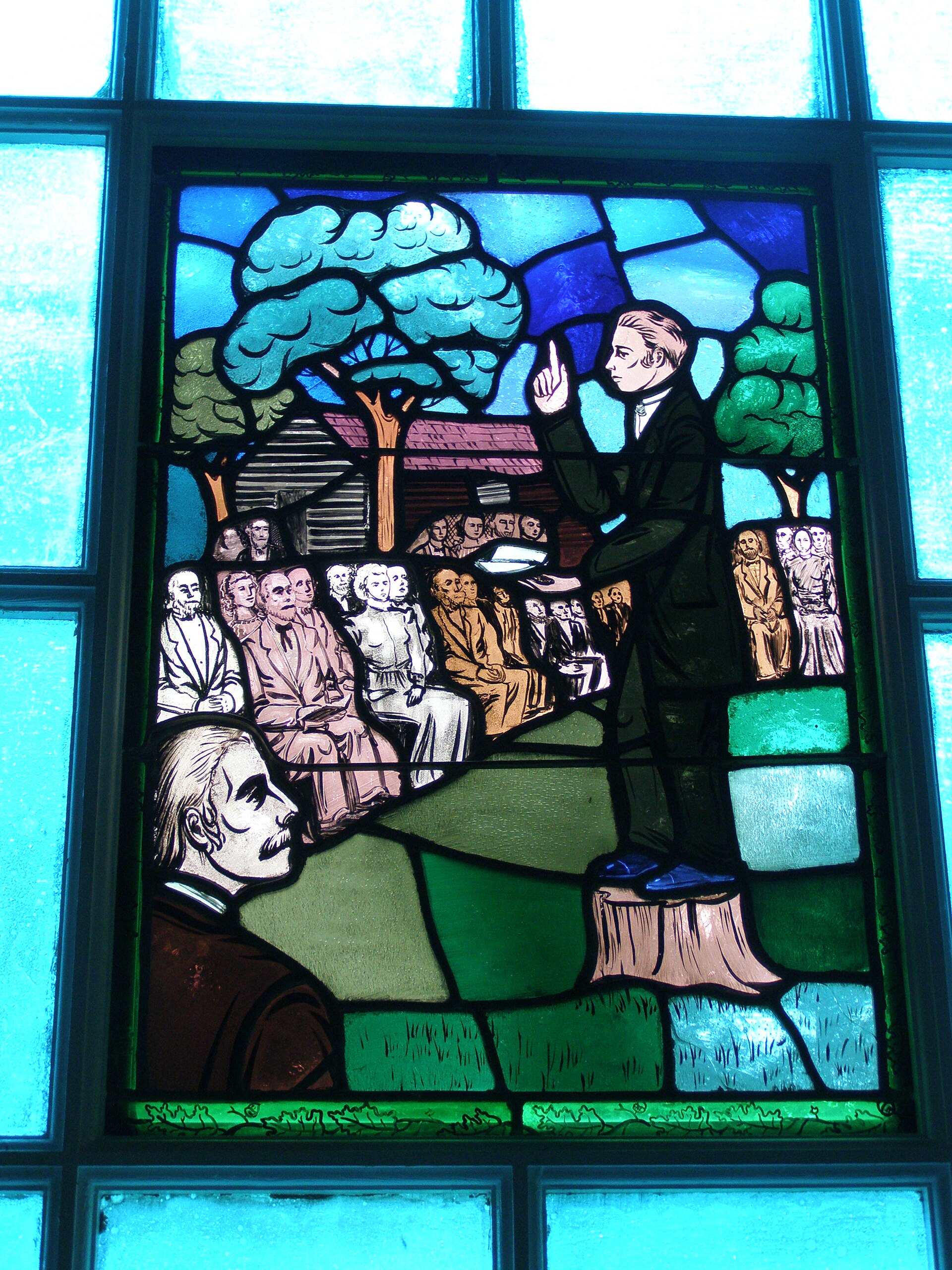

The "exercises"
What the witnesses described
What made the Kentucky meetings famous, and what divided the churches over them, were the bodily agitations that participants called "exercises." The fullest description is a chapter of Stone's autobiography, "An account of the remarkable religious exercises, witnessed in the beginning of the 19th century."11 Stone, who saw them at Cane Ridge and for several years afterward, listed them one by one.
- Falling. The subject "would, generally, with a piercing scream, fall like a log on the floor, earth, or mud, and appear as dead." Stone said this was common "among all classes," and described two sisters who "lay for more than an hour apparently in a lifeless state" and later became pious church members.11
- The jerks. "The jerks cannot be so easily described." Sometimes only the head was affected, sometimes the whole body: "I have seen the person stand in one place, and jerk backward and forward in quick succession." He added: "Though so awful to behold, I do not remember that any one of the thousands I have seen ever sustained an injury in body."11
- Dancing. It usually began with the jerks and was found, he said, only among professing Christians: "There was nothing in it like levity, nor calculated to excite levity in the beholders."11
- Barking. "The barking exercise, (as opposers contemptuously called it,) was nothing but the jerks." Stone traced the name to a mocking story: "This name of barking seems to have had its origin from an old Presbyterian preacher of East Tennessee," who grunted during a jerk while holding a tree.11
- Laughing. "a loud, hearty laughter, but one sui generis; it excited laughter in none else." He said it was confined to religious people and was solemn rather than merry.11
- Running. Persons who felt the agitations coming on "attempted to run away, and thus escape from them," but seldom got far. He told of a young physician who fled into the woods.11
- Singing. To Stone this was "more unaccountable than any thing else I ever saw." The sound came "entirely in the breast," and "Such music silenced every thing, and attracted the attention of all."11
David Purviance, a Presbyterian elder and later a minister in Stone's movement, gave a similar account in a memoir published by his son Levi Purviance in 1848. He wrote that after the falling exercise "the jerks succeeded," that people's heads would jerk back suddenly, sometimes with a yelp, and that people of all classes were affected; those who resisted sometimes felt sore afterward, but he knew of no lasting injury. He quoted Stone's journal: "A particular description of this meeting would fill a large volume, and then the half would not be told."14
Peter Cartwright, the Methodist, described the same thing with a different explanation. People under "a warm song or sermon" were "seized with a convulsive jerking all over, which they could not by any possibility avoid." Resisting made it worse, and earnest prayer usually calmed it. "I have seen more than five hundred persons jerking at one time in my large congregations."15 And on the cause: "I always looked upon the jerks as a judgment sent from God, first, to bring sinners to repentance."15 He told of a drinking man who mocked the jerks at a camp meeting, was seized by them, broke his whisky bottle against a sapling, and "snapped his neck, fell, and soon expired, with his mouth full of cursing and bitterness."15 That story is Cartwright's own, told without names, dates or witnesses, and it belongs to the category of preachers' cautionary tales; no record has been found to confirm it.
How many fell? Spencer reports that the Presbyterian minister James Crawford computed "the astonishing number of about 3,000" who fell at Cane Ridge.10 Cartwright wrote that "Hundreds fell prostrate under the mighty power of God, as men slain in battle."13 The 2024 Humanities article gives a range of 300 to 3,000 without naming who made which figure.12 Paul Conkin wrote: "Perhaps for the first time in American religious history, falling to the ground became almost the norm."12

How the churches judged the exercises
The exercises raised an old question in a new form: how to tell a work of God from human excitement. Jonathan Edwards had faced it in the 1740s, and his answer in The Distinguishing Marks (1741) and Religious Affections (1746), taught in lesson 02 and lesson 05, was that bodily effects prove nothing either way: the test is the fruit in a changed life. Stone's own judgment followed that line. He admitted "That there were many eccentricities, and much fanaticism in this excitement, was acknowledged by its warmest advocates," but insisted, "Yet the good effects were seen and acknowledged in every neighborhood." He blamed the later decline of the revival on its managers: "these blessed effects would have continued, had not men put forth their unhallowed hands to hold up their tottering ark."11
The positions divided roughly along theological lines, though not neatly.
- Revival Presbyterians such as McGready and Stone at first welcomed the exercises as marks of conviction and grace, while warning against excess. Stone's further step, to doubt the Westminster Confession's teaching on election and to preach that sinners could believe the gospel without first waiting for a sense of regeneration, took him out of the Presbyterian synod.
- Presbyterian critics in the Synod of Kentucky objected to the disorder, to preaching by unordained exhorters, to women and children exhorting in public, and to the doctrine they believed was being preached at the meetings. Their concern was both with order and with the Calvinist teaching that regeneration is God's act alone and is not produced by excitement. Their complaints led to the suspension of Stone's colleagues in 1803 and to the dissolution of the revival-friendly Cumberland Presbytery in 1806 (below).
- Methodists generally accepted the exercises as part of a work of God. Cartwright, as quoted above, saw the jerks as a divine "judgment" meant to bring sinners to repentance, and he defended the Methodist place in the revival against the New Lights and the Shakers.
- Baptists in Kentucky experienced great revivals of their own in the same years, but mostly kept to their own meetings and their own discipline.10
- Skeptical observers, then and now, have explained the exercises as the effects of exhaustion, heat, sleeplessness, crowd emotion and expectation. That explanation belongs to them and to modern writers, and is neither proved nor disproved by the sources quoted here, which report what witnesses saw and what they believed it meant.
The Shakers (the United Society of Believers in Christ's Second Appearing) sent missionaries to Kentucky and Ohio in 1805, and won over several of the revival preachers, including Richard McNemar, one of Stone's colleagues of 1803. Cartwright wrote that Shaker preachers "swept members of different Churches away from their steadfastness into the muddy pool of Shakerism."15 That is a hostile judgment from a rival preacher. The Shakers' own teaching and history are described neutrally in lesson 12.
The camp meeting becomes an institution
From Presbyterian sacrament to Methodist camp meeting
The Presbyterians who began the Kentucky meetings soon backed away from them. The synod's quarrels and the loss of Stone's group and the Cumberland ministers left the Presbyterians wary of outdoor revivals. The Methodists took the camp meeting over and made it their own. Cartwright, who would preach at camp meetings for half a century, claimed the form for the whole country: "And I may here be permitted to say, that this was the first camp-meeting ever held in the United States, and here our camp-meetings took their rise."13 By the early 1800s Methodist camp meetings were held on every frontier circuit and soon in the older states as well. The meetings took on a regular shape: a cleared ground, often a few acres, a preachers' stand at one end, benches or logs for seats, and tents or log cabins in a ring or rows around the ground; a fenced "mourners' bench" or "altar" in front of the stand where seekers came forward for prayer; and a schedule of preaching three or four times a day, with prayer meetings at night by firelight. Men and women often sat on separate sides. Guards were posted at night, because camp meetings also drew drinkers, horse traders and rowdies, and Cartwright's Autobiography is full of stories of disturbances he put down.
John H. Wigger, in Taking Heaven by Storm: Methodism and the Rise of Popular Christianity in America (1998), argued that the camp meeting suited Methodism because it combined what Methodists already valued: enthusiastic worship, lay participation, singing, and the itinerant preacher's direct appeal for decision.16 Camp meeting songs, short repeated choruses that a crowd could learn on the spot, became a new form of American hymnody.
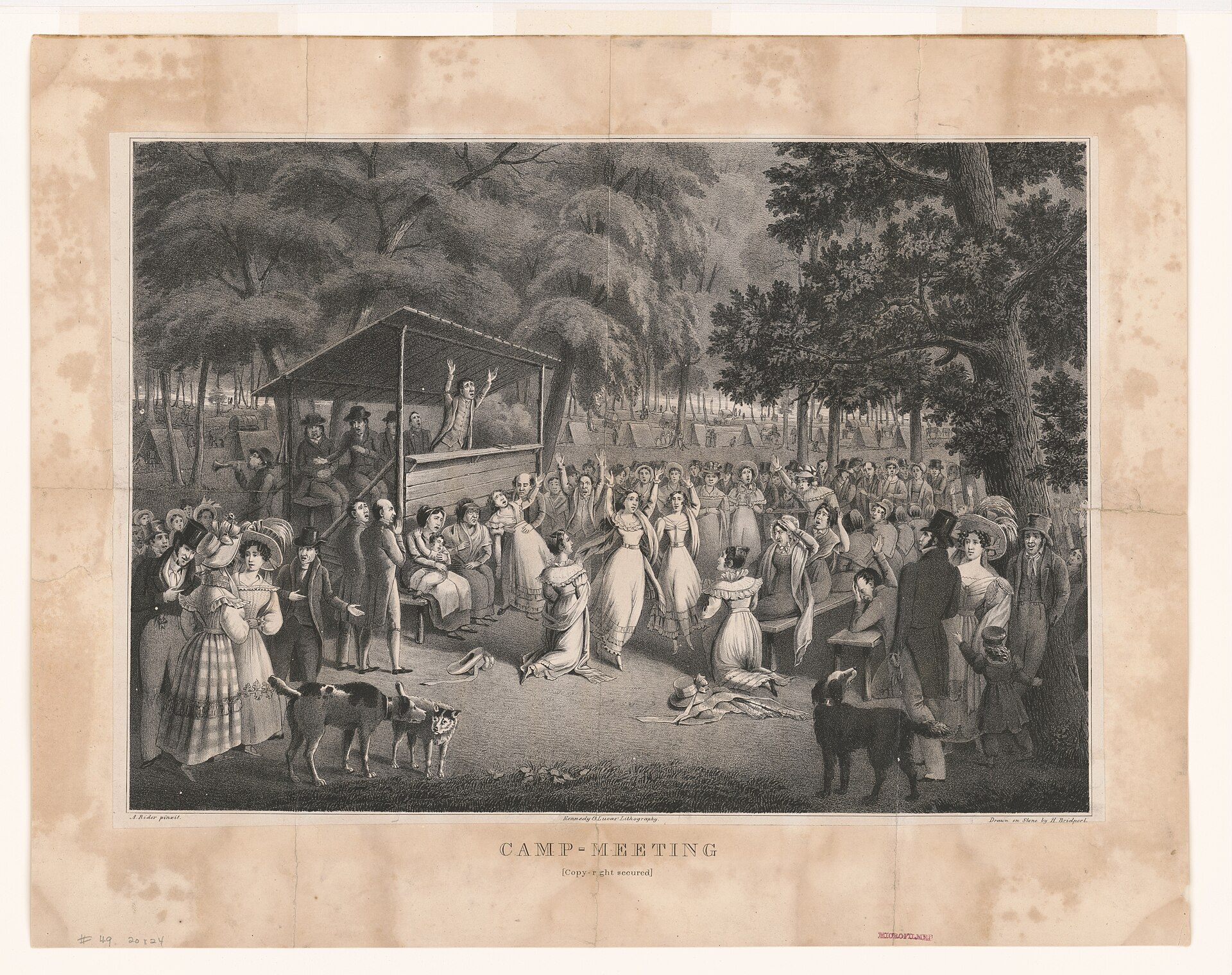

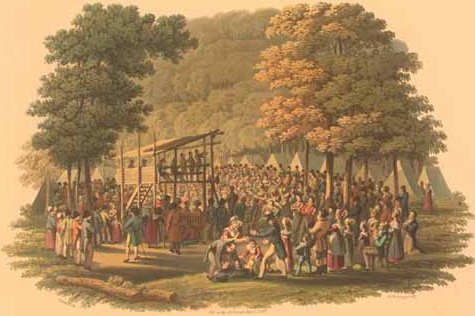

Lorenzo Dow
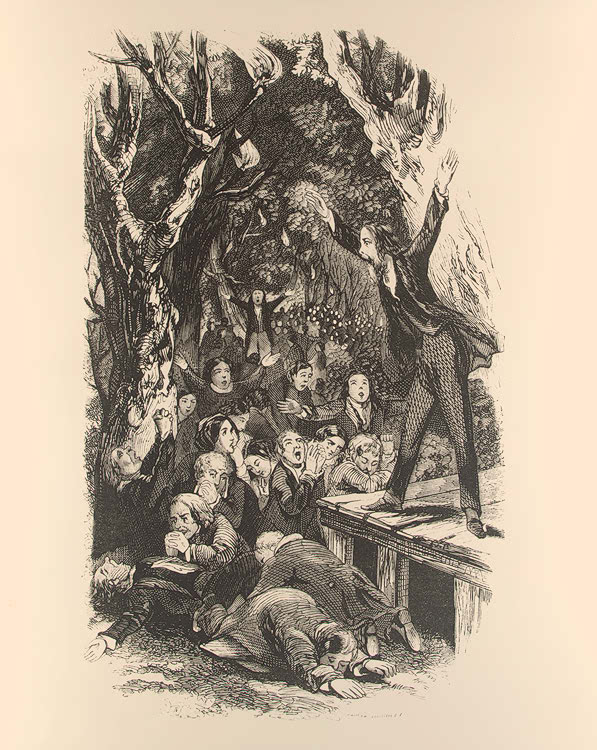
The most famous independent camp meeting preacher of the period was Lorenzo Dow (1777 to 1834), a Connecticut-born Methodist who often preached without a regular conference appointment. With his long hair and rough clothes, he was known as "Crazy Dow," and he traveled from New England to Mississippi. Dow preached in the region where the jerks were common in the early 1800s, and the 1856 engraving above shows him before a jerking crowd. He also took the camp meeting idea to England and Ireland between 1805 and 1807, where it was taken up by Hugh Bourne and others; the Wesleyan Methodist Conference in England disapproved of camp meetings, and those who held them formed the Primitive Methodist Connexion. Dow's own Journal, often reprinted in the nineteenth century, is the main source for his life, and he is a reminder that the camp meeting spread through independent preachers as well as through the Methodist conferences.
Francis Asbury and the circuit riders
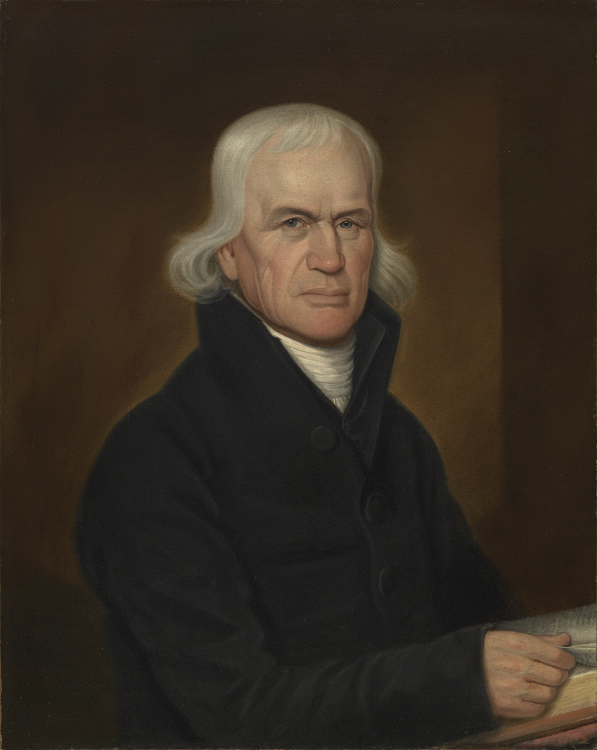
Asbury
Francis Asbury (1745 to 1816), born in Staffordshire, England, was one of the lay preachers John Wesley sent to America. His Journal records the decision at sea on September 12, 1771: "Whither am I going? To the New World. What to do? To gain honour? No, if I know my own heart."17 He landed on October 27, 1771: "This day we landed in Philadelphia, where we were directed to the house of one Mr. Francis Harris."17 Within a month he had found his life's method. The other preachers stayed in the towns. Asbury wrote on November 21, 1771: "My brethren seem unwilling to leave the cities, but I think I shall show them the way."17
Asbury stayed in America through the Revolution, when most of Wesley's other preachers went home. At the Christmas Conference in Baltimore in December 1784 the American Methodists organized as the Methodist Episcopal Church, independent of the Church of England, and Asbury, according to the official history of the United Methodist Church's General Commission on Archives and History, "was elected a bishop of the Methodist Episcopal Church at its organization in 1784."18 For the next thirty years he traveled almost constantly, attending the annual conferences, making the preachers' appointments, and riding the circuits himself. Cartwright, who knew him, recorded his death: Asbury preached his last sermon at Richmond, Virginia, on March 24, 1816, was taken from his carriage for the last time on "Friday evening, the 29th of March," and died on Sunday, March 31, 1816, at the house of his friend George Arnold, "about twenty miles south of Fredericsburgh, Virginia."19 Cartwright wrote that he "had traveled half a century near three hundred thousand miles."19 That figure is Cartwright's estimate, made from memory and reputation; modern biographers, working from the Journal's itineraries, usually give a lower figure of around 270,000 miles, which is still an estimate.

How a circuit worked
The Methodist system that Asbury built was designed for scattered people. A "circuit" was a route of preaching places (homes, barns, schoolhouses, a few chapels) that one or two traveling preachers covered in a fixed round, usually taking several weeks to complete it. At each place a "class" of members met weekly under a lay class leader, who checked on each member's spiritual state and collected small contributions. Local preachers and exhorters, who did not travel, preached between the circuit rider's visits. Circuits were grouped into districts under a presiding elder, who held quarterly meetings, and the districts made up annual conferences, where the bishop read out the preachers' appointments for the coming year. Preachers were moved often, usually every year or two. The system needed few buildings and no college-trained clergy, and it could add a new settlement to a circuit as soon as a few families asked for preaching.
The circuit rider's life was hard and poorly paid. Cartwright, recalling his first year on the Sangamon Circuit in Illinois in the 1820s, wrote that the "support of a traveling preacher was exceedingly small," and that his own came to "forty dollars all told."20 Most early circuit riders were young and unmarried, because a married preacher could not support a family on the allowance, and many left the traveling ministry when they married. Many died young. The figures often repeated about circuit riders' early deaths come from later compilations of conference obituaries and are discussed in Claims checked below.
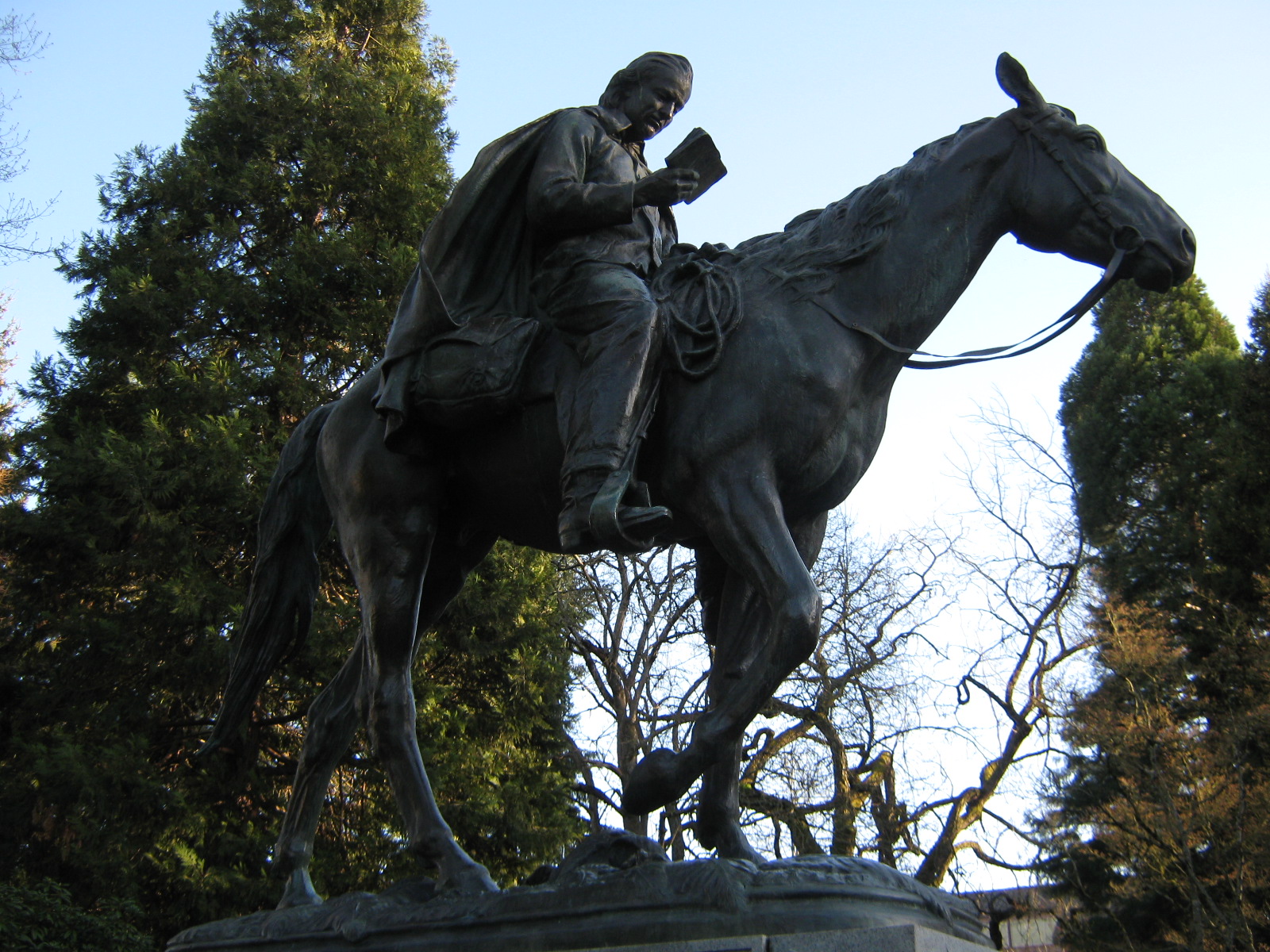

Peter Cartwright, the backwoods preacher
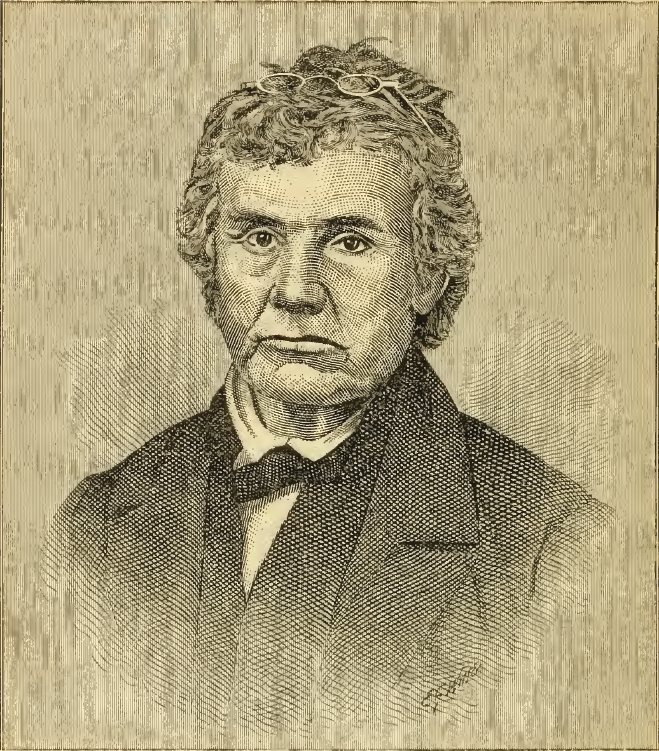
Peter Cartwright (1785 to 1872) is the best known circuit rider because he wrote the most readable memoir. His Autobiography of Peter Cartwright, the Backwoods Preacher (1856), edited by W. P. Strickland, tells of his conversion in Kentucky in 1801, "when I was in my sixteenth year," at a sacramental meeting in May held near a Presbyterian meeting house, where the officers "erected a stand in a contiguous shady grove."21 While praying at the stand he sensed a voice saying, "Thy sins are all forgiven thee." In June 1801, at the little church called Ebenezer, he "joined the Methodist Episcopal Church."21 He became an exhorter, then a traveling preacher in Kentucky, Tennessee, Ohio and Indiana, and from 1824 in Illinois, where he served for decades as a presiding elder and twice sat in the state legislature. In 1846 he ran for Congress against Abraham Lincoln and lost.
Cartwright's Autobiography is a primary source with a strong point of view. He was a Methodist and an Arminian who argued against Calvinism, wrote pamphlets against it, and treated rival movements with scorn. He called the New Lights of Stone's movement a "trash trap," and he named "Marshall, M'Namar, Dunlevy, Stone, Huston, and others" as its "chief leaders."13 He described the Cumberland Presbyterians more kindly: "They generally preach Methodist doctrine, and have been the means of doing a great deal of good," but he regretted that they kept the doctrine of final perseverance, and said they "would have done much more if they had left this relic of John Calvin behind."15 A Calvinist reader would answer that perseverance of the saints is a scriptural doctrine, not a relic, and the Cumberland Presbyterians themselves held that it was. These are the judgments of a participant, and they are quoted here as such.

Methodists and slavery
The early Methodist Episcopal Church took a stand against slavery. Its rules of 1784 required members who held slaves to free them, but the rule was suspended within months because of resistance in the South, and later General Conferences left the question more and more to local conferences. Cartwright lived through the change and wrote about it. Among his reasons for leaving Kentucky for Illinois, where slavery was banned, he listed: "First, I would get entirely clear of the evil of slavery." He also wrote that he had "seen with painful emotions the increase of a disposition to justify slavery" among Methodist preachers.20 The quarrel ended in 1844 with the division of the Methodist Episcopal Church into northern and southern bodies, which Cartwright recounted in his chapters on the General Conference of 1844. Christine Leigh Heyrman, in Southern Cross: The Beginnings of the Bible Belt (1997), argued that southern Baptists and Methodists, who began as outsiders who challenged slaveholding and the social order, won acceptance among southern whites over these decades in part by giving up their early opposition to slavery.22
Growth: what the numbers show
Methodist membership from the Minutes
Methodist numbers are better than most church statistics of the period, because the annual conferences reported counts of members (including probationers, and listing white and "colored" members separately) every year in printed Minutes. The General Commission on Archives and History of the United Methodist Church publishes a table of membership by decade. It gives these figures for its "Methodist" column: 1790, 57,858; 1800, 65,181; 1810, 174,560; 1820, 257,736; 1830, 478,053; 1840, 855,761; 1850, 1,185,902; 1860, 1,661,086.23 The table does not explain which bodies are counted after the division of 1844 (when the Methodist Episcopal Church, South, separated), so the figures for 1850 and 1860 should not be compared directly with those for earlier years without checking the Minutes. Cartwright, writing of the General Conference of May 1816, gave a figure of "over two hundred and fourteen thousand members in these United States and Territories, and the Provinces of Canada," and said that "over thirty thousand probationers had been added to the Church" that year.19
Finke and Stark on shares of adherents
The most cited comparison of denominations across the period comes from the sociologists Roger Finke and Rodney Stark, The Churching of America, 1776 to 1990 (1992; second edition, 1776 to 2005, published in 2005). They estimated each denomination's share of all religious adherents in 1776 and 1850. Their figures, as tabulated from the book: Congregationalists, 20.4 percent in 1776 and 4.0 percent in 1850; Episcopalians, 15.7 and 3.5; Presbyterians, 19.0 and 11.6; Baptists, 16.9 and 20.5; Methodists, 2.5 and 34.2; Catholics, 1.8 and 13.9. They also estimated that the share of the population belonging to a church rose from about 17 percent in 1776 to about 34 percent in 1850.24
The method matters for how far the figures can be trusted. For 1776 there was no census of religion, and Finke and Stark worked from counts of congregations by denomination, multiplied by an estimated number of adherents per congregation. For 1850 they used the federal census, which for the first time counted churches and their seating capacity by denomination, and converted those counts to estimates of adherents. Both steps involve assumptions, and other scholars have questioned some of them, especially the low 1776 membership rate. Finke and Stark's own interpretation is that the "upstart sects," Methodists and Baptists, grew because their preachers were close to the people, paid little and motivated by zeal, while the older established churches with educated, salaried clergy lost ground in an open religious market. That is an argument from economics applied to religion, and readers should separate the estimates in the table from the theory used to explain them.24
New churches from the revival
The Cumberland Presbyterians (1810)
The revival in the Green River and Cumberland settlements created more congregations than the Presbyterian Church had ministers to serve. The Cumberland Presbytery, formed in the revival region, licensed and ordained men who had not completed the classical education the church required, and some of them would not accept the Westminster Confession's teaching on predestination without reservation; they objected to what they called its "fatality." The Synod of Kentucky investigated, and in 1806, in the words of the Tennessee Encyclopedia, the Presbyterian Church "dissolved the Cumberland Presbytery" and barred the revival ministers from preaching or administering the sacraments.25 After years of appeals, three ministers met at the home of Samuel McAdow in Dickson County, Tennessee: "At his home on February 4, 1810," McAdow and "other revival pastors including Finis Ewing and Samuel King" formed a new presbytery "independently of the Presbyterian Church," which "quickly became known as a new denomination, the Cumberland Presbyterian Church."25 The site is now part of Montgomery Bell State Park.
The Cumberland Presbyterians kept Presbyterian church government and much of the Westminster Confession, but revised its teaching on election to allow that Christ died for all and that the Spirit works on all who hear the gospel, while keeping the perseverance of the saints. That middle position is why Cartwright, as quoted above, said they preached "Methodist doctrine" but kept a "relic of John Calvin." A Calvinist would describe their revision as a departure from the Reformed confession. The Cumberland Presbyterians described it as a return to the plain teaching of Scripture on God's love for all. Both descriptions are the parties' own.
Stone's "Christians" and the Shakers
The Kentucky revival also produced the movement Cartwright called the New Lights. In 1803 Stone and four other ministers withdrew from the Synod of Kentucky and formed the Springfield Presbytery, which they dissolved in 1804 to call themselves simply "Christians." Cartwright wrote: "Here was the origin of what was called the New Lights," and said they "dubbed it with the name of Christian."13 Stone's later life, his union with Alexander Campbell's Disciples in 1832, and the churches that came from it are taught in Module 80, lesson 10, and are not retold here. Two of Stone's 1803 colleagues, Richard McNemar and John Dunlavy, joined the Shakers after Shaker missionaries arrived in 1805, and became leaders of the Shaker villages in Ohio and Kentucky; the Shakers appear in lesson 12.
Black churches and Richard Allen
The revivals drew large numbers of enslaved and free Black Americans into the Baptist and Methodist churches. Methodist Minutes counted "colored" members separately, and many early Methodist and Baptist congregations in the South had Black majorities. In northern cities, free Black Methodists and Baptists began to form their own congregations, and then their own denominations.
Richard Allen (1760 to 1831) was born enslaved, was converted under Methodist preaching, bought his freedom, and became a Methodist preacher in Philadelphia. His autobiography, The Life, Experience, and Gospel Labours of the Rt. Rev. Richard Allen (published in 1833, after his death), explained why the Methodists drew Black converts: "The Methodists were the first people that brought glad tidings to the coloured people." His reason was their preaching: "for the plain and simple gospel suits best for any people, for the unlearned can understand, and the learned are sure to understand."26 He also told of the day the trustees of St. George's Methodist Church in Philadelphia tried to pull Black worshipers off their knees during prayer in the newly built gallery, after which, he wrote, "we all went out of the church in a body, and they were no more plagued with us in the church."26 The year of that walkout is disputed: it has traditionally been dated to 1787, while several historians date the gallery and the incident to about 1792 or 1793.
Allen's congregation bought a blacksmith shop, hauled it to a lot at Sixth and Lombard Streets, and fitted it out as a church. According to the church's own history, Allen asked Bishop Francis Asbury to lead the dedication services, which he did on July 29, 1794.27 Bethel remained under the Methodist Episcopal Church's authority for some years, and its members fought white Methodist elders over control of the property and pulpit. The church's history records that the dispute reached the Pennsylvania Supreme Court in 1816, and that Allen and the members of Bethel were declared free from the Methodist Episcopal Church's control, and that "In April of 1816" the first General Conference met at Bethel, where the African Methodist Episcopal Church was organized; Daniel Coker was elected bishop first and resigned the next day, and Allen was then elected and consecrated as the first bishop.27 The AME Church kept Methodist doctrine and discipline. Its founding is the clearest example of a new denomination formed by Black Christians from within the revival churches, and Nathan Hatch counted the Black churches among the five movements of his "democratization" thesis (below). On Lemuel Haynes, a Black New Divinity minister in New England, see lesson 07 and Liberty, Module 54, lesson 22.
The Second Awakening in New England: a contrast
Lyman Beecher
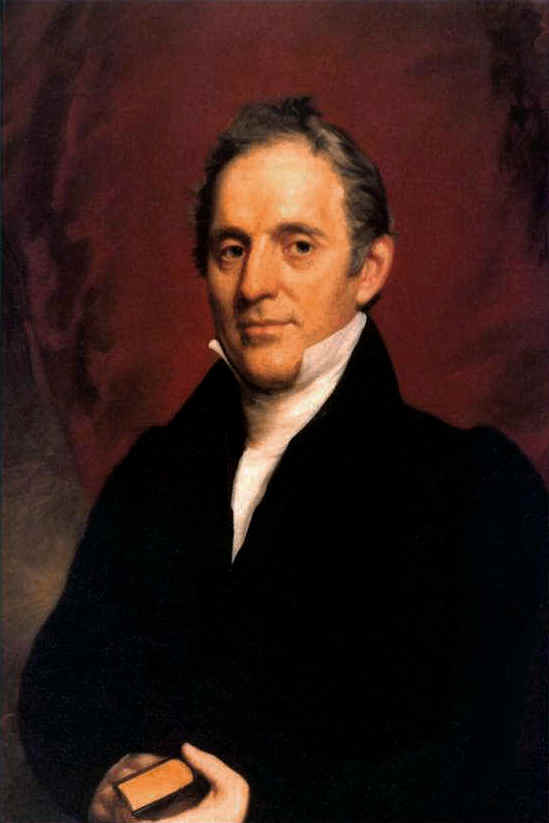
Lyman Beecher (1775 to 1863), a student of Timothy Dwight at Yale, was the most active Congregational pastor of the New England revivals. He served East Hampton on Long Island, then Litchfield, Connecticut (1810 to 1826), then Boston (from 1826), and in 1832 he became president of Lane Theological Seminary in Cincinnati. Beecher organized revivals, voluntary societies for missions and moral reform, and campaigns against dueling and drink. He was also a defender of the Congregational establishment in Connecticut, which ended when the state adopted a new constitution in 1818. His Autobiography (edited by his son Charles Beecher, 1864) recalls the defeat: "For several days I suffered what no tongue can tell for the best thing that ever happened to the State of Connecticut."28 He went on: "It cut the churches loose from dependence on state support. It threw them wholly on their own resources and on God."28 The passage became one of the most quoted statements of the change from established churches to voluntary ones (the story of disestablishment state by state is in lesson 06).

Asahel Nettleton
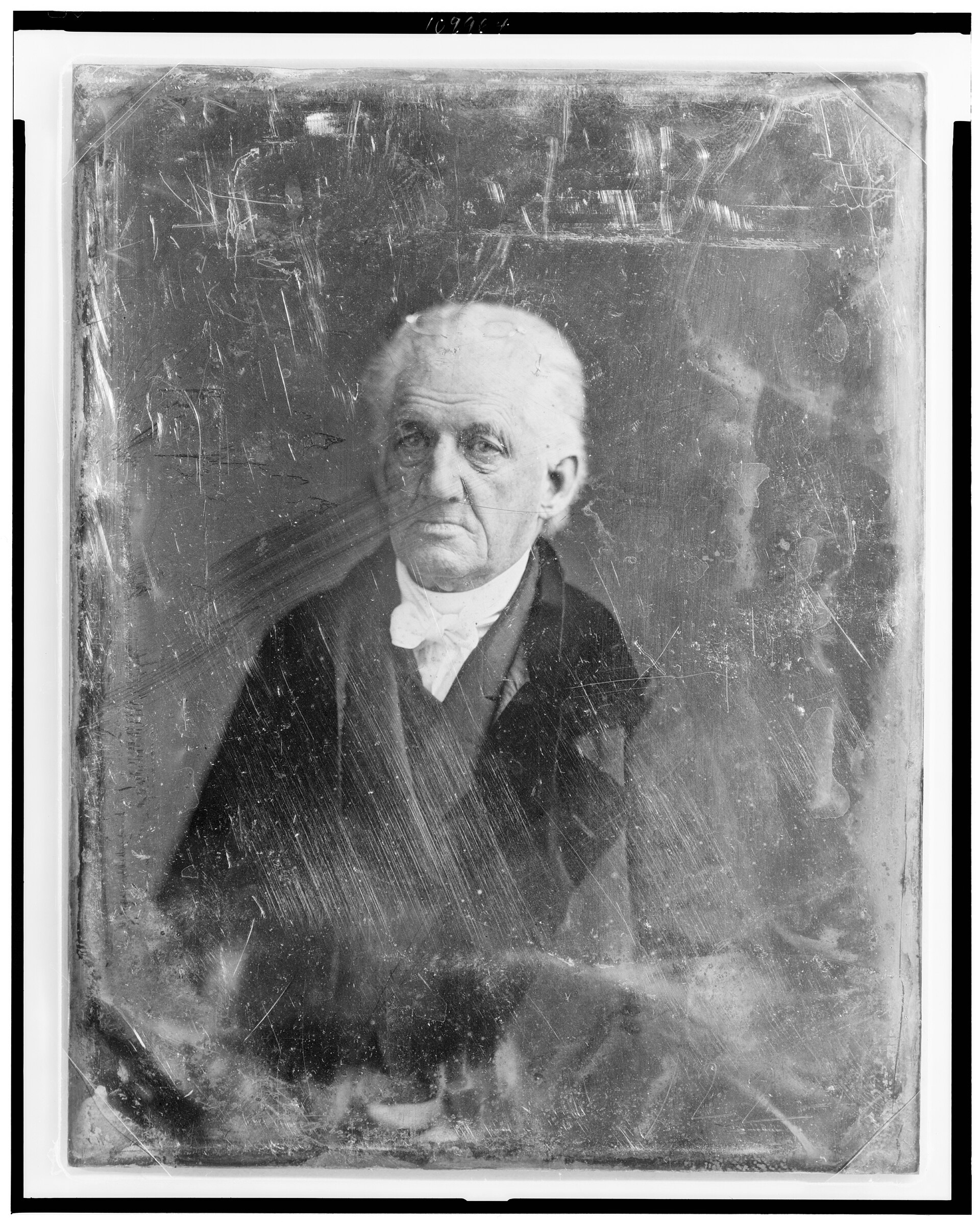
Asahel Nettleton (1783 to 1844), a Yale graduate converted in the revival period, became the best known itinerant evangelist of New England in the 1810s. He worked in parishes by invitation of the pastors, preached Calvinist doctrine on human inability and divine sovereignty, avoided public excitement, and talked with inquirers privately. His converts were examined over a period of time before they joined the church. His life was written by his friend Bennet Tyler (Memoir of the Life and Character of Rev. Asahel Nettleton, 1844). In 1827 he and Beecher opposed Charles Finney's "new measures" at the New Lebanon convention, a meeting described in lesson 09; the theological dispute is in lesson 10.
The contrast between Cane Ridge and Nettleton's quiet parish revivals matters for the rest of this module. Both were called revivals and both counted converts. The Kentucky meetings were huge, outdoor, interdenominational and physical. The New England revivals were local, inside the parish, under pastoral control, and wary of bodily effects. When Finney brought western methods to eastern towns in the 1820s, he joined the two traditions, and that is why New Englanders such as Beecher and Nettleton reacted as they did.

How historians read the Second Awakening
Several readings of the period are current, and each is the work of a named historian.
- Democratization. Nathan O. Hatch, in The Democratization of American Christianity (1989), argued that the popular religious movements of 1780 to 1830 (the Methodists, the Baptists, the "Christians" of Stone and the Campbells, the Black churches, and the Latter-day Saints) took the democratic ideas of the Revolution into religion: they rejected the authority of learned clergy, trusted ordinary people to read the Bible for themselves, and spread through preachers who spoke and sang in the people's own idiom.29
- An organizing process. Donald Mathews (1969) described the Awakening as a way of building social order in a mobile society, with churches, classes, societies and discipline giving people a place to belong.2
- The southern evangelical tradition. John Boles (1972) saw the Great Revival of 1787 to 1805 as the origin of southern evangelical religion, conservative in theology and focused on individual conversion.6 Christine Heyrman (1997) traced how southern evangelicals moved from the margins of society to its center.22
- Scottish roots. Leigh Eric Schmidt (1989) and Paul Conkin (1990) placed Cane Ridge in the Scottish Presbyterian tradition of communion seasons.78 Conkin called Cane Ridge a gathering that "arguably remains the most important religious gathering in all of American history."12 His subtitle, America's Pentecost, refers to the outpouring of the Spirit in Acts 2:1 to 4.30
- Awakenings as cultural revitalization. William G. McLoughlin, in Revivals, Awakenings, and Reform (1978), argued that the great awakenings were periods of cultural change in which Americans revised their beliefs to fit new conditions, and he dated the Second Great Awakening from 1800 to 1830.31
- Doubts about the category. Jon Butler (1990) questioned whether "awakening" describes anything more than a historian's grouping, and stressed the steady growth of church institutions over the whole period.1
Readers from the churches involved add their own readings. Methodists and Wesleyans have seen the period as a providential spread of scriptural holiness. Many Reformed writers have welcomed the conversions while regretting the move away from Calvinist doctrine and pastoral control that the camp meetings and later Finney's methods brought (lesson 10). Restorationists see in Cane Ridge the beginning of their call to unity on the Bible alone. Each of these is a theological judgment, and the record itself supports the facts on which they all agree: large meetings, many professed conversions, new denominations, and a rapid shift in the balance among the churches.
What the record shows and what it does not
- Documented fact: Sacramental meetings at Red River (June 1800) and Gasper River (July 1800) in Logan County, Kentucky, where people came with wagons and provisions and stayed for days (McGready's narrative). A large communion meeting at Cane Ridge, Bourbon County, in August 1801, with Presbyterian, Methodist and Baptist preachers taking part (Stone, Cartwright). The founding of the Cumberland Presbytery on February 4, 1810. Bethel's dedication on July 29, 1794, and the organization of the AME Church in April 1816. Asbury's death on March 31, 1816. Methodist membership as reported in the annual Minutes.
- Participants' own claims: That the revival was a work of God (McGready, Stone, Cartwright, Allen); that the jerks were "a judgment sent from God" (Cartwright); that Cane Ridge was "the first camp-meeting ever held in the United States" (Cartwright); that "military men on the ground" judged the crowd at 20,000 to 30,000 (Stone).
- Estimates: All crowd figures for Cane Ridge (10,000 to 30,000); the number who fell (300 to 3,000); the share of students converted at Hampden-Sydney (more than half) and Yale (75 of about 230); Finke and Stark's shares of adherents; the miles Asbury rode.
- Later tradition: The McGee brothers' role at Red River as usually told; the cautionary stories of scoffers struck down; the Hampden-Sydney prayer-meeting story.
- Scholarly readings: Democratization (Hatch), organizing process (Mathews), southern evangelical origins (Boles, Heyrman), Scottish communion roots (Schmidt, Conkin), revitalization (McLoughlin), doubts about the category (Butler), religious market (Finke and Stark).
- Open questions: How many different people attended Cane Ridge; what caused the bodily exercises; whether the frontier was as irreligious before 1800 as revival memoirs say; how lasting the conversions were.
Claims checked
"Cane Ridge drew 25,000 people." Rating: Unresolved
The figure is one of several estimates. Stone reported that "military men on the ground" judged the crowd at "between twenty and thirty thousand"; a Revolutionary officer, as reported by Spencer, computed "not less than 20,000 souls"; Cartwright gave "from twelve to twenty-five thousand" at times during the meeting; Weisberger (1958) put it much lower from a wagon count; Shaw (1963) and the 2024 Humanities article give a range of 10,000 to 30,000.111013412 No one counted, the crowd changed over six or seven days, and the high figures come from supporters. A crowd in the low tens of thousands at some point in the week is possible; any single number is an estimate.
"Cane Ridge was the first camp meeting in America." Rating: Refuted as stated
Cartwright wrote that Cane Ridge "was the first camp-meeting ever held in the United States."13 McGready's own narrative shows that at Gasper River, in July 1800, a year earlier, "between twenty and thirty wagons were brought to the place, loaded with people and their provisions," and Spencer's sources say people slept in their wagons or under bed covers.910 Stone himself went to see such meetings in Logan County in the spring of 1801, before Cane Ridge.11 Multi-day outdoor communions also had a long history in Scotland and among Scots-Irish settlers (Schmidt).7 Cane Ridge was the largest and best known early camp meeting; it was not the first.
"The Methodists invented the camp meeting." Rating: Unsupported
The first meetings at Red River, Gasper River and Cane Ridge were Presbyterian sacramental occasions led by Presbyterian ministers (McGready, Stone), though Methodist preachers took part.911 The Methodists adopted the form within a few years and made it a regular part of their church life, which is why it is often remembered as Methodist.16
"Three thousand people fell at Cane Ridge." Rating: Unresolved
The figure comes from James Crawford's computation of "about 3,000," as reported by Spencer.10 Cartwright said "Hundreds"; the 2024 Humanities article gives a range of 300 to 3,000.1312 That many fell is well attested by several witnesses; how many is not known.
"Asbury rode 300,000 miles on horseback." Rating: Partly supported
Cartwright wrote that Asbury "had traveled half a century near three hundred thousand miles."19 The Journal records near-constant travel for forty-five years in America, so a figure in the hundreds of thousands of miles is reasonable, but no one measured it. Later biographers' figure of about 270,000 miles is also an estimate, and in his later years Asbury often traveled by carriage rather than on horseback (Cartwright mentions his carriage at the end).
"Logan County was a lawless 'Rogues' Harbor' with no religion before the revival." Rating: Partly supported
Cartwright reports the nickname and describes Sundays given to "hunting, fishing, horse-racing, card-playing."3 He also says that a small Methodist society existed and "ebbed and flowed for years, until about 1799, when a mighty revival of religion broke out," and McGready had three Presbyterian congregations there by the late 1790s.39 The region was rough and thinly churched, but not without churches. Conversion memoirs tend to darken the "before" picture.
"A scoffer who mocked the jerks was struck dead." Rating: Unsupported
The story is Cartwright's, told without a name, date or other witness: the man "snapped his neck, fell, and soon expired."15 No independent record has been found. Stone, on the other hand, wrote that he did not remember that any of "the thousands" he had seen with the jerks "ever sustained an injury in body."11 The two accounts cannot both describe the usual case; the story is best treated as a preacher's warning tale.
"The Second Great Awakening ended slavery." Rating: Unsupported
The revival churches were divided over slavery. The Methodist rule of 1784 against slaveholding by members was soon suspended, and preachers like Cartwright complained of "a disposition to justify slavery" among their colleagues; Cartwright left Kentucky for Illinois in 1824 in part to be "clear of the evil of slavery."20 Heyrman argued that southern evangelicals gave up their early antislavery stand to win acceptance.22 The revivals did produce Black churches such as the AME Church and, later, the revival-connected abolitionists of Oberlin and the Finney circle (lesson 11). Slavery in the United States ended with the Civil War and the Thirteenth Amendment (1865). The revivals shaped the moral arguments on both sides; they did not end slavery.
"Most early circuit riders died before the age of thirty." Rating: Unresolved
Figures of this kind (for example, that about half of early Methodist preachers died before thirty, or before thirty-three) are often repeated in popular histories and sermons. They seem to come from later counts of conference obituaries, and no count was checked for this lesson. What the record does show is that the work was hard and poorly paid, that Cartwright's first year on an Illinois circuit brought "forty dollars all told," and that many preachers left traveling when they married.20 The claim should not be repeated as fact without a named source and method.
"By 1850 the Methodists were the largest religious body in America." Rating: Supported (as an estimate)
Finke and Stark estimate that Methodists made up 34.2 percent of all religious adherents in 1850, ahead of Baptists (20.5) and Catholics (13.9).24 The Methodist membership figures in the Minutes, over a million members by mid-century according to the General Commission on Archives and History, point the same way.23 The comparison depends on how adherents are estimated, and the Methodist total combines several Methodist bodies after 1844.
Hard questions and answers
A Reformed reader asks: were the falling and jerking a work of the Holy Spirit?
The sources cannot settle a theological question, but they show how the participants argued it. Stone and Cartwright believed the revival was God's work and judged the exercises by their fruit: changed lives, prayer and repentance in "every neighborhood," in Stone's words.11 Both admitted excess. Presbyterian critics in the Synod of Kentucky, holding the Westminster teaching that regeneration is God's work alone, feared that disorder and the doctrine preached at the meetings would produce false conversions. This was the same argument Edwards had worked through in the 1740s (lesson 05), whose Religious Affections (1746) devoted a whole part to "what are no certain signs" that religious affections are gracious "or that they are not," and placed bodily effects among them. A reader who accepts Edwards's test would ask what happened to the converts years later, and that is the part of the record least documented.
A Wesleyan reader asks: did Methodism grow because of its doctrine or because of its system?
Methodists would answer that the message of free grace offered to all, and the call to holiness, drew people. Historians such as Wigger give much of the weight to method: itinerant preachers who went to the settlers, classes that held members together, camp meetings, singing, and lay leadership.16 Finke and Stark stress the zeal and low cost of an unpaid or poorly paid clergy.24 The Baptists, who held Calvinist doctrine in many of their associations, also grew quickly with a similar unpaid, uneducated ministry, which suggests that organization and closeness to the people mattered as much as doctrine. The two explanations do not exclude each other.
A skeptic asks: if the crowd numbers are unreliable, how do we know anything happened?
The firmer evidence is not the crowd figures but the records kept by the churches themselves: the Methodist Minutes that counted members every year, the presbytery and synod minutes that record the disputes and new presbyteries, the founding of new denominations on known dates (1810, 1816), and the many independent memoirs (McGready, Stone, Purviance, Cartwright, Allen) that agree on the main events while disagreeing on details. These show a large change in religious membership and organization between 1790 and 1850. The size of a single meeting is the least certain part of the story.
A Catholic reader asks: Finke and Stark show Catholics growing from 1.8 to 13.9 percent. Was that part of the Awakening?
No. Catholic growth in this period came mainly from immigration from Ireland and Germany, especially in the 1830s and 1840s, and from the acquisition of territories with Catholic populations. Catholic parish missions in the United States did adopt some revival methods later in the century, but the Second Great Awakening as historians use the term was a Protestant movement. The table is a reminder that the religious picture of 1850 was shaped by immigration as well as by revivals.24
A Latter-day Saint reader asks: how does this revival relate to Joseph Smith's First Vision?
Joseph Smith's 1838 account of his First Vision, as published by The Church of Jesus Christ of Latter-day Saints, places it in a time of religious excitement among the Methodists, Presbyterians and Baptists of his district in western New York, around 1820. That excitement belongs to the later, northern phase of the same revival period, in the region that Whitney Cross called the Burned-over District. The accounts and how other Christians answered them are set out neutrally in lesson 12. This lesson's sources show that the competition among Methodists, Presbyterians and Baptists, which Smith described, was a real feature of revival-era America from Kentucky to New York.
Why did the Presbyterians, who began the western revival, lose ground in it?
The record points to three causes. First, the Presbyterian requirement of a classically educated ministry limited the supply of preachers, and the attempt of the Cumberland Presbytery to ordain men without it ended with that presbytery dissolved in 1806 and a new denomination in 1810.25 Second, disputes over doctrine and order split the revival Presbyterians into the Stone movement, the Cumberland church and the Shaker converts. Third, the synod's caution about the exercises left the camp meeting to the Methodists. Finke and Stark's estimates show the Presbyterian share of adherents falling from 19.0 to 11.6 percent between 1776 and 1850 while the Methodist share rose from 2.5 to 34.2.24 Presbyterians would add that they chose to keep their standards for ministry and doctrine, and that the Old School and New School argument over those standards is the subject of lesson 13.
The story continues in lesson 09, where Charles Finney carries revival methods from the western camp meetings into the towns of upstate New York. For the wider history of Methodism and the later Holiness movement, see Module 77, lesson 01, and for the definition of evangelicalism that historians use, Module 77, lesson 03.
Learn more
- Barton W. Stone's Biography (1847), full text: The host minister's own account of Logan County, Cane Ridge and the exercises, pp. 34 to 42.
- Autobiography of Peter Cartwright (1856), table of contents: The most vivid circuit rider's memoir, with a strong Methodist and anti-Calvinist point of view.
- The Journal of Francis Asbury, vol. 1 (Wesley Center Online): Asbury's day-by-day record of the Methodist itinerancy from 1771.
- Amy Lifson, "Cane Ridge," Humanities (2024): A short modern account drawing on Conkin.
- Wayne Shaw on historians' treatment of Cane Ridge (1963): How historians' adjectives and crowd estimates have colored the story.
- Module 80, lesson 10: The Restoration Movement: Barton Stone's later movement and the Campbells.
- Module 80, lesson 07: Methodists and the Holiness lines: Wesley, Asbury and Methodist church order in outline.
Still being checked (18 items)
These points could not be confirmed against a primary source when this lesson was written and fact checked in October 2026. The text above states each one as uncertain.
- The roles of William and John McGee at Red River in June 1800 come from later accounts and were not checked against a primary source.
- Stone dates Cane Ridge to the week before the third Lord's day in August 1801; modern accounts (Humanities, 2024) give August 6 to 12. The contemporary letters behind the modern dating were not consulted. Spencer (1885, vol. 1, chapter 27), quoting Robert Davidson's history, also dates the great meeting at Cane Ridge to August 6, 1801.
- Weisberger's lower Cane Ridge estimate is reported from Shaw (1963), who does not give the number in the scanned text.
- Hampden-Sydney ('more than half' of students) and Yale (75 of about 230 converted) figures come from Beardsley (1912), a secondary compilation drawing on Goodrich and Tyler.
- Finke and Stark's 1776 and 1850 percentages were taken from David Bromley's VCU tabulation, not checked against the printed table (page or table number not confirmed); their method is described in general terms.
- The GCAH membership table does not say which Methodist bodies are counted for 1850 and 1860 (after the 1844 division).
- The modern estimate of about 270,000 miles for Asbury's travels is not attributed to a specific biographer checked in this run.
- Lorenzo Dow details (nickname 'Crazy Dow', preaching in England and Ireland 1805 to 1807, the link to Hugh Bourne and the Primitive Methodists) come from standard histories and were not checked against Dow's Journal.
- The Methodist antislavery rule of 1784 and its suspension soon after are stated from standard histories, not from the Minutes.
- The year of the St. George's gallery walkout (traditionally 1787; some historians 1792 or 1793) is disputed and was not resolved.
- The exact days of the AME organization (often given as April 9 and Allen's consecration April 11, 1816) were not verified; the lesson says April 1816.
- Biographical details of Nettleton, Beecher, Cartwright's legislative service and 1846 race against Lincoln, the Springfield Presbytery dates (1803 to 1804) and the Shaker mission of 1805 are standard facts not footnoted to a primary source in this run.
- The Cumberland Presbyterian doctrinal revision is summarized from general knowledge; their 1814 confession was not consulted.
- The theses of Butler, Mathews, Boles, Schmidt, Conkin, Wigger, Heyrman, Hatch and McLoughlin are summarized from knowledge of the books, not re-read in this run.
- Asbury's Journal quotation of September 12, 1771 follows the standard punctuation of the printed Journal; the Wesley Center transcription as fetched lacked the question marks.
- Joseph Smith's 1838 account is summarized, not quoted, and was not checked against the Joseph Smith Papers in this run (lesson 12 covers it).
- The Yale revival figure (75 of about 230) is printed by Beardsley without a named source; its usual attribution to Chauncey Goodrich (1838) was not checked.
- Asbury's entry "My brethren seem unwilling to leave the cities" is headed Thursday 22 in the 1852 printing of the Journal; November 21, 1771 (a Thursday) matches the calendar and the Wesley Center transcription cited in the footnote.
Notes
- Jon Butler, Awash in a Sea of Faith: Christianizing the American People (Cambridge, Mass.: Harvard University Press, 1990), on the growth of church institutions and his doubts about the category of "awakening"; summarized, not quoted. Read it online. ↩
- Donald G. Mathews, "The Second Great Awakening as an Organizing Process, 1780 to 1830: An Hypothesis," American Quarterly 21, no. 1 (Spring 1969); summarized, not quoted. Read it online. ↩
- Peter Cartwright, Autobiography of Peter Cartwright, the Backwoods Preacher, ed. W. P. Strickland (New York: Carlton and Porter, 1856), chapter II, online text at the Christian Biography Library (retrieved Oct. 28, 2026). Read it online. ↩
- Wayne Shaw, "The Historians' Treatment of the Cane Ridge Revival," The Filson Club History Quarterly 37 (1963), pp. 249 to 257, including note 4 on crowd estimates and Kentucky's 1800 population, and his reply to Bernard A. Weisberger, They Gathered at the River (1958), p. 31 (retrieved Oct. 28, 2026). Read it online. ↩
- Frank G. Beardsley, A History of American Revivals (1912), chapter 5, "The Awakening of 1800," on Hampden-Sydney (1787), Yale (1802) and the New England revivals, citing Bennet Tyler's New England Revivals and Edward D. Griffin; online at The Gospel Truth (retrieved Oct. 28, 2026). Read it online. ↩
- John B. Boles, The Great Revival, 1787 to 1805: The Origins of the Southern Evangelical Mind (Lexington: University Press of Kentucky, 1972); summarized, not quoted. Read it online. ↩
- Leigh Eric Schmidt, Holy Fairs: Scottish Communions and American Revivals in the Early Modern Period (Princeton: Princeton University Press, 1989); summarized, not quoted. Read it online. ↩
- Paul K. Conkin, Cane Ridge: America's Pentecost (Madison: University of Wisconsin Press, 1990); summarized; quotations from it are taken from note 12. Read it online. ↩
- James McGready, "Narrative of the Commencement and Progress of the Revival of 1800," in a letter dated Logan County, Ky., Oct. 23, 1801 (first printed in the New York Missionary Magazine, 1803), in The Posthumous Works of the Reverend and Pious James M'Gready, ed. James Smith, two volumes in one (Nashville: J. Smith's Steam Press, 1837), narrative at the front of the volume; Internet Archive scan (retrieved Oct. 28, 2026). Also reproduced on the page "James McGready" at The Restoration Movement, therestorationmovement.com. Read it online. ↩
- J. H. Spencer, A History of Kentucky Baptists (1885; reprint 1984), chapter 27, pp. 506 to 521, quoting James Smith's history of the Cumberland Presbyterian Church and reporting the Red River and Gasper River meetings of 1800 (with Smith's statement that McGready had the Gasper River camp meeting "proclaimed far and wide") and the Cane Ridge figures of a Revolutionary officer, John Lyle and James Crawford; checked against the 1885 printing, vol. 1, chapter 27, archive.org/details/historyofkentuck01inspen; online at the Baptist History Homepage (retrieved Oct. 28, 2026). Read it online. ↩
- Barton W. Stone, The Biography of Eld. Barton Warren Stone, Written by Himself: with Additions and Reflections by Elder John Rogers (Cincinnati: J. A. and U. P. James, 1847), pp. 34 to 42 (Logan County, Cane Ridge, and "An account of the remarkable religious exercises"); PDF of the 1847 text (retrieved Oct. 28, 2026). Read it online. ↩
- Amy Lifson, "Cane Ridge," Humanities (National Endowment for the Humanities) 45, no. 4 (Fall 2024), quoting Paul K. Conkin, Cane Ridge: America's Pentecost (retrieved Oct. 28, 2026). Read it online. ↩
- Peter Cartwright, Autobiography (1856), chapter III, on the Great Revival, Cane Ridge and the New Lights (retrieved Oct. 28, 2026). Read it online. ↩
- Levi Purviance, The Biography of Elder David Purviance, with His Memoirs (Dayton, Ohio: B. F. and G. W. Ells, 1848), pp. 300 to 302, scan at the Internet Archive (retrieved Oct. 28, 2026). Read it online. ↩
- Peter Cartwright, Autobiography (1856), chapter V, on the Cumberland Presbyterians, the Shakers and "The Jerks" (retrieved Oct. 28, 2026). Read it online. ↩
- John H. Wigger, Taking Heaven by Storm: Methodism and the Rise of Popular Christianity in America (New York: Oxford University Press, 1998); summarized, not quoted. Read it online. ↩
- Francis Asbury, The Journal and Letters of Francis Asbury, vol. 1, chapter 1, entries of September 12, October 27 and November 21, 1771, Wesley Center Online transcription (retrieved Oct. 28, 2026). Read it online. ↩
- General Commission on Archives and History, The United Methodist Church, "Francis Asbury," Voices from Our Past (retrieved Oct. 28, 2026). Read it online. ↩
- Peter Cartwright, Autobiography (1856), chapter XIII, on Bishop Asbury's death and the General Conference of 1816 (retrieved Oct. 28, 2026). Read it online. ↩
- Peter Cartwright, Autobiography (1856), chapter XVIII, on the move to Illinois and the Sangamon Circuit (retrieved Oct. 28, 2026). Read it online. ↩
- Peter Cartwright, Autobiography (1856), chapter IV, on his conversion and joining the Methodist Episcopal Church (retrieved Oct. 28, 2026). Read it online. ↩
- Christine Leigh Heyrman, Southern Cross: The Beginnings of the Bible Belt (New York: Alfred A. Knopf, 1997); summarized, not quoted. Read it online. ↩
- General Commission on Archives and History, The United Methodist Church, "Membership Statistics" (table of Methodist membership compared with the United States census) (retrieved Oct. 28, 2026). Read it online. ↩
- Roger Finke and Rodney Stark, The Churching of America, 1776 to 1990 (New Brunswick: Rutgers University Press, 1992; 2nd ed., 1776 to 2005, 2005), table of religious adherents by denomination, 1776 and 1850, as tabulated by David G. Bromley, Virginia Commonwealth University, "Changes in Denominations" (retrieved Oct. 28, 2026). Read it online. ↩
- Tara Mitchell Mielnik, "Samuel McAdow," Tennessee Encyclopedia (Tennessee Historical Society) (retrieved Oct. 28, 2026). Read it online. ↩
- Richard Allen, The Life, Experience, and Gospel Labours of the Rt. Rev. Richard Allen (Philadelphia: Martin and Boden, 1833), full text at Documenting the American South, University of North Carolina (retrieved Oct. 28, 2026). Read it online. ↩
- Mother Bethel AME Church, "Our Pastoral History" (retrieved Oct. 28, 2026). Read it online. ↩
- Lyman Beecher, Autobiography, Correspondence, etc., of Lyman Beecher, ed. Charles Beecher, vol. 1 (New York: Harper and Brothers, 1864), chapter "Downfall of the Standing Order," p. 252 (quotation checked against the 1864 Harper printing, archive.org/details/autobiocorr01beecrich), Internet Archive (retrieved Oct. 28, 2026). Read it online. ↩
- Nathan O. Hatch, The Democratization of American Christianity (New Haven: Yale University Press, 1989); summarized, not quoted. Read it online. ↩
- The Holy Bible, King James Version (1611), Acts 2:1 to 4. Read it online. ↩
- William G. McLoughlin, Revivals, Awakenings, and Reform: An Essay on Religion and Social Change in America, 1607 to 1977 (Chicago: University of Chicago Press, 1978); summarized, not quoted. Read it online. ↩
Check yourself
1. Where and when did James McGready report that "multitudes were struck down under awful conviction" on a Monday?
McGready's narrative: "In June, the sacrament was administered at Red River. ... On Monday multitudes were struck down under awful conviction."
2. What kind of occasion was the Cane Ridge meeting planned to be?
Cartwright and Stone both describe it as a sacramental meeting appointed by Presbyterian ministers, in the Scottish communion tradition described by Schmidt and Conkin.
3. Who, according to Barton Stone, judged the Cane Ridge crowd at between twenty and thirty thousand?
Stone wrote: "It was judged, by military men on the ground, that there were between twenty and thirty thousand collected." It remains an estimate.
4. Which statement about Peter Cartwright's claim that Cane Ridge was "the first camp-meeting ever held in the United States" is best supported?
McGready reported "between twenty and thirty wagons" loaded with people and provisions at Gasper River a year before Cane Ridge.
5. On what date did Samuel McAdow, Finis Ewing and Samuel King form the presbytery that became the Cumberland Presbyterian Church?
The Tennessee Encyclopedia: "At his home on February 4, 1810," in Dickson County, Tennessee.
6. According to Finke and Stark's estimates, what share of American religious adherents were Methodists in 1850?
Their table gives Methodists 2.5 percent in 1776 and 34.2 percent in 1850; these are estimates built from congregation counts and the 1850 census.
7. Which church did Richard Allen help organize at Bethel in Philadelphia in April 1816?
Mother Bethel's history records the first General Conference there in April 1816, which organized the AME Church; Allen was consecrated its first bishop.
8. How did Lyman Beecher later describe Connecticut's ending of its established church in 1818?
His Autobiography recalls that he suffered for several days over what he later called "the best thing that ever happened to the State of Connecticut."
Terms in this lesson
- Second Great Awakening
- Historians' name for the revivals in the United States from about the 1790s to the 1840s, including the western camp meetings, the New England parish revivals and later Finney's campaigns. Some historians question whether "awakening" is a useful category.
- Sacramental (communion) season
- A Scottish and Scots-Irish Presbyterian custom of celebrating the Lord's Supper once or twice a year over several days (fast, preparation, communion Sabbath, thanksgiving Monday), drawing neighboring congregations.
- Camp meeting
- An outdoor religious gathering lasting several days where families camped on the ground; it grew from the Kentucky sacramental meetings of 1800 and 1801 and became a regular Methodist institution.
- Cane Ridge
- The Presbyterian meeting house in Bourbon County, Kentucky, served by Barton W. Stone, site of the great communion meeting of August 6 to 12, 1801.
- Exercises
- Participants' word for the bodily agitations at the revivals: falling, jerking, dancing, laughing, running and singing, as described by Stone and Cartwright.
- Circuit
- A Methodist route of preaching places covered in a regular round by one or two traveling preachers (circuit riders), with local classes led by lay class leaders.
- Presiding elder
- A Methodist minister who supervised the circuits of a district and held quarterly meetings; Peter Cartwright served as one in Illinois.
- Class meeting
- A small weekly Methodist group under a lay class leader who checked each member's spiritual state and collected contributions.
- Cumberland Presbyterian Church
- The denomination formed from the presbytery organized on February 4, 1810, in Dickson County, Tennessee, by revival ministers after the Cumberland Presbytery was dissolved in 1806.
- New Lights (Kentucky)
- Cartwright's name for the movement of Barton Stone and his colleagues who left the Synod of Kentucky in 1803 and called themselves "Christians"; not the same as the New Lights of the 1740s.
- African Methodist Episcopal (AME) Church
- The denomination organized at Bethel Church, Philadelphia, in April 1816, with Richard Allen as its first bishop.
- Disestablishment
- The ending of a state-supported church; Connecticut ended its Congregational establishment with its 1818 constitution.
Sources
- Barton W. Stone, The Biography of Eld. Barton Warren Stone, Written by Himself (1847) (1847) checked 2026-10
- Peter Cartwright, Autobiography of Peter Cartwright, the Backwoods Preacher (1856), chapters II to V, XIII, XVIII (1856) checked 2026-10
- James McGready, narrative of the Logan County revival (1801), as quoted at The Restoration Movement (1801) checked 2026-10
- J. H. Spencer, A History of Kentucky Baptists, vol. 1, chapter 27 (1885) (1885) checked 2026-10
- Levi Purviance, The Biography of Elder David Purviance (1848), pp. 300 to 302 (1848) checked 2026-10
- Francis Asbury, Journal, vol. 1, chapter 1 (Wesley Center Online) (1771) checked 2026-10
- Richard Allen, The Life, Experience, and Gospel Labours of the Rt. Rev. Richard Allen (1833), excerpt (1833) checked 2026-10
- Lyman Beecher, Autobiography, vol. 1 (1864), Internet Archive (1864) checked 2026-10
- Frank G. Beardsley, A History of American Revivals (1912), chapter 5 (1912) checked 2026-10
- GCAH, Membership Statistics (accessed 2026) checked 2026-10
- GCAH, Francis Asbury (accessed 2026) checked 2026-10
- Mother Bethel AME Church, Our Pastoral History (accessed 2026) checked 2026-10
- Tennessee Encyclopedia, Samuel McAdow (accessed 2026) checked 2026-10
- Wayne Shaw, The Historians' Treatment of the Cane Ridge Revival (Filson Club History Quarterly, 1963) (1963) checked 2026-10
- Amy Lifson, Cane Ridge, Humanities (NEH), Fall 2024 (2024) checked 2026-10
- David G. Bromley, Changes in Denominations (tabulating Finke and Stark) (accessed 2026) checked 2026-10
- King James Version, Acts 2 (1611) checked 2026-10
- Roger Finke and Rodney Stark, The Churching of America, 1776 to 2005 (2005) checked 2026-10
- Paul K. Conkin, Cane Ridge: America's Pentecost (1990) checked 2026-10
- Leigh Eric Schmidt, Holy Fairs (1989) checked 2026-10
- John B. Boles, The Great Revival, 1787 to 1805 (1972) checked 2026-10
- Nathan O. Hatch, The Democratization of American Christianity (1989) checked 2026-10
- John H. Wigger, Taking Heaven by Storm (1998) checked 2026-10
- Christine Leigh Heyrman, Southern Cross (1997) checked 2026-10
- Jon Butler, Awash in a Sea of Faith (1990) checked 2026-10
- William G. McLoughlin, Revivals, Awakenings, and Reform (1978) checked 2026-10
- Donald G. Mathews, The Second Great Awakening as an Organizing Process (American Quarterly, 1969) (1969) checked 2026-10