Lesson 12 of 14 · about 55 minutes · Updated October 28, 2026
The Burned-Over District and Its Offshoots: Millerites, Latter-day Saints, Spiritualists and Oneida
You'll be able to
- Explain where the name 'Burned-over District' comes from, from Finney's 'burnt district' and Noyes's 'Volcanic District' to Whitney Cross (1950), and summarize how Cross, Johnson, Pritchard, Wellman and Hatch explain the region.
- Trace the Millerite chronology from Miller's 1818 conclusion to the Great Disappointment, and state accurately who set the dates of 1843, March 1844 and October 22, 1844.
- Describe the founding of The Church of Jesus Christ of Latter-day Saints from the Church's own published sources, including the differences among the First Vision accounts of 1832, 1835 and 1838.
- Summarize the Fox sisters' rappings, the 1888 confession and its retraction, and the Shaker and Oneida communities, from their own documents.
- Separate documented fact, a movement's own claim, later tradition and scholarly reading in the history of the district.
- Report how other Christians, including Finney, Campbell, Himes and the early Adventists, answered the new movements, with attribution.
Start here: the short version
Between about 1825 and 1850 a belt of western and central New York, opened to settlers and trade by the Erie Canal (completed in 1825), produced more new religious movements than any comparable region of the young United States. Charles Finney preached there (lessons 09 to 11), and in his Memoirs (1876) he described the country around Evans' Mills as what "in the western phrase, would be called, 'a burnt district,'" meaning a place so scorched by an earlier revival that people resisted the next one. The historian Whitney Cross made "the Burned-over District" the standard name in his book of 1950. Within about fifty miles of Rochester, Joseph Smith reported a vision of God, published the Book of Mormon at Palmyra (1830), and organized the Church of Christ on April 6, 1830; it is known today as The Church of Jesus Christ of Latter-day Saints. William Miller, a Baptist farmer from Low Hampton, New York, lectured from 1831 that Christ would return "about the year 1843"; a later "seventh month" message set October 22, 1844, and after the Great Disappointment some of his followers formed the Seventh-day Adventist Church (organized 1863). In 1848 the rappings heard by the Fox sisters at Hydesville started modern Spiritualism, and John Humphrey Noyes, converted in the revivals of 1831, moved his Perfectionist community to Oneida. The Shakers, who had come from England in 1774, had settlements at Sodus Bay and Groveland. This lesson sets out what each movement taught in its founders' own words, what the records show, and how other Christians answered, without judging whether any claimed revelation was true.
Lessons 09 to 11 followed Charles Finney through the revivals of Oneida County, Rochester and New York City and on to Oberlin. This lesson stays in the region where Finney first made his name and asks what else grew there. The Restoration movement of Barton Stone and the Campbells, which also drew converts in these years, is taught in Module 80, lesson 10, and the Holiness and perfectionist lines in Module 77, lesson 01. Here the subject is the region itself, the Millerites and the Seventh-day Adventists who came out of them, the Latter-day Saints, the Spiritualists, the Shakers, and the Oneida Community, with the Universalists and the anti-Masonic movement as context. The method is the same for every movement: dates, places and numbers from the records; teaching in the founders' own words; the answers of other Christians, attributed by name; and historians' readings, attributed by name. No movement is ranked against another, and no claim is made here about whether any vision or revelation was true.
The name: "a burnt district"
Finney's phrase in the Memoirs
The name comes from Finney's world, though not from his invention. In the chapter of his Memoirs on the revival at Evans' Mills, in the town of Le Ray in Jefferson County, New York, where he went to preach in 1824 under a six-month commission from a women's missionary society of Oneida County, he explained why the opposition there had been so bitter:
"I found that region of country what, in the western phrase, would be called, 'a burnt district.' There had been, a few years previously, a wild excitement passing through that region, which they called a revival of religion, but which turned out to be spurious. I can give no account of it except what I heard from Christian people and others. It was reported as having been a very extravagant excitement; and resulted in a reaction so extensive and profound, as to leave the impression on many minds that religion was a mere delusion."1
Finney did not claim the term as his own. He called it "the western phrase," a piece of frontier speech already in use. He applied it to one place, the country around Evans' Mills in northern New York near Lake Ontario, and not to the whole of western New York. And he meant it as a warning. A "burnt district" was land so scorched by one fire that it would not take another: a population that had been through an "extravagant excitement" and come out of it convinced that "religion was a mere delusion."1 Finney went on to describe the habits the earlier revival had left in the prayer meetings, where one member after another rose to say, in substance, "Religion is good; I do not enjoy it; I have nothing else to say, but I must do my duty. I hope you will all pray for me." Of course, he wrote, "the ungodly would make sport of this. It was in fact ridiculous and repulsive."1 The Memoirs were written in the late 1860s and published in 1876, a year after Finney's death, so the phrase as printed is Finney's memory of the 1820s, written down more than forty years later (lesson 09 discusses the editing of the Memoirs and the restored text published by Garth Rosell and Richard Dupuis in 1989).
Noyes and "the Volcanic District"
Before historians took up the region, John Humphrey Noyes, the founder of the Oneida Community, described it in his History of American Socialisms (1870). His chapter on western New York is titled "The Volcanic District," and it draws a circle around Rochester:
"Western New York was the region that responded most vigorously to the gospel of Fourierism, proclaimed by Brisbane, Greeley, Godwin and the Brook Farmers. Taking Rochester for a center, and a line of fifty miles for radius, we strike a circle that includes the birth-places of nearly all the wonderful excitements of the last forty years."2
Noyes then listed the excitements: at Palmyra, "twenty-five miles east of Rochester, Joseph Smith in 1823 was visited by the Angel Moroni, and instructed about the golden plates from which the book of Mormon was copied"; at Batavia, "Morgan's abduction," "which event started the great Anti-Masonic excitement, that spread through the country and changed the politics of the nation"; and in Wayne County, where "the Fox family first heard the mysterious noises which were afterward known as the 'Rochester rappings,' and were the beginning of the miracles of modern Spiritualism." He added: "The Rochester region has also been famous for its Revivals, and borders on what Hepworth Dixon has celebrated as the 'Burnt District.'"2 Dixon was an English writer who toured the United States and published New America in 1867. So the phrase was in print and attached to the region before Finney's Memoirs appeared, and Noyes credited its currency to Dixon. Noyes's account is that of a participant: he had been converted in the revivals and founded one of the communities he described (see below).
Whitney Cross and the historians
The phrase became the name of a field of study with Whitney R. Cross's The Burned-over District: The Social and Intellectual History of Enthusiastic Religion in Western New York, 1800 to 1850 (Cornell University Press, 1950).3 Cross treated revivalism, the new sects, the reform societies (temperance, anti-slavery, women's rights) and the communal experiments as one regional story. His explanation, in summary, was that the district was settled largely by Yankees from New England and their children, who brought with them a habit of intense religious concern and a high rate of literacy, and that its "enthusiasm" peaked in the 1820s to 1840s, when the region was already passing out of frontier conditions into a settled and commercial economy along the canal. On this reading the movements came from a prosperous, literate, mostly Yankee population with time and means for religious experiment, and raw frontier isolation, which older writers had blamed, explains little.3
Later historians tested Cross. Paul E. Johnson's A Shopkeeper's Millennium: Society and Revivals in Rochester, New York, 1815 to 1837 (1978) read the Rochester revival of 1830 to 1831 as a response by the city's master craftsmen and merchants to the breakdown of the old household workshop (the thesis and its critics are set out in lesson 09).4 Linda K. Pritchard, in "The Burned-Over District Reconsidered: A Portent of Evolving Religious Pluralism in the United States" (Social Science History 8, no. 3, 1984), used church statistics to place the region's revivals of 1820 to 1850 within wider national patterns and read its many competing sects as an early sign of the religious pluralism that would mark the whole country.5 Judith Wellman's Grassroots Reform in the Burned-over District of Upstate New York (2000) traced how revival networks fed the reform societies of towns such as Seneca Falls.6 Nathan Hatch's The Democratization of American Christianity (1989) put the Latter-day Saints, the Millerites and the popular Methodists and Baptists into one national pattern in which ordinary people claimed the right to read the Bible for themselves and to follow preachers of their own choosing.7 None of these writers denies that the district produced many new movements. They disagree about why, and about whether the region was exceptional or only the most visible part of a national pattern.
The Erie Canal and the country it made
The Erie Canal was begun at Rome, New York, on July 4, 1817, promoted by DeWitt Clinton, and finished on October 26, 1825, two years ahead of schedule. It ran 363 miles (584 kilometers) from the Hudson River at Albany to Lake Erie at Buffalo, and the state legislature had been asked to authorize loans of $7 million to build it.8 The canal tied the Great Lakes to the port of New York, and Britannica credits the canal's success with making New York City a major commercial center. Towns grew along it: Rochester at the falls of the Genesee, Lockport where a flight of locks climbed the Niagara Escarpment, Syracuse, Utica and Palmyra.8 Many of the people who came were migrants from New England, and several founders in this lesson were among them. William Miller was born at Pittsfield, Massachusetts, in 1782, grew up at Hampton, New York, and lived for years at Poultney, Vermont, before settling at Low Hampton, New York.9 Joseph Smith's family left Vermont for Palmyra "in my tenth year, or thereabouts," as his 1838 history put it, and later moved to a farm in Manchester township.10 John Humphrey Noyes was born at Brattleboro, Vermont, in 1811.11 Charles Finney himself was born in Warren, Connecticut (1792), and grew up in Oneida and Jefferson counties (lesson 09).
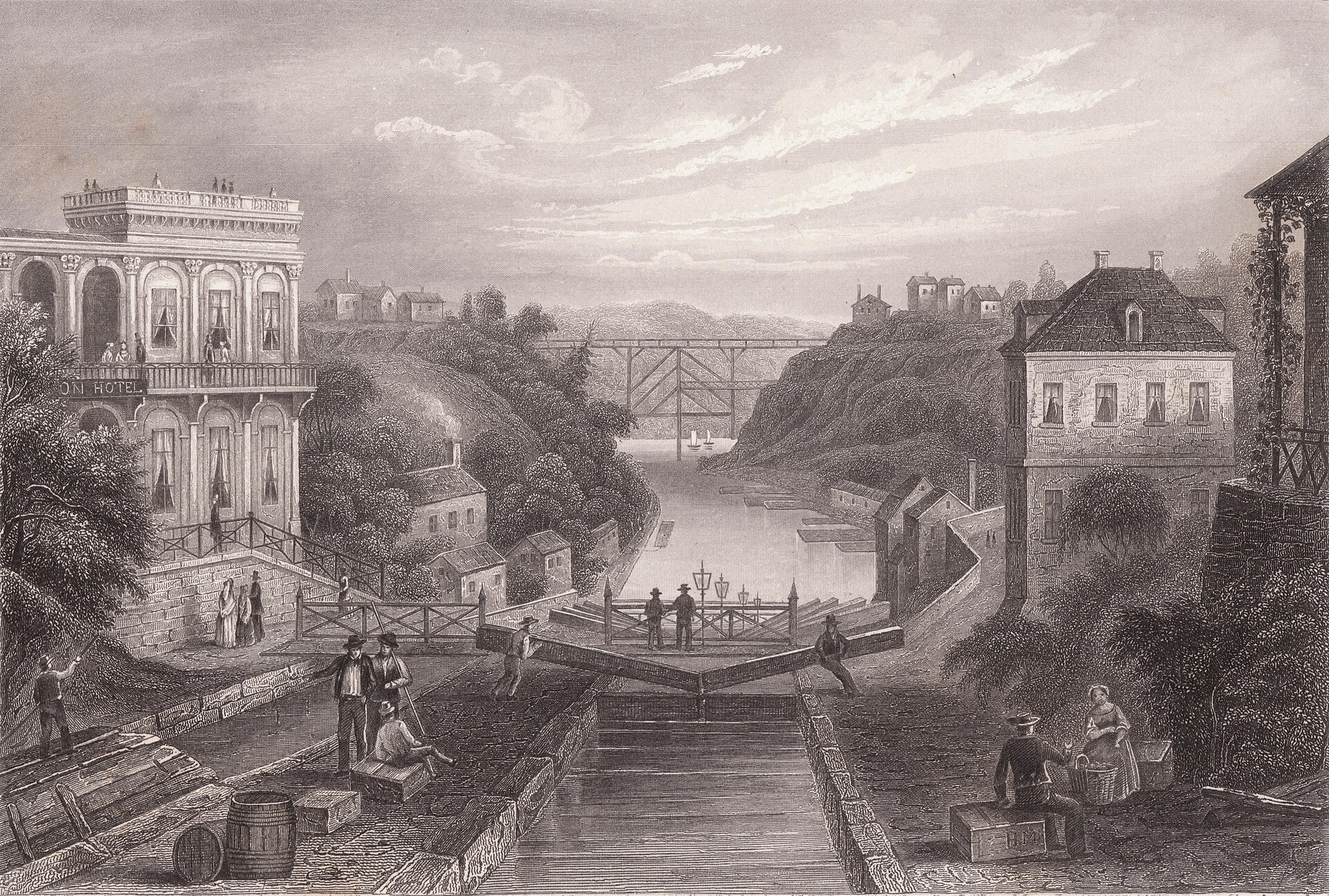

The canal mattered to religion in plain practical ways. Preachers, lecturers, books and newspapers moved along it. Finney worked the canal corridor from Utica to Rochester; Miller's lectures and charts were carried along the same routes, and on one tour in the early 1840s he lectured aboard a canal boat that he took from Albany on his way to Granville, New York, near the Vermont line;9 and the Book of Mormon was printed at Palmyra, a canal town, in the shop of Egbert B. Grandin on its main street.12 Cross, Johnson and Wellman all connect the region's religious life to the canal's commerce, though they disagree about how. The safest statement is the one the records support: the canal brought a large, mobile, mostly Yankee population into a region where the churches were still being organized, and it brought them the printing press and the traveling preacher at the same time.
Context: Universalists and Anti-Masons
The Universalists
Universalists taught that all people would finally be saved, so that no one would suffer endless punishment. Universalist preachers were active in the towns where Finney worked, and the Memoirs record his clashes with them: the chapter headings of his early years include "Lectures on Universalism" and "Preaching to the Universalists."1 Finney's own judgment, written in his chapter on Rochester, was that "Universalism, Unitarianism, and indeed all forms of fundamental error, have given way and fallen out of sight in the presence of great revivals," and that "a man needs only to be thoroughly convicted of sin by the Holy Ghost, to give up at once and forever, and gladly give up, Universalism and Unitarianism."13 That is Finney's claim about his own revivals, not a count of converts from Universalism, and Universalist congregations did not disappear from the region. The Universalists matter here because their denial of eternal punishment marks one end of a range of opinion about the last things that runs through this lesson, from Miller's literal and near judgment to the Spiritualists' reported conversations with the dead.
The Anti-Masonic movement
In 1826 William Morgan of Batavia, New York, who claimed to expose the secrets of the Freemasons, was taken from the jail at Canandaigua in September 1826 and was never seen again. The suspicion that Masons had done away with him produced a popular movement against the order across the district.4214 It became the Anti-Masonic Party, which Britannica counts as the first American third party; in late 1831 it held the first national nominating convention of its kind, and it was the first party to offer the voters a platform of party principles.14 Noyes later counted the "Anti-Masonic excitement" among the movements born in his circle around Rochester.2 Many of its members were church people who saw the oath-bound lodge as a rival to the church and a danger to the republic, and Finney himself, who wrote that while he was "in Connecticut at school, an old uncle of mine persuaded me to join the Freemasons," later left the lodge and published a book-length attack on the order, The Character, Claims and Practical Workings of Freemasonry (1869).15 The movement shows the same features as the religious excitements of the region: a moral crusade, a flood of print, and a quick turn from conviction to organization.
William Miller and the Millerites
Miller's own account of his study
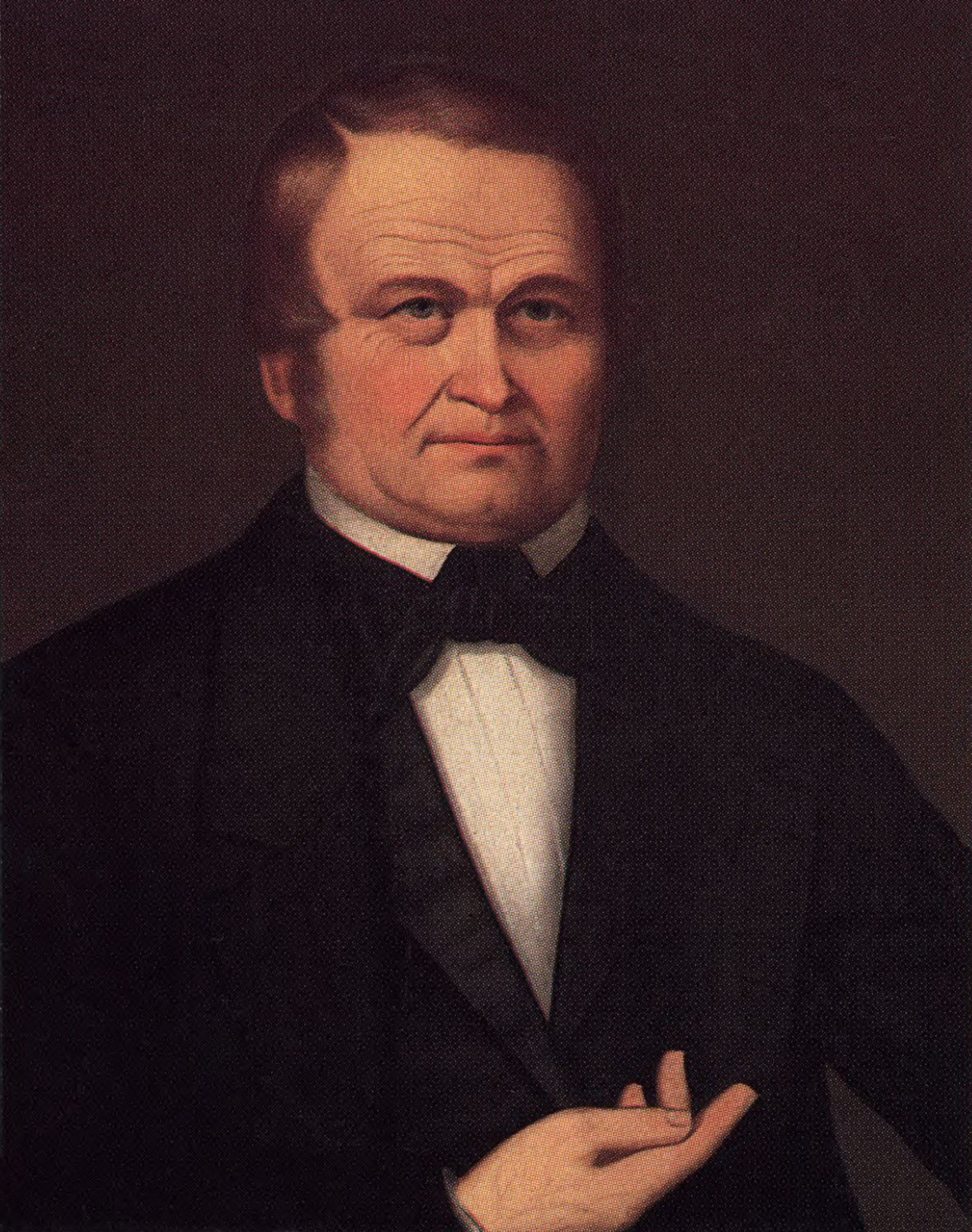
William Miller (1782 to 1849) was a farmer, a veteran of the War of 1812 and, from 1816, a Baptist layman at Low Hampton, in Washington County, New York, close to the Vermont line.9 Low Hampton lies east of the district proper, but his lectures were carried across it. After the Great Disappointment he published Mr. Miller's Apology and Defence (Boston, 1845), a statement of what he had taught and why. His biographer Sylvester Bliss dates his deist years from about 1804 to 1816. Miller wrote that after his return to the Bible a friend challenged him to show how he knew the Bible was true, and his answer set the course of his life: "if the Bible was the word of God, every thing contained therein might be understood, and all its parts be made to harmonize," and "if he would give me time, I would harmonize all these apparent contradictions, to my own satisfaction, or I would be a Deist still."16
His method was a concordance and a rule of literal fulfillment. "I commenced with Genesis, and read verse by verse, proceeding no faster than the meaning of the several passages should be so unfolded, as to leave me free from embarrassment respecting any mysticism or contradictions," he wrote, and he concluded that "all the prophecies, as far as they have been fulfilled, had been fulfilled literally."16 He also concluded, against the common Protestant expectation of his day that a thousand years of gospel triumph would come before Christ returned, that the evidence proved "the advent personal and pre-millennial," and that the millennium of Revelation 20 "must necessarily follow the personal coming of Christ and the regeneration of the earth."16 The central text for his dating was Daniel 8:14: "Unto two thousand and three hundred days; then shall the sanctuary be cleansed" (KJV).17 Reading the days as years and dating them, together with the seventy weeks of Daniel 9, from 457 B.C., he found that the prophetic periods "would terminate together, about A. D. 1843." He gave the date of that conclusion himself: "I was thus brought, in 1818, at the close of my two years study of the Scriptures, to the solemn conclusion, that in about twenty-five years from that time all the affairs of our present state would be wound up."16 (The scanned 1845 printing reads "twemy-five," a typographical slip; the sense is twenty-five.)

The first lecture: 1831 or 1833?
Miller waited more than a decade before preaching his conclusion. In the Apology he dated his first public lecture, at Dresden, New York, to "about the first Sabbath in August, 1833," and reported that a revival followed in which "it was said that in thirteen families all but two persons were hopefully converted."16 His friend and first biographer Sylvester Bliss, who had his correspondence, corrected the date in a footnote: "By an examination of his correspondence, it appears that he must have begun to lecture in August, 1831," so the printed date was "a mistake of the printer or an error in Mr. Miller's memory."9 Historians follow Bliss and date the first lecture to August 1831. The small discrepancy is a reminder that even a founder's own account, written years later, can misdate events, a point that returns in the Latter-day Saint and Spiritualist sections below.
Miller's lectures were first printed as a pamphlet and then, in 1836, as Evidence from Scripture and History of the Second Coming of Christ, About the Year 1843, a course of sixteen lectures. The title itself states his position: "about" the year 1843. In November 1839, at Exeter, New Hampshire, he met Joshua V. Himes, one of about twenty ministers of the Christian Connection who came to hear him, and Himes invited him to Boston, where Miller lectured from December 8. When Miller told Himes in the winter of 1840 that no one would risk publishing a paper for the cause, Himes "promptly offered to commence a paper which should be devoted to this question"; the Signs of the Times followed, and Himes became the movement's publisher and organizer. Miller wrote that Himes had been "more instrumental in the spread of these views than any other ten men who have embarked in the cause."16 Himes had earlier written the prefatory remarks to the 1832 Boston edition of Alexander Campbell's critique of the Book of Mormon, discussed below, so the organizer of the Millerite press had already taken part in the region's argument over another new movement.18
The chart and the numbers
The Millerites taught with large printed charts. The 1843 chart set the beasts and images of Daniel and Revelation side by side with columns of dates, all converging on 1843. Lecturers hung it behind the pulpit or in the tent and pointed to it as they spoke.
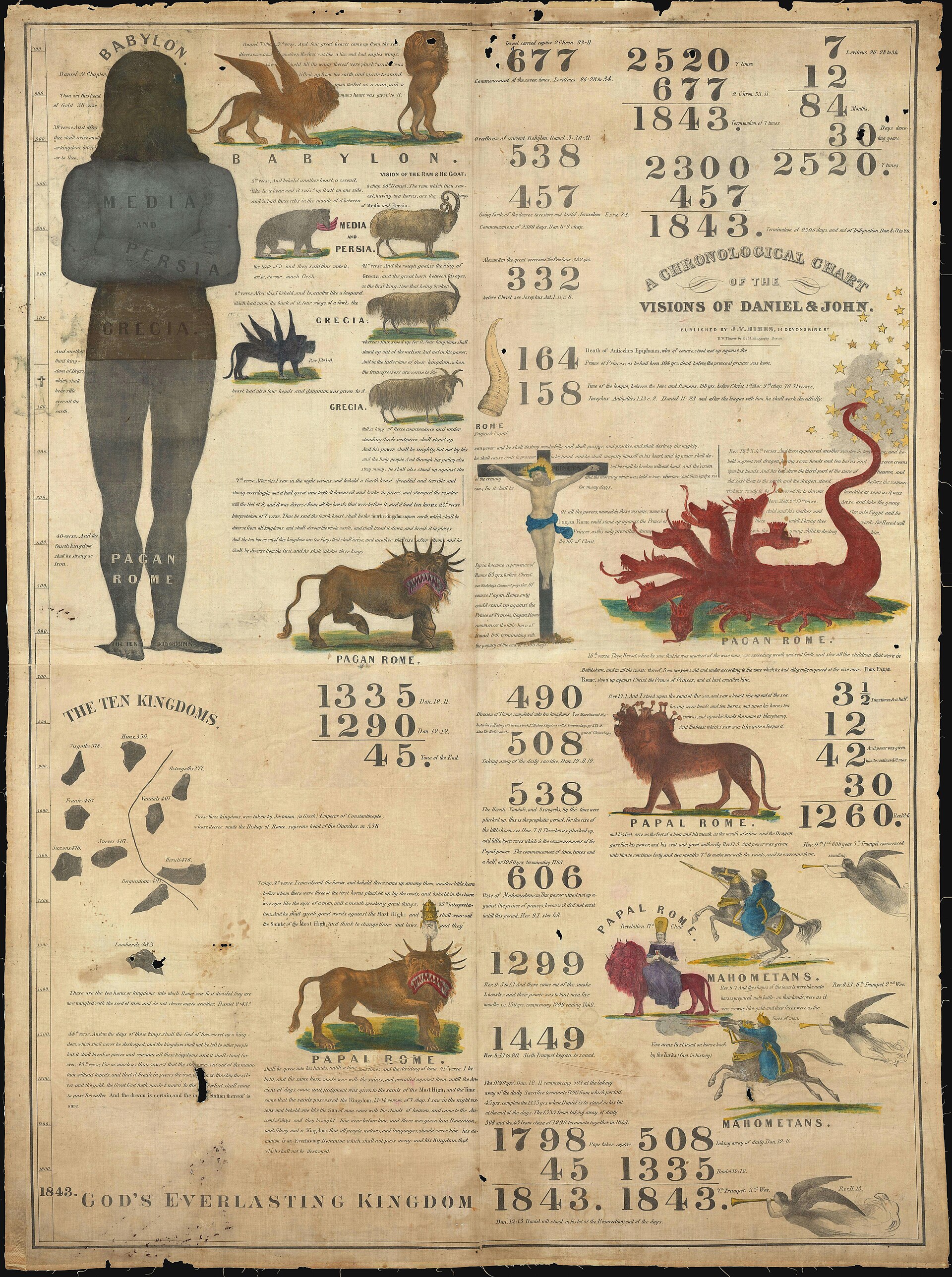

How many people believed? The only figures from inside the movement are Miller's own, given in the Apology of 1845, and he labeled them estimates. He wrote that he had given "about four thousand lectures in something like five hundred different towns," that "about two hundred ministers embraced my views," that "there have been about five hundred public lecturers," and that "in nearly a thousand places Advent congregations have been raised up, numbering, as near as I can estimate, some fifty thousand believers."16 He also counted "about six thousand instances of conversion from nature's darkness to God's marvellous light," the result, he said, of his personal labors alone.16 These are a leader's recollections, not membership rolls. Many people who attended the lectures did not leave their churches, and many who expected the advent kept their membership in Baptist, Methodist, Christian Connection and Congregational churches until local churches closed their doors to the movement; Miller recorded that the first church closed against him was the Congregational church at Westford, Massachusetts, on December 17, 1839.16 No independent count exists, so every figure for the Millerites, including Miller's fifty thousand, should be read as an estimate.
1843 and 1844: who set the dates
The popular story says that Miller predicted the end of the world on a single day. The Apology states his position in his own words:
"I had never been positive as to any particular day for the Lord's appearing, believing that no man could know the day and hour. In all my published lectures, it will be seen on the title page, 'about the year 1843.' In all my oral lectures, I invariably told my audiences that the periods would terminate in 1843, if there were no mistake in my calculation; but that I could not say the end might not come even before that time, and they should be continually prepared."16
He added that "in 1842, some of my brethren preached with great positiveness the exact year," that "the public press had also published that I had fixed upon a definite day, the 23d of April, for the Lord's Advent," and that in December 1842 he therefore "published my belief, that sometime between March 21st, 1843, and March 21st, 1844, the Lord would come."16 The end of that year passed: "the 21st of March, 1844 went by, without our witnessing the appearing of the Lord. Our disappointment was great; and many walked no more with us."16 Already in the fall of 1843 some Millerite preachers had begun to call the churches that rejected the message "Babylon" and to urge believers to come out of them. Miller opposed this: "With this I was much grieved, as not only the effect was very bad, but I regarded it as a perversion of the word of God."16
Samuel Snow and the "seventh month"
The date October 22, 1844, came from Samuel S. Snow, a Millerite lecturer. At a camp meeting at Exeter, New Hampshire, in mid-August 1844, Snow argued that the prophetic periods would end on the Day of Atonement, the tenth day of the seventh month of the Jewish year, reckoned by the calendar of the Karaite Jews, which fell that autumn on October 22. The Adventist historian LeRoy Edwin Froom, in The Prophetic Faith of Our Fathers (volume 4, 1954), describes the Exeter meeting as the turning point and dates the final printed form of the argument to Snow's paper The True Midnight Cry, published at Haverhill, Massachusetts, on August 22, 1844.19 The paper's masthead carried the words of the parable of the ten virgins, "Behold, the bridegroom cometh; go ye out to meet him" (Matthew 25:6, KJV), and its text argued that "from that point 2300 years reach to the autumn of A. D. 1844" and that Christ would come "on the tenth day of the seventh month of the year of jubilee." It defended the Karaite reckoning in so many words: "The Caraites are therefore undoubtedly correct."20
Miller's own account, again from the Apology, is that he "had no participation in this, only as I wrote a letter eighteen months previously," in which he had set out the observances of the law of Moses that pointed to the seventh month "as a probable time when the Advent might be expected," and that he "had no fellowship with that movement until about two or three weeks previous to the 22d of October, when seeing it had obtained such prevalence, and considering it was at a probable point of time, I was persuaded that it was a work of God."16 Bliss gives the date of the change: as late as September 30 Miller had discountenanced the positiveness with which some regarded the seventh month, and "on the 6th of October he was first led to favor the expectation which pointed to that month, and thus wrote: 'If Christ does not come within twenty or twenty-five days, I shall feel twice the disappointment I did in the spring.'"9 So the record is clear on the point the popular story gets wrong: Miller did not set October 22, 1844. Snow did, the movement took it up from August onward, and Miller accepted it about two weeks before the day.
Miller described the mood of the last weeks in a letter dated October 11, 1844, which Bliss printed:
"I think I have never seen among our brethren such faith as is manifested in the seventh month. 'He will come,' is the common expression. 'He will not tarry the second time,' is their general reply. There is a forsaking of the world, an unconcern for the wants of life, a general searching of heart, confession of sin, and a deep feeling in prayer for Christ to come."9
The Great Disappointment
October 22, 1844, passed. Miller wrote in the Apology: "But that time passed; and I was again disappointed."16 The "forsaking of the world" that Miller had described two weeks earlier made the blow heavier, and believers and their critics have disagreed ever since about how much fanaticism went with it. Bliss, writing in 1853, granted that "there were some cases of extravagance, as there have been in all great movements," but wrote that "the published accounts of these were greatly exaggerated," and that reports about the preparation of ascension robes "were demonstrated over and over again to be false and scandalous."9 Miller himself did not set a new date. He confessed his error about the time and kept his belief in a near, personal, premillennial advent: "On the passing of my published time, I frankly acknowledged my disappointment in reference to the exact period; but my faith was unchanged in any essential feature." To his followers he wrote: "We have been disappointed; but disappointments will work for our good, if we make the right use of them."16 He died at Low Hampton on December 20, 1849, in the sixty-eighth year of his age, and the family monument carries the words of Daniel 12:13: "But go thou thy way till the end be, for thou shalt rest, and stand in thy lot at the end of the days."9
Finney meets Miller
Finney and Miller met in Boston. In his chapter on the winter of 1843 to 1844 Finney recalled that on his previous visit "it was the time of the greatest excitement in Boston, on the subject of the second advent of Christ," that Miller "was there lecturing, and was holding daily Bible classes," and that "his teaching led to intense excitement, involving much that was wild and irrational." Finney attended the Bible class "once or twice" and then invited Miller to his room. His argument was exegetical. Miller taught that the stone "cut out of the mountain without hands" in Daniel 2 was Christ coming in person to destroy the nations; Finney answered that "the prophet affirmed expressly that the stone was not Christ, but the kingdom of God," and that the overthrow meant was of governments, by the influence of the gospel. Finney wrote that Miller conceded the point about the stone, but that "it was vain to reason with him, and his followers, at that time. Believing, as they most certainly did, that the advent of Christ was at hand, it was no wonder that they were too wild with excitement, to be reasoned with to any purpose."21 This is Finney's account only; Miller left no record of the conversation that this lesson has found. The exchange shows a real theological divide. Finney expected the world to be won by revivals and reform before Christ's return, the position later called postmillennial, and much of his reform work at Oberlin (lesson 11) assumed it. Miller expected a personal return before the millennium, with no general conversion of the world first.
After the Disappointment: the Adventist bodies
The movement divided after October 1844. One body, around Himes and Miller, held a Mutual Conference at Albany, New York, called for April 29, 1845, which adopted a declaration of principles and a plan of operations; Bliss prints its proceedings and records that Elon Galusha of Lockport presided.9 Others held that the "door" of salvation had shut on October 22, and Bliss describes, with disapproval, the practices that spread among some of them in 1845: "feet-washing and kissing as religious ceremonies; bodily exercises and mesmeric ecstasies."9 The groups that came out of the Albany wing became the Advent Christian and related churches.
A third group reread the prophecy. Adventist tradition credits Hiram Edson, a farmer of Port Gibson, New York, a canal town in the district, with the idea, soon developed in print by others, that the "sanctuary" of Daniel 8:14 was in heaven, and that on October 22, 1844, Christ had begun a new phase of his work as high priest there instead of returning to earth. The Seventh-day Adventist Church's own history states that Adventists "linked the 2,300-day prophecy in Daniel 8 to cleansing of the Most Holy Place in the heavenly sanctuary, not the earth itself."22 Joseph Bates, a former sea captain, published a tract urging the seventh-day Sabbath, and James and Ellen White began keeping Saturday as the Sabbath after reading it.23 Delegates agreed on the name "Seventh-day Adventists" on October 1, 1860, and in May 1863 a meeting of delegates organized the General Conference of Seventh-day Adventists.22

Ellen G. White
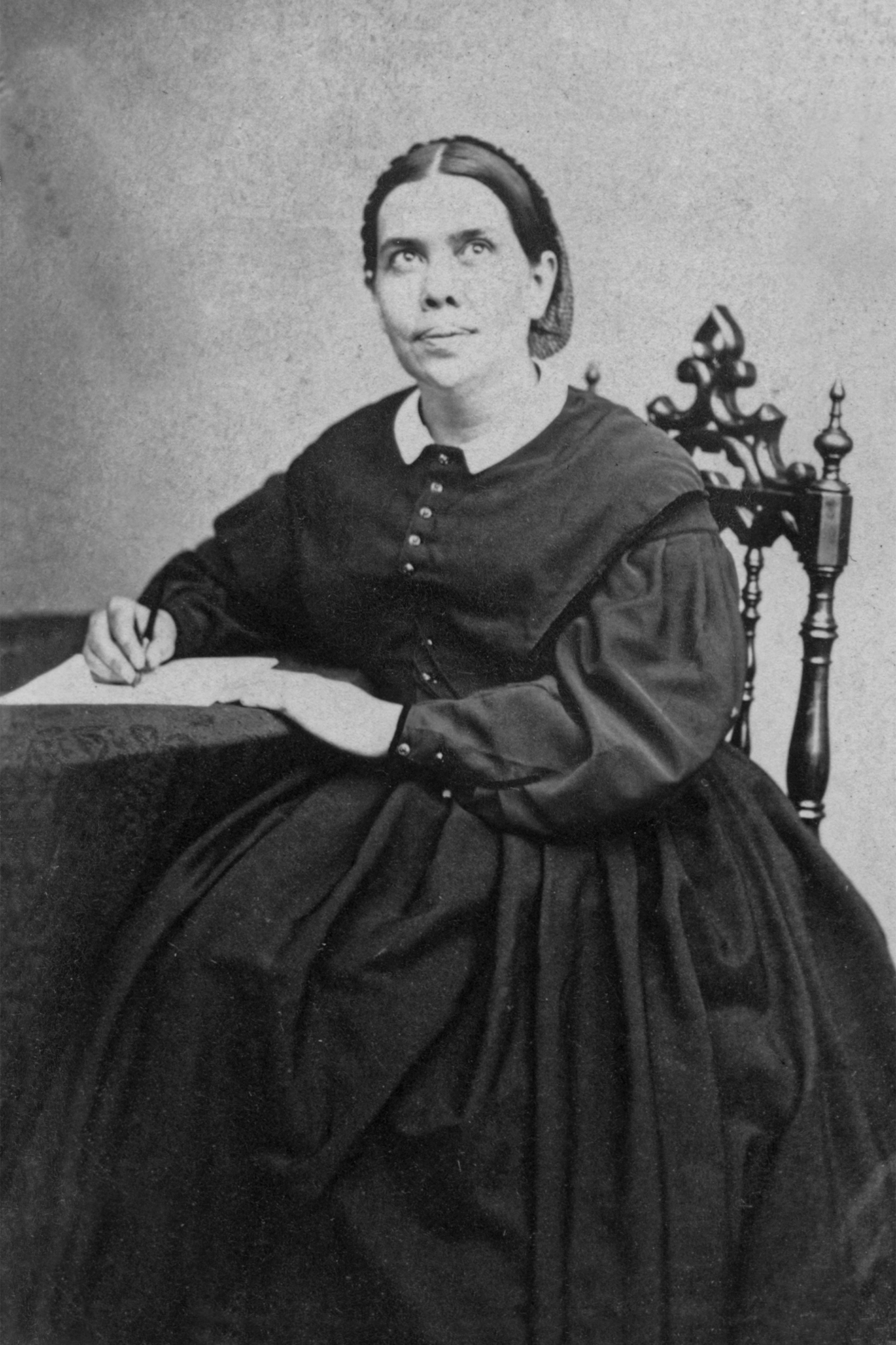
Ellen Gould Harmon was born on November 26, 1827, near the village of Gorham, Maine. As a girl in Portland she attended Adventist meetings in 1840 and 1842 and accepted "the views presented by William Miller and his associates," and she lived through the disappointment of October 22, 1844.23 Late in December 1844, at seventeen, she reported her first vision. Her earliest book-length account, A Sketch of the Christian Experience and Views of Ellen G. White (Saratoga Springs, New York, 1851, published by James White), tells it this way: while she prayed with four other women at a family altar, "the power of God came upon me as I never had felt it before, and I was wrapt up in a vision of God's glory, and seemed to be rising higher and higher from the earth, and was shown something of the travels of the Advent people to the Holy City." In the vision the Advent people walked a narrow path, and "they had a bright light set up behind them at the first end of the path, which an angel told me was the Midnight Cry."24 The "Midnight Cry" was the name of the seventh-month movement of 1844, so the vision affirmed the movement that had ended in disappointment while turning its meaning.
She married James White late in August 1846. The White Estate counts "approximately 2,000 visions and dreams" over about seventy years and more than 5,000 periodical articles and 40 books published in her lifetime. She died on July 16, 1915, and was buried at Battle Creek, Michigan.23 Seventh-day Adventists regard her as a messenger with the prophetic gift, whose writings are tested by the Bible and do not add to it; other Christians, and some former Adventists, have disputed that claim. The question of whether her visions were from God lies outside this lesson; what the record shows is that the largest church to come out of the Millerite movement was organized around the Sabbath, the heavenly sanctuary and her counsel.
Joseph Smith and the Latter-day Saints
The Smith family in Palmyra and Manchester
Joseph Smith Jr. (1805 to 1844) was born on December 23, 1805, at Sharon, Windsor County, Vermont.10 His 1838 history, now part of the Pearl of Great Price, one of the Church's books of scripture, states that his father "left the State of Vermont, and moved to Palmyra, Ontario (now Wayne) county, in the State of New York," when Joseph was in his tenth year or thereabouts, and that about four years later the family moved to Manchester in the same county.10 The same history describes "an unusual excitement on the subject of religion" in the region, which drew members of the family into different churches and left the boy asking: "Who of all these parties are right; or, are they all wrong together?"10 The setting is the revival culture this module has been tracing. Historians have debated whether a revival can be documented in Palmyra in 1820 itself: the Presbyterian minister Wesley P. Walters argued in 1967 that the main local revival came in 1824 to 1825, and the Latter-day Saint historian Milton V. Backman Jr. answered with evidence of camp meetings and church growth in the wider region in 1819 and 1820. The Church's Gospel Topics essay places the excitement in "Palmyra, New York, and its vicinity in 1820."25
The First Vision accounts
Joseph Smith described his first vision more than once, and the Church publishes the accounts itself, in the Joseph Smith Papers and in the Gospel Topics essay "First Vision Accounts." The essay identifies four firsthand accounts: one of 1832, "the only account written in Joseph Smith's own hand"; one of 1835, told to a visitor named Robert Matthews in Kirtland, Ohio, and recorded in Smith's journal by his scribe Warren Parrish; one of 1838, dictated as part of his history and first published in the Times and Seasons in 1842, which "was canonized in the Pearl of Great Price and thus became the best known account"; and a short one of 1842, written for the Chicago editor John Wentworth. The essay grants that the accounts differ, "though naturally they differ in emphasis and detail," and that critics have argued he embellished the story; it notes that three accounts clearly describe two personages, while the 1832 account can be read as describing one or two.25 Each account in brief, in its own words:
- 1832 (Smith's own hand, with an insertion by Frederick G. Williams giving his age as "in the 16th year of my age"): "therefore I cried unto the Lord for mercy," and "a piller of fire light above the brightness of the sun at noon day come down from above and rested upon me and I was filled with the spirit of god and the Lord opened the heavens upon me and I saw the Lord and he spake unto me saying Joseph my son thy sins are forgiven thee."26
- 1835 (journal, November 9, 1835, in the Church's regularized text): "A pillar of fire appeared above my head"; "A personage appeared in the midst of this pillar of flame"; "Another personage soon appeared, like unto the first"; "He testified unto me that Jesus Christ is the son of God"; "And I saw many angels in this vision"; "I was about fourteen years old when I received this first communication."27
- 1838 (the canonized history): "I was at this time in my fifteenth year"; two Personages appeared, one of whom said, pointing to the other, "This is My Beloved Son. Hear Him!"; and he was told to join none of the churches, "for they were all wrong."10
The differences are of the kind historians weigh with any multiple retelling: age (the sixteenth year in 1832, about fourteen in 1835, the fifteenth year in 1838), the number of heavenly beings, and the emphasis on personal forgiveness in 1832 and on the question of which church was right in 1838. Latter-day Saint historians read the accounts as one experience told for different audiences over twenty years; critics, from nineteenth-century opponents to modern skeptical writers, read the changes as development of the story. Both readings start from the same documents, which the Church itself has published in full.25
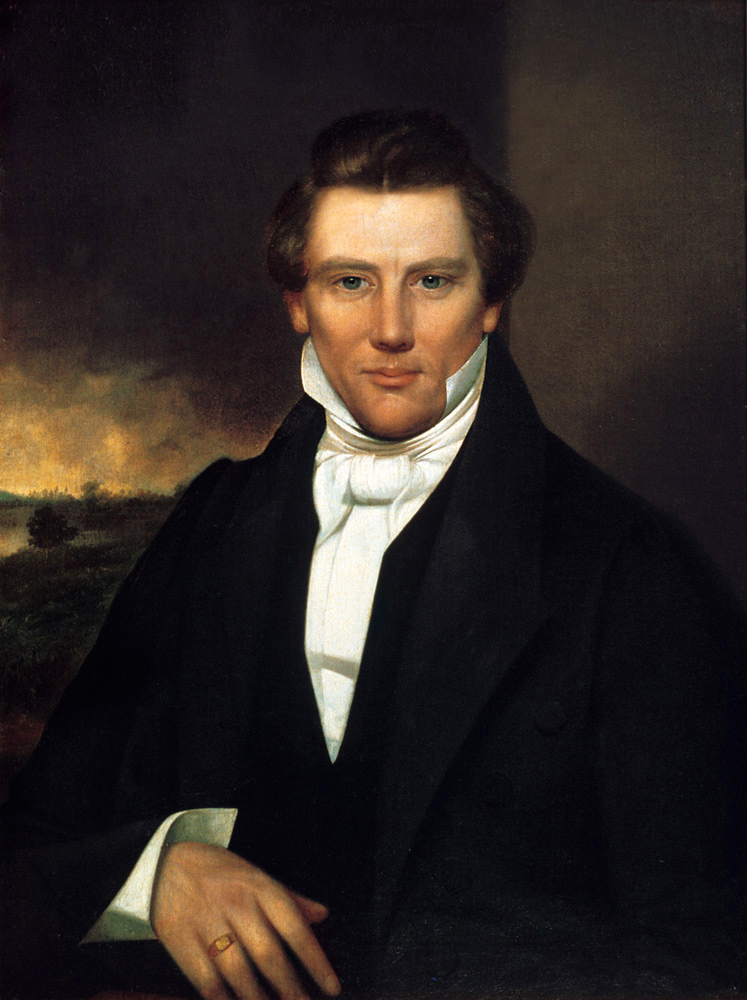

Moroni, the plates and the Book of Mormon
The 1838 history goes on to describe a visit by an angel, later named Moroni, in September 1823, who told him that "there was a book deposited, written upon gold plates," buried in a hill near his home.10 Noyes in 1870 put the same event at Palmyra in 1823, as one of the birthplaces in his circle around Rochester.2 The same history dates his receipt of the plates to 1827, and Latter-day Saints hold that he translated them by divine power. The work was printed in Palmyra by Egbert B. Grandin, who first refused it and then accepted it after Martin Harris, a local farmer, offered his farm as security; "In August 1829, Harris signed over the mortgage to Grandin," and the planned first printing was 5,000 copies, more than twice the usual size of a book of the time, according to the Church's history of the printing.12 The title page of 1830 reads "By Joseph Smith, Junior, Author and Proprietor"; Latter-day Saints describe his role as that of translator.28 The book went on sale at Grandin's shop in the spring of 1830.
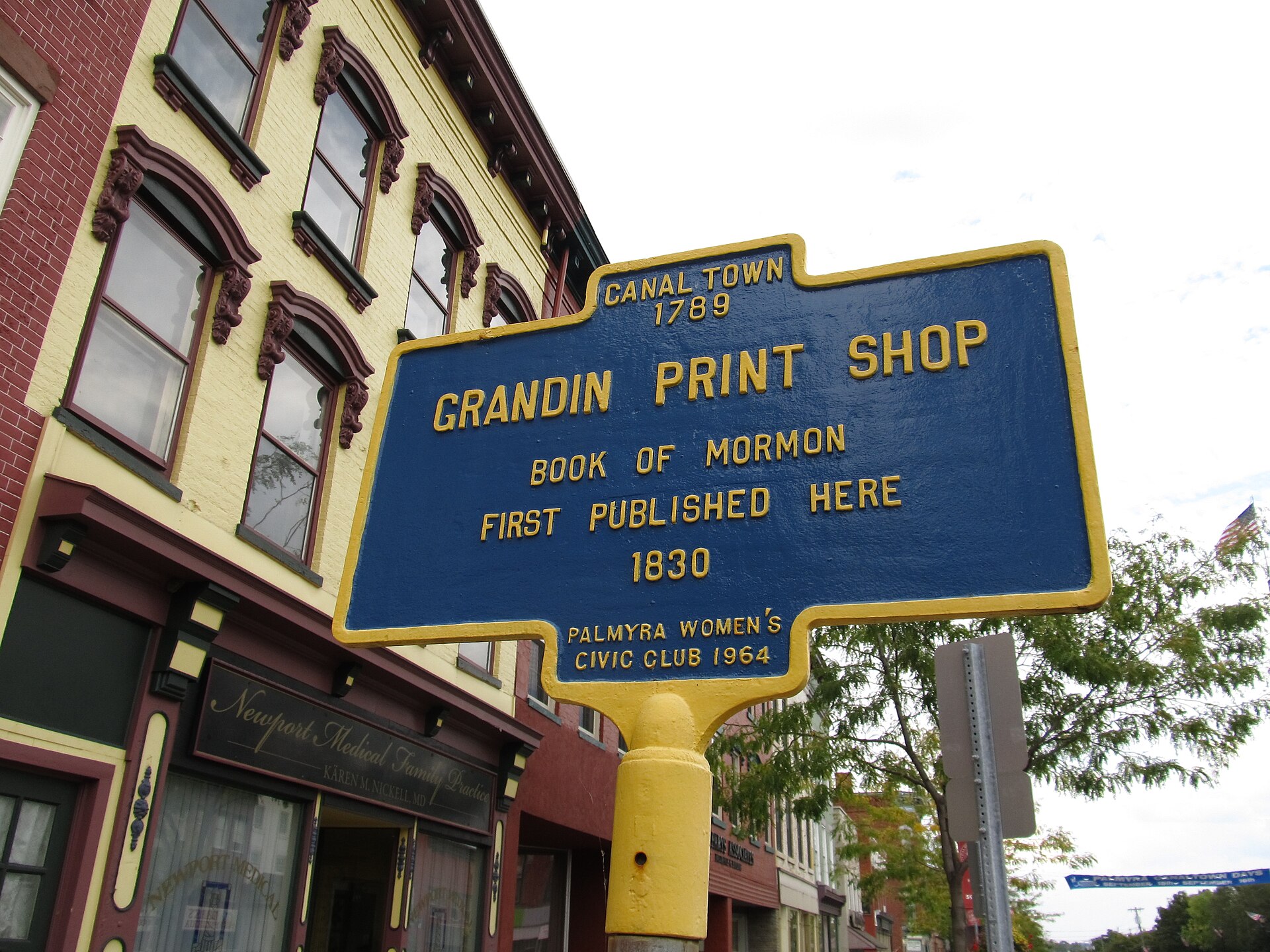

April 6, 1830, and the Church's names
The Church's history states: "On Tuesday, April 6, 1830, Joseph Smith, Oliver Cowdery, and others convened to organize the Church of Christ." It also states that the surviving firsthand accounts "contradict one another on the location of the founding meeting": some name the Peter Whitmer Sr. farm at Fayette, Seneca County, and others Manchester, and Smith's own histories of 1839 and 1842 differ on the point.29 The Church's present name comes from a revelation dated "at Far West, Missouri, April 26, 1838": "For thus shall my church be called in the last days, even The Church of Jesus Christ of Latter-day Saints."30 Other churches that trace their origin to Joseph Smith, of which the largest is the Community of Christ (until 2001 the Reorganized Church of Jesus Christ of Latter Day Saints), use different names.
Kirtland, Missouri, Nauvoo and Carthage
The Church did not stay in the district. In December 1830 a revelation named "the Ohio" as the first gathering place, and members moved to Kirtland, near Cleveland, where the Saints completed and dedicated a temple in early 1836. "In the early months of 1838, Joseph Smith and other Church leaders escaped Kirtland and traveled to Far West, Missouri," the Church's history records.31 Driven from Missouri in the late 1830s after armed conflict with their neighbors, the Saints found refuge near Quincy, Illinois, and built a city on the Mississippi at Commerce, which Smith renamed Nauvoo; at its height its population "reached nearly 10,000 people."32 On June 27, 1844, Joseph Smith and his brother Hyrum, held in the jail at Carthage, Illinois, "were shot in Carthage jail, on the 27th of June, 1844, about five o'clock p.m., by an armed mob," in the words of the account now printed as Doctrine and Covenants 135.33 The main body of the Saints left Nauvoo beginning in February 1846 and went west under Brigham Young.32 October 22, 1844, the Millerite date, fell four months after Smith's death.


How other Christians answered
The first printed answers came from Christians of the revival era. Alexander Campbell, the Restoration leader (see Module 80, lesson 10), wrote Delusions: An Analysis of the Book of Mormon, reprinted at Boston in 1832 with prefatory remarks by Joshua V. Himes. Campbell's argument was that the book answered the local controversies of its day: Smith, he wrote, put into it "every error and almost every truth discussed in N. York for the last ten years," and he listed "infant baptism, ordination, the trinity, regeneration, repentance, justification, the fall of man, the atonement" among them. Himes's preface called the "Mormonites" "a fanatical sect, which originated a few years since in the western part of New York," whose missionaries had come to Boston.18 Campbell had a personal stake, since Sidney Rigdon, one of his former associates in Ohio, had joined the new church with part of his congregation in 1830. Later Protestant writers developed other theories of the book's origin; Latter-day Saints answered with the testimony of the witnesses printed in the book itself and with their own scholarship. Nathan Hatch places the Church among the popular movements of the era that rejected the authority of the learned clergy and appealed to ordinary readers of scripture, which is a description of method that both sides can test.7
The Fox sisters and modern Spiritualism
Hydesville, March 1848
In the winter of 1847 to 1848 the family of John and Margaret Fox lived in a small rented house at Hydesville, in the town of Arcadia, Wayne County, a few miles from Palmyra. The two youngest daughters were Margaretta, called Maggie or Margaret, and Catherine, called Kate; their ages in 1848 are given variously, about fourteen or fifteen for Margaret and eleven or twelve for Kate.34 The family reported knocking sounds in the house at night. The mother's signed statement, gathered by a local man, E. E. Lewis, and printed in 1848, was reprinted by the critic Reuben Briggs Davenport in 1888. It describes the night of March 31, 1848, the third night of the rappings: the girls "heard the rappings and tried to make similar sounds with their fingers," and Kate exclaimed, "Mr. Splitfoot, do as I do," clapping her hands, and "the sound instantly followed her with the same number of raps." Mrs. Fox then asked the noises to rap her children's ages, and "instantly, each one of my children's ages was given correctly."35 Neighbors were called in, and a code of raps for yes and no was worked out. The family and their visitors came to believe that the knocks were made by the spirit of a man murdered in the house.
The eldest sister, Ann Leah Fox Fish, a music teacher in Rochester, took the younger girls into her care, and the rappings became public there. On November 14, 1849, Leah, Margaret and Kate gave a public demonstration at Corinthian Hall in Rochester.34 Within a few years mediums were holding séances across the North and in Britain. Spiritualism had no single creed. Its central claim was that the spirits of the dead survive and can communicate with the living through mediums, and many Spiritualists joined that claim to reform causes, including women's rights and abolition. Noyes in 1870 called the Hydesville noises "the beginning of the miracles of modern Spiritualism."2
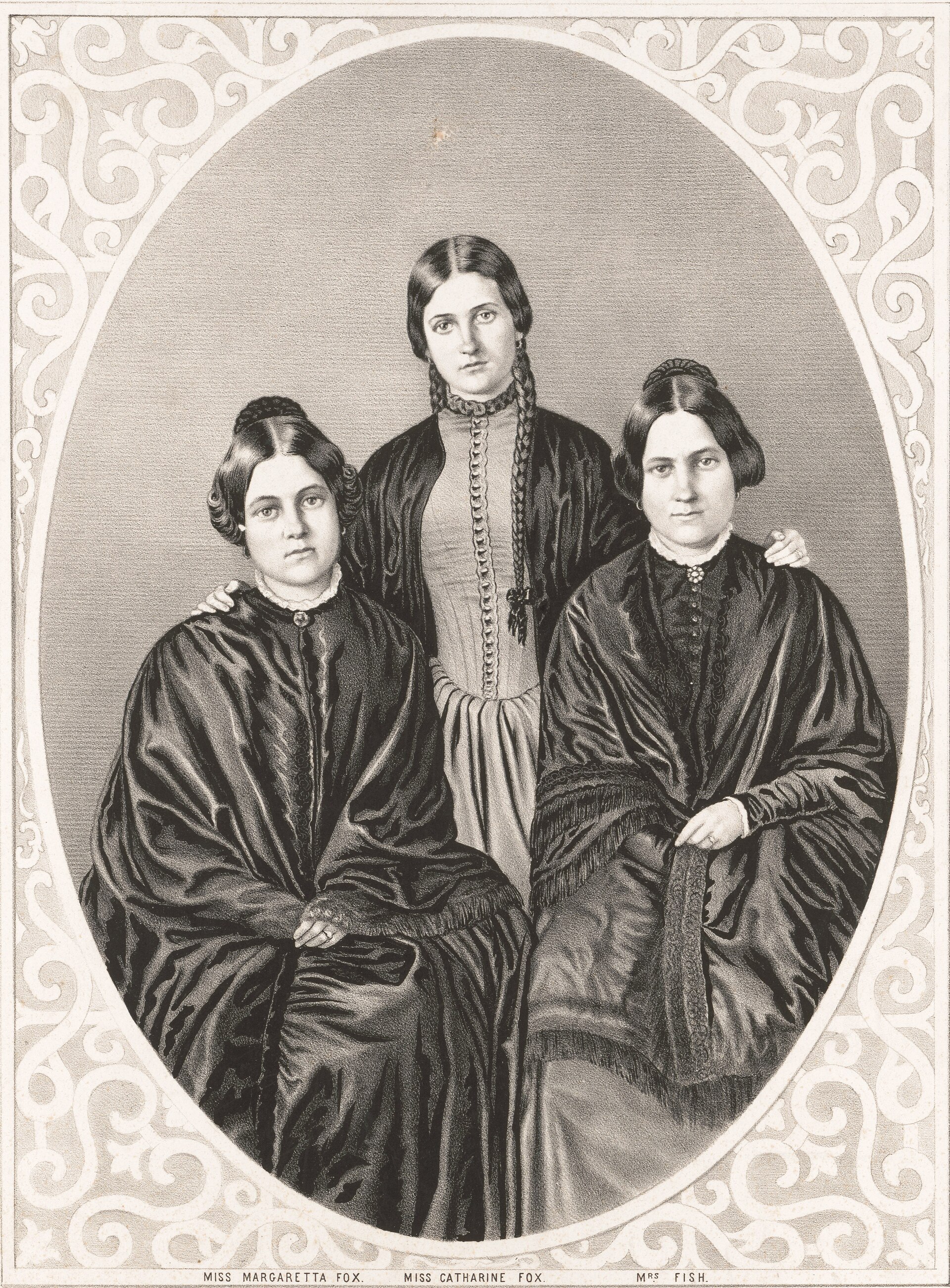

Tests, a confession and a retraction
The sisters were tested many times. In 1851 three physicians of the University of Buffalo, of whom Austin Flint was the best known, examined them and concluded that the raps were made by joints of the lower limbs, which they took to be the knees; Davenport later argued that the doctors had found the right kind of explanation and the wrong joint.35 The decisive public event came almost forty years after Hydesville. On October 21, 1888, Margaret Fox Kane, the widow of the Arctic explorer Elisha Kent Kane, appeared at the Academy of Music in New York, with her sister Kate present, to denounce Spiritualism and to demonstrate how the raps were made. Davenport's book of the same year, The Death-Blow to Spiritualism, prints her statement. In it she said that she and Kate had begun as children by dropping apples on strings to frighten a niece, and had then learned to make the sounds with their toes: "we could easily produce very loud raps by the action of the toe-joints when in contact with any substance which is a good conductor of sound. My sister Katie was the first to discover that we could make such peculiar noises with our fingers." Of her later career she said: "I knew, of course, then, that every effect produced by us was absolute fraud."35
The confession did not settle the matter. About a year later, in 1889, Margaret and Kate retracted it; Spiritualists have cited the retraction ever since, and skeptics have cited the confession.34 Kate died in New York on July 3, 1892, and Margaret on March 8, 1893.34 The record supports these statements: the rappings began in March 1848 at Hydesville; Margaret publicly confessed fraud in October 1888 and demonstrated a method; she later recanted. Whether any of the phenomena had another cause is a question the documents do not answer, and this lesson does not try to.
How other Christians answered
Most churches judged the séance forbidden by the biblical ban on consulting the dead ("There shall not be found among you any one that ... useth divination, or an observer of times, or an enchanter, or a witch, or a charmer, or a consulter with familiar spirits, or a wizard, or a necromancer," Deuteronomy 18:10 to 11, KJV).17 The early Adventists drew the line from inside the district's own history. The preface to Ellen White's Sketch of 1851, published by James White, gave two causes of the prejudice many Christians felt against visions: past fanaticism, and "the exhibition of mesmerism, &c, and what is commonly called the 'mysterious rappings,'" which, it said, "are perfectly calculated to deceive, and create unbelief relative to the gifts and operations of the Spirit of God."24 Davenport, a journalist, wrote as an unbeliever exposing a fraud. The Adventist teaching that the dead are unconscious until the resurrection, which grew out of the Millerite circle, gave its holders a doctrinal reason to deny that any spirit at a séance could be a dead person. So the same few counties produced a movement that claimed to speak with the dead and a movement that denied the dead could speak.
The Shakers at Sodus Bay and Groveland
The Shakers were older than the district's other movements. Their own early account, A Summary View of the Millennial Church, or United Society of Believers (Commonly Called Shakers), published at Albany in 1823, records that Ann Lee and a small company "embarked at Liverpool, on board the ship Mariah," and "sailed on the 19th of May, 1774," and that in September 1776 she and those who stayed with her "took up their residence in the woods of Watervliet, near Niskeyuna," near Albany.36 The Society taught that its testimony was "the second appearing of Christ," in and through Ann Lee and the community of believers, and it required celibacy of its full members; the Summary View itself admits that "a life of continency is so opposite to the natural propensities of human nature" that some doubted the Society could ever be large.36 The Shakers lived in celibate "families," held property in common, confessed their sins to elders, and worshiped with ordered dances, which outsiders came to watch.
The Shakers grew by gathering converts from revivals, and in 1826 they planted a community at Sodus Bay on Lake Ontario, in Wayne County, organized in March of that year. When the state proposed a Sodus Canal Company in 1836 that threatened their land, the members sold and moved to Groveland, in Livingston County, south of Rochester. The historian John H. Martin gives the Groveland membership as "148 members in 1836, 130 in 1857, 57 in 1874, 41 in 1880, and 37 in 1892." In 1892 the Groveland community was dissolved, and its furniture and equipment went to the Shaker community at Watervliet.37 The numbers tell the story of a celibate community in a period of falling recruitment: without converts it could not grow at all. Other Christians generally answered the Shakers on two points, the claim about Ann Lee and the rule of celibacy for all full members; the Summary View answered in turn that the charges spread against Ann Lee "had no more foundation in truth" than the charges once made against the apostles.36
John Humphrey Noyes and the Oneida Community
From revival to Perfectionism
Noyes's own summary of his life, in the Oneida chapter of History of American Socialisms, ties him directly to Finney: "John Humphrey Noyes was born at Brattleboro, Vermont, in 1811. The great Finney Revival found him at twenty years of age, a college graduate, studying law, and sent him to study divinity, first at Andover and afterward at New Haven." There, "under the instructions of Moses Stuart, Edward Robinson and Nathaniel Taylor, and under the continued and increasing influence of the Revival afflatus," he came to "new views of the way of salvation, which took the name of Perfectionism. This was in February, 1834."11 His Perfectionism held that a believer could be, and in his case was, saved from sin in this life. Taylor's New Haven theology is discussed in lesson 13, and the Oberlin doctrine of sanctification that Finney and Asa Mahan taught in the same years in lesson 11. Noyes himself drew the line of descent: "As Unitarianism ripened into Transcendentalism at Boston, and Transcendentalism produced Brook Farm, so Orthodoxy ripened into Perfectionism at New Haven, and Perfectionism produced the Oneida Community."11
Finney rejected that kind of perfectionism by name. In the Memoirs he recalled that in the 1830s "the question of Christian perfection, in the antinomian sense of the term, came to be agitated a good deal at New Haven, at Albany, and somewhat in New York city. I examined these views, as published in the periodical entitled 'The Perfectionist.' But I could not accept them." He held instead that "entire sanctification, in the sense that it was the privilege of Christians to live without known sin, was a doctrine taught in the Bible."38 Finney's word "antinomian" (against the law) named the fear of Noyes's critics: that a claim to be already perfect would free a man from the moral rules others lived by. The Princeton theologian B. B. Warfield later wrote an extended critical study of Noyes in his Perfectionism.
From Putney to Oneida
For twelve years Noyes taught "salvation from sin" chiefly at Putney, Vermont, where "a little school of believers gathered around him": first his mother, two sisters and a brother, then their spouses, then others. In 1846 the Putney group "began cautiously to experiment in Communism." In the fall of 1847 local opposition forced it out ("Putney conservatism expelled it," Noyes wrote), and "a Perfectionist Community, just begun at Oneida under the influence of the Putney school, received it."11 The Oneida Community, in Madison County, New York, dates its founding to 1848. "The community's original 87 members grew to 306 by 1878," according to the Social Welfare History Project; it supported itself by manufacturing, and its successor company, Oneida Limited, became a large maker of tableware and cutlery.39
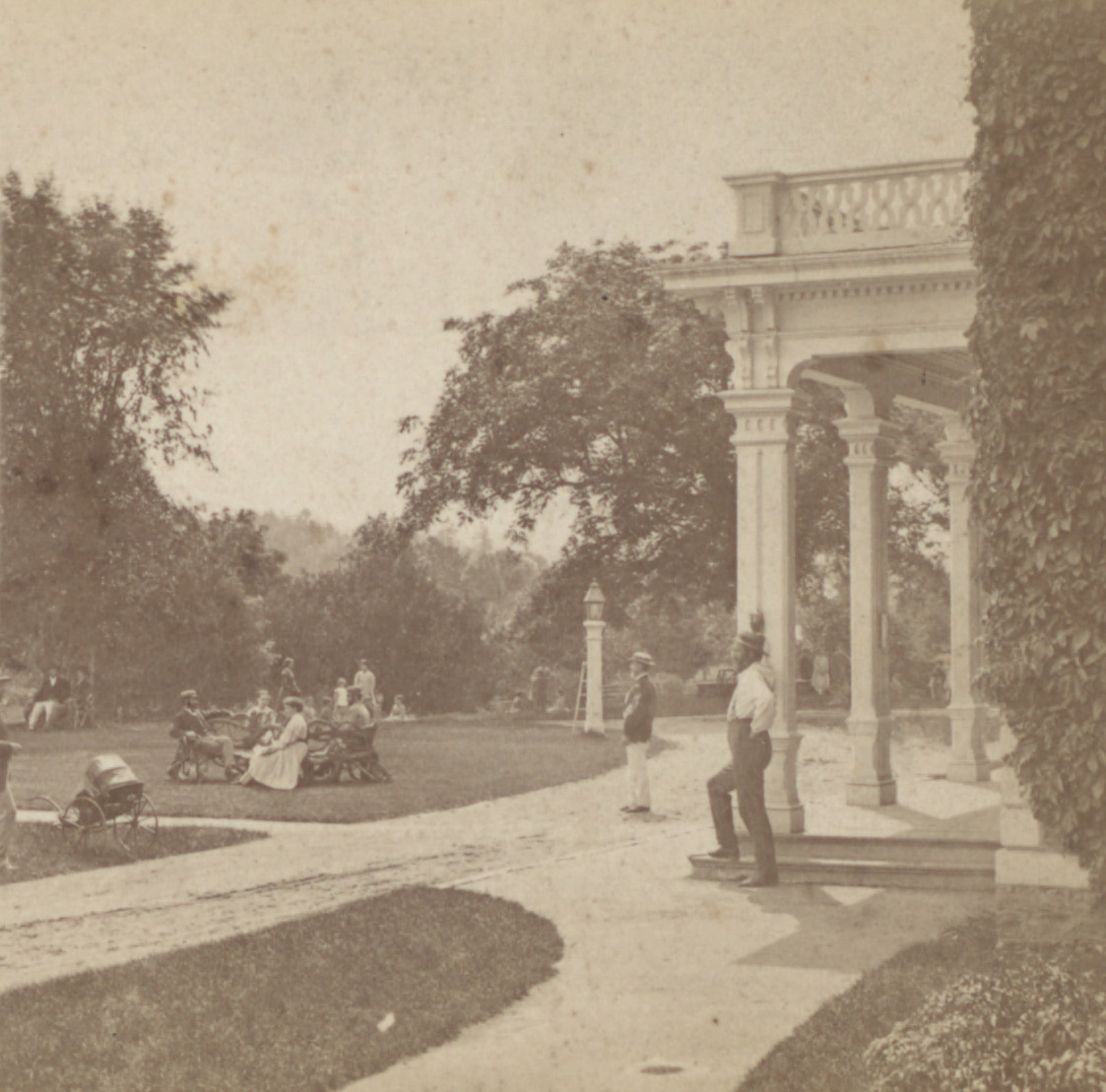

Bible Communism and complex marriage
The Community's theory was printed in Bible Communism (1848), which Noyes summarized in 1870. Its fifth and sixth propositions state the rule that set Oneida apart: "In the Kingdom of Heaven, the institution of marriage, which assigns the exclusive possession of one woman to one man, does not exist. Matt. 22: 23 to 30," and "In the Kingdom of Heaven the intimate union of life and interest, which in the world is limited to pairs, extends through the whole body of believers; i. e. complex marriage takes the place of simple."40 In practice, "complex marriage" meant that adult members could have sexual relations with other members, under rules set and supervised by the Community's leaders, and that exclusive attachments between couples were discouraged. Births were limited by the practice Noyes called "male continence," and in a later program that he called "stirpiculture" the Community chose which members would become parents. Members corrected one another by "mutual criticism," in which a member's faults were stated by a committee or by the whole community at a meeting.39 Neighbors, clergy and the press attacked the system, and by the late 1870s some members within the Community opposed Noyes's leadership.
"In late June 1879, Noyes fled the Oneida Community Mansion House for Canada, never to return to the United States," and the Community soon gave up complex marriage. "The Oneida Community dissolved in 1881, but set up a joint-stock company called the Oneida Community, Ltd.," which continued the manufacturing business.39 Oneida is the clearest case in this lesson of a movement that came directly out of the revival theology of the 1830s: it began from the question Finney's revivals pressed on every convert, how holy a Christian could be in this life, and gave an answer that Finney and nearly every other Christian teacher of the time rejected.
The district in one timeline
Set side by side, the dates show how closely the movements overlapped. Finney's Rochester revival (September 1830 to March 1831) began months after the Book of Mormon was printed twenty-five miles away; Miller's first lecture came in August 1831; Noyes's Perfectionism dates from February 1834; Joseph Smith was killed four months before the Millerite date of October 22, 1844; and the Hydesville rappings and the founding of the Oneida Community both fall in 1848.
What the movements shared and where they parted
Read together, the movements of the district answered the same few questions in very different ways. On the question of revelation, the Latter-day Saints held that God had spoken again through a prophet and given new scripture, the Shakers that Christ had appeared a second time in the community of believers, the Seventh-day Adventists that the prophetic gift had been given again in Ellen White, and the Spiritualists that the dead could speak through mediums; the Millerites, by contrast, claimed no new revelation at all, only a correct reading of Daniel by a farmer with a concordance. On the question of the last things, Miller expected a personal return of Christ before the millennium, Finney a millennium won by revivals and reform before Christ's return, Noyes a kingdom of heaven that had in some sense already begun, and the Universalists a final salvation of all. On the question of the household, the Shakers required celibacy, Oneida practiced complex marriage, and among the Latter-day Saints plural marriage was practiced privately in Nauvoo (the Church's Gospel Topics essay dates the first plural marriage there to April 1841), publicly acknowledged after the move to Utah, and brought to an end after President Wilford Woodruff's Manifesto of 1890, which "led to the end of plural marriage in the Church."41
What they shared was the setting described by Cross, Johnson and Hatch: a literate population raised on the Bible, a revival culture that urged every person to seek a direct experience of God, cheap print, the canal, and the absence of any established church that could say no. Finney's revivals did not create these movements, and most of their founders disagreed sharply with Finney. But Noyes was converted in the revivals of 1831, Miller wrote that in his first lecture tours "the churches of Congregationalists, Baptists and Methodists were thrown open" to him,16 Joseph Smith's 1838 history begins with a revival, and the Fox sisters first appeared in public in Rochester, the city of Finney's best-known revival. The district's movements grew in soil the revivals had turned.
What the record shows and what it does not
- Documented fact: the Erie Canal was finished on October 26, 1825; the Church of Christ was organized on April 6, 1830 (place disputed between Fayette and Manchester in the Church's own sources); Joseph and Hyrum Smith were killed at Carthage on June 27, 1844; Miller published the range March 21, 1843 to March 21, 1844 in December 1842; Snow's True Midnight Cry was dated August 22, 1844; the Fox rappings began in March 1848 at Hydesville; Margaret Fox Kane confessed fraud at the Academy of Music on October 21, 1888; the Oneida Community was founded in 1848 and dissolved into a joint-stock company in 1881.
- A movement's or founder's own claim: Joseph Smith's First Vision and the angel's visit, in four firsthand accounts that differ in detail; Ellen White's visions; Miller's estimate of 50,000 believers and 6,000 conversions; the Shaker testimony of Christ's second appearing; Noyes's claim of salvation from sin.
- Later tradition: the stories of Millerites in ascension robes on rooftops (denied by Bliss in 1853); Hiram Edson's cornfield insight of October 23, 1844, recorded in his own later manuscript; the precise words of the Hydesville night, known from Mrs. Fox's 1848 statement as later reprinted.
- Scholarly reading: Cross's Yankee and literacy thesis; Johnson's social-control reading of Rochester; Pritchard's statistical reassessment; Hatch's democratization thesis; the Walters and Backman debate over a Palmyra revival in 1820.
- Open questions: whether any revelation, vision or séance reported here had a divine or spiritual source, which history cannot settle; the true size of the Millerite movement; whether the district was exceptional or only the best documented part of a national pattern.
Claims checked
"William Miller set October 22, 1844, himself."
Refuted. Miller's published expectation was "about the year 1843," narrowed in December 1842 to the period from March 21, 1843 to March 21, 1844. The October 22 date was argued by Samuel S. Snow at the Exeter camp meeting in August 1844 and printed in The True Midnight Cry of August 22, 1844. Miller wrote that he "had no fellowship with that movement until about two or three weeks previous to the 22d of October," and Bliss dates his acceptance to October 6. He accepted the date late; he did not set it.16920
"Millerites put on white ascension robes and waited on rooftops."
Unsupported. The story was printed in newspapers of the time and repeated in later popular histories, but no firsthand evidence for it has been produced. Bliss wrote in 1853 that such reports "were demonstrated over and over again to be false and scandalous," while granting "some cases of extravagance." Bliss was a Millerite and a partisan witness, so his denial does not close the question, but the burden lies on the claim, and it has not been met.9
"Finney coined the term 'Burned-over District.'"
Partly supported. Finney used "a burnt district" in the Memoirs (1876) for the country around Evans' Mills, but he called it "the western phrase," a term already in use. Noyes in 1870 credited the phrase "Burnt District" to the English writer Hepworth Dixon. The form "Burned-over District" as the name of the whole region is Whitney Cross's, from his book of 1950.123
"Joseph Smith told only one story of the First Vision, and the Church hid the others."
Refuted. Smith gave several accounts, and the Church publishes them: the Joseph Smith Papers print the 1832 account in his own hand and the 1835 journal account, and the Gospel Topics essay "First Vision Accounts" discusses all four firsthand accounts and their differences. Members and critics alike can read every account in facsimile and transcription.2526
"The Church was organized at Fayette, New York."
Unresolved. The date, April 6, 1830, is secure. The place is not: the Church's own history says the firsthand accounts "contradict one another on the location of the founding meeting," with some naming Fayette and others Manchester.29
"The Fox sisters confessed that it was all a trick, so Spiritualism was refuted."
Partly supported. Margaret Fox Kane publicly confessed fraud on October 21, 1888, demonstrated the raps, and named the toe joints as their source, and Kate supported her. Both later retracted the confession. The confession is good evidence about the Fox sisters' own séances; it does not by itself decide claims made by other mediums, which have to be judged on their own evidence.3534
"Finney's revivals produced Mormonism, Millerism and Spiritualism."
Unsupported as stated. None of the founders came out of Finney's own meetings, and only Noyes credited the revivals of Finney's era with his conversion, writing that "the great Finney Revival" sent him into the study of divinity. The vision Joseph Smith described is dated in his accounts to about 1820, before Finney's own conversion; Miller's conclusions date from 1818, three years before Finney's conversion; and the Fox rappings came after Finney had left for Oberlin. Historians from Cross to Hatch argue for a shared setting, and the revivals were part of it.11163
"The Millerites numbered a million (or 50,000, or 100,000)."
Unresolved. The only inside figure is Miller's: "as near as I can estimate, some fifty thousand believers" in nearly a thousand congregations, with perhaps many more who were sympathetic. No membership roll exists. Larger figures in popular writing have no documentary basis this lesson has found, and every figure should be labeled an estimate.16
"Oneida practiced 'free love.'"
Partly supported. Oneida abolished exclusive marriage, as its own Bible Communism stated, but sexual relations were governed by Community rules and leaders, and Noyes in 1870 treated the "Free Love" movement of the Spiritualist circles as a different system from his own. "Complex marriage," the Community's own term, is the accurate name.4039
"The Shakers died out because they were celibate."
Partly supported. Celibacy meant the Shakers could grow only by converts and adopted children, and the Groveland numbers fell from 148 in 1836 to 37 in 1892 as recruitment slowed. The Society had flourished for decades under the same rule, so celibacy explains the dependence on converts, and the falling supply of converts after mid-century explains the decline.3736
Hard questions and answers
Why did so many movements start in one region?
The historians named in this lesson give overlapping answers. Cross pointed to a literate, mostly Yankee population with a religious habit carried from New England, living in a region that was becoming prosperous and settled; Johnson to the social changes of canal towns; Hatch to a national revolt against learned clergy in which the district was the most visible example; Pritchard to the pluralism that would mark the whole country. The records add a plain point: the canal and cheap printing made it easy to spread a new message, and no established church existed in New York to forbid it. No single cause has won general agreement.375
A Calvinist asks: did Finney's theology of human ability open the door to these movements?
Some Old School critics argued along these lines, holding that preaching which stressed the sinner's ability and the use of means encouraged excitement and novelty. The evidence is mixed. Noyes did come out of the New Haven theology and the Finney revivals, and Finney's own perfectionist teaching at Oberlin was attacked as a step toward Noyes's views, which Finney rejected by name. But Miller was a Baptist with no interest in Finney's theology of the will, the Latter-day Saints arose from different questions about authority and revelation, and the Shakers were older than Finney's career. Calvinist churches also lost members to the new movements. The question is best answered movement by movement.3811
A Latter-day Saint asks: is it fair to set the Restoration beside the Fox sisters and Oneida?
The lesson groups these movements because they arose in the same place and decade, which is a historical fact about geography and timing, not a judgment that they are alike in truth or value. Each is described from its own sources: the Church's own published accounts and essays for the Latter-day Saints, Ellen White's own writings for the Adventists, Noyes's own book for Oneida. The movements differ greatly in what they claimed and in what became of them. The Church of Jesus Christ of Latter-day Saints and the Seventh-day Adventist Church grew into worldwide churches, while Oneida became a company and the Groveland Shakers closed in 1892.2537
An Adventist asks: does the Great Disappointment discredit the Seventh-day Adventist Church?
The record shows that the Millerite expectation of Christ's visible return on October 22, 1844, did not come to pass, and Miller himself said so plainly. Seventh-day Adventists accept that the event expected did not happen and hold that the date marked the beginning of Christ's work in the heavenly sanctuary, a reading their church's own history states openly. Other Christians answer that the reinterpretation saved a failed date. History can report both positions and the dates; it cannot judge between the readings of Daniel 8:14 on which they rest.2216
A skeptic asks: if founders' own accounts misdate events, can any of them be trusted?
Every historical account is tested the same way: against other documents written closer to the events. Miller's Apology put his first lecture in 1833; his letters put it in 1831, and his own biographer corrected him. Joseph Smith's accounts of his vision differ on his age and the beings he saw, and the Church publishes them all. Margaret Fox's confession and her retraction both survive. Contradictions of this kind are ordinary in memoirs written years later, Finney's included. They show the need to date each statement and to compare accounts; they do not by themselves prove invention or confirm truth.92534
A Catholic asks: what does the district say about Protestant private judgment?
Catholic writers of the nineteenth century often pointed to the multiplication of sects as the result of reading scripture without a teaching church, and Campbell's remark that the Book of Mormon touched "every error and almost every truth discussed in N. York for the last ten years" shows how many disputed questions were then in the air. Protestant historians such as Hatch describe the same facts as the democratization of American religion. Both descriptions rest on the same evidence: ordinary believers in western New York, without an established church, took the Bible and the right of religious choice into their own hands, and arrived at very different places.187
For the theological debate between Princeton and New Haven that framed the Perfectionist controversy, continue to lesson 13. For Finney's own revivals in the district, see lesson 09, and for the review of the whole module, lesson 14.
Learn more
- The Joseph Smith Papers: Primary Accounts of Joseph Smith's First Vision of Deity: Facsimiles and transcriptions of every firsthand and secondhand account, published by the Church Historian's Press.
- Gospel Topics Essays: First Vision Accounts: The Church's own discussion of the differences among the accounts.
- William Miller, Apology and Defence (1845): Miller's short account of his study, his dates and the Disappointment, in his own words.
- Sylvester Bliss, Memoirs of William Miller (1853): The first biography, with Miller's letters of 1844 and the Albany Conference.
- Ellen G. White, A Sketch of the Christian Experience and Views (1851): Her earliest book, with her own account of the first vision.
- John Humphrey Noyes, History of American Socialisms (1870): Noyes's chapters on the Volcanic District and on Oneida, by the founder himself.
- Reuben Briggs Davenport, The Death-Blow to Spiritualism (1888): Prints Mrs. Fox's 1848 statement and Margaret Fox Kane's 1888 confession; written by a critic.
- John H. Martin, Saints, Sinners and Reformers: A regional history of the district, with chapters on each movement.
Still being checked (12 items)
These points could not be confirmed against a primary source when this lesson was written and fact checked in October 2026. The text above states each one as uncertain.
- The exact date the Book of Mormon first went on sale (often given as March 26, 1830, from an advertisement in the Wayne Sentinel) was not confirmed in a source opened for this lesson; the text says only spring 1830.
- Hiram Edson's role in the heavenly-sanctuary interpretation is given as Adventist tradition, based on Edson's own later manuscript; the manuscript was not opened for this lesson.
- E. E. Lewis as the compiler of the 1848 pamphlet of Hydesville statements was taken from the writer brief and general histories; Davenport's reprint of Mrs. Fox's statement was opened, the Lewis pamphlet was not.
- The newspaper and exact date of Margaret Fox Kane's 1889 retraction were not confirmed; the WRSP timeline gives only the year.
- The ages of Margaret and Kate Fox in 1848 differ among sources (about 14 or 15, and 11 or 12).
- The Wesley P. Walters (1967) and Milton V. Backman Jr. (1971) debate over a Palmyra revival in 1820 is summarized from general knowledge; neither work was opened for this lesson.
- Sidney Rigdon's joining the Church in 1830 with part of his Ohio congregation, and B. B. Warfield's study of Noyes in Perfectionism (1931), are stated from general knowledge and not footnoted to an opened source.
- Froom's description of the Exeter camp meeting (pp. 810 to 814) was not opened directly; the lesson relies on Froom's p. 799 statement that The True Midnight Cry of August 22, 1844 followed the Exeter meeting, and on Snow's paper itself.
- Cross's thesis is summarized, not quoted; his book was not opened for this lesson. Pritchard's conclusions are summarized from her title and abstract only.
- Shaker practices of confession to elders and ordered dances, and the Adventist doctrine of the unconscious state of the dead as growing from the Millerite circle, are stated from general knowledge.
- Noyes (History of American Socialisms, 1870, p. 267) dates Morgan's abduction to 1820, an error in Noyes; the lesson gives September 1826 from the New York courts history and Smithsonian Magazine.
- Miller's canal-boat lecture (Bliss) was on a trip from Albany toward Granville, New York, not on the Erie Canal; the year of that tour was not fixed from the OCR text (early 1840s).
Notes
- Charles G. Finney, Memoirs of Rev. Charles G. Finney, Written by Himself (New York: A. S. Barnes, 1876), ch. VI, "Revival at Evans' Mills and Its Results," pp. 77 to 78; chapter headings in the table of contents (ch. IV and VIII) (retrieved Oct. 28, 2026). Read it online. ↩
- John Humphrey Noyes, History of American Socialisms (Philadelphia: J. B. Lippincott, 1870), "The Volcanic District," pp. 267 to 268 (retrieved Oct. 28, 2026). Read it online. ↩
- Whitney R. Cross, The Burned-over District: The Social and Intellectual History of Enthusiastic Religion in Western New York, 1800 to 1850 (Ithaca: Cornell University Press, 1950). Summary of the argument; no direct quotation. Read it online. ↩
- Paul E. Johnson, A Shopkeeper's Millennium: Society and Revivals in Rochester, New York, 1815 to 1837 (New York: Hill and Wang, 1978). See lesson 09 for the thesis and its critics. Read it online. ↩
- Linda K. Pritchard, "The Burned-Over District Reconsidered: A Portent of Evolving Religious Pluralism in the United States," Social Science History 8, no. 3 (Summer 1984): 243 to 265, doi 10.2307/1170853 (abstract retrieved Oct. 28, 2026). Read it online. ↩
- Judith Wellman, Grassroots Reform in the Burned-over District of Upstate New York: Religion, Abolitionism, and Democracy (New York: Garland, 2000). Read it online. ↩
- Nathan O. Hatch, The Democratization of American Christianity (New Haven: Yale University Press, 1989). Read it online. ↩
- Encyclopaedia Britannica, "Erie Canal" (retrieved Oct. 28, 2026): length 363 miles (584 km), construction begun July 4, 1817, finished October 26, 1825, loans of $7 million, finished "two years ahead of schedule," Lockport, and the canal's success, which "propelled New York City into a major commercial centre." Read it online. ↩
- Sylvester Bliss, Memoirs of William Miller, Generally Known as a Lecturer on the Prophecies, and the Second Coming of Christ (Boston: Joshua V. Himes, 1853): ch. I to IV (birth at Pittsfield, Hampton, Poultney, deism from about 1804, return to faith in 1816); the footnote correcting the date of the first lecture to August 1831; the account of the lecture tours (canal boat from Albany); p. 269 (October 6, 1844); the letter of October 11, 1844; p. 276 ("cases of extravagance," ascension robes); pp. 297 to 301 (the shut door, the Mutual Conference at Albany, April 29, 1845); the account of his death and monument, December 20, 1849 (retrieved Oct. 28, 2026). Read it online. ↩
- Joseph Smith, History 1:3 to 34 (the 1838 history), Pearl of Great Price, The Church of Jesus Christ of Latter-day Saints (retrieved Oct. 28, 2026). Read it online. ↩
- John Humphrey Noyes, History of American Socialisms (Philadelphia: J. B. Lippincott, 1870), "Oneida Community," pp. 614 to 616 (retrieved Oct. 28, 2026). Read it online. ↩
- The Church of Jesus Christ of Latter-day Saints, Church History Topics, "Printing and Publishing the Book of Mormon" (retrieved Oct. 28, 2026). Read it online. ↩
- Finney, Memoirs (1876), "Revival in Rochester," pp. 368 to 369 (retrieved Oct. 28, 2026). Read it online. ↩
- Encyclopaedia Britannica, "Anti-Masonic Party" ("the first American third party"; its convention of late 1831 as "the first of its kind"; "a platform of party principles") (retrieved Oct. 28, 2026). Read it online. ↩
- Charles G. Finney, The Character, Claims and Practical Workings of Freemasonry (Cincinnati: Western Tract and Book Society, 1869), ch. 1 (retrieved Oct. 28, 2026). Read it online. ↩
- William Miller, Wm. Miller's Apology and Defence (Boston: J. V. Himes, August 1, 1845), sections "Manner of Studying the Bible," "Mr. Miller Commences His Oral Lectures," "Invitation to Visit Boston," "Definiteness of Prophetic Time" and the account of the seventh month (retrieved Oct. 28, 2026). Quotations were read from the archive.org text of the scan and corrected only for obvious scanning errors. Read it online. ↩
- The Holy Bible, King James Version: Daniel 8:14; Daniel 12:13; Matthew 25:6; Deuteronomy 18:10 to 11. Read it online. ↩
- Alexander Campbell, Delusions: An Analysis of the Book of Mormon, with prefatory remarks by Joshua V. Himes (Boston: Benjamin H. Greene, 1832), Himes's prefatory remarks and Campbell's point 7 (first printed in the Millennial Harbinger, 1831) (retrieved Oct. 28, 2026). Read it online. ↩
- LeRoy Edwin Froom, The Prophetic Faith of Our Fathers, vol. 4 (Washington, D.C.: Review and Herald, 1954), pp. 799 to 800 and the Exeter camp meeting discussion, pp. 810 to 814, as published by the Ellen G. White Estate (retrieved Oct. 28, 2026). Read it online. ↩
- S. S. Snow, ed., The True Midnight Cry, vol. 1, no. 1 (Haverhill, Mass.: E. Hall Jr., August 22, 1844), as transcribed by the Ellen G. White Estate (retrieved Oct. 28, 2026). Read it online. ↩
- Finney, Memoirs (1876), ch. XXVII, "Another Winter in Boston," pp. 370 to 371 (retrieved Oct. 28, 2026). Read it online. ↩
- Seventh-day Adventist Church (adventist.org), "History of Seventh-day Adventists" (retrieved Oct. 28, 2026). Read it online. ↩
- Ellen G. White Estate, "Ellen G. White: A Brief Biography" (retrieved Oct. 28, 2026). Read it online. ↩
- Ellen G. White, A Sketch of the Christian Experience and Views of Ellen G. White (Saratoga Springs, N.Y.: James White, 1851), preface and the account of her first vision (retrieved Oct. 28, 2026). Read it online. ↩
- The Church of Jesus Christ of Latter-day Saints, Gospel Topics Essays, "First Vision Accounts" (retrieved Oct. 28, 2026). Read it online. ↩
- Joseph Smith, "History, circa Summer 1832," p. 3, The Joseph Smith Papers (Church Historian's Press), transcription in original spelling; the age phrase is an insertion in the hand of Frederick G. Williams (retrieved Oct. 28, 2026). Read it online. ↩
- "Journal, 9 to 11 November 1835," in Joseph Smith's Accounts of the First Vision (The Church of Jesus Christ of Latter-day Saints, 2020), regularized text (retrieved Oct. 28, 2026). The original is in Journal, 1835 to 1836, The Joseph Smith Papers. Read it online. ↩
- Book of Mormon (Palmyra, N.Y., 1830), title page, The Joseph Smith Papers (retrieved Oct. 28, 2026). Read it online. ↩
- The Church of Jesus Christ of Latter-day Saints, Church History Topics, "Founding Meeting of the Church of Christ" (retrieved Oct. 28, 2026). Read it online. ↩
- Doctrine and Covenants 115, section heading and verse 4 (Far West, Missouri, April 26, 1838) (retrieved Oct. 28, 2026). Read it online. ↩
- The Church of Jesus Christ of Latter-day Saints, Church History Topics, "Kirtland, Ohio" (retrieved Oct. 28, 2026). Read it online. ↩
- The Church of Jesus Christ of Latter-day Saints, Church History Topics, "Nauvoo (Commerce), Illinois" (retrieved Oct. 28, 2026). Read it online. ↩
- Doctrine and Covenants 135:1 (retrieved Oct. 28, 2026). Read it online. ↩
- Elizabeth Schleber Lowry, "Fox Sisters" timeline, World Religions and Spirituality Project, Virginia Commonwealth University (retrieved Oct. 28, 2026). Read it online. ↩
- Reuben Briggs Davenport, The Death-Blow to Spiritualism: Being the True Story of the Fox Sisters, as Revealed by Authority of Margaret Fox Kane and Catherine Fox Jencken (New York: G. W. Dillingham, 1888), including Mrs. Fox's 1848 statement, the account of the Buffalo physicians, and Margaret Fox Kane's statement of October 1888 (Project Gutenberg ebook 33506, retrieved Oct. 28, 2026). Read it online. ↩
- [Calvin Green and Seth Y. Wells], A Summary View of the Millennial Church, or United Society of Believers (Commonly Called Shakers) (Albany: Packard and Van Benthuysen, 1823), the account of Ann Lee's voyage (May 19, 1774) and settlement at Watervliet (September 1776), and the discussion of the Society's numbers (retrieved Oct. 28, 2026). Read it online. ↩
- John H. Martin, Saints, Sinners and Reformers: The Burned-Over District Re-Visited, ch. 6, "Sodus Bay and Groveland: Shaker Life in Western New York," The Crooked Lake Review (Fall 2005) (retrieved Oct. 28, 2026). Read it online. ↩
- Finney, Memoirs (1876), "Early Labors in Oberlin," pp. 341 to 342 (retrieved Oct. 28, 2026). Read it online. ↩
- Social Welfare History Project, Virginia Commonwealth University Libraries, "The Oneida Community (1848 to 1880): A Utopian Community" (June 2017; retrieved Oct. 28, 2026). Read it online. ↩
- Noyes, History of American Socialisms (1870), "Oneida Community," pp. 623 to 624, summarizing Bible Communism (1848), ch. II, propositions 5 and 6 (retrieved Oct. 28, 2026). Read it online. ↩
- The Church of Jesus Christ of Latter-day Saints, Gospel Topics Essays, "Plural Marriage in Kirtland and Nauvoo" (retrieved Oct. 28, 2026). Read it online. ↩
- Historical Society of the New York Courts, "People v. Mather, 1830" (Morgan of Batavia, his Illustrations of Masonry, his abduction from the Canandaigua jail, "never seen again, alive or dead") (retrieved Oct. 28, 2026); the date, September 1826, as given in Smithsonian Magazine, "The Masonic Murder That Inspired the First Third Party in American Politics" (retrieved Oct. 28, 2026), https://www.smithsonianmag.com/history/the-masonic-murder-that-inspired-the-us-first-third-party-180982495/. Read it online. ↩
Check yourself
1. Where did Finney use the phrase "a burnt district" in his Memoirs?
Finney wrote that he found "that region of country" around Evans' Mills to be what "in the western phrase, would be called, 'a burnt district'" (Memoirs, pp. 77 to 78). The regional name "Burned-over District" is Whitney Cross's (1950).
2. Who first set October 22, 1844, as the date of Christ's return?
Snow argued for the tenth day of the seventh month by the Karaite reckoning. Miller wrote that he had no fellowship with the seventh-month movement until two or three weeks before October 22, and Bliss dates his acceptance to October 6, 1844.
3. What range of dates did Miller himself publish in December 1842?
Miller wrote in his Apology (1845) that he published his belief that "sometime between March 21st, 1843, and March 21st, 1844, the Lord would come," and denied that he had fixed on April 23.
4. According to the Church's Gospel Topics essay, which First Vision account is the only one written in Joseph Smith's own hand?
The essay calls the 1832 account "the only account written in Joseph Smith's own hand"; the 1835 account was recorded by his scribe Warren Parrish, and the 1838 account was dictated.
5. What does the Church's own history say about the place of the founding meeting of April 6, 1830?
Church History Topics states that surviving firsthand accounts "contradict one another on the location of the founding meeting."
6. What did Margaret Fox Kane say at the Academy of Music on October 21, 1888?
Her statement, printed by Davenport in 1888, says the raps were made "by the action of the toe-joints" and that "every effect produced by us was absolute fraud." She retracted the confession in 1889.
7. How did Noyes describe the origin of his Perfectionism in History of American Socialisms (1870)?
Noyes wrote that "the great Finney Revival found him at twenty years of age" and that study at Andover and New Haven led to "new views ... which took the name of Perfectionism. This was in February, 1834."
8. What do John H. Martin's figures show about the Groveland Shakers?
Martin gives "148 members in 1836, 130 in 1857, 57 in 1874, 41 in 1880, and 37 in 1892"; the remaining members moved to Watervliet in 1892.
Terms in this lesson
- Burned-over District
- The belt of western and central New York known for repeated revivals and new movements in about 1800 to 1850. Finney used "a burnt district" for one area in his Memoirs; Whitney Cross made "Burned-over District" the name of the region in 1950.
- Millerites
- Followers of William Miller (1782 to 1849), who taught from 1831 that Christ's personal, premillennial return would come "about the year 1843."
- Seventh-month movement (the Midnight Cry)
- The Millerite movement of August to October 1844, led by Samuel S. Snow's argument that Christ would return on the tenth day of the seventh month, October 22, 1844.
- Great Disappointment
- The name for the passing of October 22, 1844, without the expected return of Christ.
- Premillennial and postmillennial
- Two views of the last things: Christ returns before the thousand years of Revelation 20 (Miller), or after a millennium brought about by the spread of the gospel and reform (the view common among revivalists such as Finney).
- Seventh-day Adventists
- The church that grew from Sabbath-keeping Millerites, including James and Ellen White and Joseph Bates; the name was adopted October 1, 1860, and the General Conference organized in May 1863.
- First Vision
- Joseph Smith's account of a vision of God received as a youth near Palmyra, told in firsthand accounts of 1832, 1835, 1838 and 1842, all published by The Church of Jesus Christ of Latter-day Saints.
- Book of Mormon
- The book Joseph Smith published in 1830 at Palmyra, printed by E. B. Grandin, which Latter-day Saints hold to be scripture translated from ancient plates.
- Spiritualism
- The movement, dated from the Fox family's rappings at Hydesville in March 1848, built on the claim that the spirits of the dead communicate with the living through mediums.
- Shakers
- The United Society of Believers, brought from England by Ann Lee in 1774, who taught Christ's second appearing in their community and required celibacy; they had villages at Sodus Bay (1826 to 1836) and Groveland (1836 to 1892).
- Perfectionism (Noyes)
- John Humphrey Noyes's teaching, from February 1834, that believers can be saved from sin in this life; Finney rejected it as "Christian perfection, in the antinomian sense."
- Complex marriage
- The Oneida Community's own term for its rule that marriage of one man and one woman was replaced by a union of the whole body of believers, with sexual relations governed by Community rules.
- Anti-Masonic movement
- The popular movement against Freemasonry that followed William Morgan's disappearance near Batavia in 1826 and became the Anti-Masonic Party, the first to hold a national nominating convention (1831).
Sources
- Charles G. Finney, Memoirs of Rev. Charles G. Finney (1876) (1876) checked 2026-10
- Charles G. Finney, The Character, Claims and Practical Workings of Freemasonry (1869) (1869) checked 2026-10
- John Humphrey Noyes, History of American Socialisms (1870) (1870) checked 2026-10
- William Miller, Wm. Miller's Apology and Defence (1845) (1845-08-01) checked 2026-10
- Sylvester Bliss, Memoirs of William Miller (1853) (1853) checked 2026-10
- S. S. Snow, The True Midnight Cry, vol. 1, no. 1 (Aug. 22, 1844), Ellen G. White Estate transcription (1844-08-22) checked 2026-10
- LeRoy Edwin Froom, The Prophetic Faith of Our Fathers, vol. 4 (1954) (1954) checked 2026-10
- Ellen G. White, A Sketch of the Christian Experience and Views of Ellen G. White (1851) (1851) checked 2026-10
- Ellen G. White Estate, Ellen G. White: A Brief Biography checked 2026-10
- Seventh-day Adventist Church, History of Seventh-day Adventists checked 2026-10
- Alexander Campbell, Delusions: An Analysis of the Book of Mormon, with prefatory remarks by Joshua V. Himes (Boston, 1832) (1832) checked 2026-10
- Joseph Smith, History 1 (Pearl of Great Price) (1838 to 1842) checked 2026-10
- Gospel Topics Essays, First Vision Accounts checked 2026-10
- The Joseph Smith Papers, History, circa Summer 1832 (1832) checked 2026-10
- Joseph Smith's Accounts of the First Vision: Journal, 9 to 11 November 1835 (1835-11-09) checked 2026-10
- The Joseph Smith Papers, Book of Mormon, 1830 (title page) (1830) checked 2026-10
- Church History Topics, Founding Meeting of the Church of Christ checked 2026-10
- Church History Topics, Printing and Publishing the Book of Mormon checked 2026-10
- Church History Topics, Kirtland, Ohio checked 2026-10
- Church History Topics, Nauvoo (Commerce), Illinois checked 2026-10
- Doctrine and Covenants 115 (1838-04-26) checked 2026-10
- Doctrine and Covenants 135 (1844) checked 2026-10
- Gospel Topics Essays, Plural Marriage in Kirtland and Nauvoo checked 2026-10
- Reuben Briggs Davenport, The Death-Blow to Spiritualism (1888) (1888) checked 2026-10
- World Religions and Spirituality Project, Fox Sisters timeline checked 2026-10
- A Summary View of the Millennial Church, or United Society of Believers (1823) (1823) checked 2026-10
- John H. Martin, Saints, Sinners and Reformers, ch. 6 (Crooked Lake Review, 2005) (2005) checked 2026-10
- Social Welfare History Project, The Oneida Community (1848 to 1880) (2017) checked 2026-10
- Encyclopaedia Britannica, Erie Canal checked 2026-10
- Encyclopaedia Britannica, Anti-Masonic Party checked 2026-10
- Linda K. Pritchard, The Burned-Over District Reconsidered (Social Science History, 1984) (1984) checked 2026-10
- Whitney R. Cross, The Burned-over District (1950) (1950) checked 2026-10
- Paul E. Johnson, A Shopkeeper's Millennium (1978) (1978) checked 2026-10
- Judith Wellman, Grassroots Reform in the Burned-over District of Upstate New York (2000) (2000) checked 2026-10
- Nathan O. Hatch, The Democratization of American Christianity (1989) (1989) checked 2026-10
- The Holy Bible, King James Version (1611) checked 2026-10