Lesson 13 of 16 · about 55 minutes · Updated October 28, 2026
Why the NIV and Similar Versions Fall Short, Verse by Verse (with the Counter View)
You'll be able to
- You'll be able to name the sixteen New Testament verse numbers the 2011 NIV leaves empty, and tell which of them most Greek manuscripts contain.
- You'll be able to find, in the NIV itself, shorter readings that carry no footnote, and explain why that matters to a reader.
- You'll be able to explain how the NIV's method replaced words such as sarx ("flesh") with interpretations, and which of those choices its own committee reversed in 2011.
- You'll be able to describe the gender-language dispute from the 1997 Colorado Springs Guidelines to the 2011 Southern Baptist resolution, verse by verse.
- You'll be able to separate the true criticisms of the NIV's verses about Christ from the false ones, using the NIV's own text.
- You'll be able to state the counter view as the NIV's translators and defenders state it.
Start here: the short version
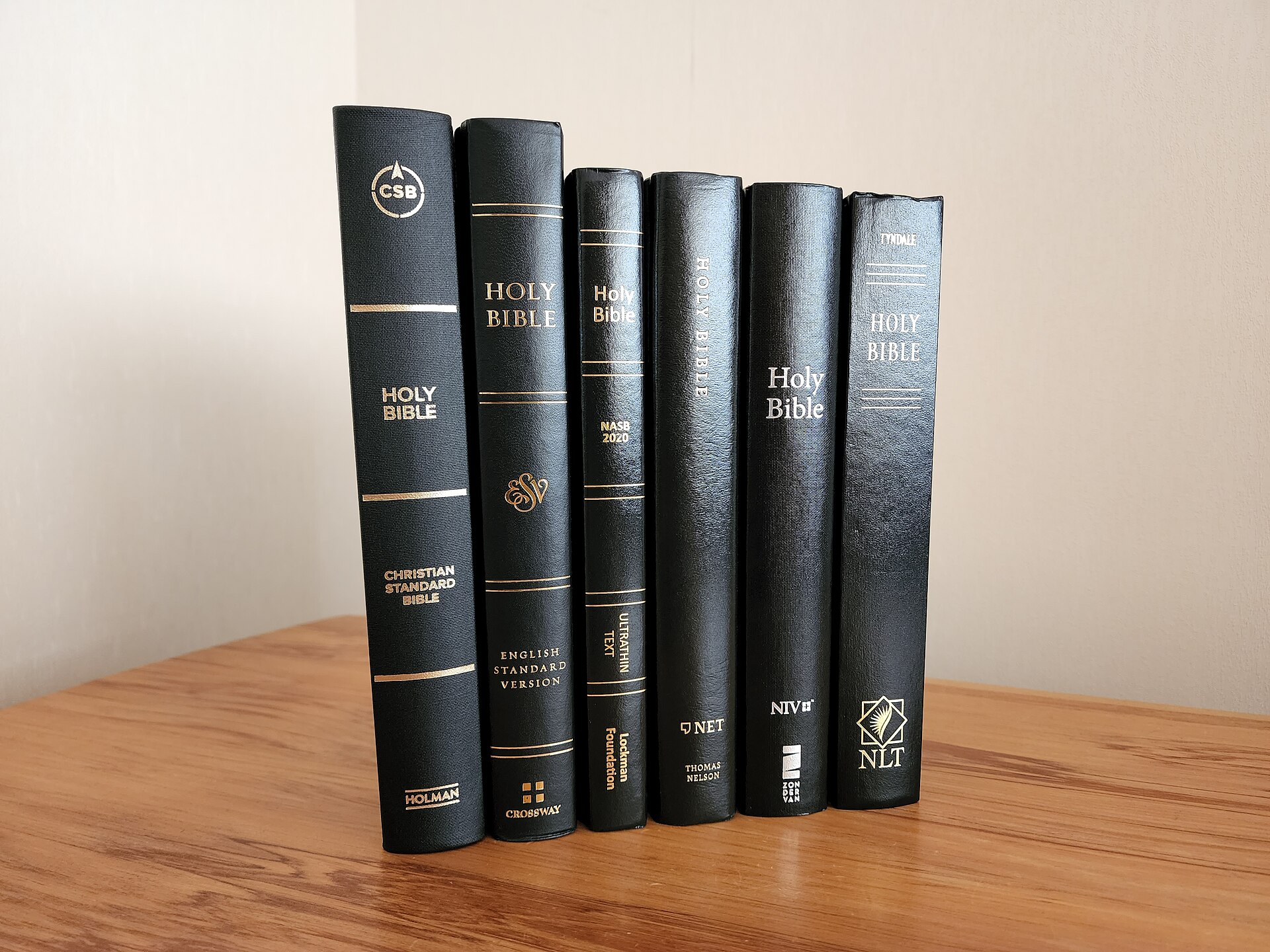
This lesson makes a case. It argues that the New International Version (NIV), for decades the best-selling modern English Bible by its publishers' and booksellers' counts, and the versions that share its methods are weaker translations than the King James Version (KJV) and the close formal translations that followed it. Every point is tied to a verse a reader can open and check. The NIV wording quoted here was copied from the 2011 NIV text as Bible Gateway prints it in October 2026; the 1984 NIV wording is quoted only where the NIV's own Committee on Bible Translation or another named source printed it side by side with the 2011 text.12
The case has five parts. (1) The Greek text behind the NIV leaves out words, clauses and whole verses that most surviving Greek manuscripts contain, and in a number of places it does so without telling the reader. (2) The NIV's method lets the translators put their interpretation in place of the words, and the committee itself has reversed many of those choices. (3) The 2011 NIV kept most of the gender-language changes of the withdrawn TNIV, against guidelines that two NIV translators signed in 1997. (4) In several verses tied to the doctrine of Christ, the NIV reads less directly than the KJV. (5) Most modern versions share the first point, and several share the others.
The argument is one-sided by design. The facts in it are not. Where the NIV agrees with the KJV on a doctrinal point, this lesson says so plainly, and the section near the end headed The counter view gives the defenders' case in their own words. For a neutral description of how the NIV was made, read lesson 12; for the manuscript evidence on the disputed passages, stated evenly, read lesson 8.
How to check this lesson
Every claim below can be tested with a free web browser. Bible Gateway (biblegateway.com) prints the current NIV, which is the 2011 text, with its footnotes, and it prints the KJV in the standard Oxford text that descends from the 1769 revision by Benjamin Blayney (lesson 7 tells that story).3 Open a verse in the NIV, then switch the version menu to KJV, and the difference shows at once. Turn on footnotes in the page options, because much of this lesson concerns what the NIV puts in its footnotes and what it leaves out of them.
A few facts about the NIV's editions are needed first, and they are told more fully in lesson 12. The complete NIV appeared in 1978. A revision followed in 1984, and that 1984 text was the NIV most English-speaking churches read for a generation. The same Committee on Bible Translation (CBT) then produced Today's New International Version (TNIV), with a New Testament in 2002 and a complete Bible in 2005. The TNIV was withdrawn, and in 2011 the committee issued an updated NIV that, in its own words, "builds on both the original NIV and the TNIV."2 The 1984 NIV is no longer sold or printed online by its publishers, so a reader who opens "NIV" today is reading the 2011 text.
The committee says that "about 95% of the text of the updated NIV is exactly the same as the 1984 text it replaces."2 That means most of what follows applies to both editions. Where the editions differ, this lesson says which one it means.

Point one: the Greek text, and what it leaves out
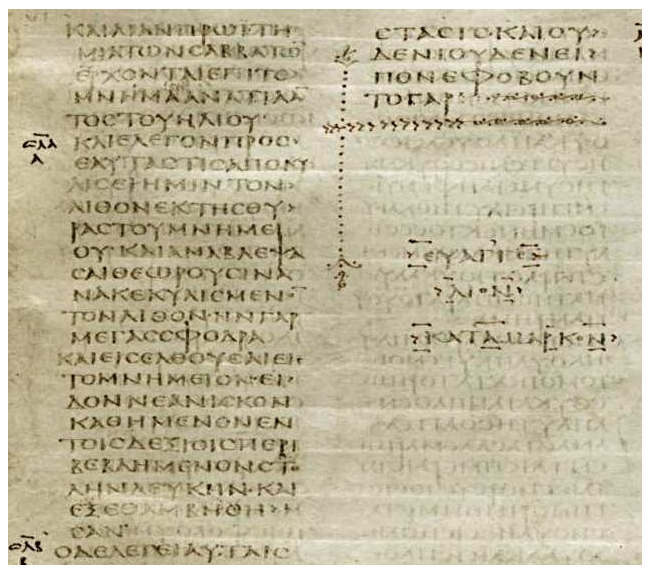
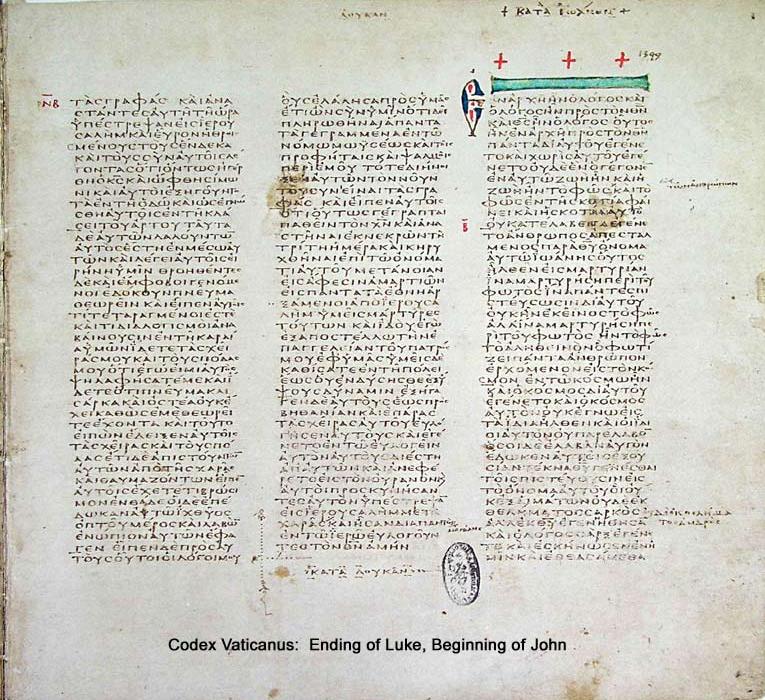
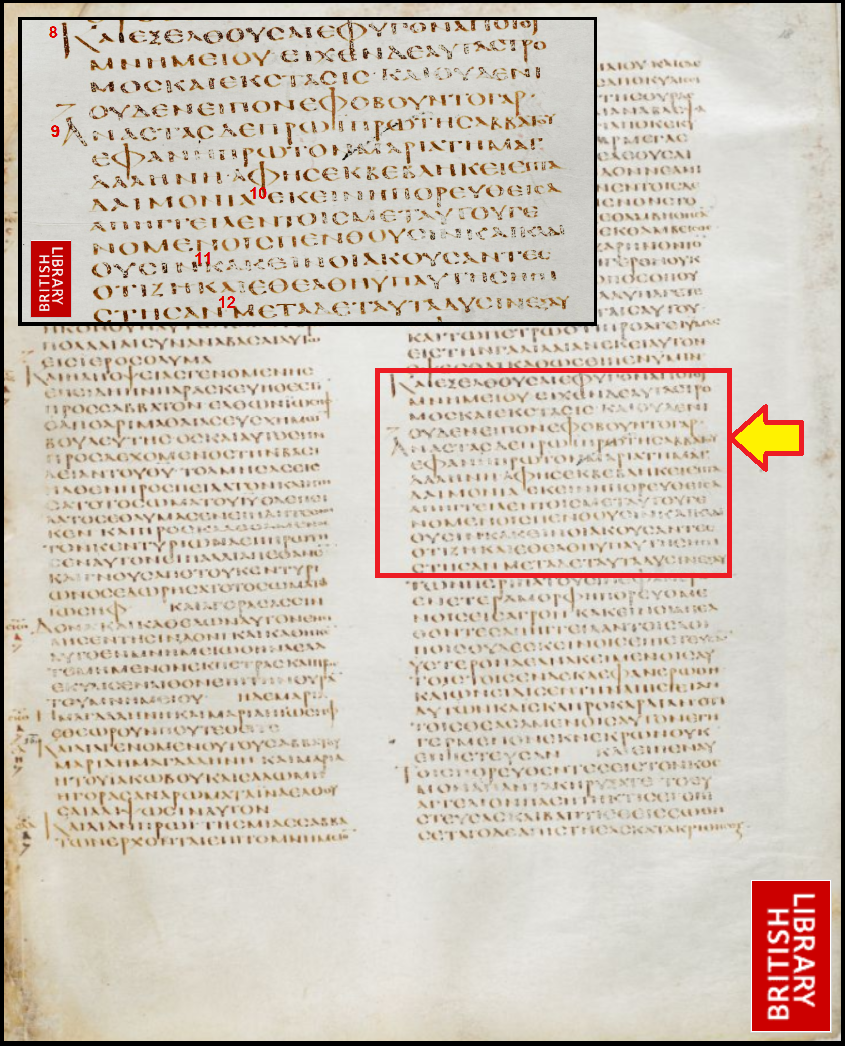
The NIV's preface states its New Testament base plainly: "The Greek text used in translating the New Testament has been an eclectic one, based on the latest editions of the Nestle-Aland/United Bible Societies' Greek New Testament."1 "Eclectic" means the editors choose, reading by reading, among the manuscripts, and in practice the Nestle-Aland and United Bible Societies editions give great weight to a small number of early manuscripts, above all the 4th century codices Sinaiticus (British Library) and Vaticanus (Vatican Library, Vat. gr. 1209) and the early papyri. The KJV was made from the printed Greek editions of the 16th century, the Textus Receptus, whose text stands close to the large majority of later Greek manuscripts (the Byzantine text). Lesson 5 tells how the Textus Receptus was made and lesson 8 sets out the three positions on the Greek text.
The result is that the NIV is shorter than the KJV. The most visible sign is the empty verse number.
Sixteen verse numbers with no verse
In the 2011 NIV, sixteen New Testament verse numbers stand in the text with nothing after them except a footnote mark. Each of the sixteen was checked on Bible Gateway for this lesson. In every case the verse is printed in the KJV, and the NIV gives only a footnote that begins "Some manuscripts include here."45 Six of those footnotes print the missing words (John 5:4, Acts 8:37, 15:34, 24:7, 28:29 and Romans 16:24). The other ten print no words at all: they say only that some manuscripts include words found in, or similar to, another passage, and name it. At Mark 9:44 and 9:46 that passage is verse 48, printed a few lines below; for the other eight the reader must look up the parallel to learn what the KJV's verse says.
- Matthew 17:21. KJV: "Howbeit this kind goeth not out but by prayer and fasting." The NIV footnote says some manuscripts include words similar to Mark 9:29.
- Matthew 18:11. KJV: "For the Son of man is come to save that which was lost." The NIV footnote points to Luke 19:10.
- Matthew 23:14. KJV: the woe on those who "devour widows' houses, and for a pretence make long prayer." The NIV footnote points to Mark 12:40 and Luke 20:47.
- Mark 7:16. KJV: "If any man have ears to hear, let him hear." The NIV footnote points to Mark 4:23.
- Mark 9:44 and 9:46. KJV: "Where their worm dieth not, and the fire is not quenched." The NIV keeps the words once, at verse 48, and its footnotes say some manuscripts include them at 44 and 46.
- Mark 11:26. KJV: "But if ye do not forgive, neither will your Father which is in heaven forgive your trespasses." The NIV footnote points to Matthew 6:15.
- Mark 15:28. KJV: "And the scripture was fulfilled, which saith, And he was numbered with the transgressors." The NIV footnote points to Luke 22:37.
- Luke 17:36. KJV: "Two men shall be in the field; the one shall be taken, and the other left." The NIV footnote points to Matthew 24:40.
- Luke 23:17. KJV: "For of necessity he must release one unto them at the feast." The NIV footnote points to Matthew 27:15 and Mark 15:6.
- John 5:4. KJV: the angel who "went down at a certain season into the pool, and troubled the water." The NIV prints the words in a footnote.
- Acts 8:37. KJV: "And Philip said, If thou believest with all thine heart, thou mayest. And he answered and said, I believe that Jesus Christ is the Son of God." The NIV prints the words in a footnote.
- Acts 15:34. KJV: "Notwithstanding it pleased Silas to abide there still." Footnote only in the NIV.
- Acts 24:7. KJV: "But the chief captain Lysias came upon us, and with great violence took him away out of our hands." Footnote only in the NIV, which also moves the end of verse 6 and the start of verse 8.
- Acts 28:29. KJV: "And when he had said these words, the Jews departed, and had great reasoning among themselves." Footnote only in the NIV.
- Romans 16:24. KJV: "The grace of our Lord Jesus Christ be with you all. Amen." Footnote only in the NIV.
The KJV wording above is the Oxford standard text as Bible Gateway prints it.3 Two more passages are kept in the NIV text but placed under a warning. Before Mark 16:9 the NIV prints a bracketed line that begins "The earliest manuscripts and some other ancient witnesses do not have verses" 9 to 20, and before John 7:53 it prints a bracketed line saying that "The earliest manuscripts and many other ancient witnesses do not have" the story of the woman taken in adultery, John 7:53 to 8:11.6 A reader who meets those lines in the middle of the Gospel is told, in effect, that twelve verses of Mark and twelve of John are probably not part of those Gospels as first written. That is a heavy judgment to place between two verses of a Bible meant for ordinary readers, and it rests on the testimony of a few manuscripts against the great majority.
The weight of the manuscripts matters here. The text-critical notes of the NET Bible, prepared by scholars who support the critical text, list the witnesses for each verse. They show that Matthew 17:21 is included in "the majority" of later manuscripts (their sign M) along with Codex Ephraemi (C), Codex Bezae (D), Codex Washingtonianus (W) and others, and is left out by the first hand of Sinaiticus, by Vaticanus and by a smaller group.7 The same notes show the majority of manuscripts including Matthew 18:11, Matthew 23:14, Mark 7:16, Mark 9:44 and 9:46, Mark 11:26, Mark 15:28, Luke 23:17, John 5:4, Acts 28:29 and Romans 16:24.78 In twelve of the sixteen places, then, the NIV has set aside a reading found in most of the Greek copies the church actually used for over a thousand years.
Fairness to the facts requires the rest of that count, and it is shown in the chart below. In three of the sixteen (Luke 17:36, Acts 8:37 and Acts 15:34), the NET notes show the verse missing from the Byzantine majority as well, and the NKJV's own footnote on Acts 8:37 says that both the critical text and the Majority Text "omit v. 37."89 In one (Acts 24:7) the later manuscripts are split. For those four, the case against the NIV rests on the Textus Receptus and its use in the church, and on early witnesses such as Irenaeus of Lyon, the second century bishop, who wrote that the Ethiopian eunuch, "immediately requesting to be baptized," said, "I believe Jesus Christ to be the Son of God" (Against Heresies 3.12.8, in the Ante-Nicene Fathers translation).10 Irenaeus's words show that the confession of Acts 8:37 was known in the church more than a century before Sinaiticus and Vaticanus were copied.
Shorter readings with no footnote at all
The sixteen empty verse numbers at least tell the reader that something is missing. A more serious problem is the number of places where the NIV prints a shorter text than the KJV and gives no footnote of any kind. A reader of the NIV alone cannot know that the words exist. Each of the following was checked in the 2011 NIV on Bible Gateway, with its footnotes turned on, and each has no note at the place where the KJV's words are missing.11
- Luke 9:55 to 56. The KJV reads: "But he turned, and rebuked them, and said, Ye know not what manner of spirit ye are of. For the Son of man is not come to destroy men's lives, but to save them." The NIV keeps only that Jesus rebuked them and that they went to another village. Its one footnote in the passage, at verse 54, concerns Elijah. The sayings of Jesus in verses 55 and 56 appear nowhere on the page.
- Matthew 5:44. The KJV reads: "Love your enemies, bless them that curse you, do good to them that hate you, and pray for them which despitefully use you, and persecute you." The NIV has only the command to love enemies and pray for persecutors. There is no note.
- Matthew 20:16. The KJV ends the parable of the workers: "So the last shall be first, and the first last: for many be called, but few chosen." The NIV stops after "the first will be last." There is no note.
- Matthew 25:13. The KJV reads: "Watch therefore, for ye know neither the day nor the hour wherein the Son of man cometh." The NIV ends at "the hour." There is no note.
- Romans 8:1. The KJV reads: "There is therefore now no condemnation to them which are in Christ Jesus, who walk not after the flesh, but after the Spirit." The NIV ends at "Christ Jesus." There is no note.
- Luke 4:4. The KJV reads: "Man shall not live by bread alone, but by every word of God." The NIV ends at "bread alone," with only a note giving Deuteronomy 8:3 as the source of the quotation.
- John 6:47. The KJV reads: "He that believeth on me hath everlasting life." The NIV has "the one who believes," with no object of belief and no note.
- Colossians 1:14. The KJV reads: "In whom we have redemption through his blood, even the forgiveness of sins." The NIV has no "through his blood" and no note.
The NET notes, again from scholars who favor the shorter readings, confirm that the longer forms of Matthew 5:44, Luke 4:4, John 6:47 and the second half of Romans 8:1 stand in the majority of manuscripts; their note on Romans 8:1 says plainly, "The KJV follows the longest reading found in M."12 On Luke 9:55 to 56 they say that "Many mss" have the longer text.12 Whatever a scholar decides about the original wording, a Bible that drops words read by most of the manuscripts, and printed in the KJV for four centuries, owes its readers a footnote. The NIV gives one for Acts 8:37. It gives none for Luke 9:55 to 56, which records words of Jesus. The 1984 NIV did better. In its text as reproduced by Bible-Centre, it carried footnotes at Luke 9:55 to 56 ("Some manuscripts them. And he said, 'You do not know what kind of spirit you are of...'"), at Matthew 5:44, at Romans 8:1 and at Colossians 1:14 ("A few late manuscripts redemption through his blood") (NIV 1984 footnotes, copyright Biblica, Inc.). The 2011 revision dropped all four notes.26
Two of these need a fair word, because they are often used in popular attacks. "Through his blood" in Colossians 1:14 is not in the Byzantine majority either; the NET note lists only a few minuscules (614, 630, 1505, 2464) for it, against Sinaiticus, Alexandrinus, Vaticanus and the majority (M), and the words stand firmly in the parallel at Ephesians 1:7, where the NIV prints them: "In him we have redemption through his blood" (NIV 2011, copyright Biblica, Inc.).1213 The claim that the NIV "takes out the blood" is therefore wrong as stated. The weaker but true claim is that the 2011 NIV no longer tells the reader that the KJV reads differently at Colossians 1:14, as the 1984 NIV did.

Why the few should not outvote the many
The NIV's choice rests on a rule of thumb that most textual critics have used since the 19th century: the oldest manuscripts are usually the best, and the shorter reading is usually the original, because scribes tended to add rather than remove. The defenders of the Byzantine text answer that both rules beg the question. John William Burgon, Dean of Chichester, attacked the Revised Version's Greek text in The Revision Revised (1883). He called Sinaiticus, Vaticanus and Codex Bezae "three of the most scandalously corrupt copies extant" and charged that the revisers had departed from the traditional text "nearly 6000 times" and "almost invariably for the worse."14 His argument was that a reading found across the Greek church in hundreds of copies has the better claim to descend from the apostles than a reading found in two or three old ones. Later defenders of the majority text, among them Zane Hodges and Arthur Farstad, who edited The Greek New Testament According to the Majority Text (1982), and Maurice Robinson, made the same case with modern collations. Lesson 8 sets out their arguments and the replies in full.
The point for this lesson is narrower. Whether or not a reader accepts Burgon's argument, a translation meant for every church should not quietly adopt the minority reading in dozens of places and leave the reader unaware. The NIV's preface says, "Footnotes call attention to places where uncertainty remains."1 The list above shows places where the NIV printed the minority reading as if no uncertainty remained.
The same preface makes a parallel admission about the Old Testament. It says the translators sometimes read Hebrew words with vowels different from those in the Masoretic Text (the vowel signs are explained in Hebrew lesson 2), and it adds: "These instances are usually not indicated in the footnotes."1 A reader of the NIV Old Testament therefore cannot tell from the page where the translators have departed from the vowels of the standard Hebrew text.

Point two: interpretation in place of translation
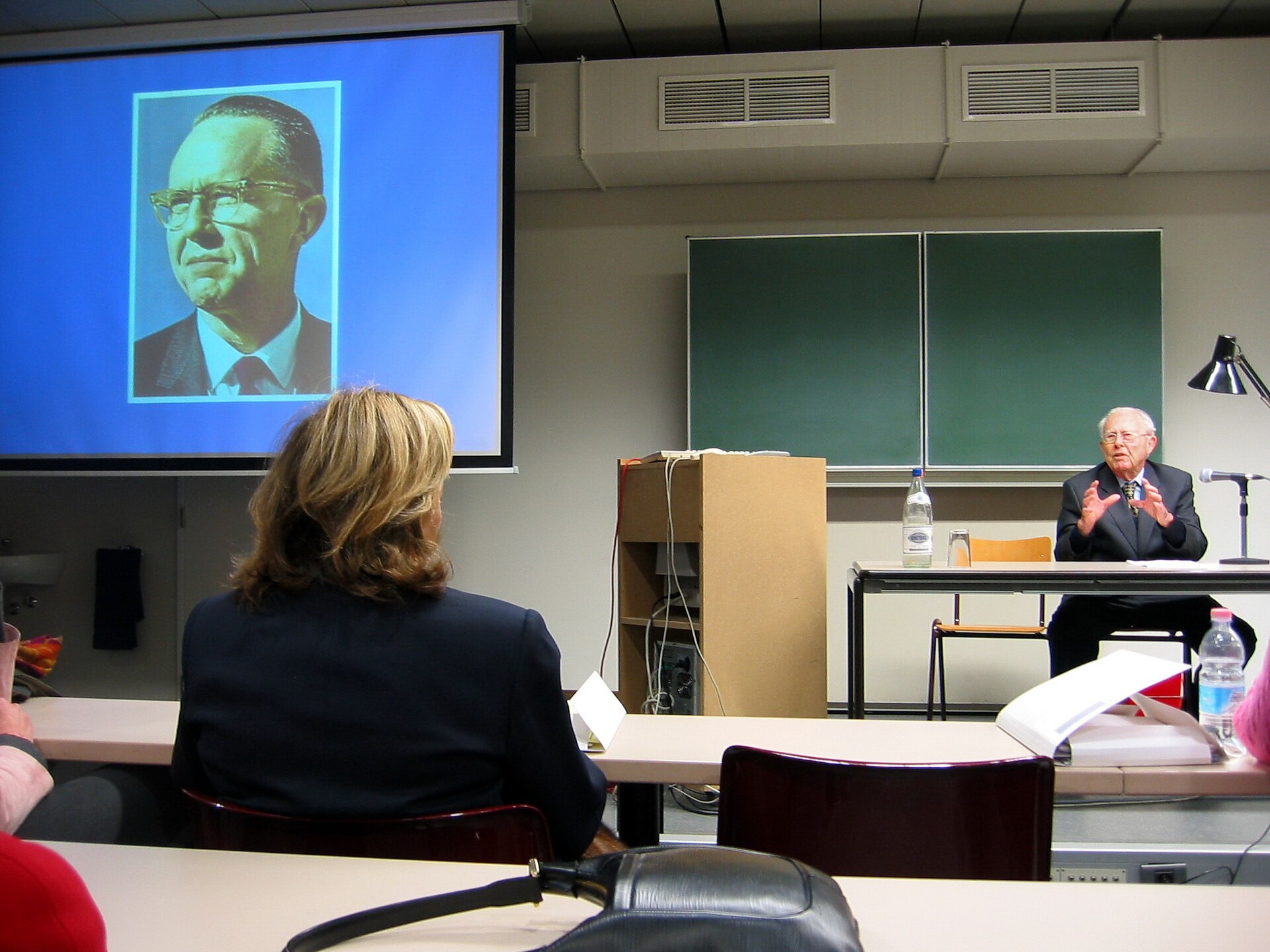
The NIV was built on the method that Eugene Nida called dynamic equivalence and later functional equivalence: translate the meaning of a clause as the translator understands it, in natural English, instead of matching the words and grammar of the original as closely as English allows. Lesson 12 explains the method and its history. The NIV's 2011 preface is candid about one consequence: "the Committee generally privileges clear natural meaning over a concern with consistency in rendering particular words."1
That sounds harmless until one asks who decides what the "clear natural meaning" is. In a formal translation such as the KJV, the NASB or the NKJV, an English reader sees roughly what a reader of the Greek or Hebrew sees, including its ambiguities, and is left to weigh them, usually with the help of a preacher or a commentary. In a functional translation the weighing has already been done, and the English reader is given the result. When the translators are right, little is lost. When they are wrong, the reader has no way to know, because the words that would have shown the other possibility are gone. The NIV's own history supplies the best evidence that its translators were often wrong, because the committee has publicly reversed itself on several of its most characteristic renderings.
"Sinful nature" for "flesh"
The Greek word sarx, which the KJV translates "flesh," is central to Paul's teaching on sin and the Spirit. The 1984 NIV often rendered it "sinful nature." The Council on Biblical Manhood and Womanhood (CBMW), reviewing the 2011 NIV, wrote that "in most cases the key Pauline term sarx has been changed from" "sinful nature" "to the more literal and precise term" "flesh," and gave Romans 8:4 as its example.15 The NIV's own committee explained the change in its 2010 notes: "the original NIV often rendered sarx as" "sinful nature," but "this expression can mislead readers into thinking the human person is made up of various compartments."2
That is a remarkable admission. For twenty-seven years, from 1984 to 2011, the most widely read modern Bible in English taught its readers a picture of human nature that its own translators now say can mislead. The KJV reader of Romans 8:4 read, as he still reads, "who walk not after the flesh, but after the Spirit," and the 2011 NIV now reads "flesh" in Romans 8:4 and 8:5 and in Galatians 5:16 to 17.16 The change was a return toward the older wording. It was not finished: a search of the 2011 NIV on Bible Gateway still finds "sinful nature" in two verses, Romans 7:18 and 7:25, where the Greek again has sarx. In Romans 7:18 the NIV reads "in my sinful nature" (NIV 2011, copyright Biblica, Inc.), and only a footnote gives "Or my flesh."17
The same pattern shows in 1 John 2:16. The committee's 2010 notes print the 1984 NIV as "the cravings of sinful man, the lust of his eyes and the boasting of what he has and does," and the 2011 NIV as "the lust of the flesh, the lust of the eyes, and the pride of life" (both NIV text as printed by the Committee on Bible Translation, copyright Biblica, Inc.).2 The KJV has read "the lust of the flesh, and the lust of the eyes, and the pride of life" since 1611. The committee's comment on its own change is worth reading in full in its notes; in part it asks, "Has anyone really improved on the KJV rendering of these three expressions, to which the updated NIV returns?"2 The answer the 1984 NIV gave was yes. The answer the 2011 NIV gives is no.
Choices the committee itself reversed
The committee's 2010 notes list other 1984 renderings that it changed because they had closed off readings the Greek leaves open. "Translations that leave open important scholarly options have often been chosen," the notes say, and they give as examples Romans 1:17, where "righteousness from God" became "righteousness of God," and the phrase erga nomou, where "observing the law" became "works of the law."2 The KJV had "the righteousness of God" in Romans 1:17 and "the works of the law" in Galatians 2:16 all along.3 These are not small matters: the meaning of "the righteousness of God" and of "the works of the law" is at the center of the debate over justification that divided the Reformation churches from Rome, and the 1984 NIV had settled both questions in the text for its readers.
Malachi 2:16 shows the instability of the method at its sharpest. The committee prints the 1984 NIV as "'I hate divorce,' says the Lord God of Israel," and the 2011 NIV as "'The man who hates and divorces his wife,' says the Lord, the God of Israel, 'does violence to the one he should protect'" (both as printed by the Committee on Bible Translation, copyright Biblica, Inc.).2 In the first, God speaks of what he hates. In the second, God describes a man who hates his wife. The committee explains that the Hebrew is "very elliptical and hard to translate."2 That is true, and it is the strongest argument for a translation that shows the reader the difficulty instead of resolving it twice in opposite directions within one generation. The KJV reads: "For the LORD, the God of Israel, saith that he hateth putting away." The 2011 NIV now puts the older sense in its footnote.18
Philippians 4:13 is a smaller example of the same habit. The KJV reads, "I can do all things through Christ which strengtheneth me." The 2011 NIV reads "I can do all this through him who gives me strength" (NIV 2011, copyright Biblica, Inc.).18 The Greek word is panta, "all things." The committee's notes say openly that the change was made so that the verse would not be misapplied: "one shouldn't be as easily able to misapply Philippians 4:13 now."2 The aim, guarding readers from a misreading, is good pastoral work. It is the work of a preacher or a study note, placed inside the text of Scripture. (The shift from "Christ" to "him" is a textual difference: the Textus Receptus names Christ, and the critical text does not.)
Words the NIV interprets
Three more verses show the method replacing a word with an explanation of it.
Matthew 1:25. The KJV reads, "And knew her not till she had brought forth her firstborn son." The Greek verb is the ordinary word for "know" (ginosko), used here, as in Genesis 4:1 in the Greek Old Testament, as a reserved idiom for marital union. The 2011 NIV reads, "But he did not consummate their marriage until she gave birth to a son" (NIV 2011, copyright Biblica, Inc.).18 The NIV's sense is right, but the reader loses the Bible's own modest idiom and is given a modern legal phrase in its place.
Romans 3:25. The KJV reads, "Whom God hath set forth to be a propitiation through faith in his blood." Propitiation means a sacrifice that turns away wrath. The 2011 NIV reads, "God presented Christ as a sacrifice of atonement" (NIV 2011, copyright Biblica, Inc.), and its footnote explains that the Greek word refers to "the atonement cover on the ark of the covenant."18 In 1 John 2:2, where the KJV again has "propitiation," the NIV has "atoning sacrifice." Whether the Greek words in these verses include the idea of satisfying God's wrath was a live debate among 20th century scholars. The KJV's "propitiation" keeps that idea in front of the reader. The NIV's wording leaves room for that idea without stating it, and an English reader who has only the NIV will not meet the word "propitiation" anywhere in these verses.
1 Corinthians 7:1. The KJV reads, "It is good for a man not to touch a woman." The 2011 NIV reads, "It is good for a man not to have sexual relations with a woman" (NIV 2011, copyright Biblica, Inc.), and places the sentence in quotation marks as a slogan of the Corinthians; the committee says the rendering came from the original NIV's footnote and "has now become the text."218 The Greek verb means "to touch." The NIV may well be right about Paul's meaning, but again the reader receives a conclusion and loses the evidence.

The cost of meaning for meaning
The defenders of the NIV answer that every translation interprets, and that is true. The KJV translators also chose among meanings, and their marginal notes in 1611 often gave the reader the alternatives (lesson 7). The difference is one of degree and of honesty to the reader. A formal translation tries to keep the reader's choices open where the original keeps them open; it prints "flesh," "propitiation," "knew her," "the righteousness of God," and lets the context, the preacher and the commentary do their work. A functional translation decides, and its decisions harden into the reader's theology without his knowing that a decision was made. The NIV's own reversals in 2011 on sarx, on "righteousness from God," on "observing the law," on 1 John 2:16 and on Malachi 2:16 show how often the deciding went wrong. A reader who wants to see the text for himself is better served by a version that does less deciding. Lesson 15 shows how to compare versions and check the Hebrew and Greek with free tools, and Greek lesson 20 shows how to look up a word such as sarx for oneself.
Point three: gender language
The third charge concerns the way the NIV translates words that are masculine in Hebrew and Greek when they refer to people in general. This is the charge that led the Southern Baptist Convention in 2011 to decline to commend the new NIV, and its history matters, because the NIV's own translators once agreed with the critics.
The 1997 guidelines
In 1996 an inclusive-language edition of the NIV was published in Britain; CBMW's 2011 report records that it was "released only in the UK."15 When word spread in 1997 that a similar edition was planned for the United States, a meeting was called at the Focus on the Family headquarters in Colorado Springs on May 27, 1997. It produced the Colorado Springs Guidelines for Translation of Gender-Related Language in Scripture, revised and signed on September 9, 1997. Among the twelve original signers were two members of the NIV's own Committee on Bible Translation: Ken Barker, listed as "Secretary, Committee on Bible Translation," and Ron Youngblood, listed as "Member, Committee on Bible Translation."19
The guidelines are short and specific. Among the renderings they affirm:
- "The generic use of 'he, him, his, himself' should be employed to translate generic 3rd person masculine singular pronouns in Hebrew, Aramaic and Greek." (Guideline A1)
- "Person and number should be retained in translation so that singulars are not changed to plurals." (A2, in part)
- "The phrase 'son of man' should ordinarily be preserved to retain intracanonical connections." (A9)
- "Masculine references to God should be retained." (A10)
The guidelines also allowed what is often attacked in the NIV today: they said that "the plural adelphoi can be translated 'brothers and sisters' where the context makes clear that the author is referring to both men and women" (B1).19 The page that reprints them lists sample verses "you can check for yourself," among them John 14:23 and Revelation 3:20 for the generic "he," Psalm 1:1 for the Hebrew 'ish ("man"), and Psalm 8:4 for "son of man." The introduction printed with them in Grudem's booklet said that "Several widely-used translations already meet these guidelines, including the NIV, NASB, RSV, KJV, and NKJV."19 In 1997, then, the 1984 NIV met the standard. The question is whether the 2011 NIV does.
The verses the guidelines named
Each verse the guidelines named as a test can be checked in the 2011 NIV.20
John 14:23. The KJV reads, "If a man love me, he will keep my words: and my Father will love him, and we will come unto him, and make our abode with him." The Greek has a singular indefinite subject followed by singular masculine pronouns. CBMW prints the 1984 NIV as "If anyone loves me, he will obey my teaching. My Father will love him" (NIV 1984, copyright International Bible Society, as printed by CBMW).15 The 2011 NIV reads, "Anyone who loves me will obey my teaching. My Father will love them, and we will come to them and make our home with them" (NIV 2011, copyright Biblica, Inc.). The singular promise to one believer, that the Father and the Son will make their home "with him," has become a statement with a plural pronoun that most readers will take as plural.
Revelation 3:20. The KJV reads, "if any man hear my voice, and open the door, I will come in to him, and will sup with him, and he with me." The 2011 NIV ends, "I will come in and eat with that person, and they with me" (NIV 2011, copyright Biblica, Inc.). One of the best-loved invitations in the New Testament now ends in a pronoun that does not agree in number with the person invited.
Psalm 1:1. The KJV reads, "Blessed is the man that walketh not in the counsel of the ungodly." The Hebrew word is 'ish, the ordinary word for a man. CBMW's report quotes "Blessed is the man who does not walk in the counsel of the wicked" as wording that no modern reader finds hard to understand.15 The 2011 NIV reads, "Blessed is the one who does not walk in step with the wicked" (NIV 2011, copyright Biblica, Inc.). Guideline A4 had said that "Hebrew 'ish should ordinarily be translated 'man' and 'men.'"19
Psalm 8:4 and Hebrews 2:6. This pair shows the cost most clearly. The KJV reads in Psalm 8:4, "What is man, that thou art mindful of him? and the son of man, that thou visitest him?" and Hebrews 2:6 quotes the psalm in nearly the same words. CBMW prints the 1984 NIV of Psalm 8:4 as "what is man that you are mindful of him, the son of man that you care for him?"15 The 2011 NIV reads, "what is mankind that you are mindful of them, human beings that you care for them?" (NIV 2011, copyright Biblica, Inc.), and moves "a son of man" to a footnote. Yet in Hebrews 2:6, quoting the same psalm, the 2011 NIV keeps "a son of man that you care for him." The NIV's English reader of Psalm 8 can no longer see the phrase that Hebrews goes on to apply to Jesus, whom it describes as "made a little lower than the angels" and "crowned with glory and honour" (Hebrews 2:9, KJV). That is the "intracanonical connection" that Guideline A9 was written to protect. The committee's own notes concede the difficulty: they say the 2011 solution in Hebrews was to keep "son of man that you care for him" but "to make the remaining pronouns plural."2

1 Timothy 2:12: "assume authority"
The most disputed single change in the 2011 NIV is in 1 Timothy 2:12, a verse at the center of the debate over whether women may serve as pastors and elders. The KJV reads, "But I suffer not a woman to teach, nor to usurp authority over the man, but to be in silence." CBMW prints the 1984 NIV as "I do not permit a woman to teach or to have authority over a man; she must be silent."15 The 2011 NIV reads, "I do not permit a woman to teach or to assume authority over a man; she must be quiet" (NIV 2011, copyright Biblica, Inc.), with a footnote "Or over her husband."20
The Greek verb, authentein, occurs only here in the New Testament, and its meaning is debated. The committee defended its choice in its notes: "'Assume authority' is a particularly nice English rendering because it leaves the question open."2 CBMW answered that the new wording makes the verse forbid only a self-appointed grasp at authority, so that a woman given authority by others is no longer touched by it, and it set the NIV against the other main versions: "Even the gender-neutral NRSV translates authenteo 'have authority' here," along with the NLT, RSV, Holman CSB and NKJV, while "the NASB, NET Bible, and ESV similarly translate it as 'exercise authority.'"15 A check on Bible Gateway in October 2026 bears out the comparison for the versions now in print: the NRSV Updated Edition, the CSB and the NKJV have "have authority," the ESV has "exercise authority," and the NLT has "have authority" with a footnote "Or teach men or usurp their authority."9 On this verse the 2011 NIV stands nearly alone among the major versions, and the only one found to go further is the Common English Bible, which reads "I don't allow a wife to teach or to control her husband," with footnotes giving "a woman" and "a man" as the alternatives (CEB, copyright Common English Bible).9
The Southern Baptist resolution of 2011
The Southern Baptist Convention, meeting in Phoenix on June 14 to 15, 2011, adopted a resolution titled "On The Gender-neutral 2011 New International Version." It is short enough that its main clauses can be quoted directly. It said that "This translation alters the meaning of hundreds of verses, most significantly by erasing gender-specific details which appear in the original language," that "the 2011 NIV has gone beyond acceptable translation standards," and that "Seventy-five percent of the inaccurate gender language found in the TNIV is retained in the 2011 NIV." It resolved to "respectfully request that LifeWay not make this inaccurate translation available for sale in their bookstores" and closed: "we cannot commend the 2011 NIV to Southern Baptists or the larger Christian community."21 The resolution also recalled that the convention had in 1997 "urged every Bible publisher and translation group to resist 'gender-neutral' translation of Scripture" and had passed "a similar resolution concerning the TNIV in 2002."21
The "seventy-five percent" figure came from CBMW's report, "An Evaluation of Gender Language in the 2011 Edition of the NIV Bible" (revision of June 6, 2011). CBMW's staff took the list of 3,686 TNIV renderings that Wayne Grudem and Jerry Thacker had called inaccurate in 2005, adjusted it to 3,699, and checked each in the 2011 NIV. By their count 2,766 (75 percent) were "Same as TNIV" and 933 (25 percent) had been revised; in the New Testament alone the count was 572 retained and 336 revised.15 Those figures are CBMW's own, made by its definitions of what counts as an inaccuracy, and the report itself warns that the 933 revisions are "probably a bit high" because some replace one gender-neutral term with another. CBMW also gave credit where it was due: it praised the return to "flesh," and it counted 164 passages where "man" and "mankind" had replaced a gender-neutral term, as in Genesis 1:27, which the 2011 NIV renders "So God created mankind in his own image" (NIV 2011, copyright Biblica, Inc.).1520
"Brothers and sisters": a fair limit to the charge
The 2011 NIV often renders the plural adelphoi as "brothers and sisters," with a standard footnote, for example at Romans 1:13, that "The Greek word for brothers and sisters (adelphoi) refers here to believers, both men and women, as part of God's family" (NIV 2011, copyright Biblica, Inc.).20 This is the change most often cited in sermons against the NIV, and it is the weakest of the gender charges. The Colorado Springs Guidelines themselves allowed it for the plural when the context includes women, and Paul's letters were read to whole congregations. The stronger objections are the ones above: singular promises turned into plural or mismatched pronouns (John 14:23, Revelation 3:20), the Hebrew word for "man" turned into "the one" (Psalm 1:1), the "son of man" removed from the psalm that Hebrews applies to Christ (Psalm 8:4), and the key verb in 1 Timothy 2:12 given a sense that no other major version adopts. The committee's notes are clear that the changes apply only to people: "Nowhere in the updated NIV ... is there even the remotest hint of any inclusive language for God."2 A check of Matthew 6:9 ("Our Father in heaven") and John 3:16 bears that out.13
Point four: verses about Christ
The fourth charge must be stated with care, because it is the one most often overstated. The NIV does not deny the deity of Christ or His virgin birth, and the evidence for that is given below. The charge that survives a check is narrower: in a handful of verses that the church has long read as witnesses to who Christ is, the NIV reads less directly than the KJV, and in two of them it does not tell the reader that the KJV's wording is the reading of most Greek manuscripts.2213
1 Timothy 3:16: "God was manifest in the flesh"
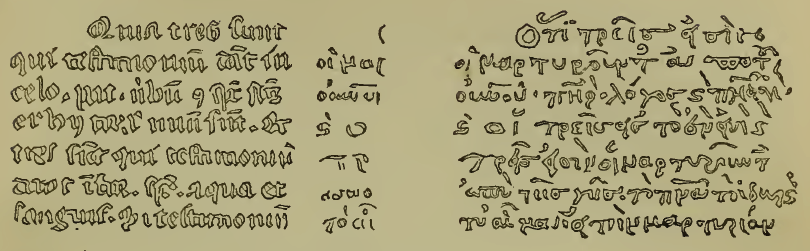
The KJV reads, "And without controversy great is the mystery of godliness: God was manifest in the flesh." The 2011 NIV reads, "He appeared in the flesh" (NIV 2011, copyright Biblica, Inc.), and its only footnote on the verse concerns a later phrase ("Or vindicated in spirit").22 The difference rests on one Greek word. In the uncial script of the early manuscripts, "God" was written as a two-letter abbreviation with a stroke above it, and "who" (hos) differs from it by two small strokes. The NET Bible's note says that "The Byzantine text along with a few other witnesses" read theos, "God," and lists among them later correctors of Sinaiticus and Alexandrinus, Codex Ephraemi as corrected, minuscules 1739 and 1881, and the majority (M).22 The critical text prints hos, "who."
A reader may decide the textual question either way. What sets the NIV apart is silence. Most of the other critical-text versions checked for this lesson tell the reader that "God" is a known reading: the ESV's footnote says "Greek Who; some manuscripts God; others Which" (ESV, copyright Crossway), the CSB's says "Other mss read God" (CSB, copyright Holman Bible Publishers), the NRSV Updated Edition's says "other ancient authorities read God or Which," and the NLT's says "Greek He who; other manuscripts read God."9 The CEB and the Good News Translation, like the 2011 NIV, give no such note. The 2011 NIV, the most widely read of them, gives its readers no hint that the verse most often quoted for the incarnation reads "God" in the KJV and in most Greek manuscripts. The 1984 NIV did give that hint, in a footnote reading "Some manuscripts God" (NIV 1984, copyright Biblica, Inc.); the 2011 revision removed it.26
Luke 2:33: "Joseph and his mother"
The KJV reads, "And Joseph and his mother marvelled at those things which were spoken of him." The 2011 NIV reads, "The child's father and mother marveled at what was said about him" (NIV 2011, copyright Biblica, Inc.), with no footnote.22 The NET note reports that "Most mss" read "Joseph," while Sinaiticus, Vaticanus, Bezae, Regius (L), Washingtonianus (W) and a few others read "his father."22 Defenders of the KJV have long argued that calling Joseph Jesus' "father" in the narrator's own voice, in a chapter that follows the account of the virgin conception, is the kind of wording the church would have been careful to avoid. The CSB and the NKJV both footnote the other reading; the NIV does not.9
The fair limit to this charge is in the same chapter. In Luke 2:48 the KJV itself has Mary say to Jesus, "thy father and I have sought thee sorrowing," and in 2:41 the KJV calls Mary and Joseph "his parents."3 Luke could speak of Joseph as Jesus' father in the ordinary, legal sense without denying the virgin birth, which he had already told in Luke 1:34 to 35. The NIV's wording in 2:33 is therefore not a denial of the virgin birth. It is the less careful of two readings, printed without notice.
Micah 5:2 and Daniel 3:25
In Micah 5:2, the prophecy of the ruler from Bethlehem, the KJV reads, "whose goings forth have been from of old, from everlasting." The 2011 NIV reads, "whose origins are from of old, from ancient times" (NIV 2011, copyright Biblica, Inc.), and its only footnote on the verse concerns the word "clans."13 The 1984 NIV printed two more notes on this phrase, "Hebrew goings out" and "Or from days of eternity" (NIV 1984, copyright Biblica, Inc.); the 2011 revision dropped both, so its reader no longer sees the sense the KJV prints.26 The Hebrew phrase behind "from everlasting" can mean "from days of old" or "from days of eternity," and Christian readers since the early church have seen in it the eternal existence of the Messiah. "Origins" suggests a beginning, which is exactly what the KJV reader understands the verse to deny. The ESV ("whose coming forth is from of old, from ancient days") and the CSB ("His origin is from antiquity, from ancient times," with a note "Lit His going out") also drop "everlasting" here, so this is a point shared by the modern versions generally (ESV, copyright Crossway; CSB, copyright Holman Bible Publishers).9
In Daniel 3:25 Nebuchadnezzar sees a fourth figure in the furnace. The KJV reads, "the form of the fourth is like the Son of God." The 2011 NIV reads, "the fourth looks like a son of the gods" (NIV 2011, copyright Biblica, Inc.).13 The Aramaic words (bar elahin) can bear either sense, and the speaker is a pagan king who, three verses later, says God "hath sent his angel" (Daniel 3:28, KJV).3 The NIV's rendering is defensible as a report of what a pagan would mean. The KJV's rendering keeps open the reading that many Christian interpreters have held, that the fourth figure was the pre-incarnate Christ, and the NIV closes it.
"Only begotten" and "one and only"
John 3:16 in the KJV reads, "he gave his only begotten Son." The 2011 NIV reads, "his one and only Son" (NIV 2011, copyright Biblica, Inc.).13 The Greek word, monogenes, is the word behind the Nicene Creed's confession of the "only-begotten Son of God," and the creed's language of the Son "begotten, not made" stands on it. Modern lexicons argue that monogenes means "unique" or "only one of its kind" and not "only begotten," and the NIV follows them. The KJV's wording keeps the link between the Gospel and the creed in plain view; the NIV's wording breaks it, and the English reader of John 3:16 in the NIV cannot see why the creed speaks of begetting.
Where the NIV agrees with the KJV, or says more
The other half of the record must be stated as plainly, because the popular attacks on the NIV ignore it.
- The virgin birth. Isaiah 7:14 in the 2011 NIV reads "The virgin will conceive and give birth to a son," with a footnote "Or young woman." Matthew 1:23 reads "The virgin will conceive," and in Luke 1:34 Mary asks how this can be, "since I am a virgin" (NIV 2011, copyright Biblica, Inc.).13 The NIV keeps "virgin" where the Revised Standard Version of 1952 had put "young woman" in the text of Isaiah 7:14 (lesson 9).
- Isaiah 9:6. The NIV keeps "Mighty God" and "Everlasting Father" among the names of the child, as the KJV does ("The mighty God, The everlasting Father").13
- John 1:18. The KJV reads "the only begotten Son, which is in the bosom of the Father." The 2011 NIV, following the reading of the oldest papyri, reads "the one and only Son, who is himself God" (NIV 2011, copyright Biblica, Inc.), with a footnote giving the other reading.13 Here the NIV states the deity of Christ more directly than the KJV does.
- Romans 9:5 and Titus 2:13. The NIV calls Christ "God over all" in Romans 9:5 and reads "our great God and Savior, Jesus Christ" in Titus 2:13, where the KJV's "the great God and our Saviour Jesus Christ" can be read as naming two persons.13
- Philippians 2:6. The committee's notes say the 2011 change in this verse makes "clear that Jesus really was equal with God when he determined to become a human."2
The honest summary is that the NIV's weaknesses on the person of Christ are weaknesses of text and wording in particular verses, and of disclosure. They are not a denial of His deity, and a critic who says otherwise can be answered from the NIV's own pages.

Point five: the similar versions
The title of this lesson speaks of "the NIV and similar versions." Which versions share each weakness can be shown from their own texts, all checked on Bible Gateway in October 2026.9
- The Greek text. Almost every major English version since the Revised Version of 1881 follows a critical text: the ESV, CSB, NLT, NRSV Updated Edition, CEB and Good News Translation all leave out Acts 8:37 and print it only in a footnote. The NKJV is the main modern exception: it prints Acts 8:37 in the text with a note that the critical and majority texts omit it (lesson 11). On disclosure, the NIV is weaker than its peers at 1 Timothy 3:16 and Luke 2:33, where the ESV, CSB or NLT give notes the NIV lacks.
- Interpretive rendering. The New Living Translation still reads "sinful nature" in Romans 8:4, where the 2011 NIV returned to "flesh"; the Common English Bible reads "selfishness" there and the Good News Translation "human nature."9 These versions carry the functional method further than the NIV (lesson 14). The ESV, CSB and NRSV Updated Edition all read "flesh."
- Gender language. In Psalm 8:4 the NLT ("mere mortals"), the NRSV Updated Edition ("humans," "mortals"), the CEB and the Good News Translation ("human beings") all drop the singular "man" and "son of man," as the 2011 NIV does, while the ESV and CSB keep a singular form.9 The TNIV, the NIV's own predecessor, carried these changes further than the 2011 NIV, by CBMW's count.15
- 1 Timothy 2:12. Only the 2011 NIV (and before it the TNIV) has "assume authority"; only the CEB, with "control her husband," departs further.
What the record shows and what it does not
- Documented fact. The 2011 NIV leaves sixteen New Testament verse numbers empty and marks each with a footnote; it brackets Mark 16:9 to 20 and John 7:53 to 8:11 with warnings; it prints shorter readings with no note at Luke 9:55 to 56, Matthew 5:44, Matthew 20:16, Matthew 25:13, Romans 8:1, Luke 4:4, John 6:47 and Colossians 1:14; it gives no note on "God" at 1 Timothy 3:16 or on "Joseph" at Luke 2:33. All were checked on Bible Gateway in October 2026.
- Documented fact. The NIV's committee says about 95 percent of the 2011 text is the same as 1984, that the original NIV "often rendered sarx as" "sinful nature," and that it changed "righteousness from God" and "observing the law" because the new renderings "leave open important scholarly options."
- Documented fact. Two NIV translators signed the Colorado Springs Guidelines in 1997; the Southern Baptist Convention declined to commend the 2011 NIV in June 2011.
- An organization's count. The figure that 75 percent of TNIV gender renderings remain in the 2011 NIV is CBMW's, made by its own definitions.
- Scholarly judgment, contested. Whether the shorter readings are original is a question of textual criticism on which trained scholars disagree (lesson 8). This lesson argues for the longer readings and for full disclosure; it does not claim the question is closed.
- Not shown by the record. That the NIV denies the virgin birth or the deity of Christ. Its text affirms both.
The counter view
This section is the counter view. It gives the case for the NIV and for the critical text as the NIV's translators and defenders make it, in their own words where they can be quoted, so that a reader can weigh both sides.
What the NIV says it is doing
The NIV's preface states its aim: "The goal of the New International Version (NIV) is to enable English-speaking people from around the world to read and hear God's eternal Word in their own language." It says the translators "have prioritized accuracy, clarity and literary quality with the goal of creating a translation suitable for public and private reading, evangelism, teaching, preaching, memorizing and liturgical use," and that they "sought to preserve a measure of continuity with the long tradition of translating the Scriptures into English."1 Bible Gateway's page on the version records that the project began with Howard Long, an engineer and "lifelong devotee of the King James Version," who found that when he shared the KJV with his friends "it just didn't connect."23
The committee's 2010 notes describe the NIV's place among translations as a middle way: it "tries to bring its readers as close as possible to the experience of the original audience: providing the best possible blend of transparency to the original documents and comprehension of the original meaning in every verse." The notes add that the KJV itself made the same trade, "a tremendous gain in comprehensibility" for "some loss of transparency."2 On this view, the NIV does for modern readers what the KJV did for readers in 1611.
The committee also points to its process. A change to the text is made "only if at least 70 percent of the committee members present at the time of the voting agree to it," and the committee meets every year to review "developments in biblical scholarship and changes in English usage." In August 2010 it had fifteen members, from "Baptist, Presbyterian or Reformed, Anglican, Pentecostal, and independent denominations and churches."2 The willingness to change "sinful nature" back to "flesh" is, on this view, the system working as designed: the committee listened to critics and corrected itself.
The case for meaning-based translation
Douglas Moo, who chaired the Committee on Bible Translation, made the linguistic case in an address to the Evangelical Theological Society in 2014, later published as We Still Don't Get It: Evangelicals and Bible Translation Fifty Years After James Barr. He argued that "meaning is found not in individual words, as vital as they are, but in larger clusters," and drew the conclusion: "The principle that meaning resides in larger clusters of words means that we should no longer talk in terms of 'word-for-word' as a translation value." He rejected the claim that the doctrine of inspiration requires a literal method: "it is foolish to claim that the doctrine of inspiration entails a 'word-for-word' translation approach." Inspiration, he wrote, means "every word of the original text was inspired by God," which is why the committee "labors over every single word," but "what we translate are not those individual words but the meaning that they convey in their combination."24
On this view, a phrase such as "did not consummate their marriage" in Matthew 1:25 is a more accurate translation than "knew her not," because it conveys to a modern reader what the Greek conveyed to an ancient one, and "flesh" or "sinful nature" for sarx is a choice made by context in each verse, not a doctrine smuggled in. The preface says the committee "does try to translate related occurrences of a word in the original languages with the same English word in order to preserve the connection for the English reader," but puts clear meaning first.1 Mark Strauss of Bethel Seminary, co-author with Gordon Fee of How to Choose a Translation for All Its Worth, carried the same argument into a paper published in November 2008 under the title "Why the English Standard Version (ESV) should not become the Standard English Version," which argued against treating a more literal version as the standard for English-speaking churches.25
The case for the critical text
On the missing verses, the defenders' first answer is that the NIV did not remove anything from the original: on their reading of the evidence, the words were added by later scribes, and the NIV restores the earlier text. The NET Bible's notes, quoting Bruce Metzger's Textual Commentary on the Greek New Testament, put the argument for Matthew 17:21 this way: "Since there is no satisfactory reason why the passage, if originally present in Matthew, should have been omitted in a wide variety of witnesses, and since copyists frequently inserted material derived from another Gospel, it appears that most manuscripts have been assimilated to the parallel in Mk 9.29."7 The same pattern, a verse in Matthew or Mark or Luke that matches a verse in another Gospel, explains most of the sixteen: the NIV's own footnotes point to the parallel each time (Mark 9:29, Luke 19:10, Mark 12:40, Matthew 6:15, Luke 22:37, Matthew 24:40, Matthew 27:15).4
The defenders note that the reader is not left uninformed: the NIV marks every one of the sixteen with a footnote, printing the words in six of them and naming the parallel passage in the rest, and it prints the longer ending of Mark and the story of the woman taken in adultery in its text. On the shorter readings, the NET notes argue that scribes tended to fill out a saying from its fuller form elsewhere: the longer Matthew 5:44 is "surely a motivated reading, importing the longer form of this aphorism from Luke 6:27-28," and the longer Luke 4:4 is "an assimilation to Matt 4:4."12 On Romans 8:1 they argue that scribes added "who walk not after the flesh" from verse 4 "to insulate Paul's gospel from charges that it was characterized too much by grace."12 On Colossians 1:14 they ask, "If these words had been in the original of Colossians, why would scribes omit them here but not in Eph 1:7?"12
The defenders also turn the majority argument around. In Acts 8:37, Acts 15:34, Luke 17:36 and Colossians 1:14 the KJV's reading is not the majority reading at all, so a reader who follows the majority of manuscripts must part with the KJV in those places too. The NKJV's footnote at Acts 8:37 says plainly that the Majority Text omits the verse.9 On this view the real choice is between methods of weighing manuscripts, and the Textus Receptus, built from a handful of late manuscripts in the 16th century (lesson 5), has no stronger claim than the critical text.

The case for the gender changes
The committee answers the gender charge from evidence about English. For the 2011 revision it commissioned a study from Collins Dictionaries using the Collins Bank of English, "a database of more than 4.4 billion words drawn from text publications and spoken word recordings from all over the world." The study found, the committee reports, that "The gender-neutral pronoun 'they' ('them'/'their') is by far the most common way that English-language speakers and writers today refer back to singular antecedents such as 'whoever,' 'anyone,'" and that "Even in Evangelical sermons and books ... instances of what grammarians are increasingly calling the 'singular they' ... appear three times more frequently than generic masculine forms."2
The committee argues that the singular "they" is old English usage, not a modern invention, and that the Bible itself uses it: "Even the KJV occasionally used expressions like ' ... let each esteem other better than themselves' (Philippians 2:3). For that matter, so did the Greek New Testament! In James 2:15-16, the Greek for 'a brother or sister' (adelphos ē adelphē) is followed by plural verbs and predicate adjectives and referred back to with autois ('them')."2 On adelphoi the committee cites "the consensus view among scholars (and with basis in the dictionaries) that plural adelphoi refers to both men and women equally."2
The committee also states the limits of the changes. It insists that "Nowhere in the updated NIV ... is there even the remotest hint of any inclusive language for God," that "every single change introduced into the committee's last major revision (the TNIV) relating to inclusive language for humanity was reconsidered," and that "Some were preserved, some were abolished in favor of the 1984 rendering and many were reworded in a third, still different way."2 On Hebrews 2:6 to 8 it explains that it kept "son of man that you care for him" so as to preserve the link to Jesus while making "the remaining pronouns plural so that it is clear they refer to all people, including Jesus."2 On 1 Timothy 2:12 it says that "assume authority" "leaves the question open, as it must be unless we discover new, more conclusive evidence," and that the question of what forms of authority Paul forbade "is up to the individual interpreter to decide."2
The case on the doctrinal verses
On the verses about Christ, the defenders point to the NIV's own text. It reads "virgin" in Isaiah 7:14 and Matthew 1:23, "Mighty God" in Isaiah 9:6, "who is himself God" in John 1:18, "God over all" in Romans 9:5, and "our great God and Savior, Jesus Christ" in Titus 2:13; on Philippians 2:6 the committee says its 2011 change makes "clear that Jesus really was equal with God."213 On Luke 2:33 the NET note argues that "Joseph" is "an obviously motivated reading, intended to prevent confusion over the virgin conception of Christ," which, if true, makes the change a scribe's correction of Luke and not the NIV's departure from him.22 On 1 Timothy 3:16 the same note observes that "the second correctors of some of the other mss tend to conform to the medieval standard, the Byzantine text."22
The NIV's defenders thus agree with its critics on the facts listed in this lesson: which verses are footnoted, which words differ, which were changed in 2011. They disagree about what the facts mean. The reader who has followed both sides is in a position to decide, and lesson 15 gives a method for doing so verse by verse.

Claims checked
Popular books, tracts, sermons and websites make many claims about the NIV, some for it and many against it. Each claim below was tested against the NIV and KJV texts and the documents cited in this lesson.
"The NIV removed 64,000 words." Rating: Unsupported
The figure circulates widely in tracts and on websites, but no published count with a stated method, a named counter and a stated edition was found in the research for this lesson. A count of "words removed" depends on which Greek texts are compared (the Textus Receptus against a Nestle-Aland edition) and on how English words are counted in two translations that use different numbers of English words to render the same Greek even where the Greek is identical. What can be checked is listed above: sixteen verse numbers left empty, a number of shorter phrases, and two passages bracketed. The NIV's committee says that about 95 percent of the 2011 text is unchanged from 1984, which says nothing about the KJV comparison either way.2 Until someone publishes a verifiable count, the number should not be repeated.
"The NIV took out whole verses." Rating: Partly supported
The 2011 NIV leaves sixteen New Testament verse numbers empty and marks each with a footnote (Matthew 17:21, 18:11, 23:14; Mark 7:16, 9:44, 9:46, 11:26, 15:28; Luke 17:36, 23:17; John 5:4; Acts 8:37, 15:34, 24:7, 28:29; Romans 16:24).45 The reader is told of each one (six of the footnotes print the words; the other ten name a parallel passage), but the words are removed from the text that is read aloud and memorized. The NIV also prints 1 John 5:7's Trinitarian words only in a footnote, as nearly every modern version does. Mark 16:9 to 20 and John 7:53 to 8:11 are not removed; they stand in the text under a warning.6
"The NIV denies the virgin birth." Rating: Refuted
The 2011 NIV reads "The virgin will conceive" in Isaiah 7:14 (with a footnote "Or young woman") and in Matthew 1:23, and has Mary say "since I am a virgin" in Luke 1:34.13 The true and narrower point is that at Luke 2:33 the NIV calls Joseph "the child's father" without noting the majority reading "Joseph," a wording the KJV itself uses in Luke 2:48 ("thy father and I").
"The NIV removes the deity of Christ." Rating: Refuted
The NIV calls Christ "God" in John 1:18 ("the one and only Son, who is himself God"), Romans 9:5 ("God over all") and Titus 2:13 ("our great God and Savior, Jesus Christ"), and keeps "Mighty God" in Isaiah 9:6.13 In John 1:18 and Titus 2:13 it is more explicit than the KJV. The true and narrower point is 1 Timothy 3:16, where the NIV reads "He appeared in the flesh" without telling the reader that most manuscripts read "God."22
"The NIV takes the blood of Christ out of Colossians 1:14." Rating: Refuted as stated
The words "through his blood" in Colossians 1:14 are missing from the NIV, but the NET notes show them missing from the Byzantine majority as well; they are found in a few minuscules and stand firmly in Ephesians 1:7, where the NIV prints them.1213 The NIV speaks of Christ's blood in many places, among them Romans 3:25 ("through the shedding of his blood"). What is true is that the 2011 NIV gives no note at Colossians 1:14, where the 1984 NIV had one.26
"The NIV hides what it leaves out." Rating: Partly supported
For the sixteen verses and the two bracketed passages, the NIV tells the reader. For the shorter readings listed in point one (Luke 9:55 to 56, Matthew 5:44, 20:16, 25:13, Romans 8:1, Luke 4:4, John 6:47, Colossians 1:14) and for "God" in 1 Timothy 3:16 and "Joseph" in Luke 2:33, the 2011 NIV does not, and at five of those places (Luke 9:55 to 56, Matthew 5:44, Romans 8:1, Colossians 1:14 and 1 Timothy 3:16) the 1984 NIV had printed a note that the 2011 revision removed.112226 Its preface also says that changed Hebrew vowels "are usually not indicated in the footnotes."1 "Hides" implies intent, which the record does not show; "does not disclose" is accurate.
"The 2011 NIV uses gender-neutral language for God." Rating: Refuted
The committee says there is not "the remotest hint of any inclusive language for God," and the text bears it out: "Our Father in heaven" in Matthew 6:9, "his one and only Son" in John 3:16.213 The gender changes concern language for human beings, and there they are real and extensive.
"Seventy-five percent of the TNIV's gender errors remain in the 2011 NIV." Rating: Supported, as CBMW's count
CBMW's 2011 report counted 2,766 of 3,699 listed TNIV renderings (75 percent) as unchanged in the 2011 NIV, and the Southern Baptist resolution repeated the figure.1521 The count is accurate as a count of CBMW's list. Whether each item on the list is an "error" is the point in dispute, and the NIV's committee does not accept that it is.
"The 2011 NIV dropped 'sinful nature' and went back to 'flesh.'" Rating: Partly supported
The 2011 NIV reads "flesh" in Romans 8:4 to 5 and Galatians 5:16 to 17 and in most other places, but a search of its text still finds "sinful nature" in Romans 7:18 and 7:25.1716
"The NIV is a paraphrase." Rating: Refuted
The NIV is a translation made by a committee of scholars from Hebrew, Aramaic and Greek texts; its preface calls the 1978 NIV "a completely new translation made by over a hundred scholars working directly from the best available Hebrew, Aramaic and Greek texts."1 A paraphrase, in the sense lesson 14 uses, rewords an existing English Bible. The fair criticism is that the NIV is more interpretive than formal translations such as the KJV, NKJV and NASB, not that it is a paraphrase.
"The NIV's translators never accepted the 1997 guidelines on gender language." Rating: Refuted
Two members of the Committee on Bible Translation, Ken Barker and Ron Youngblood, signed the Colorado Springs Guidelines in 1997.19 The committee as a body later produced the TNIV and the 2011 NIV, which depart from several of those guidelines.
"The oldest manuscripts are the best manuscripts." Rating: Unresolved
This is the working rule behind the critical text, and it is often true that an older copy stands fewer steps from the original. It is not a law: an old manuscript can descend from a careless copy, and a late one from a careful line. Burgon held that Sinaiticus and Vaticanus were among "the most scandalously corrupt copies extant"; the editors of the critical text hold that they are the most reliable.14 Lesson 8 sets out the evidence; the question remains in dispute.
"There are more than 400 million NIV Bibles in print." Rating: Partly supported
The NIV's own committee wrote in 2010 that "Thirty years after its first publication there are more than four hundred million NIV Bibles in print."2 The figure is the publisher's side's own, and no independent audit of it was found. CBMW's 2011 report, citing the Christian Booksellers Association, called the NIV "the best-selling Bible in English" at that time.15
Hard questions and answers
A King James reader asks: if the NIV leaves out verses, is it a corrupt Bible that should not be read at all?
The evidence in this lesson supports a narrower conclusion: the NIV is a weaker translation, built on a Greek text that sets aside the majority of manuscripts in many places and on a method that puts interpretation in place of the words more often than a formal translation does. It is not a forgery. It marks most of what it leaves out of the text with footnotes, it affirms the virgin birth and the deity of Christ, and its translators held, as their preface says, "that the Bible is God's Word in written form."1 A reader who wants a modern English Bible that keeps the Textus Receptus can use the NKJV, which also footnotes the critical and majority readings (lesson 11).
A textual critic asks: if Matthew 17:21 is plainly borrowed from Mark 9:29, shouldn't a faithful Bible leave it out?
If the borrowing is proven, yes, and the NIV's defenders argue that it is (see The counter view). The case made here is that the proof is a probability built on rules of thumb, that the verse stood in most Greek copies for over a thousand years, and that a Bible for every church should give the reader the longer form with a note, as the NKJV does, instead of an empty verse number. Where the NIV prints a shorter reading with no note at all, the textual critic and the KJV reader should agree that the reader deserves to be told.
A Catholic or Orthodox reader asks: does this argument touch the Bibles of my church?
In part. Any modern version, Catholic or Protestant, that is translated from the Nestle-Aland and United Bible Societies Greek text shares the textual point, and its preface will say which text it used; the gender and method points depend on each version. The Douay-Rheims followed the Latin Vulgate (translated about 382 to 405 at the request of Pope Damasus I), which has its own textual tradition: the NIV's footnote at 1 John 5:8 traces the Trinitarian words of 1 John 5:7 to "Late manuscripts of the Vulgate."6 The Orthodox churches read the Greek New Testament in a form close to the Byzantine majority, so on the sixteen verses an Orthodox reader's Bible stands nearer the KJV than the NIV. Lesson 4 and lesson 6 trace the Latin and Catholic English traditions.
A skeptic asks: if Bible translators disagree this much, how can anyone know what the Bible says?
The disagreements in this lesson are real, and they matter to a careful reader, but they concern a small share of the text. The NIV's committee says about 95 percent of its 2011 text is the same as 1984, and the KJV and NIV agree on the substance of nearly every verse.2 The verses in dispute are known and listed, the manuscripts behind them are catalogued and photographed (lesson 2), and any reader can compare versions in a few minutes. The fact that a list like the one in this lesson can be made at all shows how much is settled.
A reader who favors women in church leadership asks: isn't "assume authority" more honest about an uncertain verb?
The committee makes exactly that case: the verb authentein is rare, and "assume authority" "leaves the question open."2 The answer given by CBMW and by this lesson is that a translation which leaves a question open should do it in a footnote, and that "assume authority" does not leave the question open so much as move it, since it shifts the verse from a ban on exercising authority to a ban on taking it. The other major versions, including the NRSV Updated Edition, render the verb "have authority" or "exercise authority," and none of them reads "assume."9
A pastor asks: which Bible should a church read from, then?
This lesson's case points toward a formal translation that shows its readers the words and tells them where the manuscripts differ: the KJV, the NKJV, the NASB (lesson 10), or, for those who accept the critical text but want a formal rendering, the ESV or the CSB, which footnote readings the NIV passes over at 1 Timothy 3:16 and, in the CSB, at Luke 2:33. Lesson 15 gives a method for checking any version against the Hebrew and Greek, and the Greek and Hebrew courses on this site (Introduction to Classical Greek and Introduction to Classical Hebrew) teach enough of the languages to follow the debate at first hand. The history of the church bodies that sponsored and opposed these versions is told in Church History, Part B, lesson 11.
Learn more
- Committee on Bible Translation, Notes on the 2011 NIV (PDF): The translators' own account of what changed in 2011 and why, with 1984 and 2011 wording side by side; the best single source for the counter view.
- CBMW, An Evaluation of Gender Language in the 2011 Edition of the NIV Bible (PDF): The fullest critique of the 2011 NIV's gender language, with verse-by-verse examples from the 1984 and 2011 texts.
- Colorado Springs Guidelines (1997): The short guidelines, the signers, and the sample verses readers were invited to check.
- Burgon, The Revision Revised (1883): The classic case against the critical text, free and public domain.
- NIV Preface at Blue Letter Bible: Read the NIV's own statement of its method and textual basis before judging it.
Still being checked (7 items)
These points could not be confirmed against a primary source when this lesson was written and fact checked in October 2026. The text above states each one as uncertain.
- The 1984 NIV wording (Romans 8:4 to 5, John 14:23, Psalm 8:4, 1 Timothy 2:12, 1 John 2:16, Malachi 2:16) and the 1984 footnotes now cited at Luke 9:55 to 56, Matthew 5:44, Romans 8:1, Colossians 1:14, 1 Timothy 3:16 and Micah 5:2 were checked by the fact checker on Bible-Centre's reproduction of the 1984 text (one source, which does not state its edition year; its wording matches every 1984 reading the CBT and CBMW quote). An archived Bible Gateway NIV1984 page exists (Wayback snapshot of Nov. 15, 2012, for 1 Timothy 3:16) but could not be fetched (rate-limited), so the 1984 footnotes rest on that single reproduction.
- The "64,000 words" figure: no original source or method for the claim was found; the lesson rates it Unsupported and does not repeat it as fact.
- Manuscript witness lists for the verses in point one come from the NET Bible's text-critical notes (a secondary scholarly source), not from a direct reading of the Nestle-Aland apparatus or Metzger's Textual Commentary; the one Metzger quotation is quoted as given in the NET note.
- Manuscript evidence for the KJV's "firstborn" in Matthew 1:25, "of Christ" in Romans 1:16 and the longer endings of Matthew 20:16 and 25:13 was not checked; the lesson states only that the NIV lacks the words and gives no note.
- Craig Blomberg and D. A. Carson were named in the brief as defenders; no statement of theirs was opened during this task, so neither is quoted. Mark Strauss's 2008 paper was known only through a secondary description; its contents are not quoted.
- The CBT's figure of "more than four hundred million NIV Bibles in print" (2010) is the committee's own claim and was not independently confirmed.
- The date and place of the Eugene Nida photograph (Ghent) are from the Commons description; the Commons date field (2015) is later than Nida's death and was not used.
Notes
- Committee on Bible Translation, "Preface," The Holy Bible, New International Version (2011 text), Biblica, Inc., as reprinted by Blue Letter Bible, sections "Translation Philosophy" and "Textual Basis" (retrieved Oct. 28, 2026). Read it online. ↩
- Committee on Bible Translation, "Updating the New International Version of the Bible: Notes from the Committee on Bible Translation," August 2010, 11 pp., PDF published by Bible Gateway; it prints 1984 and 2011 NIV wording side by side for Psalm 23:4, Malachi 2:16, 2 Corinthians 5:17, 1 Thessalonians 2:14 to 15, Philemon 6, Hebrews 2:6 to 8 and 1 John 2:16 (retrieved Oct. 28, 2026). Read it online. ↩
- King James Version, standard Oxford text (descended from Benjamin Blayney's 1769 revision), public domain, as printed at Bible Gateway; all KJV quotations in this lesson were copied from this text (retrieved Oct. 28, 2026). Read it online. ↩
- New International Version (2011 text), copyright Biblica, Inc., at Bible Gateway: Matthew 17:20 to 22, 18:10 to 12, 23:13 to 15; Mark 7:15 to 17, 9:43 to 48, 11:25 to 26, 15:27 to 29; Luke 17:35 to 37, 23:16 to 18; John 5:3 to 5, text and footnotes (retrieved Oct. 28, 2026). Read it online. ↩
- New International Version (2011 text), copyright Biblica, Inc., at Bible Gateway: Acts 8:36 to 38, 15:33 to 35, 24:6 to 8, 28:28 to 30; Romans 16:23 to 25, text and footnotes (retrieved Oct. 28, 2026). Read it online. ↩
- New International Version (2011 text), copyright Biblica, Inc., at Bible Gateway: Mark 16:8 to 9, John 7:53 and 1 John 5:7 to 8, bracketed notes and footnotes (retrieved Oct. 28, 2026). Read it online. ↩
- NET Bible (New English Translation), 2nd ed., copyright Biblical Studies Press, text-critical (tc) notes at Matthew 17:20, 18:10, 23:13; Mark 7:15, 9:43, 11:25, 15:27; Luke 17:35, 23:16; John 5:3, at Bible Gateway. The note at Matthew 17:20 quotes Bruce M. Metzger, A Textual Commentary on the Greek New Testament, 2nd ed. (Stuttgart: German Bible Society, 1994), p. 35 (retrieved Oct. 28, 2026). Read it online. ↩
- NET Bible, 2nd ed., copyright Biblical Studies Press, text-critical notes at Acts 8:36, 15:33, 24:6, 28:28 and Romans 16:23, at Bible Gateway (retrieved Oct. 28, 2026). Read it online. ↩
- Comparison texts at Bible Gateway, each copyright its publisher: English Standard Version (Crossway), Christian Standard Bible (Holman Bible Publishers), New Living Translation (Tyndale House Foundation), New Revised Standard Version Updated Edition (National Council of the Churches of Christ in the USA), Common English Bible, Good News Translation (American Bible Society) and New King James Version (Thomas Nelson), for Acts 8:36 to 38, 1 Timothy 3:16, Luke 2:33, Psalm 8:4, 1 Timothy 2:12, Romans 8:4 and Micah 5:2 (retrieved Oct. 28, 2026). Read it online. ↩
- Irenaeus, Against Heresies 3.12.8, trans. Alexander Roberts and William Rambaut, Ante-Nicene Fathers vol. 1, ed. Roberts, Donaldson and Coxe (Buffalo: Christian Literature Publishing, 1885), public domain, at New Advent (retrieved Oct. 28, 2026). Read it online. ↩
- New International Version (2011 text), copyright Biblica, Inc., at Bible Gateway, checked with footnotes shown: Luke 9:54 to 56; Matthew 5:44, 20:16, 25:13; Romans 8:1; Luke 4:4; John 6:47; Colossians 1:14 (retrieved Oct. 28, 2026). Read it online. ↩
- NET Bible, 2nd ed., copyright Biblical Studies Press, text-critical notes at Luke 9:55, Matthew 5:44, Romans 8:1, Luke 4:4, John 6:47 and Colossians 1:14, at Bible Gateway (retrieved Oct. 28, 2026). Read it online. ↩
- New International Version (2011 text), copyright Biblica, Inc., at Bible Gateway: Micah 5:2; Daniel 3:25; John 3:16; John 1:18; Isaiah 7:14; Isaiah 9:6; Matthew 1:23; Luke 1:34; Romans 9:5; Titus 2:13; Ephesians 1:7; Matthew 6:9, text and footnotes (retrieved Oct. 28, 2026). Read it online. ↩
- John William Burgon, The Revision Revised (London: John Murray, 1883), Article I, pp. 16 and 107, public domain, Project Gutenberg ebook 36722 (retrieved Oct. 28, 2026). Read it online. ↩
- Council on Biblical Manhood and Womanhood, "An Evaluation of Gender Language in the 2011 Edition of the NIV Bible," revision 6/6/11, 24 pp., Tables 1 to 3 and section "Examples of specific changes from the 1984 NIV to the 2011 NIV," PDF as hosted by bible-researcher.com (retrieved Oct. 28, 2026). Read it online. ↩
- New International Version (2011 text), copyright Biblica, Inc., at Bible Gateway: Romans 8:4 to 5 and Galatians 5:16 to 17 (retrieved Oct. 28, 2026). Read it online. ↩
- Bible Gateway keyword search for "sinful nature" in the New International Version: 2 results, Romans 7:18 and 7:25 (retrieved Oct. 28, 2026). Read it online. ↩
- New International Version (2011 text), copyright Biblica, Inc., at Bible Gateway: Matthew 1:25; Romans 3:25; 1 John 2:2; Philippians 4:13; 1 Corinthians 7:1; Malachi 2:16, text and footnotes (retrieved Oct. 28, 2026). Read it online. ↩
- "Colorado Springs Guidelines for Translation of Gender-Related Language in Scripture," affirmed May 27, 1997, revised Sept. 9, 1997, with list of signers and sample verses, as reprinted by bible-researcher.com from the appendix to Wayne Grudem, What's Wrong with Gender-Neutral Bible Translations? (Libertyville, Ill.: Council on Biblical Manhood and Womanhood, 1997) (retrieved Oct. 28, 2026). Read it online. ↩
- New International Version (2011 text), copyright Biblica, Inc., at Bible Gateway: Psalm 8:4; Hebrews 2:6; John 14:23; Revelation 3:20; Psalm 1:1; 1 Timothy 2:12; Romans 1:13; Genesis 1:27, text and footnotes (retrieved Oct. 28, 2026). Read it online. ↩
- Southern Baptist Convention, resolution "On The Gender-neutral 2011 New International Version," 2011 Annual Meeting, Phoenix, Arizona, June 14 to 15, 2011 (page dated June 1, 2011), sbc.net (retrieved Oct. 28, 2026). Read it online. ↩
- New International Version (2011 text), copyright Biblica, Inc., at Bible Gateway: 1 Timothy 3:16 and Luke 2:33 (no textual footnote at either), with the NET Bible's text-critical notes on the same verses (copyright Biblical Studies Press) (retrieved Oct. 28, 2026). Read it online. ↩
- Bible Gateway, "New International Version (NIV): Version Information," publisher Biblica (retrieved Oct. 28, 2026). Read it online. ↩
- Jeremy Bouma, "Douglas J. Moo on Words and Where Meaning Lies," Zondervan Academic blog, Dec. 24, 2014, excerpting Douglas J. Moo, We Still Don't Get It: Evangelicals and Bible Translation Fifty Years After James Barr (address to the Evangelical Theological Society, 2014; Zondervan, 2014) (retrieved Oct. 28, 2026). Read it online. ↩
- Marg Mowczko, "A Critique of the ESV by Mark L. Strauss," Sept. 24, 2011, describing Strauss's November 2008 paper "Why the English Standard Version (ESV) should not become the Standard English Version" (retrieved Oct. 28, 2026). Read it online. ↩
- New International Version, 1984 text, copyright Biblica, Inc. (formerly International Bible Society), as reproduced by Bible-Centre (bible-center.com), "New International Version (en)": footnotes at Luke 9:55 to 56, Matthew 5:44, Romans 8:1, Colossians 1:14, 1 Timothy 3:16 and Micah 5:2. The site does not state the edition year; the text is identified as the 1984 NIV because it reads "sinful nature" in Romans 8 and "I can do everything through him" in Philippians 4:13, the 1984 wording the Committee on Bible Translation itself quotes; quoted for comparison (retrieved Oct. 29, 2026). Read it online. ↩
Check yourself
1. How does the 2011 NIV handle Matthew 17:21 ("Howbeit this kind goeth not out but by prayer and fasting" in the KJV)?
The NIV 2011 shows verse number 21 with only a footnote mark; the note says some manuscripts include words similar to Mark 9:29.
2. According to the NET Bible's text-critical notes, which of these verses is missing from most Greek manuscripts as well as from the NIV?
The NET note says Acts 15:34 is lacking in the majority (M) as well as in P74, Sinaiticus, Alexandrinus and Vaticanus. The other three are in most later manuscripts.
3. Which of these does the 2011 NIV print WITHOUT any footnote telling the reader the KJV reads more?
Luke 9:55 to 56 in the NIV omits the KJV's words of Jesus ("Ye know not what manner of spirit ye are of...") with no note; the other three are footnoted or bracketed. The 1984 NIV had printed a footnote with those words; the 2011 revision dropped it.
4. What did the NIV's Committee on Bible Translation say about the 1984 NIV's rendering of sarx as "sinful nature"?
The committee's 2010 notes say the expression "can mislead readers into thinking the human person is made up of various compartments," and most occurrences became "flesh" in 2011.
5. Which two members of the NIV's Committee on Bible Translation signed the 1997 Colorado Springs Guidelines?
The signers' list names Ken Barker, Secretary of the CBT, and Ron Youngblood, a CBT member.
6. How does the 2011 NIV render the key verb in 1 Timothy 2:12?
The NIV 2011 reads "to assume authority over a man"; the committee said this "leaves the question open," while CBMW and the SBC objected.
7. Which statement about the NIV and the deity of Christ is accurate?
The NIV is explicit in John 1:18, Romans 9:5 and Titus 2:13 and keeps "Mighty God" in Isaiah 9:6; the true criticism concerns 1 Timothy 3:16, where it gives no note on the reading "God.". The 1984 NIV had a footnote there, "Some manuscripts God"; the 2011 revision removed it.
8. What did the Southern Baptist Convention resolve about the 2011 NIV in June 2011?
The resolution, adopted in Phoenix on June 14 to 15, 2011, ended: "we cannot commend the 2011 NIV to Southern Baptists or the larger Christian community."
Terms in this lesson
- Formal equivalence
- A method of translation that follows the words and grammar of the original as closely as good English allows, as in the KJV, NKJV and NASB.
- Functional (dynamic) equivalence
- A method, associated with Eugene Nida, that translates the meaning of a phrase or clause into natural English instead of matching the original word for word; the NIV's method is built on it.
- Critical text
- A Greek New Testament reconstructed by editors who weigh all the manuscripts reading by reading, chiefly the Nestle-Aland and United Bible Societies editions; the NIV calls its base text "eclectic."
- Textus Receptus
- The printed Greek New Testament of the 16th and 17th centuries (Erasmus, Stephanus, Beza, Elzevir) behind the KJV.
- Majority (Byzantine) text
- The form of the Greek New Testament found in most surviving manuscripts, chiefly late medieval copies; it agrees with the Textus Receptus in most places but not all.
- Sarx
- The Greek word translated "flesh" in the KJV; the 1984 NIV often rendered it "sinful nature," and the 2011 NIV returned to "flesh" in most places.
- Adelphoi
- The Greek plural "brothers"; the 2011 NIV often renders it "brothers and sisters" when the context includes women, as the 1997 Colorado Springs Guidelines allowed.
- Authentein
- The rare Greek verb in 1 Timothy 2:12, found nowhere else in the New Testament, rendered "usurp authority" (KJV), "have authority" (1984 NIV) and "assume authority" (2011 NIV).
- TNIV
- Today's New International Version (New Testament 2002, complete Bible 2005), the NIV committee's revision with extensive gender-inclusive language for people; withdrawn, and the basis of much of the 2011 NIV.
- Colorado Springs Guidelines
- Guidelines on gender-related language in Bible translation, affirmed May 27, 1997 and revised September 9, 1997, signed among others by two NIV translators.
- Monogenes
- The Greek word rendered "only begotten" in the KJV of John 3:16 and "one and only" in the NIV.
- Propitiation
- A sacrifice that turns away wrath; the KJV's word in Romans 3:25 and 1 John 2:2, where the NIV has "sacrifice of atonement" and "atoning sacrifice."
Sources
- NIV Preface (2011 text), as reprinted by Blue Letter Bible (2011) checked 2026-10
- Updating the New International Version of the Bible: Notes from the Committee on Bible Translation (August 2010) checked 2026-10
- New International Version (2011) at Bible Gateway (2011 text, consulted Oct. 2026) checked 2026-10
- King James Version at Bible Gateway (1611, standard text after 1769) checked 2026-10
- NET Bible, 2nd ed., with text-critical notes, at Bible Gateway (2019 edition, consulted Oct. 2026) checked 2026-10
- Comparison versions at Bible Gateway (ESV, CSB, NLT, NRSVUE, CEB, GNT, NKJV) (consulted Oct. 2026) checked 2026-10
- Council on Biblical Manhood and Womanhood, An Evaluation of Gender Language in the 2011 Edition of the NIV Bible (June 6, 2011 revision) checked 2026-10
- Colorado Springs Guidelines for Translation of Gender-Related Language in Scripture (May 27, 1997; revised Sept. 9, 1997) checked 2026-10
- Southern Baptist Convention, On The Gender-neutral 2011 New International Version (June 14 to 15, 2011) checked 2026-10
- Irenaeus, Against Heresies, Book 3, chapter 12 (ANF vol. 1) (2nd century; translation 1885) checked 2026-10
- John William Burgon, The Revision Revised (1883), Project Gutenberg (1883) checked 2026-10
- Jeremy Bouma, Douglas J. Moo on Words and Where Meaning Lies (Zondervan Academic) (Dec. 24, 2014) checked 2026-10
- Marg Mowczko, A Critique of the ESV by Mark L. Strauss (Sept. 24, 2011) checked 2026-10
- Bible Gateway keyword search, "sinful nature" in the NIV (consulted Oct. 2026) checked 2026-10
- New International Version, 1984 text, as reproduced by Bible-Centre (1984 text) checked 2026-10