Lesson 11 of 16 · about 50 minutes · Updated October 28, 2026
The New King James Version (1982): Keeping the KJV's Wording and Its Greek Text
You'll be able to
- Tell who made the NKJV, when, and why, from the publisher's statements, the preface and the record of Sam Moore and Arthur Farstad.
- Explain what the preface means by "complete equivalence" and how it differs from dynamic equivalence.
- List the kinds of change the NKJV made to the King James English and the kinds of wording it kept.
- Name the Hebrew and Greek texts behind the NKJV and explain the NU-Text and M-Text footnotes.
- Read the NKJV notes on Mark 16:9 to 20, John 7:53 to 8:11, Acts 8:37 and 1 John 5:7 to 8 and say what each one reports.
- Weigh the main criticisms of the NKJV from King James Only writers and from critical-text scholars against the evidence.
Start here: the short version
The New King James Version (NKJV) is a revision of the King James Version of 1611, commissioned by Thomas Nelson Publishers of Nashville in 1975 and published as a New Testament in 1979 and a complete Bible in 1982. Its preface says the translators did not pursue "a goal of innovation" and saw their work "as a continuation of the labors of the earlier translators." It removed thee, thou and ye, the -eth and -est verb endings, and hundreds of words whose meaning has shifted since 1611, while keeping the order and sound of the King James wording so closely that, in the preface's words, a listener can follow one edition while hearing the other read aloud.
What sets the NKJV apart from every other major modern version is its Greek base. Its New Testament translates the same traditional Greek text that lies behind the King James, the Textus Receptus, and then reports in footnotes where two other kinds of Greek text differ: the "NU-Text" (the critical text of the Nestle-Aland and United Bible Societies editions) and the "M-Text" (the Majority Text edited by Zane Hodges and the NKJV's own executive editor, Arthur Farstad, in 1982). A reader of the NKJV can therefore see, on the page, that Mark 16:9 to 20 is missing from Codex Sinaiticus and Codex Vaticanus, that Acts 8:37 is absent from most Greek manuscripts, and that the words about the three heavenly witnesses in 1 John 5:7 to 8 stand in only a handful of late Greek copies. This lesson tells who made the NKJV and why, what it changed and what it kept, how its notes work, and what its two sets of critics, defenders of the King James alone and defenders of the critical text, say against it.
Why a new King James
By the 1970s the King James Version had been the common Bible of English-speaking Protestants for more than three centuries. Lesson 7 of this module tells how it was made at the order of James I between 1604 and 1611 and how the text most readers own today is the Oxford edition of 1769 (The King James Version of 1611). Lesson 9 tells how the first official attempt to replace it, the Revised Version of 1881 to 1885 and its American partner of 1901, was built on a new Greek text edited by Brooke Foss Westcott and Fenton John Anthony Hort (The Revised Version and the American Standard Version), and lesson 10 tells how the New American Standard Bible carried that line forward from 1960 (The New American Standard Bible).
Each of those revisions did two things at once. It updated the English, and it changed the Greek text being translated. Readers who loved the King James but found its language hard had no modern Bible that did the first without the second. The NKJV was designed to fill that gap: an update of the English of 1611 that kept the King James's own Hebrew and Greek texts in the body of the page.
The NKJV's preface states the purpose by quoting the King James translators themselves. "In the preface to the 1611 edition," it says, "the translators of the Authorized Version, known popularly as the King James Bible, state that it was not their purpose 'to make a new translation ... but to make a good one better.'" The preface goes on: "In harmony with the purpose of the King James scholars, the translators and editors of the present work have not pursued a goal of innovation."1 The words of 1611 come from Miles Smith's address "The Translators to the Reader," discussed in lesson 7.
The publisher's own short description, printed on Bible Gateway, puts the goal in one sentence: "Commissioned in 1975 by Thomas Nelson Publishers, 130 respected Bible scholars, church leaders, and lay Christians worked for seven years to create a completely new, modern translation of Scripture, yet one that would retain the purity and stylistic beauty of the original King James."2 The two descriptions pull in slightly different directions. The preface speaks of continuation and revision, while the publisher's blurb speaks of "a completely new, modern translation." The publisher's present website answers the question directly: asked whether the NKJV is "a translation from the ground up or a simple revision," it says the committee "worked for seven years to create a completely ground-up, modern translation of Scripture that honored the beloved KJV legacy wherever an accurate translation supported it."3 The difference matters to the arguments about the NKJV described later in this lesson, because its critics on one side call it too free with the King James and its critics on the other call it too bound to it.
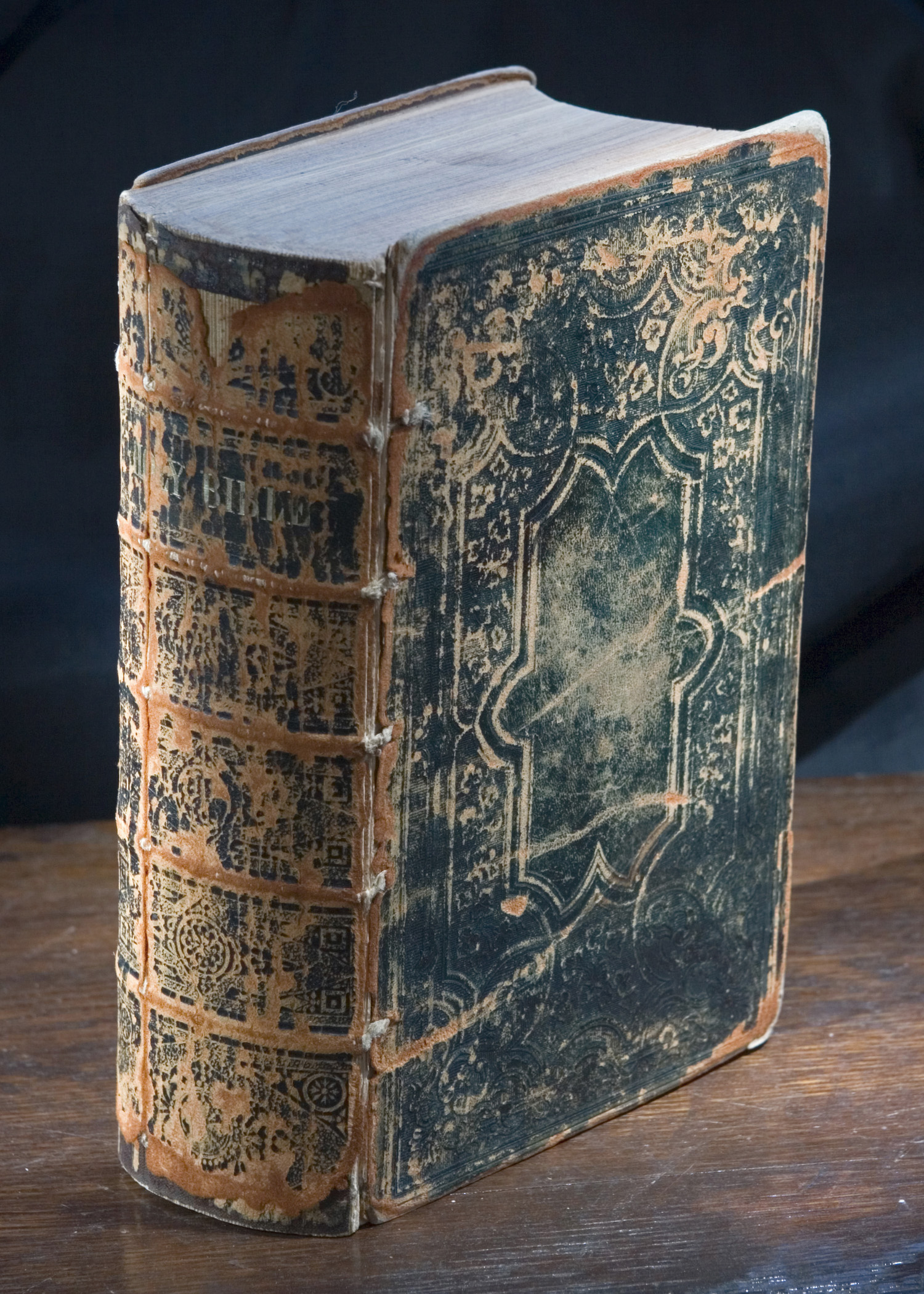

Thomas Nelson and Sam Moore
The publisher behind the NKJV was Thomas Nelson, a firm with a long history in Bible printing. Its earlier form, Thomas Nelson and Sons, had published the American Standard Version in 1901 (the title page appears in lesson 9). By the 1970s the American business was run by Sam Moore, born Salim Ziady in Lebanon, who came to the United States at 19 in the 1950s and, according to Christianity Today's obituary, "sold Bibles door-to-door to pay for his tuition at the University of South Carolina."4 Publishers Weekly reports that Moore founded National Book Publishers in 1958, launched a Christian publishing house called Royal Publishing three years later, acquired Thomas Nelson and Sons, and in 1969 had Royal Publishing adopt "the Thomas Nelson name (dropping and Sons)" and move to Nashville.5
Two obituaries written after Moore's death in June 2018, at 88, credit him with the NKJV. Christianity Today wrote that he "prompted Thomas Nelson's multimillion-dollar launch of the New King James Version (NKJV) of the Bible in 1983, inspired by his young son's confusion over the traditional KJV text."4 Publishers Weekly wrote that "Moore also led a $4.5 million project to translate the King James Version of the Bible into the New King James Version."5 The figure of $4.5 million matches the publisher's own statement that "The New King James Version represents an investment of over $4.5 million. All of those costs have been paid by Thomas Nelson Publishers."3
Not every account gives Moore the idea. Michael Marlowe's Bible Research site, a careful reference page on English versions, states that "The New King James Version was conceived by Arthur Farstad, a conservative Baptist and a former editor at Thomas Nelson Publishers."6 The two accounts can both be partly true, since a publisher can approve and pay for a project that an editor designs, but the record available for this lesson does not settle who first proposed it. Note also that both obituaries date the launch to 1983, while the complete Bible carries a copyright date of 1982. The copyright line printed with every NKJV quotation reads "Copyright 1982 by Thomas Nelson."2 The difference may be one of a print copyright year against a sales launch, and is listed as unresolved below.
The 1975 meetings and the guidelines
According to Marlowe, "The project was inaugurated in 1975 with two meetings (Nashville and Chicago) of 68 interested persons, most of them prominent Baptists but also with some conservative Presbyterians. The men who were invited to these meetings prepared the guidelines for the NKJV."6 The figure of 68 comes from this one source and could not be checked against the meeting records for this lesson.
The guidelines themselves are quoted by James D. Price, who chaired the NKJV's Old Testament committee. In a 1996 paper answering a critic of the NKJV, Price cites what he calls "an excerpt from the initial guidelines drawn up for the NKJV project," taken from a brochure Thomas Nelson distributed when the version first appeared:
The traditional texts of the Greek and Hebrew will be used rather than modern critical texts based on the Westcott and Hort theory. Because of the continued popularity of the traditional text (Textus Receptus) and the increasing number of scholars who prefer this text because of its support by the majority of manuscripts, it is important that a version of the Bible based on this text be available in current literary English.7
That sentence states the whole design of the version. The text was to be the traditional one, and the English was to be "current literary English." Everything else the NKJV did follows from those two decisions.
Arthur Farstad and the committees
The executive editor was Arthur Leonard Farstad. A eulogy published in the Journal of the Grace Evangelical Society in 1998 gives the facts of his life: he "was born on March 7, 1935 in Yonkers, New York," and died "at sixty-three years of age on Tuesday evening, September 1, 1998 in Dallas." He "earned degrees and received many honors from Emmaus Bible School, Washington Bible College, and Dallas Theological Seminary," and besides his work on the NKJV and on "The Majority Text of the Greek New Testament," he "was also a founder of the Majority Text Society, editor of the Journal of the Grace Evangelical Society, and translator and general editor of a new translation of the New Testament called Logos 21."8 The same eulogy says that around 1980 Farstad "had been a Greek professor at DTS for five and a half years and was at that time Executive Editor of The New King James Version of the Bible."8
The Logos 21 project had a later history of its own. Marlowe's page on the Holman Christian Standard Bible reports that the HCSB "originated in 1984 as an independent project of Arthur Farstad, who had formerly served as general editor for the New King James Version," and that "Farstad's original concept was to produce a modern English translation of the New Testament based on the Greek Majority Text which he had edited with Zane Hodges and published in 1982."9 Holman's finished HCSB, after Farstad's death, was based on the critical text. The NKJV's executive editor, in other words, preferred the Majority Text over the Textus Receptus that his own version printed, a point King James Only critics have used against the NKJV and that the NKJV's own preface states openly, as shown below.
The publisher describes how the work was organized. "Scholars were assigned specific Old and New Testament books based on their areas of expertise. They submitted their work to the Executive Editors for the Old and New Testaments, who next gave it to the English Editor to be checked for grammatical accuracy, literary beauty, and effective communication of content." During the process, it says, "the work was regularly reviewed by the clergy and lay advisers on the British Oversight Committee and the North American Overview Committee. The final exhaustive process was carried out by a separate Executive Review Committee for each Testament."3
The lists of committee members printed with the preface, as reproduced on the Bible Research site, name the Old Testament Executive Review Committee under Dr. James D. Price of Temple Baptist Theological Seminary in Chattanooga, Tennessee, and the New Testament Executive Review Committee under Farstad, with Rev. William H. McDowell of Florida Southern College as English editor. The revisers came from a wide range of schools and churches: Dallas Theological Seminary, Southwestern Baptist Theological Seminary, Asbury Theological Seminary, Covenant College and Covenant Theological Seminary, Concordia Seminary in St. Louis, Gordon-Conwell Theological Seminary, Reformed Theological Seminary, Mennonite Brethren Biblical Seminary, Nazarene Theological Seminary, Moody Bible Institute, Biola College, Grace Theological Seminary, Liberty Baptist College, the Free Church of Scotland College in Edinburgh, Wycliffe College in Toronto, and others in Canada, Australia, New Zealand and England. Among them were the Old Testament scholars Meredith C. Kline and R. K. Harrison, the classicist E. M. Blaiklock of Auckland, and Harry A. Sturz, professor emeritus of Greek at Biola College.1
The publisher's figure of "130" scholars, church leaders and lay Christians is larger than the number of named revisers in those lists, because it counts the overview and oversight committees of clergy and lay readers as well. The publisher's own site now phrases it two ways on one page: "a team of more than 130 scholars" in one place and "130 international and multi-denominational Bible scholars, church leaders, and lay Christians" in another.3 The second wording matches the earlier blurb and is the safer one to repeat.
Every participant signed a doctrinal statement. The preface says: "In faithfulness to God and to our readers, it was deemed appropriate that all participating scholars sign a statement affirming their belief in the verbal and plenary inspiration of Scripture, and in the inerrancy of the original autographs."1
The timeline from 1969 to the present
The dates below are drawn from the publisher's statements, the two 2018 obituaries of Sam Moore, the 1998 eulogy for Arthur Farstad, Daniel Wallace's 1983 review of the Majority Text, and Michael Marlowe's reference pages. The New Testament appeared in 1979 and the whole Bible carries a 1982 copyright. Marlowe adds that "In 1984 the NKJV was slightly revised by a committee of reviewers chaired by Farstad."6 The lists printed with the preface name that "Revision Committee (1984)" and note that two of its members, James Borland of Liberty Baptist Seminary and Zane Hodges of Dallas Theological Seminary, "served on the committee only for the revision of 1984."1 What exactly changed in 1984 is not documented in the sources consulted here.
Complete equivalence: the method in the preface's own words
The NKJV preface names its method "complete equivalence" and sets it against the "dynamic equivalence" associated with Eugene Nida and the versions described in lesson 12 (The NIV and Dynamic Equivalence). The preface explains: "Where new translation has been necessary in the New King James Version, the most complete representation of the original has been rendered by considering the history of usage and etymology of words in their contexts. This principle of complete equivalence seeks to preserve all of the information in the text, while presenting it in good literary form." It then states its objection to the other method in one sentence: "Dynamic equivalence, a recent procedure in Bible translation, commonly results in paraphrasing where a more literal rendering is needed to reflect a specific and vital sense."1
The preface gives four examples of complete equivalence: "'lifted her voice and wept' (Gen. 21:16); 'I gave you cleanness of teeth' (Amos 4:6); 'Jesus met them, saying, Rejoice!' (Matt. 28:9); and 'Woman, what does your concern have to do with Me?' (John 2:4)."1 Set beside the King James, the examples show what the method keeps and what it changes. The King James reads in Genesis 21:16 that Hagar "lift up her voice, and wept," and in Amos 4:6, "I also have given you cleanness of teeth in all your cities, and want of bread in all your places" (KJV). The NKJV keeps the Hebrew idiom "cleanness of teeth" in its text and puts the meaning, "Hunger," in a footnote, while changing "want of bread" to "lack of bread" (NKJV, copyright Thomas Nelson).10 A dynamic equivalence version would usually put the meaning in the text. In John 2:4 the King James reads "Woman, what have I to do with thee?" (KJV), and the NKJV's "what does your concern have to do with Me?" is a new rendering of the same Greek idiom, an example where "new translation has been necessary."10
The preface also defends interjections that modern versions often drop: "the interjection behold, in the older King James editions, continues to have a place in English usage, especially in dramatically calling attention to a spectacular scene, or an event of profound importance such as the Immanuel prophecy of Isaiah 7:14. Consequently, behold is retained for these occasions in the present edition." It adds that the same Hebrew and Greek words may also be rendered "indeed, look, see, and surely" when the context calls for it.1
Thomas Nelson today describes the same method in the more common terms. On its NKJV page, under the question "Is the NKJV a 'word for word' translation?", it answers "Yes" and says the NKJV "is a 'word for word' translation which is sometimes known as formal equivalence. It gives the meaning clearly in natural English while maintaining as much of the wording and grammar of the original languages as possible."3 James D. Price, the Old Testament chairman, later wrote a book on the theory, Complete Equivalence in Bible Translation (Thomas Nelson, 1987), listed in Marlowe's bibliography.6
Keeping the thought flow of 1611
The feature the preface calls "special" is the closeness of the NKJV's sentence shape to the King James: "A special feature of the New King James Version is its conformity to the thought flow of the 1611 Bible. The reader discovers that the sequence and selection of words, phrases, and clauses of the new edition, while much clearer, are so close to the traditional that there is remarkable ease in listening to the reading of either edition while following with the other."1
The Lord's Prayer shows the effect. The King James reads:
After this manner therefore pray ye: Our Father which art in heaven, Hallowed be thy name. Thy kingdom come, Thy will be done in earth, as it is in heaven. (Matthew 6:9 to 10, KJV)
The NKJV reads:
In this manner, therefore, pray: Our Father in heaven, Hallowed be Your name. Your kingdom come. Your will be done On earth as it is in heaven. (Matthew 6:9 to 10, NKJV, copyright Thomas Nelson)11
Every phrase of the King James is still in place and in the same order. "Which art" has gone, "thy" has become "Your" with a capital Y, "in earth" has become "On earth," and "pray ye" has become "pray." A congregation that knows the King James wording can follow an NKJV reading without losing its place, which is exactly what the preface promised.
Devotional quality
The preface claims a second inheritance besides accuracy. "The King James scholars readily appreciated the intrinsic beauty of divine revelation," it says, and the editors of the NKJV, "while sensitive to the late-twentieth-century English idiom, and while adhering faithfully to the Hebrew, Aramaic, and Greek texts, have sought to maintain those lyrical and devotional qualities that are so highly regarded in the Authorized Version." It also rejects the idea that the Gospels and Epistles should read like a newspaper: their style "cannot strictly be likened, as sometimes suggested, to modern newspaper style."1 That sentence is aimed at the style of the paraphrases and common-language Bibles of the 1960s and 1970s described in lesson 14 (The Modern Rewrites).
What the NKJV changed from the King James
The preface lists its changes to the English under the heading "The Style." It begins from a plain admission: "it is also universally understood that our language, like all living languages, has undergone profound change since 1611. Subsequent revisions of the King James Bible have sought to keep abreast of changes in English speech. The present work is a further step toward this objective."1 The sentence assumes what lesson 7 shows from the printing record: the King James itself was revised many times between 1611 and 1769, mostly in spelling, punctuation and the correction of printers' errors.
Pronouns and verb endings
The most visible change is the pronouns. "Readers of the Authorized Version will immediately be struck by the absence of several pronouns: thee, thou, and ye are replaced by the simple you, while your and yours are substituted for thy and thine as applicable." The preface explains that these forms "were once forms of address to express a special relationship to human as well as divine persons" and "are no longer part of our language." In their place it adds a new sign of reverence: "reverence for God in the present work is preserved by capitalizing pronouns, including You, Your and Yours, which refer to Him."1 The preface argues that capitals also help the reader, because "Without such capitalization the distinction is often obscure, because the antecedent of a pronoun is not always clear in the English translation." Capitalizing divine pronouns is an interpretive act, since the translators must decide in each verse whether a pronoun refers to God, a point that matters in a verse like 2 Thessalonians 2:7, discussed below, where the NKJV prints "He" with a footnote "Or he."12
The verb endings went the same way. "The -eth and -est verb endings, so familiar in the earlier King James editions, are now obsolete," the preface says, and it gives a practical reason drawn from prayer: "Unless a speaker is schooled in these verb endings, there is common difficulty in selecting the correct form to be used with a given subject of the verb in vocal prayer. That is, should we use love, loveth, or lovest? do, doeth, doest, or dost? have, hath, or hast?"1
A cost of this change, pointed out by the NKJV's King James Only critics and discussed below, is that the King James distinguished singular "thee" from plural "ye," as Greek and Hebrew do, and modern "you" cannot. In Luke 22:31 to 32 the King James reads "Satan hath desired to have you" (plural, all the disciples) and then "I have prayed for thee" (singular, Peter). The NKJV's "you" in both places loses that difference on the page.
The word "and," proper names and theological terms
The preface notes that "the frequency of the connective and far exceeded the limits of present English usage" in the King James, and that "instead of and, alternatives such as also, but, however, now, so, then, and thus are accordingly rendered in the present edition, when the original language permits."1 The Lord's Prayer above shows one effect: the NKJV ends Matthew 6:10 with a full stop after "Your kingdom come," where the King James runs on with commas.
Proper names were made uniform. The King James spelled Old Testament names one way and their Greek forms in the New Testament another, so that Isaiah appears as "Esaias" and Elijah as "Elias" in the Gospels. The NKJV kept the King James Old Testament spelling and used it in both Testaments: "instead of the spellings Isaiah and Elijah in the Old Testament, and Esaias and Elias in the New Testament, Isaiah and Elijah now appear in both Testaments."1
The theological vocabulary stayed. "King James doctrinal and theological terms, for example, propitiation, justification, and sanctification, are generally familiar to English-speaking peoples. Such terms have been retained except where the original language indicates need for a more precise translation."1 So did the names of ancient objects: "Words representing ancient objects, such as chariot and phylactery, have no modern substitutes and are therefore retained."1
Words whose meaning shifted
The greatest number of changes concern English words that are still in use but now mean something different. A reader of 1611 knew that "prevent" meant to go before, "let" could mean to hinder, "conversation" meant one's whole way of life, "quick" meant alive, and "carriages" meant the baggage one carried. A modern reader takes each one in the wrong sense. The chart below sets a dozen King James words beside the NKJV's renderings, verse by verse. The King James wording is public domain. The NKJV words are short excerpts, copyright Thomas Nelson, taken from Bible Gateway.12
Some of these changes are pure updating. "Charity" in 1611 meant self-giving love, and the Greek word in 1 Corinthians 13 is agape, the same word the King James renders "love" in most other places. Other changes, especially the last three in the chart, are choices of rendering that the King James translators could have made but did not. Those are the ones the NKJV's King James Only critics count against it, as shown below. The NKJV footnote on Revelation 1:18 explains its choice: "Lit. Unseen; the unseen realm."12
The format
The preface lists the features of the NKJV's printed page: "Subject headings assist the reader to identify topics and transitions in the biblical content. Words or phrases in italics indicate expressions in the original language which require clarification by additional English words, as also done throughout the history of the King James Bible. Oblique type in the New Testament indicates a quotation from the Old Testament. Poetry is structured as contemporary verse to reflect the poetic form and beauty of the passage in the original language." The divine name is printed as in the King James, "LORD" or "GOD" in capitals, and the NKJV extends the practice: "the name is so capitalized whenever the covenant name is quoted in the New Testament from a passage in the Old Testament."1 The King James of 1611 printed each verse as its own paragraph and set the poetry of the Psalms and the prophets as prose.
What the NKJV kept
The NKJV kept more of the King James than any other modern revision, and the places where it kept the older reading are as revealing as the places where it changed.
Doctrinally loaded words. In Isaiah 7:14 the NKJV reads "Behold, the virgin shall conceive and bear a Son" (NKJV, copyright Thomas Nelson), keeping both "behold" and "virgin," against the "young woman" of the Revised Standard Version of 1952 described in lesson 9.13 In 1 Timothy 3:16 the NKJV prints "God was manifested in the flesh," following the Textus Receptus, and gives the critical-text reading "Who" in a footnote. In Romans 1:20 it keeps the King James word "Godhead" and footnotes the alternatives "divine nature, deity."13
Hebrew idiom. Marlowe, who generally prefers the critical text, still observes that "of all versions of the complete Bible published in the twentieth century, the NKJV seems to retain the Hebrew form of expression most often." His examples include Genesis 18:19 and Amos 3:2, where the NKJV keeps the King James "known" for the Hebrew yada while the NASB of 1977 changed it to "chosen," and Romans 1:3, where the NKJV keeps "the seed of David" while the NASB has "a descendant of David." He concludes that the NKJV "simply reproduces the Hebraism of the original, and leaves the interpretation to the reader."6
Where it did not keep the King James form. Marlowe also notes the reverse: "The bold Hebraisms of the KJV are not always retained in the NKJV. For instance, we see that 'the calves of our lips' in Hosea 14:2 have been changed to 'the sacrifices of our lips.'"6 The NKJV footnote on that verse gives the literal sense, "Lit. bull calves," and adds that the Greek Septuagint reads "fruit."13
Variety of wording. Marlowe points out that the NKJV keeps the King James habit of varying English words for one Greek word, which sounds better but hides repetition. In 1 Corinthians 3:17 Paul uses the Greek verb phtheiro twice, and the NKJV, like the King James, renders it first "defiles" and then "destroy," while the NASB uses "destroy" both times. In 1 Corinthians 13:8 to 11 the NKJV keeps the King James variety ("fail," "vanish away," "done away," "put away") for the single Greek verb katargeo.6 The NKJV did make some renderings agree that the King James had left different: Marlowe notes that "the renderings of Matt. 26:41 and Mark 14:38, which had been different in the KJV, are now exactly the same in the NKJV, as they are in the Greek."6
The Hebrew base of the Old Testament
The NKJV preface gives a short history of the Hebrew text before naming its own base. It says that "By the sixth century A.D. the scribes were succeeded by a group known as the Masoretes," that "Babylonia, Palestine, and Tiberias were the main centers of Masoretic activity," and that "by the tenth century A.D. the Masoretes of Tiberias, led by the family of ben Asher, gained the ascendancy."1 Lesson 1 of this module tells that history in full, and the Hebrew course on this site explains the vowel points the Masoretes added (How the Old Testament Was Written and Kept; Classical Hebrew, lesson 2).
The preface then traces the printed Hebrew Bibles: "Daniel Bomberg printed the first Rabbinic Bible in 1516-17; that work was followed in 1524-25 by a second edition prepared by Jacob ben Chayyim and also published by Bomberg. The text of ben Chayyim was adopted in most subsequent Hebrew Bibles, including those used by the King James translators." It notes that Rudolf Kittel's Biblia Hebraica used the ben Chayyim text in its first two editions (1906 and 1912), and that in 1937 Paul Kahle's third edition switched to "the Leningrad Manuscript B19a (A.D. 1008), which Kahle regarded as superior to that used by ben Chayyim."1
The NKJV's own choice follows: "For the New King James Version the text used was the 1967/1977 Stuttgart edition of the Biblia Hebraica, with frequent comparisons being made with the Bomberg edition of 1524-25. The Septuagint (Greek) Version of the Old Testament and the Latin Vulgate also were consulted. In addition to referring to a variety of ancient versions of the Hebrew Scriptures, the New King James Version draws on the resources of relevant manuscripts from the Dead Sea caves."1 The Stuttgart edition, Biblia Hebraica Stuttgartensia (BHS), prints the Leningrad Codex. The Latin Vulgate here is the Latin translation made about 382 to 405 at the request of Pope Damasus I, described in lesson 4.
So in the Old Testament the NKJV did not translate the exact printed text the King James translators used. It translated the Leningrad Codex as printed in BHS and checked it against Bomberg's second Rabbinic Bible. The two Hebrew texts are both Masoretic texts of the ben Asher tradition and differ very little, mainly in small points of spelling and vowels, but the choice drew criticism from defenders of the Bomberg text, set out below.
The preface also states a rule for hard places: "In the few places where the Hebrew was so obscure that the 1611 King James was compelled to follow one of the versions, but where information is now available to resolve the problems, the New King James Version follows the Hebrew text. Significant variations are recorded in footnotes."1 The NKJV's Old Testament footnotes show both kinds of decision.
- Genesis 4:8. The Hebrew says that Cain "talked" with Abel but does not report what he said. The NKJV follows the Hebrew in the text and adds the footnote "Sam., LXX, Syr., Vg. add 'Let us go out to the field,'" naming the Samaritan Pentateuch, the Septuagint, the Syriac and the Vulgate.14
- 1 Chronicles 25:3. The King James lists five sons of Jeduthun and then says "six." The NKJV adds a sixth name, Shimei, and footnotes it "So with one Heb. ms., LXX mss.," a second note pointing out that "Shimei is the sixth, v. 17."14 Here the NKJV adds a word that stands in the Septuagint and one Hebrew manuscript but not in the printed Masoretic text.
- Psalm 4:4. The King James reads "Stand in awe, and sin not." The NKJV reads "Be angry, and do not sin," which is how the Septuagint renders the line and how Paul quotes it in Ephesians 4:26, with the footnote "Lit. Tremble or Be agitated" (NKJV, copyright Thomas Nelson).14
The second and third examples show the NKJV choosing a reading or a sense that the Greek translation supports. Its defenders argue that such cases are few and noted, and its critics argue that any departure from the Bomberg text breaks the promise of a traditional text.
The Greek base of the New Testament
The New Testament is where the NKJV differs most from every other modern version. The preface states its decision this way:
In light of these facts, and also because the New King James Version is the fifth revision of a historic document translated from specific Greek texts, the editors decided to retain the traditional text in the body of the New Testament and to indicate major Critical and Majority Text variant readings in the footnotes.1
"The traditional text" is the Textus Receptus, the family of printed Greek New Testaments that began with Erasmus in 1516 and runs through Robert Estienne (Stephanus) in 1550, Theodore Beza and the Elzevir edition of 1633, whose preface gave it the name (lesson 5, Erasmus and the Textus Receptus). No single printed edition exactly matches the Greek the King James translators chose, because they moved between editions. In the nineteenth century F. H. A. Scrivener reconstructed that Greek, published in 1881 and again in 1894. James D. Price states that Scrivener's text "is currently published by the Trinitarian Bible Society, and this is the text upon which the NKJV was based," and quotes what he calls "the Publisher's forward to the NKJV": "the Scrivener Greek Text was the basis of the New Testament."7 That foreword could not be opened for this lesson, so the quotation rests on Price's report.
The preface's account of the three texts
Unusually for a Bible preface, the NKJV's discusses the textual debate at length and fairly. It describes three positions, which lesson 8 of this module sets out with the manuscript evidence (The Textual Debate).
On the Textus Receptus, the preface says that the King James New Testament "was based on the traditional text of the Greek-speaking churches, first published in 1516, and later called the Textus Receptus or Received Text. Although based on the relatively few available manuscripts, these were representative of many more which existed at the time but only became known later." It then rejects the theory of Westcott and Hort that the Byzantine text was an official fourth-century revision: "a total lack of historical evidence for this event has forced a revision of the theory. It is now widely held that the Byzantine Text that largely supports the Textus Receptus has as much right as the Alexandrian or any other tradition to be weighed in determining the text of the New Testament."1
On the critical text, it says that "Since the 1880s most contemporary translations of the New Testament have relied upon a relatively few manuscripts discovered chiefly in the late nineteenth and early twentieth centuries. Such translations depend primarily on two manuscripts, Codex Vaticanus and Codex Sinaiticus, because of their greater age." And it adds a criticism: "some scholars have grounds for doubting the faithfulness of Vaticanus and Sinaiticus, since they often disagree with one another, and Sinaiticus exhibits excessive omission."1 (Codex Vaticanus was in the Vatican Library by the fifteenth century and was not "discovered" in the nineteenth. What the nineteenth century brought was full access to it and the publication of Sinaiticus, as lesson 2 explains.)
On the Majority Text, it says: "A third viewpoint of New Testament scholarship holds that the best text is based on the consensus of the majority of existing Greek manuscripts. This text is called the Majority Text. Most of these manuscripts are in substantial agreement. Even though many are late, and none is earlier than the fifth century, usually their readings are verified by papyri, ancient versions, quotations from the early church fathers, or a combination of these. The Majority Text is similar to the Textus Receptus, but it corrects those readings which have little or no support in the Greek manuscript tradition."1
Then the preface makes a remarkable admission about its own base: "Very few scholars still favor the Textus Receptus as such, and then often for its historical prestige as the text of Luther, Calvin, Tyndale, and the King James Version." It describes the critical text as dominant for "about a century," notes a move toward a "more eclectic" text, and adds that "a small but growing number of scholars prefer the Majority Text, which is close to the traditional text except in the Revelation."1 It closes the discussion with a statistic: "fully eighty-five percent of the New Testament text is the same in the Textus Receptus, the Alexandrian Text, and the Majority Text."1 The preface gives no source for the eighty-five percent figure, and the way such percentages are counted (by words, by variation units, or by verses) changes the result, so it is best read as the editors' estimate.
The preface also gives its own count of manuscripts: "Over five thousand Greek, eight thousand Latin, and many more manuscripts in other languages attest the integrity of the New Testament."1 That was a round figure of the 1970s and 1980s. Lesson 2 gives the current count from the Institute for New Testament Textual Research in Munster and explains what such counts show and what they do not (The New Testament Manuscripts).
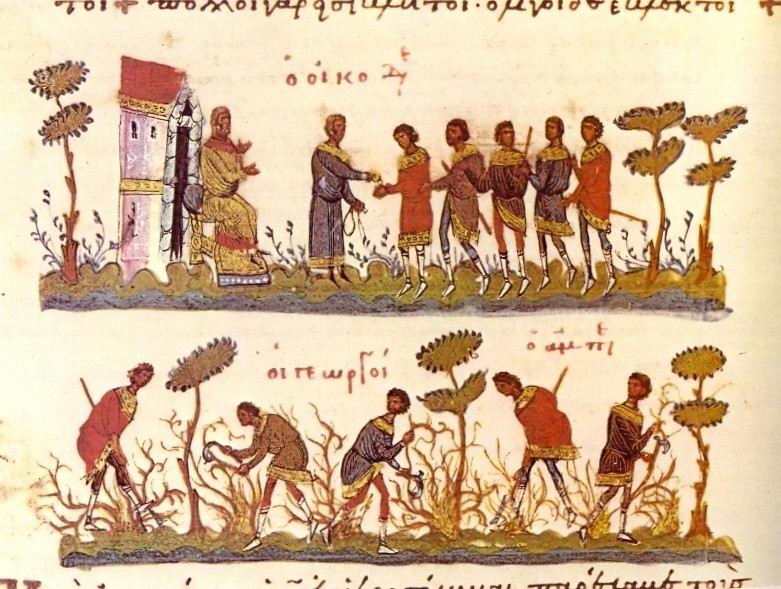

The Majority Text of 1982
In the same year as the complete NKJV, Thomas Nelson published The Greek New Testament According to the Majority Text, edited by Zane C. Hodges and Arthur L. Farstad. Daniel B. Wallace, later a professor of New Testament at Dallas Theological Seminary, reviewed it in the Grace Theological Journal in 1983. He described the editors as "Zane Hodges, professor of NT Literature and Exegesis at Dallas Theological Seminary, and Arthur Farstad, executive New Testament editor of the New KJV," and noted that "The most casual reader will be struck immediately with the fact that this is not another reprint of the Textus Receptus." As examples he named Acts 8:37 and 1 John 5:7 to 8: "A glance at the Majority Text will reveal that these TR readings are indeed rejected because they are not found in the majority of MSS."15
Wallace praised the edition and recommended it "for every student of the Greek NT, regardless of his text-critical views," while pointing out its main weakness: its text and apparatus were "based entirely on evidence supplied in other editions of the Greek NT rather than on a first-hand acquaintance with the MSS," chiefly Hermann von Soden's edition of 1913. He quoted the editors' own description of their text as "both preliminary and provisional."15
The NKJV's "M-Text" footnotes report this edition's readings. The NKJV's executive editor therefore edited a Greek text that disagrees with the Textus Receptus in hundreds of places, and then put those disagreements in the footnotes of a Bible that prints the Textus Receptus. Edwin A. Blum, a Dallas Seminary colleague who later edited the Holman Christian Standard Bible, said in a 2007 interview quoted on Marlowe's site that "when he was working on the NKJV, he wanted to change the text in about 260 places that he felt the KJV text did not represent the MT."9 The body text was not changed in those places. The notes carry the Majority Text instead.
Where the NKJV departs from Scrivener
The NKJV does not follow Scrivener's Greek in every word. Comparing the parallel Greek texts printed on Bible Hub shows several places where the NKJV's English agrees with another Textus Receptus edition or with the Majority Text against Scrivener's 1894 text.
- Luke 1:35. Scrivener's 1894 text reads "to gennomenon ek sou hagion," "the holy thing born of thee," and the King James has "that holy thing which shall be born of thee" (KJV). Stephanus's 1550 edition, the Robinson and Pierpont Majority Text and the critical text all lack "ek sou."16 The NKJV reads "that Holy One who is to be born will be called the Son of God" (NKJV, copyright Thomas Nelson), without "of you" and without a footnote.17
- Revelation 6:11. Scrivener and Stephanus read the plural "stolai leukai," "white robes," and the King James has "white robes were given unto every one of them." The Majority Text and the critical text read the singular "stole leuke." The NKJV reads "a white robe was given to each of them" (NKJV, copyright Thomas Nelson).1817
- Colossians 3:17. Scrivener reads "to theo kai patri," and the King James translates "to God and the Father." The NKJV has "giving thanks to God the Father through Him" (NKJV, copyright Thomas Nelson), which leaves the Greek "kai" untranslated or treats it as "even." Here the Greek behind the NKJV is the same as Scrivener's, and the difference is one of translation.1917
The first two cases are the kind the Trinitarian Bible Society points to when it argues that the NKJV does not fully keep its promise to translate the Received Text. The same examples also show that the King James itself followed different printed editions at different points, which is why Scrivener had to reconstruct its Greek in the first place.
How the NKJV footnotes work
The textual footnotes are the NKJV's most original feature. The preface defines the two labels:
1. NU-Text. These variations from the traditional text generally represent the Alexandrian or Egyptian type of text described previously in "The New Testament Text." They are found in the Critical Text published in the twenty-sixth edition of the Nestle-Aland Greek New Testament (N) and in the United Bible Societies' third edition (U), hence the acronym, "NU-Text."
2. M-Text. This symbol indicates points of variation in the Majority Text from the traditional text, as also previously discussed in "The New Testament Text." It should be noted that M stands for whatever reading is printed in the published Greek New Testament According to the Majority Text, whether supported by overwhelming, strong, or only a divided majority textual tradition.1
The preface claims that these notes are neutral: "The textual notes in the present edition of the New Testament make no evaluation of readings, but do clearly indicate the manuscript sources of readings. They objectively present the facts without such tendentious remarks as 'the best manuscripts omit' or 'the most reliable manuscripts read.' Such notes are value judgments that differ according to varying viewpoints on the text. By giving a clearly defined set of variants the New King James Version benefits readers of all textual persuasions."1 Other versions word such notes differently. The NIV 2011, for example, prints this line in brackets within the text of Mark 16: "[The earliest manuscripts and some other ancient witnesses do not have verses 9-20.]" (NIV 2011, copyright Biblica, Inc.).20 The NKJV preface treats wording that ranks the witnesses as a value judgment and leaves the ranking to the reader.
The NU editions named in the preface, Nestle-Aland 26 (1979) and UBS 3 (1975), have since been followed by Nestle-Aland 28 (2012) and UBS 5 (2014). The NKJV notes as printed still refer to the older editions. Readers should not assume that every NU note matches the current critical text word for word, though the large passages discussed below are treated the same way in the newer editions.
Mark 16:9 to 20
The longer ending of Mark begins in the King James: "Now when Jesus was risen early the first day of the week, he appeared first to Mary Magdalene, out of whom he had cast seven devils" (Mark 16:9, KJV). The NKJV prints all twelve verses, beginning "Now when He rose early on the first day of the week, He appeared first to Mary Magdalene, out of whom He had cast seven demons" (Mark 16:9, NKJV, copyright Thomas Nelson), and attaches this note: "Vv. 9-20 are bracketed in NU as not in the original text. They are lacking in Codex Sinaiticus and Codex Vaticanus, although nearly all other mss. of Mark contain them."21
The note does three things. It reports the critical text's judgment and names it as that text's judgment ("bracketed in NU as not in the original text"). It names the two great fourth-century codices that end Mark at 16:8. And it reports the opposite fact, that almost all other Greek copies of Mark have the verses. The reader gets the evidence both sides use without being told which side is right. Lesson 8 adds the rest of the evidence, including Codex Alexandrinus and Codex Bezae, which contain the verses, and Irenaeus's quotation of Mark 16:19 in Against Heresies 3.10.5.
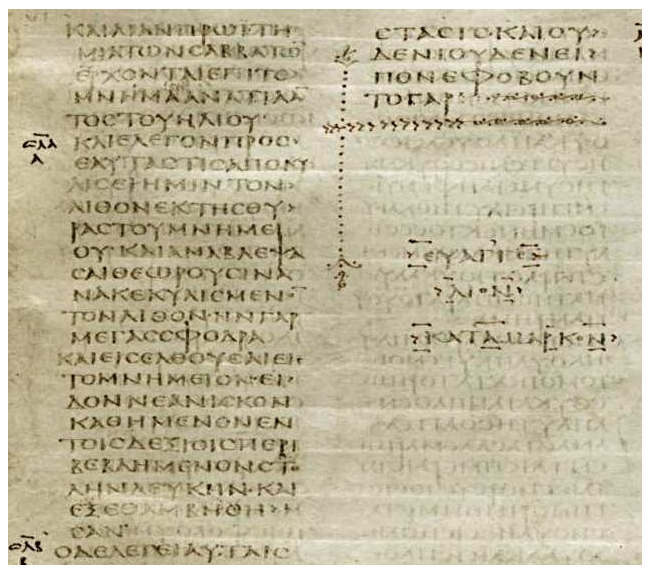

John 7:53 to 8:11
The account of the woman taken in adultery is printed in full in the NKJV. Its note on John 7:53 reads: "NU brackets 7:53 through 8:11 as not in the original text. They are present in over 900 mss. of John."22 This note is the one Marlowe uses to dispute the preface's claim of neutral notes. "Obviously the purpose of the second sentence in this note is to give a 'Majority Text' rationale for the authenticity of the story," he writes. "Students would have been better served by a note which indicated that the verses are absent from the ancient manuscripts and versions."6 The fact in the note is a fact, but which fact a note chooses to state shapes how a reader weighs it. The Mark note names the codices that lack the passage, while the John note names only the count of copies that have it. Lesson 8 lists the early manuscripts that lack John 7:53 to 8:11, among them the papyri P66 and P75 and Codices Sinaiticus and Vaticanus.
Acts 8:37
In the King James, the Ethiopian official asks to be baptized and Philip answers: "If thou believest with all thine heart, thou mayest. And he answered and said, I believe that Jesus Christ is the Son of God" (Acts 8:37, KJV). The NKJV prints the verse: "Then Philip said, 'If you believe with all your heart, you may.' And he answered and said, 'I believe that Jesus Christ is the Son of God'" (Acts 8:37, NKJV, copyright Thomas Nelson). Its note reads: "NU, M omit v. 37. It is found in Western texts, including the Latin tradition."23
This is one of the places where the Textus Receptus stands against both the critical text and the Majority Text, as Wallace pointed out in reviewing the Hodges and Farstad edition. An NKJV reader who checks the note learns that the verse is printed because it is in the traditional printed text, and that most Greek manuscripts of every kind lack it. Irenaeus (Against Heresies 3.12.8) appears to know the confession, which lesson 8 discusses.
1 John 5:7 to 8
The King James reads: "For there are three that bear record in heaven, the Father, the Word, and the Holy Ghost: and these three are one. And there are three that bear witness in earth, the Spirit, and the water, and the blood: and these three agree in one" (1 John 5:7 to 8, KJV). The NKJV prints the whole passage, beginning "For there are three that bear witness in heaven: the Father, the Word, and the Holy Spirit; and these three are one" (1 John 5:7, NKJV, copyright Thomas Nelson), and adds the note: "NU, M omit the words from in heaven (v. 7) through on earth (v. 8). Only 4 or 5 very late mss. contain these words in Greek."24
The words in question, often called the Johannine Comma, entered Erasmus's Greek text with his third edition of 1522, as lesson 5 tells (the Complutensian Polyglot, whose New Testament was printed in 1514 and issued about 1520 to 1522, also contains them). Here the NKJV note uses the kind of evaluative fact ("very late") that its preface says the notes avoid, and for once it sides plainly against its own body text. Defenders of the passage, such as the Trinitarian Bible Society, rely on the Latin evidence, which lesson 8 sets out.
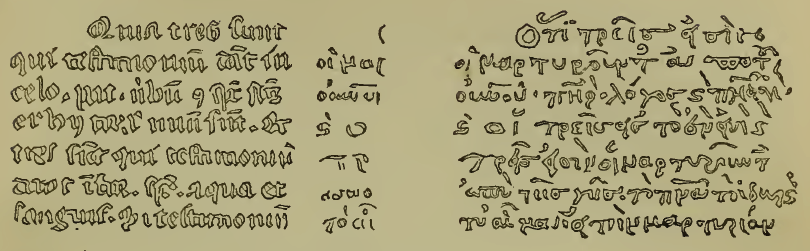

Revelation 22:19 and the last chapter
The preface says that the Majority Text is "close to the traditional text except in the Revelation," and Revelation 22:19 shows why. The King James warns that God "shall take away his part out of the book of life" (KJV). The NKJV prints "the Book of Life" and adds two notes: "M may God take away" and "NU, M tree of life."25 Lesson 5 explains that Erasmus had only one Greek manuscript of Revelation, lacking the last verses, and supplied them by translating the Latin into Greek. "Book of life" is the Latin reading, and almost the whole Greek tradition reads "tree of life." The NKJV body keeps the Erasmian reading and the note tells the reader that both the critical text and the Majority Text disagree.
Smaller notes on every page
Most NKJV textual notes concern small words. In Matthew 28:9 the NKJV prints "And as they went to tell His disciples, behold, Jesus met them" with the note "NU omits as they went to tell His disciples." In Luke 22:31 it prints "And the Lord said" with the note "NU omits And the Lord said." In 1 Timothy 3:16 it prints "God was manifested in the flesh" with the note "NU Who."26 A reader can open almost any chapter of the NKJV New Testament and see where the printed texts differ, which, as Marlowe put it, makes the version useful "for students who do not ignore the margin."6
Reception and use
The NKJV found a wide readership among churches that wanted to keep the King James form with modern pronouns. It has stayed among the best-selling English translations for four decades. The Evangelical Christian Publishers Association's list of "Bible Translations Bestsellers, Best of 2024," compiled from Circana BookScan sales data reported by Christian retailers, ranks it fifth, after the New International Version, the English Standard Version, the King James Version and the New Living Translation, and ahead of the Christian Standard Bible and the New American Standard Bible.27 The ECPA list counts sales through reporting stores, not all Bibles in use, and ranks titles only, without giving copies sold.
Thomas Nelson itself changed hands. Publishers Weekly reports that "In 2012, HarperCollins Publishers bought Thomas Nelson as a part of its HarperCollins Christian Publishing arm (along with Zondervan)."5 The NKJV's publisher and Zondervan, the North American publisher of the NIV, the two versions that took opposite sides of the textual question, now belong to the same parent company. The NKJV copyright notice reads "Scripture taken from the New King James Version. Copyright 1982 by Thomas Nelson. Used by permission. All rights reserved," and the publisher permits quotation of "up to 500 verses or 25% of a work" without written permission for certain non-commercial uses, under the terms stated on its site.32
The publisher's own present-day claims about the version are worth reading closely as claims. It says the committee was "the largest interdenominational translation committee assembled for a Bible translation," that the NKJV "has been assessed at an eighth grade reading level," and that it is "considered a highly accurate and reliable translation."3 The publisher gives no source for the committee comparison or the reading-level assessment.
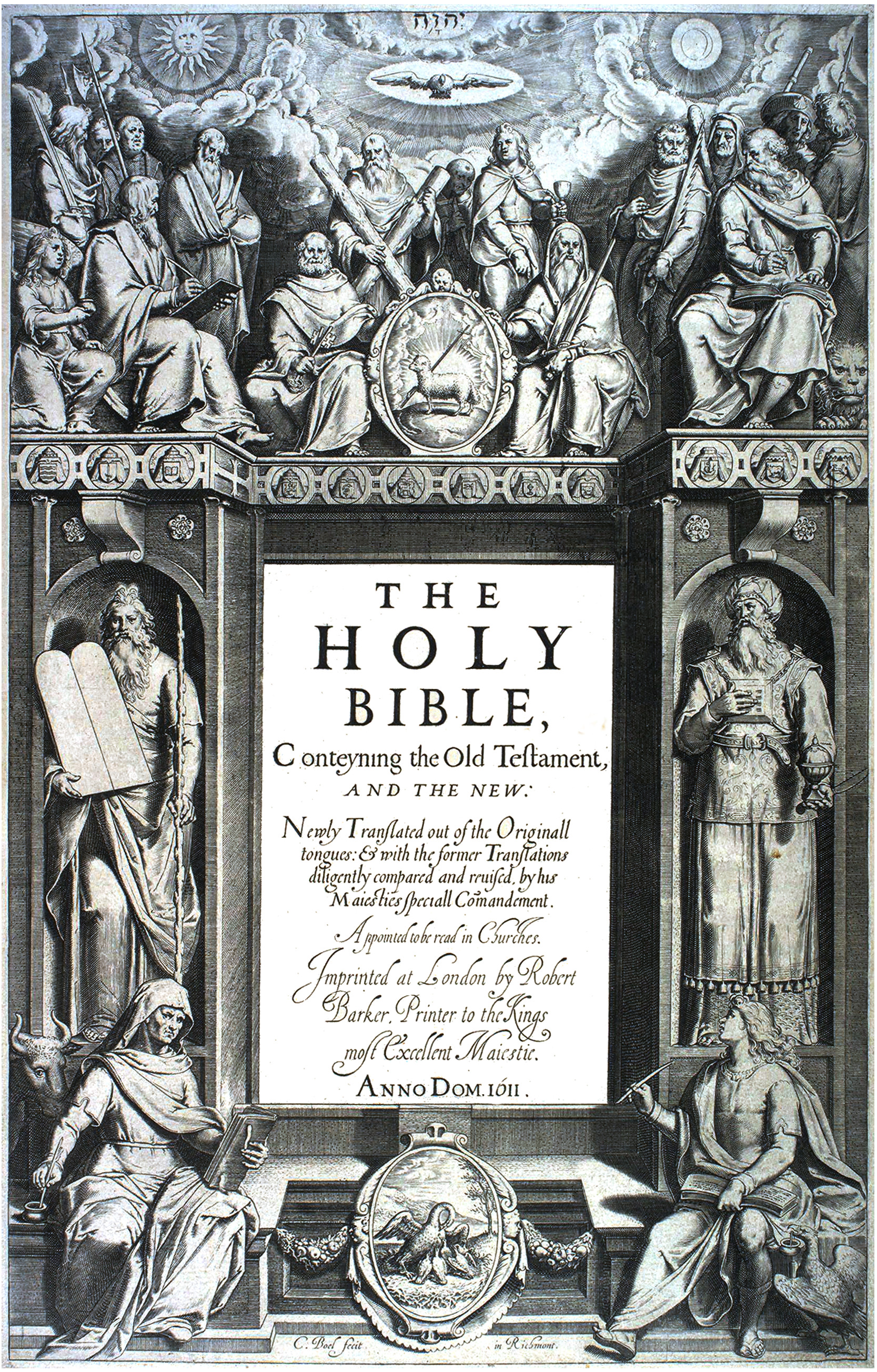

The criticism from defenders of the King James alone
The NKJV was meant in part for readers who trusted the King James and distrusted the critical text. Some of the sharpest criticism of it has come from that same group, the movement often called King James Only, which holds that the King James Version alone should be used in English. Its objections fall into five groups.
That it changes too many words
The best known attack is a list of word counts by G. A. Riplinger, author of New Age Bible Versions (1993). James D. Price, the NKJV's Old Testament chairman, answered a published sheet of hers in a 1996 paper (revised in 1997). Price quotes her accusations one by one: that the "NKJV omits the word 'Lord' 66 times," that it "omits the word 'God' 51 times," "the word 'heaven' 50 times," "the word 'repent' 44 times," "the word 'blood' 23 times," "the word 'hell' 22 times," and that it "omits the word 'devils' entirely."7
Price's answer is that none of these is an omission of any Hebrew or Greek word. The NKJV, he writes, "translated the underlying Hebrew and Greek words by English words different than the word 'lord' in the KJV," and "the KJV has the word 'lord' (without a capital letter) in most of the places where the NKJV uses a different word, and only four refer to God or Jesus Christ." He gives the cases: for example, thirty-two places where the Greek kurios refers to the master of servants or the owner of slaves and the NKJV has "master," and seventeen where the Hebrew adon refers to a human superior.7 On "devils," the Greek daimonion means a demon, and the King James also uses "devil" for diabolos, the name of Satan. The NKJV's "demons" separates two Greek words the King James merged.
On "hell," Price explains that the King James translates the Hebrew sheol "as grave 31 times, as hell 31 times, and as pit three times," which leaves the King James saying in places that righteous men went to hell, and that the NKJV uses "Sheol" and "Hades" for the realm of the dead in general while keeping "hell" for Gehenna and Tartarus, the words for the place of punishment, and for sheol where the context refers to the wicked dead.7 This is a real change of practice. It is a change in English rendering, made for the same Hebrew and Greek words, and the chart earlier in this lesson shows one example, Revelation 1:18.
That it does not keep the Received Text
Riplinger also wrote that the "NKJV ignored the KJV Greek Textus Receptus over 2000 times." Price calls this "a false statement" and replies that "the NKJV translators followed exactly the same traditional Greek text that was used by the KJV translators."7 The Trinitarian Bible Society, which publishes Scrivener's Greek and defends the King James, makes a narrower claim. In an article titled "Does the NKJV Live up to its Claims?" Rev. Craig Dennison of the Society lists specific verses where, he argues, the NKJV departs from the Received Text, including Luke 1:35, Colossians 3:17, 2 John 7, Jude 19 and Revelation 6:11. His conclusion is blunt: "The answer is that it is a completely different translation," and "To that extent, it is actually a misleading translation."28
The check of the parallel Greek texts earlier in this lesson shows that the narrower claim is partly right. In Luke 1:35 and Revelation 6:11 the NKJV's English does not match Scrivener's Greek and does match other editions. Riplinger's "over 2000 times," as Price shows, counts differences in English rendering as if they were differences in the Greek text.
That it uses a different Hebrew text
The Society's article also objects that the NKJV's Hebrew base is the 1967/1977 Stuttgart edition rather than the Bomberg text used for the King James, and that its margins cite the Septuagint, the Vulgate and the Dead Sea Scrolls, as at Genesis 4:8, which the author argues undermines confidence in the Hebrew. It names 1 Chronicles 25:3, where the NKJV adds "Shimei" from the Septuagint, and Psalm 4:4.28 The NKJV's own footnotes, quoted above, confirm the facts of both verses. Price answers in general terms that the enemies of the NKJV "have failed to produce any legitimate examples of where the NKJV did not follow the reading of the Bomberg text in places where the KJV did," and adds in a note that "There are over 200 places where the KJV failed to follow the Bomberg text for some reason."7 Price wrote before the Society's article, and the 1 Chronicles 25:3 example is the kind of case his challenge invited.
That it slips into dynamic equivalence
The Society's article asks "Does the NKJV fully adhere to formal equivalence?" and cites Jeremiah 1:17, 2 Corinthians 7:2, Psalm 94:19 and Proverbs 4:18 as samples of where it does not. Under its headings on accuracy of translation and theological accuracy it faults further renderings, such as Psalm 30:4 ("holiness" becoming "holy name"), Revelation 19:8 ("righteousness" becoming "righteous acts") and Romans 1:28 ("reprobate" becoming "debased").28 Other changes the King James Only movement has long cited include 2 Corinthians 2:17, where the King James "corrupt the word of God" becomes "peddling the word of God" with a footnote "adulterating for gain"; Acts 3:13, where "his Son Jesus" becomes "His Servant Jesus"; Matthew 20:20, where "worshipping him" becomes "kneeling down"; 2 Timothy 2:15, where "Study to shew thyself approved" becomes "Be diligent to present yourself approved"; and 1 Corinthians 1:18, where "unto us which are saved" becomes "to us who are being saved" (KJV; NKJV phrases copyright Thomas Nelson).29
Each of these is a question of how to render a Greek word, and translators who hold to the Textus Receptus disagree among themselves about them. The Greek in Acts 3:13 is pais, which can mean "child," "son" or "servant," and in Matthew 20:20 it is proskuneo, which can mean bowing low before a person or worship of God. The present participle in 1 Corinthians 1:18 is continuous in form, which is why the NKJV, like most modern versions, has "are being saved." Whether these are improvements or losses depends on the reader's view of the King James renderings, but none of them involves a different Greek text.
That its symbol is occult
The NKJV's cover design carries a triquetra, three interwoven arcs. The publisher explains the design on the copyright page, as Price quotes it: "The triquetra (from a Latin word meaning 'three cornered') is an ancient symbol of the Trinity. It comprises three interwoven arcs, distinct yet equal and inseparable, symbolizing that the Father, the Son, and the Holy Spirit are three distinct yet equal Persons and indivisibly One God." Riplinger wrote that "The NKJV logo is the ancient symbol for the pagan trinity, not the Christian Trinity," linking it to Pythagoras, Aleister Crowley, a rock album and a New Age book cover.7 Price answers with three standard handbooks of Christian symbolism that describe the triquetra as a symbol of the Trinity, and points out that the symbol on Marilyn Ferguson's The Aquarian Conspiracy is a different figure with "three rounded lobes."7 One of the handbooks Price cites, by Heather Child and Dorothy Colles, calls the triquetra "an early symbol of the Trinity." The claim of a hidden occult meaning rests on resemblance alone.
The criticism from the side of the critical text
Scholars who follow the critical text have the opposite complaint: that the NKJV keeps readings in its text that the evidence of the early manuscripts does not support. Marlowe states the case in his summary: "Its main fault is the use of the Textus Receptus instead of a critically edited text, based upon ancient manuscripts; but the marginal notes will compensate for this, if the student makes a habit of consulting the margin."6 He also objects to one sentence of the preface, its statement that "it is now widely held" that the Byzantine text has "as much right as the Alexandrian or any other tradition to be weighed." That sentence, Marlowe writes, is "true as far as it goes," but "the reader should be told that nearly all competent scholars agree that the so-called Byzantine manuscript tradition of the middle ages can never be given the same evidential weight as the ancient manuscripts."6
At the same time, scholars on that side have generally granted the NKJV's notes their value. Marlowe writes: "No other Bible version has such a complete set of text-critical notes."6 His overall verdict on the translation is positive: "the New King James Version is comparable to the NASB in literal accuracy, and sometimes exceeds it. It is equally valuable for detailed study of the Bible. Its English style is superior to the NASB."6 Lesson 13 of this module makes the case against the NIV and similar versions, where the question of what the critical text moves out of the body of the page comes up verse by verse (Why the NIV and Similar Versions Fall Short).
The NKJV's defenders
The NKJV's defenders are mostly its makers and the readers who use it. Price wrote his answer to Riplinger, and later a longer book, King James Onlyism: A New Sect (2006), whose title states his view; it is mentioned here as a published title and was not opened for this lesson. Farstad wrote The New King James Version in the Great Tradition (Thomas Nelson; second edition 1989, edition of 1993 listed by Marlowe), which explains the version's choices.6 Their case rests on the points this lesson has traced: the body text is the traditional text; the notes report the alternatives openly; the English changes are the kind of updating that the King James itself underwent from 1611 to 1769; and a modern reader can use the NKJV to compare all three textual traditions on one page, which no other major English version offers.
Price's conclusion to his 1996 paper states the defenders' complaint against their critics in his own words: "It is time for the enemies of modern versions of the Bible to stop bearing false witness, to stop using misrepresentations, to stop using subtle deceptions, and to begin to deal honestly with the truth."7
What the record shows and what it does not
- Documented fact: Thomas Nelson commissioned the NKJV in 1975; the New Testament appeared in 1979 and the complete Bible carries a 1982 copyright. Arthur L. Farstad was executive editor and James D. Price chaired the Old Testament committee. The New Testament body text is the Textus Receptus, with footnotes giving NU-Text (Nestle-Aland 26 and UBS 3) and M-Text (Hodges and Farstad 1982) readings. The Old Testament was translated from Biblia Hebraica Stuttgartensia (1967/1977) compared with Bomberg's 1524 to 1525 Rabbinic Bible. All of this is stated in the preface and the publisher's pages.
- Documented fact: the NKJV prints Mark 16:9 to 20, John 7:53 to 8:11, Acts 8:37 and the heavenly witnesses of 1 John 5:7 to 8 in its text and reports in footnotes that the critical text (and, for Acts 8:37 and 1 John 5:7 to 8, the Majority Text as well) does not.
- The publisher's own claim: that the committee numbered 130, that it was the largest interdenominational committee for any translation, and that the notes "make no evaluation of readings." The first counts more than translators; the second has no stated basis; the third is mostly true and fails in a few notes, as at John 7:53 and 1 John 5:7.
- Reported, single source: the 68 participants at the 1975 meetings (Marlowe); the publisher's foreword naming Scrivener's Greek text as the New Testament base (quoted by Price); the initial guidelines' wording (quoted by Price from a Nelson brochure).
- Scholarly reading: Marlowe and Wallace, both on the critical-text side, judge the NKJV a careful literal translation and its notes valuable, while rejecting its Greek base. The Trinitarian Bible Society, on the Received Text side, judges it a different translation from the King James that departs from the Received Text in places.
- Open questions: who first proposed the version, Sam Moore or Arthur Farstad; why the obituaries give 1983 for a Bible copyrighted in 1982; and exactly what the light revision of 1984 changed.
Claims checked
"The NKJV is just the King James with thee and thou taken out."
Partly supported. The preface itself stresses continuity and "conformity to the thought flow of the 1611 Bible," and in many verses, such as Matthew 6:9 to 10, the pronouns and verb endings are almost the only changes. But the NKJV also changed hundreds of words whose meaning has shifted (charity, prevent, let, conversation), changed renderings of some Greek and Hebrew words (Hades, demons, Servant, Passover), added footnotes throughout, and in the Old Testament used a different printed Hebrew edition. The publisher's own site calls it "a completely ground-up, modern translation."13
"The NKJV translates the same Greek text as the King James."
Partly supported. Its New Testament follows the Textus Receptus, and Price reports that the publisher named Scrivener's Greek text as its base. In a small number of places, such as Luke 1:35 and Revelation 6:11, its English matches other Greek editions instead of Scrivener's, as a comparison of the parallel Greek texts shows.71618 Riplinger's claim that it "ignored the KJV Greek Textus Receptus over 2000 times" is refuted: it counts differences of English wording as differences of Greek text.7
"The NKJV omits 'Lord' 66 times, 'God' 51 times and 'hell' 22 times."
Refuted as stated. The counts concern English words, and no Hebrew or Greek word is omitted in the cases listed. Price shows that the NKJV renders the same words as "master," "owner," "Sheol," "Hades" and so on, mostly where the King James "lord" refers to a human master and where "hell" stands for the general realm of the dead.7 Whether those renderings are better is a fair question. "Omits" is the wrong word for them.
"The NKJV logo is a pagan or satanic symbol."
Unsupported. The publisher states that the triquetra symbolizes the Trinity. Handbooks of Christian symbolism cited by Price, among them Heather Child and Dorothy Colles, describe the triquetra as "an early symbol of the Trinity." The argument for an occult meaning rests on resemblance to designs used elsewhere, one of which Price shows is a different figure.7
"The NKJV Old Testament uses a different Hebrew text from the King James."
Supported, with qualification. The preface states that the base was the Stuttgart Biblia Hebraica of 1967/1977, which prints the Leningrad Codex, compared with Bomberg's edition of 1524 to 1525, which the King James translators used. Both are Masoretic texts of the ben Asher tradition and agree in nearly every word. The NKJV's notes at 1 Chronicles 25:3 show at least one place where it adds a word found in one Hebrew manuscript and the Septuagint.114
"The King James had never been revised before the NKJV."
Refuted. The NKJV preface itself speaks of "several revisions of its English form" and calls the NKJV "the fifth revision of a historic document." Lesson 7 traces the King James revisions of 1629, 1638, 1762 and 1769.1
"The NKJV footnotes make no judgment about which reading is right."
Partly supported. Most notes simply report a reading ("NU omits," "M Who"). Some state facts that lean one way: the note on John 7:53 gives only the count of manuscripts that have the passage, which Marlowe calls a "Majority Text" rationale, and the note on 1 John 5:7 calls the Greek witnesses "very late."22246
"130 scholars translated the NKJV."
Partly supported. The earlier publisher wording is "130 respected Bible scholars, church leaders, and lay Christians," which includes the oversight and overview committees. The printed lists of revisers and review committees name fewer scholars than that.213
"The NKJV is a dynamic equivalence version."
Unsupported as a general description. The preface sets "complete equivalence" against dynamic equivalence, and Marlowe judges it at least as literal as the NASB in many places, with more Hebrew idiom kept than any other twentieth-century complete Bible. The Trinitarian Bible Society's list of interpretive renderings is a fair criticism of particular verses, and some of them (such as "sacrifices of our lips" in Hosea 14:2) do trade an idiom for its sense.1628
Hard questions and answers
Why would an editor who preferred the Majority Text print the Textus Receptus?
Because the version was defined from the start as a revision of the King James. The preface gives two reasons: the state of the textual debate ("in a state of flux") and the fact that the NKJV "is the fifth revision of a historic document translated from specific Greek texts." Edwin Blum reports that Farstad wanted to change the text in "about 260 places," and the publisher did not do so.19 The footnote system is the compromise: the King James text in the body, the alternatives in the margin.
A King James Only reader asks: if the NKJV keeps the Received Text, why is it rejected by King James defenders?
The objection is less about the Greek than about authority and wording. For a reader who holds that the King James wording itself is the standard for English, any change of rendering, such as "Hades" for "hell," is a loss, and footnotes that print critical readings are seen as sowing doubt. The Trinitarian Bible Society also points to real textual departures (Luke 1:35, Revelation 6:11, 1 Chronicles 25:3).28 Defenders of the NKJV reply that the King James itself was revised many times, and that the King James translators printed marginal alternatives of their own, as lesson 7 shows.
A critical-text scholar asks: is a Bible built on late manuscripts a step backward?
On the critical-text view, yes, in the body text: the NKJV prints readings, such as the heavenly witnesses of 1 John 5:7, that almost no early or Greek witness supports. But the same scholars praise the notes, and Marlowe recommends the version "for students who do not ignore the margin."6 An NKJV with its notes gives a reader more information about the text than a critical-text version without notes on the same verses.
A Catholic or Orthodox reader asks: what does the NKJV do with the books outside the Hebrew canon?
The NKJV preface describes only the Old and New Testaments, translated from the Hebrew Bible and the Greek New Testament, and the standard editions follow the Protestant canon. The King James of 1611 printed the Apocrypha between the Testaments, as lesson 3 explains (How the Canon Formed). The preface does not discuss the Apocrypha at all, and a reader who wants those books in a version of this family must look to other editions, which this lesson did not examine.
A skeptic asks: if the editors admit that only 85 percent of the text is shared, how can anyone know what the New Testament said?
The preface does not say how its 85 percent figure was measured. It does say that many of the remaining differences are matters of spelling and word order, which, it says, "ordinarily do not show up in translation and do not affect the sense of the text in any way."1 The larger differences are few enough that the NKJV can list them in footnotes on the page, and a reader can check every one of them. Lesson 2 and lesson 8 explain what the manuscript evidence can and cannot settle.
Which should a reader use, the KJV or the NKJV?
This module does not rank versions in this lesson. Lesson 15 gives a method for choosing a Bible by reading prefaces, comparing passages and checking the original-language tools (How to Choose a Bible). What this lesson shows is that the NKJV gives the King James's text in modern English with the most complete set of textual notes of any major English Bible, and that its critics on both sides object to the same design from opposite directions.
Related lessons and courses
- Lesson 5: Erasmus and the Textus Receptus, for the printed Greek text the NKJV translates.
- Lesson 7: The King James Version of 1611, for the version the NKJV revises and its own revisions from 1612 to 1769.
- Lesson 8: The Textual Debate, for the full manuscript evidence on every passage in the NKJV's notes.
- Lesson 10: The New American Standard Bible, for the other major literal version of the period, built on the critical text.
- Lesson 12: The NIV and Dynamic Equivalence and Lesson 13, for the method the NKJV preface rejects.
- Intro to Classical Greek, especially lesson 20 on lexicons and reading aids, for reading the Greek behind the NU and M notes.
- Intro to Classical Hebrew, for the Masoretic text behind the NKJV Old Testament.
- Church History, Part B, lesson 11: Mainline and Evangelical, for the church divisions behind the versions of the 1950s to 1980s.
Learn more
- The NKJV preface and committee lists (Bible Research): The full preface, the lists of translators, and Michael Marlowe's comparison of the NKJV with the NASB, verse by verse.
- Daniel B. Wallace's 1983 review of the Majority Text: A critical-text scholar's fair assessment of the Hodges and Farstad edition behind the NKJV's M-Text notes.
- James D. Price on the charges against the NKJV: The Old Testament chairman answers the King James Only word counts one by one.
- Trinitarian Bible Society, Does the NKJV Live up to its Claims?: The case against the NKJV from the publisher of Scrivener's Textus Receptus.
- Thomas Nelson's NKJV page: The publisher's present description of the version, its process and its permissions.
Still being checked (10 items)
These points could not be confirmed against a primary source when this lesson was written and fact checked in October 2026. The text above states each one as uncertain.
- Who first proposed the NKJV is not settled: Michael Marlowe says Arthur Farstad conceived it, while the 2018 obituaries credit Sam Moore, Christianity Today adding that Moore was inspired by his young son's confusion over the KJV.
- The 2018 obituaries in Christianity Today and Publishers Weekly date the NKJV launch to 1983, while the complete Bible carries a 1982 copyright; the reason for the difference was not found.
- The figure of 68 persons at the 1975 Nashville and Chicago meetings comes from Michael Marlowe's Bible Research page only.
- The wording of the initial NKJV guidelines and the publisher's foreword naming Scrivener's Greek text are known here only from James D. Price's quotations; the brochure and foreword were not opened.
- What changed in the 1984 revision is not documented in the sources consulted; Marlowe calls it a slight revision chaired by Farstad.
- The NKJV preface is quoted from the text dated 1997 on Bible Research and checked against a transcription headed '1982 Preface' at BibleVersion.org; a printed 1979 or 1982 copy was not compared.
- The Trinitarian Bible Society page blocks direct download; its section headings, the verses listed under each, and the two concluding sentences quoted were confirmed in two separate readings of the page, but the full wording of its verse-by-verse arguments is paraphrased, not quoted.
- G. A. Riplinger's words are quoted from James D. Price's paper, not from her own publication; the year 1993 for New Age Bible Versions and James D. Price's 2006 book King James Onlyism: A New Sect are given from general knowledge and were not opened.
- The details of the Commons images (minuscule 269 as BnF Cod. gr. 74; Codex Ottobonianus as fourteenth century; the 1859 family Bible) are as stated on their Commons pages and IMAGES.md, not checked against library catalogues.
- The publisher's statements that the NKJV committee was the largest interdenominational translation committee and that the NKJV reads at an eighth grade level have no stated basis.
Notes
- Preface to the New King James Version (Thomas Nelson; text dated "Copyright 1997, Thomas Nelson, Inc."), with the lists of the Executive Review Committees, revisers and the 1984 Revision Committee, as reproduced on Michael Marlowe's Bible Research site, "New King James Version" (retrieved Oct. 28, 2026). Quotations checked a second time against the transcription headed "1982 Preface" at BibleVersion.org (https://bibleversion.org/?p=1829) and the transcription at textus-receptus.com (retrieved Oct. 29, 2026). Read it online. ↩
- Bible Gateway, "New King James Version (NKJV)": version information supplied by the publisher, and the NKJV copyright notice ("Copyright 1982 by Thomas Nelson") (retrieved Oct. 28, 2026). Read it online. ↩
- Thomas Nelson Bibles (HarperCollins Christian Publishing), "NKJV" page and its questions and answers (commission in 1975, committees, cost of over $4.5 million, translation philosophy, copyright and permissions) (retrieved Oct. 28, 2026). Read it online. ↩
- Kate Shellnutt, "Died: Sam Moore, Who Made Thomas Nelson a Top Christian Publisher," Christianity Today, June 4, 2018 (retrieved Oct. 28, 2026). Read it online. ↩
- "Obituary: Sam Moore," Publishers Weekly, June 2018 (article 77156) (retrieved Oct. 28, 2026). Read it online. ↩
- Michael Marlowe, "New King James Version," Bible Research (history of the version, textual base, method of translation and evaluation), August 2004, revised October 2009, with bibliography listing Arthur L. Farstad, The New King James Version in the Great Tradition (Thomas Nelson, 1993) and James D. Price, Complete Equivalence in Bible Translation (Thomas Nelson, 1987) (retrieved Oct. 28, 2026). Read it online. ↩
- James D. Price, "The False Witness of G. A. Riplinger's Death Certificate for the New King James Version" (dated July 12, 1996; revised Oct. 6, 1997), PDF on the author's site; includes his quotation of the initial NKJV guidelines from a Thomas Nelson brochure, of the publisher's foreword naming Scrivener's text, of the NKJV copyright-page note on the triquetra, and of Riplinger's accusations (retrieved Oct. 28, 2026). Read it online. ↩
- Frank D. Carmical, "Eulogy for Dr. Arthur Leonard Farstad," Journal of the Grace Evangelical Society 11 (Autumn 1998), as posted by the Grace Evangelical Society (retrieved Oct. 28, 2026). Read it online. ↩
- Michael Marlowe, "The Holman Christian Standard Bible," Bible Research, including a 2007 interview statement by Edwin A. Blum on Arthur Farstad and the NKJV (retrieved Oct. 28, 2026). Read it online. ↩
- Genesis 21:16; Amos 4:6; John 2:4 in the King James Version (public domain) and the New King James Version (copyright 1982 Thomas Nelson), Bible Gateway (retrieved Oct. 28, 2026). Read it online. ↩
- Matthew 6:9 to 10 in the KJV (public domain) and NKJV (copyright 1982 Thomas Nelson), Bible Gateway (retrieved Oct. 28, 2026). Read it online. ↩
- 1 Corinthians 13:4; 1 Thessalonians 4:15; 2 Thessalonians 2:7; Philippians 1:27; Philippians 4:6; Mark 10:14; 2 Timothy 4:1; Acts 21:15; 2 Corinthians 8:1; Matthew 28:9; Acts 12:4; Revelation 1:18; Luke 22:31 to 32 in the KJV (public domain) and NKJV (copyright 1982 Thomas Nelson), with NKJV footnotes, Bible Gateway (retrieved Oct. 28, 2026). Read it online. ↩
- Isaiah 7:14; 1 Timothy 3:16; Romans 1:20; Hosea 14:2 in the KJV (public domain) and NKJV (copyright 1982 Thomas Nelson), with NKJV footnotes, Bible Gateway (retrieved Oct. 28, 2026). Read it online. ↩
- Genesis 4:8; 1 Chronicles 25:3; Psalm 4:4 in the KJV (public domain) and NKJV (copyright 1982 Thomas Nelson), with NKJV footnotes, Bible Gateway (retrieved Oct. 28, 2026). Read it online. ↩
- Daniel B. Wallace, review article, "The Greek New Testament According to the Majority Text" (ed. Zane C. Hodges and Arthur L. Farstad, Nashville: Thomas Nelson, 1982), Grace Theological Journal 4.1 (1983), pp. 119 to 126, PDF at biblicalstudies.org.uk / gospelstudies.org.uk (retrieved Oct. 28, 2026). Read it online. ↩
- Bible Hub, Luke 1:35 parallel Greek texts (Scrivener's Textus Receptus 1894, Stephanus Textus Receptus 1550, Robinson and Pierpont Byzantine Majority Text 2005, Westcott and Hort 1881, SBL Greek New Testament and others) (retrieved Oct. 28, 2026). Read it online. ↩
- Luke 1:35; Revelation 6:11; Colossians 3:17 in the KJV (public domain) and NKJV (copyright 1982 Thomas Nelson), Bible Gateway (retrieved Oct. 28, 2026). Read it online. ↩
- Bible Hub, Revelation 6:11 parallel Greek texts (Scrivener 1894, Stephanus 1550, Robinson and Pierpont 2005 and others) (retrieved Oct. 28, 2026). Read it online. ↩
- Bible Hub, Colossians 3:17 parallel Greek texts (Scrivener 1894, Stephanus 1550, Westcott and Hort 1881 and others) (retrieved Oct. 28, 2026). Read it online. ↩
- Mark 16:8 to 9 in the New International Version (2011, copyright Biblica, Inc.), Bible Gateway (retrieved Oct. 28, 2026). Read it online. ↩
- Mark 16:9 to 10 in the KJV (public domain) and NKJV (copyright 1982 Thomas Nelson), with the NKJV footnote, Bible Gateway (retrieved Oct. 28, 2026). Read it online. ↩
- John 7:53 in the NKJV (copyright 1982 Thomas Nelson), with its footnote, Bible Gateway (retrieved Oct. 28, 2026). Read it online. ↩
- Acts 8:36 to 37 in the KJV (public domain) and NKJV (copyright 1982 Thomas Nelson), with the NKJV footnote, Bible Gateway (retrieved Oct. 28, 2026). Read it online. ↩
- 1 John 5:7 to 8 in the KJV (public domain) and NKJV (copyright 1982 Thomas Nelson), with the NKJV footnote, Bible Gateway (retrieved Oct. 28, 2026). Read it online. ↩
- Revelation 22:19 in the KJV (public domain) and NKJV (copyright 1982 Thomas Nelson), with the NKJV footnotes, Bible Gateway (retrieved Oct. 28, 2026). Read it online. ↩
- Matthew 28:9; Luke 22:31; 1 Timothy 3:16 in the NKJV (copyright 1982 Thomas Nelson), with footnotes, Bible Gateway (retrieved Oct. 28, 2026). Read it online. ↩
- Evangelical Christian Publishers Association, "Bible Translations Bestsellers, Best of 2024," compiled from Circana BookScan data, as posted by Christian Book Expo (retrieved Oct. 28, 2026). Read it online. ↩
- Rev. Craig Dennison, "Does the NKJV Live up to its Claims?" Trinitarian Bible Society (posted July 5, 2024), sections "Does the NKJV adhere fully to the Greek Received Text?", "Does the NKJV adhere fully to the Hebrew Masoretic Text?", "Does the NKJV fully adhere to formal equivalence?", "Does the NKJV maintain accuracy of translation?" and "Does the NKJV maintain theological accuracy?" (retrieved Oct. 28, 2026). Read it online. ↩
- 2 Corinthians 2:17; Acts 3:13; Matthew 20:20; 2 Timothy 2:15; 1 Corinthians 1:18 in the KJV (public domain) and NKJV (copyright 1982 Thomas Nelson), Bible Gateway (retrieved Oct. 28, 2026). Read it online. ↩
Check yourself
1. In what year did Thomas Nelson commission the New King James Version?
The publisher states that the NKJV was commissioned in 1975. The New Testament appeared in 1979 and the complete Bible carries a 1982 copyright.
2. What name does the NKJV preface give to its translation method?
The preface calls its method "complete equivalence," which "seeks to preserve all of the information in the text," and sets it against dynamic equivalence.
3. Which Greek text stands in the body of the NKJV New Testament?
The editors "decided to retain the traditional text in the body of the New Testament" and to put Critical and Majority Text readings in footnotes.
4. In an NKJV footnote, what does "NU" stand for?
The preface explains that NU readings are found in the 26th Nestle-Aland edition (N) and the UBS third edition (U).
5. What does the NKJV footnote on 1 John 5:7 say about the words on the heavenly witnesses?
The note reads that NU and M omit the words and "Only 4 or 5 very late mss. contain these words in Greek."
6. Which Hebrew text did the NKJV translate in the Old Testament?
The preface states that the text used was the Stuttgart edition of the Biblia Hebraica, "with frequent comparisons being made with the Bomberg edition of 1524-25."
7. Who was the NKJV's executive editor, later co-editor of the Majority Text?
Arthur L. Farstad (1935 to 1998) was executive editor of the NKJV and edited the 1982 Majority Text with Zane Hodges.
8. How does James D. Price answer the claim that the NKJV "omits the word 'Lord' 66 times"?
Price shows that the NKJV translated the same Hebrew and Greek words with other English words, mostly where the KJV's lowercase "lord" refers to a human superior.
Terms in this lesson
- New King James Version (NKJV)
- A revision of the King James Version commissioned by Thomas Nelson in 1975, published as a New Testament in 1979 and a complete Bible in 1982, keeping the King James Greek base and much of its wording.
- Complete equivalence
- The NKJV preface's name for its method, which "seeks to preserve all of the information in the text, while presenting it in good literary form." The publisher also calls it word for word or formal equivalence.
- Dynamic equivalence
- A method of translation associated with Eugene Nida that aims at an equivalent effect on the modern reader, which the NKJV preface says "commonly results in paraphrasing."
- Textus Receptus
- The traditional printed Greek New Testament from Erasmus (1516) through Stephanus, Beza and the Elzevirs; the text in the body of the NKJV New Testament.
- Scrivener's text
- F. H. A. Scrivener's reconstruction (1881, 1894) of the Greek followed by the King James translators, reported by James D. Price as the NKJV's New Testament base.
- NU-Text
- In NKJV footnotes, readings of the critical text printed in Nestle-Aland 26 (N) and UBS 3 (U).
- M-Text
- In NKJV footnotes, readings of The Greek New Testament According to the Majority Text edited by Zane Hodges and Arthur Farstad (Thomas Nelson, 1982).
- Majority Text
- A Greek text built on the readings of the majority of surviving Greek manuscripts, mostly Byzantine and late; close to the Textus Receptus except chiefly in Revelation.
- Biblia Hebraica Stuttgartensia (BHS)
- The Stuttgart edition of the Hebrew Bible (1967/1977) that prints the Leningrad Codex; the NKJV's Old Testament base.
- Bomberg Rabbinic Bible
- The second Rabbinic Bible printed by Daniel Bomberg in Venice in 1524 to 1525 and edited by Jacob ben Chayyim; the Hebrew text used by the King James translators and compared by the NKJV.
- Johannine Comma
- The words about the three heavenly witnesses in 1 John 5:7 to 8, printed in the KJV and NKJV text; the NKJV note says only 4 or 5 very late Greek manuscripts contain them.
- King James Only
- The view that the King James Version alone should be used in English; its writers have criticized the NKJV for its wording, notes and textual choices.
- Triquetra
- The three-arc symbol on NKJV covers, explained by the publisher as an ancient symbol of the Trinity.
Sources
- Preface to the New King James Version (reproduced on Bible Research) (1982; text dated 1997) checked 2026-10
- Michael Marlowe, New King James Version, Bible Research (2004, rev. 2009) checked 2026-10
- Bible Gateway, New King James Version (NKJV) version information (retrieved 2026) checked 2026-10
- Thomas Nelson Bibles, NKJV (retrieved 2026) checked 2026-10
- Kate Shellnutt, Died: Sam Moore, Who Made Thomas Nelson a Top Christian Publisher, Christianity Today (2018-06-04) checked 2026-10
- Obituary: Sam Moore, Publishers Weekly (2018-06) checked 2026-10
- Frank D. Carmical, Eulogy for Dr. Arthur Leonard Farstad, Journal of the Grace Evangelical Society (1998) checked 2026-10
- Michael Marlowe, The Holman Christian Standard Bible, Bible Research (retrieved 2026) checked 2026-10
- Daniel B. Wallace, review of The Greek New Testament According to the Majority Text, Grace Theological Journal 4.1 (1983) checked 2026-10
- James D. Price, The False Witness of G. A. Riplinger's Death Certificate for the New King James Version (1996, rev. 1997) checked 2026-10
- Craig Dennison, Does the NKJV Live up to its Claims? Trinitarian Bible Society (2024) checked 2026-10
- ECPA Bible Translations Bestsellers, Best of 2024 (Christian Book Expo) (2025) checked 2026-10
- King James Version text (public domain), Bible Gateway (1769 Oxford text) checked 2026-10
- NKJV passages with footnotes (Mark 16, John 7:53, Acts 8:37, 1 John 5:7 to 8, Revelation 22:19), Bible Gateway (1982) checked 2026-10
- Bible Hub parallel Greek texts: Luke 1:35 (retrieved 2026) checked 2026-10
- Bible Hub parallel Greek texts: Revelation 6:11 (retrieved 2026) checked 2026-10
- Bible Hub parallel Greek texts: Colossians 3:17 (retrieved 2026) checked 2026-10
- NIV 2011, Mark 16:8 to 9, Bible Gateway (2011) checked 2026-10
- Preface to the New King James Version (1982), transcription at BibleVersion.org (1982) checked 2026-10