Lesson 8 of 10 · about 24 minutes
Rand Paul: The Senator Who Holds the Floor
You'll be able to
- Summarize Rand Paul's life and his three Senate elections in Kentucky, with the official results
- Explain what he said about the Civil Rights Act of 1964 in May 2010 and how he clarified it
- Describe the 2013 drone filibuster and the 2015 fight over Section 215 of the Patriot Act
- Read his votes on the 2017 health care bills, the 2011 and 2023 debt-limit deals, Ukraine aid and the 2025 One Big Beautiful Bill Act from the senate.gov roll calls
- State his committee roles and position in the Senate as of October 2026
On March 6, 2013, Rand Paul stood at his desk on the Senate floor and began to talk about drones. The Senate was ready to vote on John Brennan's nomination to run the Central Intelligence Agency. Paul wanted something first: a plain statement from the Obama administration that it would not use a drone to kill an American on American soil who was not fighting anyone. He held the floor for 12 hours and 52 minutes.1 Republicans came to spell him with questions, and so did one Democrat, Ron Wyden of Oregon. Late that night he yielded.
The next day the White House press secretary read from a letter Attorney General Eric Holder had sent the senator. It restated Paul's question: "Does the President have the authority to use a weaponized drone to kill an American not engaged in combat on American soil?" The answer, Holder wrote, was no.2 Paul said he was "quite happy" with that.1 Then he voted for cloture on Brennan, which passed 81 to 16, and against the nomination itself, which passed 63 to 34.3
That sequence is a fair picture of how Rand Paul works. He uses the Senate's rules to drag a question into the open, takes the partial win, and then still votes no on the final question when he knows he will lose. The votes below come from the Senate's own roll calls. Lesson 7 told his father's story, and Lesson 9 compares the two.
An eye surgeon from Bowling Green
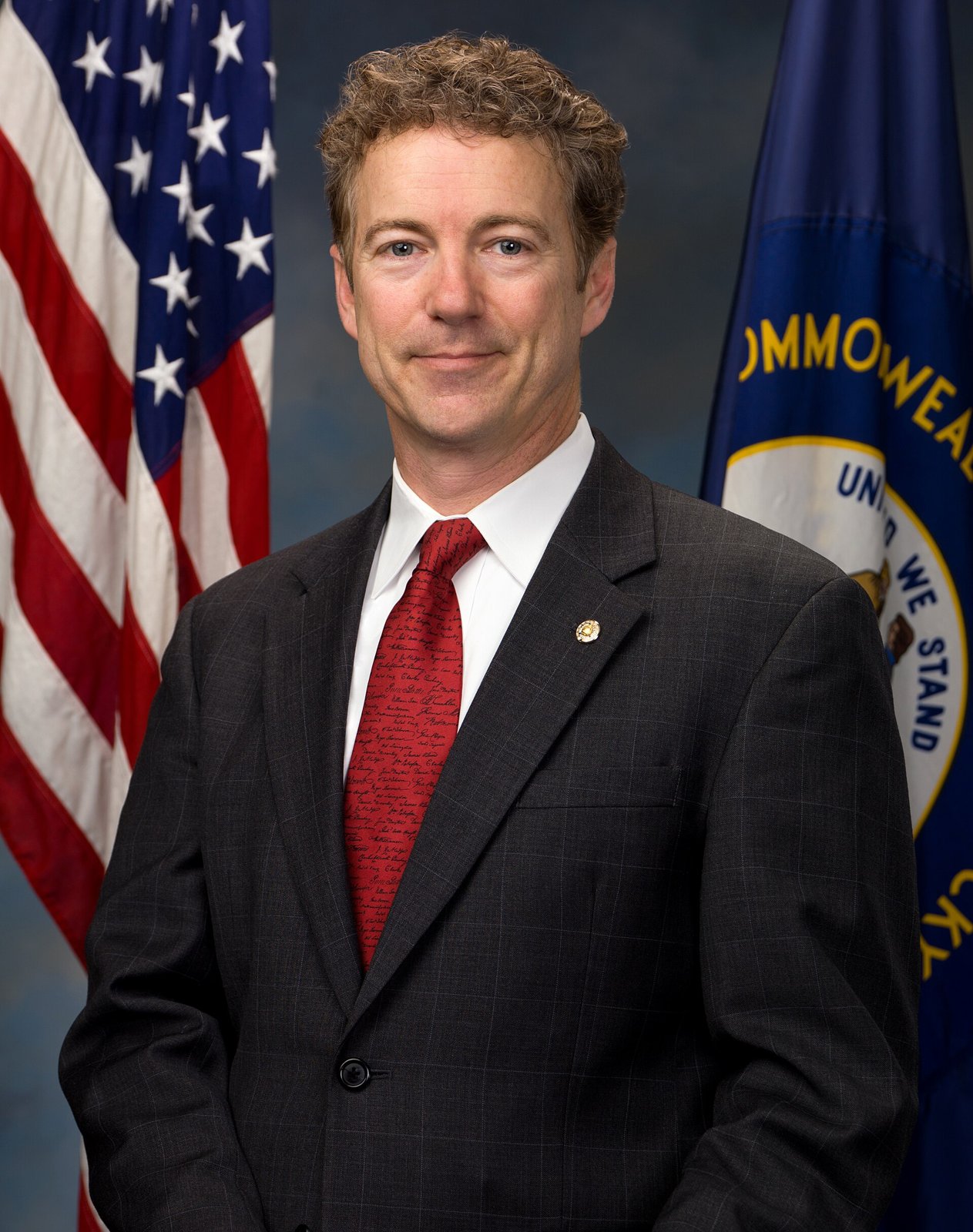
Randal Howard Paul was born in Pittsburgh on January 7, 1963, the third of Ron and Carol Paul's five children.51 The family moved to the Texas Gulf Coast when his father opened an obstetrics practice there. Rand studied biology and English at Baylor University from the fall of 1981 to the summer of 1984 and left without a bachelor's degree for Duke University's medical school. He earned his M.D. at Duke in 1988 and finished a residency in ophthalmology there in 1993.1 He married Kelley Ashby in 1990. They have three sons.1
In 1993 he moved to Bowling Green, Kentucky, and went into practice as an eye surgeon. A year later he founded Kentucky Taxpayers United, an anti-tax group that rated state legislators.1 In 1999 he set up the National Board of Ophthalmology as a cheaper alternative to the established American Board of Ophthalmology, with himself, his wife and his father-in-law as its board. The American Board of Medical Specialties never recognized it, and it lapsed in 2000 when he did not file the renewal paperwork with Kentucky's Secretary of State. He revived it in 2005, and it was dissolved again in 2011.1
The Tea Party race of 2010
In 2010 Paul ran for an open Senate seat in Kentucky as an outsider, carried by the young Tea Party movement, against the party favorite, Trey Grayson. On May 18, 2010, he won the primary with 206,986 votes, 58.76 percent, to Grayson's 35.45 percent.6
The Civil Rights Act remarks
The next night a single interview put his campaign on the defensive. A month earlier he had told the Louisville Courier-Journal editorial board that he supported laws against discrimination but objected to imposing them on private businesses.7 On May 19, on MSNBC, Rachel Maddow pressed him on whether he would have voted for the Civil Rights Act of 1964. He would not give a yes or no. "I don't believe in any discrimination," he said, and he said he would not attend, support or go to a business that discriminated. But he framed the question as one of property: "Does the owner of the restaurant own his restaurant? Or does the government own his restaurant?"7
His position, as he explained it, was that he agreed with nine of the Act's ten titles and had a constitutional question about Title II, which bars discrimination in public accommodations such as restaurants and hotels.1 Title II was the part of the law that opened lunch counters, hotels and theaters, and the reaction was swift. On May 20 his campaign issued a written statement. "I support the Civil Rights Act because I overwhelmingly agree with the intent of the legislation," it said, which was "to stop discrimination in the public sphere and halt the abhorrent practice of segregation." And: "I unequivocally state that I will not support any efforts to repeal the Civil Rights Act of 1964."7 He later said he would have voted for the Act.1
His defenders say he was stating, clumsily, a view about the limits of federal power over private property that has a long history in conservative thought, and that his record since, including criminal justice reform with Democrats, matters more. His critics answer that a candidate who could not answer yes on the central civil rights law of the century told voters something real. Kentucky voters weighed it in November. On November 2, 2010, Paul beat the Democrat, Jack Conway, 755,706 to 600,052, or 55.73 percent to 44.25 percent.6
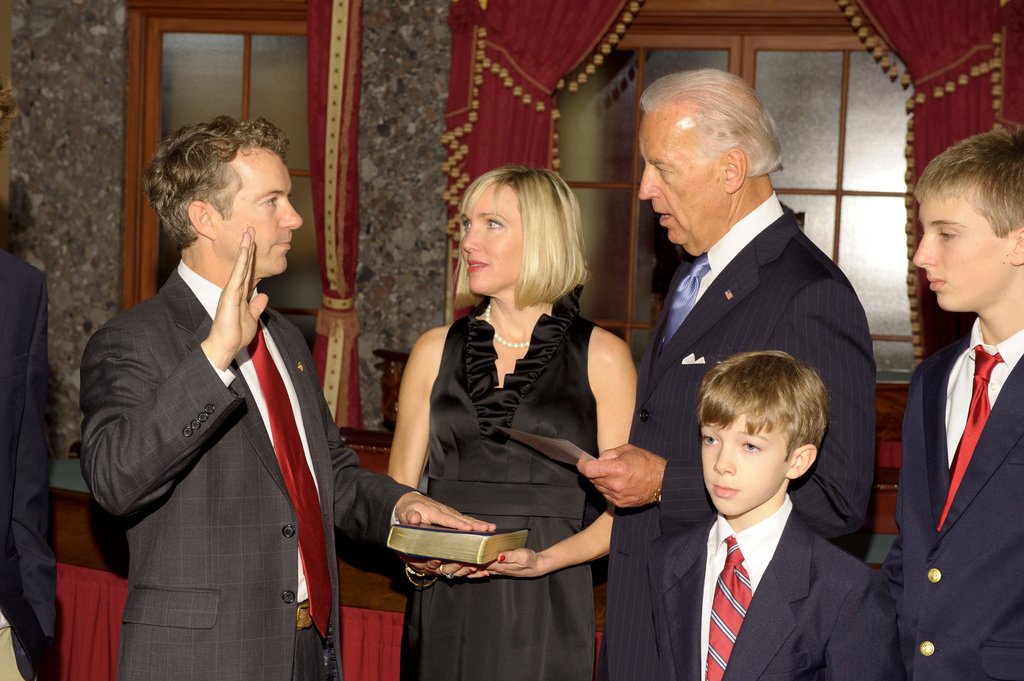
He arrived in January 2011, formed a Senate Tea Party Caucus with Jim DeMint and Mike Lee, and offered a first bill to cut $500 billion from federal spending in a single year. It would have cut the Department of Education by 83 percent, folded the Department of Energy into Defense and ended foreign aid.1 It went nowhere, but it told his colleagues what kind of senator they had.
Drones, data and the Fourth Amendment
The drone filibuster made Paul a national figure, and his hashtag, Stand With Rand, outlived the night. Two years later he went after the government's surveillance powers directly. Section 215 of the Patriot Act, the provision behind the phone-records program Edward Snowden had exposed, was set to expire on June 1, 2015. On May 20 Paul spoke against renewing it for about ten and a half hours.19
He then used the Senate's rules to run out the clock. Shortly after midnight on May 23, a motion to take up the House-passed USA FREEDOM Act failed, 57 to 42, three votes short of the 60 needed; Paul voted no.10 He objected to requests for a short extension of the old law, and the provisions lapsed on June 1.9 The next day the Senate passed the replacement, the USA FREEDOM Act, 67 to 32. Paul voted against it too, one of 30 Republicans who did.10
Paul has said "the Fourth Amendment is equally as important as the Second Amendment" and has called Edward Snowden a whistleblower.1 He also carried his father's Fed audit into the Senate. In January 2016 a motion to proceed to his Audit the Fed bill, S. 2232, got 53 votes, seven short of cloture. Fifty-one Republicans voted yes; one, Bob Corker, voted no.11
The 2016 presidential run
Paul announced for president on April 7, 2015, at the Galt House hotel in Louisville. He had spent two years trying to widen the party's reach, with speeches at Howard University and at Berkeley, meetings in Ferguson and Detroit, and a criminal justice bill written with Democrat Cory Booker.9 He had won the Conservative Political Action Conference straw poll three years running.9
The money and the moment did not come. His campaign raised $7 million in the quarter ending June 30, 2015, half of Ted Cruz's $14 million, and Cruz competed for the same anti-establishment voters.9 Paul finished fifth in the Iowa caucuses with 4.5 percent and ended his campaign on February 3, 2016.9 His name stayed on several later primary ballots, and the FEC's state tables credit him with about 56,500 primary votes.12 That November Kentucky re-elected him over the Democrat Jim Gray, 1,090,177 to 813,246, or 57.27 percent.12
Health care, spending and the debt limit
On spending Paul has voted against his party's leaders about as often as against the other party. He voted against the Budget Control Act that settled the 2011 debt-limit standoff, which passed 74 to 26 on August 2, 2011.13 He has introduced versions of a Penny Plan, which would cut total spending by a set share each year until the budget balances, and he publishes an annual Festivus report of federal spending he considers wasteful; the 2025 edition claimed $1.6 trillion.1
The 2017 health care votes
In July 2017 Republicans tried to repeal the Affordable Care Act through reconciliation. Paul voted for the motion to proceed on July 25, which passed only when Vice President Mike Pence broke a 50 to 50 tie.14 He had been promised a vote on his own amendment, which copied the repeal bill Congress had passed in 2015 and President Obama had vetoed, with a two-year delay. He said he was "pleased the Senate has heeded my call to vote on what we already passed in 2015," and urged "a clean repeal of as much of this disastrous law as possible." It failed on July 26, 45 to 55, with seven Republicans voting no.1514 Early on July 28 he voted for Majority Leader Mitch McConnell's narrower amendment, which failed 49 to 51 when Susan Collins, John McCain and Lisa Murkowski joined the Democrats.14 Paul had opposed the House's American Health Care Act, and later the Graham-Cassidy bill, which he called "more Obamacare Lite."1
The 2023 debt deal
When President Biden and Speaker Kevin McCarthy struck a deal in 2023 to suspend the debt limit for two years, Paul offered a substitute. It would have replaced the suspension with a $500 billion increase and capped total on-budget spending, starting with a cut of $303 billion in the first year, enforced by automatic sequester, while leaving Social Security alone. "Sixty percent of Americans say Congress should only raise the nation's debt ceiling if it cuts spending at the same time," he said.16 His amendment failed 21 to 75 on June 1, 2023. The deal itself, the Fiscal Responsibility Act, passed that night, 63 to 36, with Paul voting no.17 Most Democrats and 17 Republicans voted for it; its official title called it "a responsible increase to the debt ceiling."17 Paul's reply was that a one percent increase over pandemic-era levels was not a cut.16
Ukraine, Israel and foreign aid
Paul's foreign policy runs close to his father's, with more caution in how he says it. When Russia moved into Crimea in 2014 he wrote that "Putin must be punished for violating the Budapest Memorandum," and he called for economic sanctions and for American missile-defense sites in Poland and the Czech Republic, without military action.1 After the full invasion of 2022 he turned against the scale of American aid, and he said President Biden had provoked Russia by pressing for Ukraine to join NATO. On May 12, 2022, he blocked a fast vote on a $40 billion aid package, objecting that it was the second such bill and three times the size of the first, and sought an amendment to give an existing inspector general oversight of the money.118 A week later the bill passed 86 to 11. All 11 no votes were Republicans, Paul among them.18
On September 20, 2023, he told the Senate, "I will not consent to any expedited passage of any spending bill that provides any more American aid to Ukraine." He added: "No matter how sympathetic we are to the Ukrainian people, we must put the American people first."19 He voted against the Senate's national security supplemental, H.R. 815, which passed 70 to 29 on February 13, 2024. When the final version came back from the House on April 23, 2024 and passed 79 to 18, the roll call lists him as not voting.20
His votes on Israel do not fit a simple label. On January 16, 2024, he was the only Republican to vote against tabling Bernie Sanders's resolution asking the State Department for a report on Israel's human rights practices; the Senate tabled it 72 to 11.21 In November 2024 he voted with every other Republican against discharging Sanders's resolutions to block specific arms sales to Israel.21 And on September 29, 2026, he was the only Republican to vote to discharge a similar request, S. Res. 852, concerning violence in the West Bank; it failed 47 to 51.221 When President Trump said in February 2025 that the United States would take over Gaza, Paul objected on X: "The pursuit for peace should be that of the Israelis and the Palestinians." He added, "We have no business contemplating yet another occupation to doom our treasure and spill our soldiers blood."1
Chairman, the big bill and the tariffs
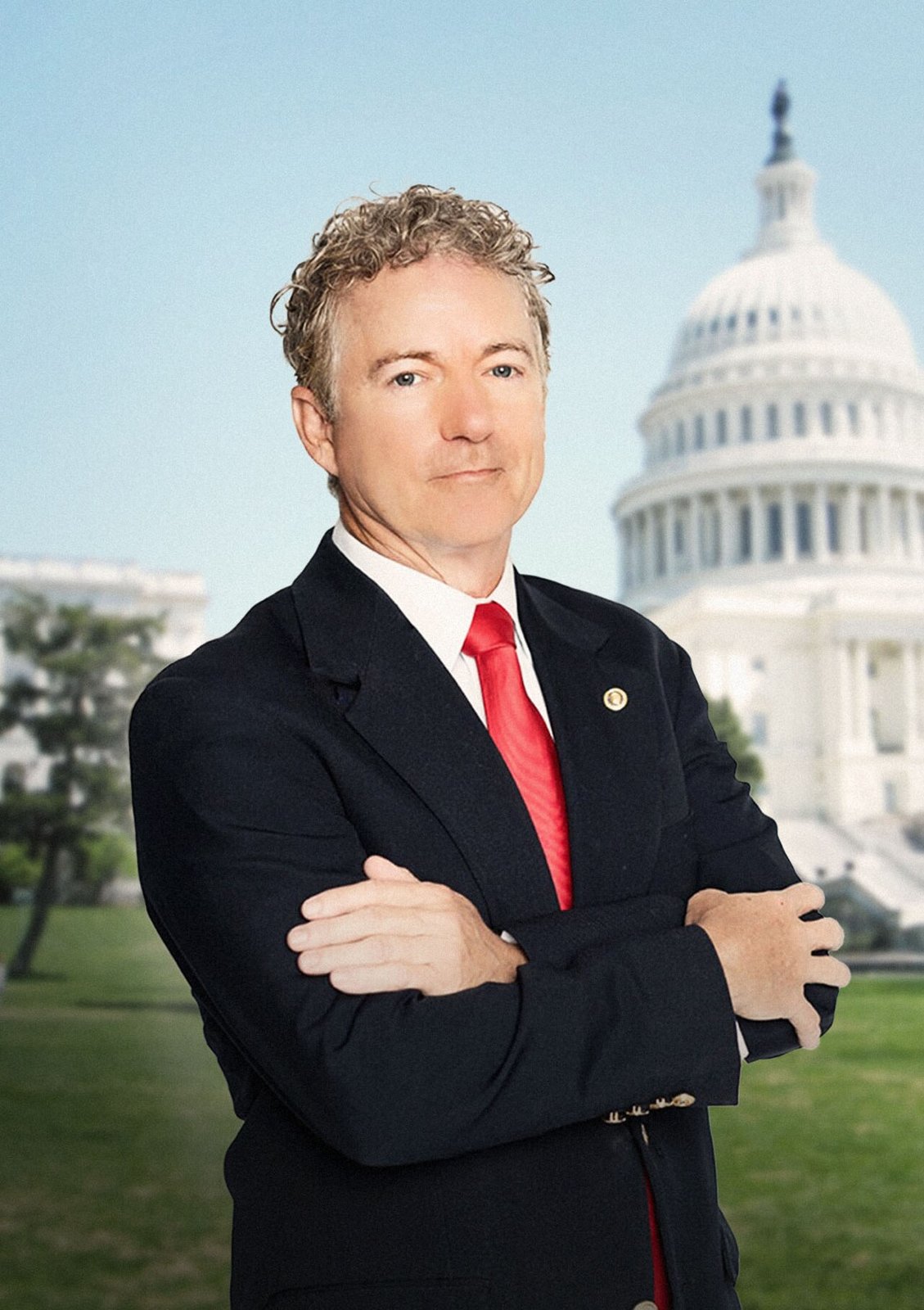
With Republicans back in the majority, Paul took the gavel of the Homeland Security and Governmental Affairs Committee on January 7, 2025. "I chose to chair this Committee over another because I believe that, for the health of our republic, Congress must stand up once again for its constitutional role," he said.23 The committee has since been the base for his long investigation into the origins of COVID-19 and federal records, the fight he began with Dr. Anthony Fauci in hearings in 2020 and 2021.123
The One Big Beautiful Bill Act
The defining fight of 2025 was the reconciliation bill that carried President Trump's tax and spending agenda. Paul opposed it at every recorded step, and the roll calls show how often he stood alone. On February 21 the Senate adopted its first budget resolution, S. Con. Res. 7, by 52 to 48; Paul was the only Republican no.25 On April 4 he offered an amendment to change the resolution's debt-limit instructions. It got five votes.25 Hours later the Senate adopted the House's resolution, H. Con. Res. 14, by 51 to 48, with Paul and Collins voting no.25
On June 28 the motion to proceed to H.R. 1 passed 51 to 49. Paul and Thom Tillis were the Republican nays.26 After a vote-a-rama that ran past 24 hours, the bill passed on July 1, 2025, by 50 to 50, with Vice President JD Vance casting the deciding vote. Collins, Paul and Tillis voted no.2627
Paul explained his vote on his Senate website. His mission, he wrote, was to "Stop Congress from plunging this country deeper into debt." He said he told Vance he would support the package if its debt-limit increase were cut by 90 percent, and that he wrote an amendment to keep the bill as written but raise the ceiling separately or for a short term. It was rejected, and leaders instead added subsidies for states such as Alaska. He objected that the bill added $270 billion to the debt in 2026 and more than $500 billion over five years, on top of a "$5 trillion increase in the debt limit." His closing line was his own: "They didn't just raise the debt ceiling. They raised the white flag on fiscal sanity."28 Republican supporters had argued, when the budget resolution passed in April, that extending the expiring 2017 tax cuts should not be counted as new debt; by that measure, Reuters reported, the plan added about $1.5 trillion over ten years rather than the $5.7 trillion nonpartisan analysts estimated. Paul's reply was that the bill's savings were back-loaded and might never come.2728
He was not against every spending cut from the White House. On July 17, 2025, he voted for the rescissions package, H.R. 4, which passed 51 to 48.29 But he voted against the House-passed stopgap funding bill each of the three times it came to a final vote that fall. On November 10, 2025, the bill that ended the fall shutdown passed 60 to 40; Paul was the only Republican to vote no.30
Tariffs
Paul has fought President Trump's emergency tariffs alongside the Democrats. "The truth is that tariffs are taxes," he wrote. "They don't punish foreign governments; they punish American families."31 On Brazil, he joined Democrats Tim Kaine, Chuck Schumer, Jeanne Shaheen and Ron Wyden on a resolution to end the emergency, saying, "Trade policy belongs to Congress, not the White House."31 The roll calls show a steady pattern. He voted to end the emergency behind the Canada tariffs on April 2, 2025, which passed 51 to 48, and the global tariff emergency on April 30, which failed on a 49 to 49 tie. In late October 2025 he voted for the resolutions on Brazil (52 to 48), Canada (50 to 46) and global tariffs (51 to 47), all of which passed.32
War powers, 2025 and 2026
Paul's most consistent cause in President Trump's second term has been Congress's power to decide on war. On November 6, 2025, he and Murkowski were the only Republicans to vote to discharge a resolution directing the removal of American forces from hostilities with Venezuela; it failed 49 to 51.33 On January 8, 2026, a second Venezuela resolution, S.J.Res. 98, was discharged 52 to 47, with five Republicans including Paul voting yes. Six days later a point of order against the resolution's privileged status was sustained on a 50 to 50 tie broken by the Vice President, and Paul voted against the point of order.33
He put his case in an op-ed on his Senate site. "No provision in the Constitution allows the president to unilaterally bomb another nation's capital and remove its leader," it begins. He wrote of his "disdain and loathing of state-sponsored socialism" and said he celebrated the fall of the authoritarian regime in Venezuela, and that the only question was whether the Constitution lets "one man or one woman" take the nation to war without Congress. His answer leaned on Madison, Hamilton's Federalist 69 and Elbridge Gerry at the Constitutional Convention.34
The same fight followed the conflict with Iran in 2026. In March he said the administration's reasons for military action were not valid and that war should be a last resort.1 On May 19 a motion to discharge an Iran war powers resolution passed 50 to 47, with Paul, Collins, Murkowski and Bill Cassidy voting yes. On June 23 the Senate adopted H. Con. Res. 86, a concurrent resolution directing the removal of forces from hostilities with Iran, 50 to 48, the same four Republicans voting with the Democrats. A second such resolution, H. Con. Res. 89, failed 49 to 50 on September 24.3536 The administration's position, reported at the time, was that a concurrent resolution does not go to the president and has no force of law.36
| Date | Measure | Result | Paul |
|---|---|---|---|
| Aug. 2, 2011 | Budget Control Act (S. 365), debt-limit deal | Agreed to 74-26 | Nay |
| Mar. 7, 2013 | Brennan nomination, CIA director | Confirmed 63-34 | Nay |
| June 2, 2015 | USA FREEDOM Act (H.R. 2048) | Passed 67-32 | Nay |
| Jan. 12, 2016 | Audit the Fed (S. 2232), cloture on motion to proceed | Rejected 53-44 | Yea |
| July 26, 2017 | Paul amendment, repeal of the health law with two-year delay | Rejected 45-55 | Yea |
| May 19, 2022 | Ukraine supplemental (H.R. 7691) | Passed 86-11 | Nay |
| June 1, 2023 | Fiscal Responsibility Act (H.R. 3746) | Passed 63-36 | Nay |
| Feb. 13, 2024 | National security supplemental (H.R. 815) | Passed 70-29 | Nay |
| Apr. 23, 2024 | H.R. 815, final version | Agreed to 79-18 | Not voting |
| Apr. 5, 2025 | Budget resolution (H. Con. Res. 14) | Agreed to 51-48 | Nay |
| July 1, 2025 | One Big Beautiful Bill Act (H.R. 1) | Passed 50-50, VP voting yea | Nay |
| July 17, 2025 | Rescissions (H.R. 4) | Passed 51-48 | Yea |
| Nov. 10, 2025 | Continuing appropriations ending the shutdown (H.R. 5371) | Passed 60-40 | Nay |
| Jan. 30, 2026 | Further consolidated appropriations, FY 2026 (H.R. 7148) | Passed 71-29 | Nay |
| Apr. 23, 2026 | Budget resolution (S. Con. Res. 33) | Agreed to 50-48 | Nay |
| June 5, 2026 | Reconciliation bill (S. 2) | Passed 52-47 | Yea |
| June 23, 2026 | Iran war powers (H. Con. Res. 86) | Agreed to 50-48 | Yea |
Two lines in that table deserve a note. In April 2026 Paul voted against a second budget resolution, S. Con. Res. 33, as he had against the first two. In June he voted for the reconciliation bill written under it, S. 2, which passed 52 to 47 with Murkowski as the only Republican no.13 The roll calls record the change but not the reason for it.
Where he stands, October 2026
As of October 2026, Paul is in his third term as Kentucky's junior senator. He won it in November 2022 with 913,326 votes, 61.80 percent, over Democrat Charles Booker's 38.19 percent, after taking 86.35 percent in the Republican primary.37 The term runs to January 3, 2029.5
The Senate's committee list, checked for this lesson in October 2026, shows him as chairman of the Homeland Security and Governmental Affairs Committee and a member of its Permanent Subcommittee on Investigations, its Subcommittee on Border Management, Federal Workforce, and Regulatory Affairs, and its Subcommittee on Disaster Management, District of Columbia, and Census. He also sits on Foreign Relations, on Health, Education, Labor, and Pensions, and on Small Business and Entrepreneurship.38 His Senate office has kept up a steady flow of bills: a Six Penny Plan to balance the budget, a bill with Wyden and Cynthia Lummis to abolish the Selective Service, and drug-price legislation that cleared committee unanimously.3940 On the draft he put his view in one sentence: "if a war is worth fighting, Congress will vote to declare it and people will volunteer."40
He is 63. He has survived a serious assault: on November 3, 2017, a neighbor tackled him while he mowed his lawn and broke five of his ribs, and in 2019 part of a lung had to be removed. The neighbor pleaded guilty in federal court to assaulting a member of Congress.1 On March 22, 2020, he became the first senator to announce a positive test for COVID-19, and he missed the vote on the CARES Act three days later.113
The case for and against
What his supporters argue
Supporters see the most consistent constitutionalist in the Senate. He has voted against spending and debt under Obama, Trump, Biden and Trump again, and the 2025 roll calls show he paid a price with his own party to do it. He has made Congress vote on war with Venezuela and Iran and on emergency tariffs, questions many members would prefer to avoid. He builds coalitions that cross the aisle when the Constitution is at stake: Wyden on surveillance and the draft, Booker on criminal justice, Kaine on tariffs and war powers. And his drone filibuster got a written answer from the attorney general that the administration had not given before.
What his critics argue
Critics on the left start with the 2010 Civil Rights Act interview and the self-run certification board. During the pandemic YouTube suspended him for a week in August 2021 over a video that falsely claimed masks do not work, and Fauci told him in a 2020 hearing that he had misconstrued the evidence.1 Critics among defense hawks of both parties say his votes on Ukraine aid weakened an ally under attack, and in July 2022 Ukraine's Center for Countering Disinformation put him on a list of public figures it accused of promoting Russian propaganda.1 On his own side, the complaint is arithmetic. The big bill passed only on the Vice President's vote, so one more Republican no would have sunk the President's central law, and Paul was the lone Republican against the bill that ended the 2025 shutdown.
Paul's answer to most of it is the one he gave in his op-ed on the big bill: "This country isn't broke because we tax too little. It's broke because we spend too much."28 Unlike his father, he has turned seniority into a committee gavel with real power over what the Senate investigates. Whether that has bought more influence than Ron Paul's outsider campaigns is the question Lesson 9 takes up.
Learn more
- Biographical Directory of the U.S. Congress: Rand Paul: The official summary of his life and service.
- Senate roll call 372 of 2025: How every senator voted on the One Big Beautiful Bill Act.
- Why I said no to the One Big Beautiful Bill Act: Paul's own explanation of his vote.
- Has my party become eunuchs in the thrall of the president?: His constitutional case on war powers and Venezuela.
- Terminate the Trump tariffs before it's too late: His argument that tariffs are taxes on Americans.
- White House briefing, March 7, 2013: Where the Holder letter answering Paul was read aloud.
- Senate rejects repeal and delay: Roll Call on his 2017 health care amendment.
- Senate committee assignments: The current list of his committees and subcommittees.
Notes
- "Rand Paul," Wikipedia, section on the 2013 filibuster, citing Josh Voorhees, "Rand Paul Ends Epic Mr. Smith-Style Filibuster After More Than 12 Hours," Slate, March 7, 2013, and CNN, "Rand Paul 'happy' with drone response," March 7, 2013, consulted October 2026. Read it online. "Rand Paul," Wikipedia, sections on early life, medical career, Senate career, political positions, the 2017 assault and COVID-19, consulted October 2026. Used for details not available from a primary source. Read it online. ↩
- The White House, Office of the Press Secretary, "Press Briefing by Press Secretary Jay Carney, 3/7/2013," reading Attorney General Holder's letter to Senator Paul. Read it online. ↩
- U.S. Senate, Roll Call Votes 31 and 32, 113th Congress, 1st Session, March 7, 2013: cloture on the nomination of John Owen Brennan, agreed to 81-16 (Paul, Yea); confirmation, 63-34 (Paul, Nay). Read it online. ↩
- "Rand Paul, official portrait, 112th Congress alternate," Wikimedia Commons, dated January 26, 2011, author United States Senate, license PD-USGov. View the file. ↩
- Biographical Directory of the United States Congress, "Paul, Rand" (P000603); birth date and Senate terms (January 5, 2011 to January 3, 2017; January 3, 2017 to January 3, 2023; current term ending January 3, 2029) as compiled in the @unitedstates congress-legislators project, legislators-current.yaml. Read it online; term data. ↩
- Federal Election Commission, Federal Elections 2010, U.S. Senate results, Kentucky: primary, May 18, 2010, Paul 206,986 (58.76%), Grayson 124,864 (35.45%); general, November 2, 2010, Paul 755,706 (55.73%), Conway 600,052 (44.25%). Read it online. ↩
- "Tea Party Favorite Rand Paul Under Fire for Criticizing Civil Rights Act," Fox News, May 20, 2010, on the April 2010 Courier-Journal interview, the May 19 Maddow interview and the May 20 written statement. Read it online. "Rand Paul: Civil Rights Act brouhaha clouds Senate campaign," The Christian Science Monitor, May 20, 2010, quoting the Maddow interview and the statement. Read it online. ↩
- "Rand Paul ceremonial swearing in," Wikimedia Commons, January 5, 2011, author United States Senate, source Office of Senator Rand Paul, license PD-USGov-Congress. View the file. ↩
- "Rand Paul 2016 presidential campaign," Wikipedia, section on the Patriot Act speech of May 20, 2015 and the lapse of the provisions, consulted October 2026; see also Seung Min Kim and Alex Byers, "Rand Paul calls it a night after 10 1/2 hours," Politico, May 20, 2015. Read it online. "Rand Paul 2016 presidential campaign," Wikipedia, sections on outreach, announcement, fundraising and the Iowa caucus, consulted October 2026. Read it online. ↩
- U.S. Senate, Roll Call Vote 194, 114th Congress, 1st Session, May 23, 2015: cloture on the motion to proceed to H.R. 2048, rejected 57-42 (Paul, Nay). Read it online. U.S. Senate, Roll Call Vote 201, 114th Congress, 1st Session, June 2, 2015: H.R. 2048, passed 67-32; Republicans 23 yea, 30 nay; Paul, Nay. Read it online. ↩
- U.S. Senate, Roll Call Vote 2, 114th Congress, 2nd Session, January 12, 2016: cloture on the motion to proceed to S. 2232, rejected 53-44 (Paul, Yea; Corker the only Republican nay). Read it online. ↩
- Federal Election Commission, Federal Elections 2016: U.S. Senate, Kentucky, general election, Paul 1,090,177 (57.27%), Gray 813,246 (42.72%); presidential primary tables, from which Paul's Republican primary votes (56,528) were summed for this lesson. Read it online. ↩
- U.S. Senate roll call votes as listed in the table: 112th Congress vote 123; 113th, 32; 114th, 201 and (2nd session) 2; 115th, 169; 117th (2nd session), 191; 118th, 146 and (2nd session) 48 and 154; 119th (1st session), 191, 372, 411 and 618; 119th (2nd session), 20 (H.R. 7148, passed 71-29), 105 (S. Con. Res. 33, agreed to 50-48; Murkowski and Paul the Republican nays), 163 (S. 2, passed 52-47; Murkowski the only Republican nay) and 184. Read the 2026 vote list. U.S. Senate, Roll Call Vote 123, 112th Congress, 1st Session, August 2, 2011: motion to concur in the House amendment to S. 365, agreed to 74-26 (Paul, Nay). Read it online. U.S. Senate, Roll Call Vote 80, 116th Congress, 2nd Session, March 25, 2020: H.R. 748, the CARES Act, as amended, passed 96-0 (Paul, Not Voting). Read it online. ↩
- U.S. Senate, Roll Call Vote 167, 115th Congress, 1st Session, July 25, 2017: motion to proceed to H.R. 1628, agreed to 50-50 with the Vice President voting yea (Paul, Yea). Read it online. U.S. Senate, Roll Call Vote 169, 115th Congress, 1st Session, July 26, 2017: Paul Amendment No. 271, rejected 45-55. Read it online. U.S. Senate, Roll Call Vote 179, 115th Congress, 1st Session, July 28, 2017: McConnell Amendment No. 667, rejected 49-51 (Paul, Yea; Collins, McCain and Murkowski the Republican nays). Read it online. ↩
- "Senate Rejects Obamacare 'Repeal and Delay' Proposal," Roll Call, July 26, 2017. Read it online. ↩
- Office of Senator Rand Paul, "Dr. Rand Paul Introduces Conservative Alternative to Biden-McCarthy Debt Deal," June 1, 2023. Read it online. ↩
- U.S. Senate, Roll Call Vote 136, 118th Congress, 1st Session, June 1, 2023: Paul Amendment No. 107, in the nature of a substitute, rejected 21-75. Read it online. U.S. Senate, Roll Call Vote 146, 118th Congress, 1st Session, June 1, 2023: H.R. 3746, passed 63-36; Republicans 17 yea, 31 nay; Paul, Nay. Read it online. ↩
- U.S. Senate, Roll Call Vote 191, 117th Congress, 2nd Session, May 19, 2022: H.R. 7691, passed 86-11; all 11 nays Republican; Paul, Nay. Read it online. Office of Senator Rand Paul, "Dr. Rand Paul Introduces Bill to Provide Much Needed Oversight of Ukraine Spending," July 26, 2023, in which Paul recalls proposing an amendment to the $40 billion package "that would have entrusted a proven and effective Inspector General to oversee and track how funds are spent in Ukraine." Read it online. ↩
- Office of Senator Rand Paul, "Dr. Rand Paul Puts Congress on Notice, Opposes Ukraine Spending at the Expense of American Taxpayers," September 20, 2023. Read it online. ↩
- U.S. Senate, Roll Call Vote 48, 118th Congress, 2nd Session, February 13, 2024: H.R. 815, as amended, passed 70-29 (Paul, Nay). Read it online. U.S. Senate, Roll Call Vote 154, 118th Congress, 2nd Session, April 23, 2024: motion to concur in the House amendment to the Senate amendment to H.R. 815, agreed to 79-18 (Paul, Not Voting). Read it online. ↩
- U.S. Senate, Roll Call Vote 8, 118th Congress, 2nd Session, January 16, 2024: motion to table the motion to discharge S. Res. 504, agreed to 72-11 (Paul, Nay, the only Republican). Read it online. U.S. Senate, Roll Call Votes 292, 293 and 294, 118th Congress, 2nd Session, November 20, 2024: motions to discharge S.J.Res. 111, 113 and 115, joint resolutions of disapproval of proposed foreign military sales to Israel, rejected 18-79, 19-78 and 17-80 (Paul, Nay on each). Read it online. ↩
- U.S. Senate, Roll Call Vote 252, 119th Congress, 2nd Session, September 29, 2026: motion to discharge S. Res. 852, a resolution requesting information on Israel's human rights practices under section 502B(c) of the Foreign Assistance Act, rejected 47-51 (Paul, Yea, the only Republican). Read it online. ↩
- Office of Senator Rand Paul, "Dr. Rand Paul Assumes Chairmanship of Senate Homeland Security and Governmental Affairs Committee," January 7, 2025. Read it online. Office of Senator Rand Paul, "Chairman Paul Launches 'The Reading Room,' a Public Archive of the Committee's Ongoing COVID-19 Origins Investigations," undated press release. Read it online. ↩
- "Rand Paul Portrait," Wikimedia Commons, dated June 4, 2025, author US Senate Photography Office, source paul.senate.gov press kit, license PD-USGov-Senate. View the file. ↩
- U.S. Senate, Roll Call Vote 87, 119th Congress, 1st Session, February 21, 2025: S. Con. Res. 7, as amended, agreed to 52-48 (Paul, Nay, the only Republican). Read it online. U.S. Senate, Roll Call Vote 179, 119th Congress, 1st Session, April 4, 2025: Paul Amendment No. 1760, "To modify the debt limit instruction for the House of Representatives and the Senate," rejected 5-94. Read it online. U.S. Senate, Roll Call Vote 191, 119th Congress, 1st Session, April 5, 2025: H. Con. Res. 14, as amended, agreed to 51-48 (Collins and Paul the Republican nays). Read it online. ↩
- U.S. Senate, Roll Call Vote 329, 119th Congress, 1st Session, June 28, 2025: motion to proceed to H.R. 1, agreed to 51-49 (Paul and Tillis the Republican nays). Read it online. U.S. Senate, Roll Call Vote 372, 119th Congress, 1st Session, July 1, 2025: H.R. 1, a bill to provide for reconciliation pursuant to title II of H. Con. Res. 14, passed 50-50 with the Vice President voting yea; Collins, Paul and Tillis the Republican nays. Read it online. ↩
- "One Big Beautiful Bill Act," Wikipedia, sections on the budget resolutions, Senate consideration, the vote-a-rama and the $5 trillion debt-limit increase, consulted October 2026. Read it online. ↩
- Rand Paul, "Why I said 'no' to the One Big Beautiful Bill Act," op-ed posted on paul.senate.gov, July 2025. Read it online. ↩
- U.S. Senate, Roll Call Vote 411, 119th Congress, 1st Session, July 17, 2025: H.R. 4, as amended, a bill to rescind certain budget authority, passed 51-48 (Paul, Yea; Collins and Murkowski the Republican nays). Read it online. ↩
- U.S. Senate, Roll Call Votes 528 (September 19, 2025), 535 (September 30, 2025) and 618 (November 10, 2025), 119th Congress, 1st Session, on H.R. 5371, continuing appropriations for fiscal year 2026; Paul voted Nay on each, and on vote 618 (passed 60-40) he was the only Republican nay. Read it online. ↩
- Rand Paul, "Terminate the Trump tariffs before it's too late," op-ed posted on paul.senate.gov, 2025. Read it online. Office of Senator Rand Paul, "Paul, Kaine, Schumer, Shaheen and Wyden Introduce Bipartisan Resolution to Reassert Congressional Authority Over Tariffs," September 18, 2025. Read it online. ↩
- U.S. Senate, Roll Call Votes 160 (April 2, 2025, S.J.Res. 37, passed 51-48), 225 (April 30, 2025, S.J.Res. 49, defeated 49-49), 594 (October 28, 2025, S.J.Res. 81, Brazil, passed 52-48), 598 (October 29, 2025, S.J.Res. 77, Canada, passed 50-46) and 600 (October 30, 2025, S.J.Res. 88, global tariffs, passed 51-47), 119th Congress, 1st Session; Paul, Yea on each. Read the first. ↩
- U.S. Senate, Roll Call Vote 608, 119th Congress, 1st Session, November 6, 2025: motion to discharge S.J.Res. 90, to direct the removal of United States Armed Forces from hostilities within or against Venezuela, rejected 49-51 (Murkowski and Paul the Republican yeas). Read it online. U.S. Senate, Roll Call Votes 5 (January 8, 2026, motion to discharge S.J.Res. 98, agreed to 52-47; Republican yeas Collins, Hawley, Murkowski, Paul and Young) and 9 (January 14, 2026, point of order on the privileged status of S.J.Res. 98, well taken 50-50 with the Vice President voting yea; Paul, Nay), 119th Congress, 2nd Session. Read it online. ↩
- Rand Paul, "Has my party become 'eunuchs in the thrall' of the president?" op-ed posted on paul.senate.gov. Read it online. ↩
- U.S. Senate, Roll Call Votes 129 (May 19, 2026, motion to discharge S.J.Res. 185, Iran, agreed to 50-47), 184 (June 23, 2026, H. Con. Res. 86, agreed to 50-48) and 244 (September 24, 2026, H. Con. Res. 89, rejected 49-50), 119th Congress, 2nd Session; Paul, Yea on each. Read it online. ↩
- "Senate votes to curb Trump's Iran war powers," NBC Palm Springs, June 23, 2026, on the 50-48 vote, the four Republican yeas and the White House position. Read it online. ↩
- Federal Election Commission, Federal Elections 2022, U.S. Senate results, Kentucky: primary, May 17, 2022, Paul 333,051 (86.35%); general, November 8, 2022, Paul 913,326 (61.80%), Booker 564,311 (38.19%). Read it online. ↩
- U.S. Senate, "Committee Assignments of the 119th Congress," entry for Paul, Rand (R-KY), consulted October 18, 2026. Read it online. ↩
- Office of Senator Rand Paul, news releases on the Six Penny Plan to balance the federal budget in five years and on drug-price legislation advancing unanimously out of committee, listed at paul.senate.gov/news, consulted October 2026. Read it online. ↩
- Office of Senator Rand Paul, "Dr. Paul, Sen. Wyden, Sen. Lummis Introduce Bipartisan Bill to Abolish the Selective Service," August 2, 2024. Read it online. ↩


Check yourself
1. How did Rand Paul vote on final passage of H.R. 1, the One Big Beautiful Bill Act, on July 1, 2025?
Senate roll call 372 of the 119th Congress shows the bill passed 50 to 50 with Vice President Vance breaking the tie. Collins, Paul and Tillis were the Republican nays. Paul wrote that the bill's $5 trillion debt-limit increase was his central objection.
2. What did Paul say in his written statement of May 20, 2010, after his remarks on the Civil Rights Act?
The statement said he supported the Act because he agreed with its intent to end segregation in the public sphere, and it pledged not to support repeal. In the Maddow interview the night before he had questioned applying the law to private businesses.
3. What question did Paul's 2013 filibuster push Attorney General Eric Holder to answer?
The White House read Holder's letter at its March 7, 2013 briefing. The answer to that question, Holder wrote, was no, and Paul said he was 'quite happy' with it.
4. Which committee does Paul chair as of October 2026?
He took the chair of the Homeland Security and Governmental Affairs Committee on January 7, 2025, and the Senate's current committee list shows him as chairman, with seats on Foreign Relations, HELP and Small Business.
5. How did Paul vote on the $40 billion Ukraine aid bill, H.R. 7691, on May 19, 2022?
Senate roll call 191 of the 117th Congress, second session, shows the bill passed 86 to 11. Paul had blocked a quick vote a week earlier, seeking an amendment to put an inspector general in charge of overseeing the money.
6. What share of the vote did Paul receive in the 2022 Kentucky Senate general election, according to the FEC?
The FEC's Federal Elections 2022 gives Paul 913,326 votes, 61.80 percent, to Charles Booker's 38.19 percent. He won 55.73 percent in 2010 and 57.27 percent in 2016; 86.35 percent was his 2022 primary share.
Terms in this lesson
- Filibuster
- Extended debate used to delay or block a Senate vote. A talking filibuster means a senator holding the floor in person, as Paul did in 2013 and 2015.
- Cloture
- The Senate procedure for ending debate, which usually takes 60 votes. Cloture on the Brennan nomination in 2013 passed 81 to 16.
- Budget reconciliation
- A process that lets certain tax and spending bills pass the Senate by simple majority with limited debate, after both chambers adopt a budget resolution with instructions.
- Debt ceiling
- The legal limit on how much the Treasury may borrow. Congress must raise or suspend it to permit more borrowing.
- Section 215
- The Patriot Act provision the government used to collect Americans' telephone records in bulk. It lapsed on June 1, 2015 and was replaced by the USA FREEDOM Act.
- War Powers Resolution
- The 1973 law that requires the president to report to Congress on hostilities and lets Congress direct the removal of forces. Senators can force votes on resolutions under it.
- IEEPA
- The International Emergency Economic Powers Act of 1977, which presidents have used to declare emergencies and impose tariffs. Congress can vote to end such emergencies by joint resolution.
Sources
- Biographical Directory of the U.S. Congress: Paul, Rand (P000603) checked 2026-10
- U.S. Senate, Committee Assignments of the 119th Congress checked 2026-10
- Senate roll call 372, 119th Congress, 1st session: H.R. 1 passage checked 2026-10
- Rand Paul, Why I said no to the One Big Beautiful Bill Act checked 2026-10
- Federal Election Commission, Federal Elections 2010 checked 2026-10
- Federal Election Commission, Federal Elections 2022 checked 2026-10
- Press Briefing by Press Secretary Jay Carney, March 7, 2013 checked 2026-10
- Christian Science Monitor, Rand Paul: Civil Rights Act brouhaha clouds Senate campaign (2010) checked 2026-10
- Roll Call, Senate Rejects Obamacare Repeal and Delay Proposal (2017) checked 2026-10
- Senate roll call votes, 119th Congress, 2nd session (vote menu) checked 2026-10
- Rand Paul checked 2026-10