Lesson 7 of 10 · about 24 minutes
Ron Paul: The Doctor Who Said No
You'll be able to
- Trace Ron Paul's career: his medical training, his House service in 1976-77, 1979-85 and 1997-2013, and his three runs for president
- Explain the Gold Commission minority report, the Federal Reserve Board Abolition Act and the Federal Reserve Transparency Act, and how far each got
- Read his record on the 2001 force authorization, the Patriot Act, the Iraq War resolution and the 2008 bank rescue from the House roll calls
- State the newsletters controversy accurately: what was published, who has been named as writing it, and how Paul's explanations changed from 1996 to 2012
- Weigh the strongest case made by his supporters and by his critics
On August 15, 1971, Richard Nixon went on television and told the country that the United States would stop exchanging gold for the dollars held by foreign governments. Most Americans heard a speech about wage controls and import fees. A 35-year-old obstetrician in Brazoria County, Texas, heard the end of honest money. His biographers date his decision to run for Congress to that night.1 Within five years he was in Congress. Within forty he had run for president three times, drawn crowds of college students that few Republicans of his time could match, and built a movement that outlived his own campaigns.
He also left a trail of problems his opponents never let him forget. Both sides of that record appear below, drawn from the official sources wherever they exist: the Clerk of the House for votes, the Federal Election Commission for results, the bill records for legislation. Lesson 1 of this module set out where the third paths in American politics come from, and Lesson 6 told the story of the Libertarian Party that nominated Paul in 1988. Lesson 9 compares him with his son.
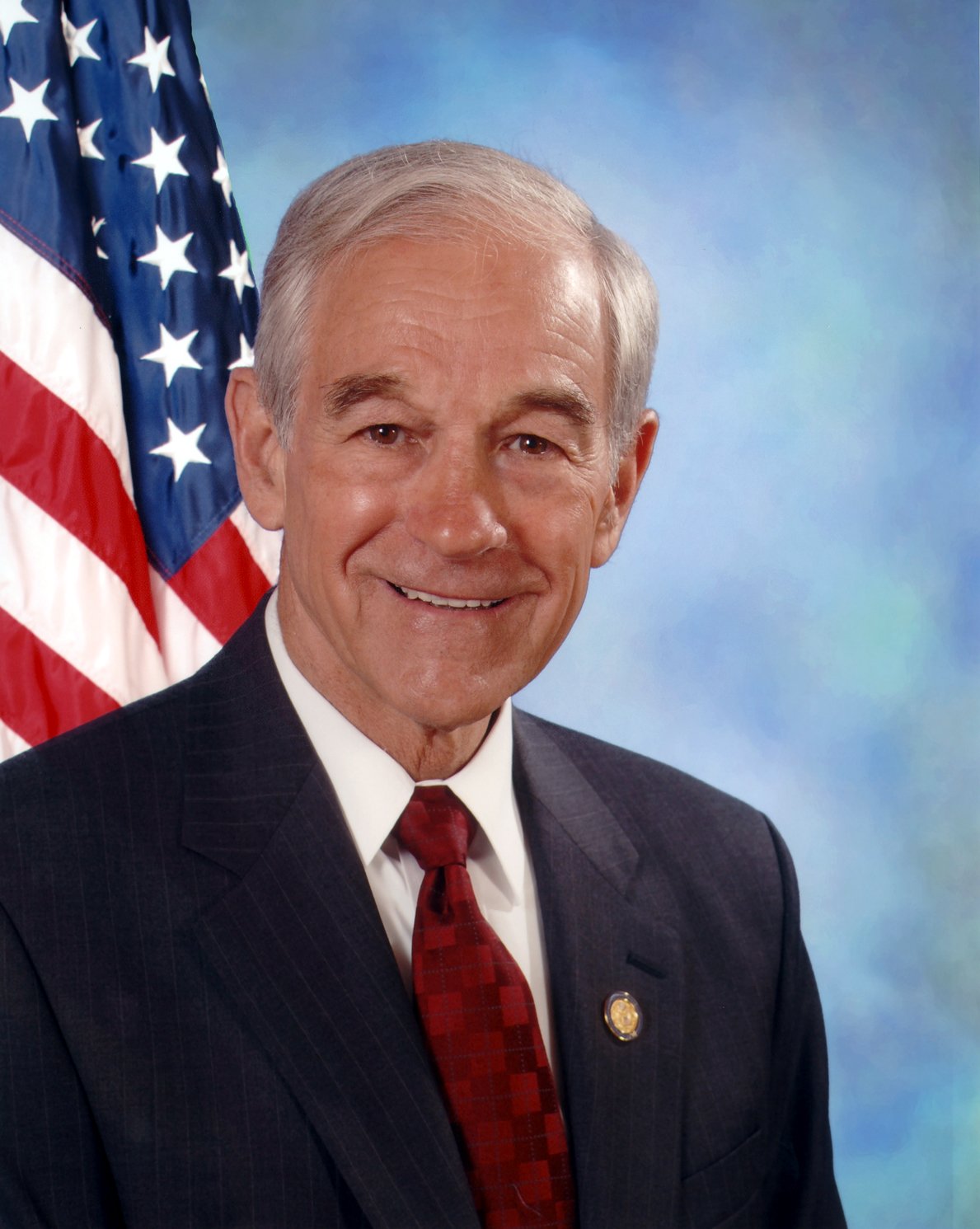
A doctor from Pittsburgh
Ronald Ernest Paul was born on August 20, 1935, in Pittsburgh, one of five sons of Howard Paul, who ran a small dairy business, and Margaret Dumont Paul.1 He was a track star at Dormont High School in the city's southern suburbs. He took a biology degree at Gettysburg College in 1957 and a medical degree from Duke University in 1961, then interned at Henry Ford Hospital in Detroit and trained in obstetrics and gynecology at Magee-Womens Hospital back in Pittsburgh.1
From 1963 to 1965 he was a flight surgeon in the United States Air Force, and from 1965 to 1968 he served in the Air National Guard.1 Then he and his wife Carol, whom he had married in 1957, moved to the Texas Gulf Coast. He set up a practice in obstetrics and gynecology. It mattered politically. Bob Gammage, the Democrat who fought him for the seat twice, once complained that Paul had delivered half the babies in Brazoria County.1
The ideas came before the politics. As a resident in the 1960s Paul read Friedrich Hayek's The Road to Serfdom, which sent him to Ludwig von Mises and Ayn Rand. He came to know the Austrian economists Hans Sennholz and Murray Rothbard and credited them with his education in economics.1 Lesson 5 of the Economic Thinkers module covers the Austrian school in depth. What matters here is that Paul arrived in Washington with a theory of money already formed, and he never changed it.
Three tours in the House
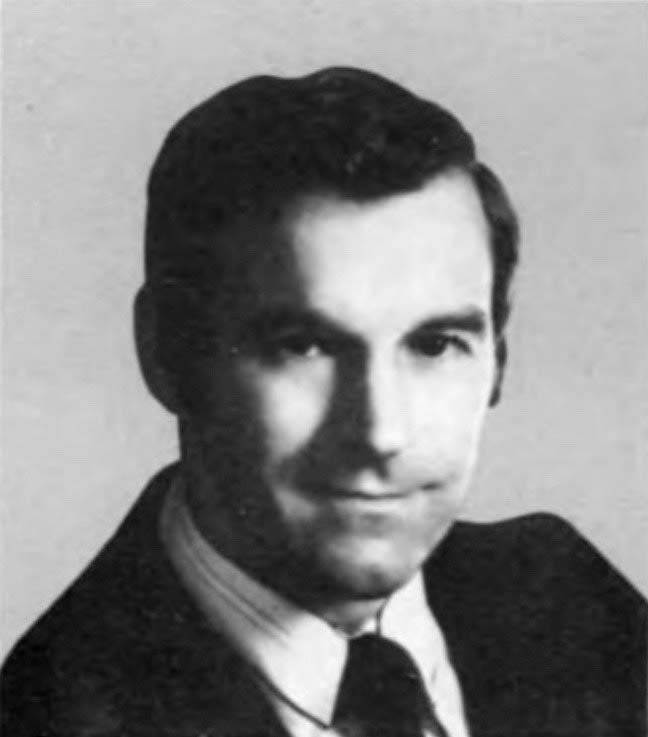
Paul's first run, in 1974, ended in defeat by the Democratic incumbent, Robert Casey. Then President Gerald Ford appointed Casey to the Federal Maritime Commission, and Paul won the special election for the empty seat in April 1976. He was sworn in on April 3.3 Seven months later he lost the regular election. It was about as close as a House race gets. The Clerk's official count gave Gammage 96,535 votes and Paul 96,267, a margin of 268.4 Two years later Paul took the seat back, 54,643 to 53,443.5
He held it through two more elections and then gave it up in 1984 to run for the Senate. He lost the Republican primary to Phil Gramm, a former Democrat who had just switched parties, and the House seat went to Tom DeLay.1 Paul went home to his practice. Twelve years later he came back to Washington from a different district, the 14th, after beating a Republican incumbent, Greg Laughlin, in the 1996 primary over the opposition of the national party.1 He served there until January 3, 2013.
| Period | District | How it began | How it ended |
|---|---|---|---|
| April 3, 1976 to January 3, 1977 | Texas 22nd | Won special election for Robert Casey's vacant seat | Lost to Bob Gammage by 268 votes |
| January 15, 1979 to January 3, 1985 | Texas 22nd | Beat Gammage in the 1978 rematch; re-elected 1980 and 1982 | Left to run for the Senate; lost the 1984 primary to Phil Gramm |
| January 7, 1997 to January 3, 2013 | Texas 14th | Beat Republican incumbent Greg Laughlin in the 1996 primary | Retired after eight terms to run for president in 2012 |
The meaning of Dr. No
Colleagues called him Dr. No, and he wore it gladly. His rule was simple to state. He would not vote for a measure unless the Constitution expressly authorized it, and in his view it authorized very little: national defense, courts for civil disputes, a criminal justice system for force and fraud.1 The result was a long list of lonely votes. He opposed the reinstatement of draft registration in 1980 against President Carter and most of his own party. He later said he was the only Republican to vote against Ronald Reagan's budgets in 1981, because they ran deficits.1
His record also shows the limits of that approach. In more than two decades in the House he saw very few of his own bills become law. One that did, H.R. 2121 in 2009, let a federal customhouse in his district be sold to a local historical society.1 His influence ran through amendments, through coalitions with Democrats on surveillance and drug policy, and above all through the people he persuaded outside the building.
The Gold Commission
Congress ordered a study of the role of gold in the domestic and international monetary systems, and the commission it created met through 1981 and into 1982. Treasury Secretary Donald Regan chaired it. Paul, then on the House Banking Committee, served as a member alongside the businessman Lewis Lehrman.7 The commission released its report on March 31, 1982. It recommended against relinking the dollar to gold. It suggested instead that Congress consider a gold coin, exempt from capital gains tax but not legal tender, and that Congress and the Federal Reserve study a fixed rule for money growth. The Christian Science Monitor put the result plainly: "As expected, the majority of the Gold Commission did not vote in favor of a return to any kind of gold standard."7
Paul and Lehrman wrote a dissent. The Cato Institute published it the same year as The Case for Gold: A Minority Report of the U.S. Gold Commission, a book-length report whose long history of American money, by Cato's account, came from Murray Rothbard's work on money and banking.8 Its reforms went well past gold. The authors called for ending legal tender laws, defining the dollar as a fixed quantity of metal, letting private mints coin gold alongside the government, removing the Federal Reserve's monopoly privileges and continuing audits of the nation's gold. They wrote that "Deregulation of banking, including free entry by simply filing the legal documents" was "a must for monetary freedom."9 Mark Calabria, in Cato's note on the electronic edition, describes it as "not simply an argument for returning to the gold standard, but more importantly, an argument for choice and competition."8
The minority report changed nothing in law. It did fix Paul's agenda for the next thirty years, and it is still the clearest statement of what he meant by sound money.
The 1988 Libertarian campaign
In 1987 Paul quit the Republican Party. His resignation letter blamed the Reagan years for "skyrocketing deficits" and a doubled national debt, and a month later he announced for the Libertarian Party's presidential nomination.1 He beat the American Indian Movement activist Russell Means for the nomination, though not without friction. Paul opposed abortion, and the party's platform supported a woman's right to choose it.1 In June 1987, still seeking the nomination, he campaigned in Idaho alongside Andre Marrou, a former Libertarian member of the Alaska House who became his running mate, and predicted that a Libertarian could win the White House before long.10 Lesson 6 places this campaign in the party's history.
On November 8, 1988, Paul received 432,179 votes nationwide, 0.47 percent of the total, according to the FEC's official compilation.11 He was third, far behind George H. W. Bush and Michael Dukakis. The state tables show his reach and its limits. He drew 70,105 votes in California, 0.71 percent. He got 2.74 percent in Alaska. In North Carolina he appeared only as a write-in and got 1,263 votes.11 Missouri kept him off the ballot.1
He did not stay. By 1996 he was running as a Republican again. He later said he had never read the whole Libertarian platform, that he had worked for the party "on my terms, not theirs," and that the label he preferred was constitutionalist.1 That choice, a movement candidate working inside a major party rather than outside it, is the strategy his son would follow.
End the Fed, or at least audit it
Paul's war on the Federal Reserve ran on two tracks, one radical and one practical. The radical track was a bill to abolish the Fed outright. He filed it as the Federal Reserve Board Abolition Act: H.R. 2755 on June 15, 2007, H.R. 833 on February 3, 2009, and H.R. 1094 on March 15, 2011. The bill would have abolished the Board of Governors and the regional reserve banks and repealed the Federal Reserve Act. The bill records show it never gained a single cosponsor.12 His 2009 book End the Fed made the same case for a popular audience.1
The practical track nearly worked. On February 26, 2009, in the middle of the financial crisis, Paul introduced H.R. 1207, the Federal Reserve Transparency Act. It would have struck the exceptions in federal law that bar the Government Accountability Office from auditing the Fed's monetary policy, its discount window and its agreements with foreign bankers. By the end of the 111th Congress it had 320 cosponsors, a large majority of the House.13 On November 19, 2009, the Financial Services Committee adopted much of it as the Paul-Grayson amendment to a financial reform bill, 43 to 26, with Democrat Alan Grayson of Florida as Paul's partner and over the objections of Fed Chairman Ben Bernanke and Treasury Secretary Timothy Geithner.14 Paul then voted against the larger House bill that carried his amendment, because he objected to the rest of it.14
His last try came in his final year. On July 25, 2012, the House passed H.R. 459, the Federal Reserve Transparency Act, by 327 to 98 under a suspension of the rules. Republicans voted 238 to 1 for it. Democrats split, 89 for and 97 against.15 The Senate placed the bill on its calendar and never voted on it.13 Paul retired five months later.
The case against Paul's monetary views
Most academic economists reject the gold standard, and they say so without much hedging. In January 2012 the University of Chicago's panel of leading economists was asked whether replacing discretionary monetary policy with a gold standard, defining a dollar as a set number of ounces of gold, would give the average American better price stability and employment. Of the 39 panelists, 36 answered. Twenty-one strongly disagreed, 15 disagreed, and none agreed.16 Robert Hall of Stanford added: "Modern interest-rate feedback rules (Taylor rules) do a vastly better job."16 The Fed's defenders add that its financial statements are already audited every year by an independent outside auditor. Janet Yellen, as Fed chair, said a policy audit would "politicize monetary policy."14
Paul's answer was that the annual audit leaves out the Fed's most important activities, and that the 2008 rescues, carried out by an unelected board with trillions in emergency lending, proved the point. On that narrower question he found allies across the aisle, Bernie Sanders among them, which is why the audit bill drew 320 cosponsors while the abolition bill drew none.14
A foreign policy of nonintervention
Paul argued that American military action abroad breeds the hatred it claims to fight. He wanted out of the United Nations and NATO. He opposed most foreign aid. He did not oppose all force. Three days after the September 11 attacks he voted for the authorization to use military force against those responsible, which passed the House 420 to 1. He suggested an alternative as well, letters of marque and reprisal, the constitutional tool by which Congress can commission private parties to go after specific enemies.117
After that, his votes broke from his party again and again. The roll calls are plain.
| Date | Measure | Result | Republicans | Paul |
|---|---|---|---|---|
| Sept. 14, 2001 | H.J.Res. 64, force against those responsible for the September 11 attacks | Passed 420-1 | All yes | Yea |
| Oct. 24, 2001 | H.R. 3162, USA PATRIOT Act | Passed 357-66 | 211 yes, 3 no | Nay |
| Oct. 10, 2002 | H.J.Res. 114, force against Iraq | Passed 296-133 | 215 yes, 6 no | Nay |
| July 21, 2005 | H.R. 3199, Patriot Act reauthorization | Passed 257-171 | 214 yes, 14 no | No |
| Oct. 3, 2008 | H.R. 1424, Emergency Economic Stabilization Act (the bank rescue) | Passed 263-171 | 91 yes, 108 no | Nay |
| July 25, 2012 | H.R. 459, Federal Reserve Transparency Act | Passed 327-98 | 238 yes, 1 no | Yea |
The Patriot Act vote is the one his admirers cite most. Only three House Republicans voted no in October 2001, six weeks after the attacks, and Paul was one of them.18 On Iraq he was one of six Republicans to oppose the war resolution, in a House that approved it by 163 votes.20 By the time of the 2008 bank rescue his position was no longer lonely. A majority of House Republicans voted against it with him.21
He applied the same thinking to impeachment in 1998. Paul voted for all four articles against President Bill Clinton, and said beforehand that his reason was Clinton's military strikes in Iraq, Sudan and Afghanistan, which he called a more serious offense than the Lewinsky affair.1 Critics heard in his foreign policy something darker: a habit of blaming America for the hostility of its enemies. Paul's reply, made in debate after debate, was that he was describing cause and effect, not excusing anyone, and that the founders had warned against entangling alliances for this reason.
The campaigns of 2008 and 2012
Paul declared for the 2008 Republican nomination on March 12, 2007. Few officeholders endorsed him and the major networks gave him little time. His supporters found each other online instead.1 On November 5, 2007, Guy Fawkes Day, a fundraiser organized by a supporter with no official tie to the campaign brought in about $4.2 million. On December 16, the 234th anniversary of the Boston Tea Party, a second one raised more than $6 million, passing what the Institute for Southern Studies called "the one-day record of $5.7 million previously held by Sen. John Kerry of Massachusetts."22
The money did not turn into votes on the same scale. Paul finished fifth in Iowa with about 10 percent and fifth in New Hampshire with 8 percent. His best showings came in the caucus states of the West: second in Nevada, second in Montana with 25 percent, third in North Dakota with 21 percent.23 Adding up the FEC's state primary tables gives him about 1.17 million primary votes, roughly 5.6 percent of the 20,790,899 cast in Republican primaries that year.24 He ended the campaign on June 12, 2008, and put more than $4.7 million left in the account into a new group, the Campaign for Liberty.23 At the convention in St. Paul his name drew 15 votes in the roll call, from Alaska, Oregon, Washington and West Virginia.25 He refused to endorse John McCain.
The 2012 run was stronger. Paul announced on May 13, 2011, and two months later said he would not seek re-election to the House. In the Iowa caucuses on January 3, 2012, he took 26,036 of 121,503 votes, about 21 percent, and finished third. He was second in New Hampshire with 23 percent and second in the Minnesota caucuses with 27 percent.1 The FEC's tables credit him with 2,017,957 primary votes, about 10.3 percent of 19,530,335 Republican primary votes, roughly 1.7 times his 2008 total.26 His campaign then concentrated on winning delegates at state conventions, where his organized supporters were strongest. That strategy produced fights over rules in several states and a lawsuit by Paul delegates against the Republican National Committee, which Paul said was not his campaign's doing.1
At the Tampa convention on August 28, 2012, the Associated Press tally gave Mitt Romney 2,061 delegate votes and Paul 190.27 Paul declined to speak, saying the conditions attached to a speaking slot, including an unqualified endorsement of Romney, would undo what he had worked for. Many of his delegates walked out over rule changes that made it harder for insurgent candidates to win future nominations.1 Four years later, though he was not a candidate, a Texas elector pledged to Donald Trump cast a presidential vote for Ron Paul instead. The National Archives records Texas's 2016 electoral votes as Trump 36, Ron Paul 1 and John Kasich 1.28
- 1971 Nixon closes the gold window on August 15; Paul decides to run for Congress.
- 1976 Wins April special election; loses November race by 268 votes.
- 1978 Wins the rematch with Bob Gammage.
- 1982 Gold Commission minority report, The Case for Gold, with Lewis Lehrman.
- 1984 Runs for the Senate; loses the primary to Phil Gramm.
- 1988 Libertarian nominee for president: 432,179 votes.
- 1996 Returns to the House from the 14th District.
- 2002 One of six House Republicans to vote against the Iraq War resolution.
- 2008 Republican primary campaign ends June 12; Campaign for Liberty founded.
- 2012 Second Republican run; 190 delegate votes at Tampa; House passes his Fed audit bill 327 to 98.
- 2013 Leaves Congress; founds the Ron Paul Institute for Peace and Prosperity in April.
The newsletters
No account of Ron Paul is honest without this section, and his supporters lose nothing by reading it straight.
What was published
In 1976 Paul founded the Foundation for Rational Economics and Education, which published Ron Paul's Freedom Report. In 1984, as he left Congress, he set up a for-profit company, Ron Paul and Associates, with his wife, his daughter and his former chief of staff, Llewellyn Rockwell. It published a string of newsletters under his name, among them the Ron Paul Political Report, the Ron Paul Survival Report and the Ron Paul Investment Letter.29 They made money. A June 1993 tax document reported annual income of $940,000 for the company, which had four employees in Texas and seven elsewhere.30 Most articles carried no byline, and many were written in the first person, as if by Paul himself.29
In January 2008 James Kirchick of The New Republic published excerpts from issues he had read in the collections of the University of Kansas and the Wisconsin Historical Society.29 They were ugly. One 1990 issue complained that Ronald Reagan had approved the Martin Luther King Jr. holiday and said of Reagan, "We can thank him for our annual Hate Whitey Day."31 Others called King a "world-class philanderer" and mocked a proposal to rename New York City in his honor with names like "Zooville" and "Lazyopolis."31 After the 1992 Los Angeles riots one issue said that "order was only restored in L.A. when it was time for the blacks to pick up their welfare checks."32 There were attacks on gay people and items with a conspiratorial cast toward Israel.29 PolitiFact reviewed the excerpts, which ran from 1988 to 1996, and counted "at least 35 sentences in at least 14 passages over nine different newsletters" that many readers would find inflammatory.32
Who wrote them
Paul has said he did not. The best reporting on authorship came from Reason, a libertarian magazine with no motive to wound him. On January 16, 2008, Julian Sanchez and David Weigel reported that about a half-dozen longtime libertarian activists, some still close to Paul, named Rockwell as the chief ghostwriter. Financial records showed Rockwell as a vice president of the company that published the political and survival reports.30 Rockwell has denied responsibility for the newsletters' contents. He declined to discuss it with Reason and has called the discussion "hysterical smears aimed at political enemies."30
How Paul's explanations changed
Paul's own account shifted over time, and the shifts are part of the record.
- 1996 His House opponent, Charles "Lefty" Morris, makes the newsletters a campaign issue. Paul's campaign does not deny authorship and says the passages are taken out of context; in a Dallas Morning News interview Paul ties a line about black men in Washington to a criminal justice study.33
- 2001 He tells Texas Monthly: "I could never say this in the campaign, but those words weren't really written by me." He adds, "It wasn't my language at all," accepts "some moral responsibility," and says advisers told him a denial would be "too confusing."33
- Jan. 8, 2008 On the day of the New Hampshire primary he issues a statement: "The quotations in The New Republic article are not mine and do not represent what I believe or have ever believed." He says he did not edit the newsletter, that several writers contributed while he practiced medicine, and that he takes moral responsibility for not watching what went out under his name.34
- Jan. 2008 Asked by Reason, he calls the matter "old news" and "ancient history."30
- Dec. 2011 He walks out of a CNN interview after saying he did not write the newsletters. On December 29 he tells a Des Moines radio host there was "a total of about eight or 10 sentences" and "I was not an editor." PolitiFact rates the sentence count False.353233
- Jan. 2012 The Washington Post reports that associates said Paul signed off on a strategy that used provocative material to sell subscriptions, while numerous colleagues said he did not hold racist views. His spokesman calls the accounts untrue and says Paul "abhors it, rejects it and has taken responsibility for it."36
His defenders make three points, and each has evidence behind it. In his 2008 statement Paul said he had always agreed with King that people should be judged by the content of their character, and he pointed to an April 20, 1999 House speech in which he honored Rosa Parks.34 No one has produced a passage proved to be in his hand. And his record on the drug war and military policy, which he argued fell hardest on minorities, cuts against the picture the newsletters paint.33
His critics answer with their own. The words ran for years, in his name, in the first person, and made his company money. In 1996 he did not deny them. Newt Gingrich, his rival in 2011, said of Paul's claim not to have known: "These things are really nasty," and asked whether a man unaware of what went out under his name was ready to be president.35 The fair conclusion is narrow. The documents show the material was published under Paul's name over several years and that he did not repudiate it clearly until 2001. They do not show that he wrote it. Readers will have to weigh his oversight against his explanations themselves.
After Congress
The Campaign for Liberty, built in 2008 with money left over from his first Republican run, became the main vehicle for his Audit the Fed drive. Its slogan is "Reclaim the Republic. Restore the Constitution," and it describes its foundation as respect for the Constitution, the rule of law, individual liberty, sound money and a noninterventionist foreign policy.37 In April 2013, three months after leaving the House, Paul founded the Ron Paul Institute for Peace and Prosperity, a project of his older foundation, based in Clute, Texas, to press his foreign policy views.381
Since 2015 he has co-hosted an online program, The Ron Paul Liberty Report, with Daniel McAdams. He has kept criticizing American wars, sanctions and aid to Ukraine. In September 2020 he was briefly hospitalized after slurring his words during a livestream, and posted soon after that he was doing fine.1 As of October 2026 he is 91, lives with his wife in Lake Jackson, Texas, and is still writing: the Ron Paul Institute published a new weekly column under his name on October 12, 2026, and a new episode of the Liberty Report on October 16.139
The case for and against
The case for Ron Paul
His admirers start with consistency. For three decades Paul voted the same way on the same principles, whether the president was Carter, Reagan, Clinton or Bush, and that is rare enough in Congress to count as a qualification. He voted against the Patriot Act when almost no Republican would. He opposed the Iraq War in 2002, when that cost something in his party. He warned about debt, inflation and Fed power years before the 2008 crisis made those worries common. He brought young people into politics in numbers no other Republican of his era managed, and many of them later ran for office. He has been called the intellectual godfather of the Tea Party movement.1 And on the narrower question of Fed transparency, he moved a bill from zero support to a 327-vote House majority.
The case against
His critics start with the newsletters, set out above. They add that his central economic idea, a return to gold, is rejected by nearly every academic economist, and that his repeated warnings of hyperinflation did not come true in the years after 2008.161 On foreign policy they say he too often treated America's enemies as reacting to American provocation, and in later years he opposed sanctions on Russia and aid to Ukraine after Russia's invasion.1 Some point to a practical problem as well. A congressman who votes no on nearly everything passes very little. And during the 2008 campaign Tim Russert pressed him on Meet the Press for requesting about $400 million in earmarks for his district. Paul answered that his constituents were asking for some of their money back, and that he had never voted for an earmark himself.23
Paul's own reply to most of this was that he never expected to win by the usual measures. In 1988 he said he was campaigning for the next generation as much as for votes: "These kids will vote eventually, and maybe, just maybe, they'll go home and talk to their parents."1 By that standard the son who won a Senate seat in 2010, the subject of Lesson 8, is part of his record too.
Learn more
- Biographical Directory of the U.S. Congress: Ron Paul: The official summary of his life and service.
- The Case for Gold: The 1982 minority report Paul wrote with Lewis Lehrman, reissued by Cato.
- Federal commission pans idea to link gold and US dollar: The 1982 report on the Gold Commission's majority view.
- House roll call 513 of 2012: Every member's vote on Paul's Federal Reserve audit bill.
- Clark Center panel on the gold standard: How leading economists answered, with their comments.
- Who Wrote Ron Paul's Newsletters?: Reason's 2008 reporting on authorship.
- PolitiFact on the newsletters: A sentence-by-sentence check of Paul's 2011 claim.
- What Ron Paul has said about the newsletters: A dated timeline of his explanations.
- Federal Elections 88: The FEC's state-by-state results for his Libertarian campaign.
Notes
- "Ron Paul," Wikipedia, sections on early life, congressional career, the 1988, 2008 and 2012 campaigns, political positions and post-congressional career, consulted October 2026. Used for biographical details and for statements not available from a primary source; the Biographical Directory entry (P000583) could not be fetched for this lesson. Read it online. ↩
- "Ron Paul, official Congressional photo portrait, 2007," Wikimedia Commons, author United States Congress, dated December 1, 2007, license PD-USGov-Congress. View the file. ↩
- Biographical Directory of the United States Congress, "Paul, Ronald Ernest" (P000583); term dates as compiled in the @unitedstates congress-legislators project, legislators-historical.yaml, which lists his House terms from April 3, 1976 to January 3, 1977, January 15, 1979 to January 3, 1985, and January 7, 1997 to January 3, 2013. Read it online; term data. ↩
- Clerk of the House of Representatives, Statistics of the Presidential and Congressional Election of November 2, 1976, Texas, 22nd District: Bob Gammage, Democrat, 96,535; Ron Paul, Republican, 96,267. Read from the scanned page. Read it online. ↩
- Clerk of the House of Representatives, Statistics of the Congressional Election of November 7, 1978, Texas, 22nd District: Ronald E. Paul, Republican, 54,643; Bob Gammage, Democrat, 53,443. Read from the scanned page. Read it online. ↩
- "Ron Paul 1979," Wikimedia Commons, from the Congressional Pictorial Directory, 96th Congress (1979), author U.S. Congress, license PD-USGov-Congress. View the file. ↩
- "Federal commission pans idea to link gold and US dollar," The Christian Science Monitor, April 1, 1982, on the report released March 31, 1982, the commission chaired by Treasury Secretary Donald Regan, and the dissent of Paul and Lewis Lehrman. Read it online. ↩
- Ron Paul and Lewis Lehrman, The Case for Gold: A Minority Report of the U.S. Gold Commission (Washington: Cato Institute, 1982), with Mark Calabria's "About the Book" note to the electronic edition, which credits Murray Rothbard's history of money and banking as chapters two and three. Read it online. ↩
- Tommy W. Rogers, review of The Case for Gold, Foundation for Economic Education, March 1, 1983, summarizing the chapter on specific reforms and quoting the authors on bank deregulation. Read it online. ↩
- "Ron Paul 1988 presidential campaign," Wikipedia, on the Libertarian nomination at Seattle over Russell Means, running mate Andre Marrou and the June 1987 campaign swing through Idaho, consulted October 2026. Read it online. ↩
- Federal Election Commission, Federal Elections 88: Election Results for U.S. President, the U.S. Senate and the U.S. House of Representatives (June 1989), presidential results: Ronald E. Paul, Libertarian, 432,179 votes, 0.47 percent; state tables for California, Alaska and North Carolina. Read it online. ↩
- Bill status records, U.S. Government Publishing Office: H.R. 2755, 110th Congress, introduced June 15, 2007; H.R. 833, 111th Congress, introduced February 3, 2009; H.R. 1094, 112th Congress, introduced March 15, 2011; each titled the Federal Reserve Board Abolition Act, sponsored by Rep. Ron Paul, with no cosponsors. Read the 2009 record; also at congress.gov. ↩
- Bill status record, H.R. 1207, 111th Congress, introduced February 26, 2009 by Rep. Ron Paul, 320 cosponsors. The record for H.R. 459, 112th Congress, shows it was read the second time in the Senate and placed on the Senate Legislative Calendar, with no further action. Read it online; also at congress.gov. ↩
- "Federal Reserve Transparency Act," Wikipedia, sections on purpose, the Paul-Grayson amendment (adopted in committee 43-26 on November 19, 2009), House passage of H.R. 4173 (223-202, December 11, 2009) and the Senate companion by Bernie Sanders, consulted October 2026. Read it online. ↩
- Clerk of the House, Roll Call 513, July 25, 2012, H.R. 459, on motion to suspend the rules and pass, as amended: passed 327-98; Republicans 238-1, Democrats 89-97; Paul, Yea. Read it online. ↩
- Clark Center for Global Markets, University of Chicago Booth School, Economic Experts Panel, "Gold Standard," January 12, 2012, Question A and participant responses, with the comment by Robert Hall. Response counts tallied from the published list. Read it online. ↩
- Clerk of the House, Roll Call 342, September 14, 2001, H.J.Res. 64, on passage: passed 420-1; Paul, Yea. Read it online. ↩
- Clerk of the House, Roll Call 398, October 24, 2001, H.R. 3162, on motion to suspend the rules and pass: passed 357-66; Republicans 211-3; Paul, Nay. Read it online. ↩
- Clerk of the House, Roll Call 414, July 21, 2005, H.R. 3199, USA PATRIOT and Terrorism Prevention Reauthorization Act, on passage: passed 257-171; Republicans 214-14; Paul, No. Read it online. ↩
- Clerk of the House, Roll Call 455, October 10, 2002, H.J.Res. 114, to authorize the use of United States Armed Forces against Iraq, on passage: passed 296-133; Republicans 215-6, Democrats 81-126; Paul, Nay. Read it online. ↩
- Clerk of the House, Roll Call 681, October 3, 2008, H.R. 1424, Emergency Economic Stabilization Act of 2008, on motion to concur in Senate amendments: passed 263-171; Republicans 91-108; Paul, Nay. Read it online. ↩
- "Ron Paul's remarkable haul," Facing South (Institute for Southern Studies), December 17, 2007. Read it online. ↩
- "Ron Paul 2008 presidential campaign," Wikipedia, sections on primary results, the end of the campaign and the Meet the Press interview, consulted October 2026. Read it online. ↩
- Federal Election Commission, Federal Elections 2008, official primary election results for U.S. President; Republican primary votes 20,790,899. Paul's total, 1,169,863 by a fact-checker's count of his Republican primary lines in the state tables (rounded in the text to about 1.17 million), was computed for this lesson; caucus states are not included. Read it online. ↩
- "Ron in the roll call," News 9 (Oklahoma City), September 4, 2008, listing Paul's votes from West Virginia (2), Washington (4), Oregon (4) and Alaska (5). Read it online. ↩
- Federal Election Commission, Federal Elections 2012, official primary election results for U.S. President; Republican primary votes 19,530,335. Paul's total of 2,017,957 is the sum of his Republican primary lines in the state tables, computed for this lesson. Read it online. ↩
- Associated Press, "The final delegate vote tally from the Republican National Convention on Tuesday," published by the Deseret News, August 28, 2012. Read it online. ↩
- National Archives and Records Administration, "2016 Electoral College Results," note on Texas. Read it online. ↩
- "Ron Paul newsletters," Wikipedia, sections on background, content and responsibility, consulted October 2026. Read it online. ↩
- Julian Sanchez and David Weigel, "Who Wrote Ron Paul's Newsletters?" Reason, January 16, 2008. Read it online. ↩
- James Kirchick, "Angry White Man," The New Republic, January 8, 2008, reposted as "Best of TNR 2008," December 26, 2008. Read it online. ↩
- Meghan Ashford-Grooms and Sue Owen, "Ron Paul says newsletters contained only eight or 10 sentences of 'bad stuff'," PolitiFact, December 31, 2011. Read it online. ↩
- "'Racist newsletter' timeline: What Ron Paul has said," The Christian Science Monitor, December 29, 2011, quoting the 2001 Texas Monthly interview, the 1996 Dallas Morning News interview and the December 29, 2011 WHO-AM interview, and campaign chairman Jesse Benton as quoted by the Houston Chronicle. Read it online. ↩
- Ron Paul, statement in response to The New Republic, January 8, 2008, as reproduced at History News Network, "Ron Paul's reply to TNR," January 9, 2008. Read it online. ↩
- "Newt Gingrich Presses Ron Paul to Explain Racist Newsletters," ABC News, December 24, 2011, reporting the CNN walkout and quoting Gingrich. Read it online. ↩
- "Spokesman Rejects Report That Ron Paul Signed Off On Racist Newsletters," NPR, The Two-Way, January 27, 2012, summarizing The Washington Post report and the response of spokesman Jesse Benton. Read it online. ↩
- Campaign for Liberty, "About" and Statement of Principles. Read it online. ↩
- Ron Paul Institute for Peace and Prosperity, "About," describing the institute as a project of the Foundation for Rational Economics and Education, Clute, Texas. Read it online. ↩
- Ron Paul, "The Only Way To Fight Government Corruption," Ron Paul Institute for Peace and Prosperity, October 12, 2026, and "Iran War: Trump Sowed The Wind, And Is Reaping The Whirlwind," The Ron Paul Liberty Report, October 16, 2026, both listed on the institute's home page, consulted October 18, 2026. Read it online. ↩


Check yourself
1. By how many votes did Ron Paul lose the November 1976 general election to Bob Gammage, according to the Clerk of the House?
The Clerk's official statistics for the 1976 election show Gammage with 96,535 votes and Paul with 96,267. Paul won the 1978 rematch, 54,643 to 53,443.
2. What did the majority of the U.S. Gold Commission recommend in its report released March 31, 1982?
The Christian Science Monitor reported that the report recommended against relinking the dollar to gold. Paul and Lewis Lehrman dissented and published their minority report as The Case for Gold.
3. How did Ron Paul vote on the October 10, 2002 House resolution authorizing force against Iraq?
House roll call 455 of 2002 passed 296 to 133. Republicans split 215 to 6, and Paul was among the six Republican nays.
4. What happened to Paul's Federal Reserve Transparency Act (H.R. 459) on July 25, 2012?
House roll call 513 of 2012 shows the bill passed under suspension of the rules, 327 to 98, with Republicans voting 238 to 1 in favor. The bill record shows the Senate placed it on its calendar and never voted on it.
5. In his 2001 interview with Texas Monthly, what did Paul say about the newsletter passages?
Paul told Texas Monthly the words were not his and acknowledged 'some moral responsibility.' In 1996 his campaign had not denied authorship and said the passages were taken out of context.
6. How many delegate votes did Ron Paul receive in the roll call at the 2012 Republican National Convention, according to the Associated Press tally?
The AP tally of August 28, 2012 gave Mitt Romney 2,061 votes and Paul 190. In 2008 Paul had received 15 votes in the convention roll call.
Terms in this lesson
- Special election
- An election held to fill a vacant seat before the regular term ends. Paul first entered Congress through one in April 1976.
- Gold standard
- A monetary system in which the dollar is defined as a fixed weight of gold and paper money can be redeemed for it. The United States ended the last link to gold for foreign governments on August 15, 1971.
- Audit the Fed
- The popular name for bills that would remove limits on the Government Accountability Office's power to audit the Federal Reserve, including its monetary policy decisions.
- Noninterventionism
- A foreign policy that avoids military action abroad unless the nation is attacked or Congress declares war, and that opposes foreign aid and permanent alliances that commit the country to fight.
- Roll call vote
- A recorded vote in which each member's yes or no is published. The Clerk of the House posts every House roll call online.
- Money bomb
- A one-day online fundraising drive organized by supporters, often outside the campaign itself. Paul's backers made the tactic famous in 2007.
- Faithless elector
- A member of the Electoral College who casts a vote for someone other than the candidate he or she was pledged to support.
Sources
- Biographical Directory of the U.S. Congress: Paul, Ronald Ernest (P000583) checked 2026-10
- Clerk of the House, Statistics of the Congressional Election of 1976 checked 2026-10
- Federal Election Commission, Federal Elections 88 checked 2026-10
- Federal Election Commission, Federal Elections 2012 checked 2026-10
- House roll call 455 (2002): H.J.Res. 114, Iraq checked 2026-10
- House roll call 513 (2012): H.R. 459, Federal Reserve Transparency Act checked 2026-10
- Paul and Lehrman, The Case for Gold (Cato Institute) checked 2026-10
- Julian Sanchez and David Weigel, Who Wrote Ron Paul's Newsletters? (Reason, 2008) checked 2026-10
- PolitiFact, Ron Paul says newsletters contained only eight or 10 sentences (2011) checked 2026-10
- Christian Science Monitor, Racist newsletter timeline: What Ron Paul has said (2011) checked 2026-10
- Clark Center Economic Experts Panel, Gold Standard (January 12, 2012) checked 2026-10
- Ron Paul checked 2026-10