Lesson 5 of 10 · about 24 minutes
What Libertarians Believe
You'll be able to
- Trace the word libertarian from Joseph Dejacque's 1857 letter to its adoption by American free-market writers in the 1950s and 1960s
- Explain self-ownership and the non-aggression principle in the words of the thinkers who stated them
- Describe Robert Nozick's case for the minimal state and the main objections to it
- Distinguish minarchists, anarcho-capitalists and left-libertarians, and explain why Hayek, Rand and Kirk each kept their distance
- Read survey estimates of libertarian Americans with an eye to how the question was asked
In the May 1, 1955 issue of The Freeman, a writer at the Foundation for Economic Education named Dean Russell admitted that his side had a naming problem. "Those of us who favor individual freedom with personal responsibility have been unable to agree upon a generally acceptable name for ourselves and our philosophy of liberty," he wrote. "Individualist" made people think of a heartless man. "Conservative" fit people who valued an institution for its age. And "liberal," the old word, had been taken over, he wrote, by "leftists" who wanted more government ownership and more controls. So Russell made a proposal: "Let those of us who love liberty trade-mark and reserve for our own use the good and honorable word 'libertarian.'"1
He defined it, too. "Strictly speaking, a libertarian is one who rejects the idea of using violence or the threat of violence, legal or illegal, to impose his will or viewpoint upon any peaceful person. Generally speaking, a libertarian is one who wants to be governed far less than he is today."1 That two-level definition, one strict and one loose, has followed the word ever since. It explains why a philosophy professor who wants to abolish the state and a Republican senator who wants lower taxes can both answer to the same name, and why they so often argue about who deserves it.
The best-known picture of where libertarians stand, David Nolan's two-axis chart, appears in Lesson 1 of this module and is treated in depth in Why One Line Fails, in the Liberty Political Matrix module. The ideas behind the chart are older than the chart, and older than the word.
A word with two lives
Russell was borrowing a word that had already lived a whole life on the other side of politics. The first person known to call himself a libertarian in a political sense was Joseph Dejacque, a French house painter and anarchist born in Paris in 1821, who fled France after the revolution of 1848.2 In 1857 he wrote an open letter to the anarchist Pierre-Joseph Proudhon, published as "On the Human Being, Male and Female," attacking Proudhon's hostility to equality for women. Dejacque used the French libertaire as a synonym for anarchist.2 From June 1858 to February 1861 he published a newspaper in New York City, at irregular intervals, called Le Libertaire, Journal du Mouvement Social, the first anarchist paper in the United States printed in a language other than English.2
Dejacque wanted a world with no government and no private ownership of the means of production. When the French anarchist Sebastien Faure started a weekly called Le Libertaire in 1895, the word still belonged to the far left, and in most of Europe it still does.3 A Spanish or French reader who sees libertario or libertaire today is likely to think of anarchist trade unions, not tax cuts.
The American turn came in the twentieth century. The journalist H. L. Mencken and the essayist Albert Jay Nock were the first prominent Americans to call themselves libertarians, using it as a synonym for "liberal" in the older sense after Franklin Roosevelt's supporters took "liberal" for the New Deal.3 Leonard Read founded the Foundation for Economic Education in 1946, the group that published Russell's essay and often described as the oldest free-market think tank in the country.3 The economist Murray Rothbard, who began publishing libertarian works in the 1960s, was among those who made the word the standard name for the movement.3
Myth: the word was always on the right
For its first century the political word libertarian belonged mostly to anarchists and socialists who opposed private capital. The free-market movement adopted it on purpose in the 1950s, and Russell's essay says so in plain words: the movement chose the term because "the leftists" had "corrupted" the word liberal.1 Both uses are legitimate history. A reader just needs to know which one a writer means.
The older roots
Libertarians claim a longer family tree than the word itself. Four writers from the seventeenth to the nineteenth century show up again and again in their reading lists, and each supplied a different piece.
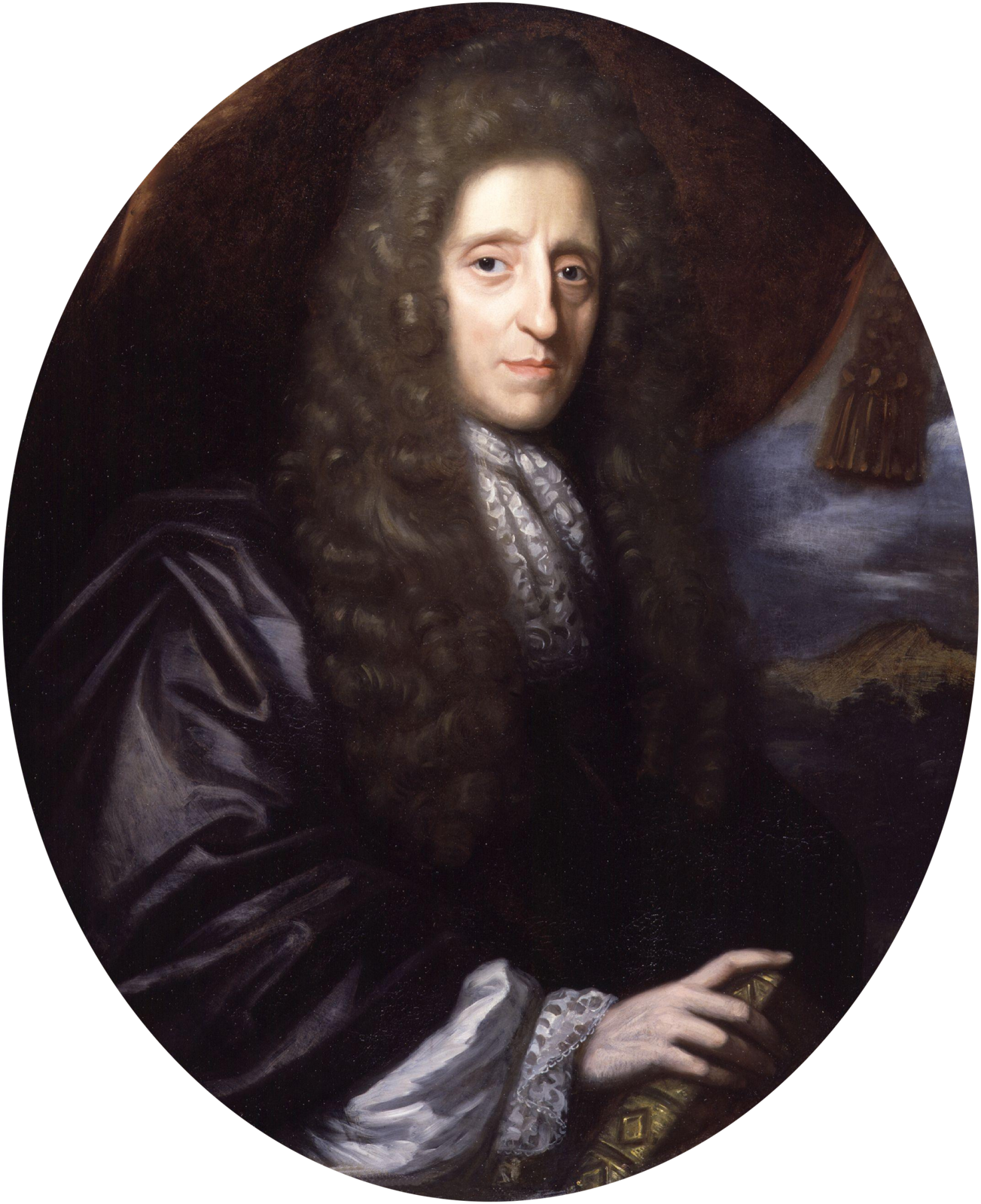
John Locke and property in one's person
John Locke's Second Treatise of Government (1689) gave libertarians their founding sentence on self-ownership. "Though the earth, and all inferior creatures, be common to all men, yet every man has a property in his own person: this no body has any right to but himself. The labour of his body, and the work of his hands, we may say, are properly his."4 A person who mixes that labor with something unowned in nature makes it his property, Locke argued, so long as enough and as good is left for others.4
But read the earlier chapter too. Locke's law of nature teaches "that being all equal and independent, no one ought to harm another in his life, health, liberty, or possessions: for men being all the workmanship of one omnipotent, and infinitely wise maker; all the servants of one sovereign master, sent into the world by his order, and about his business; they are his property, whose workmanship they are."5 Locke grounded the rule against harming others in God's ownership of every person. Many modern libertarians keep the rule and drop the ground. That difference matters, and Lesson 10 comes back to it.
John Stuart Mill and the harm principle
Mill's On Liberty (1859) supplied the clearest statement of where the state's power stops. The passage is long, and its exact words matter:
"That principle is, that the sole end for which mankind are warranted, individually or collectively, in interfering with the liberty of action of any of their number, is self-protection. That the only purpose for which power can be rightfully exercised over any member of a civilised community, against his will, is to prevent harm to others. His own good, either physical or moral, is not a sufficient warrant."
John Stuart Mill, On Liberty, 1859, chapter 1. 6
Mill went on: "Over himself, over his own body and mind, the individual is sovereign."6 He allowed people to argue with, plead with and persuade a person who was harming only himself. He did not allow them to compel him. Mill was a utilitarian, not a natural-rights thinker, and he defended the principle by its good effects on human character and progress. Libertarians who rest everything on rights still quote him, because no one has put the boundary more memorably.
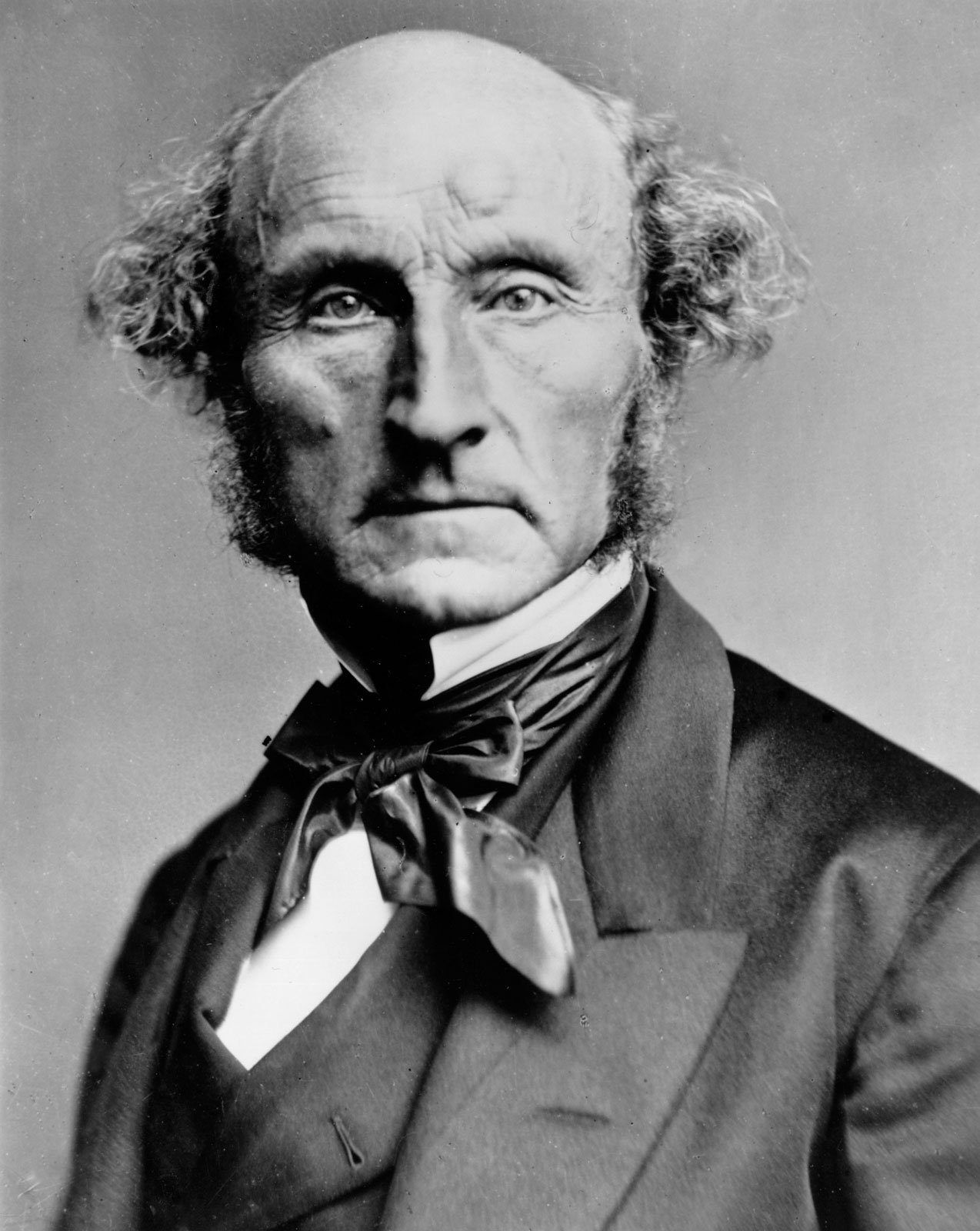
Frederic Bastiat and the purpose of law
The French economist and legislator Frederic Bastiat published The Law in 1850, the year he died. He argued that the law exists to protect what comes before it. "It is not because men have made laws, that personality, liberty, and property exist. On the contrary, it is because personality, liberty, and property exist beforehand, that men make laws." Law, in his definition, "is the collective organization of the individual right to lawful defense."7 When law is turned to take from one group for the benefit of another, Bastiat called it "legal plunder." He wrote, too, that "Nature, or rather God, has bestowed upon every one of us the right to defend his person, his liberty, and his property."7 Like Locke, he rooted rights in the Creator.
Herbert Spencer and equal freedom
The English writer Herbert Spencer's Social Statics (1851) offered a "first principle" that the Online Library of Liberty summarizes this way: every man may claim the fullest liberty to exercise his faculties that is compatible with the same liberty for every other man.8 Spencer's law of equal freedom is a near relative of the non-aggression principle. His later reputation suffered from his evolutionary social theory, and modern libertarians cite him less often than Locke or Bastiat. His place in the family tree is still secure.
Two axioms: self-ownership and non-aggression
Modern libertarian theory rests on two ideas that these older writers gave in pieces. The Stanford Encyclopedia of Philosophy's entry on libertarianism, by the philosophers Bas van der Vossen and Billy Christmas, last substantively revised in 2023, opens with the first: "Libertarians take individual freedom as the paramount political value and understand coercion to be the antithesis of that freedom."9 Its account of self-ownership reads: "Self-ownership is the idea that all individuals have ownership rights over themselves, and therefore may do whatever they choose with themselves so long as they do not violate the self-ownership of others."9
Rothbard gave the second idea its famous form in For a New Liberty (1973):
"The libertarian creed rests upon one central axiom: that no man or group of men may aggress against the person or property of anyone else. This may be called the 'nonaggression axiom.' 'Aggression' is defined as the initiation of the use or threat of physical violence against the person or property of anyone else."
Murray N. Rothbard, For a New Liberty: The Libertarian Manifesto, 1973, chapter 2, "Property and Exchange." 10
Everything turns on the word "initiation." Force used to defend against aggression is allowed. Force used first is not, whether a burglar uses it or a legislature. Rothbard drew the conclusion his critics found most startling: since taxes are collected under threat of penalty, he treated taxation as a form of theft and the state as an organization that claims a right to do what would be crime if anyone else did it.10
The Libertarian Party built the same idea into its platform. The current version, posted by the Libertarian National Committee, defines aggression as "the use, trespass against, or invasion of the borders of another person's owned resource (property) without the owner's consent; or the threat thereof," and says each person "is the presumptive owner of his or her own body (self-ownership)."11 Lesson 6 looks at the party itself.
The strongest objection to the two axioms is about duty. The Stanford entry states it fairly: full self-ownership "rules out the view that individuals have an enforceable duty to come to the assistance of others" in serious or urgent need, unless they caused the need.9 A drowning child, a starving neighbor, a disaster victim: on the strict view, the law may not make you help. Many libertarians answer that few of them ever held full self-ownership in that strong sense, that private charity and mutual aid do the work better than force, and that a moral duty to help is real even when it should not be a legal one.9 Whether that answer satisfies you depends on what you think the law is for.
Nozick and the minimal state
The book that made libertarianism respectable in philosophy departments came from Harvard in 1974. Robert Nozick, who had taught there permanently since 1969, called it Anarchy, State, and Utopia, and it won the National Book Award for Philosophy and Religion in 1975.12 It opens with a sentence that many students still remember: "Individuals have rights, and there are things no person or group may do to them (without violating their rights)."12
The book has three parts. The first, with the wry title "State-of-Nature Theory or How to Back into a State without Really Trying," argues against the anarchists. Nozick tried to show that a minimal state could arise from a state of nature, as people bought protection from agencies and one agency became dominant, without anyone's rights being violated along the way.12 The second, "Beyond the Minimal State?", argues against everyone to his left. Any state that does more than protect people against force, theft and fraud and enforce contracts violates rights, he concluded. The third, "A Framework for Utopia," pictures the minimal state as a frame within which people form whatever voluntary communities they like.12
Wilt Chamberlain and the entitlement theory
Nozick's theory of justice looks backward, not at the final pattern. A person's holdings are just if they were acquired justly, transferred justly, or handed over to correct an earlier injustice.12 To show what is wrong with theories that require a set pattern, he told a story about the basketball star Wilt Chamberlain. Start with whatever distribution you think is fair. Then let a million fans each pay Chamberlain 25 cents to watch him play. Every transfer is voluntary, and yet the pattern is broken, and Chamberlain is now rich. To keep the pattern, Nozick argued, the state would have to interfere with free choices again and again.12 His most quoted line follows from the same reasoning: taxation of earnings from labor is "on a par with forced labor."12
The critics answered hard. Nozick never fully stated his principles of just acquisition. He called each of them a "complicated truth" that he would not try to formulate.12 The philosopher G. A. Cohen pressed the point that Nozick's reading of Locke's "enough and as good" condition might let one person appropriate nearly everything so long as others were paid a small compensation.9 And in The Examined Life (1989), Nozick himself seemed to step back from parts of the book, though he said in a 2001 interview that he remained within the general framework of libertarianism.12
Ayn Rand's quarrel with the movement
Few writers sent more young readers toward these ideas than the novelist Ayn Rand, author of The Fountainhead and Atlas Shrugged. Few were more hostile to the organized libertarian movement. Rand called her own philosophy Objectivism and treated her politics as the conclusion of a whole system of thought about reality, knowledge and ethics. People who took the conclusion and left the system looked to her like poachers.
Her own words, from The Objectivist in September 1971, warned readers against "the so-called 'hippies of the right,' who attempt to snare the younger or more careless ones of my readers."13 Ten years later, her associate Harry Binswanger wrote in The Objectivist Forum that the libertarians "plagiarize Ayn Rand's principle that no man may initiate the use of physical force."13 Libertarians answer that the rule against initiating force is much older than Rand, as Locke and Spencer show, and that many people can share a political conclusion without sharing a whole philosophy. The quarrel has never been settled.
The men who kept the label at arm's length
Two of the economists most often called libertarian kept their distance from the title. One refused it outright. The other took it only in lower case.
Hayek: "a manufactured term"
F. A. Hayek ended The Constitution of Liberty (1960) with a postscript titled "Why I Am Not a Conservative." He objected to conservatism because, in his view, "by its very nature it cannot offer an alternative to the direction in which we are moving." It could slow change but not choose a better course.14 He then looked for a better name for himself. He noted that in America "the term 'libertarian' has been used instead," and turned it down: "For my taste it carries too much the flavor of a manufactured term and of a substitute." He wanted a word for "the party of life, the party that favors free growth and spontaneous evolution," and settled on an old one: "Whiggism is historically the correct name for the ideas in which I believe."14 Lesson 4 of the Economic Thinkers module treats Hayek's work at length.
Friedman: "a libertarian with a small l"
Milton Friedman, whose life and Capitalism and Freedom are covered in Lesson 5 of Economic Systems, accepted the word with a qualifier. Asked about it by Brian Doherty of Reason in 1995, he said, "So I am a Republican with a capital 'r' and a libertarian with a small 'l.'"15 He described the range inside the movement: "There's a zero-government libertarian, an anarchist. There's a limited-government libertarianism." The two camps "share a lot in terms of their fundamental values," he said, though they differ at the roots. He said he would like to be a zero-government libertarian but did not think it "a feasible social structure." And he explained why he never joined the Libertarian Party: he had built good working relationships in the Republican Party and thought he could be "more effective by being a Republican."15
Ronald Reagan said something close to the same thing twenty years earlier. In a July 1975 interview with Reason, he said, "If you analyze it I believe the very heart and soul of conservatism is libertarianism." He added a limit at once. Some libertarians, he said, are "almost over at the point of wanting no government at all or anarchy," and he did not go there: "I believe there are legitimate government functions."16
Minarchists, anarchists and the left wing
Friedman's distinction is the biggest split inside the movement. Minarchists, from the Greek for "minimal rule," want a state confined to protecting rights. Anarcho-capitalists want no state at all, with courts, police and even defense supplied by private agencies.3 The Libertarian Party papered over the gap in 1974 with what members call the Dallas Accord, an unwritten compromise under which the platform would not say whether the state should exist at all.17 The current platform still hedges, speaking of "the purpose of government, should it exist."11
A third camp gets less attention in American politics. Left-libertarians, among them the philosophers Hillel Steiner, Peter Vallentyne and Michael Otsuka, accept self-ownership but hold that land and other natural resources belong to everyone in an egalitarian way. On their view a person who claims land may owe the rest of us compensation, which opens the door to a kind of redistribution.93 Right-libertarians, who make up nearly all of the American movement and simply call themselves libertarians, hold that a person can come to own unowned land by first use, with no duty to share equally.9
| Camp | The state | Natural resources | Representative figures |
|---|---|---|---|
| Classical liberal | Limited, but with some public goods and a safety net | Private property, with some regulation | Hayek, Friedman |
| Minarchist | Night-watchman state: police, courts, defense | Private, by first use and voluntary transfer | Nozick, Rand (who rejected the label) |
| Anarcho-capitalist | None; private agencies supply protection and law | Private, by homesteading | Rothbard |
| Left-libertarian | Varies, from minimal to none | Owned in common or subject to compensation | Steiner, Vallentyne, Otsuka |
Fusionism and Russell Kirk's dissent
In the 1950s and 1960s the American right needed libertarians and traditionalists to work together against communism abroad and the growth of federal power at home. The writer who argued that they could was Frank Meyer, an editor at William F. Buckley Jr.'s National Review. In In Defense of Freedom (1962) Meyer argued that the state's only legitimate functions are police, military and courts, and that coerced virtue is no virtue at all, because a moral act must be freely chosen.18 Tradition and freedom, on his account, had to be held together in tension. The young activists who founded Young Americans for Freedom at Buckley's family home in Sharon, Connecticut, in 1960 wrote both strands into their Sharon Statement.18 Reagan praised Meyer by name at the Conservative Political Action Conference on March 20, 1981, as a thinker who brought the two traditions together.18
Russell Kirk, the most influential traditionalist of the period, would not join the fusion. In "Libertarians: The Chirping Sectaries," published in Modern Age in the fall of 1981, he borrowed a phrase from T. S. Eliot to describe a movement he thought always splitting into smaller sects.19 His deeper charge was about order. Libertarians, he argued, belonged with the utilitarians who admitted no transcendent sanctions for conduct, while conservatives believed in a transcendent moral order. A society built on self-interest and the market alone, he warned, would wear away community, tradition and the loves and loyalties that make freedom possible.19
Meyer had already given the libertarian reply. A virtue that the state compels is not a virtue, he argued, so a conservative who cares about virtue should want the state to leave it to persons, families and churches.18 Libertarians since have added that voluntary communities do better when government stays out of their way, and that Kirk's order of family, church and town is the very thing an overgrown state crowds out. The argument between Kirk and Meyer is one of the most important in American conservatism, and it is not over. Lesson 10 of this module takes it up with the critics from the left, the right and the populist center.
How many Americans are libertarian?
The answer depends on how you ask, and the honest range is wide.
Ask people whether the word fits them and you get a small number. In 2014 the Pew Research Center found that 14 percent of Americans said "libertarian" described them well. Only 11 percent both said so and knew what the word means: given the definition "someone whose political views emphasize individual freedom by limiting the role of government," they picked "libertarian" from a list that also offered "progressive," "authoritarian," "Unitarian" and "communist." Fifty-seven percent of all respondents chose correctly.20 The self-described libertarians were more often men (15 percent of men against 7 percent of women), more often independents or Republicans (14 and 12 percent, against 6 percent of Democrats) and more often college graduates.20 They were more likely than the public at large to say government regulation of business does more harm than good (56 percent against 47) and to support legal marijuana (65 percent against 54).20
Ask instead about views, without the label, and the number grows. David Boaz and David Kirby of the Cato Institute, a libertarian think tank, defined libertarians in 2006 as people who are "fiscally conservative and socially liberal." Using two questions Gallup asks every year, one on whether government is "trying to do too many things that should be left to individuals and businesses" and one on whether government should "promote traditional values," they found that Gallup's libertarian group ran from 17 to 24 percent of respondents across their surveys. Their own best estimate from the American National Election Studies was about 13 percent of the population. A stricter three-question screen gave 9 to 13 percent.21
Two cautions apply. The Cato definition sorts people who say "less government" on both economics and values into one box, but that box holds people who have never read Rothbard and might reject his conclusions. And the label-based numbers miss people who hold libertarian views and call themselves conservatives, as Reagan did. These surveys are also old. Gallup still asks its two questions, and newer readings may differ, so treat the 2006 and 2014 figures as history rather than a current count.
What the surveys do show is that the views are much more common than the vote. In no presidential election has the Libertarian Party's nominee won as much as 4 percent of the national popular vote. Its best showing, Gary Johnson's 3.28 percent in 2016, is part of the story of the next lesson.22
Learn more
- Dean Russell, "Who Is a Libertarian?" (1955): the short essay that proposed the word for the American free-market movement.
- John Stuart Mill, On Liberty: read chapter 1 for the harm principle and chapter 4 for its limits.
- Frederic Bastiat, The Law: a brief, fierce pamphlet on law and "legal plunder."
- John Locke, Two Treatises of Government: chapters 2 and 5 of the second treatise on the law of nature and property.
- Stanford Encyclopedia of Philosophy, Libertarianism: a careful survey of the theory and its strongest objections.
- Stanford Encyclopedia of Philosophy, Robert Nozick's Political Philosophy: the best short guide to Anarchy, State, and Utopia.
- F. A. Hayek, "Why I Am Not a Conservative": Hayek's case against both conservatism and the libertarian name.
- Reason interview with Milton Friedman (1995): Friedman on anarchists, limited government and party strategy.
- Pew Research Center, "In Search of Libertarians": who calls themselves libertarian and what they think.
Notes
- Dean Russell, "Who Is a Libertarian?" The Freeman (Foundation for Economic Education), May 1, 1955. Read it online. ↩
- "Joseph Dejacque," Wikipedia, on his birth in Paris on December 27, 1821, his 1857 letter to Proudhon ("On the Human Being, Male and Female," published in May 1857), his use of libertaire as a synonym for anarchist, and Le Libertaire, 27 issues in New York, June 1858 to February 1861. Read it online. ↩
- "Libertarianism," Wikipedia, sections on etymology and the United States: Faure's Le Libertaire (1895); Mencken and Nock as the first prominent Americans to call themselves libertarian; Rothbard's role, from the 1960s, in popularizing the term; and "Foundation for Economic Education," Wikipedia, on its founding in 1946; definitions of minarchism, anarcho-capitalism and left-libertarianism. Read it online. ↩
- John Locke, Second Treatise of Government (1689), chapter 5, "Of Property," section 27, in Two Treatises of Government, Project Gutenberg eBook 7370. Read it online. ↩
- Locke, Second Treatise, chapter 2, "Of the State of Nature," section 6, Project Gutenberg eBook 7370. Read it online. ↩
- John Stuart Mill, On Liberty (1859), chapter 1, "Introductory," Walter Scott Publishing edition with introduction by W. L. Courtney (1901), Project Gutenberg eBook 34901. Read it online. ↩
- Frederic Bastiat, The Law (1850), Ludwig von Mises Institute edition, Project Gutenberg eBook 44800, section "What Is Law?" and preceding pages. Read it online. ↩
- Herbert Spencer, Social Statics (1851), as summarized on the title page of the Online Library of Liberty (Liberty Fund). The full text of chapter 6 was not checked word for word, so the principle is paraphrased here. Read it online. ↩
- Bas van der Vossen and Billy Christmas, "Libertarianism," Stanford Encyclopedia of Philosophy, first published September 5, 2002, substantive revision August 7, 2023, introduction and sections on self-ownership, natural resources (including Cohen's objection to Nozick's reading of the Lockean proviso) and political authority. Read it online. ↩
- Murray N. Rothbard, For a New Liberty: The Libertarian Manifesto (1973; Mises Institute edition), chapter 2, "Property and Exchange," and chapter 3, "The State." Read it online. ↩
- Libertarian Party, Platform, sections 2.1, "Aggression, Property, and Contract," and 3.0, "Securing Liberty," as posted by the Libertarian National Committee (accessed October 2026). Read it online. ↩
- Eric Mack, "Robert Nozick's Political Philosophy," Stanford Encyclopedia of Philosophy, sections 1 to 5, including his permanent move to Harvard in 1969, quoting Anarchy, State, and Utopia (New York: Basic Books, 1974), pp. ix and 169, and discussing the National Book Award (1975), the Wilt Chamberlain example, The Examined Life (1989) and Nozick's 2001 interview. Read it online. ↩
- "Libertarians," The Ayn Rand Lexicon, quoting Ayn Rand, "Brief Summary," The Objectivist, September 1971, p. 1, and Harry Binswanger, "Q and A Department: Anarchism," The Objectivist Forum, August 1981, p. 12. Read it online. ↩
- F. A. Hayek, "Why I Am Not a Conservative," postscript to The Constitution of Liberty (Chicago: University of Chicago Press, 1960), sections 1, 6 and 7, Cato Institute reprint. Read it online. ↩
- Brian Doherty, "Best of Both Worlds: An Interview with Milton Friedman," Reason, June 1995. Read it online. ↩
- "Inside Ronald Reagan: A Reason Interview," Reason, July 1975, interview conducted by the magazine's editors, led by Manuel S. Klausner. Read it online. ↩
- "History of the Libertarian Party (United States)," Wikipedia, section on the Dallas Accord of 1974. Read it online. ↩
- "Fusionism," Wikipedia, on Frank Meyer, In Defense of Freedom (1962), the Sharon Statement of Young Americans for Freedom (1960) and Reagan's address to the Conservative Political Action Conference, March 20, 1981. Read it online. ↩
- Russell Kirk, "Libertarians: The Chirping Sectaries," Modern Age 25, no. 4 (Fall 1981), pp. 345-351, as summarized in "Fusionism," Wikipedia. Kirk's own text was not checked word for word, so his argument is paraphrased here. Read the summary. ↩
- Jocelyn Kiley, "In Search of Libertarians," Pew Research Center, August 25, 2014, drawing on Pew's 2014 political typology survey and an American Trends Panel follow-up of 3,243 adults, April 29 to May 27, 2014. Read it online. ↩
- David Boaz and David Kirby, "The Libertarian Vote," Cato Institute Policy Analysis no. 580, October 18, 2006, tables 2 to 4. Read it online. ↩
- Federal Election Commission, Federal Elections 2016, "2016 Presidential Popular Vote Summary": Gary Johnson (Libertarian, Independence, Independent), 4,489,341 votes, 3.28 percent. Read it online. ↩
Check yourself
1. Who is credited with first using the word libertarian (libertaire) in a political sense, in an 1857 letter to Pierre-Joseph Proudhon?
Dejacque, a French anarchist living in exile, used libertaire as a synonym for anarchist in his 1857 letter to Proudhon and later published Le Libertaire in New York from 1858 to 1861.
2. In On Liberty (1859), what did John Stuart Mill say was the only purpose for which power can rightfully be exercised over a member of a civilised community against his will?
Mill wrote that 'the only purpose for which power can be rightfully exercised over any member of a civilised community, against his will, is to prevent harm to others. His own good, either physical or moral, is not a sufficient warrant.'
3. How did Murray Rothbard state the 'one central axiom' of the libertarian creed in For a New Liberty (1973)?
Rothbard wrote that the creed 'rests upon one central axiom: that no man or group of men may aggress against the person or property of anyone else,' and defined aggression as the initiation of the use or threat of physical violence.
4. What did F. A. Hayek say about the word libertarian in his 1960 postscript 'Why I Am Not a Conservative'?
Hayek wrote that the term 'carries too much the flavor of a manufactured term and of a substitute' and said Whiggism was historically the correct name for his ideas.
5. In Pew Research Center's 2014 analysis, what share of Americans both said 'libertarian' describes them well and knew what the term means?
Pew found 14 percent said the term describes them well, and 11 percent both said so and correctly identified its definition.
6. How did Milton Friedman describe his own political labels in a 1995 Reason interview?
Friedman said he was 'a Republican with a capital r and a libertarian with a small l,' explaining that he stayed a Republican because he thought he could be more effective there.
Terms in this lesson
- Self-ownership
- The idea that each person has ownership rights over his or her own body and life, so that others may not use that person without consent. Locke wrote that 'every man has a property in his own person.'
- Non-aggression principle
- The rule, central to Rothbard and the Libertarian Party, that no one may initiate force or the threat of force against another person or that person's property. Force used in defense is permitted.
- Harm principle
- Mill's rule that society may coerce an adult only to prevent harm to others, never for the person's own good.
- Minarchism
- The view that a state is legitimate only if it is limited to protecting rights: police, courts and national defense. Nozick's 'minimal state' is the best-known version.
- Anarcho-capitalism
- The view that every function of the state, including police, courts and defense, should be supplied by private firms or voluntary associations, so that no state remains.
- Left-libertarianism
- A school that accepts self-ownership but holds that natural resources such as land belong to everyone in an egalitarian way, so that those who claim them may owe compensation to others.
- Fusionism
- The effort, identified with Frank Meyer at National Review, to join traditionalist conservatives and libertarians in one movement on the ground that virtue must be freely chosen and the state kept limited.
- Entitlement theory
- Nozick's account of justice in holdings: a distribution is just if it arose from just acquisition and just transfer, with rectification of past wrongs, whatever pattern results.
Sources
- Dean Russell, Who Is a Libertarian? (The Freeman, May 1, 1955) checked 2026-10
- John Locke, Two Treatises of Government (Project Gutenberg) checked 2026-10
- John Stuart Mill, On Liberty (Project Gutenberg) checked 2026-10
- Frederic Bastiat, The Law (Project Gutenberg, Mises Institute edition) checked 2026-10
- Murray N. Rothbard, For a New Liberty (Mises Institute PDF) checked 2026-10
- Stanford Encyclopedia of Philosophy, Libertarianism checked 2026-10
- Stanford Encyclopedia of Philosophy, Robert Nozick's Political Philosophy checked 2026-10
- F. A. Hayek, Why I Am Not a Conservative (Cato Institute reprint) checked 2026-10
- Brian Doherty, Best of Both Worlds: An Interview with Milton Friedman (Reason, June 1995) checked 2026-10
- Inside Ronald Reagan: A Reason Interview (July 1975) checked 2026-10
- Pew Research Center, In Search of Libertarians (2014) checked 2026-10
- David Boaz and David Kirby, The Libertarian Vote (Cato Policy Analysis 580, 2006) checked 2026-10