Lesson 1 of 10 · about 24 minutes
Left, Right and the Third Paths
You'll be able to
- Explain in brief how the 1789 seating of the French National Assembly produced the labels left and right, and why two-axis charts such as the Nolan chart were drawn to replace a single line
- Describe populism as scholars define it and trace it from the People's Party of 1892 to the campaigns of the 1990s
- State what Williams v. Rhodes, Jenness v. Fortson, Storer v. Brown, Anderson v. Celebrezze, Burdick v. Takushi and Timmons v. Twin Cities Area New Party decided about ballots and minor parties
- Explain how a new party or an independent presidential candidate qualifies for the ballot in Idaho
- Compare the popular and electoral votes of the 1912, 1968, 1980 and 1992 third-force campaigns and explain why a candidate can win nearly one voter in five and carry no electoral votes
In 1789, when the deputies of France's National Assembly argued over what the new nation should become, they sat in a hall that sorted them without anyone planning it. The Baron de Gauville, a noble deputy, wrote in his journal that the members began to recognize each other: those loyal to religion and the king took the seats to the right of the president's chair, to get away from the shouting and disorder on the other side. Supporters of the revolution gathered on the left.1
That seating chart is why a rancher in Owyhee County, a professor in Boston and a pollster in Washington still describe politics with the same two directional words more than two centuries later. And it is why so many Americans who do not fit either word go looking for a third door. This module is about three of the people and movements who walked through one: Ross Perot, the libertarians and the Libertarian Party, and Ron and Rand Paul. Before the people, though, come the rules of the house. Who gets on a ballot, how votes turn into electors, and why the country keeps returning to two parties are questions of law and arithmetic, and they decide what a third path can win.
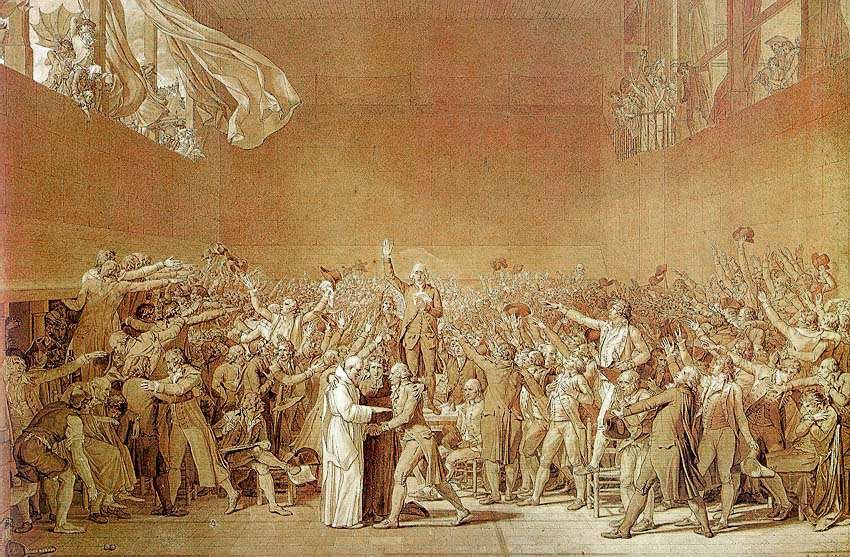
Left, right and a second axis, in brief
The labels never held still. French assemblies reshuffled the seating several times in the 1790s, the restored monarchy brought it back after 1815, and by the 1870s French parties were putting "Left" into their own names. The words crossed borders and oceans and kept changing meaning as they went. A man on the right in 1789 defended a king. An American conservative in 1992 defended a Constitution written by men who had thrown a king out.
Module 72 of this site, The Liberty Political Matrix: why one line fails, covers that history and the case against the single left-right line in depth, so this lesson gives only the part that matters for third parties. The most famous attempt to fix the line came from David Nolan, an activist who drew a chart in 1969 with two axes, economic freedom and personal freedom, and published it as "Classifying and Analyzing Politico-Economic Systems" in the January 1971 issue of The Individualist, the magazine of the Society for Individual Liberty. That December he helped start the group that became the Libertarian Party, the subject of Lesson 6. In 1987 Marshall Fritz of the Advocates for Self-Government added ten questions and turned the chart into the World's Smallest Political Quiz.3 Nolan's chart gave libertarians a corner of their own, outside the old line. Friends and foes of the chart agree that this was part of the point.
One voter, several answers
Take Ross Perot in 1992. In the first presidential debate, on October 11, he told the country he had no experience "in running up a $4 trillion debt," and warned that every one percent rise in interest rates "adds 28 billion dollars to the deficit or to the debt."4 His own family's account of the campaign says he ran on growth, private enterprise and jobs, on rooting out government waste, on a simpler tax code, and later on a balanced budget. In 1996 he added campaign and lobbying reform, congressional term limits and overhauls of health care and the income tax.5 Deficit hawks heard a conservative. Union households worried about factories moving to Mexico heard someone on their side. Reformers heard an outsider. Ask a Perot voter whether she was left or right and the answer would fit one plank and miss the next.
Nobody has solved this by giving up the words. Newspapers, campaign managers and voters still use them, and they work well enough for a first sort. The rest of this lesson looks at something harder to argue with than a chart: the history and the law that decide whether a voter who fits neither word gets anyone else to vote for.
Populism, the oldest third path
Some of the most important movements in American politics do not sit on a chart at all. They sit on a grievance. The political scientist Cas Mudde gave the most widely cited definition of populism in a 2004 article in the journal Government and Opposition: an ideology that splits society into "two homogeneous and antagonistic groups," the pure people and the corrupt elite, and holds that politics should express the general will of the people.6 Most scholars, following the British theorist Margaret Canovan, call it a thin ideology. It names the good guys and the bad guys and answers few other questions, so populists borrow the rest from a thicker creed. Nativist populists on the right set "our people" against a cosmopolitan elite. Socialist populists on the left defend ordinary people against greedy capitalists.6 That is why populism has a left form and a right form, and why it can move through either major party without belonging to it.
The People's Party of 1892
The United States had a populist party long before scholars had a definition. Farmers' alliances in the South and the plains, angry at railroad rates, falling crop prices and tight money, met in Omaha, Nebraska on July 4, 1892 and adopted a platform that still reads like a shout. The preamble said they met "in the midst of a nation brought to the verge of moral, political, and material ruin," and that "the fruits of the toil of millions are boldly stolen to build up colossal fortunes for a few." Their aim was to "restore the government of the Republic to the hands of 'the plain people,' with which class it originated."7
"We demand a graduated income tax."
People's Party Platform, Omaha, Nebraska, July 4, 1892, Finance plank.7
The platform also asked for postal savings banks, for the government to "own and operate the railroads in the interest of the people," and, among the resolutions it set apart from the formal platform, for the election of United States Senators "by a direct vote of the people."7
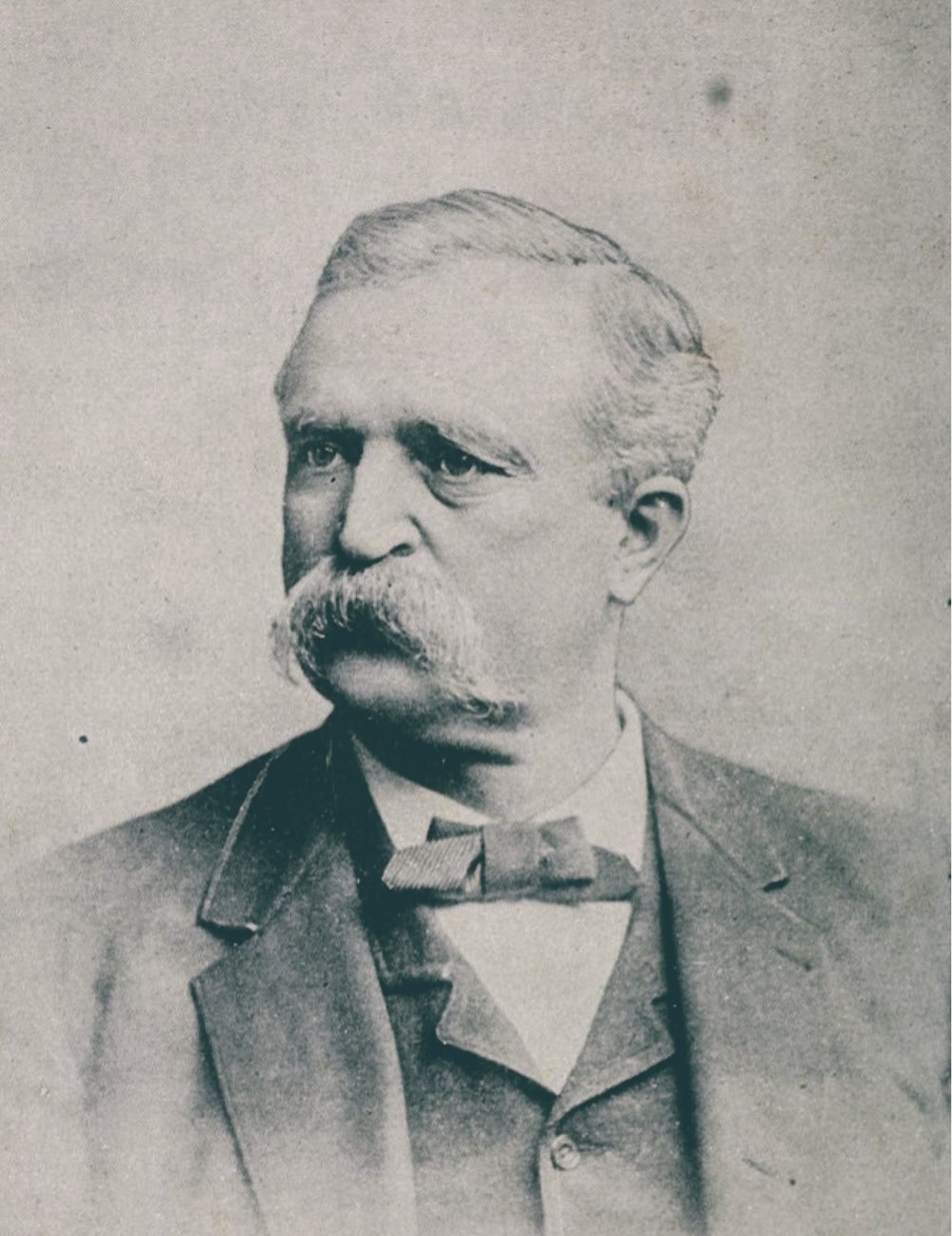
The party nominated James B. Weaver of Iowa, a former Union general and the Greenback Party's presidential nominee in 1880.9 He won 22 electoral votes: all of Colorado (4), Idaho (3), Kansas (10) and Nevada (3), plus one elector each from North Dakota and Oregon.10 His popular vote was a little over a million, about 8.5 percent of the national total, and in Idaho he won 54.21 percent.11 Idaho had been a state for two years. Its first presidential vote went to a third party.
Idaho's populists did not stop at one election. Henry Heitfeld, a Populist, served as one of the state's United States senators, and Frank Steunenberg won the governorship in 1896 and served from 1897 to 1901 on a Democratic and Populist fusion ticket.9 The national party did not last as long. In 1896 it nominated the Democrat William Jennings Bryan for President, though it chose its own running mate, Tom Watson, and Bryan lost to William McKinley. The party disbanded after 1900, came back for Watson's runs in 1904 and 1908, and then disbanded again.9 Its demands did better than its candidates. The Sixteenth Amendment, which lets Congress tax incomes, was ratified on February 3, 1913. The Seventeenth, which provides for the direct election of senators, followed on April 8, 1913.12 The historian Richard Hofstadter compressed the pattern into one line in The Age of Reform (1955): "Third parties are like bees: once they have stung, they die."13 The major parties absorb a third party's best issues and its voters drift home. That pattern shows up again in 1912, in 1968 and in the 1990s.
Populism after Omaha
Populist appeals did not stay with farmers or with the left. Mudde's definition fits movements as different as Bryan's free-silver Democrats and George Wallace's American Independents, because it describes the shape of an appeal and leaves the content open. Each movement borrowed its thicker creed from somewhere. Bryan's came from agrarian Protestant reform. Wallace's came from Southern resistance to desegregation and to federal power. Perot's, as the next three lessons show, came from a businessman's faith in management, balance sheets and plain talk. Lessons 2 through 4 test whether Perot had a program or only a grievance, and Lessons 7 and 8 ask the same of the Pauls.
Why the country keeps returning to two parties
Third parties in America face an arithmetic problem before they face a legal one. In 48 states and the District of Columbia, the candidate with the most votes statewide takes every one of that state's presidential electors. Maine and Nebraska are the exceptions: they give two electors to the statewide winner and one to the winner of each congressional district.14 Almost every seat in Congress and in state legislatures is also won by a plurality in a single-member district. A party that runs a respectable second or third everywhere wins nothing anywhere.
The French political scientist Maurice Duverger turned this into a general rule in his book Political Parties: plurality voting in single-member districts tends to produce two dominant parties. Two forces push in that direction. Small parties rarely win seats, so they have little reason to form and little to offer. And voters who like a small party fear wasting their votes on it, so they move to the major party they dislike least.15 Political scientists call this Duverger's law. It describes a strong tendency with exceptions, and scholars still argue over them.
The wasted-vote fear is where every third-party campaign in this module begins and often ends. Lesson 3 looks at how it shaped the Perot vote in 1992, and Lesson 6 at how the Libertarian Party has answered it for more than fifty years.
Ballots: who writes the rules
A third path means little if a candidate cannot reach the ballot. In the United States the states write the ballot rules, even for President. The only federally mandated ballot access requirement for a presidential candidate is a statement of candidacy filed with the Federal Election Commission, due within 15 days of raising or spending more than $5,000.16 Everything else, the signatures, the fees, the deadlines, is state law, and the numbers differ wildly. In Ballotpedia's estimate for 2016 an independent presidential candidate needed about 864,427 signatures to reach the ballot in all fifty states and the District of Columbia, from 275 in Tennessee, the fewest, to 178,039 in California, the most.16 New parties face a different set of rules in each state, often tied to a percentage of the last vote for governor or President.
For most of the nineteenth century the states printed no ballots at all. Partisan newspapers printed filled-out tickets, party workers handed them out on election day, and voters dropped them in the box. The government-printed secret ballot, called the Australian ballot, spread quickly after the presidential election of 1884. Louisville, Kentucky was the first city to use it, Massachusetts adopted the first statewide version in 1888, and most states had switched by 1891, though South Carolina did not meet all of the Australian ballot requirements until 1950.17 Once the state printed the ballot, someone had to decide whose names went on it. Ballot access law grew out of that question, and for decades the Supreme Court left it to the states.
Williams v. Rhodes, 1968
The Court first took a hard look in the year George Wallace ran. Ohio required a new party to file petitions signed by qualified electors equal to 15 percent of the ballots cast in the last governor's race, by February 7 of the election year. The Republican and Democratic parties stayed on the ballot automatically by polling 10 percent in the last governor's race. Independent presidential candidates had no route at all. Wallace supporters formed the Ohio American Independent Party in January 1968 and gathered more than 450,000 signatures, more than the 433,100 required, and were still turned away because the February deadline had passed.18
On October 15, 1968, three weeks before the election, the Court ruled for them in an opinion by Justice Hugo Black. Ohio, he wrote, had made it "virtually impossible" for a new political party to get on the ballot, and the laws taken together violated the Equal Protection Clause. The party went on the ballot. Justice Douglas concurred and would have rested more on the First Amendment, as did Justice Harlan. Chief Justice Warren and Justices Stewart and White dissented in whole or part. The Court did not order the Socialist Labor Party onto the ballot. That party had 108 members in Ohio, had filed no petitions and had asked for relief too late for the state to reprint its ballots.18
Jenness v. Fortson, 1971
Three years later the Court showed that Williams did not mean every hurdle was unconstitutional. Georgia let an independent or a new party's candidate onto the general election ballot with a petition signed by 5 percent of the voters eligible in the last election for that office, gathered within 180 days. A unanimous Court, in an opinion by Justice Potter Stewart, upheld the rule on June 21, 1971. Georgia, unlike Ohio, allowed write-in votes, independent candidacies and reasonable deadlines, and did not freeze the political status quo. The Court recognized "an important state interest in requiring some preliminary showing of a significant modicum of support" before a candidate's name is printed on the ballot.19
Storer v. Brown, 1974
California came next, and this case is the one most often cited when a state wants to keep a party member from switching to an independent run. California barred an independent candidate from the ballot if he had been registered with a qualified political party at any time within one year before the primary. Two former Democrats who wanted to run for Congress as independents challenged the rule. On March 26, 1974 the Court upheld it, 6 to 3, in an opinion by Justice Byron White. The rule protected the direct primary and the state's interest in "the stability of its political system," and the Court warned that "splintered parties and unrestrained factionalism may do significant damage" to government.20
But the same opinion sent back the claim of the Communist Party's presidential ticket, Gus Hall and Jarvis Tyner. California required independent presidential candidates to collect signatures equal to 5 percent of the last general election vote, apparently about 325,000, within 24 days, and only from voters who had not voted in a primary. The Court said a lower court had to decide whether that burden was too heavy, and it asked a question that ballot access lawyers still quote in substance: could a reasonably diligent independent candidate be expected to satisfy the requirement?20 Justice William Brennan, joined by Douglas and Marshall, dissented.20
Anderson v. Celebrezze, 1983
John Anderson, a Republican congressman from Illinois, announced an independent presidential candidacy on April 24, 1980. Ohio's filing deadline for independents had been March 20. His supporters filed a petition of about 14,500 signatures and a statement of candidacy on May 16, and the Ohio Secretary of State refused them as late. The case reached the Supreme Court after the election, and on April 19, 1983 a 5 to 4 Court sided with Anderson.21
Justice John Paul Stevens wrote that the early deadline burdened the voting and associational rights of Anderson's supporters. He called it "somewhat unrealistic to suggest that it takes more than seven months to inform the electorate" about a candidate, and he wrote that Ohio's "asserted interest in political stability amounts to a desire to protect existing political parties from competition."21 He also set out the method courts still use. A court must "first consider the character and magnitude of the asserted injury" to the voters' rights, then "identify and evaluate the precise interests put forward by the State as justifications for the burden imposed by its rule," and weigh how far those interests make the burden necessary. Presidential races got special weight, because restrictions on them "implicate a uniquely important national interest": the President and Vice President are the only officials elected by all the voters in the nation.21 Justice Rehnquist, joined by White, Powell and O'Connor, dissented. He thought the deadline was rational and the burden on independents small.21
Burdick v. Takushi, 1992
Nine years later, in a case about Hawaii's ban on write-in votes, the Court turned Anderson's method into a two-track test. Severe restrictions must be "narrowly drawn to advance a state interest of compelling importance." But "reasonable, nondiscriminatory restrictions" are usually justified by the state's "important regulatory interests." The Court upheld the write-in ban 6 to 3 on June 8, 1992, in an opinion by Justice White, with Justice Kennedy writing for the dissenters.22 Lawyers call the result the Anderson-Burdick test. Almost every modern ballot access fight, from petition deadlines to signature counts, is argued under it.
Timmons v. Twin Cities Area New Party, 1997
The Court drew the other fence in 1997. Minnesota banned fusion, the practice of letting a candidate appear on the ballot as the nominee of more than one party. The New Party, which wanted to cross-nominate a Democratic candidate for the legislature, sued. On April 28, 1997 the Court upheld the ban, 6 to 3, in an opinion by Chief Justice William Rehnquist. The burdens on the party, though not trivial, were "not severe," and "ballots serve primarily to elect candidates, not as fora for political expression." On the larger question the Court split the difference in plain words. The state's interest in stability "does not permit a State to completely insulate the two-party system" from minor parties and independents, but it does let a state "enact reasonable election regulations that may, in practice, favor the traditional two-party system."23
Justice Stevens, joined by Justice Ginsburg and in part by Justice Souter, dissented. He pointed out that "Minnesota did not argue in its briefs that the preservation of the two-party system supported the fusion ban," and that the state had disclaimed the rationale at oral argument. Souter wrote separately that a forceful version of the argument might someday be made, but that no state had yet tried to make it.23
- 1968 Williams v. Rhodes: Ohio's rules make a new party "virtually impossible"; the Wallace party goes on the ballot.
- 1971 Jenness v. Fortson: Georgia's 5 percent petition upheld; a state may demand "a significant modicum of support."
- 1974 Storer v. Brown: California's one-year disaffiliation rule upheld; petition burden on independents sent back for a closer look.
- 1983 Anderson v. Celebrezze: Ohio's March deadline for independents struck down, 5 to 4; the balancing method is set out.
- 1992 Burdick v. Takushi: Hawaii's write-in ban upheld; severe burdens need compelling interests, reasonable ones do not.
- 1997 Timmons v. Twin Cities Area New Party: Minnesota's fusion ban upheld; states may not "completely insulate" the two parties but may favor them in practice.
Taken together the cases mark a field with fences at both ends. A state cannot make the ballot impossible for a new force, and it can set reasonable rules that happen to help the old ones. Most of the fights in the later lessons of this module happen between those fences.
Idaho's rules for new parties and independents
Idaho sits near the easier end of the scale. Under Idaho Code section 34-501, a political party is "an organization of electors under a given name," and it qualifies for the ballot in one of three ways. It may have had three or more candidates for state or national office on the ballot under its name at the last general election, with the candidates for President, Vice President and presidential elector counting as one. It may have had a candidate for state or national office who polled at least 3 percent of the total vote cast for governor or for presidential electors at the last general election. Or it may file a petition.24
The petition route has firm numbers and dates. The party's name may be no more than six words. The petition must carry signatures equal to at least 2 percent of the aggregate vote cast for presidential electors in Idaho at the previous presidential election, on sheets the Secretary of State prescribes, verified under the same procedure used for initiative and referendum petitions. Circulation may begin no earlier than August 30 of the year before the general election, and the petition must be filed with the Secretary of State by August 30 of the even-numbered year. Once certified, the new party holds a state convention at which all of its members may take part in electing officers and nominating candidates.24
An independent candidate for President has a simpler road. Section 34-708A requires a declaration of candidacy, filed by August 1, stating that the candidate has "no political party affiliation," with a petition signed by 1,000 qualified electors. The signatures must be verified by September 1, and circulators do not have to live in Idaho.25 The Secretary of State's candidate page for the 2020 cycle added that each signature sheet must come from a single county and be verified by that county's clerk, and it listed four recognized parties: the Constitution Party, the Idaho Democratic Party, the Libertarian Party of Idaho and the Idaho Republican Party.26 Statutes change, and the page was written for 2020, so check the current code and the Secretary of State's office before any filing.
An Idaho voter who wants a new party on the ballot needs about 2 percent of the last presidential vote in signatures by August 30 of an election year. An independent presidential candidate needs 1,000 signatures by August 1. A party that has run three or more candidates, or had one candidate reach 3 percent, keeps its place without a petition.
Four runs, four results
American history holds a handful of campaigns that took a large share of the popular vote from outside the two major parties. Four are worth setting side by side because each was famous in its day and each ended differently.
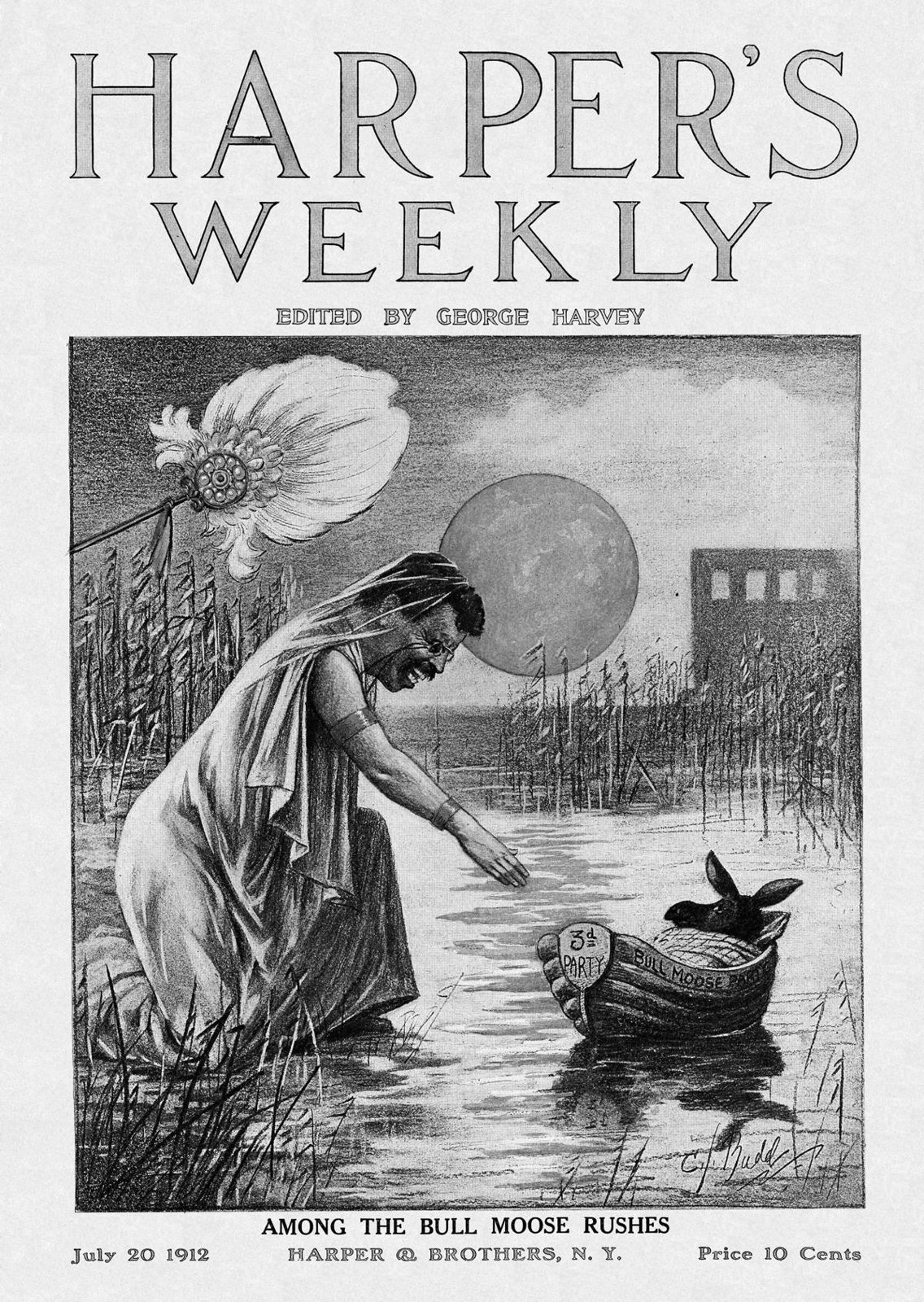
1912: Theodore Roosevelt and the Progressives
Former President Theodore Roosevelt lost the Republican nomination to the sitting President, William Howard Taft, and ran in 1912 as the nominee of the new Progressive Party, which met in Chicago on August 5. On October 14 he was shot in Milwaukee and survived.28 Woodrow Wilson, the Democrat, won with 41.84 percent of the popular vote and 435 electoral votes. Roosevelt took 27.40 percent, or 4,122,721 votes, and 88 electoral votes, which put him second. Taft, the incumbent, finished third with 23.17 percent and 8 electoral votes, from Utah and Vermont. The Socialist Eugene V. Debs won 5.99 percent, 901,551 votes, and no electors.2928 Roosevelt carried Pennsylvania, Michigan, Minnesota, Washington and South Dakota and took 11 of California's 13 electors.29 No minor-party candidate before or since has won a larger share of the popular vote, and none since has beaten a major-party nominee.28
1968: George Wallace and the American Independent Party
Wallace, the former governor of Alabama, ran as the American Independent candidate with the retired Air Force general Curtis E. LeMay as his running mate. The Republican Richard Nixon won the popular vote with 43.42 percent to the Democrat Hubert Humphrey's 42.72 percent, and carried 301 electoral votes to Humphrey's 191.3031 Wallace won 13.53 percent of the vote. The National Archives puts his total at 9,906,473. He won 46 electoral votes from Alabama (10), Arkansas (6), Georgia (12), Louisiana (10) and Mississippi (7), plus one of North Carolina's 13 electors, who broke from Nixon.30 As of 2026 he remains the most recent third-party candidate to carry any state.31 His appeal rested heavily on resistance to desegregation and on resentment of the federal government, and any honest account of his vote has to say so. Without Williams v. Rhodes he would not have been on the ballot in Ohio at all.
1980: John Anderson and Ed Clark
Ronald Reagan won with 50.75 percent and 489 electoral votes against Jimmy Carter's 41.01 percent and 49.3233 Anderson, running as an independent, took 5,719,437 votes by the National Archives count, 6.61 percent, and no electoral votes.32 The Libertarian nominee, Ed Clark, won 1.06 percent, about 921,000 votes, and appeared on the ballot in all fifty states and the District of Columbia.33 Anderson had been as high as 20 percent in some polls. The League of Women Voters held a debate with Reagan and Anderson in Baltimore on September 21, 1980 after Carter refused to take part with Anderson on the stage. Anderson was judged the narrow winner by much of the press, and then fell from over 10 percent to about 5. The single Reagan and Carter debate, in Cleveland on October 28, drew 80.6 million viewers.33
1992: Ross Perot
The Federal Election Commission's official tally of the 1992 election records Bill Clinton at 44,909,889 votes (43.01 percent), George H. W. Bush at 39,104,545 (37.45 percent) and Ross Perot at 19,742,267 (18.91 percent), out of 104,426,659 votes cast. The Libertarian, Andre Marrou, received 291,628, or 0.28 percent.34 The National Archives lists Clinton with 370 electoral votes, Bush with 168 and Perot with none, and gives Perot's popular vote as 19,741,065, a count about 1,200 lower than the FEC's.35 The Texas State Historical Association calls Perot's showing the strongest third-party debut since Roosevelt's in 1912.36
He did best where voters felt furthest from Washington. By the FEC's state tables he took 30.43 percent in Maine, enough to finish second there with 206,820 votes to Bush's 206,504, and 27.34 percent in Utah, second again, ahead of Clinton. He won 28.42 percent in Alaska, 27.04 percent in Idaho and 26.99 percent in Kansas.34 In Idaho Bush won with 202,645 votes (42.03 percent), Clinton took 137,013 (28.42 percent) and Perot took 130,395 (27.04 percent), barely a point and a half behind the Democrat.34 A century after Weaver, Idaho again gave an outsider more than a quarter of its vote.
| Year | Candidate and label | Popular vote | Share | Electoral votes | States carried |
|---|---|---|---|---|---|
| 1892 | James B. Weaver, People's | 1,026,595 | 8.51% | 22 of 444 | 4, plus 2 split electors |
| 1912 | Theodore Roosevelt, Progressive | 4,122,721 | 27.40% | 88 of 531 | 5, plus 11 of 13 in California |
| 1924 | Robert M. La Follette, Progressive | 4,822,856 | 16.61% | 13 of 531 | 1 (Wisconsin) |
| 1968 | George Wallace, American Independent | 9,906,473 | 13.53% | 46 of 538 | 5, plus 1 North Carolina elector |
| 1980 | John Anderson, Independent | 5,719,437 | 6.61% | 0 of 538 | 0 |
| 1992 | Ross Perot, Independent | 19,742,267 | 18.91% | 0 of 538 | 0 |
| 1996 | Ross Perot, Reform | 7,866,284 | about 8% | 0 of 538 | 0 |
Why votes and electoral votes part ways
Put 1912 beside 1992 and the lesson is plain. Roosevelt won 27 percent and 88 electors. Perot won nearly 19 percent and none. Wallace won under 14 percent and took 46. La Follette won almost 17 percent in 1924 and took only his home state's 13.37 The difference is geography. Under winner-take-all a candidate must finish first somewhere to win a single elector.14 Roosevelt finished first in six states counting California, and Wallace in five, where his support was packed into the Deep South. Perot's 19.7 million votes were spread across the whole country at about the same level, so he finished first nowhere. His best state, Maine, left him second: 316 votes ahead of Bush and 56,600 behind Clinton's 263,420.34
The chart shows the bargain a third-force candidate faces. Concentrated support wins electors and gets labeled sectional. Broad support earns respect in the polls and an empty column on election night. Wallace chose the first path, whether he meant to or not. Perot got the second.
Myth: A third-party vote has never mattered
Third parties rarely win, but their issues often do. The graduated income tax and the direct election of senators were in the People's Party platform in 1892 and in the Constitution by 1913.712 Perot made the federal deficit the subject of a national campaign in 1992, and Lesson 4 traces what happened to the budget afterward. Whether a third-party candidate changed who won an election is a separate and harder question, and Lesson 3 takes it up for 1992 with the political-science studies on both sides.
The ballot cases bear on a question that comes before any of that: whether voters get the choice at all. Wallace's supporters had to win in the Supreme Court to reach Ohio voters in 1968. Anderson's supporters won their case after their candidate had already lost. Perot's volunteers took a third route in 1992. They gathered the signatures in every state, and their candidate was on all fifty ballots by the fall.5
Learn more
- The Liberty Political Matrix: why one line fails: Module 72 on this site, the full treatment of left and right, the Nolan chart and other two-axis maps.
- The Omaha Platform of 1892: Read the People's Party's demands in full and count how many later became law.
- Williams v. Rhodes (1968): Justice Black's short opinion on the Wallace party and Ohio's ballot rules.
- Anderson v. Celebrezze (1983): The opinion that set the balancing test for ballot access, with a strong dissent.
- Timmons v. Twin Cities Area New Party (1997): The Court's clearest statement on how far a state may favor the two-party system.
- Idaho Code 34-501: The statute that says how a new party qualifies in Idaho.
- Ballotpedia on presidential ballot access: State-by-state signature counts and deadlines for independents and new parties.
- National Archives election results: Electoral vote tables for every presidential election, with notes on third-party popular votes.
- Federal Elections 92: The FEC's official 1992 returns, state by state, including Perot's strongest states.
Notes
- Geoffrey M. Hodgson, Wrong Turnings: How the Left Got Lost (Chicago: University of Chicago Press, 2018), p. 32, quoting Journal du Baron de Gauville, depute de l'ordre de la noblesse, aux Etats-generaux depuis le 4 mars 1789 jusqu'au 1er juillet 1790 (Paris, 1864), p. 20. The passage is reproduced in "Left-right political spectrum," Wikipedia. Read it online. ↩
- Jacques-Louis David, The Oath of the Tennis Court, 1791, pen, ink and wash drawing. Wikimedia Commons, File:Jacques-Louis David - The Oath of the Tennis Court - WGA06111.jpg. View the file. ↩
- David Nolan, "Classifying and Analyzing Politico-Economic Systems," The Individualist (Society for Individual Liberty), January 1971; on the 1969 drawing, the 1968 Bryson and McDill paper that Brian Doherty credits as the inspiration, and Marshall Fritz's 1987 World's Smallest Political Quiz, see "Nolan Chart," Wikipedia. Read it online. ↩
- Commission on Presidential Debates, transcript, "October 11, 1992 First Half Debate," Washington University, St. Louis. Read it online. ↩
- Perot family, "Presidential Candidate," Ross Perot life story, rossperot.com (official family site). The page says he "got on all state ballots" in 1992, finished with about 19 percent, and won 8 percent in 1996. Read it online. ↩
- Cas Mudde, "The Populist Zeitgeist," Government and Opposition 39, no. 4 (2004): 541-563, at 543; on the thin-ideology view (Margaret Canovan, 1999) and nativist and socialist forms of populism, see C-REX Center for Research on Extremism, University of Oslo, "What is populism?" Read it online. ↩
- National People's Party Platform, adopted at Omaha, Nebraska, July 4, 1892, preamble, Finance and Transportation planks, and the separate "Expression of Sentiments." Teaching American History. Read it online. ↩
- Portrait of James B. Weaver, 1892. Wikimedia Commons, File:James B. Weaver 1892.jpg. View the file. ↩
- "People's Party (United States)," Wikipedia, sections on the founding in 1892, the 1896 Bryan and Watson ticket, the party's dissolution, James B. Weaver, and Idaho officeholders (Henry Heitfeld; Frank Steunenberg, governor 1897-1901 by Democratic and Populist fusion). Read it online. ↩
- National Archives and Records Administration, U.S. Electoral College, "1892 Electoral College Results." Read it online. ↩
- "1892 United States presidential election," Wikipedia, results table (from Dave Leip's Atlas of U.S. Presidential Elections) and Idaho state results. The infobox gives a slightly higher Weaver total, 1,041,029 (8.6 percent). Read it online. ↩
- National Archives, "The Constitution: Amendments 11-27": the Sixteenth Amendment passed Congress July 2, 1909 and was ratified February 3, 1913; the Seventeenth passed May 13, 1912 and was ratified April 8, 1913. Read it online. ↩
- Richard Hofstadter, The Age of Reform: From Bryan to F.D.R. (New York: Alfred A. Knopf, 1955), ch. 3, part 1, p. 97. Quotation and page as given in Wikiquote, "Richard Hofstadter." Read it online. ↩
- National Archives, U.S. Electoral College, page on the allocation of electors (winner-take-all; the Maine and Nebraska district method). Read it online. ↩
- Maurice Duverger, Political Parties: Their Organization and Activity in the Modern State, English translation by Barbara and Robert North (London: Methuen, 1954; 1964 edition), Book II, chapter 1, on the two-party tendency of the simple-majority single-ballot system; summarized in "Duverger's law," Wikipedia. Read it online. ↩
- Ballotpedia, "Ballot access for presidential candidates," federal requirements and 2016 signature estimates (data as of November 2015). Read it online. ↩
- "Secret ballot," Wikipedia, section on the United States (party tickets printed by partisan newspapers; Louisville the first city and Massachusetts the first state, 1888, to adopt the Australian ballot; states moving to secret ballots after the 1884 election, finishing with Kentucky in 1891; South Carolina last, 1950). Read it online. ↩
- Williams v. Rhodes, 393 U.S. 23 (1968), decided October 15, 1968, opinion of the Court by Justice Black; concurring opinions of Justices Douglas and Harlan; dissents of Chief Justice Warren and Justices Stewart and White. Read it online. ↩
- Jenness v. Fortson, 403 U.S. 431 (1971), decided June 21, 1971, opinion of the Court by Justice Stewart; Justices Black and Harlan concurred in the result. Read it online. ↩
- Storer v. Brown, 415 U.S. 724 (1974), decided March 26, 1974, opinion of the Court by Justice White; dissent by Justice Brennan, joined by Justices Douglas and Marshall. Read it online. ↩
- Anderson v. Celebrezze, 460 U.S. 780 (1983), decided April 19, 1983, opinion of the Court by Justice Stevens, at 789-790 (the balancing method) and 794-795 (the national interest); dissent by Justice Rehnquist, joined by Justices White, Powell and O'Connor. Read it online. ↩
- Burdick v. Takushi, 504 U.S. 428 (1992), decided June 8, 1992, opinion of the Court by Justice White, at 434; dissent by Justice Kennedy, joined by Justices Blackmun and Stevens. Read it online. ↩
- Timmons v. Twin Cities Area New Party, 520 U.S. 351 (1997), decided April 28, 1997, opinion of the Court by Chief Justice Rehnquist; dissent by Justice Stevens, joined by Justice Ginsburg and in part by Justice Souter; separate dissent by Justice Souter. Read it online. ↩
- Idaho Code section 34-501, "Political party defined," Idaho Legislature. Read it online. ↩
- Idaho Code section 34-708A, "Independent candidates for President," Idaho Legislature. Read it online. ↩
- Idaho Secretary of State, Elections Division, "Candidate Information" (2020 election cycle; independent presidential candidates and recognized political parties). Read it online. ↩
- Charles Jay Budd, "Among the Bull Moose Rushes," Harper's Weekly, July 20, 1912, cover. Wikimedia Commons, File:Among the Bull Moose Rushes 07201.jpg. View the file. ↩
- "1912 United States presidential election," Wikipedia, results table (from Dave Leip's Atlas), Progressive convention of August 5, 1912, and the October 14, 1912 shooting in Milwaukee. Read it online. ↩
- National Archives, U.S. Electoral College, "1912 Electoral College Results." Read it online. ↩
- National Archives, U.S. Electoral College, "1968 Electoral College Results," including Wallace's popular vote of 9,906,473 and the 12 to 1 split of North Carolina. Read it online. ↩
- "1968 United States presidential election," Wikipedia, results table and the statement that Wallace remains, as of 2026, the most recent third-party candidate to carry a state. Read it online. ↩
- National Archives, U.S. Electoral College, "1980 Electoral College Results," including Anderson's popular vote of 5,719,437. Read it online. ↩
- "1980 United States presidential election," Wikipedia, results, Clark's ballot access, and the September 21 (Baltimore) and October 28 (Cleveland) debates. Read it online. ↩
- Federal Election Commission, Federal Elections 92: Election Results for the U.S. President, the U.S. Senate and the U.S. House of Representatives, 1992 Presidential Popular Vote Summary and state results for Alaska, Idaho, Kansas, Maine and Utah. Read it online. ↩
- National Archives, U.S. Electoral College, "1992 Electoral College Results." Read it online. ↩
- John Huntington, "Perot, Henry Ross," Handbook of Texas Online, Texas State Historical Association, published June 17, 2020. Read it online. ↩
- National Archives, U.S. Electoral College, "1924 Electoral College Results," including La Follette's popular vote of 4,822,856. Read it online. ↩
- "1924 United States presidential election," Wikipedia, results table (La Follette 4,831,706 votes, 16.61 percent). Read it online. ↩
- National Archives, U.S. Electoral College, "1996 Electoral College Results," including Perot's popular vote of 7,866,284. Read it online. ↩


Check yourself
1. In the French National Assembly of 1789, who sat to the right of the president's chair?
The Baron de Gauville's journal, quoted by Geoffrey Hodgson in Wrong Turnings (2018), says those loyal to religion and the king took positions to the right of the chair, away from the noise of the opposing side.
2. What did the Supreme Court decide in Williams v. Rhodes (1968)?
Justice Black's opinion, decided October 15, 1968, held that Ohio's laws made it 'virtually impossible' for a new party to qualify and violated the Equal Protection Clause, and the American Independent Party was ordered onto the ballot.
3. Under Idaho Code section 34-501, how many signatures does a petition to form a new political party need?
Section 34-501 sets the petition route at 2 percent of the aggregate vote for presidential electors in the previous presidential general election, with petitions filed by August 30 of the even-numbered year. The 1,000-signature rule in section 34-708A is for independent presidential candidates.
4. In 1992 Ross Perot won 18.91 percent of the popular vote according to the Federal Election Commission. How many electoral votes did that produce?
Perot finished first in no state. The National Archives lists him with no electoral votes. Theodore Roosevelt, by contrast, won 88 electoral votes in 1912 with 27.40 percent because he carried six states, five of them whole.
5. What did the Court say in Timmons v. Twin Cities Area New Party (1997) about the two-party system?
Chief Justice Rehnquist wrote that the state interest in stability 'does not permit a State to completely insulate the two-party system' but does permit 'reasonable election regulations that may, in practice, favor the traditional two-party system.'
6. Which state gave its electoral votes to the People's Party candidate James B. Weaver in 1892?
The National Archives lists Idaho's 3 electoral votes for Weaver in 1892, along with all of Colorado, Kansas and Nevada and single electors from North Dakota and Oregon, for 22 in all.
Terms in this lesson
- Left and right
- Political labels that began as seating positions in the French National Assembly in 1789 and now serve as shorthand for a spectrum of opinion that changes from country to country and era to era.
- Nolan chart
- A two-axis diagram, drawn by David Nolan in 1969 and published in 1971, that scores positions on economic freedom and personal freedom.
- Populism
- In Cas Mudde's widely used definition, an ideology that divides society into two homogeneous and antagonistic groups, the pure people and the corrupt elite, and says politics should express the general will of the people.
- Ballot access
- The state rules, such as petition signatures, filing fees and deadlines, that decide whether a candidate or party appears on the ballot.
- Anderson-Burdick test
- The balancing test courts use for election rules, from Anderson v. Celebrezze (1983) and Burdick v. Takushi (1992): severe burdens need a narrowly drawn rule serving a compelling interest; reasonable, nondiscriminatory rules usually survive on the state's important regulatory interests.
- Disaffiliation rule
- A law that bars a person from running as an independent if he or she belonged to a party within a set time before the election. The Court upheld California's one-year rule in Storer v. Brown (1974).
- Fusion voting
- A system in which a candidate may appear on the ballot as the nominee of more than one party. The Supreme Court allowed states to ban it in 1997.
- Winner-take-all
- The rule in 48 states and the District of Columbia that gives all of a state's presidential electors to the statewide popular vote winner. Maine and Nebraska award some electors by congressional district.
Sources
- Williams v. Rhodes, 393 U.S. 23 (1968) checked 2026-10
- Storer v. Brown, 415 U.S. 724 (1974) checked 2026-10
- Anderson v. Celebrezze, 460 U.S. 780 (1983) checked 2026-10
- Timmons v. Twin Cities Area New Party, 520 U.S. 351 (1997) checked 2026-10
- Idaho Code section 34-501, Political party defined, qualification of new parties checked 2026-10
- Idaho Code section 34-708A, Independent candidates for President checked 2026-10
- National Archives, U.S. Electoral College, historical election results checked 2026-10
- Federal Election Commission, Federal Elections 92 checked 2026-10
- People's Party Platform, Omaha, July 4, 1892 (Teaching American History) checked 2026-10
- C-REX, University of Oslo, What is populism? checked 2026-10
- Ballotpedia, Ballot access for presidential candidates checked 2026-10
- Nolan Chart, Wikipedia checked 2026-10