Lesson 6 of 10 · about 25 minutes
The Libertarian Party
You'll be able to
- Describe the founding of the Libertarian Party in 1971 and the circumstances of its first electoral vote in 1972
- Read the party's presidential record from 1972 to 2024 using Federal Election Commission and National Archives figures
- Explain how the Libertarian Party of Idaho keeps its standing as a qualified party under Idaho Code 34-501
- Summarize the main planks of the party platform and the factional fight that followed the 2022 convention
- Weigh the evidence on policy changes, such as marijuana legalization and licensing reform, that libertarians promoted
On the evening of August 15, 1971, President Richard Nixon went on television and announced that the United States would no longer let foreign governments trade their dollars for gold. In the same speech he ordered a 90-day freeze on wages and prices, the first peacetime wage and price controls in American history.1 A Republican president had just closed the gold window and set prices by decree. To a small circle of young activists in Colorado, already angry about the draft and the war in Vietnam, it was the last straw.2
David Nolan and four friends had formed a committee that July. They met through the late summer at Nolan's home in Westminster, a suburb of Denver. On December 11, 1971, at the home of Luke Zell in Colorado Springs, an eight-member committee formally launched the Libertarian Party.2 The party's own history dates its birth to that day: "What started as a series of meetings held in the home of David F. Nolan, one of our founders, became the Libertarian Party on December 11, 1971."3 Fifty-five years later it has run a presidential ticket in every election since 1972 and has never carried a state.
1972: Hospers, Nathan and one Virginia elector
The party held its first national convention in Denver in June 1972 and nominated John Hospers of California for president and Theodora "Tonie" Nathan of Oregon for vice president.32 They were on the ballot in only two states, Washington and Colorado, and received 3,674 popular votes.4
Then came the surprise. Nixon carried every state but Massachusetts, and Virginia's 12 electors were pledged to him.5 When the Electoral College met, the National Archives record shows, Virginia's votes split 11 for Nixon and 1 for Hospers for president, and 11 for Spiro Agnew and 1 for Theodora Nathan for vice president.5 The elector who broke ranks was Roger MacBride, a former Republican member of the Vermont House and the heir to the estate of Laura Ingalls Wilder, whose Little House books he edited and later extended.6 The party's history calls Nathan "the first woman in United States history to receive an electoral vote."3 The final national tally was Nixon 520, McGovern 17, Hospers 1.5
The vote stood and appears in the official count.5 A faithless elector is a strange way to make history. It made MacBride a hero to the young party, though, and four years later the Libertarians nominated him for president.6
The presidential record, 1972 to 2024
The Federal Election Commission has published official presidential returns compiled from the state election offices since the 1984 election, in its Federal Elections series and in separate results files for 2024. For 1972 to 1980 the table below uses the National Archives for electoral votes and widely used compilations for the popular vote, marked as such.
| Year | Nominee (running mate) | Popular vote | Share | Source |
|---|---|---|---|---|
| 1972 | John Hospers (Tonie Nathan) | 3,674 | under 0.01% | Compilation; 1 electoral vote, NARA |
| 1976 | Roger MacBride (David Bergland) | 172,557 | 0.21% | Compilation |
| 1980 | Ed Clark (David Koch) | about 921,000 | 1.06% | Compilation |
| 1984 | David Bergland | 227,204 | 0.25% | FEC |
| 1988 | Ron Paul (Andre Marrou) | 432,179 | 0.47% | FEC |
| 1992 | Andre Marrou (Nancy Lord) | 291,628 | 0.28% | FEC |
| 1996 | Harry Browne (Jo Jorgensen) | 485,798 | 0.50% | FEC |
| 2000 | Harry Browne (Art Olivier) | 384,429 | 0.36% | FEC |
| 2004 | Michael Badnarik (Richard Campagna) | 397,265 | 0.32% | FEC |
| 2008 | Bob Barr (Wayne Allyn Root) | 523,715 | 0.40% | FEC |
| 2012 | Gary Johnson | 1,275,971 | 0.99% | FEC |
| 2016 | Gary Johnson (William Weld) | 4,489,341 | 3.28% | FEC |
| 2020 | Jo Jorgensen (Spike Cohen) | 1,865,535 | 1.18% | FEC |
| 2024 | Chase Oliver (Mike ter Maat) | 650,126 | 0.42% | FEC |
MacBride and Clark: the first high-water mark
MacBride ran in 1976 with David Bergland of California as his running mate, and took 172,557 votes.7 The party's real breakout came in 1980. Ed Clark, who had won about 5.5 percent for governor of California in 1978 without the Libertarian label beside his name on the ballot, ran with the businessman David Koch. The campaign spent about $3.5 million, then the most of any Libertarian presidential effort, and the ticket appeared on the ballot in all fifty states, the District of Columbia and Guam.83 Clark won about 921,000 votes, a little over 1 percent. He tried to explain the party to a skeptical press as "low-tax liberalism," a mix of fiscal restraint, peace and personal freedom.8 Clark died in 2025 at 95.8
Bergland to Badnarik: the lean years
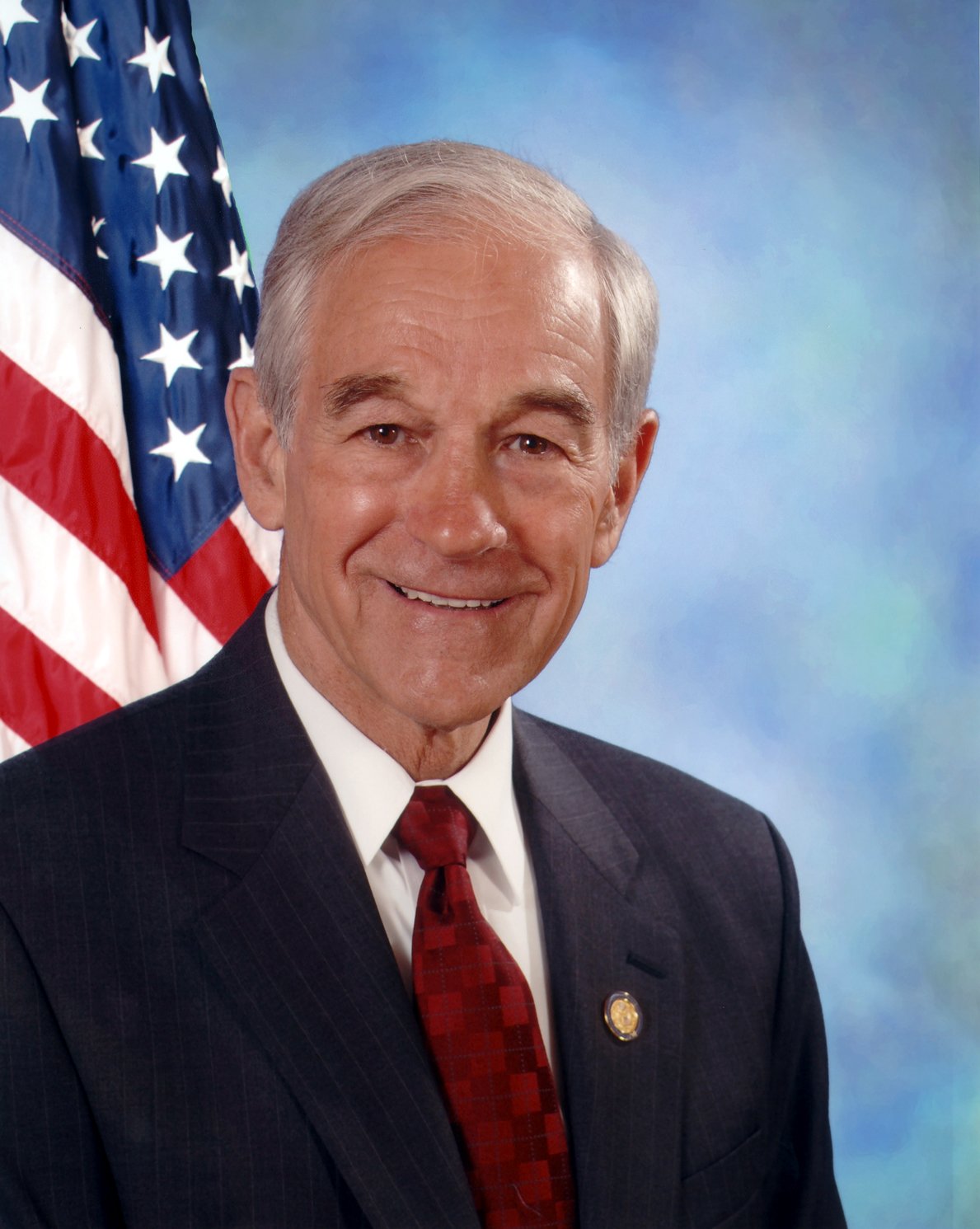
The next six elections stayed between a quarter and half of one percent. Bergland took 0.25 percent in 1984.9 In 1988 the nominee was Ron Paul, a former Republican congressman from Texas, who reached the ballot in 46 states and won 432,179 votes, 0.47 percent, the third-highest total of anyone in the race.102 The party's history says he taught Americans about non-interventionism, decriminalizing drugs and abolishing the Federal Reserve. Lesson 7 covers his career.3 Andre Marrou, Paul's running mate, headed the 1992 ticket and won 291,628 votes in the year of Ross Perot.11 Harry Browne ran twice, winning 485,798 votes in 1996 and 384,429 in 2000.1213 In 2004 Michael Badnarik, nominated on the third ballot, won 397,265.142
Two Libertarians on one ballot
The FEC's 2000 report shows something odd in Arizona. The only candidate listed there under the Libertarian label is the writer L. Neil Smith, who received 5,775 votes, 0.38 percent. Harry Browne, the national nominee, does not appear in the Arizona table at all.13 The state ballot line went to someone other than the national ticket, and fights between national and state Libertarians turn out to be much older than the Mises Caucus.
Barr, Johnson and the 2016 peak
In 2008 the party nominated Bob Barr, a former Republican congressman, after six ballots. He won 523,715 votes, 0.40 percent.152 Then came Gary Johnson, the former Republican governor of New Mexico. His first run, in 2012, won 1,275,971 votes, 0.99 percent.16 His second, with former Massachusetts Governor William Weld as running mate, was on the ballot in all fifty states and the District of Columbia and won 4,489,341 votes, 3.28 percent, the party's best result by far.172 In Idaho he won 28,331 votes, 4.10 percent, and finished fourth, behind the independent conservative Evan McMullin's 6.73 percent.17
Jorgensen and Oliver
Jo Jorgensen, the 1996 vice-presidential nominee, became the party's first woman presidential nominee in 2020. She won 1,865,535 votes, 1.18 percent, and in Idaho 16,404, or 1.89 percent.182
The 2024 nominee was Chase Oliver of Atlanta, 39 at the time, who had won 81,365 votes, 2.07 percent, for the U.S. Senate in Georgia in 2022, enough to help push that race into a runoff.2021 The convention in Washington, D.C., was one of the strangest in party history. Former President Donald Trump and Robert F. Kennedy Jr. both spoke to the delegates, and the party nominated neither.212 Oliver won on the seventh round of voting with 60.6 percent to 36.6 percent for "none of the above."21 He is openly gay and an anti-war activist, and he described liberty as "the right and the ability to live your own life as you see fit, in peace."21 Four state parties, in Colorado, Montana, New Hampshire and Idaho, publicly denounced his nomination to differing degrees, and the national chair, Angela McArdle, said openly that she backed Oliver as a way to help Trump win.21
The FEC's official count gives Oliver 650,126 votes, 0.42 percent. Jill Stein of the Green Party took 862,049, 0.56 percent, the first time since 2000 that the Greens outpolled the Libertarians.192 The FEC table shows votes for Oliver in 49 states, every state except Tennessee, and none in the District of Columbia. In Idaho he won 4,462 of 905,057 votes cast, about 0.49 percent.19
Ballot access, the permanent campaign
For a minor party the first race of every cycle is against the petition deadline. The Supreme Court cases covered in Lesson 1, from Williams v. Rhodes (1968) to Timmons v. Twin Cities Area New Party (1997), mark the limits on what states may require. Inside those limits, states set signature counts, fees and vote thresholds of their own. Petition drives cost money and volunteer hours that a small party could otherwise spend on campaigning, and the national party's website lists ballot access among its standing programs, next to candidate support and a legal fund.3
The platform states the party's position on the rules in plain terms. "We oppose laws that effectively exclude alternative candidates and parties, deny ballot access, gerrymander districts, or deny the voters their right to consider all alternatives." It calls for proportional representation, alternative voting systems and "explicit inclusion of 'none of the above' on all ballots," and it opposes tax-financed subsidies to candidates and parties.22
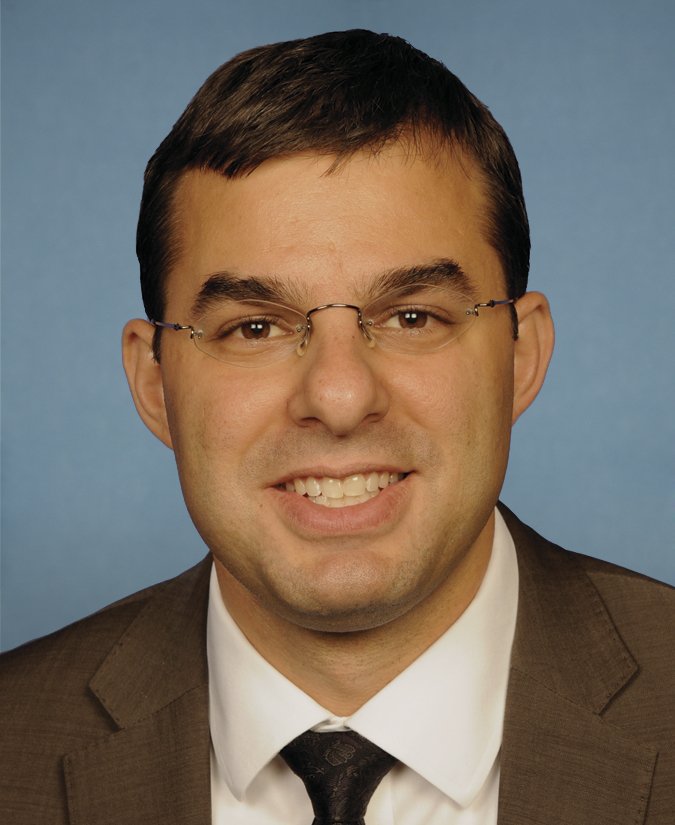
Below the presidential level the party has had a few striking results. In 2020 Ricky Dale Harrington Jr. won 399,390 votes, 33.47 percent, for the U.S. Senate in Arkansas against Senator Tom Cotton, who had no Democratic opponent. The party calls it the highest share ever for a Libertarian Senate candidate.233 The same year Justin Amash, a sitting congressman from Michigan, joined the Libertarians, which the party counts as its first member to serve in Congress, and a Libertarian won a seat in the Wyoming legislature.3 The party reported 522 Libertarians serving in public office in 2001.3
The Libertarian Party of Idaho
Idaho is one of the easier states for a small party, and the Libertarian Party of Idaho has used the opening. As of October 2026, the Secretary of State's voter site lists four registered political parties in the state: the Constitution Party, the Democratic Party, the Libertarian Party and the Republican Party.24
How a party stays qualified
Idaho Code section 34-501 gives a party three ways to be "deemed created and qualified to participate in elections." It qualifies (a) by having three or more candidates for state or national office listed under the party name at the last general election, with the president, vice president and presidential electors counted as one candidate, or (b) by polling at least 3 percent of the total vote for governor or for presidential electors for any one of its candidates at the last general election, or (c) by filing a petition signed by qualified electors equal to 2 percent of the last presidential vote, due by August 30 of an even-numbered year.25
The first test is the one that matters for the Libertarians. In the November 2024 general election the state canvass lists five candidates under the LIB label: Chase Oliver for president, Matt Loesby for the U.S. House in the First District, Todd Corsetti for the House in the Second District, Jennifer Luoma for state representative in Legislative District 2, Seat B, and Mike Long for state senator in District 21.26 Five is more than the three the statute requires. In the May 19, 2026 primary the party held contests for the U.S. Senate (Matt Loesby), the U.S. House in the Second District (Will Johanson), governor (Melissa-Sue Robinson and Paul Sand) and state representative in District 18, Seat B (Joseph Bishop). The canvass totals show Sand winning the governor's primary with 523 votes to Robinson's 392.27 Whether the party keeps its standing for 2028 will turn on how many of its nominees appear on the November 3, 2026 ballot, under the same test.
Registered Libertarians in Idaho
The Secretary of State's registration totals, last updated October 1, 2026, count 10,778 registered Libertarians in Idaho, about 1.0 percent of the state's 1,038,941 registered voters. The other parties stand at 649,080 Republicans, 123,932 Democrats and 4,130 Constitution Party members, with 251,021 voters unaffiliated.28 Ada County alone holds 3,593 of the Libertarians.28
| Year | Libertarian nominee | Idaho votes | Idaho share |
|---|---|---|---|
| 2012 | Gary Johnson | 9,453 | 1.45% |
| 2016 | Gary Johnson | 28,331 | 4.10% |
| 2020 | Jo Jorgensen | 16,404 | 1.89% |
| 2024 | Chase Oliver | 4,462 | 0.49% |
The 2024 numbers tell a story. Oliver's share in Idaho fell to about a quarter of Jorgensen's. The Idaho party had publicly denounced his nomination.21 National and state results together show a party that can still make the ballot and still struggles to turn a ballot line into votes.
What the platform says
The Libertarian platform opens with a preamble that sets the goal high: "Our goal is nothing more nor less than a world set free in our lifetime." Its Statement of Principles begins: "We, the members of the Libertarian Party, challenge the cult of the omnipotent state and defend the rights of the individual. We hold that all individuals have the right to exercise sole dominion over their own lives, and have the right to live in whatever manner they choose, so long as they do not forcibly interfere with the equal right of others to live in whatever manner they choose."22
The planks follow from there. A few, quoted from the version posted by the national committee as of October 2026, show how far they go.22
On taxes, the platform opposes "all government activity that consists of the forcible collection of money or goods from individuals in violation of their individual rights," seeks "the eventual repeal of all taxation," and calls for repeal of the income tax and abolition of the Internal Revenue Service. On licensing, it opposes "occupational and other licensing laws that infringe on this right or treat it as a state-granted privilege." On money, it supports "a halt to inflationary monetary policies and unconstitutional legal tender laws." On defense, it supports "a sufficient military to defend the United States against aggression," opposes "any form of compulsory national service," and says the country should "abandon its attempts to act as policeman for the world." On trade and migration, it calls for "the unrestricted movement of human as well as financial capital across national borders."22
The platform also supports decriminalizing prostitution and repealing laws against drug use, and it holds that adults of voting age should be presumed able to decide on alcohol, tobacco, firearms and cannabis.22 It closes with a catch-all: "Our silence about any other particular government law, regulation, ordinance, directive, edict, control, regulatory agency, activity, or machination should not be construed to imply approval."22
Notice what is missing. The posted platform contains no plank on abortion. Before 2022 it had one that Reason described as "effectively pro-choice," and the Mises Caucus said at the 2022 convention that it wanted the plank removed.29 The October 2026 text has none. Abortion divides libertarians because both sides argue from the non-aggression principle: one side counts the unborn child as a person who may not be aggressed against, and the other counts the mother's self-ownership first.
Radicals, pragmatists and the Mises Caucus
Every minor party lives with a choice between purity and reach. The Libertarians have fought over it since the Dallas Accord of 1974 kept anarchists and minarchists in one tent by leaving the question of the state unanswered.2 In the 2010s the pragmatists had the upper hand. They nominated two former Republican governors, Johnson and Weld, and the 2016 result was the party's best.
The Mises Caucus grew out of the reaction. Michael Heise founded it in 2017, in part, Reason reported, out of disapproval of Weld.29 It drew on the ideas and supporters of Ron Paul. At the May 2022 convention in Reno, Nevada, its candidate Angela McArdle won the national chair on the first ballot with 692 votes, more than 69 percent of the delegates, and the caucus swept the party's leadership posts.29 The caucus also sought to remove the platform line "we condemn bigotry as irrational and repugnant," which had first entered the platform in 1974.29 The Southern Poverty Law Center and some longtime members accused the caucus of tolerating racism. Heise and the new vice chair, Joshua Smith, denied the charge.29 State affiliates in Virginia, Massachusetts and New Mexico split from the national party or saw dissidents break away, and in February 2024 a group of breakaway parties renamed itself the Liberal Party USA.2
Each side has a real case. Caucus supporters say the party lost its nerve in the Johnson years, offering a watered-down message that won protest votes without making converts, and that a sharper, Ron Paul style of anti-war, anti-Federal Reserve politics is what brings young people in. Heise put it this way in 2022: "If you want to win elections, you better damn well start getting people to think or care about the principles of liberty."29 Their opponents say the caucus traded principle for culture-war provocation, drove off donors and candidates, and pulled the party toward Trump-era Republicans. Two major donors told Reason in 2022 that they had stopped funding Libertarian candidates over the party's direction.29 The 2024 result, the party's smallest share since 2008, gave the second side an argument. The first side answers that 2024 was a two-candidate election in which every minor party was squeezed.
The caucus's hold broke in early 2025. McArdle resigned late on January 24, 2025, saying she was moving to another position. Reason reported that her departure followed questions about more than $45,000 the national committee had paid since February 2024 to a company tied to her domestic partner, and that paid membership had fallen about 18 percent during her tenure. She called her critics "cyber stalkers."30 When the national committee met to replace her, Steven Nekhaila defeated Heise 9 to 6, with six caucus-endorsed members voting against the caucus founder.30 In September 2025 the committee censured the Libertarian Party of New Hampshire and invited it to disaffiliate.2 Going into the 2028 cycle, neither faction holds the kind of majority the Mises Caucus won in Reno.
Wins without winning
A party that never carries a state can still change what the winners do. The Libertarian case for its own usefulness rests on that claim, and the evidence for it is mixed but real. The hard part is credit. Many of these changes came through the courts, ballot initiatives, think tanks and major-party legislators, and the party can claim only that it argued for them early and kept arguing.
Marijuana
Ron Paul campaigned in 1988 for decriminalizing drugs, and the party's platform today calls for repealing laws against using them.322 When Gallup first asked, in October 1969, whether the use of marijuana should be made legal, 12 percent of Americans said yes and 84 percent said no. By October 2023 support had reached 70 percent, and in Gallup's October 2025 survey it stood at 64 percent.31 The change in opinion came from many sources, including medical-marijuana campaigns and voters' own experience. But the libertarian argument, that adults should decide what to put in their own bodies, became the main argument for repeal.
Occupational licensing
Libertarians have attacked licensing laws at least since Milton Friedman's Capitalism and Freedom (see Lesson 5 of Economic Systems), and the party platform opposes them.22 In July 2015 the Obama administration's Treasury Department, Council of Economic Advisers and Labor Department reported that about 25 percent of American workers held jobs licensed at the state level, "up from less than 5 percent in the early 1950s," and that adding locally and federally licensed jobs raised the share to 29 percent.32 The report urged states to make sure licensing rules protect health and safety rather than shield incumbents from competition. That a Democratic White House adopted much of the libertarian critique says something about how far the argument had traveled. In 2019 Arizona enacted House Bill 2569, which lets workers licensed in good standing in other states practice in Arizona without starting over.33
The limits of the claim
A fair reading has to note what has not changed. The income tax, the Internal Revenue Service and the Federal Reserve all still stand, and none of the platform's central planks on taxes or money has come close to enactment. The party's influence has been greatest where its ideas met a cultural shift that was already under way, and weakest where its program ran against the interests that both major parties serve.
Lesson 7 turns to the man who was the party's nominee in 1988 and then took its ideas back into the Republican Party: Ron Paul.
Learn more
- FEC, Election Results and Voting Information: the official national and state returns from 1982 to 2024, including every Libertarian result since 1984.
- National Archives, 1972 Electoral College results: the state-by-state record of MacBride's vote in Virginia.
- Libertarian Party platform: the full text, short enough to read in one sitting.
- Libertarian Party, Our History: the party's own timeline.
- Idaho Code 34-501: the three ways a party qualifies for Idaho's ballot.
- VoteIdaho.gov registration totals: monthly party registration counts by county and district.
- Reason on the 2022 Reno convention: a detailed account of the Mises Caucus takeover from a libertarian magazine.
- NPR on Chase Oliver: the 2024 nominee and the party's internal split.
- Occupational Licensing: A Framework for Policymakers (2015): the federal report that took the licensing critique mainstream.
Notes
- "Nixon Ends Convertibility of U.S. Dollars to Gold and Announces Wage/Price Controls," Federal Reserve History, Federal Reserve Bank of St. Louis and Federal Reserve System, on the August 15, 1971 address. Read it online. ↩
- "History of the Libertarian Party (United States)," Wikipedia, sections on the founding (committee of July 17, 1971; Nolan's home in Westminster; launch on December 11, 1971 at Luke Zell's home in Colorado Springs), the 1972 convention, the Dallas Accord (1974), nominations from 1988 to 2024, the 2022 and 2024 conventions, state-party splits and the Liberal Party USA (February 2024), and the censure of the New Hampshire affiliate (September 2025). Read it online. ↩
- Libertarian Party, "Our History," timeline entries for 1971, 1972, 1980, 1988, 2001 and 2020 (accessed October 2026). Read it online. ↩
- "John Hospers," Wikipedia, on ballot status in Washington and Colorado and the 3,674 popular votes of 1972, citing Hospers's papers and campaign histories. This figure is not from the FEC, which did not publish presidential returns for 1972. Read it online. ↩
- National Archives and Records Administration, Office of the Federal Register, "1972 Electoral College Results," state table (Virginia: 12 electoral votes, 11 Nixon and 1 Hospers; 11 Agnew and 1 Theodora Nathan) and national totals 520, 17 and 1. Read it online. ↩
- "Roger MacBride," Wikipedia, on his service in the Vermont House of Representatives, his inheritance of the Laura Ingalls Wilder estate, his 1972 vote as a Virginia elector and his 1976 nomination, citing contemporary Associated Press reports. Read it online. ↩
- "1976 United States presidential election," Wikipedia, results table: Roger MacBride (Libertarian), with David Bergland, 172,557 votes, 0.21 percent. Not an FEC figure. Read it online. ↩
- Brian Doherty, "Ed Clark, R.I.P.," Reason, July 2, 2025: Clark's death at 95, his 5.5 percent in the 1978 California governor's race, the 1980 campaign with David Koch, its $3.5 million budget, "over 921,000 votes, 1.1 percent," and his "low-tax liberalism." The 1.06 percent figure in the table is the compilation used in Lesson 1. Read it online. ↩
- Federal Election Commission, Federal Elections 84, presidential popular vote summary: David Bergland (Libertarian), 227,204 votes, 0.25 percent. Read from a scanned report; other compilations give a slightly different total. Read it online. ↩
- Federal Election Commission, Federal Elections 88, presidential popular vote summary: Ronald E. Paul (Libertarian), 432,179 votes, 0.47 percent. Read it online. ↩
- Federal Election Commission, Federal Elections 92, presidential popular vote summary: Andre Marrou (Libertarian), 291,628 votes, 0.28 percent. Read it online. ↩
- Federal Election Commission, Federal Elections 96, presidential popular vote summary: Harry Browne (Libertarian), 485,798 votes, 0.50 percent. Read it online. ↩
- Federal Election Commission, Federal Elections 2000, presidential popular vote summary: Harry Browne (Libertarian), 384,429 votes, 0.36 percent; L. Neil Smith (Libertarian), 5,775 votes. Read it online. ↩
- Federal Election Commission, Federal Elections 2004, presidential popular vote summary: Michael Badnarik (Libertarian), 397,265 votes, 0.32 percent. Read it online. ↩
- Federal Election Commission, Federal Elections 2008, presidential popular vote summary: Bob Barr (Libertarian), 523,715 votes, 0.40 percent. Read it online. ↩
- Federal Election Commission, Federal Elections 2012, presidential popular vote summary: Gary Johnson (Libertarian, Independent), 1,275,971 votes, 0.99 percent; Idaho, 9,453 votes, 1.45 percent. Read it online. ↩
- Federal Election Commission, Federal Elections 2016, presidential popular vote summary: Gary Johnson (Libertarian, Independence, Independent), 4,489,341 votes, 3.28 percent; Idaho, Johnson 28,331 (4.10 percent), McMullin 46,476 (6.73 percent). Read it online. ↩
- Federal Election Commission, Federal Elections 2020, presidential popular vote summary: Jo Jorgensen (Libertarian, Independent), 1,865,535 votes, 1.18 percent; Idaho, 16,404 votes, 1.89 percent. Read it online. ↩
- Federal Election Commission, "Official 2024 Presidential General Election Results," general election November 5, 2024: Chase Oliver 650,126 (0.42 percent), Jill Stein 862,049 (0.56 percent); Idaho, Oliver 4,462 of 905,057 total votes; running mate Mike ter Maat from the list of ballot designations. Read it online. ↩
- Federal Election Commission, Federal Elections 2022, U.S. Senate, Georgia: Chase Oliver (LIB), 81,365 votes, 2.07 percent. Read it online. ↩
- "As voters suffer presidential election deja vu, Chase Oliver wants to be another option," NPR, June 21, 2024. Read it online. ↩
- Libertarian Party, Platform: Preamble, Statement of Principles, and sections 1.6, 1.7, 2.4, 2.7, 2.9, 2.10, 3.1, 3.4, 3.6 and 4.0, as posted by the Libertarian National Committee (accessed October 2026). Read it online. ↩
- Federal Election Commission, Federal Elections 2020, U.S. Senate, Arkansas: Tom Cotton (R) 793,871 (66.53 percent), Ricky Dale Harrington Jr. (LIB) 399,390 (33.47 percent). Read it online. ↩
- Idaho Secretary of State, VoteIdaho.gov, "Voter Registration," section on party affiliation: "The State of Idaho has four registered political parties" (accessed October 18, 2026). Read it online. ↩
- Idaho Code section 34-501, "'Political party' defined, procedures for creation of a political party," added 1978, amended 1985 and 1987. Read it online. ↩
- Idaho Secretary of State, 2024 General Election Canvass, candidates listed with the LIB designation for president, U.S. Representative Districts 1 and 2, State Representative District 2 Seat B and State Senator District 21. Read it online. ↩
- Idaho Secretary of State, 2026 Primary Election Canvass Report, primary of May 19, 2026, Libertarian contests for U.S. Senator, U.S. Representative District 2, Governor and State Representative District 18 Seat B, county tables and contest totals (Governor, Libertarian: Melissa-Sue Robinson 392, Paul Sand 523). Some small county counts are marked protected in the report. Read it online. ↩
- Idaho Secretary of State, VoteIdaho.gov, "Voter Registration Totals," county totals for October 2026 (last updated October 1, 2026), data file 202610_CountyTotals.csv. Read it online. ↩
- "Mises Caucus Takes Control of Libertarian Party," Reason, May 29, 2022. Read it online. ↩
- "Libertarian Party Gets New National Chair After Angela McArdle's Surprise Resignation," Reason, February 4, 2025. Read it online. ↩
- Gallup, "Illegal Drugs," trend for "Do you think the use of marijuana should be made legal, or not?": October 2-7, 1969, 12 percent yes and 84 percent no; October 2-23, 2023, 70 percent; October 1-16, 2025, 64 percent. Read it online. ↩
- Department of the Treasury Office of Economic Policy, Council of Economic Advisers and Department of Labor, Occupational Licensing: A Framework for Policymakers, July 2015, executive summary and introduction. Read it online. ↩
- Arizona Laws 2019, chapter 55, House Bill 2569 (54th Legislature, First Regular Session), amending Arizona Revised Statutes section 32-4302 on occupational licensing. Read it online. ↩
Check yourself
1. Who cast the Libertarian Party's first electoral vote, in 1972?
The National Archives records that Virginia's 12 electoral votes split 11 for Nixon and 1 for John Hospers, with Theodora (Tonie) Nathan receiving one vote for vice president. The elector was Roger MacBride, who became the party's nominee in 1976.
2. What is the Libertarian Party's best presidential result, according to the Federal Election Commission?
The FEC's official 2016 summary lists Gary Johnson with 4,489,341 votes, 3.28 percent of the national popular vote.
3. How did Chase Oliver do in 2024, by the FEC's official count?
The FEC's official 2024 results list Oliver with 650,126 votes (0.42 percent) and Stein with 862,049 (0.56 percent). The FEC table shows no Oliver votes in Tennessee or the District of Columbia.
4. Under Idaho Code 34-501, which of these is one way a party stays qualified for the ballot?
Section 34-501(1)(a) qualifies a party that had three or more candidates for state or national office at the last general election, counting the presidential ticket as one. The Libertarian Party of Idaho ran five in 2024.
5. Which faction won control of the Libertarian National Committee at the 2022 convention in Reno?
Reason reported that McArdle won the chair on the first ballot with 692 votes, more than 69 percent, as the Mises Caucus swept the party leadership.
6. What did the 2015 White House report on occupational licensing find?
The Treasury, Council of Economic Advisers and Labor Department report found the state-licensed share rose from under 5 percent in the early 1950s to about 25 percent.
Terms in this lesson
- Faithless elector
- A member of the Electoral College who votes for someone other than the candidate he or she was pledged to support. Roger MacBride's 1972 vote is the most famous example in Libertarian history.
- Ballot access
- The legal right of a party or candidate to appear on a printed ballot, governed by state law through petitions, fees, deadlines and vote thresholds.
- Qualified party
- In Idaho, a political party that meets one of the three tests in Idaho Code 34-501 and so may hold primaries and place nominees on the general election ballot.
- Dallas Accord
- The informal 1974 compromise inside the Libertarian Party under which the platform would not say whether any state should exist, keeping minarchists and anarchists in one party.
- Mises Caucus
- A faction founded in 2017 by Michael Heise, aligned with the ideas of Ron Paul, that won control of the Libertarian National Committee in 2022.
- None of the above
- An option some parties and states allow on a ballot. Libertarian convention delegates can vote for it, and in 2024 it took 36.6 percent on the final ballot against Chase Oliver.
- Universal license recognition
- A state law that lets a worker licensed in good standing in another state practice in the new state without starting over. Arizona enacted it in 2019.
Sources
- National Archives, 1972 Electoral College Results checked 2026-10
- Federal Election Commission, Election Results and Voting Information (Federal Elections 1984 to 2024) checked 2026-10
- FEC, Official 2024 Presidential General Election Results checked 2026-10
- Libertarian Party, Our History checked 2026-10
- Libertarian Party, Platform checked 2026-10
- Idaho Code 34-501, Political party defined checked 2026-10
- VoteIdaho.gov (Idaho Secretary of State), Voter Registration checked 2026-10
- VoteIdaho.gov, Voter Registration Totals checked 2026-10
- Idaho Secretary of State, 2026 Primary Election Canvass Report checked 2026-10
- Reason, Mises Caucus Takes Control of Libertarian Party (May 29, 2022) checked 2026-10
- NPR, Chase Oliver wants to be another option (June 21, 2024) checked 2026-10
- Occupational Licensing: A Framework for Policymakers (White House, July 2015) checked 2026-10
- Gallup, Illegal Drugs (marijuana legalization trend) checked 2026-10