Lesson 2 of 10 · about 22 minutes
Ross Perot: The Man Before the Campaign
You'll be able to
- Trace Perot's early life from Texarkana through the Naval Academy and the Navy to IBM
- Explain how Perot built Electronic Data Systems from a $1,000 start in 1962 and what government health-care contracts had to do with it
- Describe the 1979 Iran episode accurately and say where Ken Follett's book and the television film go beyond the record
- Explain why General Motors bought EDS in 1984 and paid about $700 million to buy Perot out in 1986
- Summarize Perot's POW work and his role in Texas House Bill 72 of 1984, including no pass, no play
On Friday nights around 1940, a cotton broker named Gabriel Ross Perot took his ten-year-old son to the Owen Brothers' barn in Texarkana for the horse, cattle and mule auctions. The boy watched his father trade. Years later he summed up the lesson: "My goal would be to buy low and sell high." His father had one firm rule on those nights. Nothing came home unsold. Whatever they bought had to be sold the same day. Ross Perot called it his "Ph.D. in business, taught at my father's knee."1
Most Americans met Perot in 1992, a short Texan with a stack of charts who announced on Larry King's cable talk show that he would run for President as an independent.2 By then he was 61 years old and one of the richest men in the country. The voters who gave him nearly 19 percent of their votes, and the ones who laughed at him, were judging a man with a long record in business, in veterans' causes and in Texas politics. That record explains a good deal about the campaign that the next two lessons cover. It also has a legend wrapped around it, some of it encouraged by Perot himself, and the job here is to tell the two apart.
Texarkana: horses, saddles and a paper route
Henry Ross Perot was born on June 27, 1930, in Texarkana, Texas, the town that straddles the Arkansas line.1 The Handbook of Texas records that he was born Henry Ray Perot and later changed his middle name to Ross in honor of his older brother, Gabriel Ross, who had died as a small child.3 His father traded cotton and horses. His mother, Lulu May Ray Perot, worked as a secretary at a lumber company.13
The family's own account of his boyhood reads like a Horatio Alger story, and Perot later accepted the Horatio Alger Award, so the resemblance was not lost on him.3 At six he wanted a bicycle. His father told him, "Son, work, save your money and buy a bicycle." He bought and sold saddles and riding gear, sold Christmas cards and garden seeds door to door, and broke horses for a fee, collecting bruises, concussions and a broken nose for his trouble.1
The paper route is the story he told most. He delivered the Texarkana Gazette, first in a middle-class neighborhood and then in two poor sections of town that other carriers avoided. A paperboy usually made about $5 a week. Perot made up to five times that, riding a bicycle and sometimes a horse named Bea. When the paper's distributors tried to change the deal after he had built the route, he went straight to the publisher, who sided with him. He drew two rules from it that he repeated for the rest of his life: "Honor your commitments," and "go to the man who can say yes or no."1
He joined the Cub Scouts at nine and Troop 18 in Texarkana at twelve, and earned the rank of Eagle Scout in about thirteen months, an unusually fast climb.13 After Texas High School he spent two years at Texarkana Junior College, where he was elected student body president.31
Annapolis and the Navy
Perot wanted the Naval Academy and wrote to Texas congressmen for years asking for a nomination. None answered. The family's account says an aide to Senator W. Lee "Pappy" O'Daniel finally suggested that an unfilled appointment go to "the kid from Texarkana who has been trying for three years." He took the midshipman's oath on June 27, 1949, his nineteenth birthday.13
At Annapolis he was elected class vice president as a sophomore and class president as a junior and a senior. He chaired the Honor Committee, and both the family's account and the Handbook of Texas credit him with helping to establish the Academy's honor system. As a battalion commander he escorted President Dwight D. Eisenhower on a tour of the campus.13 He graduated in 1953.3
His service was short and uneventful by his own later standards. He shipped out on the destroyer USS Sigourney on his twenty-third birthday in 1953 as the Korean War was ending, moved in 1955 to the aircraft carrier USS Leyte as a junior officer, and was promoted to lieutenant.13 He left the Navy in 1957 rather than re-enlist.3 Two things from those years mattered more than any posting. In his senior year at Annapolis friends set him up on a blind date with Margot Birmingham, a Goucher College student from Pennsylvania. They married on September 15, 1956, and had five children.1 And on the Leyte he met an IBM executive who invited him to interview. Perot, by his own account, told the man he didn't know what IBM did except make typewriters.1
IBM and the idea IBM turned down
Perot arrived in Dallas to sell computers for IBM on June 27, 1957, his twenty-seventh birthday. He and Margot rented a two-bedroom apartment near Southern Methodist University and cut the rent to $110 a month by serving as the building's gardener, handyman and manager.1
He was very good at the job. Sources disagree on the exact figure for his most famous feat, which shows how quickly the stories around Perot hardened into legend. The family's account says that in 1962, his fifth year with the company, he made his entire annual sales quota in 19 days. The Associated Press obituary says he met it in January. The Handbook of Texas says within three weeks.453 All agree it was early in the year, and all agree on what came next. IBM, worried about how much its top salesmen were earning, capped commissions. Perot had a business idea of his own: rather than only selling machines, sell customers the work of running them. He pressed it on IBM's leadership, which said no.43 The AP later summed up his reasoning. Hardware made up about 80 percent of the computer business, and IBM was not interested in the rest.5
Electronic Data Systems
Margot lent him $1,000 from her savings as a schoolteacher, and Electronic Data Systems was incorporated in Dallas on June 27, 1962, his thirty-second birthday.45 The family's account marks his life's turns by that date, one after another: the Academy oath, the first Navy posting, the first day at IBM, the founding of EDS.14
The first customer took 77 sales calls, in person and by phone. It was Collins Radio, a communications company in Cedar Rapids, Iowa, and EDS finished processing its data in six weeks in late 1962.4 Blue Cross and Blue Shield became a client.3 Then came the business that made EDS rich. When Congress created Medicare and Medicaid in the mid-1960s, the states needed someone to process the claims. Starting in Texas, according to the AP, EDS won state contracts to help run the new programs.5 So the company's growth rested in large part on government health-care money. A skeptic in 1992 could point out the irony of a federal contractor's founder campaigning against waste in Washington. A defender could answer that a contractor who ran the programs for less than the government could had nothing to apologize for.
EDS went public in 1968. The Handbook of Texas says its shares rose from $16 to $162 when they began trading, and the AP put Perot's stake at about $350 million almost overnight.35 He was 38.
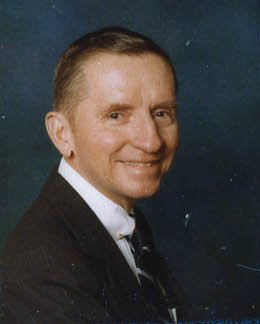
Iran, 1979: the rescue and the legend
EDS had employees working in Iran in the late 1970s, as the Shah's government began to collapse. On December 28, 1978, Iranian authorities arrested two EDS executives, Paul Chiapparone and Bill Gaylord, and held them first at the Ministry of Justice and then at Qasr prison. Bail was set at $12.75 million, a sum the family's account calls exorbitant.7 Perot treated the arrests as a hostage-taking.
Perot's response is the most famous episode of his life. On January 2, 1979, an EDS executive called retired Army Colonel Arthur "Bull" Simons, who had led the 1970 raid on the Son Tay prison camp in North Vietnam. According to the family's account, Simons asked, "When do we start?" He trained about half a dozen EDS employees with combat experience for a rescue plan called Operation HOTFOOT. Meanwhile EDS evacuated about 130 employees and family members from Iran.75 Perot himself flew into Tehran, got into the prison compound, saw his two men and told them help was coming. Chiapparone later told the AP, "Ross came to the prison one day and said, 'We're going to get you out.'"75
Then events overtook the plan. On February 11, 1979, as the Shah's last government fell, a crowd stormed Qasr prison and freed the two men along with thousands of other inmates. The family's account credits a young Iranian EDS employee with helping to stir up the crowd. After 46 days in custody, Chiapparone and Gaylord made it to a rendezvous at a Tehran hotel.75 Simons's team drove them toward the Turkish border, since flying was too risky, and got through checkpoints with a forged letter. They crossed into Turkey on February 15, flew on to Istanbul, where they met Perot, and returned to the United States by way of Frankfurt.7
"How many CEOs would do that today?"
Paul Chiapparone, to the Associated Press, on Perot's effort to free him, as reported July 9, 2019.5
Perot said afterward that he had been ready to look foolish. If the rescue had failed, he said in 1980, he would have been portrayed as an idiot for having tried it.7 The rescue did not fail, and the story became a best seller. Ken Follett, the British thriller writer, interviewed the participants for about 100 hours and published On Wings of Eagles in 1983. A five-hour television miniseries followed in 1986, with Burt Lancaster as Simons and Richard Crenna as Perot.8
Myth: Perot's commandos shot their way into an Iranian prison
The popular memory of the episode, shaped by the book and the film, is of a commando raid. The record is less cinematic. Both the AP and the Perot family's own account say the men got out because a revolutionary crowd broke open the prison. The EDS team's work was the planning, the waiting, the pickup and the long drive to Turkey.57 Summaries of Follett's book note that it embellishes the story with a firefight that never happened and places Perot at the Turkish border to greet the men. The family's account has him meeting them in Istanbul.87 None of this takes away from what Perot did. He spent his own money, went into a country in revolution and got his people home. But a voter in 1992 who pictured him leading a prison raid was picturing the movie.
General Motors: the board seat and the buyout
In 1984 General Motors bought EDS for about $2.5 billion. The Handbook of Texas and the Christian Science Monitor both give that figure, and other accounts put it a little lower or higher depending on how the stock was counted.39 To pay for it GM created a separate class of stock, Class E, whose value was tied to EDS earnings. The deal made Perot GM's largest single shareholder, with about 0.8 percent of the company, and put him on its board.9
The idea, on GM's side, was that a lean Texas data company would help modernize the world's largest automaker. Perot had other ideas about who needed modernizing. He criticized GM's management and its chairman, Roger Smith, in public, down to the heated parking garages for executives and the new company car every 3,000 miles. At one point he said GM's management should be "nuked."9
On Monday, December 1, 1986, GM's board, led by Smith, decided it had had enough. It offered Perot $56.50 for each of his 11.4 million shares, and he accepted, along with a condition that he not criticize GM in public.9 The price for Perot himself came to about $700 million, and the total, counting three other departing EDS executives, to about $750 million. Nearly half of it covered guarantees on the value of the Class E shares.105 The timing was awkward for GM. The month before, the company had announced that it would close nine assembly lines and partly close two more, a move that would lay off as many as 29,000 employees. The Monitor calculated that the buyout cost about 50 percent more than GM expected to save from those closings.10 Perot drove the point home. He said the money would "buy a new world-class auto plant and provide thousands of jobs to go with it."10
GM's defenders had a case too. A board member who attacks the company in the press while holding a large block of its stock is hard to work with, and the buyout terms included his promise to stop criticizing GM in public.9 The analyst Maryann Keller put the real question plainly: what was EDS worth "with its top management gone"?10
Perot Systems and after
In 1988 he, his son Ross Perot Jr. and eight associates formed Perot Systems in Dallas.43 The company began selling stock to the public in 1999. The AP says Perot retired as chief executive in 2000 and was succeeded by his son, and the Handbook of Texas says he stepped down as chairman that year. The family's account says he became chairman emeritus in 2004, when Ross Jr. took both the chief executive and board chair roles.435 In 2009 Dell bought Perot Systems for $3.9 billion.4 EDS, meanwhile, was sold to Hewlett-Packard in 2008.5
Prisoners of war and the veterans' cause
The cause Perot gave the most of himself to, outside business, was American prisoners of war. In 1969, as he later told it, Secretary of State Henry Kissinger asked him to lead a campaign to improve the treatment of POWs held by North Vietnam.5 On December 21, 1969, two chartered Braniff 707s carrying 26 tons of gifts, food and medicine left Dallas for Hanoi. They got as far as Laos. North Vietnam refused to let them land, and the shipment never reached the prisoners.113 In the spring of 1970 he tried again with reporters and POW wives, was again refused, and visited Laos and South Vietnam instead. He later flew POW wives to the peace talks in Paris.11
The prisoners came home in 1973. Perot helped pay for a homecoming parade in San Francisco at a time when many returning veterans were being shunned. "We had the biggest parade in the history of San Francisco, and we had only one demonstrator," he said.115 In 1974 the Defense Department gave him its Medal for Distinguished Public Service, its highest civilian honor.11
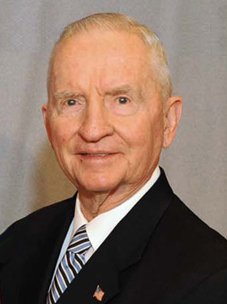
His later POW work was more controversial. He came to believe that hundreds of American servicemen had been left behind in Southeast Asia, and in the late 1980s he held unauthorized back-channel talks with Vietnamese officials that soured his relations with the Reagan and George H. W. Bush administrations.135 He had been an early supporter of the Vietnam Veterans Memorial and withdrew his support when he saw Maya Lin's design, as did James Webb.14 Supporters saw a man who would not let the government forget its missing. Officials in two Republican administrations saw a private citizen running his own foreign policy. Both views have evidence behind them, and both bear on how Perot treated Washington in 1992.
After the 1991 Gulf War, when sick veterans were told their symptoms came from stress, Perot scoffed at officials who treated them "as if they are wimps" and paid for research at UT Southwestern Medical Center into neurological damage among Gulf War veterans.511 The Department of Veterans Affairs later recognized Gulf War illness.11 His help was often personal. In 2003 an artillery shell burst about 100 feet from Army Ranger Jeremy Feldbusch near Baghdad and blinded him. Perot arranged for his evaluation and treatment at UT Southwestern and Harvard Medical School, and Feldbusch went on to become the first spokesman for the Wounded Warrior Project.11 "For those who fought and almost died," Perot liked to say, "freedom has a taste the protected will never know."11
Texas: the drug war and House Bill 72
Perot's first big turn in public policy came at the request of a Republican governor. In 1979 Governor Bill Clements asked him to lead the Texans' War on Drugs Committee. Perot toured prisons and hospitals and pushed a package that the legislature passed in 1981: longer and in some cases mandatory sentences for dealers, a forfeiture law letting the state seize dealers' assets, and limits on shops selling drug paraphernalia.153 The committee's stated targets were major offenders and dealers. Perot never softened his view of the stakes: "There is no way I can overstate the damage that drugs are doing to this country."15
The second turn came from a Democrat. Mark White beat Clements in 1982 promising teachers a 24 percent raise over two years with no new taxes, and the 1983 legislative session ended with neither a raise nor a tax bill.16 White then created a Select Committee on Public Education and asked Perot to chair it. Its charge ran from teacher pay and merit pay to curriculum, discipline, school finance and the dropout rate.1615
Perot went after the thing Texans cared about most. At a public hearing in Austin he said, "If the people of Texas want Friday night entertainment instead of education, let's find out about it." When a principal told the committee that a student missing class for sports was a rare case, Perot answered, "So is a one-legged tap-dancer, but it happens."16 He hired lobbyists, Rusty Kelley and Jack Wheeler, and the attorney Tom Luce, and pushed the plan through a special session of the legislature that began on June 4, 1984.16
The result, House Bill 72, added about $3 billion for public schools and raised teacher salaries substantially. It required statewide testing in grades 3, 6 and 12 and a one-time competency test for teachers. It limited classes in kindergarten through fourth grade to 22 students and started state-funded pre-kindergarten for poor four-year-olds. And it created "no pass, no play": a student who failed any course in a six-week grading period sat out sports and other extracurricular activities for the next six weeks. A $4.8 billion tax bill, the largest in state history to that point, paid for it and for highway work.1615
Coaches and three of the four state teacher organizations turned against the bill, the teachers over how the pay raise was structured.1615 Mark White lost his 1986 reelection bid, and former Lieutenant Governor Bill Hobby, who helped pass the law, blamed the tax increase, a weakening economy and the opposition of the Texas State Teachers Association.16 Perot's own summary of the fight was simple: "The basic purpose was to recover the school day for learning."15 In 1990 he was also an early funder of Teach for America, which places new college graduates in poor rural and urban schools.15
- 1930 Born June 27 in Texarkana, Texas.
- 1949 Takes the Naval Academy oath on his nineteenth birthday; graduates in 1953.
- 1956 Marries Margot Birmingham on September 15.
- 1957 Leaves the Navy and joins IBM in Dallas.
- 1962 Incorporates Electronic Data Systems on June 27 with $1,000.
- 1968 EDS goes public.
- 1969 POW mission: two jets with 26 tons of supplies are turned back short of Hanoi.
- 1979 Two EDS executives freed from Qasr prison in Tehran on February 11; Perot chairs the Texans' War on Drugs Committee.
- 1984 Sells EDS to General Motors; House Bill 72 passes in a special session that begins June 4.
- 1986 GM buys him out for about $700 million in December.
- 1988 Founds Perot Systems.
- 1992 Runs for President as an independent and wins 18.91 percent of the popular vote.
- 1996 Runs again as the Reform Party nominee.
- 2009 Dell buys Perot Systems for $3.9 billion.
- 2019 Dies of leukemia in Dallas on July 9, at 89.
The giver
Perot and Margot started the Perot Foundation in 1969.318 Its giving was large and mostly local, and it carried his habits with it. When UT Southwestern Medical Center in Dallas asked for a major gift in 1984, he set a condition: "Show me national evidence that UT Southwestern has become a world-class institution like Harvard or Stanford." In October 1985 he read on the front page of the New York Times that two Dallas researchers there, Michael Brown and Joseph Goldstein, had won the Nobel Prize in medicine. In 1987 he made a ten-year commitment that the family's account calls the first eight-figure gift in the history of any Texas medical school.18
The Morton H. Meyerson Symphony Center in Dallas shows the same streak. When the project stalled in the fall of 1984 over rising costs and slow fundraising, Perot gave the money to rescue it and would not let the hall carry his own name.18 The foundation's list of beneficiaries ran from the Boy Scouts' Circle Ten Council, which got an Eagle Scout kit for every scout who made the rank each year, to the service academies, the North Texas Food Bank, the Salvation Army, Highland Park Presbyterian Church and Planned Parenthood.18 He explained it in one line: "I feel personally that I have always been rich in the things that count."18
What kind of man ran in 1992
By the time he called in to Larry King, Perot had spent thirty years building a reputation on three habits. He did things himself, with his own money. He went around the people in charge to "the man who can say yes or no." And he took on institutions, from IBM to General Motors to the Texas high school football lobby, in public and in plain words. Those habits made him a formidable outsider. They also made him a hard partner for anyone who expected to share power, as Roger Smith learned and as the volunteers who built his 1992 campaign would learn in July of that year.
He spent about $65 million of his own money in 1992, by the Handbook of Texas count, and the AP put it at $63.5 million.35 After the 1992 and 1996 campaigns he went back to business and philanthropy. His gifts went to UT Southwestern, the Meyerson Symphony Center in Dallas, the Boy Scouts and the Naval Academy, among others, and in 2008 his children funded the Perot Museum of Nature and Science in Dallas, named for him and Margot.3 He endorsed George W. Bush in 2000 and Mitt Romney in 2012.3
Ross Perot died of leukemia at his home in Dallas on July 9, 2019, less than two weeks after his eighty-ninth birthday. A private funeral was held at Highland Park United Methodist Church, and he was buried at Sparkman-Hillcrest Memorial Park beside his parents and the brother whose name he had taken.35
Learn more
- Handbook of Texas: Perot, Henry Ross: A careful, compact biography from the Texas State Historical Association.
- Ross Perot's life story: The family's own account in seven chapters. Friendly to its subject, rich in dates and his own words.
- The Iran rescue, the family's version: Dates, names and the route to Turkey, useful to set beside Follett's book.
- Cost to GM: $750 million, and counting: A 1986 news account of the buyout written while the fight was fresh.
- Bill Hobby on the 1984 school reform battle: An insider's account of House Bill 72 and Perot's role in it.
- The AP obituary: A balanced summary of his business, his causes and his campaigns.
- On Wings of Eagles: A starting point on Follett's book and where it departs from the record.
- Lesson 1: Left, Right and the Third Paths: The ballot rules and vote counts that framed Perot's 1992 run.
Notes
- Perot family, "Early Life," Ross Perot life story, rossperot.com (official family site). Read it online. ↩
- Perot family, "Presidential Candidate," Ross Perot life story, rossperot.com. Read it online. ↩
- John Huntington, "Perot, Henry Ross," Handbook of Texas Online, Texas State Historical Association, published June 17, 2020. Read it online. ↩
- Perot family, "Entrepreneur Extraordinaire," Ross Perot life story, rossperot.com. Read it online. ↩
- David Koenig (Associated Press), "Texas billionaire H. Ross Perot dies at 89," July 9, 2019, as published by Boston.com. Read it online. ↩
- Karl Schumacher, White House Photographic Office, portrait of Ross Perot, January 13, 1983, Reagan contact sheet C12397, Ronald Reagan Presidential Library. Wikimedia Commons, File:Ross Perot on 13 January 1983, from- Reagan Contact Sheet C12397 (cropped).jpg. View the file. ↩
- Perot family, "Iran Hostage Rescue," Ross Perot life story, rossperot.com. Read it online. ↩
- Ken Follett, On Wings of Eagles (London: Collins; New York: William Morrow, 1983); on the 100 hours of interviews, the 1986 miniseries and the embellishments, see "On Wings of Eagles," Wikipedia. Read it online. ↩
- Mark Clayton, "GM hopes for EDS high-tech fell foul of human equation," Christian Science Monitor, December 3, 1986. Read it online. ↩
- Paul Eisenstein, "Cost to GM: $750 million, and counting," Christian Science Monitor, December 9, 1986. Read it online. ↩
- Perot family, "Military/POW Advocate," Ross Perot life story, rossperot.com. Read it online. ↩
- U.S. Department of Veterans Affairs, photograph of Ross Perot, 2008. Wikimedia Commons, File:Ross Perot.jpg. View the file. ↩
- "Ross Perot," Wikipedia, section on the POW/MIA issue (back-channel talks with Vietnamese officials in the late 1980s and relations with the Reagan and Bush administrations). Read it online. ↩
- "Vietnam Veterans Memorial," Wikipedia, section on opposition to the design, citing Andrew Glass, "Vietnam War Memorial dedicated, Nov. 13, 1982," Politico. Read it online. ↩
- Perot family, "Policy Reformer," Ross Perot life story, rossperot.com. Read it online. ↩
- Bill Hobby with Saralee Tiede, How Things Really Work: Lessons from a Life in Politics (Austin: Dolph Briscoe Center for American History, 2010), excerpted as "Bill Hobby on the 1984 education reform battle," Texas Tribune, September 2, 2010. Read it online. ↩
- Federal Election Commission, Federal Elections 92, 1992 Presidential Popular Vote Summary. Read it online. ↩
- Perot family, "Humanitarian," Ross Perot life story, rossperot.com. Read it online. ↩
- George Bush Presidential Library and Museum, "Mrs. Bush greets Ross Perot after the 3rd Presidential Debate in East Lansing, Michigan," October 19, 1992. Wikimedia Commons, File:Barbara Bush and Ross Perot.jpg. View the file. ↩


Check yourself
1. How did Perot start Electronic Data Systems in 1962?
The Perot family's account says Margot loaned him $1,000 from her teacher savings and EDS was incorporated on June 27, 1962, his 32nd birthday. The AP obituary also gives the $1,000 figure.
2. Who led the team Perot recruited in 1979 to free two EDS employees jailed in Tehran?
The AP obituary and the family's account both name Arthur 'Bull' Simons, the retired Special Forces colonel who had led the 1970 raid on the Son Tay prison camp.
3. How did Paul Chiapparone and Bill Gaylord actually get out of Qasr prison on February 11, 1979?
The AP and the family's account agree that a mob stormed the prison as the Shah's government fell, freeing the two men with thousands of others. Summaries of Follett's book note that it adds a firefight that did not happen.
4. About how much did General Motors pay to buy out Perot's stake and remove him from its board in December 1986?
The Christian Science Monitor (December 9, 1986) and the AP put Perot's buyout at about $700 million, with the total near $750 million counting three other EDS executives. The $2.5 billion figure is what GM paid for EDS in 1984.
5. What was 'no pass, no play' in the Texas school law of 1984, House Bill 72?
Former Lt. Gov. Bill Hobby's account says HB 72 required students to pass all courses in each six-week period to take part in sports and other extracurriculars. Perot chaired the select committee that recommended it.
6. What happened to Perot's 1969 attempt to deliver Christmas packages and medicine to American prisoners in North Vietnam?
The family's account says two Braniff 707s left Dallas on December 21, 1969 with 26 tons of gifts, food and medicine, reached Laos, and were refused permission to land in Hanoi. The Handbook of Texas also says North Vietnam refused the shipment.
Terms in this lesson
- Electronic Data Systems (EDS)
- The computer services company Perot founded in Dallas in 1962. It ran data processing for insurers and for state Medicare and Medicaid programs, was sold to General Motors in 1984 and to Hewlett-Packard in 2008.
- Operation HOTFOOT
- The name, according to the Perot family's account, of the 1979 plan in which retired Colonel Arthur Simons trained a handful of EDS employees with combat experience to free two colleagues from prison in Tehran.
- Class E stock
- A separate class of General Motors stock created in 1984 to pay for EDS, with its value tied to EDS earnings rather than to GM's car business.
- Qasr prison
- The Tehran prison where EDS employees Paul Chiapparone and Bill Gaylord were held in early 1979 until a revolutionary crowd broke it open on February 11, 1979.
- House Bill 72
- The Texas school reform law passed in a special session that began June 4, 1984, after a select committee chaired by Perot. It raised teacher pay, added testing and class-size limits, started state pre-kindergarten for poor four-year-olds and created no pass, no play.
- POW/MIA
- Prisoners of war and service members missing in action. Perot campaigned for American POWs in Vietnam from 1969 and later pressed the claim that some had been left behind after 1973.
Sources
- John Huntington, Perot, Henry Ross, Handbook of Texas Online (TSHA) checked 2026-10
- Ross Perot life story: Early Life (Perot family site) checked 2026-10
- Ross Perot life story: Entrepreneur Extraordinaire checked 2026-10
- Ross Perot life story: Iran Hostage Rescue checked 2026-10
- Ross Perot life story: Military/POW Advocate checked 2026-10
- Ross Perot life story: Policy Reformer checked 2026-10
- David Koenig, Texas billionaire H. Ross Perot dies at 89, Associated Press, July 9, 2019 checked 2026-10
- Mark Clayton, GM hopes for EDS high-tech fell foul of human equation, Christian Science Monitor, Dec. 3, 1986 checked 2026-10
- Paul Eisenstein, Cost to GM: $750 million, and counting, Christian Science Monitor, Dec. 9, 1986 checked 2026-10
- Bill Hobby on the 1984 education reform battle, Texas Tribune, Sept. 2, 2010 checked 2026-10
- On Wings of Eagles, Wikipedia checked 2026-10