Lesson 16 of 18 · about 14 minutes
The 1970s: Life and Death Questions
You'll be able to
- State what the Supreme Court decided in Roe v. Wade on January 22, 1973
- Explain how the definition of death and the Quinlan case changed medical decisions in the 1970s
- Describe the argument of Whatever Happened to the Human Race? and who made it
- Say what the Declaration of Independence claims about rights and where they come from
- Use the question 'who counts as a person?' to read a law or a policy
On January 22, 1973, the Supreme Court decided Roe v. Wade by a vote of 7 to 2. Justice Harry Blackmun wrote the opinion, and Justices Byron White and William Rehnquist dissented. A companion case, Doe v. Bolton, which concerned Georgia's abortion laws, came down the same day.1 The Court held that the Texas abortion statute violated the Due Process Clause of the Fourteenth Amendment, that the right of privacy covers the decision whether to end a pregnancy, and that the right is not unlimited. It set out a framework by trimester and viability that weighed the woman's interest against the state's interest in maternal health and in potential life.2
The Case Behind the Decision
The plaintiff, Norma McCorvey, sued under the name "Jane Roe" against Henry Wade, the district attorney of Dallas County, Texas. A three-judge federal district court ruled in her favor in 1970 but declined to issue an injunction, and the case went to the Supreme Court.3 Roe was not the only question of its kind in those years. The 1970s raised several about law and medicine, concerning the beginning of life, its end and the care of the disabled. Together they pressed one issue on the country: who counts as a person, and who says so?
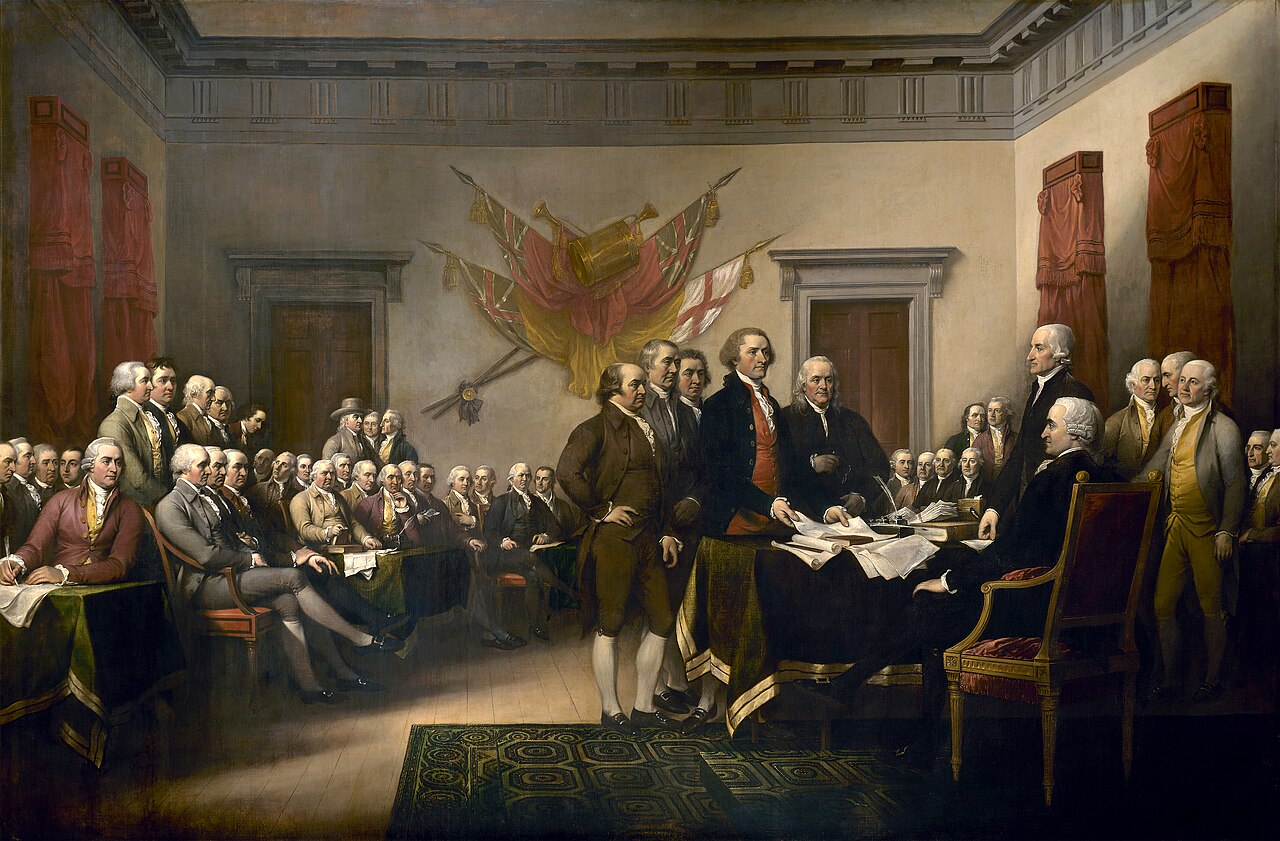
Francis Schaeffer took up that issue in his 1979 book with Dr. C. Everett Koop. The Declaration of Independence, whose best-known sentence rests on a claim about persons and their rights, frames it.
When Does a Person Die?
The same decade moved the other boundary of life. In 1968 a Harvard Medical School ad hoc committee published a report in the Journal of the American Medical Association that defined irreversible coma, and it became a basis for treating permanent loss of brain function as death.4 In July 1981 a presidential commission report titled Defining Death backed a whole-brain definition of death, and the Uniform Determination of Death Act, which Wikipedia reports has since been enacted in 39 states, put that standard into model law.4
The question was not only a medical one. A family at a bedside, a hospital, a state court and a legislature each had a part in the answer, and they did not always agree. In between came the case of Karen Ann Quinlan. On April 15, 1975, at age 21, she collapsed after drinking and taking Valium at a party. She never regained consciousness and entered a persistent vegetative state. Her parents asked that she be taken off the ventilator, and on March 31, 1976, the New Jersey Supreme Court held that the right of privacy was broad enough to cover that request.5 The ventilator was removed in May 1976, and to the surprise of many she breathed on her own. Her parents continued the feeding tube. She lived until June 11, 1985. The case led to the growth of formal ethics committees in hospitals and nursing homes.5 The court's decision and the hospital committees show how ordinary families and doctors had to make decisions that older medicine had never required.
A Philosopher Argues for New Answers
Academic philosophy joined in. In 1979 Peter Singer published Practical Ethics with Cambridge University Press. The book applies his ethical theory to abortion, infanticide, euthanasia, the status of animals and duties to the poor overseas. It later went through editions in 1993 and 2011.6 Singer's central principle is the equal consideration of interests: a being's interests are weighed according to what that being is actually like, and not according to the group it belongs to.6 It is an ethics built on interests, and it stands in the utilitarian tradition.
The Declaration's tradition begins from a different place. It starts from the claim that human beings are created equal and that their rights are endowed by a Creator. The two starting points lead to different answers on the questions of the 1970s. The argument was about premises as much as it was about laws.
The Book and the Films
Francis Schaeffer answered from the second starting point. In 1979 he and Dr. C. Everett Koop published Whatever Happened to the Human Race? with Fleming H. Revell, and a five-episode film series accompanied it. A British edition followed in 1980, launched with a tour of major cities by the two men.78 Koop, born in 1916, had been surgeon-in-chief at the Children's Hospital of Philadelphia from 1946 to 1981.9 He appeared in the films in what Christianity Today called his only dramatic role, and Schaeffer lectured and gave Bible talks throughout. Franky Schaeffer V adapted the book into the script.7
The episodes ran about 50 minutes each. They started with abortion, which the film presented as a sign of eroding human worth, and went on to what the series called mechanistic, utilitarian views of man, the neglect of the aged, infanticide and euthanasia. The final episode presented the gospel.10 The central claim was that a biblical view of man should anchor the legal and medical professions.10 A reader of How Should We Then Live? (1976), a book with a ten-part film series whose last episode was titled "Final Choices," will recognize the move from a survey of ideas to a call for decision.11
The series was scheduled to open in Philadelphia on September 7, 1979, with 19 other cities to follow.7 By January 1981 the team had edited the nearly five-hour series into a 90-minute videotape that any group could buy time to air on local television.12
From Films to Law
Koop's later career shows how these questions entered public life. Ronald Reagan nominated him as Surgeon General in 1981, the Senate confirmed him on November 16, 1981, by 60 to 24, and he served from January 21, 1982, until October 1, 1989.9 On April 9, 1982, a baby boy with Down syndrome and esophageal atresia, a defect that prevents normal feeding, was born in Bloomington, Indiana. His parents refused consent to corrective surgery, the Monroe County circuit court declined to intervene on April 12, and he died six days after birth.13 Koop, who was not involved at first, later championed policies protecting newborns with disabilities.14
The administration of President Reagan answered by telling hospitals that Section 504 of the Rehabilitation Act applied to disabled newborns (a notice of June 16, 1982), then issued an interim final rule on March 7, 1983, which a federal court overturned for skipping notice and comment. Koop and the Secretary of Health and Human Services announced the final Baby Doe regulations on January 9, 1984, and the Supreme Court struck them down in 1986 in Bowen v. American Hospital Association.1315 Congress wrote its own rule. The House passed a version of the Child Abuse Amendments by 396 to 4 on February 2, 1984, and the Senate passed one by 89 to 0 on July 26, 1984. Both chambers approved the final conference report by voice vote in late September, and President Reagan signed the law on October 9, 1984.16 The early margins were lopsided.
Stating the Other Side Well
These questions divide neighbors, and a citizen who wants to speak to both sides needs to be able to state each case in terms its holders would accept. The Court in 1973 did not describe its holding as indifference to unborn life. It said the right of privacy is not unlimited and must be weighed against the state's interest in potential life, and it allowed more regulation as pregnancy advanced.2 Singer, for his part, wrote as a philosopher who argued for the equal consideration of interests, and the same book takes up duties to the poor overseas and the status of animals.6 Schaeffer and Koop wrote as people who believed that human beings carry a worth that no government confers. Each position has a premise about persons, and the honest way to engage any of them is to name the premise first.
Koop Beyond One Issue
Koop's public record is wider than the 1979 films. He spent 35 years as surgeon-in-chief at the Children's Hospital of Philadelphia, and as Surgeon General he released a report on AIDS on October 22, 1986, and in May 1988 sent a condensed version to all 107,000,000 households.17 A reader who wants to understand why the Schaeffer and Koop partnership drew the attention it did can start with that mix: a working children's surgeon who spoke in the idiom of public health and a Christian thinker who spoke in the idiom of ideas.
What the Declaration Says
The Declaration's second paragraph begins, "We hold these truths to be self-evident, that all men are created equal." It names "Life, Liberty and the pursuit of Happiness" among the rights their Creator has given, and it says governments are instituted "to secure these rights."18 Life comes first in the list, and the rights come before the government that secures them.18 The sentence is short enough to memorize, and its order is the point. A government that treats rights as gifts it grants can withdraw them. A government that treats them as endowments it is bound to respect has to answer when it fails to protect them. That is the natural law reasoning behind the Republic. The Schaeffer and Koop series made a claim of the same family when it argued that a biblical view of man should anchor the legal and medical professions.10
When a statute, a court ruling or an agency rule draws a line, ask who falls on each side, who decided where the line goes, and on what ground. The Court's Roe opinion drew its line by trimester and viability. The medical profession drew its line for death by brain function. Schaeffer and Koop argued that the professions need a standard of human worth that stands above all of these lines. Those who disagree with them still have to name their own standard, and in a free society the argument over which standard is right belongs in public.
| Question | Year | Who drew the line | Where the line fell |
|---|---|---|---|
| Abortion | 1973 | Supreme Court, Roe v. Wade | By trimester and viability, under a right of privacy |
| Death | 1968, 1981 | Harvard committee; presidential commission | Irreversible coma and loss of brain function |
| Removing life support | 1976 | New Jersey Supreme Court, Quinlan | A right of privacy covering the parents' request |
| Disabled newborns | 1984 | Congress, Child Abuse Amendments | Federal rules on medical treatment of infants |
- 1968 Harvard committee defines irreversible coma.4
- 1973 Roe v. Wade and Doe v. Bolton decided on January 22.1
- 1975 Karen Ann Quinlan falls into a coma on April 15.5
- 1976 New Jersey Supreme Court decides Quinlan on March 31.5
- 1979 Singer's Practical Ethics and Schaeffer and Koop's Whatever Happened to the Human Race? appear.67
- 1981 Koop confirmed as Surgeon General on November 16.9
- 1984 Child Abuse Amendments signed October 9.16
Learn more
- Wikipedia, Roe v. Wade: the 1973 holding and framework in neutral summary.
- Wikipedia, Karen Ann Quinlan: the case that created hospital ethics committees.
- Christianity Today, 1979 film preview: a contemporary description of the Schaeffer and Koop series.
- Wikipedia, C. Everett Koop: the surgeon who co-wrote the book and became Surgeon General.
- Wikipedia, Baby Doe Law: the 1984 law and the cases behind it.
- National Archives, Declaration of Independence: the founding statement of rights from a Creator.
Notes
- "Roe v. Wade," Wikipedia: 410 U.S. 113, decided January 22, 1973, by a vote of 7 to 2; opinion by Justice Harry Blackmun; Justices White and Rehnquist dissenting; Doe v. Bolton decided the same day. Read it online. ↩
- "Roe v. Wade," Wikipedia, on the holding: the Texas statute violated the Due Process Clause of the Fourteenth Amendment; the right of privacy covers the abortion decision but is not unlimited; the three-part framework by trimester and viability. Read it online. ↩
- "Roe v. Wade," Wikipedia, on the parties: Norma McCorvey ("Jane Roe") against Dallas County District Attorney Henry Wade; a three-judge district court ruled for McCorvey in 1970 but declined to issue an injunction. Read it online. ↩
- "Brain death," Wikipedia: the Harvard Medical School ad hoc committee report of 1968 defining irreversible coma, JAMA 205, no. 6 (1968): 337 to 340; the President's Commission report Defining Death (July 1981), which chose a whole-brain definition; the Uniform Determination of Death Act "since enacted in 39 states" (the Wikipedia figure, not checked against state law). Read it online. ↩
- "Karen Ann Quinlan," Wikipedia: collapse on April 15, 1975; the New Jersey Supreme Court decision of March 31, 1976; ventilator removed in May 1976; death on June 11, 1985; the growth of hospital ethics committees. Read it online. ↩
- "Practical Ethics," Wikipedia: Peter Singer, Practical Ethics (Cambridge University Press, 1979), on abortion, infanticide, euthanasia, animals and overseas aid; second edition 1993 and third 2011. The principle of equal consideration of interests is Singer's own stated starting point and is described in the same article. Read it online. ↩
- "Refiner's Fire: Whatever Happened to the Human Race? A Film Preview," Christianity Today, August 17, 1979: five episodes of about 50 minutes; book by Francis Schaeffer and C. Everett Koop (Fleming H. Revell, 1979); script adapted by Franky Schaeffer V; Koop in "his only dramatic role"; premiere scheduled for Philadelphia on September 7 and 19 other cities. Read it online. ↩
- "Whatever Happened to the Human Race?," Evangelical Times: the book was first published in the United States in 1979 with a British edition the following year; the British launch in 1980 was a tour of major cities by Schaeffer and Koop. Read it online. ↩
- "C. Everett Koop," Wikipedia: born October 14, 1916; surgeon-in-chief at the Children's Hospital of Philadelphia from 1946 to 1981; confirmed as Surgeon General on November 16, 1981, by a vote of 60 to 24; took office January 21, 1982; served until October 1, 1989; died February 25, 2013. Read it online. ↩
- "Refiner's Fire," Christianity Today, August 17, 1979, on the argument of the series: abortion as a sign of eroding human worth, mechanistic and utilitarian views of man, the neglect of the aged, infanticide and euthanasia, and the claim that a biblical view of man should anchor the legal and medical professions. Read it online. ↩
- "How Should We Then Live?," Wikipedia: book published by Fleming H. Revell in 1976 with a ten-part film series; the final episode is titled "Final Choices." Read it online. ↩
- "Whatever Happened to the Human Race? Could Come to Television in Your Area," Christianity Today, January 1981: a five-episode series of nearly five hours, edited into a 90-minute videotape for local television. Read it online. ↩
- Nancy K. Rhoden and John D. Arras, "Withholding Treatment from Baby Doe: From Discrimination to Child Abuse," Milbank Memorial Fund Quarterly 63, no. 1 (1985): Infant Doe born April 9, 1982, in Bloomington, Indiana, with Down syndrome and esophageal atresia; parents refused surgery; In re Infant Doe, No. GU 8204-00 (Monroe County Circuit Court, April 12, 1982); the child died six days later; notice of 47 Fed. Reg. 26027 (June 16, 1982); interim final rule, 48 Fed. Reg. 9630 (March 7, 1983), overturned in American Academy of Pediatrics v. Heckler, 561 F. Supp. 395 (D.D.C. 1983); final rule announced January 9, 1984 by Koop and Secretary Heckler, 49 Fed. Reg. 1622 (January 12, 1984). Read it online. ↩
- "C. Everett Koop," Wikipedia, on the 1982 Bloomington, Indiana, case of an infant with Down syndrome who died after surgery was withheld, and on Koop, not involved at first, becoming active in championing policies to protect newborns with disabilities. Wikipedia dates his films with the Schaeffers to 1978; that date was not confirmed elsewhere and is not used here. Read it online. ↩
- "The Baby Doe Rules (1984)," Embryo Project Encyclopedia, Arizona State University: the Supreme Court ruled against the 1984 regulations in Bowen v. American Hospital Association, 476 U.S. 610 (1986). Read it online. ↩
- "Baby Doe Law," Wikipedia: the Child Abuse Amendments of 1984 (Public Law 98-457): House passage 396 to 4 on February 2, 1984; Senate passage 89 to 0 on July 26, 1984; conference report agreed by voice vote on September 26 (House) and September 28 (Senate); signed by President Reagan on October 9, 1984. Read it online. ↩
- "AIDS, the Surgeon General, and the Politics of Public Health," Profiles in Science, National Library of Medicine: Koop released his AIDS report on October 22, 1986, and in May 1988 sent an eight-page condensed version to all 107,000,000 households. Read it online. ↩
- Declaration of Independence, 1776, National Archives transcript: "We hold these truths to be self-evident, that all men are created equal"; the sentence naming "Life, Liberty and the pursuit of Happiness"; and "That to secure these rights, Governments are instituted among Men." Read it online. ↩
Terms in this lesson
- Roe v. Wade
- The 1973 Supreme Court decision, 7 to 2, that held the right of privacy covers the abortion decision, within limits set by the state's interests.
- Brain death
- Death defined by the permanent loss of all brain function. A Harvard Medical School committee defined irreversible coma in 1968.
- Persistent vegetative state
- A condition of wakefulness without awareness, as in the case of Karen Ann Quinlan.
- Infanticide
- The killing of a newborn. It is one of the subjects the Schaeffer and Koop book and film series took up.
- Child Abuse Amendments of 1984
- Federal law, signed October 9, 1984, that dealt with the medical treatment of disabled newborns.
- Utilitarian
- Describing an ethic that judges actions by their total good results.
- Unalienable rights
- The Declaration's term for rights that come from the Creator and cannot be surrendered or taken.
Sources
- Wikipedia, Roe v. Wade checked 2026-10
- Wikipedia, Karen Ann Quinlan checked 2026-10
- Christianity Today, Whatever Happened to the Human Race? film preview, 1979 checked 2026-10
- Wikipedia, C. Everett Koop checked 2026-10
- Wikipedia, Baby Doe Law checked 2026-10
- National Archives, Declaration of Independence checked 2026-10
- Rhoden and Arras, Withholding Treatment from Baby Doe, Milbank Quarterly 1985 checked 2026-10