Lesson 14 of 18 · about 14 minutes
The New Theology: Barth and the Liberal Church
You'll be able to
- Describe the liberal theology of Schleiermacher and Harnack in its own terms
- Explain why Karl Barth broke with his teachers and what he wrote at Barmen in 1934
- Say how Schaeffer placed the new theology at the last step of his line of despair
- Tell what 'Is God Dead?' meant in 1966 and how Schaeffer connected it to earlier ideas
- Recognize the Barth anecdote about 'Jesus loves me' as a story with an uncertain source
In 1914 ninety-three German intellectuals put their names to a manifesto that endorsed their country's war aims. One of the signers was Adolf von Harnack, the church historian whose book on the essence of Christianity had made him famous.1 A Swiss pastor named Karl Barth, serving a village congregation in Safenwil, had been one of Harnack's students.21 Barth later pointed to that manifesto as a major reason he gave up the liberal theology he had been taught.1 The confidence in culture and progress that his teachers had blessed now had a signature on it, and the signature was his professor's.
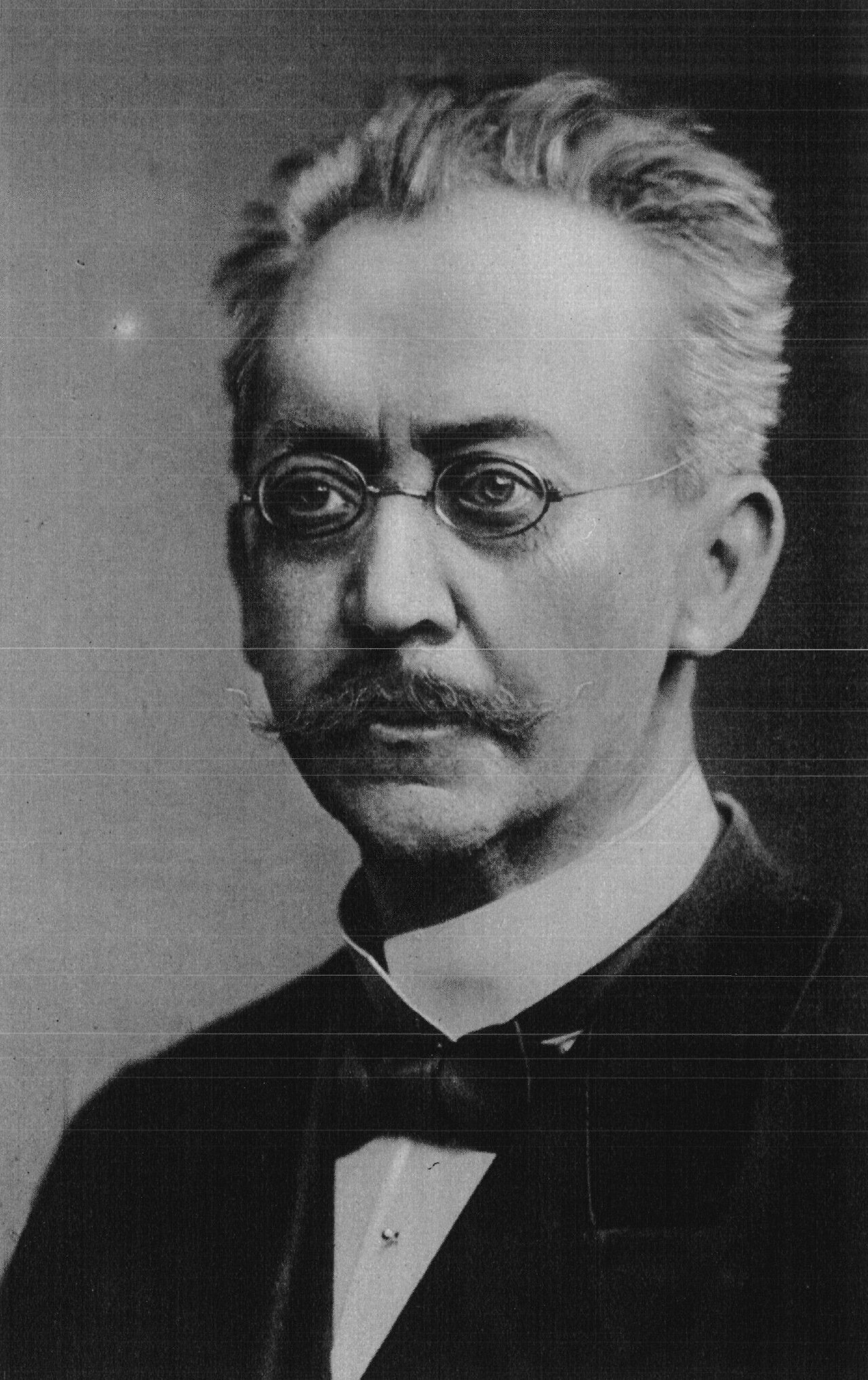
What Liberal Theology Was Trying to Do
The founding figure of liberal theology, Friedrich Schleiermacher (1768 to 1834), wrote in 1799 On Religion: Speeches to Its Cultured Despisers, a defense of religion addressed to educated Germans who thought Christianity was finished. He then built a full system in The Christian Faith (1821 to 1822, revised 1830 to 1831), and from 1810 taught at the new University of Berlin.3
Harnack carried the project to its peak. His lectures were published in 1900 as Das Wesen des Christentums, and an English edition, What Is Christianity?, followed in 1901.1 He held that Greek philosophy had gotten into the faith early and produced beliefs that were not authentically Christian. Protestants, he said, were free, and even bound, to criticize that later system and return to the pure faith of the first church.1 The method was historical study, and the motive was a wish to keep Christ and drop what Harnack saw as accretions.
J. Gresham Machen, a New Testament scholar at Princeton, reached the opposite verdict. In his 1923 book Christianity and Liberalism he wrote that the liberal attempt to reconcile Christianity with modern science "has really relinquished everything distinctive of Christianity."4 He went further and called liberalism a different religion from Christianity.4 In his chapter on doctrine he described early Christianity as "a way of life founded upon a message."5 Liberals and conservatives of 1923 disagreed about what the faith contained, and both sides said so openly.
Barth Breaks With His Teachers
Barth was born in Basel on May 10, 1886, studied at Bern, Berlin, Tübingen and Marburg, and became a pastor in Geneva and then in the village of Safenwil, where he served from 1911 to 1921.2 In Safenwil he wrote the first edition of his commentary on Romans, which appeared in 1919, and a thoroughly rewritten second edition followed in 1922.6 The war had shaken his confidence in the culture that liberal theology blessed, and he turned back to the Bible as a word spoken to the church from outside. That word was God's own address to human beings in Jesus Christ. Barth called it the Word of God.
He then took professorships at Göttingen (appointed 1921), Münster (1925 to 1930) and Bonn (1930 to 1935). The monumental Church Dogmatics began in Bonn and its volumes began appearing in 1932. It was never finished, and it runs to thirteen volumes and more than 9,300 pages.2 The work is a large attempt to think the whole of Christian doctrine from the revelation of God in Christ. In 1962, at 75, he toured the United States for seven weeks, lecturing at Princeton, Chicago, Union and San Francisco, and appeared on the cover of Time.2
Barmen, 1934
The test came when the state moved to take over the church. In May 1934 a synod met at Wuppertal-Barmen, and Barth was largely responsible for the declaration it adopted. It rejected the German Christian movement, which had made the church an arm of the government, and it rejected Nazi ideology inside the churches. It became the chief confessional document of the Confessing Church.7
The core is a claim about authority. The first thesis says that Jesus Christ, as attested in Holy Scripture, is the one Word of God to hear, trust and obey in life and in death, and it rejects the teaching that the church may recognize "events, powers, historic figures and truths" besides that Word as God's revelation. The fifth thesis rejects the idea that the state should become "the sole and total order" of human life.8 The declaration was a theological text. It also worked as a political act, because it told German believers in effect that a ruler's claim stops where Christ's begins. A year later Barth lost his Bonn professorship after refusing to swear an oath to Hitler without a qualification, "to the extent that I responsibly am able as a Protestant Christian."9 That same year the authorities in Basel appointed him professor of systematic theology.2
For a citizen, Barmen is an example of a church saying no to power on the basis of a standard it did not invent. The Declaration of Independence rests on a similar order of things, with rights coming from a Creator and governments instituted afterward to secure them.10 Both texts say that conscience answers to something higher than the government of the day.
Schaeffer's Map of the New Theology
Francis Schaeffer approached Barth as a student of the history of ideas, and his interest was in method. In The God Who Is There and Escape from Reason he set out the line of despair, a trail he said ran through philosophy, then art, then music and general culture, and reached theology last. He named Karl Barth as the man who opened the door in theology.1112 Schaeffer's concern was a split. Schaeffer's diagrams of the new theology mark the Scripture below the line as "full of mistakes," while "religious truth" sits above the line. On his reading, faith was cut loose from the historical record, and so there was no point where it could be checked against fact.13
The result, he argued, was a theology of words rich in feeling and short on definition. Schaeffer called words like "Jesus" and "resurrection" connotation words: they carry the memory of centuries and move people, while what they point to stays undefined. He gave Paul Tillich's phrase "God behind God" as an example of a first "God" left totally undefined.14 He set against this the Reformation view that a person can search the Scriptures with his reason, as a whole man, and that the Scriptures speak to history and the cosmos as well as to religious experience.15 Barmen is the clearest modern case of a church message definite enough to refuse a ruler. Schaeffer's question was what such a message rests on, and his answer was that it rests on a Bible whose statements about history can be tested like any others.
Why the Question Was Personal for Schaeffer
Schaeffer did not come to this subject as an outsider. He tells the story himself near the end of Escape from Reason. He had attended a "liberal" church for many years, and he concluded that on the basis of what he was hearing there, the only answer was agnosticism. He became an agnostic. Then, to set it against some Greek philosophy he was reading, he began to read the Bible for the first time, and over about six months he became a Christian, convinced by what he read.16
That history explains the tone of his writing on the new theology. He was not scoring points against a rival school. He was describing a road he had walked, and he wanted others to see what he had seen at the end of it. It also explains why he put so much weight on the idea that the Bible can be read and reasoned about like any other serious book, without an appeal to blind authority.16 For him the new theology offered words without a way to test them. The Bible, as he read it, offered claims that a thinking person could examine.
Is God Dead?
In the 1960s the argument came out into the street. On April 8, 1966, Time ran a cover with no picture at all, only large red type on black, asking "Is God Dead?" The story, "Toward a Hidden God" by John T. Elson, described three American theologians, Thomas Altizer, William Hamilton and Paul van Buren. About 3,500 letters followed, the most for any single story in the magazine's history.17 Four years earlier the same magazine had put Barth himself on its cover.2
Schaeffer treated the "God is dead" writers as the logical end of the trail he had drawn. He pointed out that the school still used the word Jesus, a banner with nothing defined behind it, and that its members had followed the logic of the upper story to the point of saying God is dead.18 Barth himself was not among them. His theology starts from a God who speaks. Schaeffer described a direction of travel, and Barth defended a destination of his own.
Myth: Barth summed up his theology with a children's hymn on a stage in Chicago
A famous story has a student asking Barth, after a lecture at the University of Chicago's Rockefeller Chapel on April 23, 1962, to say it all in one sentence, and Barth answering with the first line of a children's song about Jesus's love. A writer for Reformation21 calls the story's historical validity uncertain.19 A pastor's sermon tells it differently, as a reply to a newsman during the same American visit.20 Treat it as a story told about Barth. It is not a documented quotation.
What the Lesson Gives a Citizen
A church that can say clearly what it believes can say no clearly to a state. Barmen did that in 1934 with a text short enough to read aloud. A church whose creed has become a mood has less to say when a ruler asks for allegiance.
Schaeffer's point about the new theology was that doctrine and history belong together. When they do, anyone can ask whether a statement is true and look for evidence. Citizens need that habit well outside the church, in reading a budget, a statute or a promise from an official. The argument over Barth is, among other things, an argument over whether claims made in public can be checked.
- 1799 Schleiermacher publishes On Religion.3
- 1900 Harnack's lectures appear as Das Wesen des Christentums.1
- 1914 Harnack signs the Manifesto of the Ninety-Three.1
- 1923 Machen publishes Christianity and Liberalism.4
- 1934 The Barmen Declaration is adopted in May.7
- 1935 Barth loses his Bonn chair and returns to Basel.9
- 1962 Barth tours the United States and appears on the cover of Time.2
- 1966 Time asks "Is God Dead?" on April 8.17
- 1968 Schaeffer publishes Escape from Reason.12
Learn more
- Karl Barth Center, Biography: a concise life of Barth from the Princeton center that studies him.
- Stanford Encyclopedia of Philosophy, Schleiermacher: how liberal theology began.
- Machen, Christianity and Liberalism: the full 1923 text, free online.
- Wikipedia, Barmen Declaration: a summary of the 1934 statement and its context.
- Wikipedia, Is God Dead?: the 1966 Time cover story and the theologians behind it.
- Crossway, Schaeffer Trilogy contents: to find Schaeffer's chapters on the new theology.
Notes
- "Adolf von Harnack," Wikipedia (secondary source): Das Wesen des Christentums (1900), English translation What Is Christianity? (1901); Harnack signed the Manifesto of the Ninety-Three in 1914, which Karl Barth cited as a major reason to reject liberal theology. Read it online. ↩
- "Biography," Karl Barth Center, Princeton Theological Seminary: born 10 May 1886 in Basel; pastor in Geneva 1909 to 1911 and Safenwil 1911 to 1921; professor at Gottingen, Munster and Bonn; dismissed at Bonn in 1935; professor at Basel 1935 to 1962; died 10 December 1968; the 1962 American tour and Time cover. Read it online. ↩
- "Friedrich Schleiermacher," Stanford Encyclopedia of Philosophy: 1768 to 1834; On Religion: Speeches to Its Cultured Despisers (1799); The Christian Faith (1821 to 1822, revised 1830 to 1831); professor of theology at Berlin from 1810. Read it online. ↩
- J. Gresham Machen, Christianity and Liberalism (New York: Macmillan, 1923), chapter 1, "Introduction," where Machen writes that the liberal attempt at reconciling Christianity with modern science "has really relinquished everything distinctive of Christianity," and calls the liberal movement a different religion from Christianity. Read it online. ↩
- Machen, Christianity and Liberalism (1923), chapter 2, "Doctrine," describing early Christianity as "a way of life founded upon a message." Read it online. ↩
- "Major Works," Karl Barth Center, Princeton Theological Seminary: The Epistle to the Romans, first edition 1919, second edition 1922; the volumes of the Church Dogmatics began appearing in 1932. Read it online. ↩
- "Barmen Declaration," Wikipedia: adopted at the Synod in Wuppertal-Barmen in May 1934; written mostly by Karl Barth; chief confessional document of the Confessing Church; six theses. Read it online. ↩
- "The Theological Declaration of Barmen," 1934, theses 1 and 5, in an English translation hosted at MIT and at the United Church of Christ: "Jesus Christ, as he is attested to us in Holy Scripture, is the one Word of God"; the rejection of "other events, powers, historic figures and truths as God's revelation"; the rejection of a state that would become "the sole and total order" of human life. Translations differ slightly in wording. ↩
- "Biography," Karl Barth Center: Barth lost his professorship in 1935 after refusing an oath to Hitler without a qualification, "to the extent that I responsibly am able as a Protestant Christian." Read it online. ↩
- Declaration of Independence, 1776, National Archives transcript: "We hold these truths to be self-evident, that all men are created equal," and "That to secure these rights, Governments are instituted among Men." Read it online. ↩
- Francis A. Schaeffer, The Francis A. Schaeffer Trilogy (Wheaton, Ill.: Crossway), table of contents showing The God Who Is There, part 2, "The Relationship of the New Theology to the Intellectual Climate," and Escape from Reason, chapter 4. Read it online. ↩
- Francis A. Schaeffer, The God Who Is There and Escape from Reason (both 1968), in The Francis A. Schaeffer Trilogy (Wheaton, Ill.: Crossway, 1990), where Schaeffer writes that the man who opened the door in theology is Karl Barth; text searched at the Internet Archive. ↩
- Schaeffer, Escape from Reason, chapter 4, sections "Religious Existentialism" and "The New Theology," on Barth, the Scripture marked "full of mistakes" in his diagrams, and "religious truth" set apart from history. ↩
- Schaeffer, Escape from Reason, chapter 4, section "The New Theology," and chapter 6, section "Upper-Story Mysticism," on connotation words such as "Jesus" and "resurrection" and on Tillich's phrase "God behind God." ↩
- Schaeffer, Escape from Reason, chapter 2, section "The Whole Man," on the Reformation view that a man can search the Scriptures with his reason, and that they touch not only "religious truth" but also history and the cosmos. ↩
- Schaeffer, Escape from Reason, chapter 7, section "The Bible Can Stand on Its Own," Schaeffer's account of his years in a "liberal" church, his agnosticism, and his first reading of the Bible over about six months. ↩
- "Is God Dead?," Wikipedia: Time cover of 8 April 1966, article "Toward a Hidden God" by John T. Elson on Thomas Altizer, William Hamilton and Paul van Buren; about 3,500 letters followed. Read it online. ↩
- Schaeffer, Escape from Reason, chapter 6, sections "Upper-Story Mysticism" and "Jesus the Undefined Banner," on the "God is dead" theologians and on "Jesus" as an undefined banner. ↩
- Nick Batzig, "Jesus Loves Me, This I Know...," Reformation21, noting the story of Barth's reply at Rockefeller Chapel, University of Chicago, on 23 April 1962, and that its historical validity is uncertain. Read it online. ↩
- Earl F. Palmer, sermon "Love Came Down," recorded November 26, 2006, Theological Commons, Princeton Theological Seminary, which tells the story as a reply to a newsman during Barth's 1962 American visit. Read it online. ↩
Terms in this lesson
- Liberal theology
- Nineteenth and early twentieth century Protestant thought that tried to restate Christianity in terms the modern world, its science and its historical criticism, could accept.
- Neo-orthodoxy
- The name often given to Barth's theology and its relatives, which turned back toward the Word of God and the great Reformation themes after liberalism.
- Word of God
- Barth's term for God speaking in Jesus Christ, witnessed to in Scripture and proclaimed by the church.
- Confessing Church
- The German Protestant movement that rejected Nazi control of the churches and took the Barmen Declaration as its main statement.
- Higher criticism
- Study of the Bible's sources, authorship and history, often with the assumption that its accounts contain errors.
- Connotation word
- Schaeffer's term for a word used for its emotional force and not for a definite meaning.
- Death of God theology
- A short-lived 1960s movement whose best known voices were Altizer, Hamilton and van Buren.
Sources
- Karl Barth Center, Princeton Theological Seminary, Biography checked 2026-10
- Stanford Encyclopedia of Philosophy, Friedrich Schleiermacher checked 2026-10
- Machen, Christianity and Liberalism, chapter 1 checked 2026-10
- Wikipedia, Barmen Declaration checked 2026-10
- Wikipedia, Is God Dead? checked 2026-10
- Crossway, Francis A. Schaeffer Trilogy table of contents checked 2026-10
- Theological Declaration of Barmen (English translation) checked 2026-10
- Karl Barth Center, Major Works checked 2026-10