Lesson 2 of 18 · about 14 minutes
The Enlightenment: Reason and Rights
You'll be able to
- State Kant's 1784 definition of enlightenment and what he meant by daring to know
- Explain how Newton and Locke supplied the science and the political theory of the age
- Show how the Declaration of Independence joins reason, natural law and a Creator
- Say why historians speak of several Enlightenments, including Henry May's four
- Summarize how Schaeffer treated the Enlightenment in How Should We Then Live? and what it means for civic life
In 1784 a professor in Königsberg, a Prussian city on the Baltic, answered a magazine's question with an essay of a few pages. Immanuel Kant began with a sentence people still quote: "Enlightenment is man's emergence from his self-imposed nonage."1 By nonage he meant the habit of letting somebody else do your thinking. He blamed "Laziness and cowardice" for keeping most people there all their lives.1 His motto came in Latin, Sapere aude, which the translation gives as "Dare to know!" and then as the rule of the age, "Have the courage to use your own understanding."1
The essay makes a good starting line because Kant was describing a mood that ran through Europe and America for roughly a hundred years. He also declined to call the work finished. Asked whether his own time was an enlightened age, he said it was an age of enlightenment, with the road still ahead.1
Two Books That Made the Age
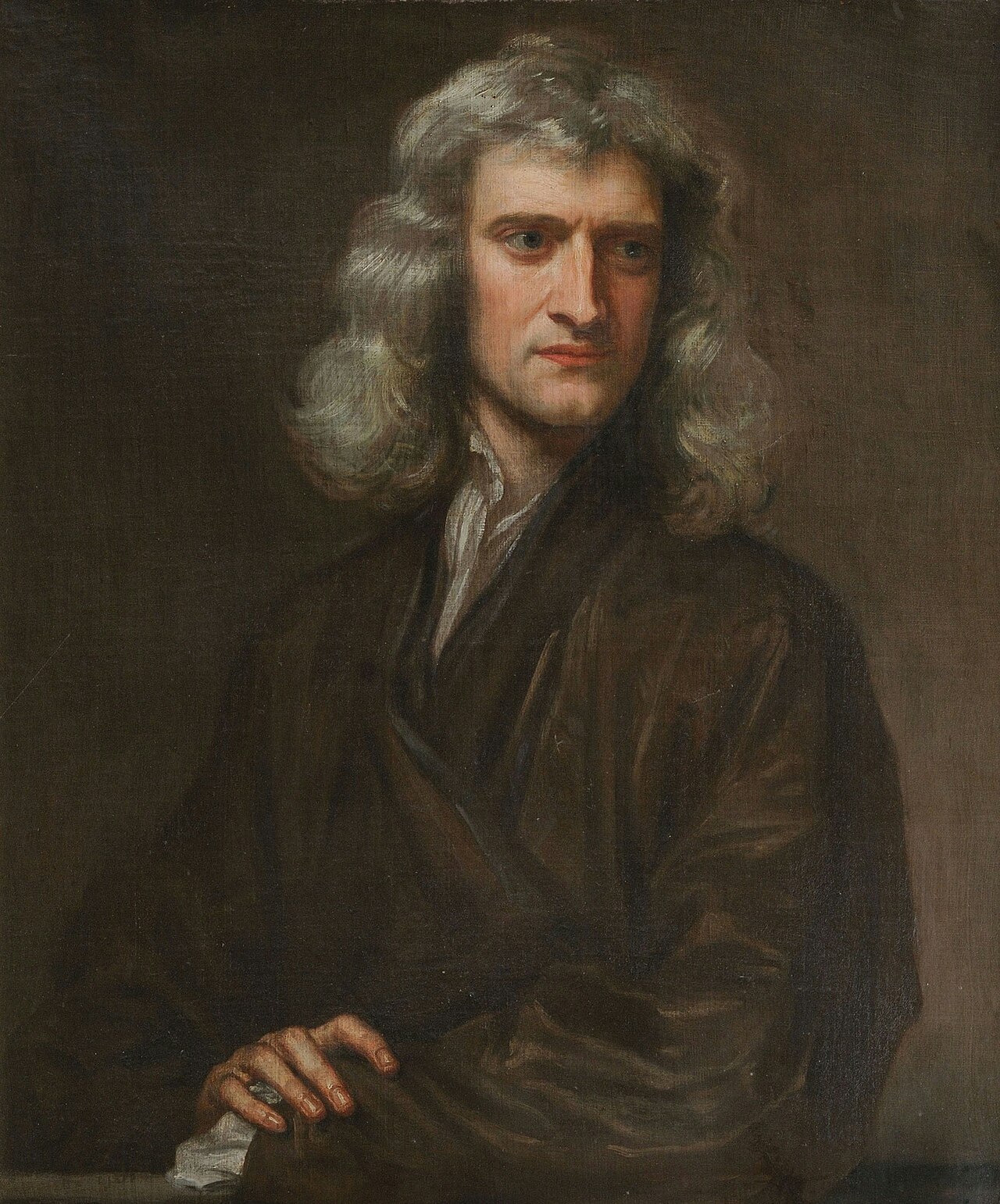
Scholars trace the Enlightenment's main source to the scientific revolution of the sixteenth and seventeenth centuries.2 Two books stand at the front. In 1687 Isaac Newton's Principia appeared under the imprint of the Royal Society. Edmond Halley paid for the printing, because the Society had spent its book budget for the year.3 Its subject was motion and gravity, and it showed that one set of mathematical laws governed the paths of the planets and the fall of a stone.3 Readers took away a large lesson. The universe was orderly, and a human mind could read it.
Newton himself did not think the order explained itself. In the General Scholium he added to the book, he wrote that the "most beautiful System of the Sun, Planets, and Comets, could only proceed from the counsel and dominion of an intelligent and powerful being."4 The greatest scientist of the age saw his own discoveries as evidence for a Designer. In Newton's own mind the new science and the old faith sat side by side.
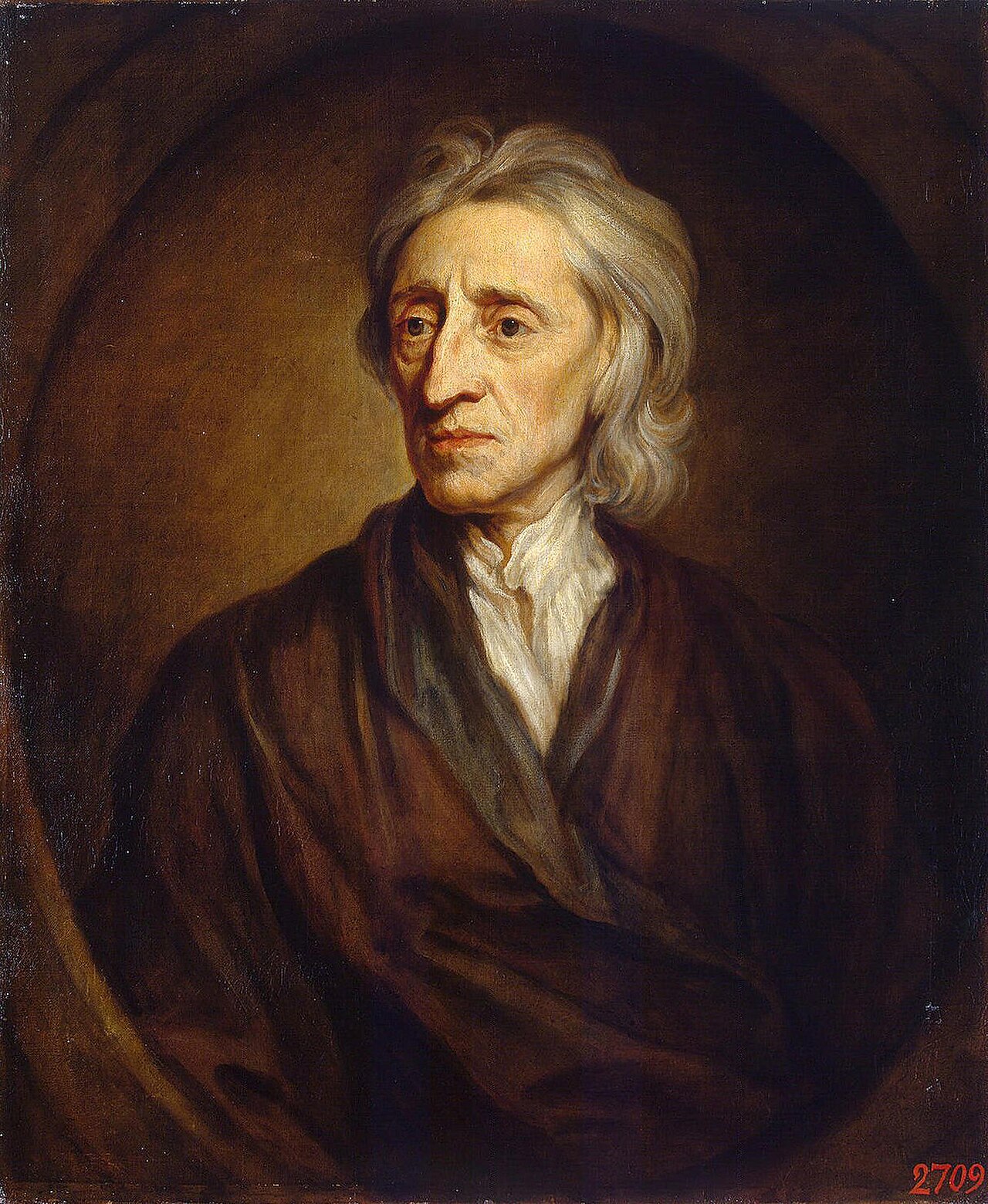
Two years later John Locke (1632 to 1704) published, without his name, the Two Treatises of Government. It came out in December 1689 with a title page dated 1690.5 The First Treatise took apart Sir Robert Filmer, who had argued that kings inherit absolute power from Adam. The Second laid out Locke's own account of the state of nature, natural equality, property and government by consent, and it held that a ruler who betrays the people's trust may be resisted.5
Locke did not build any of this on reason alone. He thought reason found a law already in place. In the state of nature, he wrote, reason "teaches all mankind, who will but consult it, that being all equal and independent, no one ought to harm another in his life, health, liberty, or possessions."6 The ground of the duty was theological. Men are "the workmanship of one omnipotent, and infinitely wise maker."6 Keep that sentence in mind through the rest of this module. Locke's reason was the reason of a creature reading the law its Maker wrote, and the Founders mostly took it that way.
The Declaration Puts It in Writing
Eighty-seven years after Locke's book, the Continental Congress approved a document that reads like his argument boiled down. It opens with "the Laws of Nature and of Nature's God." Then: "We hold these truths to be self-evident, that all men are created equal, that they are endowed by their Creator with certain unalienable Rights, that among these are Life, Liberty and the pursuit of Happiness." Governments exist "to secure these rights," and they derive "their just powers from the consent of the governed."7 The signers closed with "a firm reliance on the protection of divine Providence."7
Jefferson never claimed to have invented any of it. Writing to Henry Lee on May 8, 1825, he said the purpose of the Declaration was "not to find out new principles, or new arguments, never before thought of," but "to place before mankind the common sense of the subject." He named his sources as "Aristotle, Cicero, Locke, Sidney Etc."8 The borrowing was on purpose. A claim that nearly every American already half believed would carry more force than a novelty.
"We hold these truths to be self-evident, that all men are created equal, that they are endowed by their Creator with certain unalienable Rights."
Declaration of Independence, July 4, 1776. 7
Toleration and the Rights of Conscience
The Enlightenment's practical gift to American liberty included toleration. Franklin, Jefferson and Madison read and agreed with Locke's Letter Concerning Toleration, according to the Internet Encyclopedia of Philosophy. Jefferson's Virginia bill of 1777 to end the privileges of the Anglican church helped shape the religion clauses of the First Amendment, which was ratified with the rest of the Bill of Rights in 1791.9 The argument was that belief cannot be forced, and that a state which tries makes hypocrites. The result was a country where faith could be argued in public and no church held the sword.
One Enlightenment or Several
The word "Enlightenment" suggests a single movement. The record shows many. The Stanford Encyclopedia of Philosophy describes a diverse movement with French, Scottish and German centers, built on confidence in reason, a suspicion of inherited authority, a commitment to toleration and a list of natural rights.2 Its themes were shared. Its conclusions were not.
The American historian Henry F. May, in The Enlightenment in America (1976), sorted the age into four stages that overlapped: the Moderate, the Skeptical, the Revolutionary and the Didactic, running from about 1690 to the early nineteenth century.10 Others sort by temperament rather than by date. The Internet Encyclopedia of Philosophy credits May and Jonathan Israel with a division between a moderate Enlightenment, which favored toleration, commerce and constitutional government, and a radical one, which favored revolutionary rhetoric and the politics of classical republics. It adds that American thought drew on both.11
Religion sits in the middle of the disagreement. Many American thinkers were deists, grounding belief in God on nature and reason and setting aside miracles. Jefferson cut the miracles out of his own edition of the Gospels. Most Americans, though, remained Protestants, and May's reviewer notes that Enlightened thought had to compete with Calvinist Protestantism and never displaced it.1110 John Witherspoon shows the mixing. He was a Presbyterian minister, the only active clergyman to sign the Declaration, and the president of the College of New Jersey from 1768 to 1794. He remade the curriculum on the Scottish model and taught moral philosophy to students who included James Madison.12 In a sermon preached at Princeton on the fast day of May 17, 1776, he tied the two kinds of liberty together: "There is not a single instance in history in which civil liberty was lost, and religious liberty preserved entire."13
Myth: The Founders were all deists, or all orthodox Christians
Both claims fail. Franklin, Jefferson and some others leaned toward deism, and Witherspoon was an ordained Calvinist who signed the same Declaration. The Founding generation held a spread of views about God and Scripture, and most of them agreed on the points that mattered to the republic: a Creator, a moral law above kings, and rights that government did not grant.1112
How Schaeffer Read the Age
In How Should We Then Live? Francis Schaeffer gave the Enlightenment a chapter of its own, chapter 6. A reference summary of the book says the chapter treats how optimism about human potential became divorced from religion, and how the French Revolution showed the logical conclusion of this.14 The ten-episode film series covers the same ground in episodes titled The Renaissance, The Reformation, The Revolutionary Age and The Scientific Age.14
That summary points to a question about starting places. A thinker who begins with man alone has to find, inside man, a reason for human worth, a ground for law and a limit on rulers. A thinker who begins with a Creator has those answers on hand. The same summary says the book's chapters on the Reformation trace its effect on thinkers who were not Christians by the traditional definition.14 The Americans stand in that line. They took reason and kept the Creator, and the Declaration says so in its own words.
The contrast is easy to test. Compare Newton's General Scholium with the Declaration's closing sentence. Both appeal to a power above the scientist and above the legislator, and neither treats that appeal as a break from reason.47
The Declaration does not say rights come from a vote, a king or a majority. It says they come from the Creator, and that governments are made to secure them. A government that thinks it makes rights has no reason to stop where the rights begin.
What Citizens Can Take From It
The Founders also read human nature soberly, and they built the Constitution to match. In Federalist No. 51, published February 8, 1788, the author wrote: "If men were angels, no government would be necessary." The same essay states the framers' task in one line: "you must first enable the government to control the governed; and in the next place oblige it to control itself."15 That is the Enlightenment at its best: confidence that people can reason and govern, joined to a clear eye about what people do with power.
The rest of this module follows what happened when the second half of that pairing slipped. Lesson 3 starts with the Scottish and French versions of the age and how they came out differently. Lessons 4 to 6 take up Kant, Rousseau and Hegel, who changed what reason, freedom and history were taken to mean. The Founders' framework depended on a settled answer to those three questions, and after 1800 the answers began to move.
- 1687 Newton's Principia published under the Royal Society's imprint.
- 1689 Locke's Two Treatises of Government appear in December, dated 1690.
- 1768 John Witherspoon becomes president of the College of New Jersey.
- 1776 The Declaration of Independence rests rights on the Creator and government on consent.
- 1784 Kant answers "What is Enlightenment?" with "Dare to know!"
- 1788 Federalist No. 51: "If men were angels, no government would be necessary."
Learn more
- Kant, What Is Enlightenment?: four pages that define the age in the words of its best-known philosopher.
- Locke, Second Treatise of Government: the main source of the Founders' language of natural rights.
- Declaration of Independence, National Archives: the full text, with the Creator clauses in context.
- Jefferson to Henry Lee, 1825: Jefferson on where the Declaration's ideas came from.
- Federalist No. 51: the sober side of the Founders' view of human nature.
- American Enlightenment Thought, Internet Encyclopedia of Philosophy: a readable survey of American thinkers and their religion.
Notes
- Immanuel Kant, "An Answer to the Question: What Is Enlightenment?" (1784), trans. Mary C. Smith, opening paragraphs and the closing remarks on an age of enlightenment. Read it online. ↩
- "The Enlightenment," Stanford Encyclopedia of Philosophy, on the origin in the scientific revolution, the themes of reason, autonomy, toleration and natural rights, and the French, Scottish and German centers. Read it online. ↩
- "Philosophiae Naturalis Principia Mathematica," Pembroke College, Oxford, "400 Things" series, no. 26, on the 1687 publication under the Royal Society imprint and Halley's payment for the printing. Read it online. ↩
- Isaac Newton, General Scholium, in The Mathematical Principles of Natural Philosophy, trans. Andrew Motte (1729), Newton Project Canada text. Read it online. ↩
- "Two Treatises of Government," Wikipedia, on anonymous publication in December 1689 with a 1690 title page, Filmer's Patriarcha, and the arguments of the First and Second Treatises. Read it online. ↩
- John Locke, Second Treatise of Government (1689), chapter II, section 6, in Two Treatises of Government, Project Gutenberg. Read it online. ↩
- Declaration of Independence, July 4, 1776, National Archives transcript, preamble and closing sentence. Read it online. ↩
- Thomas Jefferson to Henry Lee, Monticello, May 8, 1825, Founders Online. Read it online. ↩
- "American Enlightenment Thought," Internet Encyclopedia of Philosophy, on Locke's Letter Concerning Toleration, Jefferson's Virginia bill of 1777, the First Amendment's religion clauses and the ratification of the Bill of Rights in 1791. Read it online. ↩
- Drew Maciag, "Reconsidering Henry F. May's The Enlightenment in America," U.S. Intellectual History Blog, March 6, 2016, on May's four stages (Moderate, Skeptical, Revolutionary, Didactic) and the persistence of Protestantism. The book is Henry F. May, The Enlightenment in America (New York: Oxford University Press, 1976). Read it online. ↩
- "American Enlightenment Thought," Internet Encyclopedia of Philosophy, on deism, the Jefferson Bible, and the division of Enlightenment thought credited to May and Israel. Read it online. ↩
- "John Witherspoon," Wikipedia, on his 1768 arrival at Princeton, his presidency to 1794, his signing of the Declaration as the only active clergyman, his Scottish-model curriculum and his influence on James Madison. Read it online. ↩
- John Witherspoon, The Dominion of Providence over the Passions of Men (sermon preached at Princeton, May 17, 1776, the general fast appointed by Congress), quoted at The Gospel Coalition, with the date and occasion from the Presbyterian Historical Society's "This Day in Presbyterian History." Read it online. ↩
- "How Should We Then Live?," Wikipedia, on the 1976 book, the ten-episode 1977 film series, the episode titles, and the chapter summaries for the Reformation (chapters 4 and 5) and the Enlightenment (chapter 6). Francis A. Schaeffer, How Should We Then Live? The Rise and Decline of Western Thought and Culture (Old Tappan, N.J.: Revell, 1976). Read it online. ↩
- Federalist No. 51, February 8, 1788, attributed to Madison or Hamilton, Avalon Project. Read it online. ↩
Terms in this lesson
- Enlightenment
- The movement of the late seventeenth and eighteenth centuries that trusted human reason to understand nature and to judge custom, church and government.
- Natural law
- A moral law that binds all people and can be known by reason. Locke taught that it comes from the Maker of mankind.
- Natural rights
- Claims such as life, liberty and property that belong to a person by nature and that government exists to protect.
- Consent of the governed
- The principle that just government draws its authority from the agreement of the people it rules.
- Deism
- The belief in a Creator who made the world and its laws but does not intervene in it. Some Founders held it. Many did not.
- Autonomy
- From the Greek for self-law. Kant's word for a person ruling himself by reason. In later lessons it comes to mean freedom from any authority outside the self.
Sources
- Kant, An Answer to the Question: What Is Enlightenment? (Smith translation) checked 2026-10
- Locke, Second Treatise of Government, Project Gutenberg checked 2026-10
- National Archives, Declaration of Independence transcript checked 2026-10
- Jefferson to Henry Lee, May 8, 1825, Founders Online checked 2026-10
- Federalist No. 51, Avalon Project checked 2026-10
- Stanford Encyclopedia of Philosophy, The Enlightenment checked 2026-10
- Internet Encyclopedia of Philosophy, American Enlightenment Thought checked 2026-10
- Drew Maciag, Reconsidering Henry F. May's The Enlightenment in America checked 2026-10
- Wikipedia, Two Treatises of Government checked 2026-10