Lesson 17 of 19 · about 30 minutes
The Courts Push Back, 2022 to 2026
You'll be able to
- Quote and explain the holdings of West Virginia v. EPA, Sackett v. EPA, Loper Bright, SEC v. Jarkesy, Corner Post, Ohio v. EPA, Learning Resources, Trump v. Slaughter and Trump v. Cook
- Say for each decision what it changes and what it leaves standing
- Connect Jarkesy's jury holding to the Stamp Act Congress and the Declaration of Independence
- Describe how the 2025 executive orders on agency rules and independent agencies used these decisions
- Weigh the dissents' warnings against the majority's reasoning
Start here: the short version
In 1765 the colonists protested courts that punished them without juries. In 2024 the Supreme Court cited that protest and told the SEC it must take its fraud penalty cases to a jury. SEC v. Jarkesy belongs to a run of decisions, June 2022 to June 2026, in which the Court took back much of what it had let agencies keep for forty years: the power to read their own statutes, find their own facts and, in many cases, impose their own penalties. It required clear authorization from Congress for vast new agency powers, narrowed federal control of wetlands, overruled Chevron deference, opened old rules to fresh challenge, struck down tariffs imposed under an emergency statute, and held that the President may fire FTC commissioners at will. Each decision changed something specific and left a great deal in place. And the power it took from agencies did not vanish. Much of it landed in the courts and the White House.
Challenge
If Loper Bright and Slaughter looked like the end of rule by bureaucrat, follow the power. Some went to judges no one elects. A large share went to a President who can now fire commissioners at will and whose 2025 executive order makes his and his Attorney General's legal opinions controlling on agency staff. If the same decisions looked like a judicial power grab, look at the rest of the record. This Court struck down the sitting President's tariffs 6 to 3 and kept a Fed governor in office over his objection. Defenders of the agencies trusted commissioners no President could fire. Their opponents now cheer a President who can fire nearly all of them. Both camps call their preferred branch accountable. The record makes each answer the same question: accountable to whom, and who checks it once it wins?
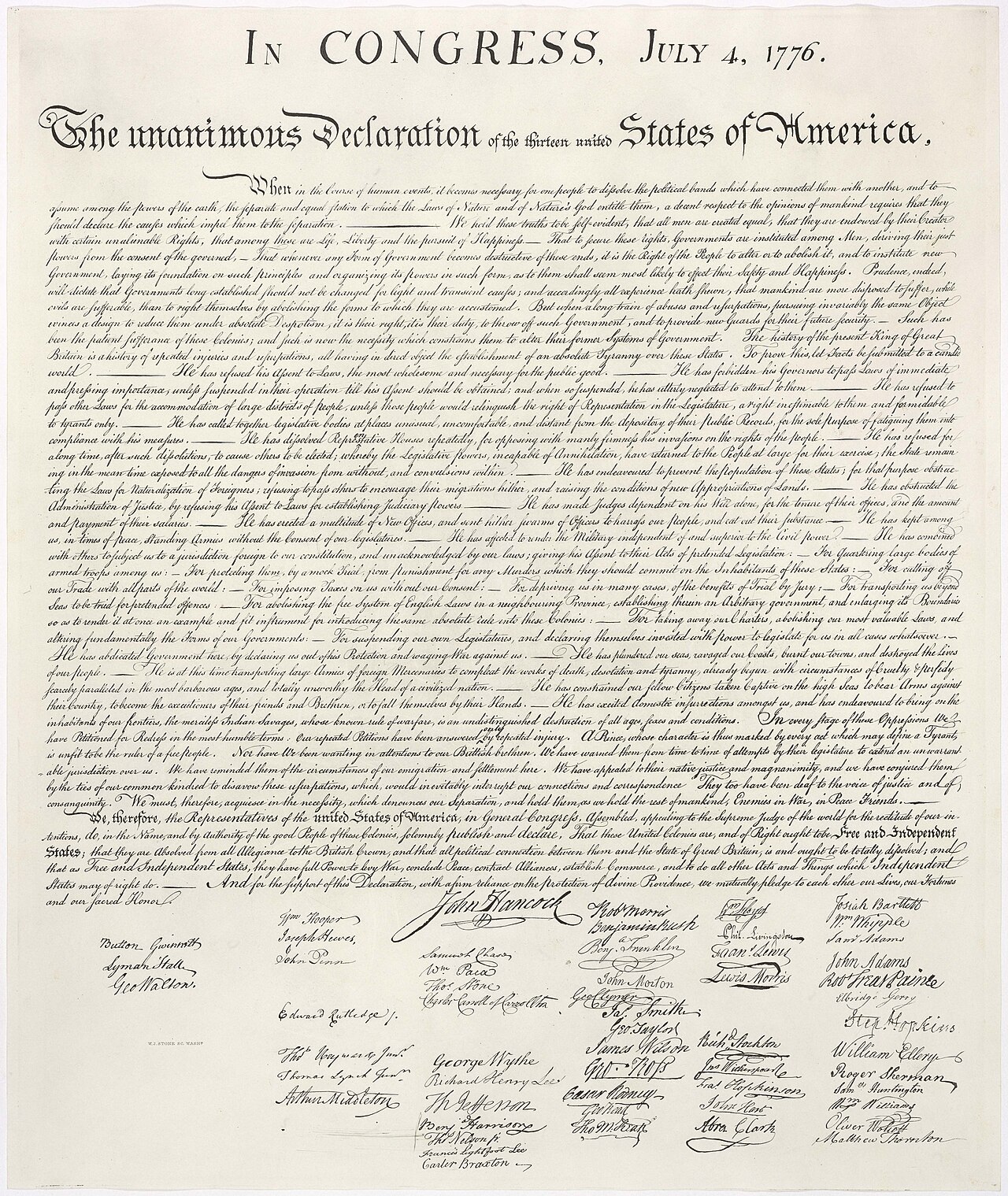
Lesson 4 ended in 1776 with the Declaration of Independence charging the King "For depriving us in many cases, of the benefits of Trial by Jury" and with having "erected a multitude of New Offices, and sent hither swarms of Officers to harrass our people."1 Lessons 8, 10 and 12 followed the federal government as it built offices that decided cases without juries, starting with the "public rights" idea in Murray's Lessee (1856), then the Interstate Commerce Commission (1887), then Crowell v. Benson (1932) and the Administrative Procedure Act (1946). Lesson 14 reached Chevron v. NRDC (1984), which told judges to accept an agency's reasonable reading of an unclear statute. From 2022 to 2026 the Court reversed or narrowed much of that inheritance, piece by piece.
Every quotation below comes from the slip opinions and preliminary prints posted at supremecourt.gov. A decision "changes" a thing when it alters the legal rule a lower court must now apply. It "leaves standing" a rule, statute or agency the opinion expressly or plainly did not disturb.
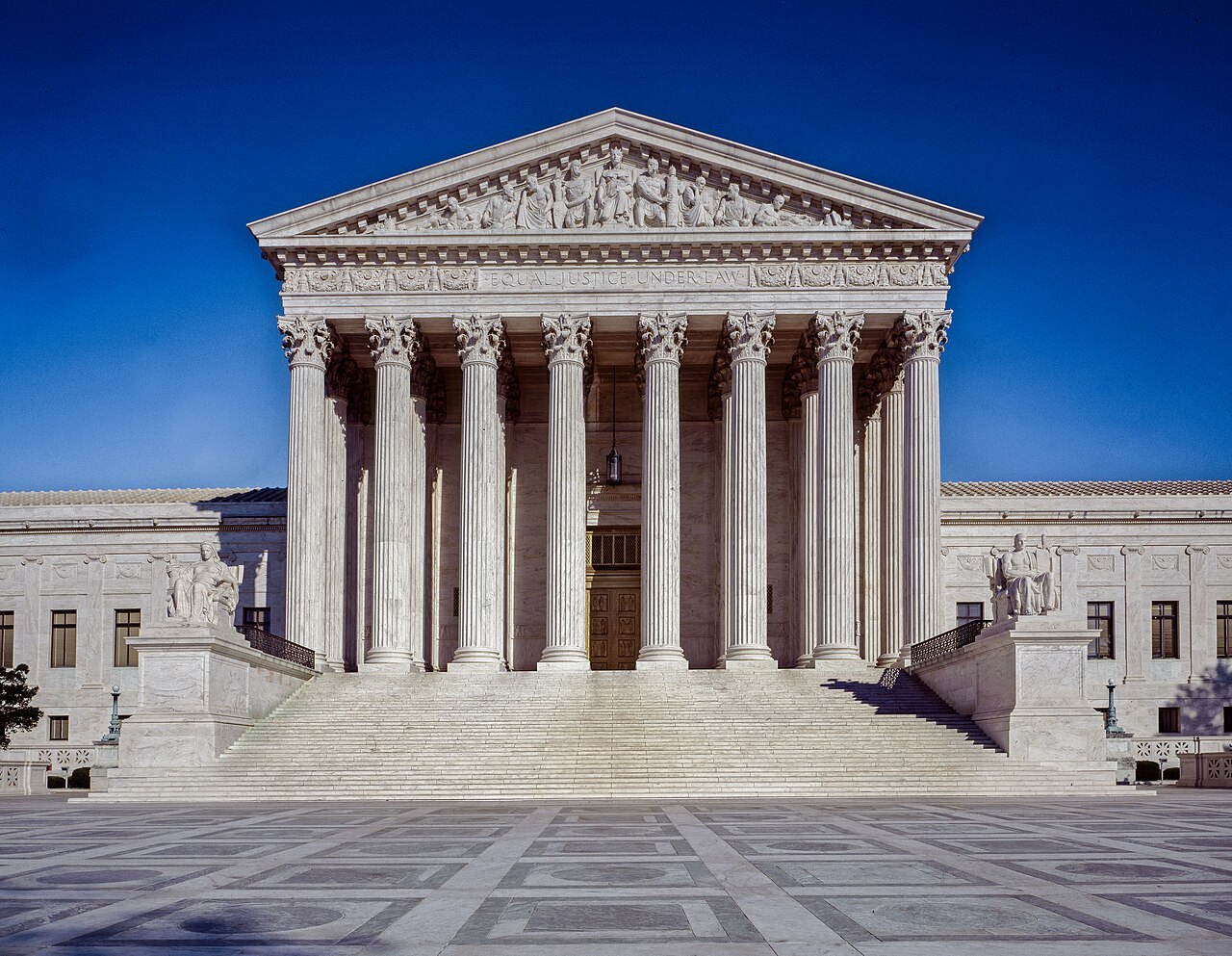

West Virginia v. EPA (2022): the major questions doctrine named
The case concerned the Clean Power Plan, a 2015 rule under section 111(d) of the Clean Air Act. EPA set carbon limits for existing power plants based on "generation shifting," meaning it assumed operators would shift production from coal to gas, wind and solar. The question, as the Court framed it, was whether "restructuring the Nation's overall mix of electricity generation, to transition from 38% coal to 27% coal by 2030, can be the 'best system of emission reduction' within the meaning of Section 111."2 The rule never took effect. EPA had repealed it, the D.C. Circuit had revived it, and the Biden administration said it would not enforce it.
On June 30, 2022, the Court ruled 6 to 3, in an opinion by Chief Justice Roberts, that Congress had not given EPA that power. The Reporter's syllabus states the holding: "Congress did not grant EPA in Section 111(d) of the Clean Air Act the authority to devise emissions caps based on the generation shifting approach the Agency took in the Clean Power Plan." The syllabus also gives the reasoning its name, "the major questions doctrine." The opinion itself put the rule this way: "in certain extraordinary cases, both separation of powers principles and a practical understanding of legislative intent make us 'reluctant to read into ambiguous statutory text' the delegation claimed to be lurking there. To convince us otherwise, something more than a merely plausible textual basis for the agency action is necessary. The agency instead must point to 'clear congressional authorization' for the power it claims."2 Its closing paragraph conceded the policy point and rejected the legal one. "Capping carbon dioxide emissions at a level that will force a nationwide transition away from the use of coal to generate electricity may be a sensible 'solution to the crisis of the day.' But it is not plausible that Congress gave EPA the authority to adopt on its own such a regulatory scheme in Section 111(d). A decision of such magnitude and consequence rests with Congress itself, or an agency acting pursuant to a clear delegation from that representative body."2
Justice Gorsuch, concurring, wrote that "the Constitution does not authorize agencies to use pen-and-phone regulations as substitutes for laws passed by the people's representatives."2 Justice Kagan, for the three dissenters, wrote: "Today, the Court strips the Environmental Protection Agency (EPA) of the power Congress gave it to respond to 'the most pressing environmental challenge of our time.'" She ended: "The Court appoints itself ... the decision-maker on climate policy. I cannot think of many things more frightening."2
What it changes and what it leaves standing
It changes how courts read broad grants of power. An agency can no longer rest a rule of great economic and political weight on general words like "best system" or "regulate." It leaves standing EPA's authority to regulate power plant emissions under section 111 by measures applied at the plant itself, and it did not touch Massachusetts v. EPA (2007), which held that greenhouse gases are air pollutants under the Act. The doctrine reappeared four years later in the tariff case, discussed below, and not every Justice in that majority joined that part.
Sackett v. EPA (2023): the reach of the Clean Water Act
The Sackett case came from Idaho. In 2004 Michael and Chantell Sackett bought a small lot near Priest Lake in the Panhandle and began backfilling it with dirt and rocks to build a house. EPA told them the lot held wetlands protected by the Clean Water Act and ordered them to restore it, in the Court's words threatening "penalties of over $40,000 per day if they did not comply." EPA's theory was that the wetlands were near a ditch that fed a creek that fed Priest Lake.3 The Act forbids discharges into "navigable waters," which 33 U.S.C. 1362(7) defines as "the waters of the United States, including the territorial seas." The Sacketts then spent nearly two decades in litigation over one small lot. Their first trip to the Supreme Court, in 2012, won them only the right to sue at all.
On May 25, 2023, Justice Alito wrote for the Court: "In sum, we hold that the CWA extends to only those wetlands that are 'as a practical matter indistinguishable from waters of the United States.'" The "waters" themselves are "relatively permanent, standing or continuously flowing bodies of water" described "in ordinary parlance as 'streams, oceans, rivers, and lakes.'" To claim an adjacent wetland, the party asserting jurisdiction must establish "first, that the adjacent [body of water constitutes] ... 'water[s] of the United States' (i.e., a relatively permanent body of water connected to traditional interstate navigable waters); and second, that the wetland has a continuous surface connection with that water, making it difficult to determine where the 'water' ends and the 'wetland' begins."3
All nine Justices agreed the Sacketts won. Only five, in Justice Alito's opinion, adopted the continuous surface connection test. Justice Kavanaugh, joined by Justices Sotomayor, Kagan and Jackson, concurred in the judgment and would have kept coverage for wetlands "separated from a covered water only by a manmade dike or barrier, natural river berm, beach dune, or the like."3
What it changes and what it leaves standing
It ended the "significant nexus" test that agencies and lower courts had used since 2006 and removed many isolated and seasonally wet areas from federal permitting. It left standing the Clean Water Act itself, federal jurisdiction over rivers, lakes and their connected wetlands, and every state's power to regulate waters the federal law no longer reaches. The agencies are still writing the rule that implements it. EPA and the Army proposed a new definition on November 20, 2025, and published a supplemental proposal on September 9, 2026, with comments due October 9, 2026.4 As of this writing no final rule has issued.
Loper Bright Enterprises v. Raimondo (2024): Chevron overruled
The case began with herring. Under the Magnuson-Stevens Act the National Marine Fisheries Service required some Atlantic herring boats to carry federal observers and, when the government did not pay for one, to hire a certified observer themselves. The agency estimated the cost "would be up to $710 per day, reducing annual returns to the vessel owner by up to 20 percent."5 The family fishing companies argued the statute did not let the agency make them pay. The lower courts upheld the rule under Chevron.
On June 28, 2024, the Court overruled Chevron. Its conclusion reads in full:
"Chevron is overruled. Courts must exercise their independent judgment in deciding whether an agency has acted within its statutory authority, as the APA requires. Careful attention to the judgment of the Executive Branch may help inform that inquiry. And when a particular statute delegates authority to an agency consistent with constitutional limits, courts must respect the delegation, while ensuring that the agency acts within it. But courts need not and under the APA may not defer to an agency interpretation of the law simply because a statute is ambiguous."5
The vote was 6 to 2 in Loper Bright itself, which came up from the D.C. Circuit and in which Justice Jackson did not participate, and 6 to 3 in the companion herring case from the First Circuit, Relentless, Inc. v. Department of Commerce. Chief Justice Roberts wrote for the majority. Justice Kagan's dissent put her objection in one line: "A rule of judicial humility gives way to a rule of judicial hubris."5
What it changes and what it leaves standing
It changes who has the last word on what a statute means. A court now decides the "best reading" itself. The majority went out of its way to protect the past. "By doing so, however, we do not call into question prior cases that relied on the Chevron framework. The holdings of those cases that specific agency actions are lawful, including the Clean Air Act holding of Chevron itself, are still subject to statutory stare decisis despite our change in interpretive methodology."5 It also leaves standing every express delegation. Where Congress tells an agency to define a term or set a standard, the court's job is to see that the agency stays inside the grant. A year later the Court showed how much remains. In Seven County Infrastructure Coalition v. Eagle County (May 29, 2025), it held that the D.C. Circuit "did not afford the Board the substantial judicial deference required in NEPA cases" in reviewing an 88-mile Utah oil railway.6 Deference on facts and policy judgment survived. Deference on the meaning of law did not.
SEC v. Jarkesy (2024): the jury returns
Until 2010 the Securities and Exchange Commission could seek civil penalties from unregistered investment advisers only in federal court. The Dodd-Frank Act of 2010 let it impose them through its own in-house proceedings, before an administrative law judge applying the Commission's own rules. The SEC brought such a case against George Jarkesy Jr. and his firm, Patriot28, for fraud, and the Commission's final order imposed a civil penalty of $300,000. The Fifth Circuit vacated the order on the ground that the defendants had a right to a jury.7
On June 27, 2024, the Court agreed, 6 to 3. Chief Justice Roberts framed the case as "a straightforward question: whether the Seventh Amendment entitles a defendant to a jury trial when the SEC seeks civil penalties against him for securities fraud." The answer was yes, in two steps. The SEC's antifraud provisions "replicate common law fraud, and it is well established that common law claims must be heard by a jury." And the public rights exception did not apply, "because the present action does not fall within any of the distinctive areas involving governmental prerogatives where the Court has concluded that a matter may be resolved outside of an Article III court, without a jury."7 Chief Justice Roberts closed: "A defendant facing a fraud suit has the right to be tried by a jury of his peers before a neutral adjudicator. Rather than recognize that right, the dissent would permit Congress to concentrate the roles of prosecutor, judge, and jury in the hands of the Executive Branch. That is the very opposite of the separation of powers that the Constitution demands."7
The 1765 grievance in a 2024 opinion
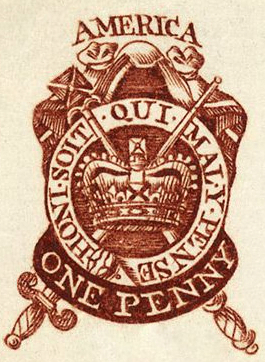
Of all these decisions, Jarkesy reaches farthest back. The Court's opinion cited the colonial record directly: "When the English began evading American juries by siphoning adjudications to juryless admiralty, vice admiralty, and chancery courts, Americans condemned Parliament for 'subvert[ing] the rights and liberties of the colonists.'" It cited the Stamp Act Congress resolutions of October 19, 1765, the First Continental Congress's demand of October 14, 1774, for the "great and inestimable privilege of being tried by their peers of the vicinage," and the Declaration of Independence.7
The Stamp Act Congress text, as lesson 04 quoted it, reads: "That trial by jury is the inherent and invaluable right of every British subject in these colonies." The next resolution charged that the Stamp Act and "several other Acts, by extending the jurisdiction of the courts of Admiralty beyond its ancient limits, have a manifest tendency to subvert the rights and liberties of the colonists."8 The Sugar Act of 1764 had let customs penalties be recovered in a court of vice admiralty "appointed over all America," at "the election of the informer or prosecutor," and the court established under it at Halifax, Nova Scotia, sat without a jury, as admiralty courts did.23 Justice Gorsuch's concurrence, joined by Justice Thomas, traced the line from those courts to the Declaration's charges that the King had "made Judges dependent on his Will alone" and deprived the colonists "in many cases, of the benefits of Trial by Jury," and quoted the historian Carl Ubbelohde: the "musket fire at Lexington and Concord ... signaled the end not only of the vice-admiralty courts, but of all British rule in America."7

The parallel has limits, and they are real. An SEC administrative law judge is no Crown appointee. A respondent could seek review in a federal court of appeals, and Congress authorized the procedure by statute. The colonists objected to a power they had no voice in creating. The Court took a narrower point from the history, and it is about function. When the government sues to punish fraud, the case is the kind the jury right was written to protect, whatever the forum is called.
What it changes and what it leaves standing
It changes where a large class of penalty cases must be tried. The SEC must now go to federal court when it seeks civil penalties for fraud. Other agencies that impose penalties for claims resembling common law actions face the same question. It leaves standing the public rights exception itself, which the Court said has "no textual basis in the Constitution" but which it did not abolish; the line of cases from Murray's Lessee on revenue collection, immigration, tariffs and public benefits; and Atlas Roofing (1977), which the majority distinguished rather than overruled. "Since the answer to the jury trial question resolves this case, we do not reach the nondelegation or removal issues."7
Justice Sotomayor's dissent, for three Justices, warned of the reach. Congress, she wrote, "has enacted more than 200 statutes authorizing dozens of agencies to impose civil penalties for violations of statutory obligations," and "Congress had no reason to anticipate the chaos today's majority would unleash after all these years." She concluded: "Make no mistake: Today's decision is a power grab."7
The Court marked one limit two years later. In FCC v. AT&T, Inc., decided June 4, 2026, by a vote of 8 to 1, the carriers argued that FCC forfeiture orders of about $57 million against AT&T and $47 million against Verizon, issued without a jury, were Jarkesy "all over again." "But Jarkesy only proves our point," the Chief Justice answered. Before the government can collect, "it must prove its case to a jury in a trial de novo," and so "the Commission may issue forfeiture orders without the involvement of a jury."9 The jury right attaches when legal obligations are finally fixed. An agency may still make the first finding.
Corner Post (2024): the clock starts at injury
Corner Post is a truck stop and convenience store in Watford City, North Dakota, that opened in 2018. It challenged Regulation II, the Federal Reserve Board's 2011 rule capping debit card interchange fees at "$0.21 per transaction plus .05% of the transaction's value," arguing the cap was higher than the 2010 statute allows. The lower courts said the suit was too late, because the federal six-year statute of limitations, 28 U.S.C. 2401(a), had run in 2017, before Corner Post existed.10
On July 1, 2024, Justice Barrett wrote for six Justices, in the opinion's closing: "An APA claim does not accrue for purposes of § 2401(a)'s 6-year statute of limitations until the plaintiff is injured by final agency action."10 Justice Jackson's dissent, joined by Justices Sotomayor and Kagan, read the decision together with Loper Bright: "The tsunami of lawsuits against agencies that the Court's holdings in this case and Loper Bright have authorized has the potential to devastate the functioning of the Federal Government."10
It changes the age at which a rule becomes safe from facial challenge. In effect, no rule ages into safety while new businesses keep getting hurt by it. A new business can sue over an old rule within six years of being harmed by it. It leaves standing the merits of Regulation II, which the Court did not reach, and the statute of limitations itself.
Ohio v. EPA (2024): explain yourself
Ohio v. EPA came up on the emergency docket. EPA issued a single Federal Implementation Plan under the Clean Air Act's "Good Neighbor" provision to cut ozone-forming emissions across many upwind states. Commenters warned that if some states fell out of the plan, the cost-effective controls for the rest would change. On June 27, 2024, Justice Gorsuch wrote for five Justices that the challengers were likely to win on their claim that the rule was arbitrary and capricious, because "To this question, EPA offered no reasoned response," and stayed enforcement of the plan against the applicants while the case proceeds. Justice Barrett dissented for four.11
The decision broke no new doctrine. EPA was stopped for skipping its homework. The Court applied the old rule from State Farm (1983) that an agency must answer significant comments. It mattered because the Court enforced that rule through a stay, which halts a regulation before any court has finished reviewing it.
The removal cases, 2025 to 2026
Trump v. Wilcox (2025)
President Trump removed Gwynne Wilcox from the National Labor Relations Board and Cathy Harris from the Merit Systems Protection Board in early 2025 without the cause their statutes required. District courts ordered them reinstated. On May 22, 2025, the Court stayed those orders. "Because the Constitution vests the executive power in the President," it wrote, "he may remove without cause executive officers who exercise that power on his behalf, subject to narrow exceptions recognized by our precedents." It said the stay "reflects our judgment that the Government is likely to show that both the NLRB and MSPB exercise considerable executive power," and added a sentence that would matter a year later: "The Federal Reserve is a uniquely structured, quasi-private entity that follows in the distinct historical tradition of the First and Second Banks of the United States."12 The D.C. Circuit later held the NLRB's for-cause protection unconstitutional, in December 2025, and on October 19, 2026, the Supreme Court declined to hear Wilcox's appeal, leaving her removal in place.25
Trump v. Slaughter (2026)
The President also removed the FTC's two Democratic commissioners, Rebecca Slaughter and Alvaro Bedoya, telling them their service was "inconsistent with [his] Administration's priorities." The FTC statute, 15 U.S.C. 41, allows removal only "for inefficiency, neglect of duty, or malfeasance in office." That was the very provision upheld in Humphrey's Executor v. United States in 1935. The Court took the case before the court of appeals ruled, heard argument December 8, 2025, and decided it June 29, 2026.13
Chief Justice Roberts wrote for six Justices, with Justice Thomas joining all but one part. "We hold that such protection from removal is contrary to the separation of powers enshrined in the Constitution." On the 1935 precedent: "If anything more is left of Humphrey's, we overrule it. Humphrey's has for decades been a result in search of a rationale." The FTC, the opinion said, "enforces and administers some 80 statutes, which cover almost every facet of our Nation's economy," and "has the power to promulgate substantive rules that carry the force of law." So "The FTC unquestionably exercises executive power, and must therefore be controlled by the Chief Executive, in whom such power is vested." The opinion's closing reached for accountability: "Subordinates who exercise the President's power are subject to removal by him. Then, and only then, can they remain accountable to the President, and the President to the people."13
Justice Sotomayor, joined by Justices Kagan and Jackson, dissented. "Today, this Court undoes centuries of political practice and concludes that all three branches of Government have been acting in open defiance of the Constitution all this time." The majority, she wrote, "gives the President a power unknown even to the English Crown against which the Founders revolted."13 Justice Gorsuch concurred and pressed further. Independent agencies, he wrote, "do not just exercise executive law-enforcement powers. Congress has also delegated to them vast legislative and judicial powers."13
What Slaughter changes and what it leaves standing
It changes the status of every multimember commission whose heads exercise executive power and hold for-cause protection: the FTC directly, and by its reasoning bodies such as the NLRB and MSPB. The President may remove their heads at will. It expressly left open two things. The opinion named "the Federal Reserve, to the extent that it follows in the distinct historical tradition of the First and Second Banks of the United States," as an entity that may have a unique role. And it said "the permissibility of tenure protections for the judges of 'non-Article III courts,' such as the Tax Court and the Court of Federal Claims, is not 'presented' or 'briefed' in this case," adding, "We leave those questions for another day." It also noted that "not all offices created by Congress necessarily come with executive or even sovereign power attached."13 It left standing the agencies themselves, their statutes and their powers. A commission whose members serve at the President's pleasure is still a commission.
Trump v. Cook (2026)
The same day the Court answered the Federal Reserve question, at least for now. In August 2025 the President tried to fire Lisa Cook, a Federal Reserve governor whose term runs to 2038, writing that he had "reason to believe" she "may have made false statements on one or more mortgage agreements." The opinion began: "Last August, for the first time in the Federal Reserve's 111-year history, the President attempted to fire one of its Governors." The Federal Reserve Act lets the President remove a governor only "for cause," 12 U.S.C. 242. A district court blocked the removal, and the government asked the Supreme Court for a stay.14
The Court denied it, 5 to 4, in an opinion by Chief Justice Roberts joined by Justices Sotomayor, Kagan, Kavanaugh and Jackson. The President's cause determination is reviewable in court. The Fed's history "counsels a substantial threshold for 'cause,'" turning on "the seriousness of the alleged misconduct, and the extent of any nexus that may exist to the Governor's professional duties." The narrow ground was process: "the President failed to afford Cook the procedural protections to which she was entitled by statute," which at a minimum meant "some explanation of the evidence at issue, some avenue for a response, and a deadline by which a response would be due." The Reporter's syllabus summarizes the Court as finding the Fed's protection "consistent with the Constitution." The opinion said, "We see no reason to leave the public in limbo, or to sow doubt as to the status of one of our Nation's (and the world's) most important financial institutions," quoting Justice Alito's earlier description of it as a "special arrangement sanctioned by history." Justices Thomas, Alito, Gorsuch and Barrett dissented.14 The case returns to the lower courts, and Cook remains in office. The fight did not end there. On August 5, 2026, the White House gave Cook 21 days to answer the mortgage allegations, and in October the President named a three-member committee to investigate them, with a closed hearing set for November 5, 2026.24

Learning Resources v. Trump (2026): the taxing power
The pushback did not run in one political direction. On February 20, 2026, the Court held 6 to 3 that "we hold that IEEPA does not authorize the President to impose tariffs," striking down both the drug-trafficking tariffs on Canada, Mexico and China and the worldwide "reciprocal" tariffs of 2025. Chief Justice Roberts grounded the holding in Article I: the Framers gave Congress "alone ... access to the pockets of the people," and "did not vest any part of the taxing power in the Executive Branch." The statute lets the President "regulate . . . importation," and "Absent from this lengthy list of powers is any mention of tariffs or duties."15
The vote split in a way that shows what the major questions doctrine has become. Only Justices Gorsuch and Barrett joined the Chief Justice's part applying it, which said: "There is no major questions exception to the major questions doctrine." Justice Kagan, joined by Justices Sotomayor and Jackson, concurred in the judgment on ordinary statutory grounds and wrote, "I do not join the part of that opinion invoking the so-called major-questions doctrine." Justice Kavanaugh, joined by Justices Thomas and Alito, dissented, arguing the tariffs were "clearly lawful" and that "the Court today concludes that the President checked the wrong statutory box by relying on IEEPA rather than another statute."15 Lesson 16 follows the refunds and the section 122 surcharge that came next.
The executive orders of 2025
The new administration put these decisions to work within weeks. Executive Order 14192 of January 31, 2025, required that for each new regulation an agency "identify at least 10 existing regulations to be repealed."16 Executive Order 14219 of February 19, 2025, told agencies to identify, among other classes, "regulations that are based on anything other than the best reading of the underlying statutory authority" (Loper Bright's language) and "regulations that implicate matters of social, political, or economic significance that are not authorized by clear statutory authority" (West Virginia's).17 A presidential memorandum of April 9, 2025, directed agencies to repeal regulations that clearly exceed their authority under ten named decisions, including Loper Bright, West Virginia, Jarkesy, Sackett and Ohio v. EPA, and to do so "without notice and comment, where doing so is consistent with the 'good cause' exception in the Administrative Procedure Act."18
Executive Order 14215 of February 18, 2025, went to the independent agencies. It stated that "previous administrations have allowed so-called 'independent regulatory agencies' to operate with minimal Presidential supervision," required their significant rules to go through White House review, and declared that "The President and the Attorney General's opinions on questions of law are controlling on all employees in the conduct of their official duties." It exempted the Federal Reserve's "conduct of monetary policy."19 Slaughter later supplied the constitutional footing for much of that order.
The decisions took power from agencies, and the power went somewhere. Much of it moved to courts, which now decide statutory meaning. Some moved to Congress, which must now speak clearly. A large share moved to the President, who can now fire commissioners and control agency legal positions. And the repeal memorandum asked agencies to skip notice and comment, the procedure that lets the public answer an agency before it acts, where the good cause exception allowed it. So a campaign against unaccountable rulemaking opened by asking to unmake rules without hearing from the public.
What changed and what stands: a summary table
| Decision | Date and vote | Holding in brief | Changes | Leaves standing |
|---|---|---|---|---|
| West Virginia v. EPA | June 30, 2022; 6 to 3 | No generation-shifting caps under CAA 111(d) | Clear authorization required for major new powers | EPA's power to regulate plant emissions; Massachusetts v. EPA |
| Sackett v. EPA | May 25, 2023; 9 to 0 judgment, 5 to 4 test | Wetlands covered only with continuous surface connection | Ends significant nexus test | Clean Water Act; state water law |
| Loper Bright | June 28, 2024; 6 to 2 and 6 to 3 | Chevron overruled | Courts decide the best reading | Prior Chevron holdings; express delegations; deference on facts |
| SEC v. Jarkesy | June 27, 2024; 6 to 3 | Jury required for SEC fraud penalties | Penalty cases like common law move to court | Public rights exception; Atlas Roofing; FCC forfeiture scheme (2026) |
| Ohio v. EPA | June 27, 2024; 5 to 4 | Good Neighbor plan stayed | Reasoned response enforced at stay stage | The Good Neighbor provision |
| Corner Post | July 1, 2024; 6 to 3 | APA clock starts at plaintiff's injury | Old rules open to new plaintiffs | The six-year limit; Regulation II's merits |
| Learning Resources | Feb. 20, 2026; 6 to 3 | IEEPA does not authorize tariffs | Emergency tariffs under IEEPA void | Sections 122, 232, 301 tariff statutes |
| Trump v. Slaughter | June 29, 2026; 6 to 3 | FTC for-cause removal unconstitutional | Humphrey's overruled for executive agencies | Federal Reserve question; non-Article III courts; the agencies' powers |
| Trump v. Cook | June 29, 2026; 5 to 4 (stay denied) | Fed governor stays pending suit | Cause for Fed removal is reviewable, needs process | Fed's for-cause protection |
Two other decisions belong in the "leaves standing" column. In FCC v. Consumers' Research (June 27, 2025), Justice Kagan wrote for six Justices that in the universal service fee scheme "no impermissible transfer of authority has occurred."20 Congress may still hand agencies broad tasks if it guides them. And in Seven County, noted above, the Court reinforced deference to agencies on environmental review.6
Through Pierson's Framework
Pierson's framework asks two questions of any institution: does it answer to the people, and is it judged by what it does or by what it calls itself? The 2022 to 2026 decisions turn on both. Loper Bright rested on the APA's text and on Federalist 78's charge that judges apply their own judgment. Jarkesy looked past the label "administrative proceeding" to the substance, a government suit to punish fraud, and asked who should decide it. Slaughter looked past the word "independent" and found an agency that enforces 80 statutes. Each is the name versus function test applied by a court.
The Anti-Federalist appendix to Ordered Liberty Reclaimed describes the danger these cases address: institutions that "entrench policies behind procedure, insulate officials through legal immunity, and claim moral neutrality while enforcing ideological dogma. This is not tyranny by seizure. It is tyranny by sediment, the slow burial of liberty under layers of unchecked authority."21 Chevron was forty years of sediment, and Humphrey's Executor ninety. The same appendix also says: "No agency, no court, no presidency is immune from corruption when disconnected from the people's virtue and oversight."21 That sentence cuts against an easy celebration. The decisions moved power from agencies to courts and to the President. Neither is self-correcting. Justice Kagan's charge of "judicial hubris" and Justice Sotomayor's of a "power grab" are claims that the Court has become the unchecked institution, and Pierson's framework takes that claim seriously.
Ordered liberty, in Pierson's framing, asks citizens both to hold government accountable and to support legitimate government. These cases are an example of the first duty performed inside the system. Litigants like the Sacketts, the herring fishermen and a North Dakota truck stop used the courts to make agencies answer, and the courts answered on the record. That is the opposite of the reflex Pierson describes in the Acacia essay: "It is the mindset that says, 'Trust the system,'" which trusts a structure because it once earned trust.22 The test for the next decade is whether Congress, now told to speak clearly, does so, and whether the President's new removal power is used to make agencies accountable or merely loyal.
Hard Questions and Answers
Isn't this just six Justices voting their politics and calling it law?
Often the votes did split 6 to 3 along the lines of the Justices' appointing parties, and the dissents said as much. That pattern is real and no amount of doctrine erases it. But it breaks too often to be the whole story. All nine Justices ruled for the Sacketts.3 Three liberal Justices joined the judgment striking down the President's tariffs, and three conservatives dissented.15 Justice Kavanaugh joined the liberals to protect a Fed governor from removal.14 Justice Kagan wrote the opinion rejecting a nondelegation challenge, joined by the Chief Justice and Justices Kavanaugh and Barrett.20 And the FCC jury case went 8 to 1 for the agency.9 Results lined up with political preference often. Not every time. And this Court struck down the sitting President's signature economic policy, an odd result for a bench supposedly voting party.
Didn't Loper Bright just swap unelected agency experts for unelected judges who know less?
In part, yes. That is Justice Kagan's argument, and it has real force where statutes are technical and judges are not experts. Judges are no more elected than agency staff.5 The majority's answer is that the question under Loper Bright is what a statute means, which is a legal question judges decide in every other area, and that agency expertise still counts as "careful attention to the judgment of the Executive Branch." The case also left facts and policy within statutory limits to agencies, as Seven County confirmed.6 Both sides agree on one effect. Congress must now write more precise statutes or accept that courts will fill the gaps. Whether it will is still open, and nothing in the decisions makes it.
Comparing a statute passed by an elected Congress to the King's admiralty courts is a rhetorical trick, isn't it?
Partly. The parallel is incomplete, as noted above. The colonists had no representation in Parliament, and the vice-admiralty judges answered to the Crown. Congress, by contrast, chose in 2010 to let the SEC seek penalties in-house, and courts of appeals reviewed the results. The Court's use of the history was narrower: the Seventh Amendment was written by people who had seen what happens when governments route punishment cases away from juries, and the Court read it to cover suits that look like common law fraud.7 The Stamp Act Congress called trial by jury an "inherent and invaluable right."8 The founding generation wrote that right into the Constitution so that a later legislature, even an elected one, could not take it away by renaming the forum.
Didn't Slaughter hand the President the kind of power the Founders revolted against?
It makes the President more powerful over agencies than at any time since 1935. That much is plain. The dissent argues it gives him "a power unknown even to the English Crown."13 The majority's answer is accountability: an officer who cannot be removed answers to no one elected, and the President answers to voters. The Court also kept limits. The Federal Reserve was set aside, and Cook requires real cause and process before a governor is removed.14 Non-Article III courts were left for another day. Congress keeps the power of the purse, the Senate's power to confirm, and impeachment. Those checks exist on paper. Whether they are enough depends on whether Congress uses them.
Isn't Corner Post an open invitation to sue over any rule ever written?
In principle, close to it. Justice Jackson predicted a "tsunami" of litigation.10 The holding lets any newly injured party challenge an old rule, so in principle no rule is ever beyond challenge. In practice a plaintiff still needs standing, a final agency action and a winning argument on the merits, and Loper Bright's protection of prior holdings under statutory stare decisis limits relitigation of rules already upheld.5 Two years is too short to measure the effect, and the record reviewed for this lesson contains no count of post-Corner Post suits. Anyone who claims to know the size of the wave, on either side, is guessing.
If agencies were acting unlawfully all those years, why did the courts bless them for decades?
Because the courts approved them. For most of the period the courts said the opposite of what they say now. Crowell v. Benson (1932), Humphrey's Executor (1935), Atlas Roofing (1977) and Chevron (1984) were each the law, and agencies and Congress built on them. Justice Sotomayor's Slaughter dissent counts that reliance as a reason to keep the precedent.13 Pierson's framework would put it differently. An institution's age is evidence that people relied on it. It is no evidence that it works or that it is lawful. The Court in Slaughter made that argument about reliance itself. Congress's reliance on Humphrey's to create agencies "insulated from presidential control," the opinion said, "is precisely the problem."13
Learn more
- SEC v. Jarkesy (2024): the jury trial opinion, with Gorsuch's history of the vice-admiralty courts.
- Loper Bright Enterprises v. Raimondo (2024): the opinion overruling Chevron, with Kagan's dissent.
- Trump v. Slaughter (2026): the removal power decision and its limits.
- Trump v. Cook (2026): the Federal Reserve exception and the meaning of "cause."
- West Virginia v. EPA (2022): the major questions doctrine named.
- Sackett v. EPA (2023): the Priest Lake, Idaho, wetlands case.
- Resolutions of the Stamp Act Congress (1765): the colonial statement of the jury right.
- Executive Order 14215 (2025): presidential supervision of independent agencies.
- Lesson 04: Admiralty courts, writs and the grievances of 1776: the colonial background to Jarkesy.
- Module 52: Ordered Liberty: Pierson's framework of accountability and mutual restraint.
Notes
- The Declaration of Independence (1776), transcription, National Archives. Read it online. ↩
- West Virginia v. EPA, 597 U.S. 697 (2022) (No. 20-1530, decided June 30, 2022), syllabus; opinion of the Court (Roberts, C.J.); Gorsuch, J., concurring; Kagan, J., dissenting. Read it online. ↩
- Sackett v. EPA, 598 U.S. 651 (2023) (No. 21-454, decided May 25, 2023), syllabus; opinion of the Court (Alito, J.); Kavanaugh, J., concurring in the judgment. Statutory definition at 33 U.S.C. 1362(7). Read it online. ↩
- EPA and Department of the Army, "Updated Definition of 'Waters of the United States,'" proposed rule, 90 Fed. Reg. 52498 (Nov. 20, 2025); supplemental proposed rule, 91 Fed. Reg. 57284 (Sept. 9, 2026). Read it online. ↩
- Loper Bright Enterprises v. Raimondo, 603 U.S. 369 (2024) (No. 22-451, with No. 22-1219, decided June 28, 2024), syllabus; opinion of the Court (Roberts, C.J.), at 412-413; Kagan, J., dissenting. Read it online. ↩
- Seven County Infrastructure Coalition v. Eagle County, 605 U.S. 168 (2025) (No. 23-975, decided May 29, 2025), syllabus. Read it online. ↩
- SEC v. Jarkesy, 603 U.S. 109 (2024) (No. 22-859, decided June 27, 2024), syllabus; opinion of the Court (Roberts, C.J.), at 120-141; Gorsuch, J., concurring; Sotomayor, J., dissenting. Read it online. ↩
- Resolutions of the Stamp Act Congress, October 19, 1765, Avalon Project, Yale Law School. Read it online. ↩
- FCC v. AT&T, Inc., 608 U.S. 531 (2026) (No. 25-406, with No. 25-567, decided June 4, 2026), syllabus and opinion of the Court (Roberts, C.J.); Thomas, J., dissenting. Read it online. ↩
- Corner Post, Inc. v. Board of Governors of the Federal Reserve System, 603 U.S. 799 (2024) (No. 22-1008, decided July 1, 2024), syllabus; opinion of the Court (Barrett, J.); Jackson, J., dissenting. Read it online. ↩
- Ohio v. EPA, 603 U.S. 279 (2024) (No. 23A349, decided June 27, 2024), syllabus; opinion of the Court (Gorsuch, J.); Barrett, J., dissenting. Read it online. ↩
- Trump v. Wilcox, 605 U.S. ___ (2025) (No. 24A966, order of May 22, 2025, granting stay). Read it online. ↩
- Trump v. Slaughter, 609 U.S. 422 (2026) (No. 25-332, decided June 29, 2026), syllabus; opinion of the Court (Roberts, C.J.), at 431, 450-456, 463-464; Gorsuch, J., concurring; Sotomayor, J., dissenting. Preliminary print. Read it online. ↩
- Trump v. Cook, 609 U.S. 528 (2026) (No. 25A312, decided June 29, 2026), syllabus and opinion of the Court (Roberts, C.J.). Preliminary print. Read it online. ↩
- Learning Resources, Inc. v. Trump, 607 U.S. 229 (2026) (Nos. 24-1287 and 25-250, decided Feb. 20, 2026), syllabus; opinion of the Court (Roberts, C.J.); Kagan, J., concurring in part and in the judgment; Kavanaugh, J., dissenting. Read it online. ↩
- Executive Order 14192, "Unleashing Prosperity Through Deregulation," 90 Fed. Reg. 9065 (Feb. 6, 2025), sec. 3(a). Read it online. ↩
- Executive Order 14219, "Ensuring Lawful Governance and Implementing the President's 'Department of Government Efficiency' Deregulatory Initiative," 90 Fed. Reg. 10583 (Feb. 25, 2025), sec. 2(a). Read it online. ↩
- The White House, Presidential Memorandum, "Directing the Repeal of Unlawful Regulations," April 9, 2025. Read it online. ↩
- Executive Order 14215, "Ensuring Accountability for All Agencies," 90 Fed. Reg. 10447 (Feb. 24, 2025), secs. 1, 2, 7. Read it online. ↩
- FCC v. Consumers' Research, 606 U.S. 656 (2025) (No. 24-354, decided June 27, 2025), syllabus; opinion of the Court (Kagan, J.); Gorsuch, J., dissenting. Read it online. ↩
- Jeff A. Pierson, "The Anti-Federalist Warning: Institutional Power and the Fragility of Liberty," appendix to Ordered Liberty Reclaimed: A Foundation for Liberty. Read it online. ↩
- Jeff A. Pierson, "The Acacia Illusion: How Institutionalism Mimics Nature's Most Subtle Manipulation," in The Ordered Liberty Papers (2025). Read it online. ↩
- Sugar Act (American Revenue Act), 4 Geo. III c. 15 (1764), sec. 41, Avalon Project, Yale Law School. Lesson 04 covers the Halifax court in detail. Read it online. ↩
- Amy Howe, "Trump announces committee investigation of Fed Governor Lisa Cook," SCOTUSblog, October 9, 2026 (reporting the August 5, 2026, notice from Deputy Chief of Staff Dan Scavino, Cook's August 27 response, and the committee hearing scheduled for November 5, 2026). Secondary report; White House documents not independently reviewed. Read it online. ↩
- Amy Howe, "Supreme Court declines to take up cases on vehicle seizures in Chicago, 9/11 plea disputes, and the president's removal of National Labor Relations Board members," SCOTUSblog, October 19, 2026 (order list of October 19, 2026, denying Wilcox's petition; describing the D.C. Circuit's December 2025 ruling). Read it online. ↩
Terms in this lesson
- Major questions doctrine
- The rule, named by the Court in West Virginia v. EPA (2022), that an agency claiming power of vast economic and political significance must point to clear congressional authorization for it.
- Chevron deference
- The 1984 rule that courts should accept an agency's reasonable reading of an ambiguous statute it administers. Overruled in Loper Bright Enterprises v. Raimondo (2024).
- Public rights exception
- The doctrine, traced to Murray's Lessee (1856), that lets Congress assign certain matters involving the government's own prerogatives to agencies or non-Article III tribunals without a jury.
- Seventh Amendment
- The constitutional guarantee that in suits at common law over twenty dollars, the right of trial by jury shall be preserved.
- Removal power
- The President's authority to fire executive officers. Trump v. Slaughter (2026) held that statutory for-cause protection for FTC commissioners is unconstitutional.
- Humphrey's Executor
- The 1935 decision upholding for-cause protection for FTC commissioners on the ground that the FTC was quasi-legislative and quasi-judicial. The Court said in 2026, 'If anything more is left of Humphrey's, we overrule it.'
- Statutory stare decisis
- The principle that past rulings on what a statute means stay binding even when the method that produced them is abandoned. Loper Bright applied it to cases decided under Chevron.
- Interim docket
- The Court's handling of emergency applications, such as stays, before full appellate review. Trump v. Wilcox (2025) and Trump v. Cook (2026) were decided on it.
Sources
- West Virginia v. EPA, 597 U.S. 697 (2022) checked 2026-10
- Sackett v. EPA, 598 U.S. 651 (2023) checked 2026-10
- Loper Bright Enterprises v. Raimondo, 603 U.S. 369 (2024) checked 2026-10
- SEC v. Jarkesy, 603 U.S. 109 (2024) checked 2026-10
- Corner Post, Inc. v. Board of Governors, 603 U.S. 799 (2024) checked 2026-10
- Ohio v. EPA, 603 U.S. 279 (2024) checked 2026-10
- Trump v. Wilcox, No. 24A966 (May 22, 2025) checked 2026-10
- Trump v. Slaughter, 609 U.S. 422 (2026) checked 2026-10
- Trump v. Cook, 609 U.S. 528 (2026) checked 2026-10
- Learning Resources, Inc. v. Trump, 607 U.S. 229 (2026) checked 2026-10
- Resolutions of the Stamp Act Congress, October 19, 1765 (Avalon Project) checked 2026-10
- Amy Howe, Trump announces committee investigation of Fed Governor Lisa Cook, SCOTUSblog, Oct. 9, 2026 checked 2026-10
- Amy Howe, Supreme Court declines NLRB removal case (Wilcox), SCOTUSblog, Oct. 19, 2026 checked 2026-10