Lesson 3 of 19 · about 35 minutes
Charters, Companies and the Crown, 1606 to 1763
You'll be able to
- Explain from Blackstone and the charters how a royal corporate charter delegated public power to private parties on conditions the Crown could enforce
- Trace the Virginia Company from its 1606 charter through the 1619 assembly to the 1624 revocation, and the Massachusetts Bay Company's transfer to New England
- Compare the proprietary charters of Maryland (1632) and Pennsylvania (1681) and identify the new royal checks in the later one
- Describe what the Navigation Acts of 1651, 1660, 1663 and 1696 required and who shared in their forfeitures
- Assess the Board of Trade and Privy Council review of colonial laws, including the count of 469 disallowed acts, using Pierson's tests of accountability and function
Start here: the short version
The second Virginia charter of 1609 closed with a rule for reading it: every doubt about its meaning was to be resolved in the way most favorable to the company. In 1651 Parliament gave half of every forfeited cargo to whoever seized it. Those two clauses show the bargain on which English America was founded. Public power went into private hands, and the hands were paid. The charters of Virginia (1606, 1609), Massachusetts Bay (1629), Maryland (1632) and Pennsylvania (1681) gave corporations and proprietors land, trade rights and the power to govern, in exchange for loyalty and a share of any gold and silver. The Navigation Acts steered colonial trade through England, and after 1696 a Board of Trade and the Privy Council reviewed colonial laws and voided hundreds of them. Against all of this the colonists built elected assemblies, starting at Jamestown in 1619. The charters themselves show what was granted, who it answered to and how the Crown judged it.
Challenge
A reader who believes America began as free enterprise standing up to government will find something else in these charters: monopolies granted by the king, a governor licensed to use martial law, and a rule that every doubt in the text went to the company. A reader who believes corporations and distant authorities are the natural enemies of self-government has a different problem. A London business corporation created the first elected assembly in English America in 1619. The Crown's case against that company in 1624 rested on its failure, with most of its colonists dead. And the royal review that voided 469 colonial laws is counted among the ancestors of American judicial review. The documents will not supply a single villain. They show forms of power that served liberty or crushed it depending on who could hold them to account.
Before the United States had agencies, it had companies. The first English institutions in North America were corporate bodies created by royal letters patent, owned by investors in London and Plymouth, and charged with turning a profit while planting English subjects across the ocean. The arrangement mixed public and private power so thoroughly that historians still argue about where one ended and the other began. That mixture is the oldest layer of what Pierson calls the institutional sediment, and it is the pattern the module later finds again in what he calls modern mercantilism.
The corporation as an instrument of state
William Blackstone, the English jurist whose Commentaries on the Laws of England (1765 to 1769) were the law book of colonial and early American lawyers, explained why corporations existed. When "it is for the advantage of the public to have any particular rights kept on foot and continued," the law found it necessary "to constitute artificial persons, who may maintain a perpetual succession, and enjoy a kind of legal immortality." Such bodies, he wrote, existed "for the advancement of religion, of learning, and of commerce."1
In Blackstone's account a corporation existed only by the king's consent, given "either by act of parliament or charter." And the grant was conditional. If a corporation abused its franchises, "the law judges that the body politic has broken the condition upon which it was incorporated, and thereupon the incorporation is void," and the regular course was "a writ of quo warranto, to enquire by what warrant the members now exercise their corporate power." Blackstone added that Charles II and James II had used this writ "for the purposes of the state," most notoriously "by seising the charter of the city of London," which "gave great and just offence."1 A charter was a grant of public power to a private body, and it could be reclaimed by the power that gave it.
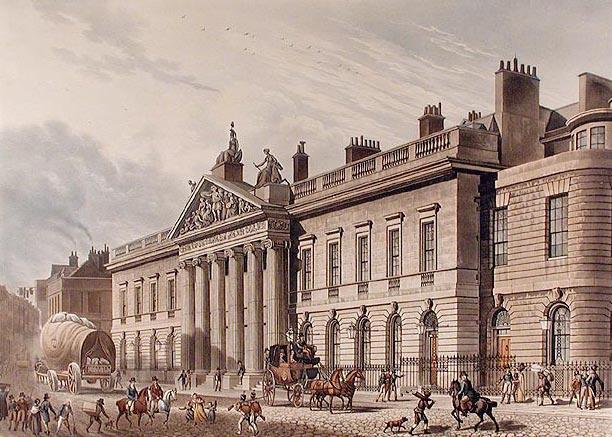
The model for colonial companies was already running in Asia. On December 31, 1600, Queen Elizabeth I granted a charter to "the Governor and Company of Merchants of London trading into the East Indies," on the petition of George, Earl of Cumberland, and 218 others. It gave the company a monopoly of English trade east of the Cape of Good Hope for fifteen years.2 The East India Company would later govern much of the Indian subcontinent with its own armies, and in 1773 its tea would be thrown into Boston Harbor. Its form, a body of merchant investors holding exclusive trade rights by royal grant, was a ready model when the Virginia venture was chartered six years later.

Virginia: three charters and a revocation
1606: a license with a constitution inside it
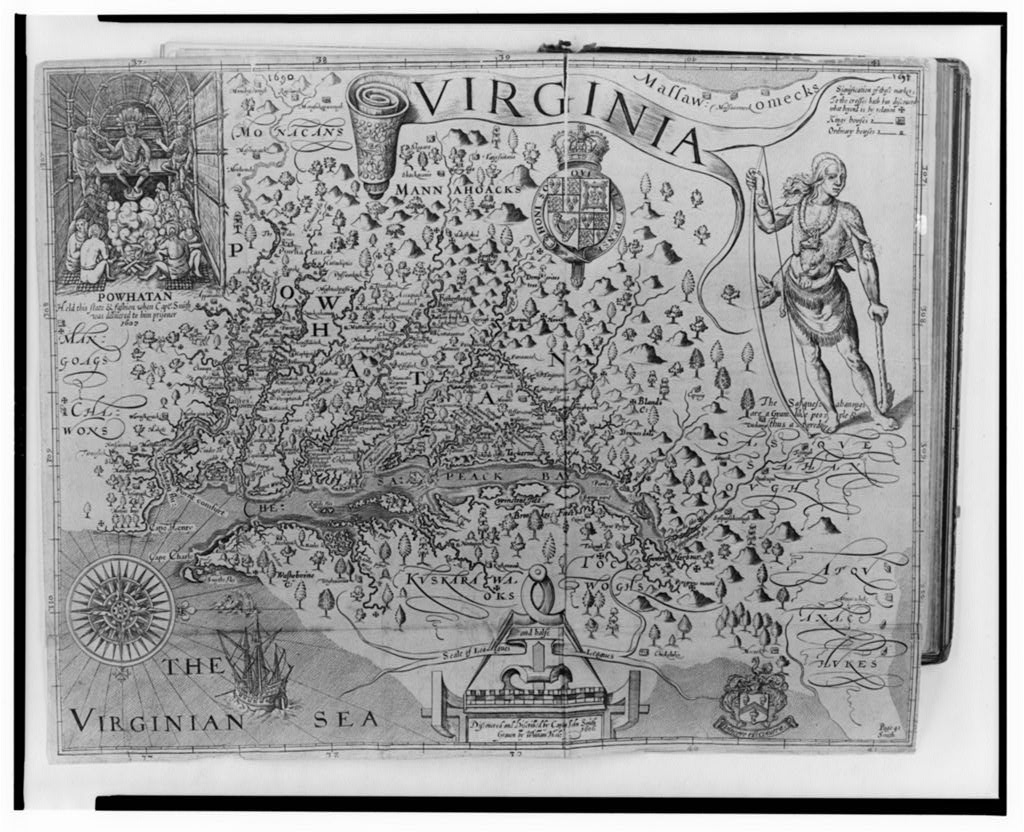
King James I signed the first Virginia charter at Westminster on April 10, 1606. It answered a petition from "Sir Thomas Gates, and Sir George Somers, Knights, Richard Hackluit, Clerk, Prebendary of Westminster, and Edward-Maria Wingfield," and others, who asked for "our Licence, to make Habitation, Plantation, and to deduce a colony of sundry of our People into that part of America commonly called VIRGINIA." The charter created two groups. Investors "of and for our City of London" would plant between 34 and 41 degrees of latitude. A second group "of the Town of Plimouth in the County of Devon" would plant between 38 and 45 degrees.3
The grant was broad. Each colony would have "all the Lands, Woods, Soil, Grounds, Havens, Ports, Rivers, Mines, Minerals, Marshes, Waters, Fishings, Commodities, and Hereditaments" for fifty miles along the coast from its first settlement. Each could mine for gold, silver and copper, "YIELDING therefore to Us, our Heirs and Successors, the fifth Part only of all the same Gold and Silver, and the fifteenth Part of all the same Copper." Each could even "establish and cause to be made a Coin."3 Land would be held "as of our Manor at East-Greenwich, in the County of Kent, in free and common Soccage only," a form of tenure without military service.3
Government was by council, and every council led back to the king. Each colony "shall have a Council, which shall govern and order all Matters and Causes," consisting "of thirteen Persons," governing "according to such Laws, Ordinances, and Instructions, as shall be, in that behalf, given and signed with Our Hand or Sign Manual." Above them sat "a Council, established here in England," also of thirteen persons "appointed by Us," called "our Council of Virginia," with "the superior Managing and Direction."3 The colonists elected nobody.
One clause pointed the other way, and the colonists would quote it for 170 years. All subjects dwelling in the colonies, and their children born there, "shall HAVE and enjoy all Liberties, Franchises, and Immunities, within any of our other Dominions, to all Intents and Purposes, as if they had been abiding and born, within this our Realm of England."3 When the Continental Congress declared in 1775 that the colonists' ancestors had formed "Societies or governments, vested with perfect legislatures, ... under charters from the crown," and the First Continental Congress in 1774 listed "the several charters or compacts" among the sources of colonial rights, they were standing on clauses like this one.45
1609: the company takes over
The second charter, dated May 23, 1609, reorganized the venture as a single corporation, "the Treasurer and Company of Adventurers and Planters of the City of London, for the first Colony in Virginia." Its list of grantees reads like a roll of the English establishment: earls, a bishop, the Lord Mayor of London, Sir Francis Bacon, and "Sir Thomas Smith," whom the charter ordained "to be Treasurer of the said Company." The grant of land now ran two hundred miles each way along the coast from Point Comfort "and all that Space and Circuit of Land, lying from the Sea Coast of the Precinct aforesaid, up into the Land throughout from Sea to Sea, West and Northwest."6 On paper, a London joint-stock company owned a strip of the continent to the Pacific.
The 1609 charter also shifted control from the Crown's appointees toward the investors. Council members would "be from henceforth nominated, chosen, continued, displaced, changed, altered and supplied ... by the Voice of the greater part of the said Company and Adventurers, in their Assembly for that Purpose," though each new councilor still swore an oath to the king.6 Shareholders, not settlers, chose the government of Virginia.
The economic privileges were generous. The company would be "free of all Subsidies and Customs in Virginia, for the space of one and twenty Years, and from all Taxes and Impositions for ever" on its goods, "EXCEPT only the five Pounds per Cent. due for Custom" on goods brought into England. It could seize the ships and goods of anyone trading in its territory without its license until they paid, "to the Hands of the Treasurer," five percent on goods brought in and five on goods shipped out, or ten percent each way for foreigners. It could repel by "Force and Arms" anyone who tried to settle without "the special Licence of the said Treasurer and Company."6 And its governor received "full Power and Authority, to use and exercise Martial Law in Cases of Rebellion or Mutiny."6
The charter ended with an instruction on how to read it. In "all Questions and Doubts that shall arise upon any difficulty of Construction or Interpretation," the text "shall be taken and interpreted in most ample and beneficial Manner for the said Treasurer and Company."6 Every ambiguity went to the company.
1612: shareholder courts and a lottery
A third charter, dated March 12 in the ninth year of James's reign (1612 by modern reckoning), gave the company "four Great and General Courts of the Council and Company of Adventurers for Virginia" each year, meetings of the investors with power over the colony. It also licensed the company "to set forth, erect, and publish, one or more Lottery or Lotteries" to raise money.7 A venture that needed a lottery license was a venture short of cash.
_-_discovered_and_discribed_(sic)_by_Captain_John_Smith_1606_(%3F)_William_Hole_LCCN2001695744.jpg)
1619 and 1621: the assembly the company created
The company's own reformers changed the colony's government in 1618 and 1619. In April 1619 Governor George Yeardley arrived announcing, in the National Park Service's account, that "the Company, in an effort to improve the social conditions of the colony, had voted for the abolition of martial law and the creation of a legislative assembly." Its members would be "the Governor and Counsell with two Burgesses from each Plantation freely to be elected by the inhabitants thereof." The 22 burgesses met with Yeardley and the council on July 30, 1619, in the church at Jamestown, chose John Pory, a former member of Parliament, as Speaker, and sat for six days. One burgess died in the heat. They approved the company's "greate Charter" of 1618 that had created them, passed laws on drunkenness, idleness and gambling, considered laws on relations with the Powhatan peoples, required church attendance, sat once as a court and, on August 4, passed a poll tax of "one pound of the best Tobacco" per man and servant to pay the assembly's officers.8
The company put the arrangement in writing on July 24, 1621. Its "Ordinance and Constitution ... for a Council of State and General Assembly" provided that the assembly would meet yearly and consist of the Council of State "and of two Burgesses out of every Town, Hundred, or other particular Plantation, to be respectively chosen by the Inhabitants." Matters would be decided "by the greater Part of the Voices then present; reserving to the Governor always a Negative Voice." The assembly had "free Power ... to make, ordain, and enact such general Laws and Orders, for the Behoof of the said Colony."9
The limit came in section VI: "no Law or Ordinance, made in the said General Assembly, shall be or continue in Force or Validity, unless the same shall be solemnly ratified and confirmed, in a General Quarter Court of the said Company here in England." The company promised in return that once the colony's government was "well framed, and settled," no company order would bind the colony unless the assembly ratified it.9 That reciprocal veto, written by a business corporation for a settlement it owned, is an early statement of the principle that laws should bind only with the consent of those who live under them.
1624: judged by results
By 1624 the company had lost its charter. King James's commission to Governor Francis Wyatt, dated August 26, 1624, explains why in the Crown's own words. Royal commissioners had reported that the colonists "were most of them by Gods visitacions sicknes of bodie famine and by massacres of them by the native savages of the land dead and deceased." The land was "fruitfull and healthfull" and could produce "divers good and staple comodities," but "in the sixteene yeares government past it had yealded fewe or none, And that this neglecte they conceaved must fall on the governors and companie here whoe had power to direct the plantacions." When the company refused to "submit their charters to be reformed," the Crown brought "a quo warranto ... and a legall and judiciall proceeding therin by due course of laws the said charters were and nowe are and stand avoyded."10 Virginia became a royal colony with a governor appointed by the king.
Whatever the Crown's political motives, the stated ground was performance. The colony's people were dying and its trade had failed. The remedy ran through a court, by the writ Blackstone described. And the General Assembly survived the company that created it. The House of Burgesses sat until 1776, when the Virginia House of Delegates succeeded it.11
Massachusetts Bay: the company that moved
The Massachusetts Bay charter, dated March 4, 1629, followed the corporate pattern. It made its grantees "one Body corporate and politique in Fact and Name, by the Name of the Governor and Company of the Mattachusetts Bay in Newe-England," with "perpetuall Succession" and the right "to implead, and to be impleaded." It provided for "one Governor, one Deputy Governor, and eighteene Assistants of the same Company, to be from tyme to tyme constituted, elected and chosen out of the Freemen of the saide Company," and for four "grease and generall Courts" a year (the Avalon transcription's spelling of "great").12 The company could make laws and ordinances "soe as such Lawes and Ordinances be not contrarie or repugnant to the Lawes and Statuts of this our Reaime of England."12 The king reserved "the fifte Parte of the Oare of Gould and Silver."12
What the charter did not say turned out to matter most. It did not fix where the company's general court had to meet. On August 26, 1629, twelve investors, John Winthrop and Thomas Dudley among them, signed the Agreement of Cambridge, binding themselves "in the word of a Christian and in the presence of God who is the searcher of all hearts" to sail for New England by the following March. They attached one condition: "that before the last of September next the whole gouernement together with the Patent for the said plantacion bee first by an order of Court legally transferred and established to remayne with vs and others which shall inhabite vpon the said plantacion."13 The company did transfer its government, and in 1630 the charter itself crossed the Atlantic with Winthrop aboard the Arbella, arriving at Salem in June.14 A London trading corporation became, by function, a self-governing commonwealth whose shareholders were its settlers.
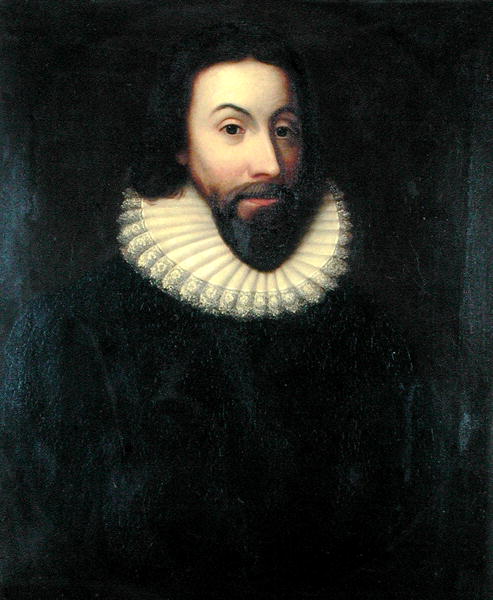

That transformation is the clearest colonial example of the name versus function test. The charter's name stayed the same. Its function changed completely. The Crown eventually noticed. In 1684 the Court of Chancery, on a writ of scire facias, ruled that the 1629 letters patent "should be cancelled vacated and annihilated." When William and Mary issued a new charter on October 7, 1691, the terms were different. There would be "one Goverour One Leivtent or Deputy Governour and One Secretary" of the province, "to be from time to time appointed and Commissionated by Vs Our Heires and Successors."15 The governor now came from London. The council of twenty-eight was still chosen in the province, but every law passed there had to be sent to the king, and any law "disallowed and rejected" in the Privy Council within three years "shall thenceforth cease and determine and become vtterly void and of none effect."15
The proprietors: Maryland and Pennsylvania
Maryland, 1632
Proprietary colonies took a different form. Instead of a corporation, the Crown granted a province to one man and his heirs. The Maryland charter, given at Westminster "the Twentieth Day of June, in the Eighth Year of our Reign" of Charles I (1632), made Cecil Calvert, Baron of Baltimore, "and his Heirs, the true and absolute Lords and Proprietaries of the Region aforesaid," saving only "the Faith and Allegiance and Sovereign Dominion due to Us." The rent was symbolic: "Two Indian Arrows of these Parts, to be delivered at the said Castle of Windsor, every Year, on Tuesday in Easter Week," along with "the fifth Part of all Gold and Silver Ore."16 Calvert received powers "as any Bishop of Durham, within the Bishoprick or County Palatine of Durham, in our Kingdom of England, ever heretofore hath had," a reference to the most nearly sovereign lordship in the English realm.16
The Maryland charter nevertheless bound the proprietor to consult the settlers. He held "free, full, and absolute Power ... to Ordain, Make, and Enact Laws," but only "of and with the Advice, Assent, and Approbation of the Free-Men of the same Province, or the greater Part of them, or of their Delegates or Deputies."16 And the king covenanted that he and his successors "at no Time hereafter, will impose, or make or cause to be imposed, any Impositions, Customs, or other Taxations, Quotas, or Contributions whatsoever" on the inhabitants for their goods, lands or tenements in the province.16

Pennsylvania, 1681
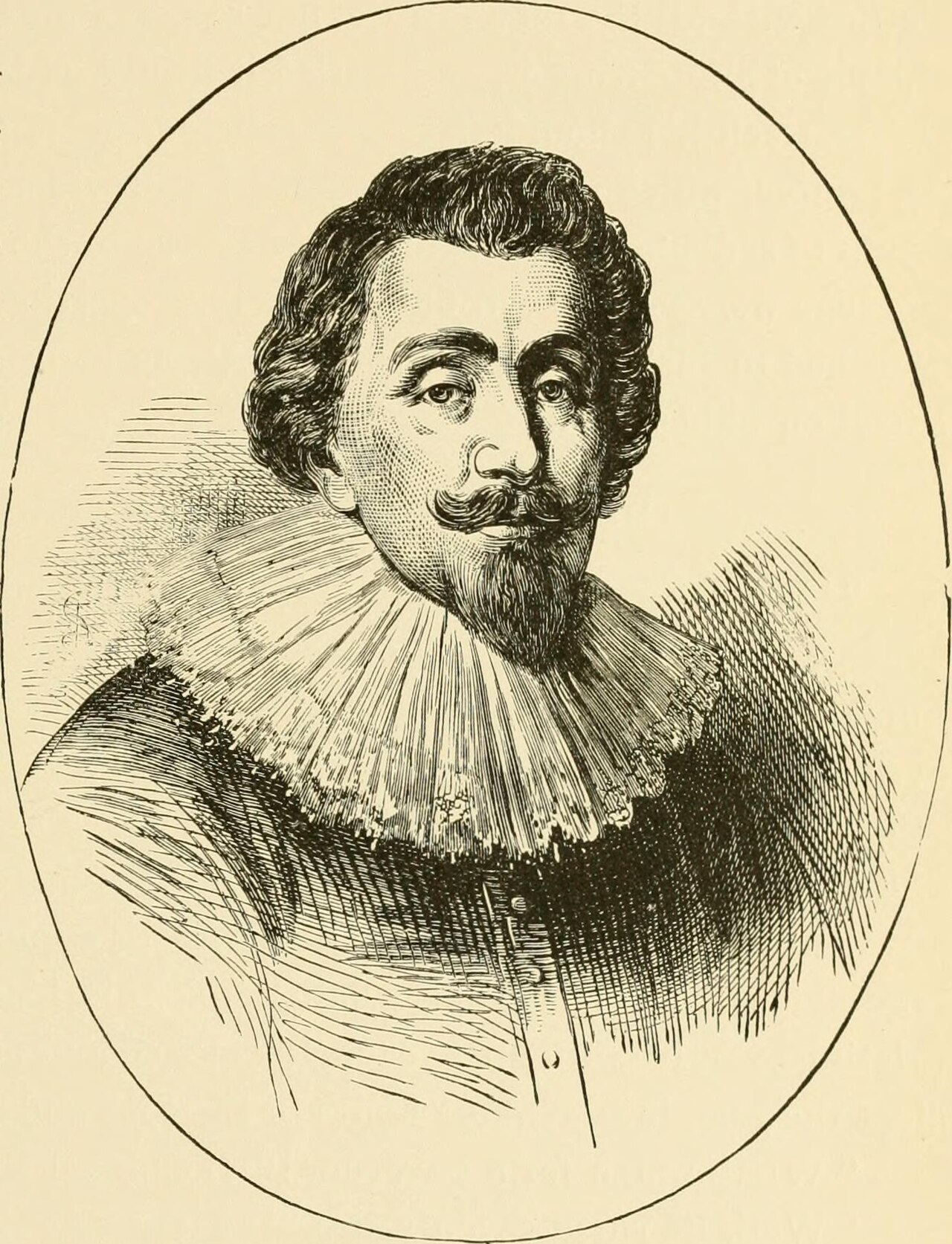
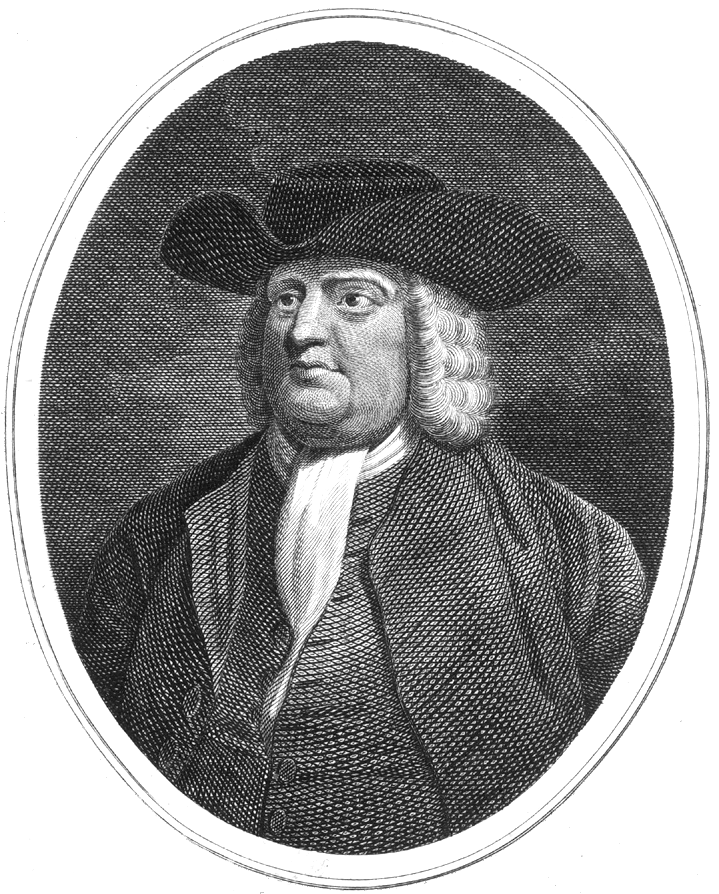
Fifty years later the Crown's terms had tightened. The charter Charles II granted to William Penn, given under the privy seal at Westminster on February 28 in the thirty-third year of his reign (1681), rewarded, in its own words, "the Memorie and Meritts of his late Father in divers Services," naming Admiral William Penn's part in the 1665 naval victory over the Dutch.17 The Crown also owed the Penn family a debt, commonly given as £16,000, which the grant settled.18 Penn's rent was "Two Beaver Skins, to bee delivered at Our said Castle of Windsor on the First Day of January in every Year," plus a fifth of gold and silver ore.17 Like Calvert, Penn could make laws only "by and with the advice, assent, and approbation of the Freemen of the said Countrey, or the greater parte of them, or of their Delegates or Deputies."17
New clauses show how the empire had learned from its experience with the earlier charters. Penn had to keep "an Attorney or Agent, to Reside in or neare our City of London," ready to answer in the courts at Westminster "for any Misdemeanors that shall be committed" against the trade laws.17 Every law made in Pennsylvania had to be sent to the Privy Council "within five yeares after the makeing thereof," and if within six months the Council declared any of them "inconsistent with the Sovereigntey or lawful Prerogative" of the Crown, "such Lawes ... shall become voyd."17 And where the Maryland charter had promised no royal taxes at all, the Pennsylvania charter promised none "unless the same be with the consent of the Proprietary, or chiefe governor, or assembly, or by act of Parliament in England."17 That last phrase reserved to Parliament the very power the colonists would deny it in 1765.

The Navigation Acts: law as trade policy
Charters governed the colonies from the inside. From 1651 on, Parliament governed their trade from the outside, through a series of statutes that historians call the Navigation Acts or the Acts of Trade.
The first, passed by the Commonwealth Parliament on October 9, 1651, aimed squarely at the Dutch carrying trade. From December 1, 1651, "no Goods or Commodities whatsoever, of the Growth, Production or Manufacture of Asia, Africa or America" could be brought into England, Ireland or the plantations "in any other Ship or Ships, Vessel or Vessels whatsoever, but onely in such as do truly and without fraud belong onely to the People of this Commonwealth, or the Plantations thereof," with masters and most mariners English. The penalty was forfeiture of goods and ship, "the one moyety to the use of the Commonwealth, and the other moyety to the use and behoof of any person or persons who shall seize the said Goods."19 Half of every seizure went to the person who made it. Enforcement had become a commission business.
The restored monarchy re-enacted and extended the system. The act of 1660 (12 Car. II c. 18) created the "enumerated" commodities: from April 1, 1661, "noe Sugars Tobaccho Cotton Wool Indicoes Ginger Fustick or other dyeing wood" grown in the English plantations could be shipped anywhere but to other English plantations or to England, Ireland, Wales or Berwick, on pain of forfeiture of goods and ship.20 Virginia's tobacco could go only to England.
The act of 1663, "An Act for the Encouragement of Trade," closed the other side. From March 25, 1664, no goods "of the Growth Production or Manufacture of Europe" could be imported into the plantations unless shipped from England in English-built ships. The act gave its purpose plainly: keeping the colonists "in a firmer dependance upon" England, "rendring them yet more beneficiall and advantagious unto it," and "makeing this Kingdome a Staple" for the goods of the plantations and of other countries. Forfeitures were split in thirds: "one third parte to His Majestie," one third "to the Governour" of the colony where the goods were seized, "and the other Third parte to him or them who shall seise informe or sue for the same."21 Every colonial governor had to swear an oath to enforce the act, on penalty of removal and a fine of one thousand pounds.21 So the governor sworn to enforce the law also took a third of what was seized.
The act of 1696, "An Act for preventing Frauds and regulating Abuses in the Plantation Trade," given royal assent on April 10, 1696, tightened enforcement and moved it toward courts without juries.22 Penalties could be recovered in the courts at Westminster, in Ireland, "or in the Court of Admiralty held in His Majesties Plantations respectively where such Offence shall bee committed att the Pleasure of the Officer or Informer." In any dispute over importation or exportation, "the Proofe shall lye upon the Owner or Claymer." And section VIII declared that all colonial "Lawes By-lawes Usages or Customes" that were "in any wise repugnant" to the trade acts, or to any future English law relating to the plantations, "are illegall null and void to all Intents and Purposes whatsoever."23 Three features that colonists would protest in the 1760s, the officer's choice of a juryless forum, the burden of proof on the owner and the voiding of colonial law, were already on the books in 1696. Lesson 4 follows them forward.
One more statute belongs here because the Sugar Act of 1764 grew out of it. The Molasses Act of 1733 (6 Geo. II), titled "An act for the better securing and encouraging the trade of his Majestys sugar colonies in America," taxed foreign molasses heavily to protect British sugar islands against French competition. The Sugar Act's own preamble recites that the 1733 act had been continued again and again since then.24 It was widely evaded.22
Mercantilism as a partnership of state and capital
The policy behind these acts is usually called mercantilism, a term made famous by its most influential critic. Module 51 treats the theory in full (see Mercantilism). The institutional point is narrower. The charters and the Navigation Acts created a working partnership between the Crown and favored private capital. The Crown supplied land, monopoly, legal privilege and naval protection. The companies and merchants supplied money, ships and settlers. Both shared the returns: the king's fifth of precious metals, the customs on enumerated goods, the moieties and thirds of every forfeiture.
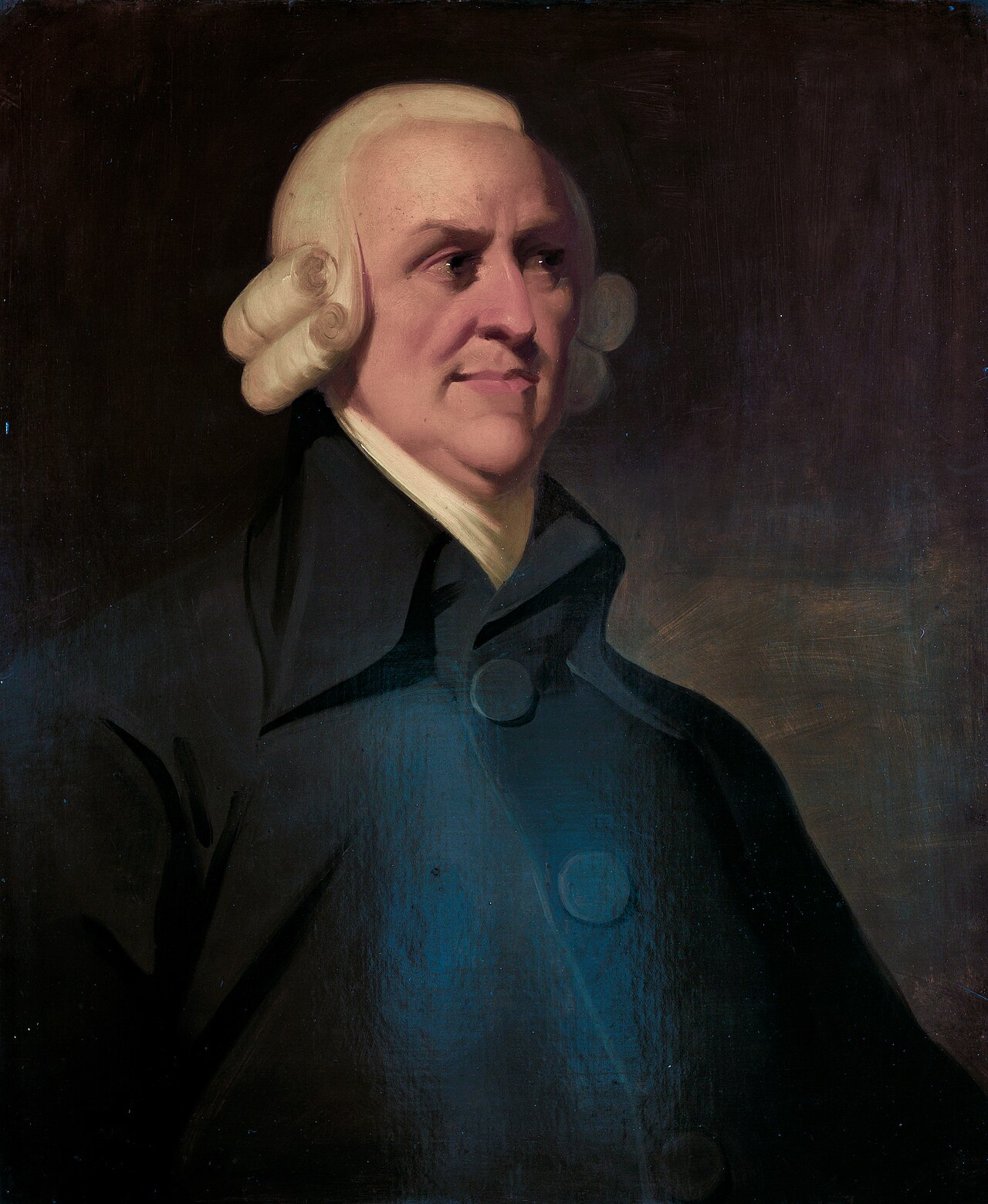
Adam Smith devoted chapter VII of Book IV of The Wealth of Nations (1776), "Of Colonies," to this system. His verdict on company rule was blunt: "The government of an exclusive company of merchants is, perhaps, the worst of all governments for any country whatever."25 On the colonial trade restraints he wrote: "To prohibit a great people, however, from making all that they can of every part of their own produce, or from employing their stock and industry in the way that they judge most advantageous to themselves, is a manifest violation of the most sacred rights of mankind."25 And he described the political economy of the whole enterprise in one passage:
"To found a great empire for the sole purpose of raising up a people of customers, may at first sight, appear a project fit only for a nation of shopkeepers. It is, however, a project altogether unfit for a nation of shopkeepers, but extremely fit for a nation whose government is influenced by shopkeepers."25
Smith's diagnosis was about influence. The system served the merchants who had the ear of government, and he summarized the result in chapter VIII: "in the mercantile system, the interest of the consumer is almost constantly sacrificed to that of the producer."26 He did make one notable exception. Of the Navigation Act, which he said "the long parliament" had "first framed" and whose rules he described as they stood after the Restoration statutes, he wrote: "As defence, however, is of much more importance than opulence," that act was "perhaps, the wisest of all the commercial regulations of England."27 The founder of free-trade economics thought a trade restriction could be justified by national security. That exception still drives arguments over trade policy, as lesson 16 shows.

Royal review of colonial laws
If the Navigation Acts governed trade, the Privy Council governed colonial legislation. Its machinery took final shape in 1696.
Charles II had first put colonial affairs under a Privy Council committee in 1660. "On 4 July 1660 a Committee of the Council for Foreign Plantations was established which, in one form or another, continued to exist until 1696," the official history of the Boards of Trade records. In 1696 that committee "was dissolved and replaced by a Council or Board, appointed by letters patent under the great seal, which remained responsible for trade and plantation affairs until 1782." The Board had "a body of salaried Commissioners," fixed "in principle at eight," presided over by the First Lord of Trade. Its first staff, "a Secretary, a Deputy Secretary, four Clerks, two Office Keepers, two Messengers and a Necessary Woman," cost "£1090 a year."28
On paper the Board advised. "The functions of the Board tended to be of an advisory nature, executive authority in colonial matters being vested in the Secretary of State who had charge of the Southern Department." Its powers rose and fell with its leaders. Under the Earl of Halifax it gained, in 1752, "the right to nominate colonial officials" and the duty of "corresponding with colonial Governors"; the first was withdrawn when Halifax left in 1761 and the second in 1766. In 1768 the Board was placed "under the immediate direction of the Secretary of State for the Colonies," a new office. It was abolished in 1782.28 An office created to advise on trade lasted 86 years and was abolished only after the war in America was lost.
Its most consequential work was reviewing colonial statutes. Each colony's laws came to London, the Board's lawyers compared them with English law and the Board recommended whether the Privy Council should allow or disallow them. Scholars count the results. One study, quoted in the Virginia Law Review in 2020, found that "Of some 8,563 acts submitted for approval, it disallowed 469," and another put it as "approximately 8563 were sent for review and 469 (5.5%) disallowed." The guiding test was whether colonial legislation was "'repugnant' to the laws of England," the same standard the Massachusetts charter had written into its grant in 1629.29
Five and a half percent sounds modest. It meant that every colonial legislature passed every law knowing it could be undone, months or years later, by a board in London that the colonists did not choose and could not lobby except through paid agents. The Pennsylvania charter had given the Council five years to receive a law and six months more to void it.17 The 1691 Massachusetts charter gave three years.15 And by 1774 the First Continental Congress was complaining that "the exercise of legislative power in several colonies, by a council appointed, during pleasure, by the crown, is unconstitutional, dangerous and destructive to the freedom of American legislation."5 The royal review of colonial laws is also, as legal historians have noted, one of the ancestors of American judicial review,29 a reminder that the same institutional form can serve very different ends.
Royal governors and the assemblies
The 1691 Massachusetts charter shows the shape most colonies took by the eighteenth century: a governor "appointed and Commissionated" by the Crown, a council and an elected assembly, with every law subject to royal disallowance.15 The 1663 trade act required every colonial governor to swear an oath to enforce the trade laws, on pain of removal and a fine of one thousand pounds, so the governor answered upward for the empire's commercial policy as well as for its politics.21
The assemblies held one great counterweight: money. The Virginia burgesses voted their first tax in 1619, a poll tax payable in tobacco to the assembly's own officers.8 Colonial legislatures guarded the power to tax and appropriate for the next century and a half. The Townshend Revenue Act of 1767 shows how much that power mattered to London, because its stated purpose was "making a more certain and adequate provision for defraying the charge of the administration of justice, and the support of civil government" out of American customs revenue, by royal warrant.30 A Crown that needed "more certain" provision for its officials was a Crown whose officials had depended on assemblies for their pay. Lesson 4 follows what happened next.
Historians call the decades before 1763 an era of "salutary neglect" on England's part, when trade-law enforcement was weakened by bribery, smuggling and poor appointments.31 The State Department's historians summarize the turn that ended it: "In 1763, the British government emerged from the Seven Years' War burdened by heavy debts," which led Prime Minister George Grenville "to reduce duties on sugar and molasses but also to enforce the law more strictly." Because enforcement "had previously been lax," stricter collection raised revenue for the British government and "served to increase the taxes paid by the colonists."32 The institutions in this lesson were already built. After 1763 the Crown started using them at full strength.
| Charter or act | Date | Granted by | Who governed | Royal check |
|---|---|---|---|---|
| First Virginia charter | April 10, 1606 | James I | Councils of 13 under royal instructions | Royal Council of Virginia in England |
| Second Virginia charter | May 23, 1609 | James I | Treasurer and council chosen by investors | Councilors' oath to the king |
| Virginia General Assembly ordinance | July 24, 1621 | Virginia Company | Governor, council and elected burgesses | Company court must ratify laws |
| Massachusetts Bay charter | March 4, 1629 | Charles I | Governor, deputy and 18 assistants elected by freemen | Laws not "repugnant" to English law |
| Maryland charter | June 20, 1632 | Charles I | Proprietor with assent of freemen | Allegiance; no royal taxes promised |
| Pennsylvania charter | February 28, 1681 | Charles II | Proprietor with assent of freemen | Laws to Privy Council within 5 years |
| Massachusetts charter | October 7, 1691 | William and Mary | Royal governor; elected council | Laws voidable within 3 years |
| Plantation Trade Act | April 10, 1696 | Parliament | Customs officers and admiralty courts | Repugnant colonial laws "null and void" |
Through Pierson's Framework
The colonial charters are a test case for Pierson's warning that unaccountable power "can be exercised through courts, agencies, corporations," and not only through government.33 The Virginia Company was a corporation exercising martial law. Its governing council was chosen by investors in London. Its colonists had, at first, no voice in the laws that bound them. By the first test of the framework, accountability to the governed, the 1609 charter failed.
The record also shows the first counterweights to that failure. The Crown judged the company by results and revoked its charter through a court. The company's own reformers created an elected assembly, and wrote that laws from London should not bind the colony unless its assembly agreed. And the colonists claimed the charter's promise of "all Liberties, Franchises, and Immunities" of Englishmen as their own, which turned a royal grant into a source of rights against the Crown.3 Pierson's ordered liberty asks for exactly that combination: citizens who hold government to account and who build legitimate government in its place. The House of Burgesses fits that description better than any other institution in this lesson.
The function test produces the lesson's sharpest contrasts. Massachusetts Bay kept the name of a trading company while it became a commonwealth governed by its settlers. The Board of Trade kept the name of an advisory body while its recommendations voided hundreds of colonial laws. The Navigation Acts carried the name of shipping laws while they built a revenue system in which officials shared in what they seized. In each case the title flattered the institution and the record told on it.
Did any of these institutions begin to defend themselves on habit? The Board of Trade's long life after it lost its most important powers in 1761 and 1766 is suggestive, and the whole system's turn in 1763 from neglect to strict enforcement shows how dormant powers could be revived without new consent.2832 That is what Pierson's image of "tyranny by sediment" describes: power laid down in one generation, unused for a time, and then found ready when someone needs it.34 His essay names the danger point: "When survival becomes the end, rather than a byproduct of service, then manipulation replaces meaning."35 The colonists of 1763 had not yet seen that turn.
Hard Questions and Answers
The charters were lawful acts of a lawful king. Isn't judging them by modern ideas of consent just anachronism dressed up as analysis?
They were lawful under English law, and the module does not claim otherwise. The consent standard, though, comes from the charters themselves. The Maryland and Pennsylvania charters themselves required laws to be made with "the Advice, Assent, and Approbation of the Free-Men."1617 The Virginia Company wrote in 1621 that company orders should not bind the colony unless its assembly ratified them.9 Consent was a seventeenth-century idea written into seventeenth-century documents. The question is how fully it was honored, and that question is fair to ask of the period on its own terms.
The colonies grew and prospered. Isn't that the only verdict on the corporate model that counts?
Some did, and on a scale no one predicted. The corporate model also failed spectacularly in its first test. The Crown's own commission of 1624 records that most Virginia colonists had died and that sixteen years had produced "fewe or none" of the promised goods.10 Smith argued that the colonies prospered in spite of company government, which "rendered it more slow and languid" where it held sway.25 The colonies that thrived longest, such as Massachusetts and Pennsylvania, did so after their settlers gained real control of their own government. That pattern supports the framework's claim that accountability and performance tend to travel together.
The Navigation Acts were defense and shipping policy. Isn't "partnership of state and capital" a modern slogan pasted onto them?
Defense was a real purpose, and Smith himself called the Navigation Act "perhaps, the wisest of all the commercial regulations of England" for that reason.27 The acts' own words show other purposes too. The 1663 act said it aimed to keep the colonists "in a firmer dependance" and to make England "a Staple" for colonial trade.21 The money clauses gave shares of every forfeiture to the king, the governor and the informer.21 A policy can serve defense and favored commerce at the same time. The label "partnership" describes the second function without denying the first.
Royal review shielded colonists from their own local majorities. Isn't this lesson romanticizing assemblies that could abuse power too?
Assemblies could, and sometimes review did protect colonists from them. The review standard was conformity with English law, and English law protected some rights better than some colonial statutes did. Legal historians trace American judicial review partly to this practice.29 The concession matters for the framework: a check imposed from outside can protect liberty. What the colonists objected to by 1774 was that the reviewing body was appointed "during pleasure, by the crown" and answerable only to it.5 The objection was to the reviewers' lack of accountability, and later Americans kept the idea of review while giving it to judges under a constitution the people had ratified.
Pages on charters and trade laws, and little on the Native nations and enslaved Africans who lost the most under them. Isn't that a convenient silence?
It leaves a great deal out, and readers should know what. The charters granted land the Powhatan, Susquehannock, Lenape and many other nations already occupied, and the 1624 commission refers to them only as "native savages" responsible for "massacres."10 The enumerated commodities of 1660, sugar, tobacco, cotton and indigo, were grown increasingly by enslaved Africans.20 This module's subject is the institutional form and its accountability to those it governed. For most of the people who lived under these institutions, that accountability was nonexistent, which is the starkest application of the framework's first test.
Learn more
- The Second Charter of Virginia, 1609: the full grant "from Sea to Sea," martial law and all.
- Virginia Company Ordinance for a General Assembly, 1621: the company's written constitution for Virginia's legislature.
- The Charter of Massachusetts Bay, 1629: the corporate charter that became a commonwealth.
- Charter for the Province of Pennsylvania, 1681: proprietary grant with Privy Council review built in.
- Plantation Trade Act, 1696: the statute that voided "repugnant" colonial laws.
- Adam Smith, The Wealth of Nations, Book IV: the classic critique of the mercantile system and its colonies.
- Blackstone, "Of Corporations": how English law understood the corporate charter.
- National Park Service, The First Legislative Assembly: the Jamestown assembly of 1619.
- Module 51, Mercantilism: the economic theory behind the Navigation Acts.
Notes
- William Blackstone, Commentaries on the Laws of England, Book 1, chapter 18, "Of Corporations" (1765), pp. 455-473, Avalon Project, Yale Law School (long-s spellings modernized in quotation; the Avalon transcription reads "by act of parliament of charter," an evident typing error for "or"). Read it online. ↩
- Charter granted by Queen Elizabeth to the Governor and Company of Merchants of London, Trading into the East-Indies, dated December 31, 1600, in the forty-third year of her reign, in John Shaw, ed., Charters Relating to the East India Company from 1600 to 1761 (Madras: Government Press, 1887), pp. 1 to 15 (petition of "George, Earl of Cumberland," and 218 named others; trade "beyond the Cape of Bona Esperanza" for "the Space of Fifteen Years"). Read it online. Summary also in "East India Company," Wikipedia. Read it online. ↩
- The First Charter of Virginia, April 10, 1606, Avalon Project, Yale Law School, from Francis Newton Thorpe, ed., The Federal and State Constitutions (1909). The Avalon text garbles the first grantee's name as "Sir Thorn as Gales"; the name is given here as Sir Thomas Gates. Read it online. ↩
- A Declaration by the Representatives of the United Colonies of North-America ... Setting Forth the Causes and Necessity of Their Taking Up Arms (1775), Avalon Project, Yale Law School. Read it online. ↩
- Declaration and Resolves of the First Continental Congress, October 14, 1774, Avalon Project, Yale Law School. Read it online. ↩
- The Second Charter of Virginia, May 23, 1609, Avalon Project, Yale Law School. Read it online. ↩
- The Third Charter of Virginia, March 12, 1611 (1612 by modern reckoning), Avalon Project, Yale Law School. Read it online. ↩
- National Park Service, Historic Jamestowne, "The First Legislative Assembly." Read it online. ↩
- "An Ordinance and Constitution of the Treasurer, Council, and Company in England, for a Council of State and General Assembly," July 24, 1621, Avalon Project, Yale Law School. Read it online. ↩
- King James I, Commission to Sir Francis Wyatt, Governor, August 26, 1624, in National Park Service, Jamestown: In the Words of Contemporaries (NPS Source Book 5), section 18. Read it online. ↩
- "House of Burgesses," Wikipedia (established 1619; succeeded by the Virginia House of Delegates in 1776). Read it online. The Constitution of Virginia of 1776 created a General Assembly of two branches, one "called, The House of Delegates," in Thorpe, The Federal and State Constitutions (1909), vol. 7, Wikisource. Read it online. ↩
- The Charter of Massachusetts Bay, March 4, 1629, Avalon Project, Yale Law School. Read it online. ↩
- "The true coppie of the Agreement of Cambridge, August. 26. 1629," Winthrop Papers, volume 2, Winthrop Papers Digital Edition, Massachusetts Historical Society. Read it online. ↩
- John Winthrop, Winthrop's Journal, "History of New England," 1630-1649, ed. James Kendall Hosmer (New York: Charles Scribner's Sons, 1908), vol. 1, pp. 23 to 24 (entry of March 29, 1630, aboard the Arbella at Cowes) and p. 49 (entry of Saturday, June 12, 1630, anchoring off Salem, then called Naumkeag; Savage's note that Endecott's commission was "superseded by the arrival of Winthrop with the charter"). Read it online. See also "Arbella," Wikipedia. Read it online. ↩
- The Charter of Massachusetts Bay, October 7, 1691, Avalon Project, Yale Law School. Read it online. ↩
- The Charter of Maryland, June 20, 1632, Avalon Project, Yale Law School. Read it online. ↩
- Charter for the Province of Pennsylvania, February 28, 1681, Avalon Project, Yale Law School. Read it online. Avalon prints "the greater parse of them"; the Wikisource transcription of the same Thorpe edition reads "the greater parte of them," and the lesson follows it. Read it online. ↩
- Historical Society of Pennsylvania, Penn Family Papers (Collection 485A), finding aid, biographical note ("it was in repayment of a debt of roughly £16,000 owed to Admiral Penn from Charles II that his oldest son William Penn was granted the colony of Pennsylvania in 1681"), Philadelphia Area Archives. Read it online. The figure is the traditional one in secondary accounts; it does not appear in the charter text. See also "Province of Pennsylvania," Wikipedia. Read it online. ↩
- Act of October 9, 1651 "for increase of Shipping," in Acts and Ordinances of the Interregnum, 1642-1660, ed. C. H. Firth and R. S. Rait (London, 1911), pp. 559-562, British History Online. Read it online. ↩
- 12 Car. II c. 18 (1660), section XVIII, in Statutes of the Realm: Volume 5, 1625-80, ed. John Raithby (1819), British History Online. Read it online. ↩
- "Charles II, 1663: An Act for the Encouragement of Trade" (15 Car. II c. 7), sections IV and VI, in Statutes of the Realm: Volume 5, 1625-80, British History Online. Read it online. ↩
- "Navigation Acts," Wikipedia, sections on the 1696 act (royal assent on 10 April 1696) and the Molasses Act 1733 (heavy duties on French West Indies sugar products; "widely flouted"). Used for a date and for an uncontested summary only. Read it online. ↩
- "William III, 1695-6: An Act for preventing Frauds and regulating Abuses in the Plantation Trade" (7 & 8 Will. III c. 22), sections VI and VIII, in Statutes of the Realm: Volume 7, 1695-1701, British History Online. Read it online. ↩
- The Sugar Act (4 Geo. III c. 15), 1764, section IV (reciting the act of 6 Geo. II "for the better securing and encouraging the trade of his Majestys sugar colonies in America"), Avalon Project, Yale Law School. Read it online. ↩
- Adam Smith, An Inquiry into the Nature and Causes of the Wealth of Nations (1776), Book IV, chapter VII, "Of Colonies," Project Gutenberg eBook 3300. Read it online. ↩
- Adam Smith, Wealth of Nations (1776), Book IV, chapter VIII, "Conclusion of the Mercantile System," Project Gutenberg eBook 3300. Read it online. ↩
- Adam Smith, Wealth of Nations (1776), Book IV, chapter II, "Of Restraints upon Importation from Foreign Countries of such Goods as can be Produced at Home," Project Gutenberg eBook 3300. Read it online. ↩
- J. C. Sainty, ed., Office-Holders in Modern Britain: Volume 3, Officials of the Boards of Trade 1660-1870 (London, 1974), introduction, British History Online. Read it online. ↩
- Justin W. Aimonetti, "Colonial Virginia: The Intellectual Incubator of Judicial Review," Virginia Law Review 106 (2020): 765, at 766-767 and notes 2-3, quoting Leon T. David, 12 Am. U. L. Rev. 23, 32 (1963), and Sharon Hamby O'Connor and Mary Sarah Bilder, 104 Law Libr. J. 83, 85 (2012). Read it online. ↩
- The Townshend Revenue Act (7 Geo. III c. 46), 1767, preamble and section V, Avalon Project, Yale Law School. Read it online. ↩
- Journal of the American Revolution, "Vice-Admiralty Courts and Writs of Assistance" (January 2015). Read it online. ↩
- Office of the Historian, U.S. Department of State, "Parliamentary Taxation of Colonies, International Trade, and the American Revolution, 1763-1775," Milestones in the History of U.S. Foreign Relations. Read it online. ↩
- Jeff A. Pierson, Ordered Liberty Reclaimed: A Foundation for Liberty. Read it online. ↩
- Jeff A. Pierson, "The Anti-Federalist Warning: Institutional Power and the Fragility of Liberty," appendix to Ordered Liberty Reclaimed. Read it online. ↩
- Jeff A. Pierson, "The Acacia Illusion: How Institutionalism Mimics Nature's Most Subtle Manipulation," in The Ordered Liberty Papers (2025). Read it online. ↩
Terms in this lesson
- Letters patent
- An open royal grant under the Great Seal conferring land, rights or corporate status, such as the colonial charters.
- Joint-stock company
- A corporation owned by investors who pool capital and share profits, like the East India Company and the Virginia Company.
- Proprietary colony
- A colony granted to an individual and his heirs as lord proprietor, such as Maryland (Calvert) and Pennsylvania (Penn).
- Quo warranto
- A writ demanding by what warrant a body exercises its powers; used to void the Virginia Company's charters in 1624.
- Enumerated commodities
- Colonial goods, such as sugar, tobacco, cotton and indigo, that the 1660 act allowed to be shipped only to England or English plantations.
- Repugnancy principle
- The rule that colonial laws could not be contrary to the laws of England, enforced by Privy Council disallowance.
- Disallowance
- The Privy Council's voiding of a colonial statute on the Board of Trade's advice; about 469 of some 8,563 reviewed acts.
- Board of Trade
- The Council of Trade and Plantations, created in 1696 by letters patent to advise on colonial trade and laws, abolished in 1782.
- Moiety
- A half share; the Navigation Acts gave a moiety or a third of forfeitures to the person who seized and sued.
- Salutary neglect
- Historians' name for loose British enforcement of colonial trade law before 1763.
Sources
- The First Charter of Virginia, 1606 checked 2026-10
- The Second Charter of Virginia, 1609 checked 2026-10
- Virginia Company Ordinance for a General Assembly, 1621 checked 2026-10
- The Charter of Massachusetts Bay, 1629 checked 2026-10
- The Charter of Maryland, 1632 checked 2026-10
- Charter for the Province of Pennsylvania, 1681 checked 2026-10
- Navigation Act of 1651 (British History Online) checked 2026-10
- Plantation Trade Act, 1696 (Statutes of the Realm) checked 2026-10
- Sainty, Officials of the Boards of Trade 1660-1870 checked 2026-10
- Adam Smith, The Wealth of Nations (Project Gutenberg) checked 2026-10