Lesson 8 of 12 · about 26 minutes
Slavery, Abolition and the Arts
You'll be able to
- Explain why the Wedgwood medallion of 1787 and the Brookes diagram of 1788-89 were such effective pieces of persuasion
- Describe the narratives of Frederick Douglass (1845), Solomon Northup (1853) and Harriet Jacobs (1861) and what each one proved that white authors could not
- Give the verified sales and stage history of Uncle Tom's Cabin and separate it from the legends that grew up around it
- Name Black artists and writers of the period, including Robert S. Duncanson, Frances Ellen Watkins Harper and Joshua McCarter Simpson
- State the pro-slavery argument as its own writers made it, and explain why it failed
In Philadelphia in the late 1780s, Benjamin Franklin, past eighty, received a shipment of small ovals of white and black stoneware from England. On it a chained African man knelt with his hands raised, and around him ran the words "Am I Not a Man and a Brother?" Franklin wrote back to the maker, the potter Josiah Wedgwood, that these little medallions "may have an Effect equal to that of the best written Pamphlet, in procuring Favour to those oppressed People."1
He was right. For the next eighty years the fight over slavery was fought with arguments, votes and finally armies, but also with pictures, poems, songs, novels and the life stories of people who had been owned. Art made people feel what statistics could not. This lesson follows that art from the medallion to the photograph that ran in Harper's Weekly on the Fourth of July, 1863. It also gives the other side its hearing, because the defenders of slavery wrote poems and essays too.
The Medallion and the Ship
"Am I Not a Man and a Brother?" (1787)
Josiah Wedgwood produced the medallion in jasperware at his Etruria Works in 1787 as a seal for the new Society for Effecting the Abolition of the Slave Trade in London, and it was widely distributed in Britain and the United States.23 Sources differ on who modeled it. The American Philosophical Society credits Wedgwood with William Hackwood, while other accounts point to a design by Henry Webber presented to the Society on October 16, 1787.13 People wore the cameos as pendants, set them in snuff boxes and used them on bracelets and hair pins.3 A moral argument had become a fashion.
The Brookes Diagram (1788-89)
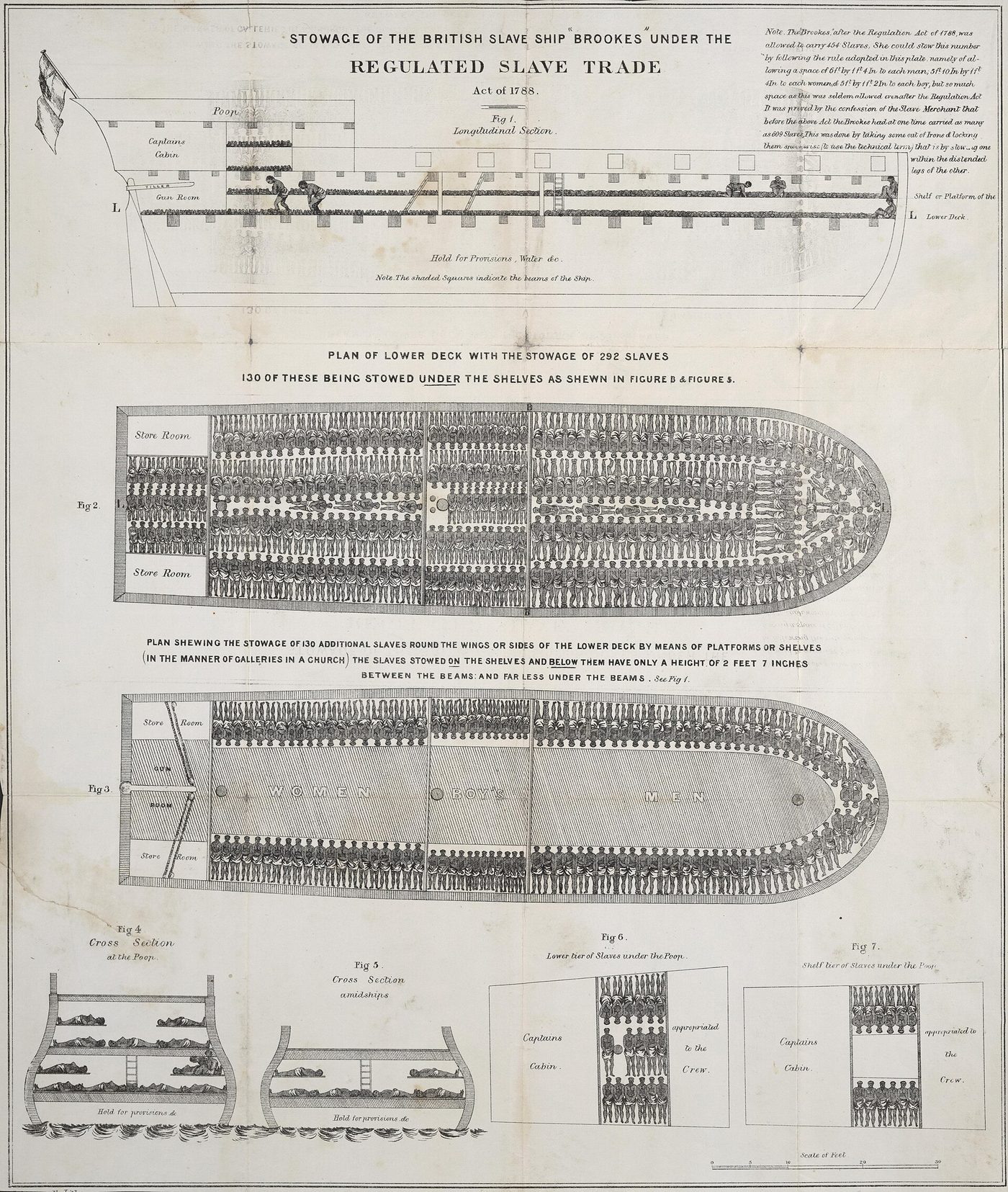
The second great image was a technical drawing. In late 1788 William Elford and the Plymouth branch of the abolition society published a plan of a slave ship, the Brookes, showing human beings packed in rows on its decks like cargo. The London committee improved the drawing, and in April 1789 its Quaker printer, Phillips, issued the version that was copied around the world. Copies went to members of Parliament. The measurements came from a naval officer, Captain Parrey, who had measured the Brookes and eight other slavers for a government inquiry.4
Britain's Slave Trade Act took effect on May 1, 1807.5 In the United States, Congress passed an Act to Prohibit the Importation of Slaves on March 2, 1807, to take effect on January 1, 1808, the first day the Constitution allowed such a ban.6 Slavery itself went on growing in America. The abolitionists would need more than a picture of a ship.
The Slave Narratives
The most powerful answer to slavery came from people who had lived it. Many formerly enslaved Americans published their stories before 1865. Three of them belong on every citizen's shelf.
Frederick Douglass, Narrative (1845)
The Narrative of the Life of Frederick Douglass, an American Slave, Written by Himself was published by the Anti-Slavery Office in Boston on May 1, 1845, with a preface by William Lloyd Garrison and a letter from Wendell Phillips vouching for it. About 5,000 copies sold in the first four months and almost 30,000 by 1860, and a Dublin edition followed while Douglass was lecturing in Ireland.7
"Written by Himself" was the point. Slaveholders said Black people could not reason or write. Douglass, who had learned to read against the orders of the man who held him, answered with a book whose prose was better than most of what his critics could manage. The hinge of the story is his fight in 1833 with the slave-breaker Edward Covey, when Douglass refused to be beaten again. Douglass introduces it with one of the great sentences in American writing:
"You have seen how a man was made a slave; you shall see how a slave was made a man."
Frederick Douglass, Narrative, 1845, chapter 10. 8
Set that beside the Wedgwood medallion. The medallion asks, "Am I not a man?" Douglass does not ask. He tells.
Solomon Northup, Twelve Years a Slave (1853)
Solomon Northup was a free Black man from Saratoga Springs, New York. In 1841, when he was 33, two white men hired him as a fiddle player, took him to Washington, drugged him and sold him at the Williams Slave Pen. He was shipped to New Orleans and spent twelve years on plantations in central Louisiana, the last of them under a master named Edwin Epps. A New York attorney, Henry Bliss Northup, a relative of the family that had once enslaved Solomon's father, finally reached the Epps place with the local sheriff on January 3, 1853, and Solomon Northup was legally freed the next day.9
His book, written with the help of an editor named David Wilson, came out that summer. It sold 17,000 copies in four months and nearly 30,000 by 1855.9 Its title page said exactly what had happened: "Kidnapped in Washington City in 1841, and Rescued in 1853."10 Northup's case frightened free Northerners because it showed that the law gave no real protection to a free man of color once he was across the line. And yet his book is remarkable for its fairness. He wrote of the slaveholder:
"It is not the fault of the slaveholder that he is cruel, so much as it is the fault of the system under which he lives. He cannot withstand the influence of habit and associations that surround him."
Solomon Northup, Twelve Years a Slave, 1853, chapter 14. 10
A man who had been whipped and robbed of twelve years could still blame the system first and the man second. That is moral seriousness of a high order.
Harriet Jacobs, Incidents in the Life of a Slave Girl (1861)
Harriet Jacobs was born into slavery in Edenton, North Carolina, in 1813. Pursued by a master who wanted her for himself, she hid in a tiny garret above a shed at her grandmother's house. "I hardly expect that the reader will credit me," she wrote, "when I affirm that I lived in that little dismal hole, almost deprived of light and air, and with no space to move my limbs, for nearly seven years."11 She escaped north in 1842.12
Her book appeared in Boston in 1861, "Published for the Author" and "Edited by L. Maria Child," under the name Linda Brent.11 It opens, "Reader, be assured this narrative is no fiction."11 Its authorship was questioned for generations. In 1980 the scholar Jean Fagan Yellin documented Jacobs's authorship and the truth of her account.12 Jacobs wrote about the thing male narrators mostly left out: what slavery did to women. "Slavery is terrible for men; but it is far more terrible for women."11
Uncle Tom's Cabin
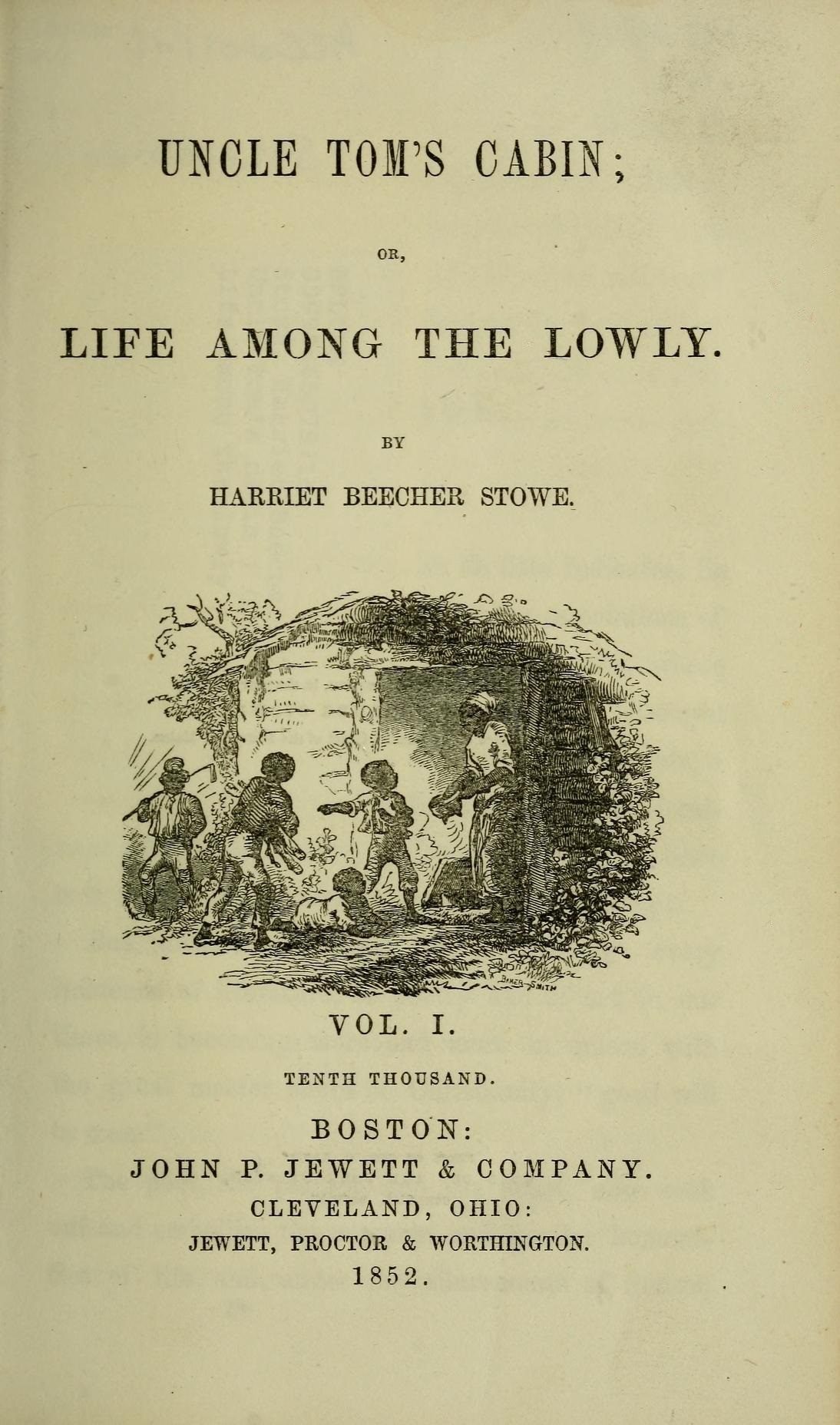
Harriet Beecher Stowe's novel ran as a forty-week serial in the antislavery paper The National Era, starting on June 5, 1851. It came out as a two-volume book on March 20, 1852.13
The Numbers
The Census Bureau's history of the book gives the verified figures. About 10,000 copies sold in the United States in one week. Within a year, 300,000 copies had been bought in America and a million in Great Britain. By 1857 more than two million copies had sold around the world, and the novel had been translated into more than twenty languages within five years.13
| Book | Published | Early sales (as documented) |
|---|---|---|
| Douglass, Narrative | May 1, 1845 | About 5,000 in four months; almost 30,000 by 1860 |
| Stowe, Uncle Tom's Cabin | March 20, 1852 | About 10,000 in one week; 300,000 in the U.S. in a year; over 2 million worldwide by 1857 |
| Northup, Twelve Years a Slave | Summer 1853 | 17,000 in four months; nearly 30,000 by 1855 |
| Jacobs, Incidents | 1861 | Published for the author; small sales, authorship doubted until 1980 |
Stowe was writing to Christians, and she said so in her "Concluding Remarks." She told Northern readers they had "something more to do than denounce their brethren at the South; they have to look to the evil among themselves." What could one person do? "They can see to it that they feel right," she wrote, and she asked whether their sympathies were "in harmony with the sympathies of Christ."14
The Tom Shows
Stowe did not control what happened next. The theater grabbed the story. George Aiken's version opened at the Troy Museum in Troy, New York, on September 27, 1852, and ran about 100 performances there. A version at Purdy's National Theatre in New York opened on July 18, 1853, and was headed for 325 performances that year. By then there were productions in Chicago, Detroit, Cleveland, Cincinnati, Salt Lake City, Philadelphia and San Francisco, and by October 1852 others were running in London, Berlin and Paris.15
Many of them betrayed the book. A rival script by H. J. Conway, staged at the Boston Museum and later by P. T. Barnum, was modeled on the minstrel show. It opened with a happy plantation scene, cut Eliza's flight across the ice, let both Tom and Little Eva survive and toned down the antislavery speeches so as not to offend.15 The novel's Tom, a Christian who dies rather than betray others, was turned on many stages into the kind of figure the minstrel show sold.
Myth: Lincoln greeted Stowe as "the little woman who wrote the book that made this great war"
Stowe did meet Lincoln at the White House in 1862. But the famous line first appeared in 1911, in a biography by her son and grandson, Charles Edward Stowe and Lyman Beecher Stowe. No letter or record from Lincoln or Stowe reports it.16 The historian Don E. Fehrenbacher called it "unverified family tradition," and Daniel R. Vollaro argued in the Journal of the Abraham Lincoln Association in 2009 that the family probably invented it.17 The book's influence was real. The quotation is not.
Poems and Songs Against Slavery
Whittier's "Massachusetts to Virginia" (1843)
John Greenleaf Whittier was the leading poet of the abolition movement. A man named George Latimer, claimed as a fugitive by James B. Grey of Norfolk, Virginia, was seized in Boston without a warrant. The case, Whittier noted, "caused great excitement North and South." More than fifty thousand citizens of Massachusetts signed a petition to Congress, and Latimer was finally bought free for four hundred dollars.18 Whittier's poem closed with a vow:
"But for us and for our children, the vow which we have given
John Greenleaf Whittier, "Massachusetts to Virginia," 1843. 18
For freedom and humanity is registered in heaven;
No slave-hunt in our borders, no pirate on our strand!
No fetters in the Bay State, no slave upon our land!"
That is a poem about the duty of a free state to protect the people within its borders, written in long, hymn-like lines that could be read aloud at a meeting.
Frances Ellen Watkins Harper
Frances Ellen Watkins was born free in Baltimore in 1825. She taught school, volunteered for the Pennsylvania Abolition Society, joined the American Anti-Slavery Society in 1853 and often performed her own poems at abolitionist meetings. Her Poems on Miscellaneous Subjects came out in 1854. It included "The Slave Auction," which begins, "The sale began, young girls were there, / Defenseless in their wretchedness."19 In 1858 the Anti-Slavery Bugle printed "Bury Me in a Free Land." Its last stanza:
"I ask no monument, proud and high,
Frances Ellen Watkins Harper, "Bury Me in a Free Land," 1858. 20
To arrest the gaze of the passers by;
All that my yearning spirit craves,
Is bury me not in the land of slaves."
Harper lived until 1911 and published one of the first novels by an African American woman, Iola Leroy, in 1892.19
Joshua McCarter Simpson Takes Back the Tunes
Joshua McCarter Simpson was born free in Windsor, Ohio, around 1820. He was bound out as a laborer until he was 21, studied at Oberlin from 1844 to 1848, worked as an herbal doctor and grocer in Zanesville and served as a conductor on the Underground Railroad.21 He was also a songwriter with a sharp idea. The minstrel stage had taken Black music and turned it into mockery. Simpson took the most popular minstrel tunes, many of them by Stephen Foster, and set new antislavery words to them. "I'm on My Way to Canada," written in Ohio in 1852, went to the tune of "Oh! Susanna." He set other songs to "Camptown Races" and "Old Folks at Home." His stated aim was to "kill the degrading influence of these comic Negro Songs" and turn the melodies into "more appropriate and useful channels."22 His 1854 collection The Emancipation Car included "To the White People of America," an attack on the hypocrisy of Christians who defended slavery, sung to Stephen Foster's "Massa's in the Cold, Cold Ground."21
Simpson's method is worth a moment. He did not ask the minstrel publishers to stop. He did not wait for anyone's permission. He took the music people already loved and made it tell the truth. The background to those tunes is in the lesson on music of the people.
A Black Painter in Cincinnati
Robert S. Duncanson was born in Seneca County, New York, in 1821, and settled in Cincinnati in 1850, drawn by its large free Black community and its antislavery feeling. That same year Nicholas Longworth, a wealthy landholder known for strict antislavery principles, commissioned him to paint eight large scenic murals and two eagles for the entrance hall of his house. The historian Joseph Ketner calls them "the most ambitious and accomplished domestic mural paintings created in the United States before the Civil War." They can still be seen in that house, now the Taft Museum of Art.23
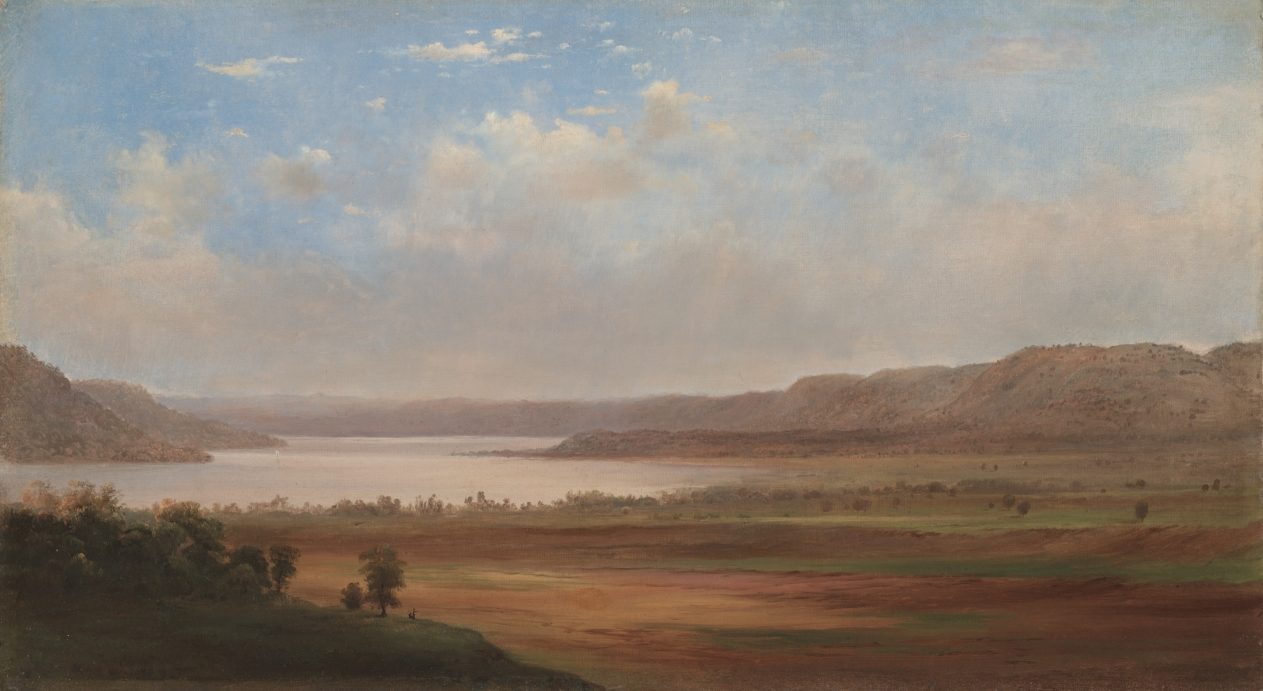
Even so, he usually received less important commissions than white artists.23 During the unrest of the Civil War years in Ohio he moved to Montreal, where he came to be regarded as the finest painter of scenery in Canada. He died on December 21, 1872.23 His career belongs with the painters in the lesson on the Hudson River School.
The Scourged Back (1863)
In March 1863 an enslaved man named Peter escaped from a Louisiana plantation owned by John Lyon near Washington, Louisiana, and made his way to the Union army at Baton Rouge. There, most likely on April 2, 1863, the photographers McPherson and Oliver took his picture. He sat in profile with his shirt off, his back to the camera.25
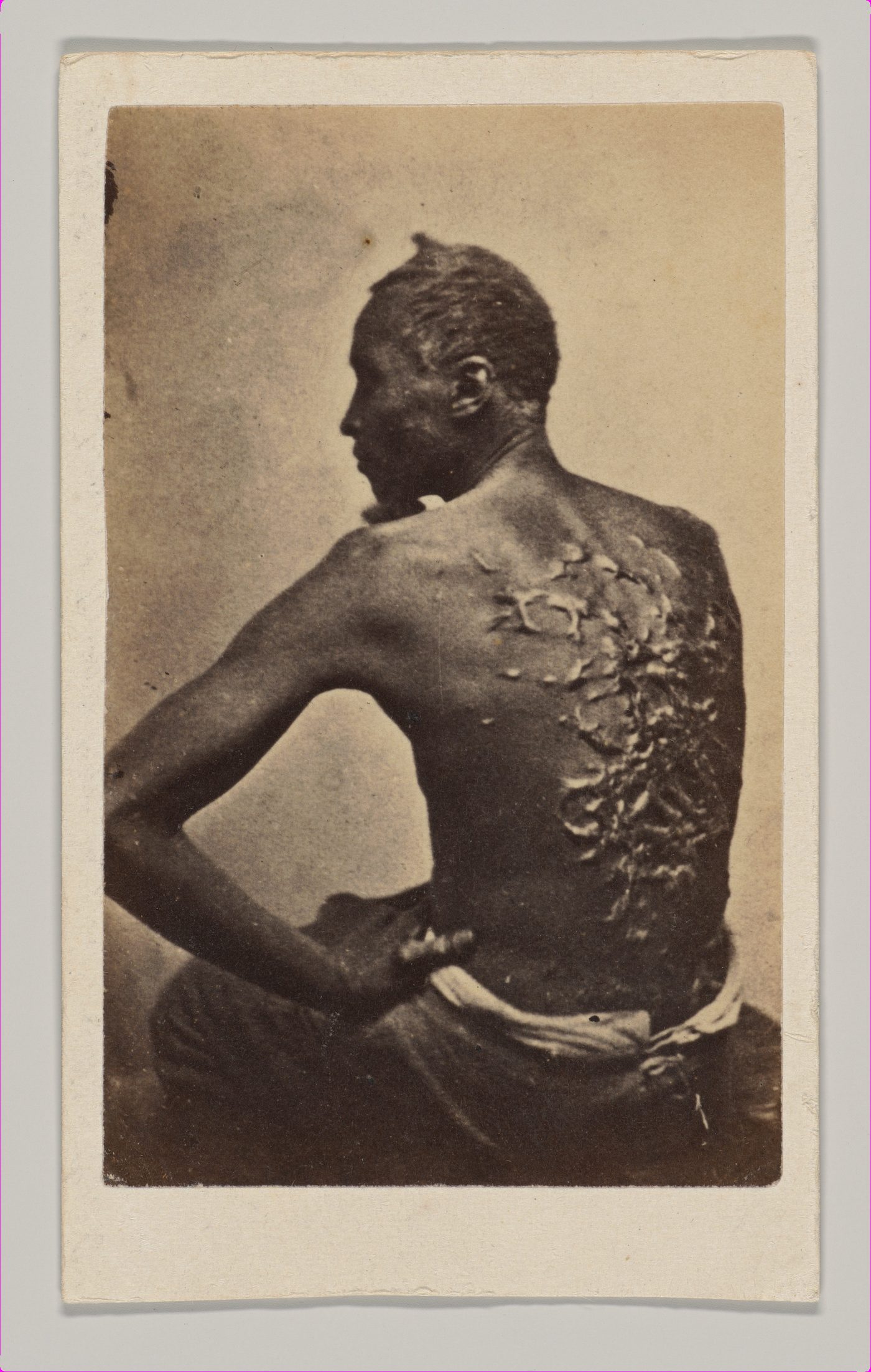
Printed as cheap cartes de visite, the photograph spread through Northern cities that spring, helped along by abolitionist groups. On July 4, 1863, Harper's Weekly ran an engraving of it in an article called "A Typical Negro," with a story about a man named Gordon who had escaped and joined the Union army. The historian David Silkenat has shown that the magazine combined Peter's story with another man's, and that much of the "Gordon" account was invented.25 The picture needed no invention. No pro-slavery essay about kind masters could stand next to it.
How the Defenders of Slavery Answered
The pro-slavery side did not stay silent, and a fair lesson has to let it speak in its own words. By the 1830s its leading men had dropped the old founders' apology that slavery was a necessary evil, to be ended some day. They now defended it as good.
Calhoun: "A Positive Good" (1837)
On February 6, 1837, Senator John C. Calhoun of South Carolina told the Senate that the relation between the races in the slaveholding states was, "instead of an evil, a good," indeed "a positive good." He went on to claim that "never before has the black race of central Africa, from the dawn of history to the present day," attained so civilized a condition.27 This was the claim behind the singing-slave image that Douglass had to answer: slaves were cared for, Christianized and content.
Hammond: The Mudsill (1858)
On March 4, 1858, Senator James Henry Hammond, also of South Carolina, made the argument sharper and more modern. "In all social systems there must be a class to do the menial duties, to perform the drudgery of life," he said. "It constitutes the very mud-sill of society and of political government." Then he turned on the North: "your whole hireling class of manual laborers and 'operatives,' as you call them, are essentially slaves. The difference between us is, that our slaves are hired for life and well compensated." Northern workers, he said, "are hired by the day, not cared for, and scantily compensated."28
Grayson: The Hireling and the Slave (1854)
William J. Grayson of South Carolina put the same case into verse. His long poem The Hireling and the Slave (1854), written in heroic couplets, was a rejoinder to Uncle Tom's Cabin. Like the writer George Fitzhugh, Grayson held that the wage system of England and the North was an even greater injustice than slavery.29
Why the Argument Failed
The strongest part of the pro-slavery case was its attack on how Northern industry treated its workers. Factory hours were long, wages were thin, and a sick or old worker could be turned out with nothing. Those were real wrongs, and honest reformers in the North said so.
But the argument collapses on its own terms. A wage worker in Lowell could quit, move west, marry whom he chose, keep his children and testify in court. He owned himself. The enslaved man owned nothing, not even his back, as the Baton Rouge photograph proved. Hammond's "hired for life" meant sold for life, with one's children sold after. Calhoun's "positive good" had to be enforced with the whip, the auction block, the patrol and the rule, as Mr. Auld told his wife when he caught her teaching young Douglass, that it was "unlawful, as well as unsafe, to teach a slave to read."8 No one builds such machinery around people who are content. The narratives of Douglass, Northup and Jacobs were the testimony of eyewitnesses, and the defenders of slavery never answered it. They could only call it false.
There is a deeper failure too, and it is a matter of first principles. The Declaration says all men are created equal and endowed by their Creator with unalienable rights. To defend slavery as a positive good, a man had to deny that premise, whether he said so or not. Once a people decides that some persons are by nature property, there is no principle left to protect anyone else's liberty. The art of the abolitionists, from the kneeling man in the medallion to the standing man in Douglass's sentence, kept putting that one question before the public: is this a man? The answer was always yes. The war that settled it is in the next lesson.
- 1787 Wedgwood's "Am I Not a Man and a Brother?" medallion; the Society for Effecting the Abolition of the Slave Trade organized in London.
- 1788-89 The Brookes diagram issued at Plymouth and then London (April 1789).
- 1837 Calhoun's "positive good" speech (February 6).
- 1843 Whittier, "Massachusetts to Virginia," after the Latimer case.
- 1845 Douglass, Narrative (May 1).
- 1850 Duncanson begins the Longworth murals in Cincinnati.
- 1851-52 Uncle Tom's Cabin serialized from June 5, 1851; book March 20, 1852; Aiken's play opens in Troy, September 27, 1852.
- 1852 Simpson's "I'm on My Way to Canada," to the tune of "Oh! Susanna."
- 1853 Northup freed (January 4); Twelve Years a Slave published that summer.
- 1854 Harper, Poems on Miscellaneous Subjects; Grayson, The Hireling and the Slave; Simpson, The Emancipation Car.
- 1858 Hammond's mudsill speech (March 4); Harper's "Bury Me in a Free Land."
- 1861 Jacobs, Incidents in the Life of a Slave Girl.
- 1863 "The Scourged Back" photographed at Baton Rouge (April 2); Harper's Weekly prints it (July 4).
Learn more
- Douglass, Narrative (1845): short enough to read in an evening, and the best place to start.
- Northup, Twelve Years a Slave (1853): the kidnapping chapters read like a thriller because they happened.
- Jacobs, Incidents in the Life of a Slave Girl (1861): read the chapter "The Loophole of Retreat" about her hiding place.
- John Frick, Uncle Tom's Cabin on the Antebellum Stage: part of the University of Virginia's large archive on the novel and its afterlife.
- Census Bureau: History and the Census, Harriet Beecher Stowe: the sales figures and the census data behind them.
- Royal Museums Greenwich: Plan and Sections of a Slave Ship: the history of the Brookes print from the museum that holds it.
- Lincoln Presidential Library: The Story Behind "The Scourged Back": Peter, Gordon and what David Silkenat found.
- Canadian Museum of History: I'm on My Way to Canada: Simpson's songs and the Canadian end of the Underground Railroad.
- Hammond's Mud-Sill Speech and Calhoun's Speech on Abolition Petitions: read the other side in full.
Notes
- "Anti-Slavery Medallion," American Philosophical Society, quoting Benjamin Franklin to Josiah Wedgwood (1788). Read it online. ↩
- Wedgwood Manufactory, Anti-Slavery Medallion, 1787, stoneware (jasperware and black basalt), cut steel and ivory, Art Institute of Chicago, object 66185. Read it online. ↩
- "Wedgwood anti-slavery medallion," Wikipedia, for its production at Etruria in 1787 as the Society's seal, the Henry Webber design of October 16, 1787, and its use as jewelry. Read it online. ↩
- "Plan and Sections of a Slave Ship [the 'Brooks' sometimes 'Brookes']," Royal Museums Greenwich, catalog entry rmgc-object-254967, with notes on William Elford, the Plymouth and London committees and the April 1789 printing. Read it online. ↩
- "Slave Trade Act 1807," Wikipedia. Read it online. ↩
- "Act Prohibiting Importation of Slaves," Wikipedia, and U.S. Constitution, Article I, Section 9, Clause 1. Read it online. ↩
- "Narrative of the Life of Frederick Douglass," Wikipedia, citing James Matlack, "The Autobiographies of Frederick Douglass," Phylon (March 1979), for the sales figures. Read it online. ↩
- Frederick Douglass, Narrative of the Life of Frederick Douglass, an American Slave, Written by Himself (Boston: Anti-Slavery Office, 1845), chapters 6 and 10, Project Gutenberg eBook 23. Read it online. ↩
- Sonja Anderson, "Solomon Northup's 'Twelve Years a Slave' Came to an End as He Regained His Long-Awaited Freedom on This Day in 1853," Smithsonian, January 4, 2025. Read it online. ↩
- Solomon Northup, Twelve Years a Slave: Narrative of Solomon Northup, a Citizen of New-York, Kidnapped in Washington City in 1841, and Rescued in 1853 (Auburn: Derby and Miller, 1853), title page and chapter 14, Project Gutenberg eBook 45631. Read it online. ↩
- Harriet A. Jacobs, Incidents in the Life of a Slave Girl, Written by Herself, ed. L. Maria Child (Boston: Published for the Author, 1861), preface, chapter 14 and chapter 29, Project Gutenberg eBook 11030. Read it online. ↩
- "Jacobs, Harriet," Encyclopedia.com. Read it online. ↩
- "History and the Census: Harriet Beecher Stowe," U.S. Census Bureau, June 2026. Read it online. ↩
- Harriet Beecher Stowe, Uncle Tom's Cabin; or, Life Among the Lowly (1852), chapter 45, "Concluding Remarks," Project Gutenberg eBook 203. Read it online. ↩
- John Frick, "Uncle Tom's Cabin on the Antebellum Stage," Uncle Tom's Cabin and American Culture, University of Virginia. Read it online. ↩
- "What Did Lincoln Say to Mrs. Stowe?" Harriet Beecher Stowe House, Cincinnati. Read it online. ↩
- "Notable Visitors: Harriet Beecher Stowe (1811-1896)," Mr. Lincoln's White House, The Lehrman Institute, citing Don E. Fehrenbacher and Daniel R. Vollaro, "Lincoln, Stowe, and the 'Little Woman/Great War' Story," Journal of the Abraham Lincoln Association (2009). Read it online. ↩
- John Greenleaf Whittier, "Massachusetts to Virginia" (1843), with the author's headnote on the George Latimer case, in Anti-Slavery Poems: Songs of Labor and Reform, Project Gutenberg eBook 9580. Read it online. ↩
- "'The Slave Auction' and 'Bury Me in a Free Land' by Frances Ellen Watkins Harper," Faculty of English, University of Oxford. Read it online. ↩
- Frances Ellen Watkins Harper, "Bury Me in a Free Land" (written for the Anti-Slavery Bugle, 1858), Wikisource. Read it online. ↩
- Jesse P. Karlsberg, "Joshua McCarter Simpson's 'To the White People of America' (1854)," Southern Spaces, June 30, 2020. Read it online. ↩
- John Willis and Tim Foran, "I'm on My Way to Canada: Canada and Musical Protests against Slavery," Canadian Museum of History, February 20, 2015. Read it online. ↩
- "Robert Duncanson: From Fame to Obscurity to Fame Once More," Ohio History Connection, drawing on Joseph D. Ketner, The Emergence of the African-American Artist: Robert S. Duncanson, 1821-1872 (Columbia: University of Missouri Press, 1993). Read it online. ↩
- Robert S. Duncanson, View of Lake Pepin, Minnesota, 1862, oil on canvas, Cleveland Museum of Art, gift of William Macbeth, 1947.198. Read it online. ↩
- Christopher Wills, "The Story Behind 'The Scourged Back' Photograph," Abraham Lincoln Presidential Library and Museum, September 23, 2025, discussing David Silkenat's research. Read it online. ↩
- McPherson and Oliver, Gordon, A Runaway Mississippi Slave, or "The Scourged Back," April 2, 1863, albumen silver print from glass negative, Metropolitan Museum of Art, object 830991. Read it online. ↩
- John C. Calhoun, Speech on the Reception of Abolition Petitions, U.S. Senate, February 6, 1837, Teaching American History. Read it online. ↩
- James Henry Hammond, Speech on the Admission of Kansas ("Mud-Sill Speech"), U.S. Senate, March 4, 1858, Teaching American History. Read it online. ↩
- Elizabeth Robeson, "Grayson, William John," South Carolina Encyclopedia. Read it online. ↩
Terms in this lesson
- Abolitionist
- A person who worked to end slavery. In Britain the first goal was abolishing the slave trade; in the United States the movement came to demand an end to slavery itself.
- Slave narrative
- An autobiography of a person who escaped or was freed from slavery, usually published with letters or prefaces from white supporters vouching for its truth.
- Jasperware
- A fine unglazed stoneware developed by Josiah Wedgwood, often made with white figures raised on a colored ground. The anti-slavery medallion of 1787 was made of it.
- Carte de visite
- A small, cheap photograph mounted on a card about the size of a calling card, popular from about 1860. Copies could be printed by the hundreds and passed hand to hand.
- Tom show
- Any of the many stage versions of Uncle Tom's Cabin that toured America from 1852 into the twentieth century, often changing Stowe's story and borrowing from the minstrel show.
- Positive good
- John C. Calhoun's 1837 claim that slavery was not a necessary evil but a benefit to both races, which became the standard pro-slavery position.
- Mudsill
- The lowest timber of a house frame. James Henry Hammond used it in 1858 for the class he said every society must have to do its menial work.
Sources
- Anti-Slavery Medallion, Wedgwood Manufactory, 1787 (Art Institute of Chicago) checked 2026-10
- Plan and Sections of a Slave Ship (Royal Museums Greenwich) checked 2026-10
- Frederick Douglass, Narrative of the Life of Frederick Douglass (Project Gutenberg) checked 2026-10
- Solomon Northup, Twelve Years a Slave (Project Gutenberg) checked 2026-10
- Harriet Jacobs, Incidents in the Life of a Slave Girl (Project Gutenberg) checked 2026-10
- Harriet Beecher Stowe, Uncle Tom's Cabin (Project Gutenberg) checked 2026-10
- History and the Census: Harriet Beecher Stowe (U.S. Census Bureau) checked 2026-10
- John Frick, Uncle Tom's Cabin on the Antebellum Stage (Uncle Tom's Cabin and American Culture, University of Virginia) checked 2026-10
- John Greenleaf Whittier, Anti-Slavery Poems (Project Gutenberg) checked 2026-10
- The Story Behind 'The Scourged Back' Photograph (Abraham Lincoln Presidential Library and Museum) checked 2026-10
- Robert Duncanson: From Fame to Obscurity to Fame Once More (Ohio History Connection) checked 2026-10
- John C. Calhoun, Speech on Abolition Petitions, 1837 (Teaching American History) checked 2026-10
- James Henry Hammond, Mud-Sill Speech, 1858 (Teaching American History) checked 2026-10