Lesson 15 of 15 · about 9 minutes
Benjamin Franklin at the Convention: Doubt, Prayer and Compromise
You'll be able to
- Describe how Franklin took part in the Convention and why others often read his words for him
- Read his June 2 argument against salaries for the executive and see what happened to it
- Explain his role in the committee behind the compromise over representation
- Read his June 28 motion for prayer and what became of it
- Read the September 17 speech and explain what he asked the delegates to do
On Monday, September 17, 1787, the Convention's last day, a very old man could not stand to read his own speech. "Docr. FRANKLIN rose with a speech in his hand," Madison wrote, "which he had reduced to writing for his own conveniency, and which Mr. Wilson read in the words following."1 The speech asked thirty-odd stubborn, opinionated men to doubt themselves. Franklin had been doing that all summer, mostly by listening.
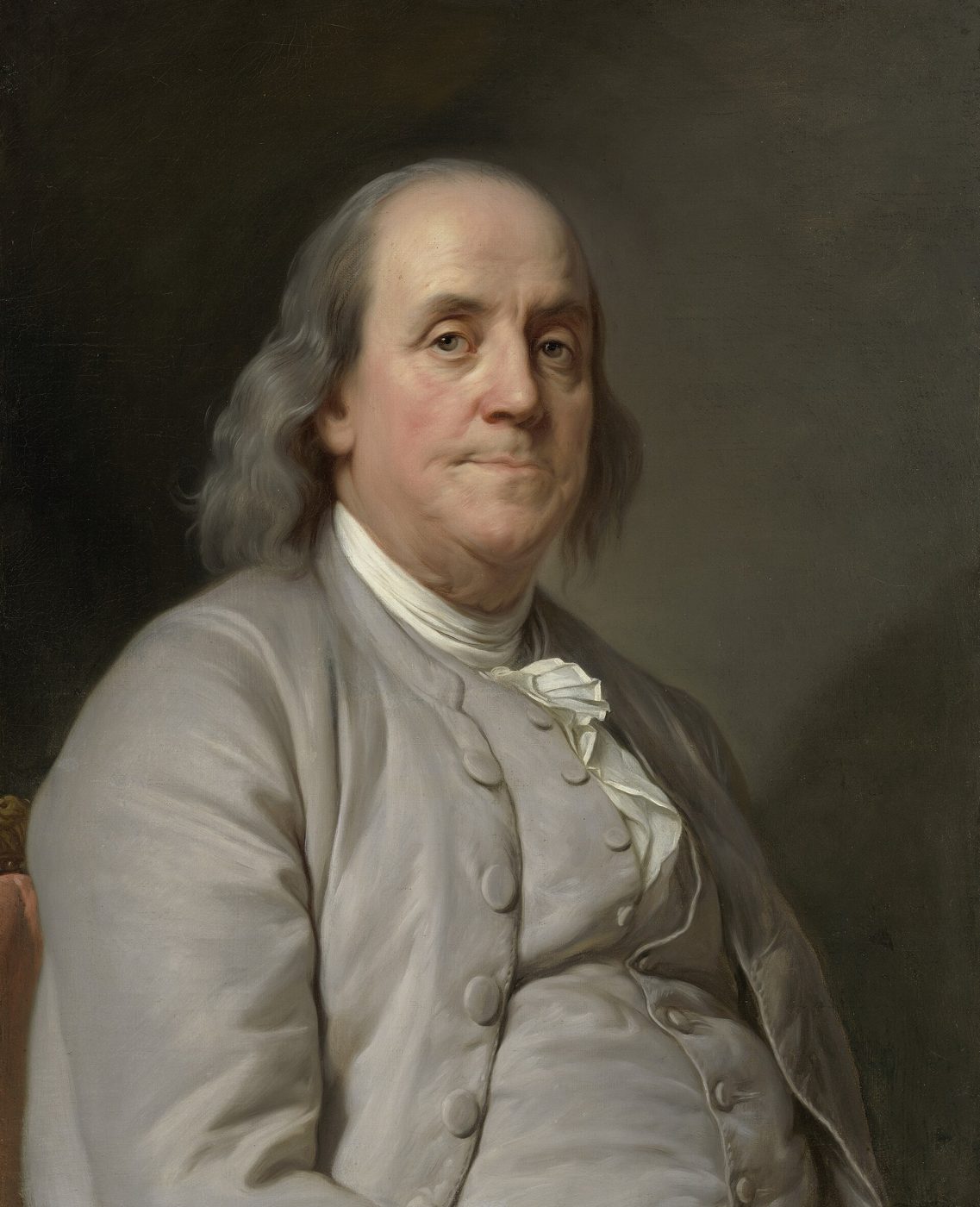
The Oldest Voice in the Room
Franklin came back from France in 1785, was elected president of Pennsylvania's Supreme Executive Council without opposition, and went to the Convention as a delegate. By then he was, next to Washington, the most widely known champion of American liberty. He was also in his ninth decade, with gout and kidney and bladder stones that, as the National Constitution Center puts it, "limited his participation at the Convention."2 So he wrote out what he wanted to say and let James Wilson of his own state read it. Madison recorded the practice more than once, on June 2, on June 11, and on the last day.1
When a man known across two continents says little, the room listens to each word, and Franklin spent his on questions of character as much as machinery.
No Salary for the Executive
On June 2 Franklin moved that the executive "receive no salary, stipend fee or reward whatsoever for their services," with expenses defrayed. His reason was about human nature. "There are two passions which have a powerful influence on the affairs of men," Wilson read for him. "These are ambition and avarice; the love of power, and the love of money." Put them together in one office and "they will move heaven and earth to obtain it." The men who strive hardest for such a prize, he warned, are not "the wise and moderate" but "the bold and the violent." His remedy was to stop "making our posts of honor, places of profit."3
Hamilton seconded the motion, Madison noted, only "with the view he said merely of bringing so respectable a proposition before the Committee." There was no debate. The motion "was treated with great respect, but rather for the author of it, than from any apparent conviction of its expediency or practicability."3 It was never adopted. The Constitution instead gave the President a compensation that can be neither increased nor diminished during his term.4 Franklin was right about the passions, and the cure was not his. His warning about office as a prize to be won has not gone out of date.
The Broad Table
By late June the Convention had split almost evenly over whether each state should have an equal vote in the Senate or a vote in proportion to population. On June 30 Franklin spoke to both sides. "The diversity of opinions turns on two points," he said. If representation is proportional, the small states fear for their liberties. If votes are equal, the large states fear for their money. Then he reached for a carpenter's image: "When a broad table is to be made, and the edges of planks do not fit, the artist takes a little from both, and makes a good joint."5
On July 2 the delegates voted to appoint a committee with one member from each state. Franklin sat on it for Pennsylvania.6 Madison's own footnote says the committee's report "was founded on a motion in the Committee made by Dr Franklin."7 The report, which Madison recorded in full on July 5, gave each state an equal vote in the second branch and the exclusive right to originate money bills to the first. On July 6 Franklin defended the money-bill provision on plain republican grounds: "it was always of importance that the people should know who had disposed of their money, & how it had been disposed of."8 Neither side loved the result. Both stayed in the room.
Prayer
On June 28 Franklin gave the speech of the summer that readers quote most often. The Convention had spent four or five weeks in "continual reasonings," and had little to show for it. "The small progress we have made," he said, was "methinks a melancholy proof of the imperfection of the Human Understanding." Then he asked how it had happened that they had "not hitherto once thought of humbly applying to the Father of lights" for help.9
He gave his reasons from experience. "I have lived, Sir, a long time, and the longer I live, the more convincing proofs I see of this truth, that God Governs in the affairs of men. And if a sparrow cannot fall to the ground without his notice, is it probable that an empire can rise without his aid?" Quoting the sacred writings, he added: "except the Lord build the House they labour in vain that build it." Without that help, he said, "we shall succeed in this political building no better, than the Builders of Babel."9
Roger Sherman seconded. Hamilton and others worried that a prayer motion so late might alarm the public. Williamson noted that the Convention had no funds. Randolph proposed a sermon on the Fourth of July and daily prayers afterward, and Franklin seconded that. After "several unsuccessful attempts for silently postponing the matter," the Convention adjourned "without any vote on the motion."9
Notice how a man who is often described as a skeptic spoke here. He did not argue that prayer is useful for morale. He argued that the delegates were dependent on a providence they had forgotten. Liberty rests on more than clever institutions, and he said so to the cleverest institution builders in the country.
The Last Speech
Back to September 17. The draft was finished. Several delegates had objections, and three, Randolph, Mason and Gerry, would refuse to sign. Franklin spoke to them through Wilson's voice. "I confess that there are several parts of this constitution which I do not at present approve, but I am not sure I shall never approve them." Life had taught him to change his mind: "the older I grow, the more apt I am to doubt my own judgment, and to pay more respect to the judgment of others."10
He did not claim the plan was perfect. "Thus I consent, Sir, to this Constitution because I expect no better, and because I am not sure, that it is not the best." And he gave a sober warning about what holds a government together. The Constitution is "likely to be well administered for a course of years, and can only end in Despotism, as other forms have done before it, when the people shall become so corrupted as to need despotic Government, being incapable of any other."10 That is the old republican teaching in plain words: free institutions need a people fit for freedom.
Then came his request: "I can not help expressing a wish that every member of the Convention who may still have objections to it, would with me, on this occasion doubt a little of his own infallibility, and to make manifest our unanimity, put his name to this instrument." He moved that the Constitution be signed in a form, drafted by Gouverneur Morris, that read "Done in Convention by the unanimous consent of the States present."10 Randolph did not change his mind. Franklin was gracious about it, and said he had no particular member in view.10
As the last members signed, Madison wrote, Franklin looked at the sun painted on the back of the President's chair. He said he had "often and often" wondered, through the summer's hopes and fears, whether it was rising or setting. "But now at length I have the happiness to know that it is a rising and not a setting Sun."10
A later story has a woman outside the hall asking him what government the Convention had given the country. "A republic, madam," he is said to have answered, "if you can keep it." The National Constitution Center notes that this comes to us as history or as historical myth. The words may be legend. The idea behind them is the one he put in writing on September 17.2
Franklin's Life at a Glance
- 1706 Born in Boston.
- 1732 Publishes the first Poor Richard's Almanac.
- 1743 Founds the American Philosophical Society.
- 1776 Serves on the committee to draft the Declaration; sent as commissioner to France.
- 1785 Returns home; elected president of Pennsylvania's Supreme Executive Council.
- 1787 Delegate to the Convention; moves for no executive salary on June 2, for prayer on June 28; speaks on September 17.
- 1790 Dies on April 17.
Learn more
- Madison Debates, September 17: Franklin's closing speech and the rising sun, in Madison's words.
- Madison Debates, June 28: the prayer motion and the debate over it.
- Madison Debates, June 2: Franklin's paper against executive salaries.
- Madison Debates, June 30: the broad table and the compromise proposal.
- Benjamin Franklin, National Constitution Center: Carol Berkin's biography of the signer.
Notes
- James Madison, Notes of Debates in the Federal Convention of 1787, September 17, 1787, Avalon Project, Yale Law School. Read it online. ↩
- Carol Berkin, "Benjamin Franklin," Signers' Biographies, National Constitution Center. Read it online. ↩
- Madison, Notes of Debates, June 2, 1787, Avalon Project. Read it online. ↩
- U.S. Constitution, Article II, Section 1, National Archives transcript. Read it online. ↩
- Madison, Notes of Debates, June 30, 1787, Avalon Project. Read it online. ↩
- Madison, Notes of Debates, July 2, 1787, Avalon Project, which lists the committee members. Read it online. ↩
- Madison, Notes of Debates, July 5, 1787, note 1 on the committee's report, Avalon Project. Read it online. ↩
- Madison, Notes of Debates, July 6, 1787, Avalon Project. Read it online. ↩
- Madison, Notes of Debates, June 28, 1787, Avalon Project. Read it online. ↩
- Madison, Notes of Debates, September 17, 1787, Avalon Project. Read it online. ↩
Terms in this lesson
- Committee of the Whole
- The Convention sitting as one committee, with looser rules, in the early weeks of debate.
- Compromise
- An agreement in which each side gives up part of what it wants. Franklin compared it to joining two planks.
- Providence
- The belief that God governs events in the world. Franklin cited it on June 28.
- Unanimous consent of the States present
- The signing formula the Convention used, so that delegates could sign as witnesses to the states' agreement, not as individual supporters of every clause.
- Infallibility
- The claim of never being wrong. Franklin asked each delegate to doubt a little of his own.
- Money bill
- A bill to raise revenue. The compromise gave the House the right to start them.
Sources
- Madison Debates, June 2, Avalon Project checked 2026-10
- Madison Debates, June 28, Avalon Project checked 2026-10
- Madison Debates, June 30, Avalon Project checked 2026-10
- Madison Debates, July 2 and July 5, Avalon Project checked 2026-10
- Madison Debates, July 6, Avalon Project checked 2026-10
- Madison Debates, September 17, Avalon Project checked 2026-10
- The Constitution of the United States, transcript, National Archives checked 2026-10
- Benjamin Franklin, Signers' Biographies, National Constitution Center checked 2026-10