Lesson 4 of 15 · about 8 minutes
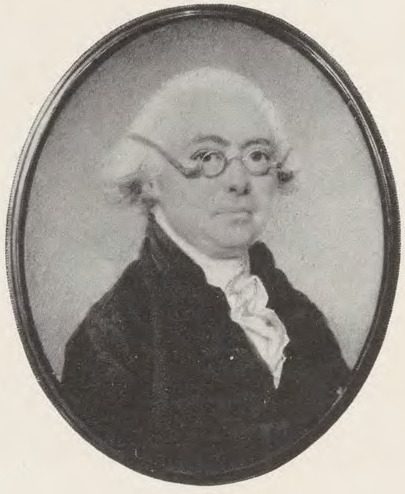
James Wilson: The Scot Who Wanted a Broad Base
You'll be able to
- Place Wilson's life in order, from Scotland to Edenton, North Carolina in 1798
- Explain his argument for drawing the House directly from the people and for a one-person executive
- Read what he said about three-fifths representation and what he said, on October 6, about a bill of rights
- Describe how a leading nationalist ended his life in debt, and why the later years matter to the story
On May 31, 1787, the Convention reached the question of who should choose members of the House. Several delegates wanted the state legislatures to do it. James Wilson of Pennsylvania disagreed, and Madison wrote down why. Wilson "contended strenuously for drawing the most numerous branch of the Legislature immediately from the people. He was for raising the federal pyramid to a considerable altitude, and for that reason wished to give it as broad a basis as possible."1 The picture stuck. A tall structure needs a wide foundation. Over the next four months Wilson spoke more often than all but Gouverneur Morris, and he kept pushing the same way.
From Scotland to the Bar
Wilson was born in Scotland, the son of a farmer, and studied at the universities of St Andrews, Glasgow and Edinburgh without taking a degree at any of them. He emigrated to Philadelphia in 1765 with letters of introduction, taught at the College of Philadelphia, and read law under John Dickinson. He was admitted to the bar two years after arriving and set up in Reading, Pennsylvania.2
In 1774 he published a pamphlet he had written in 1768, Considerations on the Nature and Extent of the Legislative Authority of the British Parliament, arguing that Parliament had no authority to legislate for the colonies. It made his name.2 He sat in the Second Continental Congress, waited in 1776 until he was sure his constituents were ready, and then signed the Declaration of Independence.2
The mob at his door
Wilson would not join the push to punish Loyalists. In 1779 he opposed Pennsylvania's plan to seize their property and drive them from the state, and he defended some of them. That October a mob marched on his house. Thirty-five of his colleagues barricaded themselves in with him. Six men died and more than seventeen were wounded before Philadelphia cavalry arrived.2
At the Convention
Historian Carol Berkin counts Wilson, Madison and Morris as the three central speakers of the Convention. Wilson wanted a strong national government and he wanted the people to run it: both houses by population, direct election by voters.2 On May 31 he added that "No government could long subsist without the confidence of the people," which in a republic was "peculiarly essential."1
One executive
On June 1 he moved that the executive consist of a single person. He argued that one man gave "energy dispatch and responsibility" to the office, and he told the delegates that unity "instead of being the fetus of monarchy would be the best safeguard against tyranny."3 The Convention did not settle the matter that day, but Article II vests the executive power in "a President."4 Wilson also proposed an early form of the Electoral College, a plan the Convention ignored at first and came back to when nothing else worked.2 On July 17 he again answered the arguments against election of the executive by the people.5
Three-fifths
Wilson's record on slavery is uncomfortable. On June 11 he moved, with Charles Pinckney seconding, that representation be based on the free population "and three fifths of all other persons," following a rule already used by Congress for apportioning requisitions on the states.6 On July 11 he told the Convention he saw no clear principle behind it: "Are they admitted as Citizens? then why are they not admitted on an equality with White Citizens? are they admitted as property? then why is not other property admitted into the computation?" He added that these were difficulties that "must be overruled by the necessity of compromise."7 He owned a household slave, and the National Constitution Center says he quietly argued against slavery but held back for fear that southern delegates would walk out.2 He chose the bargain.
Defending the Document
On October 6, 1787, a crowd gathered in the State House yard in Philadelphia to name candidates for the state legislature, and Wilson was asked to explain the new Constitution and answer its critics. His speech ran in the Pennsylvania Packet on October 10 and spread through the newspapers. Washington sent copies to Virginia.8
Wilson's answer to the complaint that the Constitution lacked a bill of rights became a standard Federalist argument. A state government, he said, holds every power it has not given away. A federal government is the reverse: "everything which is not given is reserved." So a bill of rights would be "superfluous and absurd":
"For it would have been superfluous and absurd to have stipulated with a federal body of our own creation, that we should enjoy those privileges of which we are not divested, either by the intention or the act that has brought the body into existence."
James Wilson, speech in the State House yard, Philadelphia, October 6, 1787. 8
Wilson went on to argue that listing a right could imply a power. A statement protecting the liberty of the press, he said, "might have been construed to imply that some degree of power was given, since we undertook to define its extent."8 It was a respectable argument, and Roger Sherman made a version of it in the Convention on September 12. Mason answered that national law would be paramount to state bills of rights.9 Congress added the first ten amendments anyway, and the states ratified them in 1791.10 Wilson ended his speech with a confession that he was "not a blind admirer" of the plan, then called it "the best form of government which has ever been offered to the world."8
Justice and Debtor
Wilson hoped to be chief justice. George Washington named John Jay instead and made Wilson an associate justice, sworn in on October 5, 1789. He sat on early cases including Chisholm v. Georgia in 1793 and Hylton v. United States.2
Land speculation ruined him. Wilson had invested in land companies holding hundreds of thousands of acres, and the panic of 1796 left him deeply in debt. He spent a short time in a debtors' prison in New Jersey, fled to North Carolina to dodge other creditors, and died of a stroke at Edenton in August 1798. He was fifty-five.2
Wilson's Life at a Glance
- 1765 Emigrates from Scotland to Philadelphia.
- 1774 Publishes his pamphlet on Parliament's limits.
- 1776 Signs the Declaration of Independence.
- 1779 A mob attacks his house in October; Wilson survives.
- 1787 Argues for a broad base on May 31; moves for a single executive June 1; speaks October 6 to defend the Constitution.
- 1789 Sworn in as an associate justice of the Supreme Court on October 5.
- 1793 Sits in Chisholm v. Georgia.
- 1798 Dies in Edenton, North Carolina, in August.
Learn more
- Speech of James Wilson, October 6, 1787: the whole State House yard speech, about 2,500 words.
- Madison Debates, May 31: the "federal pyramid" speech and the rest of the day's argument.
- Madison Debates, June 1: the debate over one executive or three.
- Madison Debates, July 11: Wilson on the three-fifths rule.
- National Constitution Center biography: a short life of Wilson by historian Carol Berkin.
Notes
- James Madison, Notes of Debates in the Federal Convention of 1787, May 31, 1787, Avalon Project, Yale Law School. Read it online. ↩
- Carol Berkin, "James Wilson," Signers' Biographies, National Constitution Center. Read it online. ↩
- Madison, Notes of Debates, June 1, 1787, Avalon Project. Read it online. ↩
- U.S. Constitution, Article II, Section 1, National Archives transcript. Read it online. ↩
- Madison, Notes of Debates, July 17, 1787, Avalon Project. Read it online. ↩
- Madison, Notes of Debates, June 11, 1787, Avalon Project. Read it online. ↩
- Madison, Notes of Debates, July 11, 1787, Avalon Project. Read it online. ↩
- James Wilson, "Speech of James Wilson," Philadelphia, October 6, 1787, printed in the Pennsylvania Packet, October 10, 1787, text at constitution.org. Read it online. ↩
- Madison, Notes of Debates, September 12, 1787, Avalon Project. Read it online. ↩
- "The Bill of Rights: A Transcription," National Archives. Read it online. ↩
Terms in this lesson
- Direct election
- Choosing officials by the votes of the people themselves, as opposed to election by a state legislature or by electors.
- Unitary executive
- An executive branch headed by a single person, as opposed to a committee of two or three. Wilson moved for it on June 1, 1787.
- Three-fifths clause
- The rule counting three-fifths of enslaved people in apportioning House seats and direct taxes. Wilson moved the June 11 amendment that first wrote the ratio into a Convention resolution.
- Electoral College
- The system of electors chosen in each state to choose the president. Wilson proposed an early form of it.
- Chisholm v. Georgia
- An early Supreme Court case from 1793, decided while Wilson sat on the Court, about federal courts hearing disputes between private citizens and states.
- Loyalist
- A colonist who stayed loyal to the Crown during the Revolution. Wilson opposed Pennsylvania's plan to seize Loyalist property.
Sources
- National Constitution Center, James Wilson, Signers' Biographies checked 2026-10
- Speech of James Wilson, October 6, 1787, constitution.org checked 2026-10
- Madison Debates, May 31, Avalon Project checked 2026-10
- Madison Debates, June 1, Avalon Project checked 2026-10
- Madison Debates, June 11, Avalon Project checked 2026-10
- Madison Debates, July 11, Avalon Project checked 2026-10
- Madison Debates, September 12, Avalon Project checked 2026-10
- The Constitution of the United States, transcript, National Archives checked 2026-10
- The Bill of Rights, transcript, National Archives checked 2026-10