Lesson 12 of 15 · about 8 minutes
Melancton Smith: The Antifederalist Who Voted Yes
You'll be able to
- Place Smith's life in order, from Long Island in 1744 to his death in 1798
- Read his June 1788 argument that representatives should be 'a true picture of the people'
- Follow the fight over conditional ratification in Poughkeepsie in July 1788
- Weigh Hamilton's reply and decide who had the better of the argument
- See how the Antifederalist case helped produce a bill of rights
Most people who study the ratification fight remember the winners: Hamilton, Madison, Jay. One of the best arguments against the Constitution came from a Poughkeepsie merchant most Americans have never heard of. Melancton Smith did not want to wreck the Union. He said so on the first day. He would "sacrifice every thing for a union, except the liberties of his country."1 Then he spent five weeks testing whether the new government put those liberties at risk.
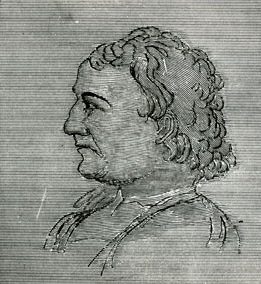
A Merchant and a Soldier
Smith was born in Jamaica, on Long Island, on May 7, 1744, and went into business in Poughkeepsie. He was no aristocrat. When the Revolution came, he sat in New York's first Provincial Congress in 1775, organized and captained the Dutchess County minutemen, and served as sheriff of Dutchess County in 1777 and 1778.2 In 1785 he moved to New York City, still a merchant, and that year he went to the Confederation Congress, where he served until 1787.2
Notice what he was not. He was not one of the delegates at Philadelphia. The men who wrote the Constitution met behind closed doors in 1787, and Smith read their work the way other citizens did, after it was published. He did not like all of it.
The True Picture of the People
New York's ratifying convention opened June 17, 1788, in Poughkeepsie. Antifederalists outnumbered Federalists there by more than two to one.3 Smith asked that the Constitution be taken up paragraph by paragraph. On June 20 he moved that the House of Representatives have one member for every twenty thousand inhabitants, not one for every thirty thousand, until the House reached three hundred.4 The next day he explained why:
"They should be a true picture of the people, possess a knowledge of their circumstances and their wants, sympathize in all their distresses, and be disposed to seek their true interests."
Melancton Smith, New York Convention, June 21, 17885
His worry was practical. The Constitution allowed no more than "one for every thirty Thousand," and the first House would have sixty-five members, to serve what Smith called three millions of people.6 A body that small, he argued, would be filled by men of wealth and fame, because ordinary farmers and tradesmen would not be able to win a district that large. He called the favored few "the natural aristocracy of the country," and he was careful to say what he meant:
"The Author of nature has bestowed on some greater capacities than others; birth, education, talents, and wealth, create distinctions among men as visible, and of as much influence, as titles, stars, and garters."
Melancton Smith, June 21, 17885
In his reply that same day he added that he did not think such men lacked "morality or virtue." He insisted only "that they could not feel sympathetically the wants of the people."7 That is a conservative point, though it is usually filed under the other side. Self-government works best near home, among neighbors who share a place and its troubles. A representative who has never met most of his voters cannot know their lives.
Hamilton's Answer
Hamilton did not give ground, and his reply deserves a fair hearing. He argued that the people could be trusted to pick whom they wished, and that a free election was the real check:
"After all, sir, we must submit to this idea, that the true principle of a republic is, that the people should choose whom they please to govern them."
Alexander Hamilton, New York Convention, June 21, 17888
Both men had a point. Hamilton was right that voters, not formulas, decide who serves. Smith was right that district size shapes which kind of person can run. The question did not die there. The first Article proposed in 1789 would have set one representative for every thirty thousand people until the House reached one hundred, with the ratio loosening after that. It was the first of twelve amendments sent to the states, and the National Archives says it "was never ratified."9 It still fell short, and Smith's twenty-thousand ratio was never adopted. The ratio in the text New York ratified was the one in Article I.
The Vote at Poughkeepsie
By the time Smith's convention reached the end of its paragraph-by-paragraph reading, the convention learned on June 24 that New Hampshire had become the ninth state to ratify, and word of Virginia's ratification arrived July 2.3 Ten states were in. Rejecting the Constitution outright was now a way of leaving the Union.
The Antifederalists split over what to do. Smith, the side's floor manager, moved on July 15 to make ratification depend on conditions, among them limits on the militia, on Congress's control of elections, and on direct taxes.3 When that failed to gather support, he and Zephaniah Platt offered a plan under which New York would ratify but could leave if Congress did not call a second convention within four years. It was withdrawn on July 19, for lack of Antifederalist support.3 The Center for the Study of the American Constitution says Smith had come to believe that insisting on amendments first would keep New York out of the Union and so cost the chance of a bill of rights.3
On July 23 Samuel Jones, supported by Smith, moved to strike the words "upon condition" from the form of ratification and write "in full confidence" in their place. It passed 31 to 29. Hamilton read a letter from Madison saying Congress would not accept a conditional ratification as valid.3 On July 26 the convention voted 30 to 27 to ratify, with a declaration of rights and recommended amendments attached.3 The roll call lists "Mr. M. Smith" among those voting yes.10 Smith, Jay and Lansing were then named to write a circular letter calling on the other states for a general convention on amendments.3
Smith also defended an amendment on the Senate, moved by Gilbert Livingston on June 24. It would have limited senators to six years in any twelve and let state legislatures recall them. On June 25 Smith said, "It is certainly inconsistent with the established principles of republicanism that the Senate should be a fixed and unchangeable body of men."11 The Constitution kept its six-year terms with no limit on reelection, and the complaint still sounds current.
What He Left Behind
Smith served in the New York Assembly in 1791 and died in New York City on July 29, 1798.2 He never had a Federalist's fame or a Federalist's biographers. What he left was a pattern. He fought hard, counted votes honestly, and then took the result that kept the Union together and kept the argument open. New York's recommended amendments, and those of other states, pressed the First Congress to act. By its own account, it proposed twelve amendments in September 1789 because state conventions had "expressed a desire, in order to prevent misconstruction or abuse of its powers, that further declaratory and restrictive clauses should be added."9 Ten of them became the Bill of Rights in 1791. A man who voted yes while demanding more is part of how that happened.
Smith's Life at a Glance
- 1744 Born May 7 in Jamaica, Long Island, New York.
- 1775 Delegate to the first Provincial Congress; captains the Dutchess County minutemen.
- 1777 Serves as sheriff of Dutchess County through 1778.
- 1785 Moves to New York City; joins the Confederation Congress until 1787.
- 1788 Leads the Antifederalists at Poughkeepsie; votes yes on July 26 as the convention ratifies 30 to 27.
- 1791 Serves in the New York Assembly.
- 1798 Dies July 29 in New York City.
Learn more
- Debates in the New York Convention: the full record of the Poughkeepsie debates, including Smith's June 21 speech.
- New York Ratifies the Constitution: a clear summary of the July 1788 votes, from the University of Wisconsin.
- Melancton Smith, U.S. House of Representatives: a short official biography.
- The Bill of Rights: A Transcription: the twelve amendments Congress proposed in 1789, including the one never ratified.
- The Constitution, National Archives transcript: Article I, Section 2, the text Smith objected to.
Notes
- Melancton Smith, remarks of June 20, 1788, in Debates in the Convention of the State of New York, constitution.org. Read it online. ↩
- "Smith, Melancton," People Search, History, Art and Archives, U.S. House of Representatives. Read it online. ↩
- "New York Ratifies the Constitution, 26 July 1788," Center for the Study of the American Constitution, University of Wisconsin. Read it online. ↩
- Smith's resolution of June 20, 1788, in Debates in the Convention of the State of New York, constitution.org. Read it online. ↩
- Smith, speech of June 21, 1788, Debates in the Convention of the State of New York, constitution.org. Read it online. ↩
- U.S. Constitution, Article I, Section 2, National Archives transcript. Read it online. ↩
- Smith, reply of June 21, 1788, Debates in the Convention of the State of New York, constitution.org. Read it online. ↩
- Alexander Hamilton, Debates in the Convention of the State of New York, June 21, 1788, constitution.org. Read it online. ↩
- "The Bill of Rights: A Transcription," National Archives, including the 1789 joint resolution and its Article the first. Read it online. ↩
- Roll call of July 26, 1788, Debates in the Convention of the State of New York, constitution.org. Read it online. ↩
- Smith on the Senate, June 25, 1788, Debates in the Convention of the State of New York, constitution.org. Read it online. ↩
Terms in this lesson
- Antifederalist
- An opponent of the Constitution as written in 1787. Most did not oppose union. They wanted stronger limits on the new government and more protection for the states and the people.
- Ratifying convention
- A special state assembly, elected to vote on the Constitution. Nine states had to approve it before it took effect.
- Conditional ratification
- Approving the Constitution only if certain amendments were adopted. Federalists said Congress would not accept it.
- Circular letter
- A letter sent to every state asking it to join in a request. New York's called for a second general convention to consider amendments.
- Rotation in office
- A rule that an officeholder must step down after a set time. Smith defended a plan to limit senators to six years in any twelve.
- Natural aristocracy
- Smith's phrase for the few men whom talent, education and wealth set above the rest in any society, whatever the law says.
Sources
- Debates in the New York Convention on Ratification of the Constitution, constitution.org checked 2026-10
- New York Ratifies the Constitution, 26 July 1788, Center for the Study of the American Constitution, University of Wisconsin checked 2026-10
- Smith, Melancton, People Search, History, Art and Archives, U.S. House of Representatives checked 2026-10
- The Constitution of the United States, transcript, National Archives checked 2026-10
- The Bill of Rights: A Transcription, National Archives checked 2026-10
- Day-by-Day Summary of the New York Ratifying Convention, Teaching American History checked 2026-10