Lesson 3 of 10 · about 24 minutes
Magna Carta and the English Charters
You'll be able to
- Describe what Magna Carta said in 1215, including clauses 12, 14, 39, 40 and 61, and why it nearly failed
- Explain how the charter was reissued in 1216, 1217 and 1225 and confirmed as statute in 1297
- Connect the Petition of Right (1628), Habeas Corpus Act (1679) and Bill of Rights (1689) to specific protections in the American Bill of Rights
- Show how the colonial charters and the Massachusetts Body of Liberties carried 'the rights of Englishmen' across the Atlantic
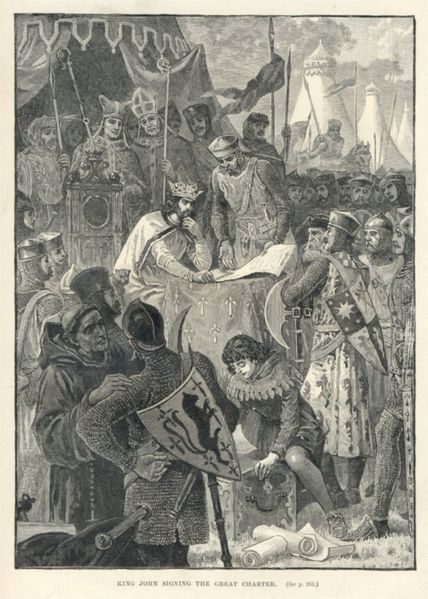
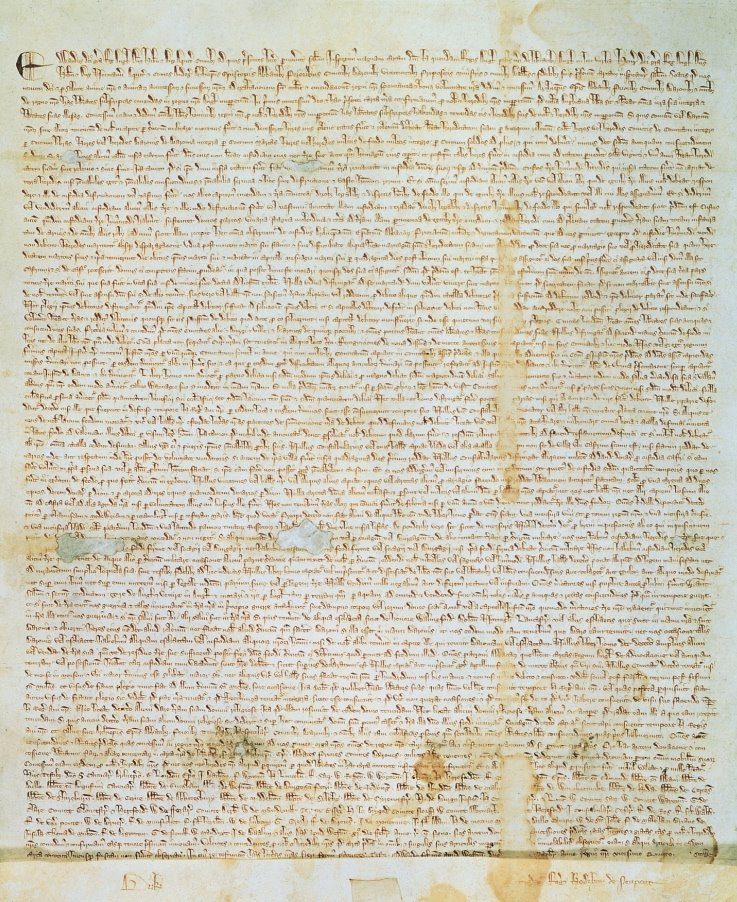
On June 15, 1215, in a meadow beside the Thames between Windsor and Staines, King John of England put his seal to a long document written in Latin. Armed barons stood on one side. The king stood on the other, with a pen in his hand he did not want to hold. The charter ended with a line that gives the place and the date: "in the meadow which is called Runnymede, between Windsor and Staines, on the fifteenth day of June, in the seventeenth year of our reign."1
John agreed to it because his enemies held London. He had lost most of his lands in France, taxed England hard to try to win them back, and watched his allies go down at the Battle of Bouvines in 1214. He had also spent years at odds with the pope over who should be archbishop of Canterbury. Now a rebel army sat in the capital. Pope Innocent III wrote on August 24, ten weeks after Runnymede, that the charter was "null, and void of all validity for ever." As a peace treaty it lasted a matter of weeks.2
And yet that document became the most quoted text in English-speaking law. Its words turned up in the Petition of Right of 1628, in the Massachusetts Body of Liberties of 1641, and in the Fifth Amendment of 1791. How a failed deal with a bad king turned into a foundation is the story of this lesson.
What the Barons Wanted
Magna Carta is long, 63 clauses in the version on the Avalon Project, and most of them deal with feudal business that seems remote now: inheritances, the wardship of orphans, the removal of fish weirs from the Thames. A few cut straight to the question of how a government may treat its people. Those few are the ones that lasted.
No tax without common counsel
King John had been collecting money from his barons by every device he could find. Clause 12 put a stop to that for a certain kind of payment: "No scutage nor aid shall be imposed on our kingdom, unless by common counsel of our kingdom, except for ransoming our person, for making our eldest son a knight, and for once marrying our eldest daughter." Clause 14 then described how the "common counsel" was to be gathered. The great men of the realm, the archbishops, bishops, abbots, earls and greater barons, were to be summoned by letter, and lesser tenants by the sheriffs, with forty days' notice and a stated reason for the meeting.3
No parliament existed yet. The idea of one did. The king may not raise certain taxes at will. A council of those who must pay has to be called and told why.
The law of the land
Clauses 39 and 40 carry the weight that later centuries put on the charter.
"No freemen shall be taken or imprisoned or disseised or exiled or in any way destroyed, nor will we go upon him nor send upon him, except by the lawful judgment of his peers or by the law of the land. To no one will we sell, to no one will we refuse or delay, right or justice."
Magna Carta, 1215, clauses 39 and 40 (Avalon Project translation).4
Read carefully, clause 39 does three jobs. It lists the ways a person can be wronged: seized, jailed, dispossessed of his land, exiled, or "in any way destroyed." It names the only lawful route to any of them, a judgment by his peers or the law of the land. And it binds "we," the king himself. The next clause adds that justice will not be sold, denied or delayed.
Clause 45 asked for something modest that matters a great deal: "We will appoint as justices, constables, sheriffs, or bailiffs only such as know the law of the realm and mean to observe it well."5 Officials who enforce the law should know it and respect it.
Twenty-five barons and a right to resist
The barons did not trust John, and with reason. So the charter included a clause nobody forgot. Clause 61 let the barons choose twenty-five of their number to enforce the peace. If the king or his officers broke any article, and four of the twenty-five told him so and he did not fix it within forty days, the whole group could "distrain and distress" him, taking his castles, lands and possessions until the wrong was righted, though his own person and family were to stay untouched.6 A written right to resist an unlawful king, with a procedure for notice and cure. It is one of the earliest of its kind in the West, and it is the part of Magna Carta that failed first.
The charter began where medieval documents began, with God: "the English Church shall be free, and shall have her rights entire, and her liberties inviolate."7 It is also a product of its age in less admirable ways. Clauses 10 and 11 regulate the debts owed to Jewish moneylenders, a reminder that the same England that produced the charter also taxed and persecuted its Jewish communities.8
What Magna Carta Was Not
Seventeenth-century lawyers, Coke among them, read the charter as a statement of the liberties of every Englishman. Victorian historians showed that the 1215 document concerned the relationship between the king and the barons, and not ordinary subjects. Modern scholars such as J. C. Holt describe it as a settlement between a king and a rebellious aristocracy. "Freemen" were not the entire population; a good many English people were unfree peasants who held land from a lord.9 Parliament as we know it did not exist. The idea of a trial by jury of one's peers had a medieval meaning that is not the same as our twelve-person trial jury.
All that is true, and it does not shrink the charter. The long-term importance of Magna Carta is not what it did in 1215 but what later generations did with it. Clauses 12, 39 and 40 stated principles that were wider than the problem they were written for. A king is bound by law. His subjects have a remedy when he breaks it. Taxes need consent. Later lawyers could read those principles back into the text, and in doing so they made them stronger.
From Failed Treaty to Statute
John died in October 1216 in the middle of the civil war that followed the pope's annulment. His heir, Henry III, was nine. The regency government, led by the old knight William Marshal, reissued the charter in 1216 and again in 1217, each time dropping clauses that made trouble, including clause 61 and the council of barons.10 The monarchy used the charter to win back rebels. The practice stuck.
The version that lasted was the one of 1225. Henry III needed money to defend Gascony against the French, and a great council approved a tax of £40,000. In return the barons demanded that the king reissue Magna Carta and its companion, the Charter of the Forest. Henry did so, declaring that he acted of his own "spontaneous and free will."10 A king who grants a liberty in exchange for a tax has admitted that the two go together.
In 1297 Edward I confirmed the charter again, this time having it entered in the statute roll as part of the law of England. Chapter 29 of that version is the old clause 39 in more modern phrasing:
"NO Freeman shall be taken or imprisoned, or be disseised of his Freehold, or Liberties, or free Customs, or be outlawed, or exiled, or any other wise destroyed; nor will We not pass upon him, nor condemn him, but by lawful judgment of his Peers, or by the Law of the Land. We will sell to no man, we will not deny or defer to any man either Justice or Right."
Magna Carta, 1297, chapter 29.11
Three clauses of the 1297 version are still in force in England and Wales today.12 In 1354 a statute rewrote the old "law of the land" as "due process of law" and replaced "free man" with "no man, of whatever estate or condition he may be."13 That is the phrase that appears in the Fifth Amendment of the United States Constitution. The line from a muddy field to Philadelphia is direct.
Throughout the Middle Ages the charter was reconfirmed again and again. Sir Edward Coke later counted 32 confirmations.14 Lesson 4 follows Coke himself, who made Magna Carta a weapon against the Stuart kings.
The Petition of Right, 1628
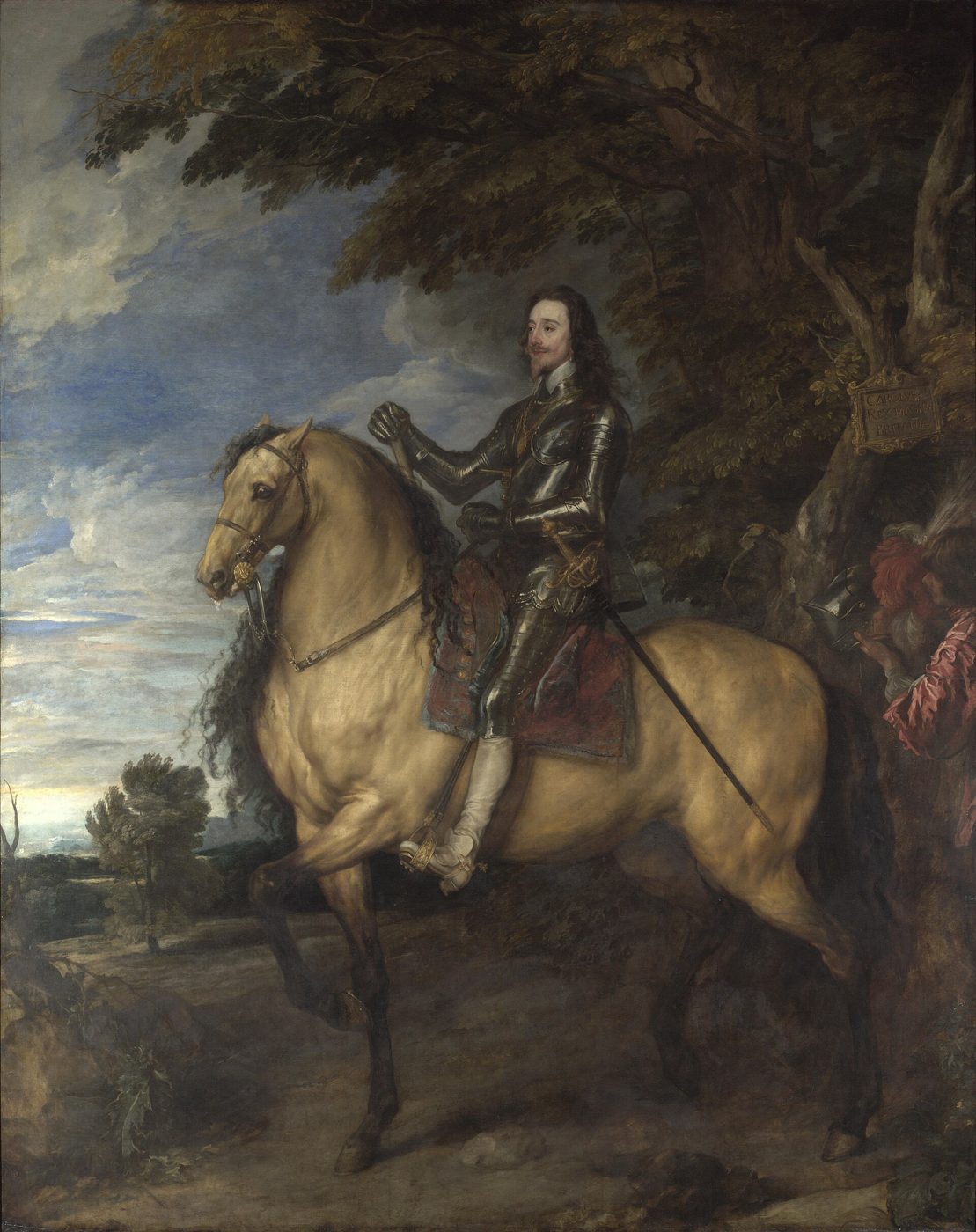
Four centuries later the Stuart kings tested whether the charter still bound the Crown. In 1627 King Charles I, short of money for his wars, demanded "forced loans" from his subjects and jailed those who refused, without trial. In 1628 he billeted soldiers and sailors in private homes and used martial law against civilians.15 Parliament tied its grant of money to a statement of his subjects' rights. Sir Edward Coke supported the Petition of Right, which Charles accepted on June 7, 1628.
The petitioners cited Magna Carta and a string of statutes from the reigns of Edward I and Edward III. They described what had been done: commissioners going county to county to demand loans, and people punished for refusing.
"They doe therefore humblie pray your most Excellent Majestie, that no man hereafter be compelled to make or yeild any Guift Loane Benevolence Taxe or such like Charge without comon consent by Acte of Parliament."
Petition of Right, 1628 (original spelling).16
The petition added that soldiers and sailors should be removed from private houses, where "the inhabitants against their wills have been compelled to receive them into their houses, and there to suffer them to sojourne against the Lawes and Customes of this Realme."17 And it asked the king to revoke the commissions for trying civilians by martial law. The petitioners closed by asking for all of this "as their Rightes and Liberties according to the Lawes and Statutes of this Realme."18
That last phrase tells you how Englishmen of 1628 thought about their rights. They claimed them as inheritance under English law, as "Rightes and Liberties" the law already gave. Later in the century, with Locke, the language would shift toward natural rights. The two traditions ran together in America, and the Declaration of Independence draws on both.
Charles accepted the Petition, then ruled for eleven years without calling Parliament. The petition did not stop him. But it gave the next generation a text to cite, and the Americans of 1774 did.
Habeas Corpus, 1679
The writ of habeas corpus, a court order commanding a jailer to produce a prisoner and say why he is held, existed in England for centuries before the statute that carries its name. The Habeas Corpus Act of 1679 did not create the writ.19 It fixed the practical problem that kept the writ from working: jailers and sheriffs stalled. The Act required a jailer served with the writ to bring the prisoner and report the true cause of his imprisonment within three days, with extra time allowed for distance, up to twenty days for the farthest cases. It set heavy penalties for officers who evaded it, and it forbade sending English prisoners overseas to keep them out of reach of the writ.20
The Constitution of the United States borrows the idea at once. Article I, section 9: "The privilege of the writ of habeas corpus shall not be suspended, unless when in cases of rebellion or invasion the public safety may require it."21
The Bill of Rights, 1689
In 1688 William of Orange crossed from Holland at the invitation of English leaders, and James II fled. Parliament offered the crown to William and Mary on terms. The Declaration of Right of February 13, 1689, became the Bill of Rights, which received royal assent on December 16, 1689.22 The statute begins with a list of the offenses of James II: suspending laws without Parliament's consent, levying money "by pretence of prerogative," requiring "excessive bail," and more. It then declares what is law.23
"That the pretended power of suspending the laws or the execution of laws by regal authority without consent of Parliament is illegal ... That it is the right of the subjects to petition the king, and all commitments and prosecutions for such petitioning are illegal ... That excessive bail ought not to be required, nor excessive fines imposed, nor cruel and unusual punishments inflicted."
English Bill of Rights, 1689.23
Line up that last sentence with the Eighth Amendment, written by Madison a century later: "Excessive bail shall not be required, nor excessive fines imposed, nor cruel and unusual punishments inflicted."24 The American text is the English text with the verb turned into a command. The English statute also carried the right of petition, which became part of the First Amendment, and a guarantee that Protestants could have arms for their defense "suitable to their conditions and as allowed by law," which is an ancestor of the Second Amendment.23
The Glorious Revolution shows how a free people can change its government and keep its law. The English did not tear down their constitution in 1688. They restored it, wrote down what the king had violated, and held the new king to the written list.
The Rights of Englishmen Cross the Atlantic
The men who founded the colonies carried English law with them, and the crown said so in writing. The first charter of Virginia, issued April 10, 1606, gave the settlers a guarantee that outlasted the company.
"all and every the Persons being our Subjects, which shall dwell and inhabit within every or any of the said several Colonies and Plantations, and every of their children, which shall happen to be born within any of the Limits and Precincts of the said several Colonies and Plantations, shall HAVE and enjoy all Liberties, Franchises, and Immunities, within any of our other Dominions, to all Intents and Purposes, as if they had been abiding and born, within this our Realm of England."
First Charter of Virginia, April 10, 1606.25
Colonists and their children were to have every liberty of an Englishman "as if they had been abiding and born" in England. The claim stayed alive. In 1774 the Continental Congress repeated it.
In New England the same impulse produced the Massachusetts Body of Liberties, a code compiled by the lawyer-turned-minister Nathaniel Ward and adopted by the General Court in December 1641.26 Its first liberty reads like Magna Carta rewritten by Puritans:
"No mans life shall be taken away, no mans honour or good name shall be stayned, no mans person shall be arested, restrayned, banished, dismembred, nor any wayes punished, no man shall be deprived of his wife or children, no mans goods or estaite shall be taken away from him, nor any way indammaged under colour of law or Countenance of Authoritie, unlesse it be by vertue or equitie of some expresse law of the Country waranting the same, established by a generall Court and sufficiently published."
Massachusetts Body of Liberties, 1641, liberty 1 (original spelling).27
The second promised that "every person within this Jurisdiction, whether Inhabitant or forreiner shall enjoy the same justice and law."27 Further down came protections that anticipate the American Bill of Rights by 150 years: no monopolies except for useful new inventions (liberty 9), no man tried twice for the same offense (42), no torture to extract a confession except in narrow cases (45), and no execution "without the testimony of two or three witnesses" (47).28
The code also held a clause every honest account must include. Liberty 91 forbade "bond slaverie, villinage or Captivitie" except for "lawfull Captives taken in just warres, and such strangers as willingly selle themselves or are sold to us."29 In the same book that guarded the colonists' liberties, a legal door for slavery stood open. The tension in that document, between liberties for the colonists and bondage for others, will come up again in later lessons.
By 1774 the colonists were putting it all together. The First Continental Congress, meeting in Philadelphia, resolved that the American colonists' ancestors "were at the time of their emigration from the mother country, entitled to all the rights, liberties, and immunities of free and natural-born subjects, within the realm of England," and that they had never lost them. Resolution five claimed "the common law of England, and more especially ... the great and inestimable privilege of being tried by their peers of the vicinage, according to the course of that law."30 Their trial-by-peers language is clause 39 of Magna Carta.
From Runnymede to the Bill of Rights
| English source | What it said | American descendant |
|---|---|---|
| Magna Carta 1215, cl. 39 (1297, ch. 29) | No one taken or imprisoned except by lawful judgment of peers or the law of the land | Fifth Amendment: no person "deprived of life, liberty, or property, without due process of law" |
| Magna Carta 1215, cl. 12 and 14 | No tax without the common counsel of the kingdom | The colonial claim that Parliament could not tax Americans without their consent; Article I, section 7 (revenue bills begin in the House) |
| Petition of Right 1628, art. VI | No soldiers forced into private houses | Third Amendment |
| Habeas Corpus Act 1679 | Prisoner must be produced and cause shown within days | Article I, section 9: habeas corpus not suspended except in rebellion or invasion |
| Bill of Rights 1689 | Right to petition the king; no excessive bail or cruel and unusual punishment | First Amendment (petition clause); Eighth Amendment |
| Virginia Charter 1606 | Colonists have all the liberties of Englishmen | Resolve 2 of the First Continental Congress, 1774 |
Timeline
- 1215 June 15: King John seals Magna Carta at Runnymede. Pope Innocent III annuls it within about ten weeks.
- 1216 to 1225 Henry III's government reissues the charter three times; the 1225 version, granted in return for a tax, becomes the standard text.
- 1297 Edward I confirms Magna Carta and it is entered on the statute roll.
- 1606 April 10: the first Virginia charter promises colonists the liberties of Englishmen.
- 1628 June 7: Charles I accepts the Petition of Right.
- 1641 The Massachusetts General Court adopts the Body of Liberties.
- 1679 May 27: the Habeas Corpus Act receives royal assent.
- 1689 December 16: the English Bill of Rights receives royal assent.
- 1774 October 14: the First Continental Congress claims the common law and the rights of Englishmen.
- 1791 The American Bill of Rights is ratified.
What the Charters Teach
Nobody in this story wrote a theory of liberty first and then built a government around it. Every document grew out of a quarrel: a king who took money without asking, jailed a subject without charge, housed soldiers in a farmhouse, or ran a court that answered to nobody. Each time, those on the receiving end looked to the old law for a rule the king had broken and wrote it down more plainly than before. Over four hundred years the pile of written promises grew into something that no king could ignore without a fight.
This is why the charters appeal to anyone who trusts inherited institutions over invented ones. They are an inheritance, accumulated by practice and tested by quarrels, and each generation added only what the last had earned. The founders did not claim to have invented anything. They claimed the rights of Englishmen, and when the Crown refused them, they declared independence to keep them. The next lesson follows the lawyers who gave the tradition its working tools.
Learn more
- Magna Carta, 1215 (Avalon Project): read all 63 clauses; the fish weirs are as interesting as clause 39.
- Magna Carta 1297 (legislation.gov.uk): the version entered on the statute roll, with notes on which chapters remain in force.
- The Petition of Right 1627 (legislation.gov.uk): short, and spelled as the Parliament of 1628 wrote it.
- English Bill of Rights, 1689 (Avalon Project): compare the list of declarations with the first ten amendments.
- First Charter of Virginia, 1606 (Avalon Project): the guarantee of English liberties is in the paragraph that begins "Also we do, for Us."
- The Massachusetts Body of Liberties, 1641: the full code with editorial notes on its authorship and adoption.
- Declaration and Resolves of the First Continental Congress, 1774: resolves 1 to 5 state the colonists' claim to English rights and the common law.
Notes
- Magna Carta 1215, closing clause 63, in the translation hosted by the Avalon Project. Read it online. ↩
- "Magna Carta," sections on John's council of January 1215, the rebel barons, and the repudiation of the charter. Read it online. ↩
- Magna Carta 1215, clauses 12 and 14. For the Constitution's rule that revenue bills originate in the House, see Article I, section 7, in the Avalon text of the Constitution. Read it online. ↩
- Magna Carta 1215, clauses 39 and 40. Read it online. ↩
- Magna Carta 1215, clause 45. Read it online. ↩
- Magna Carta 1215, clause 61. Read it online. ↩
- Magna Carta 1215, clause 1. Read it online. ↩
- Magna Carta 1215, clauses 10 and 11, on debts owed to Jewish moneylenders. Read it online. ↩
- J. C. Holt, Magna Carta (Cambridge: Cambridge University Press, 1965; second edition 1992), the standard modern study; the shift from the Victorian reading to the baronial one is summarized in "Magna Carta," note on historians' views. Read it online. ↩
- "Magna Carta," sections "Great Charter of 1216," "Great Charter of 1217" and "Great Charter of 1225." Read it online. ↩
- Magna Carta 1297 (25 Edw. 1), chapter 29, as printed on legislation.gov.uk. Read it online. ↩
- "Magna Carta," on the three clauses of the 1297 version that remain in force in England and Wales. Read it online. ↩
- "Magna Carta," on the 1354 statute that introduced the phrase "due process of law." Read it online. ↩
- "Magna Carta," on Coke's count of 32 reconfirmations and his political use of the charter. Read it online. ↩
- "Petition of Right," passed 7 June 1628, on the forced loans of 1627, the billeting of soldiers, the use of martial law, and the eleven years of personal rule that followed. Read it online. ↩
- The Petition of Right 1627 (3 Cha. 1 c. 1), preamble and petition, spelling as printed on legislation.gov.uk. Read it online. ↩
- The Petition of Right, article VI, on soldiers and mariners quartered in private houses. Read it online. ↩
- The Petition of Right, concluding paragraph. Read it online. ↩
- "Habeas Corpus Act 1679," royal assent 27 May 1679; the writ itself is far older. Read it online. ↩
- Habeas Corpus Act 1679 (31 Cha. 2 c. 2), opening provisions on the three-day return and the twenty-mile distance rule. Read it online. ↩
- United States Constitution, Article I, section 9, clause 2. Read it online. ↩
- "Bill of Rights 1689," royal assent 16 December 1689, following the Declaration of Right of 13 February 1689. Read it online. ↩
- English Bill of Rights, 1689, preamble and declarations. Read it online. ↩
- The Bill of Rights, amendments III, V and VIII. Read it online. ↩
- First Charter of Virginia, 10 April 1606. Read it online. ↩
- "The Massachusetts Body of Liberties," editorial note on Nathaniel Ward, who compiled the code; adopted by the General Court in December 1641. Read it online. ↩
- The Massachusetts Body of Liberties (1641), liberties 1 and 2. Read it online. ↩
- Massachusetts Body of Liberties, liberties 9, 42, 45, 47. Read it online. ↩
- Massachusetts Body of Liberties, liberty 91. Read it online. ↩
- Declaration and Resolves of the First Continental Congress, 14 October 1774, resolves 2 and 5 (the 1774 numbering). Read it online. ↩
Terms in this lesson
- Magna Carta
- Latin for 'Great Charter.' The agreement King John sealed at Runnymede on June 15, 1215, and the later reissues that became part of English statute law.
- Habeas corpus
- A writ ordering a jailer to bring a prisoner before a court and show the legal reason for holding him. The Latin means 'you have the body.'
- Due process of law
- The requirement that government take a person's life, liberty or property only by lawful procedures. The phrase grew out of Magna Carta's 'law of the land.'
- Petition of Right
- The 1628 statement by Parliament that the king could not tax without parliamentary consent, jail people without cause shown, or quarter soldiers in private homes.
- Bill of Rights 1689
- The statute that followed the Glorious Revolution and listed the rights of English subjects against the Crown.
- Rights of Englishmen
- The inherited liberties of English subjects under common law and statute, which the colonists claimed they carried with them overseas.
- Charter
- A written grant of rights or powers, issued by a king or other authority.
Sources
- Magna Carta, 1215 (Avalon Project) checked 2026-10
- Magna Carta 1297 (legislation.gov.uk) checked 2026-10
- The Petition of Right 1627 (legislation.gov.uk) checked 2026-10
- Habeas Corpus Act 1679 (legislation.gov.uk) checked 2026-10
- English Bill of Rights, 1689 (Avalon Project) checked 2026-10
- First Charter of Virginia, 1606 (Avalon Project) checked 2026-10
- The Massachusetts Body of Liberties, 1641 (Hanover Historical Texts Project) checked 2026-10
- Declaration and Resolves of the First Continental Congress, 1774 (Avalon Project) checked 2026-10
- The Bill of Rights, 1791 (Avalon Project) checked 2026-10
- Magna Carta (Wikipedia) checked 2026-10