Lesson 1 of 10 · about 22 minutes
The Garden and the First Law
You'll be able to
- Explain what Genesis 1 to 3 says about the image of God, dominion, and the first command, and why those texts mattered to political writers
- Describe Sir Robert Filmer's claim that kings inherit Adam's authority and how Locke and Algernon Sidney answered it
- Trace how Puritan covenant thinking turned a theological idea into a pattern for self-government
- Show how the phrases 'created equal' and 'endowed by their Creator' in the Declaration of Independence rest on this older argument
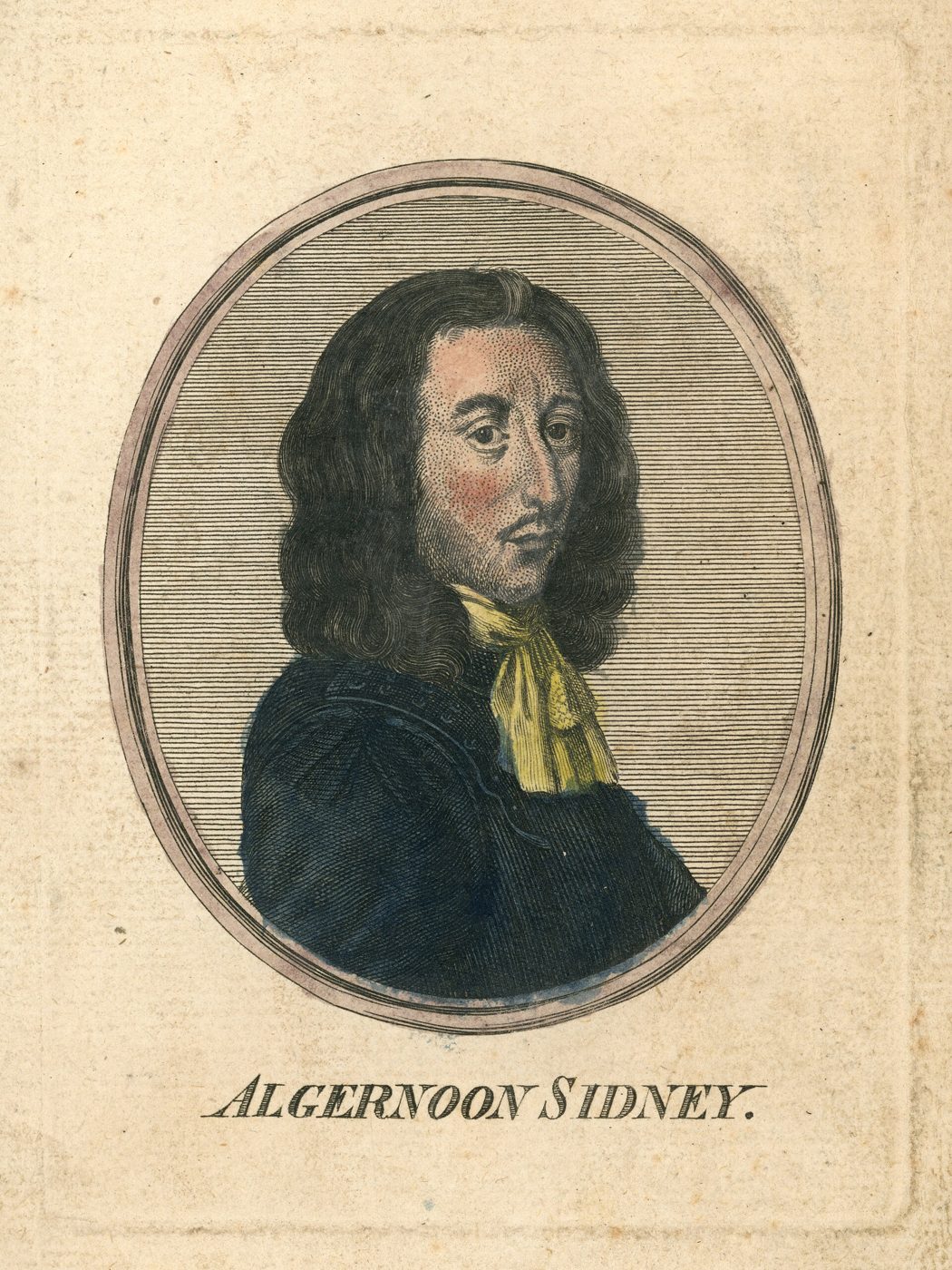
On the morning of December 7, 1683, a 60-year-old Englishman named Algernon Sidney climbed the scaffold on Tower Hill in London and was beheaded.1 A month earlier a jury had convicted him of plotting against King Charles II. The law of treason required two witnesses. The Crown had one, a lord who had turned informer. For the second, the prosecution carried into court a stack of Sidney's own handwriting, an unpublished manuscript that argued against the divine right of kings. Lord Chief Justice Jeffreys let the pages count as a witness, on the principle that to write is to act.1
The manuscript was a reply to a book about Adam. That sounds like an odd thing to hang a man over, and it was not odd to anyone alive in 1683. The book was Patriarcha, written by Sir Robert Filmer and published in 1680, twenty-seven years after Filmer's death.2 Its argument was short. The first man, Adam, ruled the world by God's gift. Every king since is Adam's heir. A subject who resists his king therefore resists God's own arrangement for the human race.
So the opening chapters of Genesis were not only Sunday reading in the seventeenth century. They were a battlefield over a practical question: who has the right to rule, and what limits that right? The answers worked out in that fight became part of the argument of the Declaration of Independence. This lesson starts where those writers started, in the Garden.
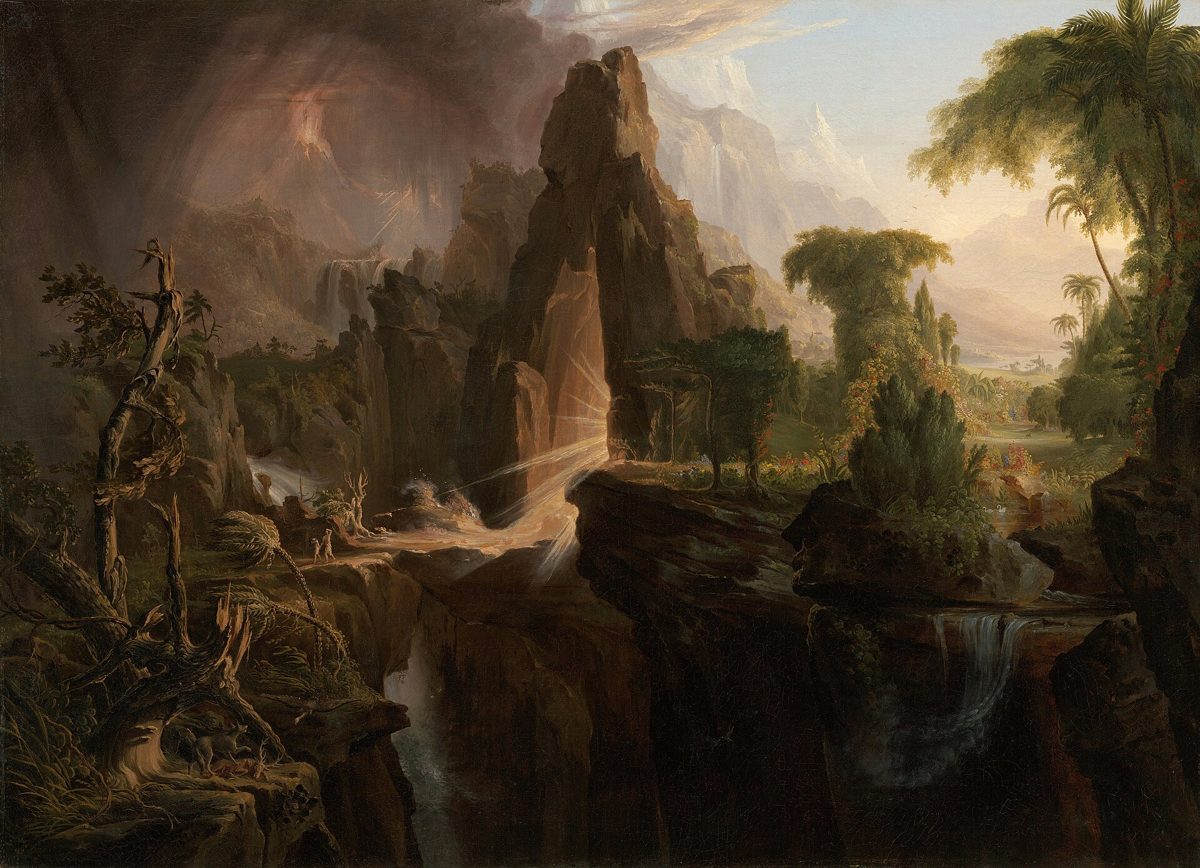
What Genesis Says, Line by Line
Before the political fight, the text. Seventeenth-century English readers knew the King James Version nearly by heart, so that is the translation to read them in.
Made in the image of God
"And God said, Let us make man in our image, after our likeness: and let them have dominion over the fish of the sea, and over the fowl of the air, and over the cattle, and over all the earth, and over every creeping thing that creepeth upon the earth. So God created man in his own image, in the image of God created he him; male and female created he them."
Genesis 1:26 to 1:27, King James Version.3
Two things stand out for a reader thinking about government. First, the image of God is given to the human race as a whole, to "them," male and female. No class, no family line, and no office is singled out. Second, the dominion listed here runs over fish, birds, cattle and "every creeping thing." Man is given rule over the animals and the earth. The text gives no human being rule over another.
Later in Genesis, after the Flood, the same idea returns as the reason murder is a crime: "Whoso sheddeth man's blood, by man shall his blood be shed: for in the image of God made he man."4 Human life is protected by the law because of what a human being is, and that rests on a fact about the person and not on the permission of a king.
Told to dress it and keep it
The second creation account puts the man in the Garden with a job. "And the LORD God took the man, and put him into the garden of Eden to dress it and to keep it."5 Dominion is a work assignment. Man tills and guards what belongs to someone else. Readers have long taken this as stewardship: authority exercised for an owner who will ask for an account. That reading matters later, because it makes every human office, a king's included, a trust and not a possession.
The first law
Then comes the first law in the Bible, and the first prohibition in human history.
"Of every tree of the garden thou mayest freely eat: But of the tree of the knowledge of good and evil, thou shalt not eat of it: for in the day that thou eatest thereof thou shalt surely die."
Genesis 2:16 to 2:17, King James Version.5
Look at how the command is built. It comes from a lawgiver who stands above the man. It states a penalty. It leaves a very wide range of free action, "every tree of the garden," and fences one thing off. The shape of it is worth noticing. A broad liberty, fenced by one rule the man did not write and cannot rewrite.
The knowledge of good and evil
The serpent's pitch to the woman is a lesson in political philosophy, whether or not the author meant it so. "Ye shall not surely die: For God doth know that in the day ye eat thereof, then your eyes shall be opened, and ye shall be as gods, knowing good and evil."6 The offer is autonomy in the strict sense of that Greek word. It means self-law: to decide for yourself what is good and what is evil. Later in the chapter God says the man "is become as one of us, to know good and evil," and sends him out of the Garden.6
That is the Christian root of a suspicion the American founders shared. A human being who sets himself up as the source of right and wrong is dangerous, and a human being with unchecked power is more dangerous still. Madison would put it in Federalist 51: "If men were angels, no government would be necessary."7 Genesis got there first, and in one chapter.
The story's next scene finishes the argument. When Cain kills Abel, God asks, "Where is Abel thy brother?" Cain answers, "Am I my brother's keeper?"8 The question hangs there. The Bible's answer, repeated over the next thousand pages, is yes. Each person answers to God for how he treats the others. The state is never the final court of appeal, because no man is the final judge of his own acts.
Filmer's Argument and Its Best Case
Sir Robert Filmer was no fool, and his case deserves its strongest statement. He was a Kentish gentleman who lived through the English Civil War and died in 1653, four years after Charles I was beheaded.2 He saw where the opposite theory led. The school of thought he attacked said, in his words, that "Mankind is naturally endowed and born with Freedom from all Subjection, and at liberty to chose what Form of Government it please."9 If that is true, he reasoned, then every king holds office only by the people's leave and can be removed by them. And a government that the crowd can unmake at will looks a good deal like no government at all.
Filmer then turned to Scripture for a rival origin. Adam was created first. He had children. A father governs his children, and God commanded children to honor their parents. Filmer put it plainly: "This Lordship which Adam by Command had over the whole World, and by Right descending from him the Patriarchs did enjoy, was as large and ample as the Absolutest Dominion of any Monarch which hath been since the Creation."10 In another place he quoted the Catholic theologian Bellarmine and bent the words to his own purpose: "Creation made man Prince of his Posterity."11
The theory had real strengths. It rested on a familiar fact, the authority of fathers. It claimed the support of the Bible. It also had a plain political payoff in a century of civil war, because it promised that order had a firm, inherited foundation. And it bit hard where the other side was weak. If all men are born equal and free, Filmer asked, how does any government ever get started? Nobody alive had signed anything.
The doctrine also had a famous embarrassment, and Filmer saw it coming. If every king descends from Adam, which king is the true heir? He admitted that people had in many cases lost the knowledge of the proper line. His answer was that the heir exists even if no one can name him: "For an Heir there always is."12 Locke would have a great deal of fun with that sentence.
Filmer was no marginal crank. The historian John Kenyon argued that in the political debates of 1689 to 1720, Filmer, and not Hobbes, Locke or Sidney, was the most influential thinker.13 Knowing what Locke and Sidney had to overcome makes their answer easier to weigh.
Locke Answers From the Text
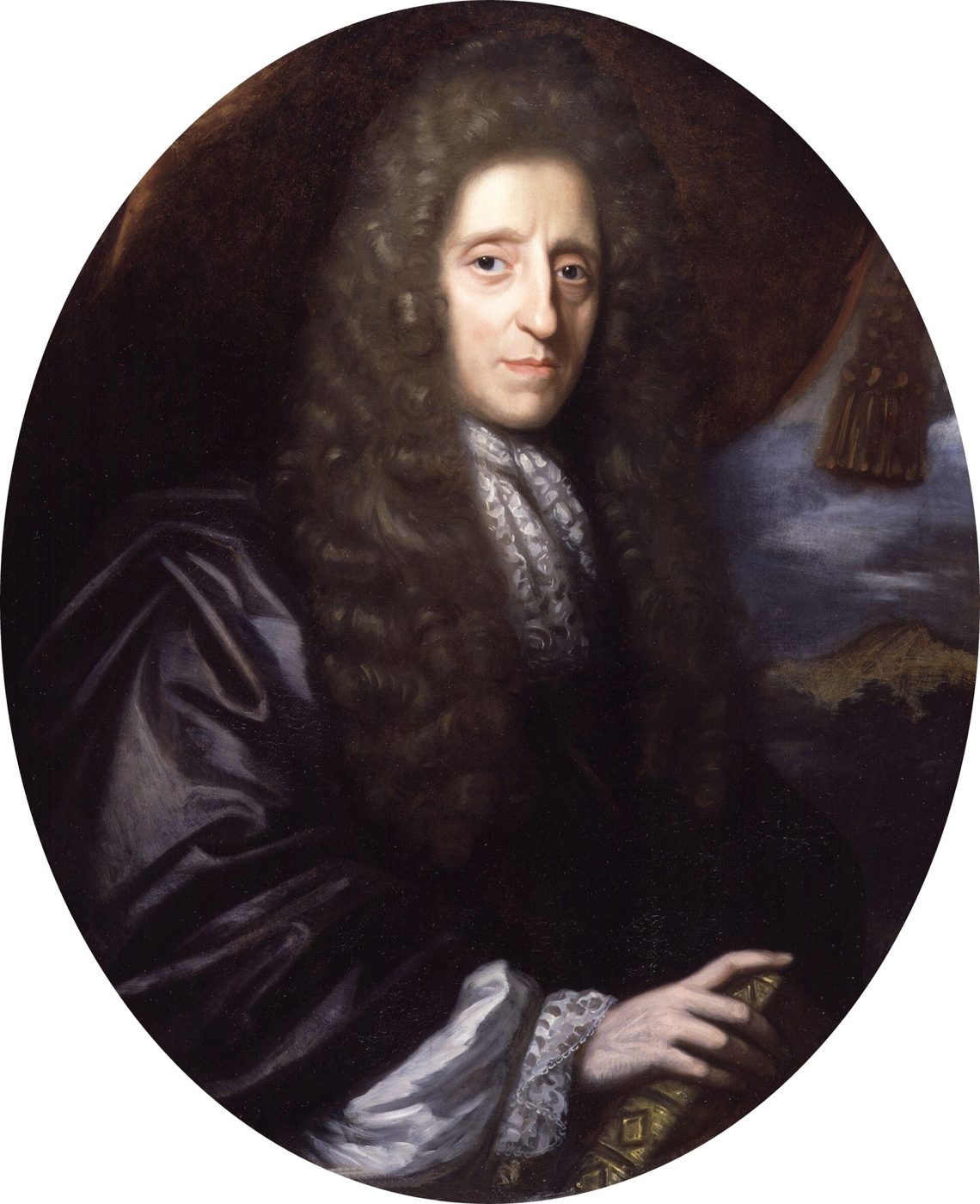
John Locke's Two Treatises of Government appeared anonymously in December 1689, though the title page said 1690.14 Most of it was written earlier, during the political crisis of 1679 to 1681, and revised afterward in Dutch exile. Historians still argue over exactly when; Peter Laslett put the bulk in 1679 to 1681, and Richard Ashcraft argued for a later date.15 The first of the two treatises is a point-by-point refutation of Filmer. It is long, often tedious, and conclusive. The Second Treatise is the part Americans read, and it opens by summing up what the First had done.
"All these premises having, as I think, been clearly made out, it is impossible that the rulers now on earth should make any benefit, or derive any the least shadow of authority from that, which is held to be the fountain of all power, Adam's private dominion and paternal jurisdiction."
John Locke, Second Treatise of Government, 1689, chapter 1, section 1.16
The first treatise argues from Scripture itself. Genesis gave Adam dominion over the earth and the animals, Locke says, and no rule over other men. Even if Adam did have some fatherly power, nothing in the Bible says it passed to a single heir. And no one can now trace the line of heirs anyway, since "the knowledge of which is the eldest line of Adam's posterity, being so long since utterly lost."16 That left Filmer's kings with no argument for their authority.
Locke then built the alternative. He began where Genesis begins, with free people who owe their existence to God.
"To understand political power right, and derive it from its original, we must consider, what state all men are naturally in, and that is, a state of perfect freedom to order their actions, and dispose of their possessions and persons, as they think fit, within the bounds of the law of nature, without asking leave, or depending upon the will of any other man."
Locke, Second Treatise, chapter 2, section 4.17
The phrase "within the bounds of the law of nature" carries the weight. Locke's state of nature has rules. Think of the condition Adam and Eve were in before the Fall: free, equal, and under a law from above. Two sections later he says so outright.
"The state of nature has a law of nature to govern it, which obliges every one: and reason, which is that law, teaches all mankind, who will but consult it, that being all equal and independent, no one ought to harm another in his life, health, liberty, or possessions: for men being all the workmanship of one omnipotent, and infinitely wise maker; all the servants of one sovereign master, sent into the world by his order, and about his business; they are his property, whose workmanship they are, made to last during his, not one another's pleasure."
Locke, Second Treatise, chapter 2, section 6.18
Read that sentence slowly. Every person is God's workmanship and God's servant, made for his pleasure and not for any other man's. That reasoning leaves a ruler no claim to own his subjects, because they were never his to begin with. It also fences off the individual from the crowd: nobody may harm another in "his life, health, liberty, or possessions." Later pages build on exactly this ground: the right of the people to make a government, to be judged by its own laws, and to resist when it turns tyrant. Locke's route to property starts in the same place. The earth, he says, was given "to mankind in common," and a man acquires a property in a part of it by mixing his labor with it.19
Sidney's Answer: Liberties Come From God and Nature
Sidney's reply to Filmer, the one that cost him his life, takes a different road to the same destination. The Discourses Concerning Government is a sprawling book. It runs through Greek, Roman, Hebrew and English history, mocks Filmer's reading of Scripture, and works out an elaborate account of how free peoples make their own governments. It reached print only in 1698, fifteen years after he died.20
One of his section headings sums up the whole book:
"The liberties of nations are from God and nature, not from kings."
Algernon Sidney, Discourses Concerning Government, 1698, chapter 3, section 31 (heading).21
Filmer had said that whatever liberties a people enjoy are a grant from their prince, a gift he may in principle take back. Sidney replied that this gets the order of things reversed. A man born "under the same condition with the rest of mankind," he says, cannot hold a right that all the others lack, unless they conferred it on him, and he cannot be said, "without the utmost absurdity," to grant liberties to the very people who made him what he is. Kings do not hand out liberty. Free people hand out offices, and keep the rest.21
Lesson 6 of this module follows how these books reached the men who wrote the Declaration. Here the point is simpler. By the time the colonists reached for these books, a century of English argument had already tied the Genesis story to a political conclusion: human beings are created free and equal, under a law they did not make, and no one holds a hereditary right to rule them.
A Law Above the King
The Hebrew Bible supplied one more thing the English reader could use: a picture of kingship under law. Israel asked for a king and God warned them what they would get. The prophet Samuel recited the "manner of the king that shall reign over you: He will take your sons, and appoint them for himself, for his chariots, and to be his horsemen."22 That speech is a warning. The story also holds a document. When Saul was chosen, "Samuel told the people the manner of the kingdom, and wrote it in a book, and laid it up before the LORD."23 Many Protestant writers read that book as a written constitution for the kingdom.
The Law of Moses went further. It told the future king to make a personal copy of the law, to read in it all his days, so that "his heart be not lifted up above his brethren."24 And when King David used his power to take another man's wife and have the man killed, the prophet Nathan walked into the palace and said to the king, "Thou art the man."25 No court could try David. A prophet could tell him he was under a higher law, and the text records that David accepted it.
English Protestants prized these passages. They did not claim that the Old Testament was a ready-made constitution. They did claim that it showed God's mind on rulers: a king is a servant of the law, he answers to God, and his subjects may remind him of both. Filmer's side had its own texts, of course. Paul in Romans 13 told Christians to be subject to the higher powers, and the Psalms spoke of God's anointed. The argument was never a contest between people who respected the Bible and people who did not. Both sides quoted it all day. The question was which passages governed which. Module 52 returns to Romans 13 in full.
The Puritan Covenant
The settlers who built the first English colonies in New England brought the Bible's political patterns with them and put them to work. In their churches a congregation formed itself by covenant, a mutual promise made before God. The same instinct shaped their civil life. In November 1620, before the Mayflower passengers stepped ashore at Cape Cod, forty-one men signed an agreement to "covenant and combine ourselves together into a civil Body Politick," promising to make "just and equal Laws" for the colony's general good, and pledging "all due Submission and Obedience" to them.26 Those settlers made a government out of a promise, in the presence of God and one another.
Ten years later John Winthrop, the governor of the Massachusetts Bay Company, preached a lay sermon to the settlers on the ship Arbella. He told them the voyage was a covenant between themselves and God, with terms and penalties: "We are entered into Covenant with Him for this worke."27 If they kept it, God would bless them. If they dealt falsely with God in the work they had undertaken, "wee shall be made a story and a by-word through the world." And in the same sermon came the line that outlived the Puritans: "wee shall be as a citty upon a hill. The eies of all people are uppon us."27
Winthrop's sermon appeals to duty and says little about rights. It still lays out a way of looking at self-government that Americans kept: a people bound together by promises, under a law above them, answerable to God for how they use their liberty. The covenant tradition also shaped the New England town meeting and the written colonial codes. Lesson 3 looks at the Massachusetts Body of Liberties of 1641, which opens with a promise that no one's life, honor, goods or person will be taken from him except under a published law.
The Puritans were far from perfect students of their own principles. The same General Court that governed by covenant convicted Roger Williams of "diverse, new, and dangerous opinions" and ordered him banished in October 1635.28 In 1660 Massachusetts hanged a Quaker, Mary Dyer, on Boston Common for coming back into the colony after being banished.29 A student of liberty ought to know both facts. The principle that a ruler is bound by a higher law cut against Puritan magistrates too, and it took other people, Williams himself and later the Quakers and Baptists, to press that point home. The idea was bigger than the people who first held it.
From the Garden to the Declaration
Put the pieces side by side. Genesis says every person bears the image of God, so no person is born to be another's property. It says God gave the first command, so law begins above the human lawgiver. It says the attempt to become one's own lawgiver is the original sin, so power over others needs checks. Filmer used the same chapters to say kings were Adam's heirs. Locke and Sidney said Filmer misread them. The colonists picked the winner.
Look at the second paragraph of the Declaration of Independence: "all men are created equal; that they are endowed by their Creator with certain unalienable rights."30 The wording is Jefferson's, and the logic belongs to Locke and Sidney by way of Genesis. The Declaration does not argue the point at length, because the readers in 1776 already held it. "Created" says that equality is a fact about origins. "Endowed by their Creator" says that rights are given, before any government exists, and that a government can only secure or violate them. That is why the same paragraph can go on to say that governments are instituted "to secure these rights" and derive "their just powers from the consent of the governed."
Scholars still debate how much of the founding generation's political thought came from the Bible and how much from Greece, Rome and the English common law. Daniel Dreisbach has traced how the founding generation used Scripture in argument and rhetoric.31 Both traditions fed the stream. This module follows each of them in turn. The point of this first lesson is that the Garden gave the colonists their starting premises: equal dignity, a law above rulers, and a standing refusal to let any one person claim to be the source of right and wrong.
Timeline: Adam to the Declaration
- 1620 Forty-one men sign the Mayflower Compact and "covenant and combine" into a civil body politic.
- 1630 John Winthrop preaches "A Model of Christian Charity" aboard the Arbella.
- 1653 Sir Robert Filmer dies. His Patriarcha has not yet been printed.
- 1680 Patriarcha is published and becomes the standard defense of the divine right of kings.
- 1683 Algernon Sidney is tried on November 7 and beheaded on Tower Hill on December 7.
- 1689 Locke's Two Treatises of Government appear anonymously in December.
- 1698 Sidney's Discourses Concerning Government is finally published.
- 1776 The Declaration states that all men are created equal and endowed by their Creator with rights.
Two Answers to One Question
| Question | Filmer, Patriarcha (1680) | Locke and Sidney (1689, 1698) |
|---|---|---|
| What did God give Adam? | Absolute rule over the world and his children, which passed to kings. | Dominion over the earth and animals. Nothing in Genesis grants one man rule over other men. |
| Are people born free? | No. Everyone is born under a father, and kings are fathers of their people. | Yes. All are God's workmanship, equal, and bound by the law of nature. |
| Where do liberties come from? | From the king's grace. | From God and nature, not from kings. |
| Can a people resist a king? | No. Resistance is resistance to God's order. | When the ruler violates the trust, the people may act. (Lesson 6.) |
Learn more
- Filmer, Patriarcha, Chapter I: read the divine right argument in its own words before judging it.
- Locke, Second Treatise of Government (Project Gutenberg): start with chapters 1 to 5.
- Sidney, Discourses Concerning Government (1698): a scanned edition; the chapter 3 headings give an outline of the argument.
- Winthrop, A Model of Christian Charity: the full sermon, with the city on a hill in context.
- The Mayflower Compact (Avalon Project): one paragraph, and the first American civil covenant.
- The Declaration of Independence (Avalon Project): read the second paragraph again after this lesson.
- The King James Bible (Project Gutenberg): Genesis 1 to 4, Deuteronomy 17 and 1 Samuel 8 to 12 are the passages used here.
Notes
- Jonathan Scott, Algernon Sidney and the Restoration Crisis, 1677 to 1683 (Cambridge: Cambridge University Press, 1991), summarized in "Algernon Sidney," arrest, trial of 7 November 1683 and execution of 7 December 1683. Read it online. ↩
- Robert Filmer, Patriarcha, or the Natural Power of Kings (London, 1680), published after Filmer's death in 1653; on its probable composition before the Civil War see "Robert Filmer." Read it online. ↩
- Genesis 1:26 to 1:28, King James Version. Read it online. ↩
- Genesis 9:6, King James Version. Read it online. ↩
- Genesis 2:15 to 2:17, King James Version. Read it online. ↩
- Genesis 3:4 to 3:6, 3:22, King James Version. Read it online. ↩
- James Madison, Federalist No. 51, 1788. Read it online. ↩
- Genesis 4:9, King James Version. Read it online. ↩
- Robert Filmer, Patriarcha, chapter 1, section 1, opening statement of the doctrine he opposes. Read it online. ↩
- Filmer, Patriarcha, chapter 1, section 5, on the "Lordship which Adam by Command had over the whole World." ↩
- Filmer, Patriarcha, chapter 1, section 4, quoting the argument from Cardinal Bellarmine, "Creation made man Prince of his Posterity." ↩
- Filmer, Patriarcha, chapter 1, section 9, on what becomes of the right of fatherhood when a crown has no heir. ↩
- John Kenyon, The Revolution Principles: The Politics of Party, 1689 to 1720 (Cambridge: Cambridge University Press, 1977), as quoted in "Robert Filmer." Read it online. ↩
- John Locke, Two Treatises of Government (London, 1690 on the title page, published anonymously in December 1689). Read it online. ↩
- Peter Laslett, "Introduction," in John Locke, Two Treatises of Government (Cambridge: Cambridge University Press, 1960), dating most of the writing to 1679 to 1681; Richard Ashcraft, Revolutionary Politics and Locke's Two Treatises of Government (Princeton: Princeton University Press, 1986), arguing for a later date. Summarized in "Two Treatises of Government". ↩
- John Locke, Second Treatise of Government (1689), chapter 1, section 1. Read it online. ↩
- Locke, Second Treatise, chapter 2, section 4. Read it online. ↩
- Locke, Second Treatise, chapter 2, section 6. Read it online. ↩
- Locke, Second Treatise, chapter 5, sections 25 and 27. Read it online. ↩
- Sidney, Discourses Concerning Government (London, 1698), first published after his execution; see Scott, Algernon Sidney and the Restoration Crisis. Read it online. ↩
- Algernon Sidney, Discourses Concerning Government (London, 1698), chapter 3, section 31, heading. Read it online. ↩
- 1 Samuel 8:11, King James Version. Read it online. ↩
- 1 Samuel 10:25, King James Version. Read it online. ↩
- Deuteronomy 17:18 to 17:20, King James Version. Read it online. ↩
- 2 Samuel 12:7, King James Version. Read it online. ↩
- "The Mayflower Compact," 11 November 1620 (Old Style); the Avalon text lists 41 signers. Read it online. ↩
- John Winthrop, "A Model of Christian Charity," delivered aboard the Arbella, 1630. Read it online. ↩
- "Roger Williams," on the General Court's conviction and sentence of banishment, October 1635. Read it online. ↩
- "Mary Dyer," hanged in Boston on 1 June 1660 for returning to Massachusetts in defiance of the law against Quakers. Read it online. ↩
- The Declaration of Independence, 4 July 1776, second paragraph. Read it online. ↩
- Daniel L. Dreisbach, Reading the Bible with the Founding Fathers (New York: Oxford University Press, 2017). ↩
Terms in this lesson
- Image of God
- The teaching from Genesis 1:26 and 1:27 that every human being, male and female, was made in the likeness of God. Political writers took it to mean that no person is born the natural property of another.
- Divine right of kings
- The claim that a monarch holds power directly from God and answers to God alone, not to the people or to a parliament.
- Patriarchalism
- Sir Robert Filmer's theory that royal power descends from the fatherly authority God gave Adam, so that every king is the heir of the first father.
- State of nature
- Locke's name for the condition of people before government, in which all are free and equal but still bound by the law of nature.
- Law of nature
- A moral law that binds all people because of what they are, whether or not any government has enacted it. Locke said reason teaches it to anyone who will consult it.
- Covenant
- A solemn agreement made in the presence of God. Puritans used it to describe both the church and the civil community.
- Consent of the governed
- The principle that legitimate government rests on the agreement of the people it rules.
Sources
- The King James Bible (Project Gutenberg) checked 2026-10
- Robert Filmer, Patriarcha, Chapter I (Wikisource) checked 2026-10
- John Locke, Second Treatise of Government (Project Gutenberg) checked 2026-10
- Algernon Sidney, Discourses Concerning Government (Internet Archive) checked 2026-10
- John Winthrop, A Model of Christian Charity (Wikisource) checked 2026-10
- The Mayflower Compact (Avalon Project) checked 2026-10
- The Declaration of Independence (Avalon Project) checked 2026-10
- Two Treatises of Government (Wikipedia) checked 2026-10
- Algernon Sidney (Wikipedia) checked 2026-10