Lesson 2 of 10 · about 24 minutes
Natural Law From Cicero to Aquinas
You'll be able to
- Describe how Antigone, Aristotle and Cicero each put the idea of a law above human legislation into words
- Explain Aquinas's four kinds of law and why he held that an unjust human law is a perversion of law
- Say what Roman law, Paul and Augustine added to the Greek and Stoic inheritance
- Weigh the strongest objections to natural law, including the case for obeying unjust laws to keep the peace
On December 7, 43 BC, soldiers of Mark Antony caught up with a 63-year-old man near Formiae, on the coast south of Rome. He had been on the run since the proscription lists went up. When the soldiers arrived he did not fight. He leaned out of his litter and bared his neck. They cut off his head, and his hands, the hands that had written the speeches against Antony, and carried them back to Rome. They were nailed up on the speakers' platform in the Forum.1
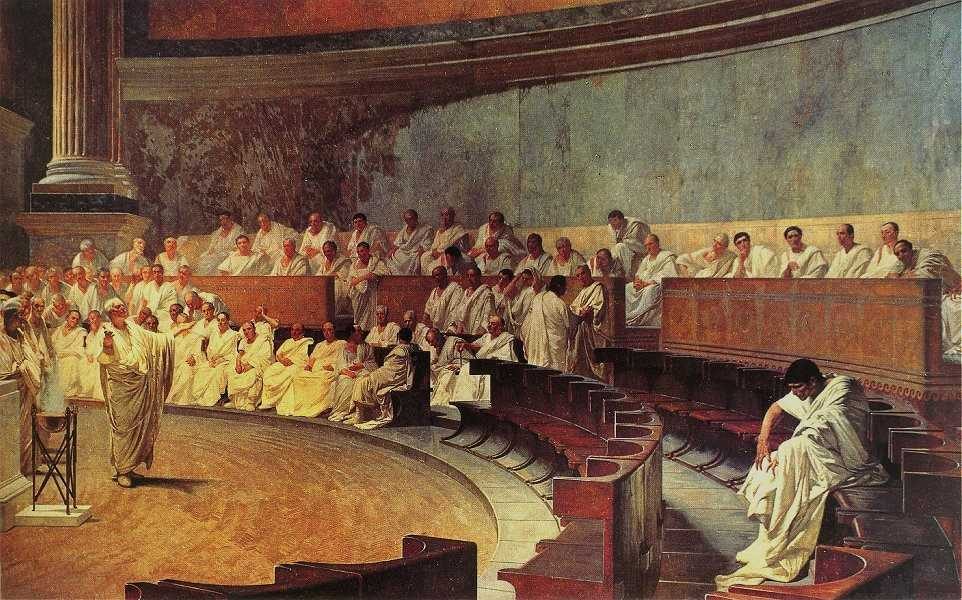
The man was Marcus Tullius Cicero, lawyer, consul, and the greatest orator Rome produced. Years earlier, in a dialogue about the best form of government, he had written down a passage that would be copied, quoted, argued over, and finally built into the foundations of Western law. It said that a true law exists that no senate or assembly made, that it binds every people, and that its author is God.
True Law, Right Reason
Cicero wrote De re publica (On the Republic) between 54 and 51 BC. The work was lost in the Middle Ages, and the main text was recovered only in 1819, when Cardinal Angelo Mai found it written beneath a copy of Augustine in the Vatican Library.2 The famous passage had never disappeared. A Christian writer named Lactantius copied it into his Divine Institutes in the early fourth century, to show that a pagan had grasped a truth Christians held. Here it is, in the standard nineteenth-century English translation of Lactantius:
"There is indeed a true law, right reason, agreeing with nature, diffused among all, unchanging, everlasting, which calls to duty by commanding, deters from wrong by forbidding ... Nor will there be one law at Rome and another at Athens; one law at the present time, and another hereafter: but the same law, everlasting and unchangeable, will bind all nations at all times; and there will be one common Master and Ruler of all, even God, the framer, arbitrator, and proposer of this law."
Cicero, On the Republic 3.33, as preserved by Lactantius, Divine Institutes 6.8.3
Four claims sit inside those lines. The law is "right reason," so any person who reasons well can see it. It is "agreeing with nature," meaning it fits what human beings are. It is the same in Rome and in Athens, so no state can repeal it. And it has an author, who is God. Cicero was a pagan Roman statesman, and here he drew on the Stoic school of philosophy. Historians usually credit the Stoics with turning the Greek idea of natural justice into a universal natural law, binding on every person and every empire.4 Cicero carried that idea into Roman law and politics.
It had a practical edge. If a true law exists above the Senate, the Senate can pass an unjust decree and the decree will not bind in the deepest sense. A Roman who knew Cicero's work could therefore say of a tyrant's order that it was no true law at all.
Before Cicero: Antigone and Aristotle
The Greeks got there first, and they got there in a play. In Antigone, performed about 441 BC, Creon rules Thebes after a civil war. He issues an edict that the traitor Polyneices shall go unburied. His sister Antigone buries him anyway. Creon demands to know why she broke the law. She answers with the lines that opened the long tradition of arguing from a higher law against a king.5
"Yea, for these laws were not ordained of Zeus, / And she who sits enthroned with gods below, / Justice, enacted not these human laws. / Nor did I deem that thou, a mortal man, / Could'st by a breath annul and override / The immutable unwritten laws of Heaven. / They were not born today nor yesterday; / They die not; and none knoweth whence they sprang."
Sophocles, Antigone, about 441 BC, lines 450 to 457, translated by F. Storr.5
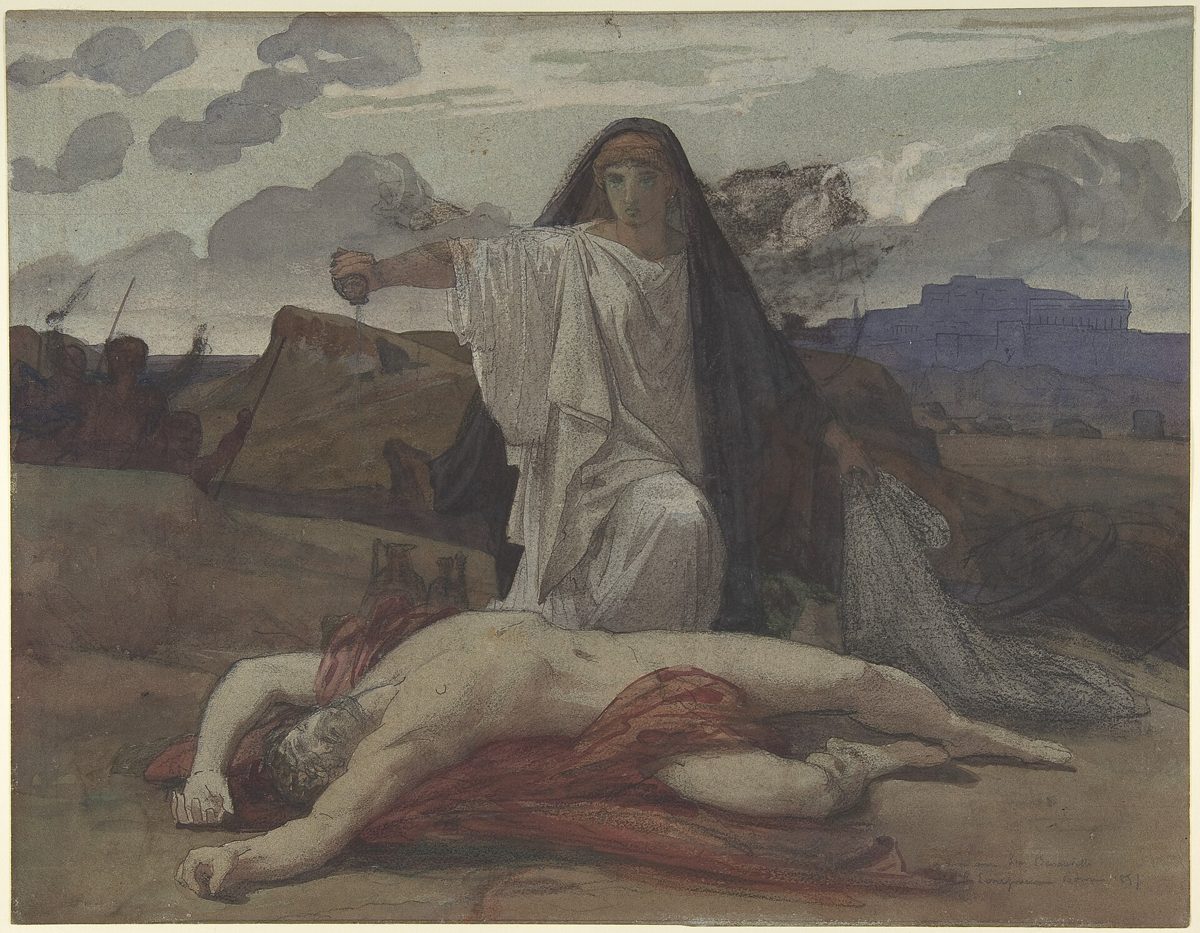
Creon has the power. Antigone has an appeal to something older. The play does not hand her a simple victory: Sophocles shows the cost of her defiance, and Creon is no cartoon tyrant. He believes the city needs order. That balance made the play last. It still poses the question every lesson in this module must face: what do we owe a government, and what can it never demand of us?
Aristotle, writing in the fourth century BC, treated the question in a handbook for public speakers. In the Rhetoric he lists the kinds of just and unjust acts and says they have been defined by reference to two kinds of law.
"By the two kinds of law I mean particular law and universal law. Particular law is that which each community lays down and applies to its own members: this is partly written and partly unwritten. Universal law is the law of Nature. For there really is, as every one to some extent divines, a natural justice and injustice that is binding on all men, even on those who have no association or covenant with each other."
Aristotle, Rhetoric 1.13, translated by W. Rhys Roberts.6
Aristotle then names Antigone as the speaker who understood this, and elsewhere in the book he tells advocates what to do when the written statute is against their client: "clearly we must appeal to the universal law, and insist on its greater equity and justice."7 The appeal to nature was already a standard move for Athenian advocates. What Cicero added was an author for the law, and an empire in which to apply it.
What Roman Lawyers Did With It
Roman jurists were practical people and they absorbed the idea. Their great summary arrived in 533 AD, when the Emperor Justinian published the Institutes, a textbook for law students, drawing on centuries of earlier jurists.8 It opens with a definition: "Justice is the set and constant purpose which gives to every man his due."9
The second title divides the law in three. There is natural law, the law of nations, and the civil law of each city. The three are not tidy. The Institutes define natural law in a way a modern reader may find strange: "The law of nature is that which she has taught all animals; a law not peculiar to the human race," the source of marriage, the begetting of children, and their upbringing. The law of nations, by contrast, covers "those rules prescribed by natural reason for all men," observed by all peoples alike.10 This was a different note from Cicero's, and the two lines of thought ran side by side for centuries.
One passage in the Institutes shows what the idea cost. Justinian's lawyers note that slavery is part of the law of nations and add, in the same breath, that it is contrary to the law of nature, "for by the law of nature all men from the beginning were born free."10 The title on freedom and slavery says it again.11 The empire kept slavery on its books while its own lawbook said nature disapproved. American law would live inside the same contradiction for generations. The principle sat on paper long before it governed practice.
Paul and Augustine
Christianity did not invent natural law, but it gave the idea a biblical anchor. The apostle Paul, writing to the church at Rome, observes that Gentiles, who had never received the Law of Moses, still act on a moral law.
"For when the Gentiles, which have not the law, do by nature the things contained in the law, these, having not the law, are a law unto themselves: Which shew the work of the law written in their hearts, their conscience also bearing witness."
Romans 2:14 to 2:15, King James Version.12
Here was a text that fit Cicero's insight to Christian belief. The law "written in their hearts" is the same moral law that the Jews received on tablets, now known to everyone by conscience. Later theologians pointed to Paul whenever they needed to say that natural law and revealed law had one author.
Augustine, bishop of Hippo in North Africa, drew the political edge. In City of God, completed in the 420s, he asked what a kingdom is when it has no justice. "Justice being taken away, then, what are kingdoms but great robberies?"13 He pointed to a band of pirates, which has a leader, a pact among its members, and an agreed way of dividing the booty. What the pirates lack is justice, and that missing thing makes them criminals however well-organized. A state that has lost it differs from them in size alone.
Augustine is also the source of a line that has been repeated in sermons and speeches ever since. In his early dialogue On Free Choice of the Will, written between 388 and 395, one speaker says that a law which is not just does not seem to him to be a law.14 Popular summaries turn that into the flat statement "an unjust law is no law at all." The original is more careful than the slogan, and Aquinas, who quotes it twice, was careful about it too. He renders it "a law that is not just, seems to be no law at all."14
Aquinas and the Four Laws
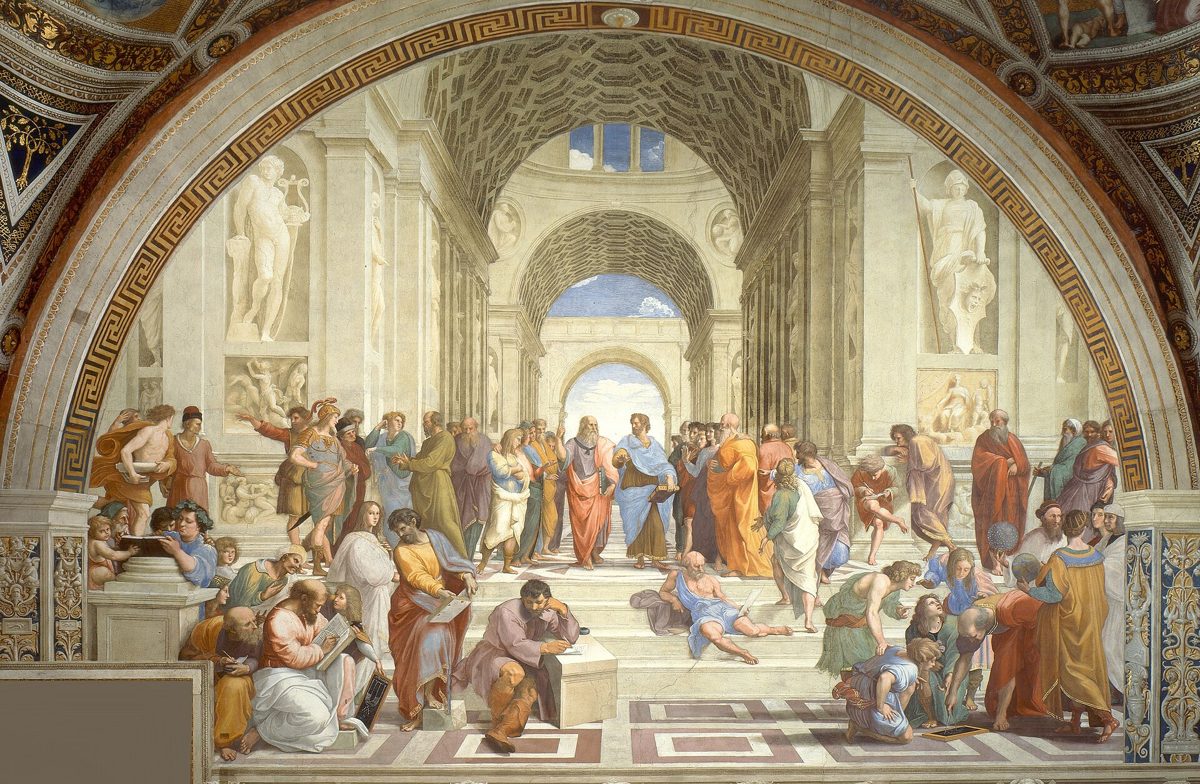
Thomas Aquinas, an Italian Dominican friar who lived from about 1225 to 1274, brought all this into one system in the Summa Theologiae.15 The part that matters here is a short treatise on law in the Prima Secundae (questions 90 to 108), which has shaped legal thought for seven centuries. Aquinas wrote it as a theologian. Its first lines are about law in general.
"An ordinance of reason for the common good, made by him who has care of the community, and promulgated."
Aquinas, Summa Theologiae, I-II, q. 90, a. 4 (definition of law).16
Take the definition apart, because every phrase does work. Law is an ordinance of reason, which separates it from pure will. It aims at the common good, which separates it from the ruler's private advantage. It is made by someone who actually has care of the community, which excludes usurpers and random commands. And it is promulgated, meaning published, so that people can know what it says. Aquinas wrote that in the thirteenth century. Nearly four centuries later the Massachusetts Body of Liberties of 1641 would demand the same thing, laws "sufficiently published."17
Eternal law
At the top stands the eternal law. "The very Idea of the government of things in God the Ruler of the universe, has the nature of a law."18 It is God's plan for the whole creation, and nobody but God sees it whole.
Natural law
Humans know part of that plan through reason. "This participation of the eternal law in the rational creature is called the natural law."19 Aquinas adds a line from the Psalms, that the light of God's countenance "is signed upon us," meaning the light of natural reason, "whereby we discern what is good and what is evil," is an imprint of the divine light.19 On the content of natural law he gives one first principle, and everything else follows from it: "good is to be done and pursued, and evil is to be avoided."20
Human law
Communities fill in the details. A natural law says to protect innocent life. A human law sets the penalties, defines the courts, and decides which side of the road to drive on. This is where Aquinas speaks most directly to anyone living under a government.
"Consequently every human law has just so much of the nature of law, as it is derived from the law of nature. But if in any point it deflects from the law of nature, it is no longer a law but a perversion of law."
Aquinas, Summa Theologiae, I-II, q. 95, a. 2.21
Divine law
The fourth kind is the revealed law of Scripture. Aquinas says it is needed because humans are made for an end beyond what natural reason alone can reach, namely eternal happiness, so they need direction "by a law given by God."22
| Kind of law | What it is (Aquinas) | How it is known | Example |
|---|---|---|---|
| Eternal law | God's plan for governing all creation | Fully known to God alone | The order of the universe |
| Natural law | The share of eternal law that rational creatures can know | Reason and conscience | Do not murder; keep promises; good is to be done |
| Human law | Rules enacted for a community, derived from natural law | Publication by the lawful authority | A speed limit; a statute of frauds; a tax code |
| Divine law | Law revealed by God in Scripture | Revelation | The Ten Commandments |
When a Law Is Unjust
Aquinas does not stop at saying a bad law is a "perversion of law." He asks in question 96 whether a human law binds in conscience, and he answers with a distinction. A law can be unjust in two ways. The first kind is contrary to the human good, "either in respect of the end, as when an authority imposes on his subjects burdensome laws, conducive, not to the common good, but rather to his own cupidity or vainglory," or when a man "makes a law that goes beyond the power committed to him," or when burdens are spread unequally across the community. "The like," he says, "are acts of violence rather than laws." The second kind opposes God's law directly: "such are the laws of tyrants inducing to idolatry, or to anything else contrary to the Divine law: and laws of this kind must nowise be observed, because, as stated in Acts 5:29, 'we ought to obey God rather than man.'"23
That second kind is Antigone's case, and it is the case of the apostles who told the Sanhedrin they would keep preaching. But look at what Aquinas says about the first kind. Such laws "do not bind in conscience, except perhaps in order to avoid scandal or disturbance, for which cause a man should even yield his right." In other words, even an unjust law may sometimes deserve outward obedience for the sake of public peace.23 A citizen who treats every disagreement as a reason to disobey is not following Aquinas. The older tradition holds two duties together: refuse what is commanded against God, and bear patiently what is merely unjust when the cost of resistance would be disorder worse than the injury. Module 52 builds on that balance.
Grotius and Pufendorf: Natural Law Goes Modern
The Reformation split Western Christendom, and the wars that followed made some thinkers wonder whether natural law could be grounded in terms every side would accept. The Dutch jurist Hugo Grotius gave the clearest early answer in De jure belli ac pacis (On the Law of War and Peace), published in 1625, in the middle of the Thirty Years' War. His definition keeps the old structure.
"Natural right is the dictate of right reason, shewing the moral turpitude, or moral necessity, of any act from its agreement or disagreement with a rational nature, and consequently that such an act is either forbidden or commanded by God, the author of nature."
Hugo Grotius, The Rights of War and Peace, 1625, book 1, chapter 1, section 10, translated by A. C. Campbell.24
Grotius also made a remark that would be discussed for centuries. In the Prolegomena he said that what he had been arguing would hold to a degree even if one granted, as could not be granted without the utmost wickedness, that there is no God or that God does not care for human affairs.25 Later writers took that sentence either as the start of a natural law with no religious premise, or as a rhetorical device in an author who plainly believed in God. Historians still debate which Grotius meant. The Americans who read him mostly took the second view, since they joined natural law to a Creator without any trouble.
A generation later the German jurist Samuel Pufendorf held the first university chair in the law of nature and nations, created for him at Heidelberg in 1661. His large treatise De jure naturae et gentium appeared in 1672.26 Pufendorf argued that natural law rests on the command of God together with the sociable nature of human beings. By the time the colonists wrote the Declaration of Independence, the opening paragraph could simply refer to "the laws of nature and of nature's God," and readers knew what was meant.27 That vocabulary had been built over two thousand years, and Grotius and Pufendorf were among the last to add to it before the founders took it over.
The Best Case Against Natural Law
The tradition has always had critics, and the strongest deserve a fair hearing.
The first objection comes from the skeptic. If natural law is written on every heart, why do peoples disagree so sharply about right and wrong? Some societies have practiced infanticide or slavery as a matter of course. Defenders answer that disagreement at the margins sits on top of wide agreement at the center: almost every society forbids murder inside the group and honors promises. The objection still has force, and Aquinas conceded part of it. The secondary precepts of the natural law, he wrote, can be "blotted out from the human heart" by evil persuasions, or "by vicious customs and corrupt habits."28
The second comes from the legal positivist. Law, on this view, is whatever the sovereign commands, and mixing it with morality only invites every individual to substitute his own opinion for the statute. Jeremy Bentham, writing in response to the French revolutionaries' declaration of rights, treated appeals to natural rights as unfounded rhetoric.29 The worry is real: "I follow a higher law" has been the cry of tyrants and fanatics as well as saints.
The reply of the natural law tradition is that every legal system already assumes the standard it claims to avoid. The people who object to the Nazi race laws or to chattel slavery do not say that those laws were valid and merely unpleasant. They say the laws were wrong in a way that goes beyond a difference of opinion. The reply also points to the restraint built into Aquinas: the tradition teaches obedience as the default and treats resistance as a grave step, justified in a narrow range of cases.
Timeline: A Law Above the State
- c. 441 BC Sophocles stages Antigone, who buries her brother against the king's edict.
- 4th c. BC Aristotle's Rhetoric separates particular law from the universal law of nature.
- 54 to 51 BC Cicero writes On the Republic and describes a true law, "right reason, agreeing with nature."
- 43 BC Cicero is killed on December 7 on Antony's orders.
- AD 57 or so Paul writes to the Romans that the law is "written in their hearts."
- 420s Augustine completes City of God and asks what kingdoms are without justice.
- 533 Justinian's Institutes divide the law into natural law, the law of nations and civil law.
- 1265 to 1274 Aquinas writes the Summa Theologiae and sets out the four kinds of law.
- 1625 Grotius publishes On the Law of War and Peace.
- 1672 Pufendorf publishes On the Law of Nature and of Nations.
- 1776 The Declaration appeals to "the laws of nature and of nature's God."
What This Gave the Founders
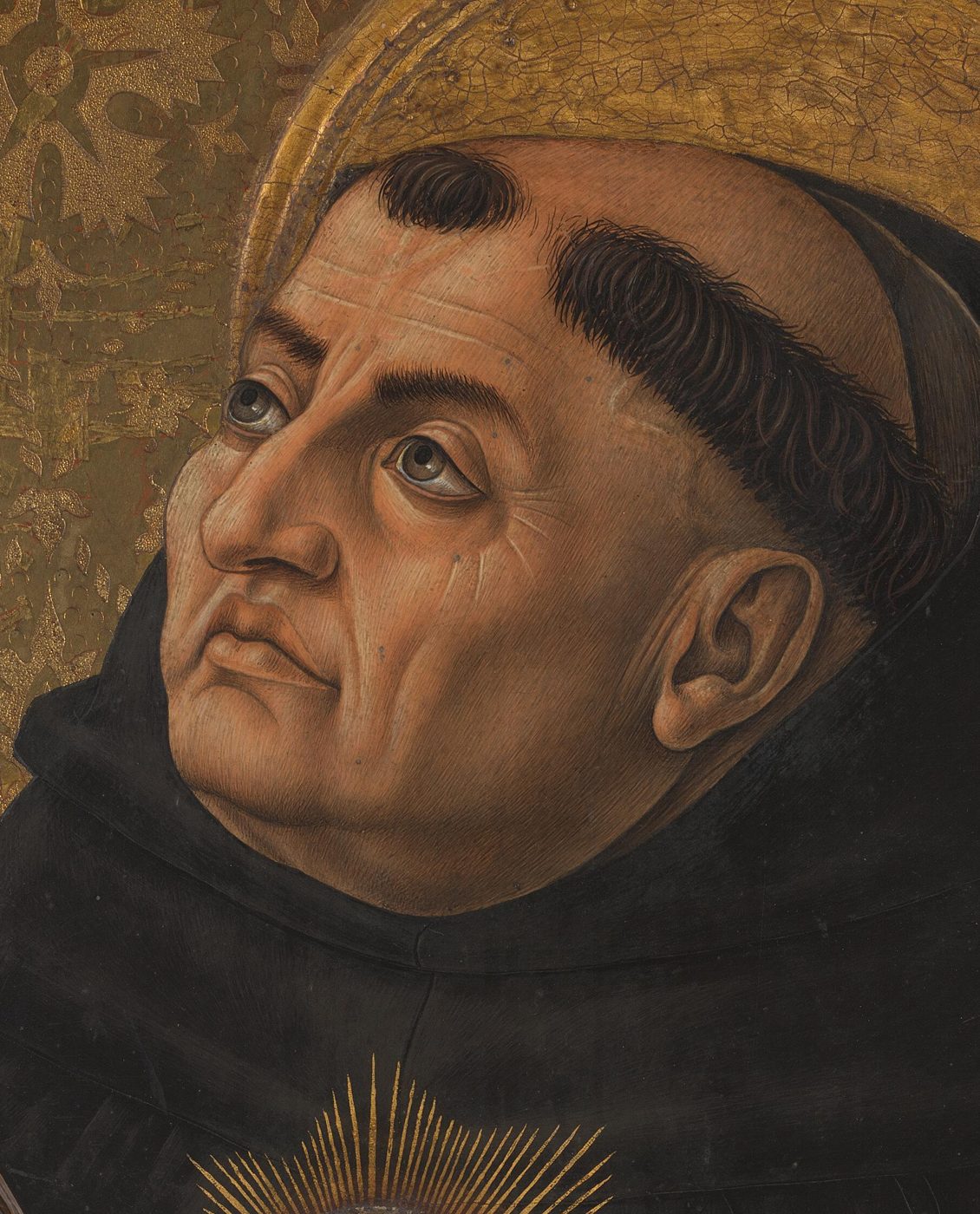
A good deal passed from this long argument into American political life. A standard of right exists above the state, and it can be known by reason. Law has a purpose, the common good, and a law that serves the ruler's appetite is something else wearing the name of law. Law must be public, made by those with lawful authority and promulgated so people can read it. And a conscience bound to God may sometimes have to refuse a human command.
None of these ideas came from the colonists, and few of them came from the English. They came from Athens and Rome by way of the church, were reshaped by a thirteenth-century friar, and were passed down by lawyers and preachers until they showed up in the pamphlets of 1760s Boston. The next lesson follows them to England, where kings and barons worked out how to write a limit on royal power in ink.
Learn more
- Lactantius, Divine Institutes, Book 6 (New Advent): chapter 8 preserves Cicero's full passage on true law.
- Sophocles, Antigone (Project Gutenberg): read the confrontation between Creon and Antigone.
- Aristotle, Rhetoric (MIT Internet Classics Archive): Book 1 chapters 13 and 15 contain the passages on universal law.
- Aquinas, Summa Theologiae, Question 90 (New Advent): the treatise on law starts here; follow with questions 91, 94, 95 and 96.
- Augustine, City of God, Book 4 (New Advent): chapter 4 asks what kingdoms are without justice.
- The Institutes of Justinian (Project Gutenberg): Book 1, titles 1 and 2 are short and worth reading whole.
- Grotius, The Rights of War and Peace (Project Gutenberg): book 1 chapter 1 sets out his definition of natural right.
Notes
- Plutarch's account as summarized in "Cicero," death on 7 December 43 BC at Formiae by order of Mark Antony; his head and hands were nailed to the Rostra in the Forum. Read it online. ↩
- "De re publica," written between 54 and 51 BC; the main surviving text was found in 1819 by Cardinal Angelo Mai in a Vatican palimpsest. Read it online. ↩
- Lactantius, Divine Institutes 6.8, quoting Cicero, De re publica 3.33, in the translation in Ante-Nicene Fathers, vol. 7. Read it online. ↩
- "Natural law," section on Stoic natural law, citing Charles H. McIlwain on the Stoic contribution to political thought. Read it online. ↩
- Sophocles, Antigone, lines 450 to 457, translated by F. Storr. Read it online. The play was first performed about 441 BC; see "Antigone (Sophocles)." ↩
- Aristotle, Rhetoric 1.13 (1373b), translated by W. Rhys Roberts. Read it online. ↩
- Aristotle, Rhetoric 1.15 (1375a), on appealing to the universal law when the written law tells against a case. Read it online. ↩
- "Institutes of Justinian," published 21 November 533 and promulgated with the Digest on 30 December 533. Read it online. ↩
- The Institutes of Justinian 1.1, translated by J. B. Moyle. Read it online. ↩
- Institutes 1.2.1 to 1.2.2. Read it online. ↩
- Institutes 1.5 on freedom and slavery: "by natural law all men were born free." Read it online. ↩
- Romans 2:14 to 2:15, King James Version. Read it online. ↩
- Augustine, City of God 4.4. Read it online. ↩
- Augustine, De libero arbitrio 1.5, as quoted by Aquinas in Summa Theologiae I-II, q. 95, a. 2, and q. 96, a. 4. On the dates of Augustine's work see "On Free Choice of the Will." ↩
- "Thomas Aquinas," born about 1225 and died 7 March 1274. Read it online. ↩
- Thomas Aquinas, Summa Theologiae, I-II, q. 90, a. 4. Read it online. ↩
- "The Massachusetts Body of Liberties," 1641, liberty 1. Read it online. ↩
- Aquinas, Summa Theologiae, I-II, q. 91, a. 1. Read it online. ↩
- Aquinas, Summa Theologiae, I-II, q. 91, a. 2. Read it online. ↩
- Aquinas, Summa Theologiae, I-II, q. 94, a. 2. Read it online. ↩
- Aquinas, Summa Theologiae, I-II, q. 95, a. 2. Read it online. ↩
- Aquinas, Summa Theologiae, I-II, q. 91, a. 4, on the need for divine law. Read it online. ↩
- Aquinas, Summa Theologiae, I-II, q. 96, a. 4. Read it online. ↩
- Hugo Grotius, De jure belli ac pacis (1625), book 1, chapter 1, section 10, translated by A. C. Campbell as The Rights of War and Peace. Read it online. ↩
- Grotius, De jure belli ac pacis, Prolegomena, section 11, the passage on natural law holding even on a hypothetical denial of God, which Grotius himself called a concession that cannot be made without the utmost wickedness. The passage is discussed in standard introductions to Grotius. Read it online. ↩
- "Samuel von Pufendorf," holder of the first chair in the law of nature and nations, created at Heidelberg for him in 1661; De jure naturae et gentium appeared in 1672. Read it online. ↩
- The Declaration of Independence, 4 July 1776, first paragraph. Read it online. ↩
- Aquinas, Summa Theologiae, I-II, q. 94, a. 6. Read it online. ↩
- Jeremy Bentham, Anarchical Fallacies, a critique of the French Declaration of the Rights of Man, which dismissed natural rights as unfounded. ↩
Terms in this lesson
- Natural law
- A standard of right and wrong grounded in human nature and reason, binding on everyone, and prior to any government's statutes.
- Eternal law
- In Aquinas, the plan by which God governs all creation. Natural law is the share of it that rational creatures can know.
- Human law
- The statutes, ordinances and decisions that communities adopt. Aquinas held that they are law only to the extent that they follow from natural law.
- Ius gentium
- Latin for 'law of nations.' In Roman law, rules common to all peoples, such as contracts and the law of war.
- Right reason
- Cicero's phrase for reason working correctly, and the faculty by which people recognize natural law.
- Legal positivism
- The view that law is whatever the proper authorities enact, whether or not it is just.
- Common good
- In Aquinas's definition, the end that law must serve: the good of the whole community, not the private advantage of a ruler.
Sources
- Sophocles, Antigone, translated by F. Storr (Project Gutenberg) checked 2026-10
- Aristotle, Rhetoric, translated by W. Rhys Roberts (MIT Internet Classics Archive) checked 2026-10
- Lactantius, Divine Institutes, Book 6, chapter 8, preserving Cicero, On the Republic 3.33 (New Advent) checked 2026-10
- The Institutes of Justinian, translated by J. B. Moyle (Project Gutenberg) checked 2026-10
- Augustine, City of God, Book 4 (New Advent) checked 2026-10
- Thomas Aquinas, Summa Theologiae, I-II, Question 90 (New Advent) checked 2026-10
- Thomas Aquinas, Summa Theologiae, I-II, Question 95 (New Advent) checked 2026-10
- Thomas Aquinas, Summa Theologiae, I-II, Question 96 (New Advent) checked 2026-10
- Hugo Grotius, The Rights of War and Peace, translated by A. C. Campbell (Project Gutenberg) checked 2026-10
- The Declaration of Independence (Avalon Project) checked 2026-10