Lesson 2 of 9 · about 19 minutes
Francis Schaeffer: A Life of Hard Questions
You'll be able to
- Trace Schaeffer's life from Germantown to Hampden-Sydney, seminary, pastorates and the move to Switzerland
- Describe how and why Francis and Edith Schaeffer founded L'Abri in 1955, and what life there was like
- Name his major books and when they appeared, beginning with The God Who Is There in 1968
- Explain his method of 'honest answers to honest questions' and why it drew skeptics as well as believers
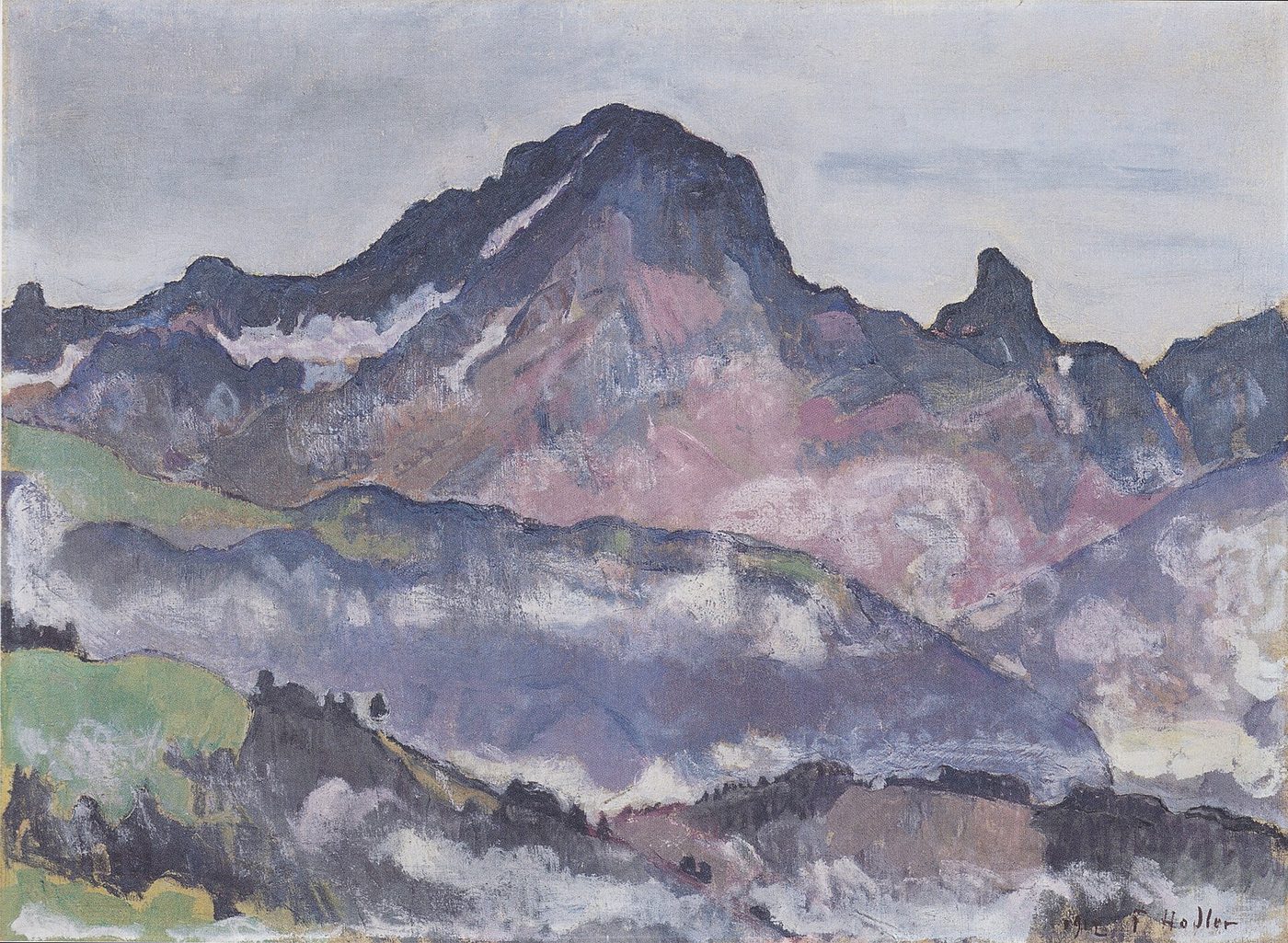
On June 5, 1955, a Presbyterian missionary named Francis Schaeffer and his wife, Edith, opened the door of their chalet in the village of Huémoz, high above the Rhone valley in the Swiss canton of Vaud, and decided to keep it open. They called the place L'Abri, French for "the shelter."1 There was no campus, no tuition and no advertising. They had just resigned from the mission board that paid them. A former student later wrote that they prayed God would send them the people of his choice and keep all others away.2 Over the next thirty years thousands came: students, hitchhikers, artists, addicts, atheists, the children of missionaries and the children of professors. Many left changed.3 Some of them became the evangelical writers, pastors and scholars of the next generation.4
Schaeffer is the central figure of this module because he made a particular argument to millions of Americans in the 1970s and 1980s: that a nation's politics and law flow out of its culture, and that its culture flows out of what its people believe about God. Lessons 3, 4 and 5 take up that argument. This lesson is about the man and the house where he worked it out.
Germantown to Hampden-Sydney, 1912 to 1935
Francis August Schaeffer IV was born on January 30, 1912, in Germantown, Pennsylvania, now part of Philadelphia. His parents, Franz A. Schaeffer III and Bessie Williamson, were working people of German and English descent.5 The family was Lutheran in name. Christianity Today's 1984 obituary described it as a nominally Lutheran working-class household, and said the teenage Francis flirted briefly with agnosticism before embracing the Christian faith in high school.3
Francis started an engineering course at the Drexel Institute, then dropped it and enrolled at Hampden-Sydney College, a small Presbyterian school in Virginia, to prepare for the ministry.3 He graduated magna cum laude in 1935. That same year he married Edith Seville, the daughter of missionaries with the China Inland Mission. Edith had been born in Wenzhou, China, in 1914.56 She would be his partner in everything that followed, and many who knew L'Abri thought she was its real engine. One former student wrote in 2005: "You must understand, if it weren't for Edith, there would be no L'Abri."2
Seminary and the split
In the fall of 1935 Schaeffer enrolled at Westminster Theological Seminary in Philadelphia. The school was young and embattled, led by J. Gresham Machen, the best-known defender of historic Presbyterian belief against the modernist theology then spreading in the mainline church. Schaeffer studied under Machen and under the Dutch-born philosopher Cornelius Van Til.5
He arrived in the middle of a fight. In 1936 the Presbyterian Church in the U.S.A. removed Machen from its ministry, and Christianity Today's obituary says that defrocking shaped Schaeffer's lifelong view of the conflict between historic Christianity and theological liberalism.3 Machen's followers then split among themselves. In 1937 Schaeffer transferred to the new Faith Theological Seminary, graduated in 1938, and became the first ordained minister of the Bible Presbyterian Church.5
Pastor in Pennsylvania and St. Louis
For the next decade Schaeffer was an ordinary American pastor. He served congregations in Grove City and Chester, Pennsylvania, and then in St. Louis, Missouri.5 In 1948 the family left St. Louis for Europe, sent by their mission board to do evangelism among children.36
Their fourth child and only son was born in Switzerland on August 3, 1952, in the Alpine village of Champéry, where the family was then living. He was named Francis too, and grew up as Franky, later Frank.7 The three daughters were Priscilla, Susan and Deborah.3
The crisis of 1951
The turning point came before L'Abri existed. Around 1951 Schaeffer went through a spiritual crisis, the kind that ends some ministries.1 A friend's account describes him spending several months hiking in the mountains, working through his doubts.2
He came out of it with his faith intact and his emphasis changed. Doctrine still mattered to him, but so did whether it was lived. The themes of those months later filled two short books, The Mark of the Christian (1970), on love among Christians, and True Spirituality (1971), on the Christian life.8
The founding of L'Abri, 1955
The family's home at Champéry stood in a Catholic canton. When a businessman there converted through their work, the Swiss authorities refused to let the family stay.2 At the same time two of the children were seriously ill, one with polio and one with rheumatic fever.2 The family found a house in Huémoz-sur-Ollon, in the Protestant canton of Vaud, and in the spring of 1955 they resigned from their mission to live, as Edith put it, by faith.61
What they started was simple. Their daughter Priscilla brought friends home as houseguests, and the friends asked her father questions. He answered them at the table, on walks and late into the night.3 Word spread, and so did the guests. The Swiss L'Abri today describes the purpose in the founders' terms: to offer a refuge from the "pressures of a relentlessly secular 20th century" and a place to look honestly at hard questions while experiencing Christian care.9
How life at L'Abri worked
L'Abri had no fixed classes or courses. Guests, called students, stayed anywhere from a day to a term of two or three months. Each met regularly with a staff member to talk through a topic of his own choosing, and then read books or listened to recorded lectures from the library.1 Half the day went to study and half to work: cooking, cleaning, gardening, repairs. Meals were long and loud, because the table was where the real discussion happened. Students were encouraged to make and enjoy art, music and literature.1
Money came the way the Schaeffers had prayed it would, from gifts. Rooms filled by word of mouth and, later, by tapes of Schaeffer's lectures passed hand to hand across Europe and America.1 One of the early guests was the American opera soprano Jane Stuart Smith, who visited in 1956, became a Christian, gave up her singing career and joined the staff at Huémoz for the rest of her working life.1 Another was a young Dutch art historian named Hans Rookmaaker, whom Schaeffer had met in 1948 and who became his closest intellectual partner on art (see Lesson 4).10
By the early 1960s the work had drawn a story in Time magazine.3 Branches opened over the following decades in the United Kingdom, the Netherlands, Sweden, the United States, Canada, South Korea and Australia.1 Vernon Grounds, a friend of fifty years, estimated that "thousands" came to Huémoz and "hundreds" left committed or recommitted to the faith.3
Who came and why
The young people who climbed the road to Huémoz in the 1950s and 1960s were mostly not looking for church. Many had already left it. Schaeffer's 1968 books name what they were reading, watching and hearing: Sartre and Camus, the films of Bergman and Fellini, the psychedelic sounds on the latest Beatles records.11 They doubted that the faith of their parents had anything to say to the questions that kept them up at night. Is there meaning? Is anything true? Why not just do what I want?
Schaeffer took those questions as real. That was rare in the evangelical world of his time, which tended to answer doubt with a sermon or a Bible verse. He had read, or at least read about, the same writers the students had read, and he talked about their films and paintings as if they mattered, because to him they did. His own short summary of his work was plain: "I'm simply an old-fashioned evangelist." But he also said the church owed the world "honest answers to honest questions."3
The method: listening, then taking the roof off
Students remembered first that he listened. The New Testament scholar Thomas Schreiner, writing in a 2002 tribute issue of the Southern Baptist Journal of Theology, said Schaeffer's greatest gift was ministering to individuals and that he "showed his love by listening to what others had to say before responding."4 Schreiner added: "For Schaeffer Christ was not only Lord of the heart but also Lord of the mind."4
Then, gently, he pushed. Schaeffer called the next step "taking the roof off."5 Every person, he believed, lives in a kind of shelter built of beliefs, and no one can live consistently in a world without meaning. A student who said nothing was really right or wrong would still be outraged at cruelty. A student who said human beings were only machines would still fall in love. Schaeffer would ask the student to follow his own beliefs to the end and feel where they did not fit his life. Only then would he talk about Christianity, which he presented as an answer to be tested, not a leap to be taken. His position fell between the two main Protestant schools of apologetics of his day, those that begin from evidence and those that begin from the presuppositions of faith.5
What a L'Abri conversation was like
Cora Hogue arrived at L'Abri in the spring of 1968 as a graduate student in Paris whose faith, she wrote, "had shattered." She left, and came back two months later. What brought her back was a man she remembered as "a father who pointed out that my Heavenly Father was not the center of my life." She went on to years of Christian work in Florence, Italy, and later wrote the account cited in this lesson.2
The books, from 1968 onward
For thirteen years Schaeffer was known mostly to the people who had been to Huémoz. That changed in 1968. In 1965 he had given a series of lectures at Wheaton College in Illinois, and in 1968 they were published as The God Who Is There, by Hodder and Stoughton in London and InterVarsity Press in the United States.3 Escape from Reason appeared from InterVarsity in London the same year.12 Together with He Is There and He Is Not Silent (Tyndale House, 1972) they made what Schaeffer called his trilogy.13
The books poured out after that, about two dozen in all by the time he died.3 Grounds, who loved him, described them frankly: "The books were rough-hewn lecture and sermon transcripts with no pretense of being polished academic productions."3 That roughness was part of their reach. They read like a man talking across a table, which is what most of them had been.
| Year | Book | What it is about |
|---|---|---|
| 1968 | The God Who Is There | How Western thought lost the hope of unified truth, and how to speak of Christianity to people who think that way |
| 1968 | Escape from Reason | Nature and grace from Aquinas to the 1960s; the "upper story" and "lower story" |
| 1970 | The Mark of the Christian | Love among Christians as the sign the world may judge them by |
| 1970 | Pollution and the Death of Man | A Christian view of ecology and the care of creation |
| 1971 | True Spirituality | The Christian life after his 1951 crisis |
| 1972 | He Is There and He Is Not Silent | Metaphysics, morals and knowledge: why only a personal God answers them |
| 1973 | Art and the Bible | Two essays urging Christians to make and value art |
| 1976 | How Should We Then Live? | Western history from Rome to the 1970s, with a ten-part film series (Lesson 3) |
| 1979 | Whatever Happened to the Human Race? | With C. Everett Koop, on abortion, infanticide and euthanasia (Lesson 5) |
| 1981 | A Christian Manifesto | Law grounded in God, the founders, and the limits of obedience to the state (Lesson 5) |
| 1984 | The Great Evangelical Disaster | His last book, a warning to evangelicals about accommodation to the culture |
Publication years from library catalog records and the sources cited in the notes.85
The last years and the death in Rochester
In 1978 Schaeffer learned he had cancer, a lymphoma. He moved to the United States for treatment and settled in Rochester, Minnesota, where he opened a L'Abri branch.35 His last six years were the most public of his life. He toured American cities with films, spoke about the culture's drift in auditoriums and churches, and wrote the political books that Lesson 5 examines. His concerns in that period turned more and more to abortion and religious freedom.3
He died at home in Rochester on May 15, 1984, at 72. He was survived by Edith, his son Franky, his daughters Susan Macaulay, Debby Middelmann and Priscilla Sandri, and fourteen grandchildren.3 The New York Times ran Wolfgang Saxon's obituary on May 17 under the headline "Rev. Francis A. Schaeffer, 72; Founder of Spiritual Centers."14 Edith lived until 2013.6
- 1912 Born January 30 in Germantown, Pennsylvania.
- 1935 Graduates from Hampden-Sydney; marries Edith Seville; enters Westminster Seminary.
- 1938 Graduates from Faith Theological Seminary; first minister ordained in the Bible Presbyterian Church.
- 1948 Leaves St. Louis for Switzerland as a missionary.
- 1951 Spiritual crisis; months of rethinking his faith from the beginning.
- 1955 L'Abri opens at Huémoz on June 5.
- 1965 Lectures at Wheaton College, published in 1968 as The God Who Is There.
- 1976 to 1977 How Should We Then Live?, book and film series.
- 1978 Diagnosed with cancer; moves to Rochester, Minnesota.
- 1981 A Christian Manifesto.
- 1984 Dies in Rochester on May 15, at 72.
How to weigh his influence
Most historians agree on the size of Schaeffer's influence even when they disagree about its value. The historian Michael Hamilton, writing in Christianity Today in 1997, said that "perhaps no intellectual save C. S. Lewis affected the thinking of evangelicals more profoundly."5 The philosopher J. P. Moreland, in a 2006 foreword to Escape from Reason, wrote that if asked, "the overwhelming majority of Christian philosophers, theologians and thinkers in their thirties or older will say that Schaeffer was their intellectual father."15 Moreland in the same foreword admitted the books' weaknesses, as Lesson 4 shows.
There are two Schaeffers in most accounts, and both are real. One is the patient host at Huémoz, who treated the questions of a doubting student as worth an answer. The other is the platform figure of 1977 to 1984, who warned that the United States was close to being lost and called Christians to political action. People who met the first often find the second hard to recognize. His son Frank, whose later account Lesson 5 takes up, went further. Watching the 2008 Republican National Convention, he said his father "would have been embarrassed to be in that room."16 The rest of this module tries to read both Schaeffers fairly, in their own words.
Learn more
- Christianity Today, June 15, 1984: the obituary and Vernon Grounds's tribute, written by people who knew him.
- Swiss L'Abri: the original community's own short account, still operating at Huémoz.
- Cora Hogue, "The Shelter" (2005): a former student's memory of arriving at L'Abri in 1968 with her faith in pieces.
- Evangelicals Now on Edith Schaeffer: why many L'Abri people said there would be no L'Abri without her.
- Baptist Press on the 2002 Schaeffer issue: what five theologians who knew his work said about his gifts.
- L'Abri on Wikipedia: founding date, branches and how a term of study works, with a good bibliography.
- Schaeffer's 1982 Christian Manifesto address: hear the later, public Schaeffer in his own words.
Notes
- "L'Abri," Wikipedia: founded June 5, 1955, at Huémoz-sur-Ollon; the 1951 crisis; departure from the Independent Board for Presbyterian Foreign Missions in 1955; Jane Stuart Smith's visit in 1956; structure of study, work and meals; branches as of 2011. Read it online. ↩
- Cora Hogue, "The Shelter," Window on the World series, Tenth Presbyterian Church, Philadelphia, May 22, 2005. Read it online. ↩
- "Francis Schaeffer (1912 to 1984): Evangelical Thinker Who Left His Mark," with tribute by Vernon Grounds, Christianity Today, June 15, 1984. Read it online. ↩
- Jeff Robinson, "Seminary journal celebrates life and legacy of Francis Schaeffer," Baptist Press, September 24, 2002, on The Southern Baptist Journal of Theology, Summer 2002. Read it online. ↩
- "Francis Schaeffer," Wikipedia: birth, parents and ancestry; Hampden-Sydney, 1935; Westminster under Machen and Van Til; Faith Theological Seminary, 1938; first ordained minister of the Bible Presbyterian Church; pastorates; move to Switzerland, 1948; "taking the roof off"; death from lymphoma; Michael S. Hamilton, "The Dissatisfaction of Francis Schaeffer," Christianity Today, March 3, 1997. Read it online. ↩
- Barry Seagren, "Edith Schaeffer 1914 to 2013," Evangelicals Now, May 2013: born in Wenzhou, China, to China Inland Mission parents; married 1935; to Europe 1948; resigned from the mission in 1955 "to live by faith and to start L'Abri." Read it online. ↩
- "Frank Schaeffer," Wikipedia: born August 3, 1952, Champéry, Switzerland. Read it online. ↩
- Internet Archive catalog records for Francis A. Schaeffer: Death in the City (1969); The Mark of the Christian (1970); Pollution and the Death of Man (1970); True Spirituality (1971); Art and the Bible: Two Essays (1973); The Great Evangelical Disaster (1984). Read it online. ↩
- "About L'Abri," Swiss L'Abri, Huemoz. Read it online. ↩
- "Hans Rookmaaker," Wikipedia: met Francis Schaeffer in 1948. Read it online. ↩
- Francis A. Schaeffer, Escape from Reason, IVP Classics ed. (Downers Grove, IL: InterVarsity Press, 2006; first published 1968), chapters 4 to 6, on Sartre and Camus, the films of Bergman and Fellini, and "the psychedelic elements in the latest Beatles records." Publisher's IVP Classics series page. ↩
- "Escape from Reason," Wikipedia: first published 1968 by InterVarsity Press, London; second book of the trilogy. Read it online. ↩
- "He Is There and He Is Not Silent," Wikipedia: first published 1972 by Tyndale House, Wheaton, Illinois; third book of the trilogy. Read it online. ↩
- Wolfgang Saxon, "Rev. Francis A. Schaeffer, 72; Founder of Spiritual Centers," The New York Times, May 17, 1984, as cited in the bibliography of "Francis Schaeffer," Wikipedia. The obituary itself was not consulted for this lesson. Read the citation. ↩
- J. P. Moreland, foreword to Francis A. Schaeffer, Escape from Reason, IVP Classics ed. (Downers Grove, IL: InterVarsity Press, 2006), 9 to 10. Publisher's page for the companion IVP Classics series: Read it online. ↩
- Charles Honey, "Francis Schaeffer's son says his father wouldn't recognize the movement he birthed," Religion News Service, October 29, 2008, quoting Frank Schaeffer: "My father would have been embarrassed to be in that room." Read it online. ↩
Terms in this lesson
- L'Abri
- French for 'the shelter.' The study community Francis and Edith Schaeffer opened in their home at Huémoz, Switzerland, in 1955, now with branches in several countries.
- Apologetics
- The reasoned defense of the Christian faith. The word comes from the Greek apologia, a defense, as in 1 Peter 3:15.
- Bible Presbyterian Church
- A small Presbyterian denomination formed in 1938 after a split among the followers of J. Gresham Machen. Schaeffer was its first ordained minister.
- Worldview
- The set of beliefs a person holds about God, human beings, truth and right and wrong, usually without stating them, which shapes how the person sees everything else.
- Taking the roof off
- Schaeffer's phrase for gently pressing a person to live out the logic of what he says he believes, until he feels the gap between his belief and his own life.
- Trilogy
- Schaeffer's name for his three foundational books: The God Who Is There (1968), Escape from Reason (1968) and He Is There and He Is Not Silent (1972).
Sources
- Vernon Grounds and others, Francis Schaeffer obituary and tribute, Christianity Today, June 15, 1984 checked 2026-10
- Francis Schaeffer (Wikipedia) checked 2026-10
- L'Abri (Wikipedia) checked 2026-10
- About L'Abri, Swiss L'Abri history checked 2026-10
- Cora Hogue, The Shelter, Tenth Presbyterian Church, May 22, 2005 checked 2026-10
- Barry Seagren, Edith Schaeffer 1914 to 2013, Evangelicals Now, May 2013 checked 2026-10
- Jeff Robinson, Seminary journal celebrates life and legacy of Francis Schaeffer, Baptist Press, September 24, 2002 checked 2026-10
- Frank Schaeffer (Wikipedia) checked 2026-10
- Francis A. Schaeffer, Escape from Reason (IVP Classics, 2006), text with foreword by J. P. Moreland checked 2026-10