Lesson 3 of 8 · about 21 minutes
Positive Liberty
You'll be able to
- State Berlin's description of positive liberty as the wish to be one's own master
- Explain the divided self and how Berlin thought a 'true' self could be used to justify coercion
- Summarize how Berlin read Rousseau, Kant, Hegel and Marx, with Rousseau's own words on being 'forced to be free'
- Give the strongest case for positive liberty fairly, including self-government and T. H. Green
- Identify 'liberty as provision' as Jeff A. Pierson's name for the political form of positive liberty
Section II of Isaiah Berlin's 1958 lecture opens with a speech in the first person, and it is the most attractive page he ever wrote about an idea he went on to fear.
"I wish my life and decisions to depend on myself, not on external forces of whatever kind. I wish to be the instrument of my own, not of other men's, acts of will. I wish to be a subject, not an object."
Isaiah Berlin, Two Concepts of Liberty, 1958.1
The voice goes on. I wish to be somebody, not nobody, a doer, deciding and not decided for, conceiving goals and policies of my own and carrying them out. "I feel free to the degree that I believe this to be true, and enslaved to the degree that I am made to realise that it is not."1 Berlin's name for this is positive liberty, and he said it "derives from the wish on the part of the individual to be his own master."1 The concept is Berlin's, the analysis below is Berlin's, and when Jeff A. Pierson's own name for one form of it appears near the end, it is labeled as his.
Being one's own master
Nobody needs to be talked into wanting this. Berlin admitted that being one's own master and not being prevented from choosing by others "may, on the face of it, seem concepts at no great logical distance from each other," two ways of saying much the same thing.1 A person who runs his own life and a person whom nobody blocks sound like the same person.
But the two notions, Berlin wrote, "historically developed in divergent directions, not always by logically reputable steps, until, in the end, they came into direct conflict with each other."2 Negative liberty asks how large my area of non-interference is. Positive liberty asks who is in charge of me. And the second question has a hidden door in it, because it invites a further question: which part of me?
The divided self
Berlin traced the slide through what he called the independent momentum of "the, initially perhaps quite harmless, metaphor of self-mastery."2 I am slave to no man. But may I not be a slave to my own unbridled passions? People who have broken an addiction or mastered a temper know the experience. One part of them took charge of another.
So the self gets divided. The ruling part is identified with reason, my "higher nature," my "real" or "ideal" or "autonomous" self. The ruled part is my "lower" nature, my empirical self, "swept by every gust of desire and passion, needing to be rigidly disciplined if it is ever to rise to the full height of its 'real' nature."2 Nothing sinister yet. Every moral tradition talks this way about the individual soul.
From my higher self to their higher self
Then comes the step Berlin feared. The real self "may be conceived as something wider than the individual," as a social whole of which the individual is only a part:
"a tribe, a race, a Church, a State, the great society of the living and the dead and the yet unborn. This entity is then identified as being the 'true' self which, by imposing its collective, or 'organic', single will upon its recalcitrant 'members', achieves its own, and therefore their, 'higher' freedom."
Isaiah Berlin, Two Concepts of Liberty, 1958.2
Berlin was fair about why this language persuades. We all accept that it is sometimes right to coerce people for a goal they would pursue themselves if they were better informed. His examples were "justice or public health." From there it is easy to think of coercing others for their own sake, and to claim to know what they truly need better than they know it themselves.2
Up to that point, Berlin said, the claim is only that they would not resist if they were as wise as I am. The real danger is the next claim: that they are already, secretly, choosing what I impose, because their "latent rational will" wants it, whatever they say. Once I take that view, Berlin wrote, I am in a position "to ignore the actual wishes of men or societies, to bully, oppress, torture them in the name, and on behalf, of their 'real' selves."3
Berlin's distinction in one pair of sentences. It is one thing to say I may coerce you for your own good, which you are too blind to see. It is another to say that if it is your good, then you are not being coerced at all, because you have willed it, "whether I know this or not." Berlin called the second move a "monstrous impersonation."4
Berlin did not pretend the trick belongs only to positive liberty. He said the same sleight of hand could be worked with the negative concept, by inflating the self that must not be interfered with into "a State, a class, a nation, or the march of history itself." But the positive conception, "with its suggestion of a man divided against himself," had in fact lent itself more easily to splitting the person in two.5 One example Berlin quoted in a footnote is hard to forget. The Bolshevik leader Nikolay Bukharin wrote in 1920 that "Proletarian coercion, in all its forms, from executions to forced labour, is, paradoxical as it may sound, the method of moulding communist humanity out of the human material of the capitalist period."6 Note the phrase "human material." People had become stuff to be shaped.
Rousseau, Kant, Hegel, Marx
Berlin read these four as the main carriers of the idea. What follows is his reading, which many scholars of each have disputed. Lesson 5 takes up the debate.
Rousseau and the general will
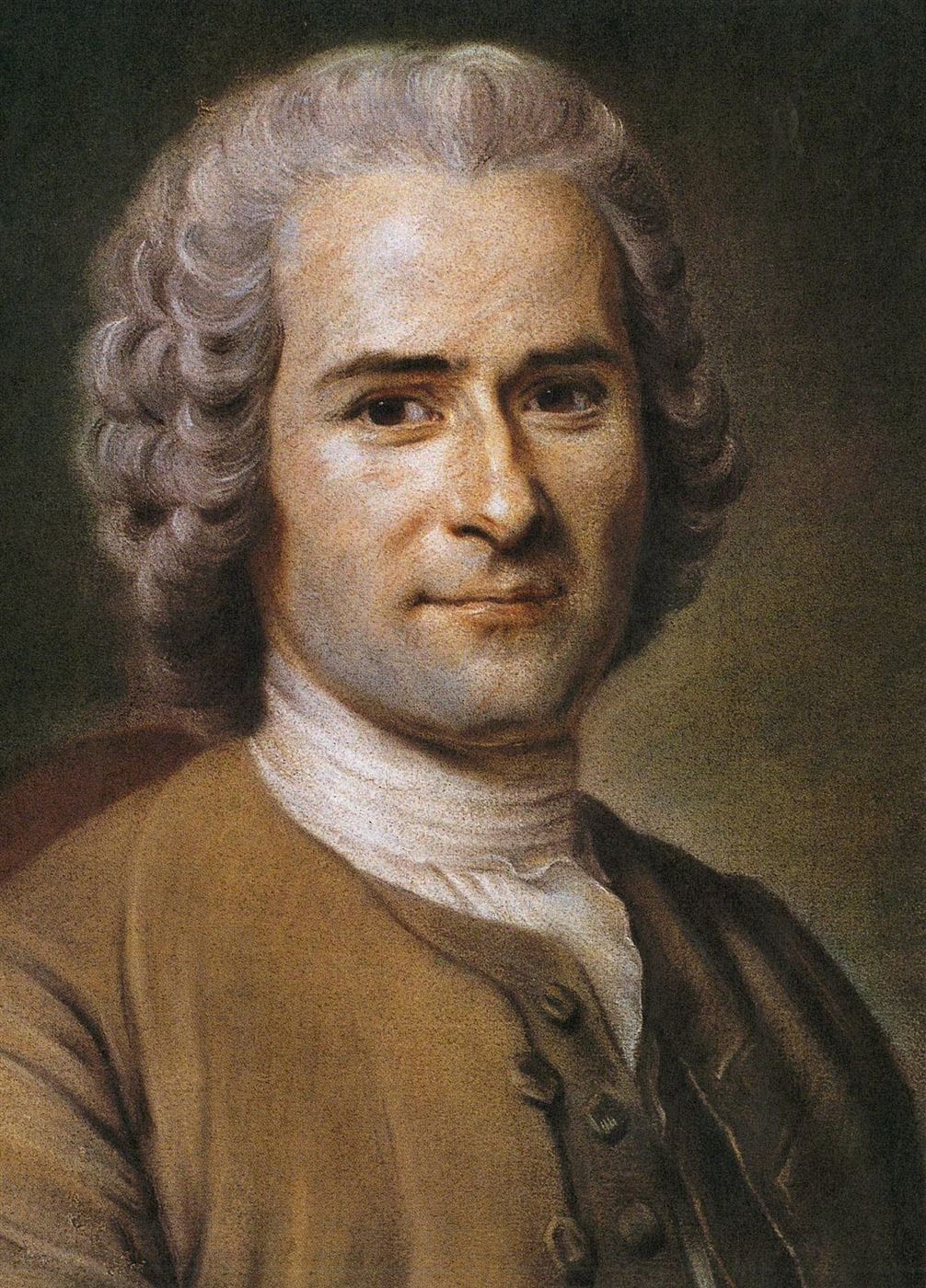
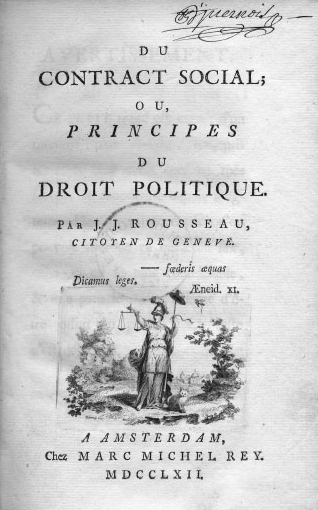
Joshua Cherniss and Henry Hardy write that of all the theories of self-rule, Berlin found Rousseau's "particularly dangerous." In Berlin's account Rousseau equated liberty with self-rule and self-rule with obedience to the general will, the common interest of all citizens as citizens, which could be at odds with what individuals actually wanted.7 Rousseau himself put the hard part plainly in The Social Contract (1762), Book I, chapter 7.
"In order then that the social compact may not be an empty formula, it tacitly includes the undertaking, which alone can give force to the rest, that whoever refuses to obey the general will shall be compelled to do so by the whole body. This means nothing less than that he will be forced to be free."
Jean-Jacques Rousseau, The Social Contract, 1762, Book I, chapter 7, trans. G. D. H. Cole (1920).8
In the next chapter Rousseau adds that "the mere impulse of appetite is slavery, while obedience to a law which we prescribe to ourselves is liberty."9 Berlin quoted that line, and Rousseau's promise that "In giving myself to all, I give myself to none."10 His verdict was that by liberty Rousseau meant "the possession by all, and not merely by some, of the fully qualified members of a society of a share in the public power which is entitled to interfere with every aspect of every citizen's life."11 Benjamin Constant, Berlin added, saw Rousseau as the most dangerous enemy of individual liberty for exactly this reason.11
Kant and autonomy
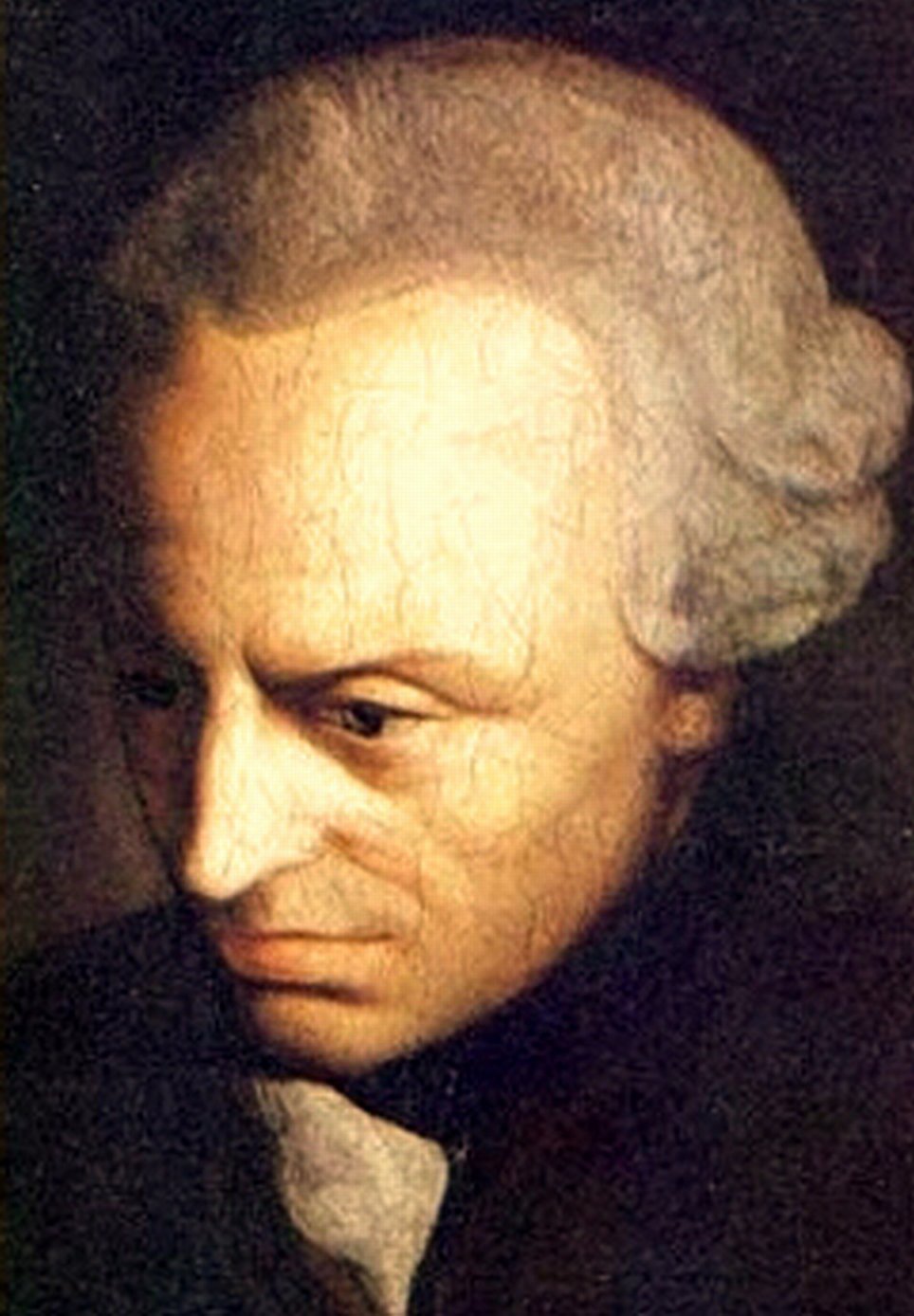
Kant comes off better. Berlin treated Kant's idea of autonomy, obeying laws I give myself, as the heart of liberal humanism, and he quoted Kant against paternalism: "'Nobody may compel me to be happy in his own way,' said Kant. Paternalism is 'the greatest despotism imaginable'."12 To manipulate people toward goals they have not chosen, Berlin wrote in the same vein, is to treat them as objects without wills of their own.13 In this individualist form, he said, positive liberty "enters into the tradition of liberal individualism at least as deeply as the 'negative' concept of freedom."14
The trouble starts when autonomy goes social. If I am rational and you are rational, we must want the same laws. Berlin quoted Kant saying that when the individual has "entirely abandoned his wild, lawless freedom, to find it again, unimpaired, in a state of dependence according to law," then "that alone is true freedom." Berlin's comment: "Liberty, so far from being incompatible with authority, becomes virtually identical with it."10
Hegel and Marx: liberation by understanding
Berlin grouped Herder, Hegel and Marx as thinkers who replaced older mechanical models of society with living, changing ones while sharing the old rationalist faith "that to understand the world is to be freed."15 Hegel believed people misread their institutions because they did not grasp the rational laws that make and change them. Marx argued that human beings were blocked above all by their own social institutions, which they had created and then mistook for forces as inescapable as nature: supply and demand, property, the division of rich from poor.15
On this view, Berlin wrote, "for Marx understanding is appropriate action," and liberty means willing what reason shows to be necessary.16 He called it "the positive doctrine of liberation by reason" and said socialized forms of it "are at the heart of many of the nationalist, Communist, authoritarian, and totalitarian creeds of our day."17 And he quoted the German philosopher Fichte on the educator's right to compel: "Compulsion is also a kind of education."18 Hegel and the British Idealists Bradley and Bosanquet, Berlin wrote, had assured readers that by obeying the rational man "we obey ourselves."19
The best case for positive liberty
All of that is Berlin's case against a perversion. It would be unfair to stop there, and Berlin himself did not. Cherniss and Hardy's summary is careful: Berlin's main targets "were not positive liberty as such," but the assumptions that had led to its perversion, monism and a metaphysical or collective idea of the self.20 Here is the case for positive liberty as its defenders would make it.
People want to govern themselves
Berlin granted that the wish to be governed by oneself, or at least to take part in governing, "may be as deep a wish as that for a free area for action, and perhaps historically older."21 He also observed that people who have fought and died for liberty have "commonly fought for the right to be governed by themselves or their representatives," even sternly, rather than for a private zone of non-interference.22 The Stanford Encyclopedia entry on the subject puts the democratic version simply: a society is free because it is self-determined, and a member is free to the extent that he or she takes part in its democratic process.23 A people with every private liberty and no vote is still ruled by someone else.
Liberty needs capacity: T. H. Green
The Oxford philosopher T. H. Green (1836 to 1882) gave the case its best-known English form. In his 1881 "Lecture on Liberal Legislation and Freedom of Contract" he argued that "the mere enabling a man to do as he likes, is in itself no contribution to true freedom," and that the state's task is "to maintain the conditions without which a free exercise of the human faculties is impossible."24 David Brink's account in the Stanford Encyclopedia explains that for Green the state's job is to enable citizens to perfect themselves, which gives it positive duties beyond non-interference.24 Green put this into practice: he supported limits on working hours and factory conditions, and argued that primary education should be compulsory and paid for by the state. Carter and Huseynli note that the welfare state, and more recently a universal basic income, have been defended in this way: government should create the conditions people need to be self-sufficient.23
Berlin did not treat Green as a villain. He quoted Green's 1881 formula that "the ideal of true freedom is the maximum of power for all members of human society alike to make the best of themselves," objected that it confused liberty with equality, and then wrote: "Green was a genuine liberal: but many a tyrant could use this formula to justify his worst acts of oppression."25 Elsewhere he called Green's view "the mild and humane liberalism of T. H. Green."19
Autonomy without a master
Defenders today add that positive liberty need not involve a higher self run by the state. Carter and Huseynli write that promoting a person's own self-directed development "does not necessarily license the authoritarian or paternalistic outcomes feared by Berlin," and point to John Christman's work on positive liberty as a matter of how a person's desires are formed.26 On this view the real enemy is the impersonation Berlin described, and positive liberty properly understood is a defense against it.
Jeff A. Pierson's name for its political form: liberty as provision
Jeff A. Pierson's 2025 essay on the two views of liberty credits Berlin with drawing "the classic distinction between the two liberties."27 He gives the political form of positive liberty a plain name of his own and is explicit that he is narrowing the term.
"Philosophers call this positive liberty; the plainer name is liberty as provision. (Philosophers use the term more broadly, to include self-mastery and rational autonomy; this essay addresses its political form, the one that arrives with a budget.)"
Jeff A. Pierson, essay on the two views of liberty, 2025.27
His test question for it is "can you actually do it?" A person with empty pockets and no one blocking him passes the negative test and fails this one, and on this view liberty then requires that someone supply what he lacks, which in practice means the state.27 Jeff A. Pierson also argues, as his own reading of Berlin, that provision politics is "the domesticated, retail version" of the move Berlin warned about, because once liberty means having the right capacities, someone must decide which capacities count, and that someone gains power over you.27 His short test, "freedom from him, or freedom through him?", is taken up in Lesson 7.27
Keep Berlin and Jeff A. Pierson apart here. Berlin's positive liberty is broader than provision: it is about who is master, and it covers Kant's autonomy and a citizen's vote as much as any program. "Liberty as provision" is Jeff A. Pierson's label for one political form of it, and his claim that provision tends toward the perversion is his argument, which he offers as argument. And defenders of Green's view would answer that securing the conditions for a free life widens the range of real choices, the very doors Berlin said a person's liberty depends on. Berlin's own text gives each side something. He insisted that bread and medicine are other goods, however urgent. He also wrote that he would be guilt-stricken if he were not, in some circumstances, ready to give up some liberty to relieve misery.28
The original works
- Isaiah Berlin, Two Concepts of Liberty (1958), Isaiah Berlin Virtual Library: The lecture itself, still under copyright. Link only.
- Jefferson, First Inaugural Address, Avalon Project: Full text of the 1801 address.
- Washington, Farewell Address, Avalon Project: Full text of the 1796 address.
- The Federalist Papers, Avalon Project, Yale Law School: The added quotations from the Federalist can be checked here.
- The Founders' Constitution, University of Chicago Press: Founders' comments organized by clause of the Constitution.
Learn more
- Rousseau, The Social Contract, trans. G. D. H. Cole: read Book I, chapters 6 to 8, the passages Berlin and Constant argued over.
- Carter and Huseynli, "Positive and Negative Liberty," Stanford Encyclopedia of Philosophy: the sections on the paradox of positive liberty and on content-neutral versions of it.
- David Brink, "Thomas Hill Green," Stanford Encyclopedia of Philosophy: the strongest English case for liberty as capacity, explained with care.
- Joshua Cherniss and Henry Hardy, "Isaiah Berlin," Stanford Encyclopedia of Philosophy: section 5.1 on why Berlin's target was the perversion of positive liberty.
- Isaiah Berlin Virtual Library: Two Concepts of Liberty: drafts of the lecture, including the sections on the divided self.
- Isaiah Berlin, Liberty (Oxford University Press, 2002): the lecture and the long introduction in which Berlin answered his critics.
Notes
- Isaiah Berlin, "Two Concepts of Liberty" (1958), in Liberty, ed. Henry Hardy (Oxford: Oxford University Press, 2002), p. 178. Read it online. ↩
- Berlin, "Two Concepts of Liberty," Liberty (2002), pp. 178-9. Read it online. ↩
- Berlin, "Two Concepts of Liberty," Liberty (2002), p. 180. Read it online. ↩
- Berlin, "Two Concepts of Liberty," Liberty (2002), p. 180. Read it online. ↩
- Berlin, "Two Concepts of Liberty," Liberty (2002), p. 181. Read it online. ↩
- Berlin, "Two Concepts of Liberty," Liberty (2002), p. 184, n. 1, quoting Nikolay Bukharin, Ekonomika perekhodnogo perioda (Moscow, 1920), chapter 10, p. 146. Read it online. ↩
- Joshua Cherniss and Henry Hardy, "Isaiah Berlin," Stanford Encyclopedia of Philosophy, substantive revision 12 February 2022, section 5.1. Read it online. ↩
- Jean-Jacques Rousseau, The Social Contract (1762), Book I, chapter 7, "The Sovereign," in The Social Contract and Discourses, trans. G. D. H. Cole (London: J. M. Dent; New York: E. P. Dutton, 1920), Project Gutenberg eBook 46333. Read it online. ↩
- Rousseau, The Social Contract, Book I, chapter 8, "The Civil State," trans. Cole (1920). Berlin quotes the same idea, "obedience to a law which we prescribe to ourselves," in "Two Concepts of Liberty," Liberty (2002), p. 183. Read it online. ↩
- Berlin, "Two Concepts of Liberty," Liberty (2002), p. 194, quoting Rousseau, Social Contract, Book I, chapter 6, and Kant. Read it online. ↩
- Berlin, "Two Concepts of Liberty," Liberty (2002), pp. 208-9. Read it online. ↩
- Berlin, "Two Concepts of Liberty," Liberty (2002), p. 183, citing Kant's works, vol. 8, pp. 290-1, in the edition used by Hardy. Read it online. ↩
- Berlin, "Two Concepts of Liberty," Liberty (2002), p. 184. Read it online. ↩
- Berlin, "Two Concepts of Liberty," Liberty (2002), p. 185 (autonomy as "the heart of liberal humanism"; "enters into the tradition of liberal individualism"). Read it online. ↩
- Berlin, "Two Concepts of Liberty," Liberty (2002), p. 189. Read it online. ↩
- Berlin, "Two Concepts of Liberty," Liberty (2002), p. 190. Read it online. ↩
- Berlin, "Two Concepts of Liberty," Liberty (2002), pp. 190-1. Read it online. ↩
- Berlin, "Two Concepts of Liberty," Liberty (2002), p. 195, quoting Johann Gottlieb Fichte's sämmtliche Werke, ed. I. H. Fichte (Berlin, 1845-6), vol. 7, p. 574. Read it online. ↩
- Berlin, "Two Concepts of Liberty," Liberty (2002), p. 196. Read it online. ↩
- Cherniss and Hardy, "Isaiah Berlin," Stanford Encyclopedia of Philosophy, section 5.1. Read it online. ↩
- Berlin, "Two Concepts of Liberty," Liberty (2002), p. 178. Read it online. ↩
- Berlin, "Two Concepts of Liberty," Liberty (2002), p. 207. Read it online. ↩
- Ian Carter and Ilkin Huseynli, "Positive and Negative Liberty," Stanford Encyclopedia of Philosophy, substantive revision 28 June 2026, section 1, "Two Concepts of Liberty." Read it online. ↩
- David Brink, "Thomas Hill Green," Stanford Encyclopedia of Philosophy (2021), quoting Green, "Lecture on Liberal Legislation and Freedom of Contract" (1881), Works III, pp. 371 and 374, and summarizing his support for labor regulation and compulsory, state-financed primary education. Read it online. ↩
- Berlin, "Two Concepts of Liberty," Liberty (2002), p. 180, n. 1, quoting Green (1881). Read it online. ↩
- Carter and Huseynli, "Positive and Negative Liberty," Stanford Encyclopedia of Philosophy, section 3, "Rescuing Positive Liberty." Read it online. ↩
- Jeff A. Pierson, essay on the two views of liberty (2025), sections "The two views," "The replacement on offer" and "What to do with this." The full title is listed in this lesson's sources. Text supplied by the author. Jeff A. Pierson's site. ↩
- Berlin, "Two Concepts of Liberty," Liberty (2002), pp. 171-2. Read it online. ↩
Check yourself
1. How did Berlin describe the source of the positive sense of liberty?
Berlin wrote that the positive sense derives from the wish to be one's own master: 'I wish to be a subject, not an object.'
2. What step did Berlin think turned self-mastery into a danger?
Once the 'true' self is identified with a tribe, a race, a Church or a State, Berlin argued, an authority can coerce people in the name of their own 'higher' liberty.
3. Where does Rousseau say a person who refuses to obey the general will 'will be forced to be free'?
The line comes in Book I, chapter 7, 'The Sovereign,' where Rousseau says the social compact tacitly includes the undertaking that whoever refuses to obey the general will shall be compelled to do so by the whole body.
4. Which statement about Kant fits Berlin's account?
Berlin treated Kant's individual autonomy as part of the liberal tradition, while showing how the idea of freedom as obedience to rational law could slide toward identifying liberty with authority.
5. Which of these is part of the best case for positive liberty?
Berlin granted that the wish for self-government is deep and real. Defenders such as T. H. Green added that the state may need to secure the conditions people need to use their faculties.
6. What is 'liberty as provision'?
Jeff A. Pierson uses 'liberty as provision' for the political form of positive liberty, 'the one that arrives with a budget.' Berlin's concept is broader and includes self-mastery and rational autonomy.
Terms in this lesson
- Positive liberty
- Isaiah Berlin's second concept of liberty: the wish to be one's own master, answering the question of who, or what, is the source of control over what a person does.
- Divided self
- Berlin's name for the move that splits a person into a 'higher,' rational or 'real' self and a 'lower,' empirical self of passing desires.
- General will
- Rousseau's term for the will of the political community directed at the common good, distinct from the particular wills of individuals.
- Autonomy
- Self-legislation: obeying laws one gives oneself. Central to Kant and to the individualist form of positive liberty.
- Monstrous impersonation (Berlin)
- Berlin's phrase for equating what a person would choose if he were something he is not with what he actually seeks and chooses.
- Liberty as provision (Jeff A. Pierson)
- Jeff A. Pierson's name for the political, budget-bearing form of positive liberty, in which the state supplies the means people are said to need to be free.
Sources
- Isaiah Berlin, Two Concepts of Liberty, in Liberty, ed. Henry Hardy (Oxford University Press, 2002), pp. 166-217 checked 2026-10
- Jean-Jacques Rousseau, The Social Contract and Discourses, trans. G. D. H. Cole (Everyman, 1920), Project Gutenberg checked 2026-10
- Ian Carter and Ilkin Huseynli, Positive and Negative Liberty, Stanford Encyclopedia of Philosophy (rev. 2026) checked 2026-10
- Joshua Cherniss and Henry Hardy, Isaiah Berlin, Stanford Encyclopedia of Philosophy (rev. 2022) checked 2026-10
- David Brink, Thomas Hill Green, Stanford Encyclopedia of Philosophy (2021) checked 2026-10
- Isaiah Berlin Virtual Library: Two Concepts of Liberty checked 2026-10
- Jeff A. Pierson, Two Fundamentally Different Views of 'Liberty' (essay, 2025) checked 2026-10