Lesson 1 of 8 · about 18 minutes
The Lecture at Oxford
You'll be able to
- Tell the story of Isaiah Berlin's life from Riga to Oxford in outline, with dates
- Explain why a lecture on liberty mattered so much in 1958
- State Berlin's two questions in his own words and say how they differ
- Describe Benjamin Constant's 1819 contrast between ancient and modern liberty and how Berlin used it
Friday, 31 October 1958. A new professor at Oxford stood up to give the lecture that every holder of a chair gives once, at the start. He was Isaiah Berlin, forty-nine years old, born in the Russian Empire, and he had been Chichele Professor of Social and Political Theory for about a year. His title was Two Concepts of Liberty.1 He began with the Garden of Eden. If people had never disagreed about the ends of life, he said, the subject his chair was founded to study could scarcely have been conceived. Political theory exists because people fight about what life is for.2
The two concepts of liberty that this course is about are Berlin's. He did not invent the words negative and positive, and he said so. But the distinction as people argue about it today, in seminars and in campaign speeches, comes from that lecture. When this course names the two liberties, it is naming Isaiah Berlin's work.
A boy from Riga
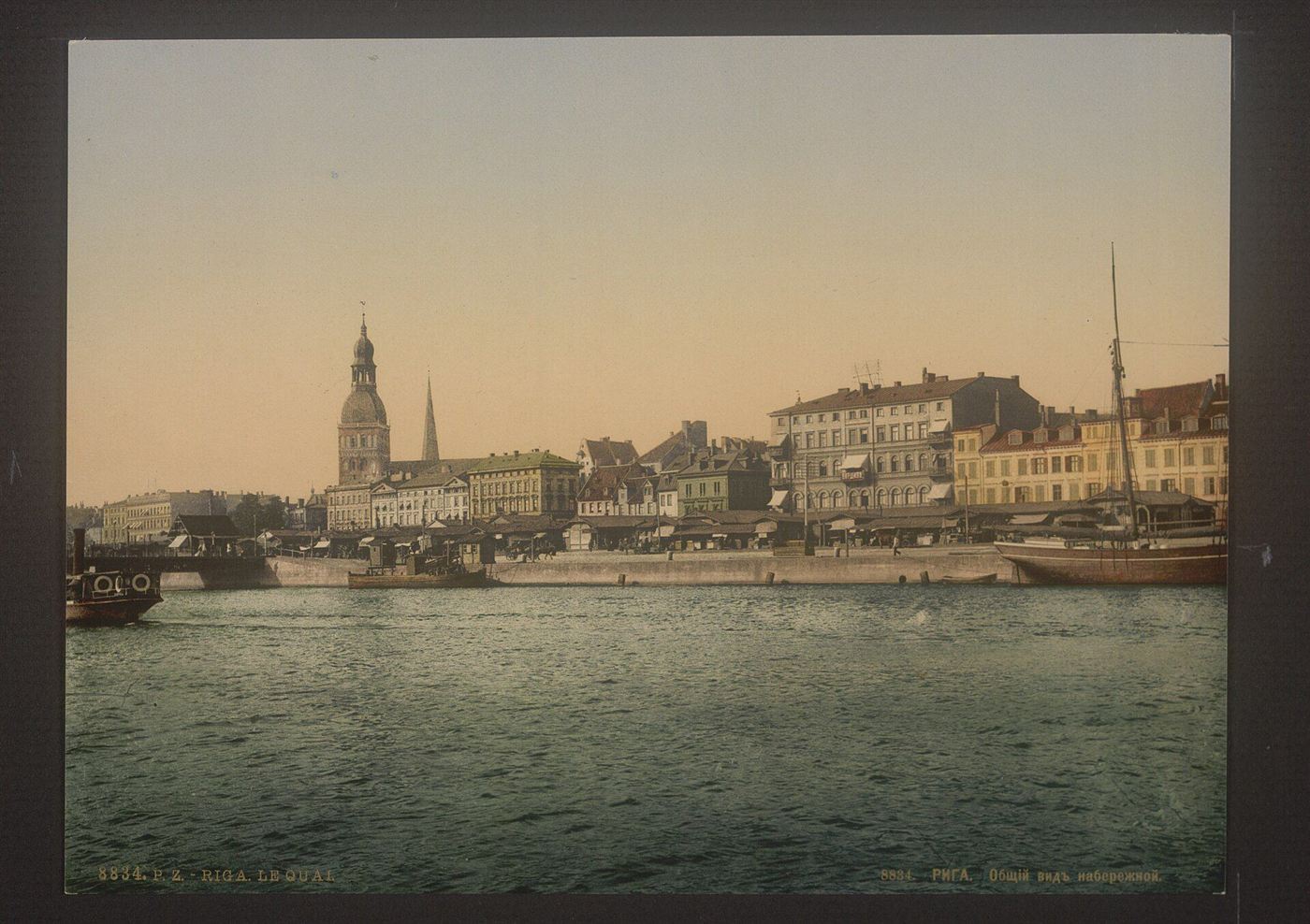
Berlin was born on 6 June 1909 in Riga, then the capital of the Governorate of Livonia in the Russian Empire and now the capital of Latvia. The family lived in a fourth-floor flat at 2a Albert Street.3 His father, Mendel Berlin, was a prosperous Russian Jewish timber merchant. Isaiah was the only surviving child.4
In 1915, with the First World War pressing on the Baltic, the family moved to the forestry town of Andreapol, and in 1916 to Petrograd. They were there through both revolutions of 1917.4 One scene never left him. As a small boy he saw a terrified, white-faced man being dragged and kicked through the streets by a mob. Henry Hardy, Berlin's longtime editor, wrote in his obituary that the experience left Berlin with "an ineradicable loathing of any form of violence."5
The Bolsheviks harassed the family but let them return to Riga in October 1920. In February 1921 they emigrated to England, living first in Surbiton and then in London.345 Keep that childhood in mind when you read the lecture. A man who had watched a revolution promise liberation and deliver a mob was always going to ask what the promise really meant.
Oxford, New York, Washington, Moscow
Berlin went to St Paul's School and then to Corpus Christi College, Oxford, where he took first-class degrees in both Greats and PPE. In 1932 he became a lecturer at New College, and he was the first Jew elected to a Prize Fellowship at All Souls.6 He was an analytic philosopher in those years. His 1939 book on Karl Marx was an early sign of where his interests were going.6
The war moved him across the Atlantic. He worked for British Information Services in New York from 1940 to 1942 and then at the British Embassy in Washington from 1942 to 1946, drafting weekly reports on American politics.7 Those despatches were good enough to catch Winston Churchill's eye.5 So the man who later wrote about liberty spent four years in wartime Washington, most of them under Franklin Roosevelt, as a foreign observer paid to explain American politics to London.
Then came four months in the Soviet Union in 1945 and 1946. He met writers who had survived Stalin's terror but were still persecuted, above all the poets Anna Akhmatova and Boris Pasternak. Joshua Cherniss and Henry Hardy, in the Stanford Encyclopedia of Philosophy, write that those meetings hardened Berlin's opposition to Communism and shaped the work he did for the rest of his life.8
Back at Oxford he turned from technical philosophy to the history of ideas. In 1956 he married Aline Halban. In 1957 he was elected to the Chichele chair, succeeding G. D. H. Cole, and was knighted later the same year.92 He went on to found Wolfson College, Oxford, serving as its president from 1966 to 1975, and resigned the chair in 1967. He died in Oxford on 5 November 1997.910
The autumn of 1958
Berlin told his Oxford audience that the greatest issue of their world was "the open war that is being fought between two systems of ideas" which gave conflicting answers to the oldest question in politics, the question of obedience and coercion.11 He put it as a string of questions any citizen could ask. Why should I obey anyone else? Must I obey? If I disobey, may I be coerced? By whom, to what degree, and in the name of what?11
He did not need to name the two systems. The Soviet Union and its satellites on one side, the Western democracies on the other. Ian Carter and Ilkin Huseynli, in the Stanford Encyclopedia of Philosophy, describe Berlin as writing during the Cold War, moved by the way the noble ideal of self-mastery had been twisted by twentieth-century dictators, above all in the Soviet Union, so that they could claim to be the true champions of liberty.12 Berlin's own text keeps the date in view. In a footnote on how to compare amounts of liberty, he wrote that the average subject of the King of Sweden was a good deal freer "today [1958]" than the average citizen of Spain or Albania, two dictatorships of very different kinds named in one breath.13
Ideas from a quiet room
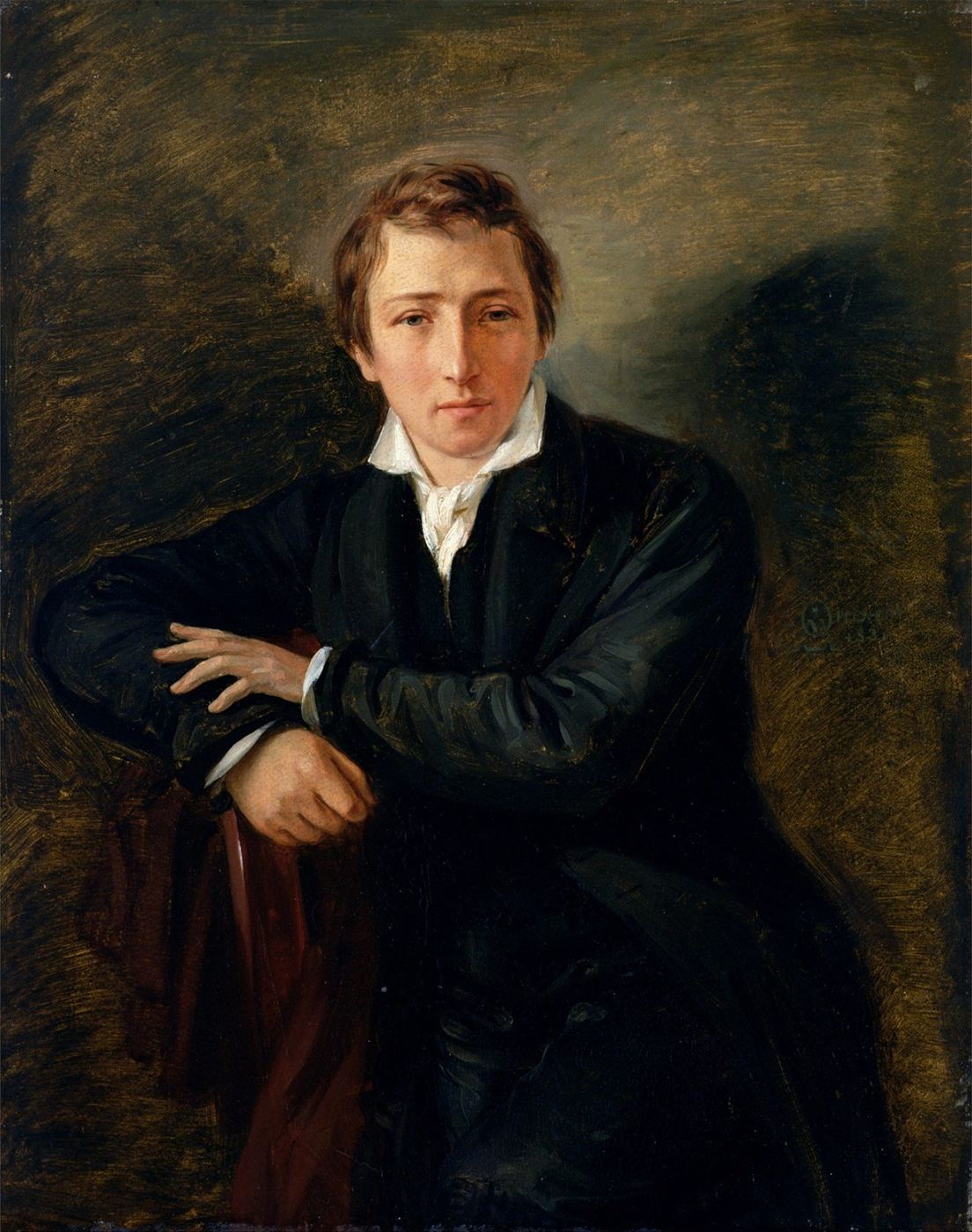
Why should a professor care? Berlin answered with a warning from the German poet Heinrich Heine, more than a century earlier.
"Over a hundred years ago, the German poet Heine warned the French not to underestimate the power of ideas: philosophical concepts nurtured in the stillness of a professor's study could destroy a civilisation."
Isaiah Berlin, Two Concepts of Liberty, 1958.14
Heine had called Kant's Critique of Pure Reason the sword that beheaded German deism and called Rousseau's works the bloodstained weapon Robespierre used on the old regime. Berlin added that the facts had "not wholly belied this prediction."14 His complaint was against his own colleagues. Oxford philosophers in the 1950s mostly treated politics as beneath serious analysis. Berlin thought that left the field to the fanatics, and he said ideas neglected by the people trained to criticize them can gain "an irresistible power over multitudes of men."15
Two questions in one word
The heart of the lecture is short. Berlin noted that almost every moralist in history has praised liberty, and that the word is so porous it can be stretched to cover almost anything. He refused to sort through what he called "the more than two hundred senses of it recorded by historians of ideas" and picked two, because they were central and had "a great deal of human history behind them, and, I dare say, still to come."16 He used the words "freedom" and "liberty" to mean the same thing. This course uses liberty.
Each sense, Berlin said, is the answer to a question. Here they are in his words.
"What is the area within which the subject - a person or group of persons - is or should be left to do or be what he is able to do or be, without interference by other persons?"
Berlin's question for the "negative" sense, 1958.17
"What, or who, is the source of control or interference that can determine someone to do, or be, this rather than that?"
Berlin's question for the "positive" sense, 1958.17
(The hyphens in the first quotation stand in for Berlin's dashes. The words are his.) He added at once: "The two questions are clearly different, even though the answers to them may overlap."17
A few pages later he put the difference more bluntly. The answer to "Who governs me?" is logically distinct from the answer to "How far does government interfere with me?" In that gap, Berlin said, lies the great contrast between the two concepts.18 A country can score well on one and badly on the other. Berlin's own example: a liberal-minded despot might leave his subjects a wide area of private liberty, while a democracy might take a great many liberties away from its citizens.19
One town, two verdicts
Picture a town council, elected fairly by every adult resident, that votes to ban a newspaper it dislikes. Berlin's second question asks who rules here, and the answer looks good: the people, through their council. His first question asks how large the area of non-interference is, and the answer is worse than it was last week. Same town, same vote, two different verdicts. That is the split Berlin wanted his audience to see.
Berlin did not treat the second question as a fraud. He wrote that the wish to govern oneself, or at least to take part in the process that controls one's life, "may be as deep a wish as that for a free area for action, and perhaps historically older." But it is not a wish for the same thing.20 And because liberty is such an attractive word, each side would claim it. His sharpest line on the danger: "Enough manipulation of the definition of man, and freedom can be made to mean whatever the manipulator wishes."21
Myth: Berlin invented negative and positive liberty out of nothing
Berlin said he would call the first sense negative "following much precedent." The Stanford Encyclopedia entry on the subject traces the idea of a negative and a positive sense of liberty back at least to Kant.22 What Berlin did was give the pair the shape everyone now argues with, trace their histories, and warn where one of them could lead. The credit for the two concepts as we use them belongs to him, and so does the duty of reading what he actually wrote.
Constant got there first, in 1819
Berlin had a favorite forerunner. In 1819 the French writer and politician Benjamin Constant gave a lecture at the Athénée Royal in Paris called The Liberty of the Ancients Compared with that of the Moderns.23 France had just lived through the Revolution, the Terror and Napoleon. Constant thought much of that misery came from confusing two kinds of liberty.
The ancients, he argued, meant by liberty a direct share in ruling. Citizens of Sparta or republican Rome voted on war and peace and judged their magistrates in the public square. But their private lives were watched and ordered by the community, down to religion and the choice of work. Constant summed it up in one line.
"Among the ancients, therefore, the individual is nearly always sovereign in public affairs but a slave in all his private relations."
Benjamin Constant, The Liberty of the Ancients Compared with that of the Moderns, 1819, in Jonathan Bennett's English version.24
Moderns, living in large commercial nations, wanted something else. "The aim of the ancients was to share social power among the citizens of a single country; that's what they called 'liberty'. The aim of the moderns is to be secure in their private benefits; and 'liberty' is their name for the guarantees accorded by institutions to these benefits."24 The revolutionaries' mistake, in Constant's telling, was to drag the ancient kind into a modern country and force France to enjoy benefits it did not want.25
Constant did not tell his listeners to give up political liberty. He ended by saying it was necessary "for us to learn to combine the two."26 Representative government was his answer: citizens keep a voice in public power so that they can guard their private lives.
What Berlin took from him
Berlin called Constant "the most eloquent of all defenders of freedom and privacy," a man who "had not forgotten the Jacobin dictatorship."27 Late in the lecture he gave Constant the decisive word on the clash between the two liberties. Moving unlimited authority from a king to the people, Constant had argued, does not increase liberty. It shifts the burden of slavery. What matters is how much authority sits in any set of hands, whoever they are. Berlin quoted him: "It is not against the arm that one must rail, but against the weapon. Some weights are too heavy for the human hand."28
Constant's line between ancient and modern liberty does not match Berlin's line exactly. Constant was writing history. Berlin was separating two questions that can be asked in any century. But you can hear Berlin's first question in Constant's moderns, and his second in Constant's ancients, and you can hear the same fear in both men: that a people could be told it had become free at the very moment it lost the room to live its own life.
How the lecture traveled
Clarendon Press, the learned imprint of Oxford University Press, published the lecture as a pamphlet in 1958.1 Berlin revised it for his collection Four Essays on Liberty (Oxford University Press, 1969), where it fills pages 118 to 172.29 In 2002 Henry Hardy published Liberty, which incorporates the four essays plus later material, with the lecture at pages 166 to 217. Page references in this course are to that 2002 edition.30
The text had a long life before 1958 too. The Isaiah Berlin Virtual Library, run by the Isaiah Berlin Literary Trust, traces the lecture to Berlin's earlier manuscript Political Ideas in the Romantic Age and lists ten versions of the text, lettered A to K (there is no I), posts several of them online, and offers the dictabelt recordings of Berlin dictating draft A and about the last half of draft C.31 You can hear him working the argument out.
Cherniss and Hardy's encyclopedia entry calls the essay one of the most influential and widely discussed texts in political theory and says it contributed to a revival of interest in the subject in the English-speaking world.32 It is also one of the most quoted and least read. People who have never opened it cite "negative liberty" as a slogan for small government and "positive liberty" as a slogan for programs. Berlin's text is stranger and more careful than either slogan, and he was harder on both concepts than their fans tend to remember.
The original works
- Isaiah Berlin, Two Concepts of Liberty (1958), Isaiah Berlin Virtual Library: The lecture itself, still under copyright. Link only.
- Benjamin Constant, The Liberty of Ancients Compared with that of Moderns (1819), Online Library of Liberty: Catalog page for the 1819 speech, with links to the text.
- Constant, 1819 speech, Early Modern Texts edition (PDF): A plain-English edition of the full speech.
- Lincoln, Address at the Sanitary Fair, Baltimore, 1864: Full text with an editor's introduction.
- The Founders' Constitution, University of Chicago Press: Founders' comments organized by clause of the Constitution.
Learn more
- Isaiah Berlin Virtual Library: Two Concepts of Liberty: the drafts, the dictabelt recordings and the publication history, from the trust that holds Berlin's literary estate.
- Joshua Cherniss and Henry Hardy, "Isaiah Berlin," Stanford Encyclopedia of Philosophy: a careful life and a full survey of Berlin's thought, co-written by his editor.
- Carter and Huseynli, "Positive and Negative Liberty," Stanford Encyclopedia of Philosophy: the standard reference on the distinction and the debate since Berlin.
- Henry Hardy's 1997 obituary of Berlin: short, personal, and the source for the Petrograd scene.
- Berlin and Riga: the house where he was born and the family's moves before England.
- Benjamin Constant, The Liberty of the Ancients Compared with that of the Moderns: the 1819 lecture in a plain modern English version.
- Isaiah Berlin, Liberty (Oxford University Press, 2002): the standard edition of Two Concepts of Liberty and the essays around it.
Notes
- Isaiah Berlin, Two Concepts of Liberty: An Inaugural Lecture Delivered before the University of Oxford on 31 October 1958 (Oxford: Clarendon Press, 1958), library catalog record; see also the Isaiah Berlin Virtual Library bibliography, item 71, which lists the Clarendon Press edition (55 pp.), and item 284, "The Concise 'Two Concepts of Liberty': What Isaiah Berlin Said on 31 October 1958." The weekday is calculated from the date. Read it online. Bibliography. ↩
- Isaiah Berlin, "Two Concepts of Liberty," in Liberty, ed. Henry Hardy (Oxford: Oxford University Press, 2002), p. 166 and n. 1 (the lecture "delivered in 1958"; Berlin "succeeded G. D. H. Cole in this Chair in 1957"). Read it online. ↩
- Isaiah Berlin Virtual Library, "Berlin and Riga" (birth on 6 June 1909 at 2a Albert Street, flat 8, fourth floor; move from Riga in June 1915; return in October 1920; emigration to England in February 1921). Read it online. ↩
- Joshua Cherniss and Henry Hardy, "Isaiah Berlin," Stanford Encyclopedia of Philosophy, first published 26 October 2004, substantive revision 12 February 2022, section 1, "Life." Read it online. ↩
- Henry Hardy, obituary of Isaiah Berlin (1997), Isaiah Berlin Virtual Library. Read it online. ↩
- Cherniss and Hardy, "Isaiah Berlin," Stanford Encyclopedia of Philosophy, section 1 (St Paul's; Corpus Christi; Firsts in Greats and PPE; New College lecturer, 1932; All Souls Prize Fellowship; Karl Marx, 1939). Read it online. ↩
- Cherniss and Hardy, "Isaiah Berlin," Stanford Encyclopedia of Philosophy, section 1 (British Information Services, New York, 1940-2; British Embassy, Washington, 1942-6; weekly reports on the American political scene). Read it online. ↩
- Cherniss and Hardy, "Isaiah Berlin," Stanford Encyclopedia of Philosophy, section 1 (four months in the Soviet Union, 1945-6; Akhmatova and Pasternak). Read it online. ↩
- Cherniss and Hardy, "Isaiah Berlin," Stanford Encyclopedia of Philosophy, section 1 (marriage, 1956; Chichele chair and knighthood, 1957; Wolfson College, 1966-75; resignation of the chair, 1967; death, 1997). Read it online. ↩
- Encyclopaedia Britannica, "Isaiah Berlin" (born 6 June 1909, Riga; died 5 November 1997, Oxford). Read it online. ↩
- Berlin, "Two Concepts of Liberty," Liberty (2002), p. 168. Read it online. ↩
- Ian Carter and Ilkin Huseynli, "Positive and Negative Liberty," Stanford Encyclopedia of Philosophy, first published 27 February 2003, substantive revision 28 June 2026, section 2. Read it online. ↩
- Berlin, "Two Concepts of Liberty," Liberty (2002), p. 177, n. 1. The bracketed year is in the printed text. Read it online. ↩
- Berlin, "Two Concepts of Liberty," Liberty (2002), p. 167. Read it online. ↩
- Berlin, "Two Concepts of Liberty," Liberty (2002), p. 167. Read it online. ↩
- Berlin, "Two Concepts of Liberty," Liberty (2002), pp. 168-9. Read it online. ↩
- Berlin, "Two Concepts of Liberty," Liberty (2002), p. 169. In the printed text the first question is set off with dashes and both questions sit in single quotation marks. Read it online. ↩
- Berlin, "Two Concepts of Liberty," Liberty (2002), p. 177. Read it online. ↩
- Berlin, "Two Concepts of Liberty," Liberty (2002), p. 176. Read it online. ↩
- Berlin, "Two Concepts of Liberty," Liberty (2002), p. 178. Read it online. ↩
- Berlin, "Two Concepts of Liberty," Liberty (2002), p. 181. Read it online. ↩
- Berlin, "Two Concepts of Liberty," Liberty (2002), p. 169 ("following much precedent"); Carter and Huseynli, "Positive and Negative Liberty," Stanford Encyclopedia of Philosophy, opening section. Read it online. ↩
- Benjamin Constant, The Liberty of the Ancients Compared with that of the Moderns, version by Jonathan Bennett (Early Modern Texts, 2017), headnote ("a lecture to the Athénée Royal of Paris in 1819"). Read it online. ↩
- Constant, The Liberty of the Ancients Compared with that of the Moderns, Bennett version, pp. 2 and 6. Bennett renders Constant's jouissances as "benefits." Read it online. ↩
- Constant, The Liberty of the Ancients Compared with that of the Moderns, Bennett version, p. 1. Read it online. ↩
- Constant, The Liberty of the Ancients Compared with that of the Moderns, Bennett version, p. 13. Read it online. ↩
- Berlin, "Two Concepts of Liberty," Liberty (2002), p. 173. Read it online. ↩
- Berlin, "Two Concepts of Liberty," Liberty (2002), p. 209, quoting Constant, Principes de politique. Read it online. ↩
- Isaiah Berlin, Four Essays on Liberty (London and New York: Oxford University Press, 1969), pp. 118-172; Isaiah Berlin Virtual Library bibliography, item 112. Read it online. ↩
- Isaiah Berlin, Liberty: Incorporating Four Essays on Liberty, ed. Henry Hardy (Oxford: Oxford University Press, 2002), "Two Concepts of Liberty," pp. 166-217. Read it online. ↩
- Isaiah Berlin Virtual Library, "Two Concepts of Liberty" (origins in Political Ideas in the Romantic Age; table of drafts A to H, J and K; recordings of draft A and part of draft C). Read it online. ↩
- Cherniss and Hardy, "Isaiah Berlin," Stanford Encyclopedia of Philosophy, opening section. Read it online. ↩
Check yourself
1. Where and when did Isaiah Berlin deliver Two Concepts of Liberty?
The 1958 Clarendon Press pamphlet calls it an inaugural lecture delivered before the University of Oxford on 31 October 1958, his first lecture as Chichele Professor of Social and Political Theory.
2. Which question did Berlin tie to the 'negative' sense of liberty?
Berlin put the negative sense in terms of an area free from interference. The positive sense answers a different question: what, or who, is the source of control.
3. What did Berlin say about the number of meanings the word liberty has?
Berlin said he would not discuss the more than two hundred senses recorded by historians of ideas. He picked two because they are central and carry a great deal of history.
4. What did Berlin see as a boy in Petrograd that stayed with him for life?
Henry Hardy's obituary of Berlin records that the scene left him with a lasting loathing of violence.
5. In his 1819 lecture, how did Benjamin Constant describe the citizen of the ancient republics?
Constant argued the ancients prized a share in collective power while private life was watched and controlled. Modern people, he said, prize security in private life.
6. Who first drew the distinction between negative and positive liberty?
Berlin made the distinction famous and gave it its modern shape, which is why he gets the credit for the two concepts as we use them. But he said he chose the names following much precedent.
Terms in this lesson
- Two Concepts of Liberty
- Isaiah Berlin's inaugural lecture as Chichele Professor of Social and Political Theory at Oxford, delivered 31 October 1958 and published that year by Clarendon Press. The source of the negative and positive liberty distinction as it is used today.
- A chair at the University of Oxford. Berlin was elected to it in 1957, succeeding G. D. H. Cole, and resigned it in 1967.
- Inaugural lecture
- The first public lecture a new professor gives on taking up a chair, often used to state a program of work.
- Negative liberty (Berlin)
- In Berlin's account, the area within which a person can act unobstructed by others. Its question: how far am I interfered with?
- Positive liberty (Berlin)
- In Berlin's account, the wish to be one's own master. Its question: who, or what, is the source of control over what I do?
- Liberty of the ancients (Constant)
- Benjamin Constant's name for the liberty of the classical republics: a direct share in collective power, joined to near total control of private life.
- Liberty of the moderns (Constant)
- Constant's name for the liberty valued in his own time: security in private life, guaranteed by institutions.
Sources
- Isaiah Berlin, Two Concepts of Liberty, in Liberty, ed. Henry Hardy (Oxford University Press, 2002), pp. 166-217 checked 2026-10
- Isaiah Berlin Virtual Library: Two Concepts of Liberty (drafts, recordings, publication history) checked 2026-10
- Isaiah Berlin Virtual Library: bibliography of Berlin's works checked 2026-10
- Joshua Cherniss and Henry Hardy, Isaiah Berlin, Stanford Encyclopedia of Philosophy (rev. 2022) checked 2026-10
- Ian Carter and Ilkin Huseynli, Positive and Negative Liberty, Stanford Encyclopedia of Philosophy (rev. 2026) checked 2026-10
- Isaiah Berlin Virtual Library: Berlin and Riga checked 2026-10
- Henry Hardy, obituary of Isaiah Berlin (1997) checked 2026-10
- Encyclopaedia Britannica, Isaiah Berlin checked 2026-10
- Benjamin Constant, The Liberty of the Ancients Compared with that of the Moderns (1819), version by Jonathan Bennett checked 2026-10
- Library catalog record for the 1958 Clarendon Press pamphlet checked 2026-10