Lesson 1 of 10 · about 17 minutes
The Map of Free-Market Thought
You'll be able to
- Describe the meeting of the Mont Pelerin Society in April 1947 and why Hayek called it
- Place the Austrian, Chicago, Virginia, supply-side and Sowell-Williams strands of free-market thought on one map and name a founding work for each
- Trace the teacher-and-student lines that connect Menger, Mises and Hayek on one side and Knight, Friedman, Stigler and Buchanan on the other
- State the disagreement between Friedman and Mises over how economics should be tested
- State the disagreement between Hayek and Friedman over who should issue money
On April 1, 1947, a small group of men checked into a hotel on a Swiss mountainside above Lake Geneva. They had come from several countries and had little in common except a shared alarm. The Mont Pelerin Society, which grew out of that gathering, still publishes the statement they signed on April 8. Its first sentence reads: "The central values of civilization are in danger."1
Friedrich Hayek had called the meeting. According to the standard account, he invited 39 scholars, mostly economists, with some historians and philosophers, and the money came chiefly from the William Volker Fund in the United States, with the Swiss bank Schweizerische Kreditanstalt (later Credit Suisse) reported to have paid 93 percent of the conference costs.2 They argued about the name. Hayek wanted the Acton-Tocqueville Society. Frank Knight of Chicago objected to naming a society after two Roman Catholic aristocrats, and Ludwig von Mises worried that the mistakes Acton and Tocqueville had made would be pinned on the group.2 They settled on the name of the mountain.
The room held economists who would later disagree in print for decades. People say "the free market economists" as if they were one choir. They are closer to a large family: shared ancestors, a few toasts everyone can drink to, and arguments at the table that never quite end.
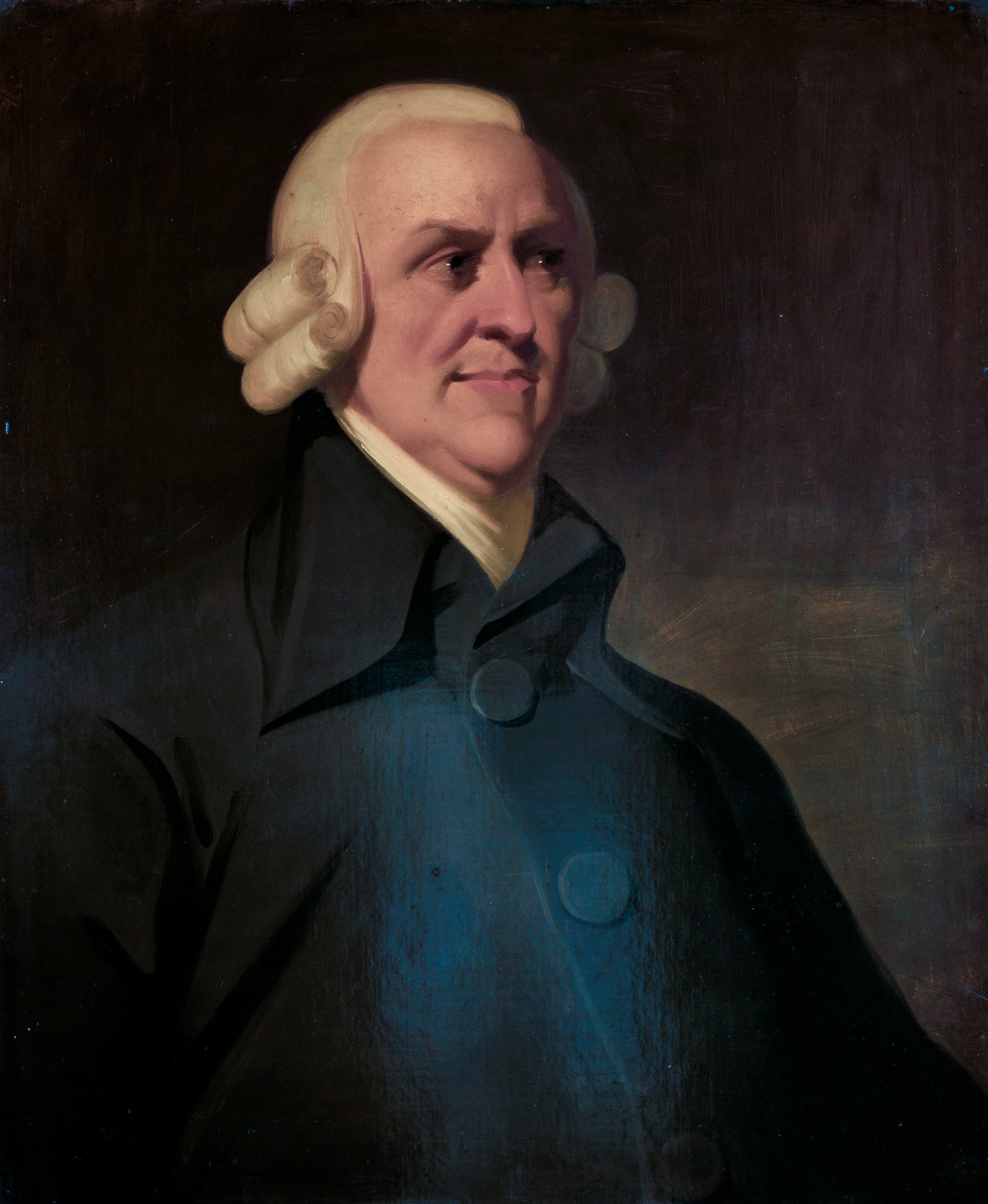
What the founders of the society agreed on
Start with what held the room together, because it was not nothing. The Statement of Aims describes a group of "economists, historians, philosophers, and other students of public affairs." It says that over large stretches of the earth "the essential conditions of human dignity and freedom have already disappeared." It blames the trouble partly on theories that question the rule of law and partly on a "decline of belief in private property and the competitive market," since without the "diffused power and initiative" those institutions give, a free society is hard to imagine.1 The members did not pledge to a program. They pledged to study and to talk.
Nearly every school on the map starts from the same few beliefs. People know their own circumstances better than any distant authority does. Prices carry information, and overriding them has costs that are easy to miss. Political power tends to grow, and those who hold it have interests of their own. Each school below turns one of these beliefs into a research program, and the schools part company on how far to push it.
Their common ancestor is classical liberalism, the tradition of Smith and John Stuart Mill and, in America, of the founders. The basic case for it is covered in the first module on economic systems, and Lesson 5 of that module gives Friedman's life and the argument of Capitalism and Freedom. The story here starts in 1871.
Five strands, one table
The cleanest way to see the whole family is to put the strands side by side. The table below names, for each one, the place where it grew, its best-known figures, and a work to start with. The dates are the years of first publication.
| Strand | Home base | Best-known figures | Signature idea | Where to begin |
|---|---|---|---|---|
| Austrian | Vienna, later New York, Auburn (Alabama) and George Mason | Menger, Bohm-Bawerk, Mises, Hayek, Rothbard | Value is subjective; knowledge is dispersed; socialism cannot calculate | Menger, Principles of Economics (1871); Mises, Human Action (1949) |
| Chicago | University of Chicago | Knight, Simons, Friedman, Stigler, Becker, Coase, Fama, Lucas | Price theory applied everywhere; theories are tested by prediction | Friedman and Schwartz, A Monetary History of the United States (1963) |
| Virginia, public choice | Virginia, Virginia Tech, George Mason | Buchanan, Tullock, Niskanen | Politicians and bureaucrats respond to incentives like everyone else | Buchanan and Tullock, The Calculus of Consent (1962) |
| Supply-side | Columbia, Southern California, Washington policy circles | Mundell, Laffer, Jude Wanniski | Tax rates change how much people work and invest | Kemp-Roth tax cut bill (1977); Economic Recovery Tax Act (1981) |
| Sowell and Williams | Stanford (Hoover) and George Mason | Thomas Sowell, Walter Williams | Trade-offs, not solutions; the record of policy on the people it was meant to help | Sowell, Basic Economics (2000) |
Some warnings go with the table. A "school" is a label that outsiders stick on a group of people, and the people often resent it. Hayek's postscript refusing the labels conservative and libertarian is the best-known case. The labels do real work all the same, because each name points to a different habit of mind.
Who taught whom
Ideas in economics travel through classrooms, and the pedigrees explain a good deal.
The Vienna line
Carl Menger's Principles of Economics (1871) is generally treated as the founding work of the Austrian school. Eugen von Bohm-Bawerk and Friedrich von Wieser formed the first wave around him.5 Their contributions were deep ones: Menger on marginal utility and subjective value, Wieser on opportunity cost, Bohm-Bawerk on time preference and the theory of capital and interest. Much of this has been absorbed into mainstream economics so completely that students learn it without knowing where it came from.5 The label itself began as an insult. The German historical economist Gustav von Schmoller used "Austrian school" in the 1880s to dismiss Menger's side in the quarrel over method known as the Methodenstreit, and the name stuck.5
The next generation was Ludwig von Mises, whose 1920 essay on economic calculation under socialism and whose treatise Human Action (1949, Yale University Press) made him the school's defining figure in the twentieth century.56 Hayek came up in the same Vienna. He took doctorates at the University of Vienna in 1921 and 1923, directed the Austrian Institute for Trade Cycle Research from 1927, and in 1931 took the Tooke chair at the London School of Economics, where he stayed until 1950.7 Then came Chicago, Freiburg and Salzburg. Lesson 4 follows him, and Lesson 5 follows Mises.
The Chicago line
Chicago's first great generation taught in the 1930s: Frank Knight, Jacob Viner and Henry Simons. Milton Friedman arrived as a graduate student on a tuition scholarship in 1932. He later called 1932-33 his most difficult year financially, and wrote of the intellectual atmosphere he found there, "I have never recovered."8 He returned to teach in 1946, and from then on the department's center of gravity was Friedman and, down the hall, George Stigler. Lesson 6 covers the school in full. For the map, what matters is that students flowed outward. Thomas Sowell earned his Chicago doctorate in 1968 with Stigler as his advisor, and Friedman was an influence he acknowledged.9 Sowell has said he was a Marxist in his twenties. He began moving toward free-market economics in 1960, while working as a Labor Department intern on minimum wages in the Puerto Rican sugar industry.9
The Virginia line
James Buchanan was born in Murfreesboro, Tennessee, in 1919, took his doctorate at Chicago in 1948, and taught at the University of Virginia from 1956 to 1968, then at Virginia Polytechnic Institute, and later at George Mason University.10 With Gordon Tullock he wrote The Calculus of Consent in 1962, the same year that Friedman published Capitalism and Freedom.10 Buchanan won the Nobel in 1986. His school grew out of Chicago price theory but turned it on a new subject, the behavior of government itself. Lesson 7 is devoted to it.
- 1776 Adam Smith publishes The Wealth of Nations.
- 1871 Carl Menger publishes Principles of Economics in Vienna.
- 1920 Mises writes on economic calculation under socialism.
- 1944 Hayek publishes The Road to Serfdom.
- 1947 Hayek convenes the Mont Pelerin Society, April 1 to 10.
- 1962 Friedman publishes Capitalism and Freedom; Buchanan and Tullock publish The Calculus of Consent.
- 1974 Hayek shares the Nobel Prize in economics with Gunnar Myrdal.
- 1976 Friedman wins the Nobel Prize; Hayek publishes The Denationalisation of Money.
- 1981 Economic Recovery Tax Act, the largest tax cut of the supply-side era.
- 1986 Buchanan wins the Nobel Prize for public choice.
- 2000 Sowell publishes Basic Economics.
- 2008-2009 Financial crisis; the Federal Reserve's response draws openly on Friedman and Schwartz.
- 2020s Inflation, debt and industrial policy return the old arguments to the front page.
Where the strands fight
The best way to learn a family is to hear its arguments, and a few of these shaped the rest of the century.
Friedman against Mises: how do you know an economic claim is true?
Friedman's 1953 essay "The Methodology of Positive Economics" set out his answer plainly. A theory, he wrote, is "to be judged by its predictive power for the class of phenomena which it is intended to explain," and "the only relevant test of the validity of a hypothesis is comparison of its predictions with experience."12 He went further and said that a theory's assumptions need not look realistic. What counts is whether its predictions survive contact with the data. That is a scientist's creed, and it is the working creed of almost every economics department in the world.
Mises held the opposite view, and held it without apology. In Human Action he described economics as part of praxeology, the study of purposeful action, and argued that its core propositions are deduced from the fact that humans act, in the way the theorems of logic and mathematics are deduced. He wrote that such theorems are "not subject to verification or falsification on the ground of experience and facts."13 If a statistical study seems to contradict the theory, he said, the fault lies with the study, since history is too complex to serve as a laboratory.
Both men were free-market advocates, and they reached many of the same policy conclusions by routes that could hardly be more different. Friedman could say that he would give up a favorite theory if the numbers turned against it. Mises could not say that without abandoning his method. Mainstream economists tend to side with Friedman, and the Austrian school is now generally counted as heterodox, largely because it rejects the mathematical and statistical methods the rest of the profession adopted.5 Lesson 5 gives the Austrian reply, which deserves a hearing: that the human sciences deal with meaning and choice, and that a method borrowed from physics can mislead.
Hayek against Friedman: who should issue money?
The money quarrel runs the other way, since here Hayek is the more radical of the two. Friedman wanted the central bank to follow a rule, a steady and predictable growth of the money supply, so that human discretion could not do harm. Hayek went further. In The Denationalisation of Money (Institute of Economic Affairs, London, 1976) he proposed to end the government monopoly on money and let private issuers compete, with the public choosing the currencies that held their value.14
Friedman's objection was pointed. As the Wikipedia summary of the debate puts it, he argued that Hayek defended spontaneously evolved institutions and then proposed a deliberately designed replacement, and that existing law in most developed countries does not stop two parties from trading in any medium they both accept.14 Other economists asked whether competing currencies might drift toward a new monopoly, or whether the most stable money would really win. Lesson 4 returns to the proposal and gives Hayek's reasons. When Hayek received his own Nobel Prize in 1974, the Academy cited his "pioneering work in the theory of money and economic fluctuations."15 He had spent his life on the subject and did not trust the men who ran the central banks.
Hayek against the label
The third argument concerns names. Hayek appended an essay to The Constitution of Liberty (1960) called "Why I Am Not a Conservative." In it he wrote that conservatism "by its very nature" cannot offer an alternative to the direction in which we are moving. He also turned down the word libertarian, because "for my taste it carries too much the flavor of a manufactured term," and described himself as "an unrepentant Old Whig."16 Friedman called himself a liberal in the old sense. Rothbard called himself a libertarian and an anarcho-capitalist. When someone lumps these men together as "the libertarian right," they ignore labels that most of them chose with care.
Remember: A school is a set of habits. The same person can accept Chicago's insistence on testing, Virginia's suspicion of politicians and the Austrian point about dispersed knowledge, and many do.
Supply-side economics and the writers
Two parts of the map are not schools in the university sense. Supply-side economics began as a tax argument in the 1970s. Robert Mundell, a Columbia economist, and Arthur Laffer, then at Chicago and later at the University of Southern California, argued that high marginal tax rates reduce the work and investment that produce the taxed income. In 1977 Representative Jack Kemp and Senator William Roth introduced a bill to cut income tax rates across the board, and the idea found its biggest political home in the Economic Recovery Tax Act of 1981, signed by President Reagan.17 Lesson 8 tests the claim against the evidence, which is more mixed than either side's partisans like to admit.
Thomas Sowell and Walter Williams belong to no school. They share a way of writing. Sowell, born in Gastonia, North Carolina, in 1930, took a Chicago doctorate in 1968, has been a senior fellow at the Hoover Institution since 1980, and wrote the books Knowledge and Decisions (1980), A Conflict of Visions (1987) and Basic Economics (2000).9 The habit they share is to ask, of any policy, what the record shows for the people it was meant to help. Their critics reply that a focus on incentives can miss history and power. Lesson 8 gives both sides.
One question, five habits of mind
A concrete case shows how the strands differ better than a definition can. Suppose a city council, alarmed by rising apartment prices, votes to cap rents. Each strand would ask a different first question.
An Austrian would begin with knowledge. The council does not know what each landlord and tenant knows about their own building, their own needs and their own alternatives, and a price is the way those scattered facts get combined. Capping it destroys the signal, and the Austrian would predict that the shortage will show up as lower quality, longer waiting lists and units pulled off the market.13 A Chicago economist would begin with a measurement. How many units, and how big a drop in supply, does the cap produce in cities that have tried it? The Chicago habit is to say what the theory predicts and then go look, and to change one's mind if the data say otherwise.12
A Virginia economist would ask who voted for the cap and why. Tenants are a large and organized bloc at election time, while the landlords who will quietly stop maintaining their buildings, and the future renters who will not find an apartment, have no seat at the meeting. The question is what incentives the council faces, and the answer may be that a cap is rational for the politician and costly for the city. A supply-side economist would ask what is making building so costly in the first place, and would look at taxes, permits and rules that raise the price of a new apartment. And a writer in the Sowell and Williams vein would look at who the cap helps in practice, which current tenants it favors over newcomers, and which groups get shut out.
None of the five would say the council's goal, helping people afford a home, is a bad one. They would ask whether the tool serves the goal. A reader who can tell which question belongs to which strand has the map in hand, and can see why economists who share a general preference for free markets can still spend a whole career arguing about the details.
Reading the map
One more useful distinction runs across the whole table: what each strand thinks economists can know. The Austrians say the economist knows how people act in general and little about what will happen next. Chicago says an economist knows what the data have so far failed to refute. Virginia adds that the economist knows little about how a government will behave unless the rules it works under are written down. The supply-siders say the economist knows what tax rates do at the margin. A reader who keeps this in mind will notice each strand's blind spot: the Austrian risk of unfalsifiable claims, the Chicago risk of trusting a model past its range, the Virginia risk of reading every public servant as a self-seeker, and the supply-side risk of promising more growth than the numbers deliver.
The 2008 crisis tested these claims all at once, and Lesson 9 reports the result. Lesson 2 begins with the man most responsible for Chicago's reputation, Milton Friedman the economist.
Learn more
- The Mont Pelerin Statement of Aims: The 1947 text in full, which shows what the founders thought they were defending.
- The 1974 Nobel press release for Hayek and Myrdal: The Academy's own account of why a prize went to two men with opposite politics.
- Hayek, Why I Am Not a Conservative: His postscript, in which he turns down the labels conservative and libertarian.
- Friedman, The Role of Monetary Policy (1968): A model of Chicago style: a theory, a prediction and a test.
- Hayek, The Use of Knowledge in Society (1945): The short essay that most economists of every school say they admire.
- Buchanan's Nobel biography: The founder of the Virginia school in his own words.
- The Denationalisation of Money: A summary of Hayek's proposal and the replies it drew, including Friedman's.
Notes
- Mont Pelerin Society, "Statement of Aims," adopted April 8, 1947, and the Society's account of the meeting held at Mont Pelerin, Switzerland, April 1 to 10, 1947. Read it online. ↩
- "Mont Pelerin Society," Wikipedia, on the invitation of 39 scholars (the article also gives a figure of sixty participants and is inconsistent), the funding from the William Volker Fund and the 93 percent share of conference costs paid by Schweizerische Kreditanstalt, Hayek's presidency from 1947 to 1961, and the dispute over the name, including Knight's objection to two "Roman Catholic aristocrats" and Mises's worry about Acton's and Tocqueville's mistakes. Read it online. ↩
- Portrait of Adam Smith (the "Muir portrait," a posthumous portrait c. 1800), Wikimedia Commons, "File:Adam Smith The Muir portrait.jpg." Adam Smith, An Inquiry into the Nature and Causes of the Wealth of Nations (London: W. Strahan and T. Cadell, 1776). Read it online. ↩
- Table compiled from the sources cited in this lesson: Menger (1871), Mises (1949), Friedman and Schwartz (1963), Buchanan and Tullock (1962), Sowell (2000); the supply-side entries are developed in Lesson 8. The Austrian and Chicago institutional details are from the Nobel biographies of Hayek and Friedman. Hayek's Nobel biography. ↩
- "Austrian school of economics," Wikipedia, on Menger's Principles of Economics (1871), the Methodenstreit and Schmoller's label, the contributions later absorbed by the mainstream, and the school's heterodox status owing to its rejection of mathematical methods. Read it online. ↩
- "Human Action," Wikipedia, on first publication by Yale University Press in 1949 and the German predecessor of 1940. Read it online. ↩
- Friedrich A. von Hayek, "Biographical," Nobel Prize in Economic Sciences 1974: born Vienna, May 8, 1899; doctorates 1921 and 1923; Austrian Institute for Trade Cycle Research 1927-31; Tooke Professor at the London School of Economics 1931-50; Chicago 1950-62; Freiburg 1962-68. Read it online. ↩
- Milton Friedman, "Biographical," Nobel Prize in Economic Sciences 1976, on the tuition scholarship, his first year at Chicago (1932-33), the faculty of Viner, Knight and Simons, the sentence "I have never recovered," and his return to teach economic theory at Chicago after one year (1945-46) at the University of Minnesota. Read it online. ↩
- "Thomas Sowell," Wikipedia: born June 30, 1930; Harvard AB 1958, Columbia AM 1959, Chicago PhD 1968 under George Stigler, with Friedman as mentor; Hoover Institution fellow from 1977 and senior fellow since September 1980; his Marxist youth and his 1960 Labor Department internship studying minimum wages in Puerto Rico; Knowledge and Decisions (1980), A Conflict of Visions (1987), Basic Economics (2000). Read it online. ↩
- James M. Buchanan Jr., "Biographical," Nobel Prize in Economic Sciences 1986: born October 3, 1919, Murfreesboro, Tennessee; PhD Chicago 1948; Virginia 1956-68, Virginia Polytechnic Institute 1969-83, then George Mason; The Calculus of Consent with Gordon Tullock (1962). Read it online. ↩
- Dates in the timeline are from the sources cited in the notes above, with the 1974 and 1976 prizes from the Nobel Foundation (1974 press release) and the 1981 Economic Recovery Tax Act from Public Law 97-34, discussed in Lesson 8. ↩
- Milton Friedman, "The Methodology of Positive Economics," in Essays in Positive Economics (Chicago: University of Chicago Press, 1953), part I. ↩
- Ludwig von Mises, Human Action: A Treatise on Economics (New Haven: Yale University Press, 1949), ch. 2, quoted at the Mises Institute's page on praxeology and economic science (the Scholar's Edition page cited there is p. 32, note 2). Read it online. ↩
- F. A. Hayek, Denationalisation of Money (London: Institute of Economic Affairs, 1976; revised edition The Argument Refined, 1978), and the summary of Friedman's and others' replies in "The Denationalisation of Money," Wikipedia. Read it online. ↩
- "The Prize in Economic Sciences 1974," press release, Royal Swedish Academy of Sciences, October 9, 1974. Read it online. ↩
- F. A. Hayek, "Why I Am Not a Conservative," postscript to The Constitution of Liberty (Chicago: University of Chicago Press, 1960), sections 1, 6 and 7. Read it online. ↩
- Kemp-Roth bill of 1977 and the Economic Recovery Tax Act of 1981 (Public Law 97-34), discussed with sources in Lesson 8; background on Mundell and Laffer in the same lesson. Read it online. ↩
Check yourself
1. Where and when did Friedrich Hayek convene the meeting that founded the Mont Pelerin Society?
The Mont Pelerin Society says the group met at Mont Pelerin, Switzerland, from April 1 to 10, 1947, and its Statement of Aims is dated April 8, 1947.
2. Which opening sentence begins the Mont Pelerin Society's Statement of Aims?
The Statement of Aims opens with the sentence 'The central values of civilization are in danger.'
3. How did Milton Friedman say economic theories should be judged in his 1953 essay on method?
Friedman's 'The Methodology of Positive Economics' (in Essays in Positive Economics, 1953) argued that the test of a theory is its predictive success. Mises, in Human Action (1949), held that economic theory is deduced from the axiom of human action and is not refuted by statistics.
4. What did Hayek propose in The Denationalisation of Money (1976)?
The Institute of Economic Affairs published the pamphlet in 1976. It proposed that private issuers compete to supply money. Friedman, who favored a steady money-growth rule for the central bank, objected that Hayek defended evolved institutions and then proposed a designed replacement.
5. In 1986 the Nobel Memorial Prize in economics went to which founder of the Virginia school of public choice?
The Nobel Foundation lists James M. Buchanan Jr. as the 1986 laureate. He co-wrote The Calculus of Consent (1962) with Gordon Tullock.
Terms in this lesson
- Classical liberalism
- The tradition that puts individual liberty, private property, limited government and free exchange first. Smith, Mill and the American founders are its common ancestors.
- Austrian school
- A school founded in Vienna by Carl Menger's Principles of Economics (1871). It stresses subjective value, individual choice, dispersed knowledge and the harm done by monetary expansion.
- Chicago school
- The economists of the University of Chicago, from Frank Knight and Henry Simons to Milton Friedman and George Stigler, known for price theory, monetary history and testing ideas against data.
- Public choice
- The study of politics with the tools of economics. It treats voters, legislators and bureaucrats as people pursuing their own goals, and asks how the rules of politics shape outcomes.
- Supply-side economics
- The view that tax rates and other rules shape how much people work, save and invest, so that policy should be judged by its effect on production and not only on demand.
- Positive economics
- Economics that describes what is and predicts what will happen, as distinct from normative economics, which says what ought to be. Friedman used the term in his 1953 essay on method.
- Praxeology
- Mises's name for the deductive study of human action. It starts from the fact that people act purposefully and draws conclusions by logic.
Sources
- Mont Pelerin Society, Statement of Aims (1947) checked 2026-10
- Mont Pelerin Society (Wikipedia) checked 2026-10
- Hayek, Biographical, Nobel Prize 1974 checked 2026-10
- Nobel Prize in Economics 1974, press release checked 2026-10
- Milton Friedman, Biographical, Nobel Prize 1976 checked 2026-10
- James M. Buchanan, Biographical, Nobel Prize 1986 checked 2026-10
- Hayek, Why I Am Not a Conservative (postscript to The Constitution of Liberty, 1960) checked 2026-10
- Austrian school of economics (Wikipedia) checked 2026-10
- The Denationalisation of Money (Wikipedia) checked 2026-10
- Thomas Sowell (Wikipedia) checked 2026-10
- Friedman, The Role of Monetary Policy, American Economic Review (March 1968) checked 2026-10
- Hayek, The Use of Knowledge in Society, American Economic Review (September 1945) checked 2026-10